2027 How to Read an Online MSW Curriculum Before You Apply

Co-Founder and Chief Data Scientist
Choosing an online MSW program is not just a question of convenience. The curriculum determines whether you can qualify for licensure, complete required fieldwork, build the right practice skills, and move toward the social work role you actually want. A program may look flexible on the surface but still be a poor fit if its accreditation, practicum model, specialization options, or state authorization do not match your goals.
This guide explains how to read online MSW curriculum details with a critical eye. It is written for career changers, BSW graduates considering advanced standing, working professionals comparing online formats, and applicants who want to avoid costly mistakes before enrolling.
You will learn how an MSW differs from other social work credentials, what accreditation to verify, which courses and specializations matter, how online field placements work, what admissions committees typically expect, and how licensure, career paths, salary potential, and program reputation should factor into your decision.
Key Things You Should Know
- Evaluating accreditation, field placement quality, and faculty expertise is critical when reviewing online MSW curricula to ensure recognized credentials and practical experience.
- Understanding specialization options within the MSW program, such as clinical or community practice, helps align education with career goals.
- Many accredited online MSW programs report graduation rates above 70%, reflecting growing program effectiveness and student support in digital learning environments.
What is an MSW degree and how does it differ from other social work credentials?
An MSW degree, or Master of Social Work, is a graduate-level professional degree designed for advanced social work practice. It goes beyond introductory social work education by preparing students for clinical assessment, direct practice, policy work, supervision, research-informed practice, and leadership roles in agencies, schools, healthcare systems, community organizations, and government settings.
The main difference between an MSW and other social work credentials is scope. A bachelor of social work (BSW) can prepare graduates for many entry-level generalist roles, while certificates usually build targeted skills in areas such as case management, advocacy, or administration. An MSW is the credential most commonly required for advanced practice and is essential for clinical licensure in most U.S. states.
For applicants comparing master of social work degree program differences, the practical question is this: do you want a credential that supports entry-level service delivery, or do you need a graduate degree that can lead to licensed clinical, supervisory, or specialized practice? Licensure as a Licensed Clinical Social Worker (LCSW) requires an MSW, which a BSW or certification alone cannot fulfill.
Alternative credentials, such as the Certified Social Work Case Manager (C-SWCM), can be valuable for professionals focused on coordination, referrals, benefits navigation, and service planning. However, these credentials are not substitutes for an MSW when the goal is therapy, independent clinical practice, or many advanced social work positions.
Online MSW curriculum vs. social work certification options also differ in depth and format. Many MSW programs include advanced coursework, supervised field education, and structured preparation for state licensure pathways. According to CSWE 2020 Annual Statistics, about 60.1% of blended MSW programs offered synchronous online sessions for real-time interaction. That format can matter if you want live discussion, faculty feedback, and peer engagement rather than fully self-paced study.
Students who plan to continue beyond the MSW may later consider a DSW degree online. A DSW can support advanced clinical leadership, applied practice expertise, and high-level roles in social work systems after the MSW is complete.
What accreditation standards should you verify when evaluating an online MSW program?
The first accreditation standard to verify is Council on Social Work Education (CSWE) accreditation. For online MSW programs, CSWE accreditation is the key professional accreditation because it confirms that the program meets accepted standards for social work education, including curriculum content, ethics, competencies, and field education. It is also mandatory for licensure eligibility in nearly all U.S. states.
Do not assume that a university’s general accreditation is enough. Regional institutional accreditation indicates that the college or university meets broad academic and administrative standards. It does not replace CSWE accreditation for a social work degree. For licensure, employer recognition, and eligibility for many advanced roles, the MSW program itself should be CSWE-accredited.
When reviewing accreditation criteria for online MSW programs, check the program page, the CSWE directory, and the school’s licensure disclosures. Look for clear answers to these questions:
- Is the MSW program accredited by CSWE?
- Is the online format included under the same accredited program approval?
- Does the program meet educational requirements for licensure in your state?
- Does the school provide state-by-state licensure disclosures?
- Are field placements approved and supervised according to CSWE standards?
Field education is part of accreditation, not an optional add-on. Online MSW curriculums commonly include field education requirements between 900 and 1,125 hours, with about 675 specialized hours following the generalist year to develop advanced clinical skills. These hours help students connect classroom learning with supervised practice and support preparation for state licensing expectations.
Even when coursework is fully online, supervised field placements must be approved by the institution and aligned with professional and ethical standards. Ask whether the school helps secure placements in your area or whether students are expected to find agencies independently. A program with weak field placement support can create major delays, especially for students in rural areas or competitive metro markets.
State authorization also matters. If you live outside the school’s home state, confirm that the program is authorized to enroll students in your state and that its curriculum supports your intended licensure pathway. Licensure reciprocity is not automatic across states, so students who may relocate should review requirements early.
Applicants comparing cost and accreditation together can explore MSW online programs affordable options while still prioritizing CSWE recognition and state licensure alignment.
What core courses and specializations are typically included in an MSW curriculum?
An MSW curriculum usually combines a generalist foundation with advanced practice coursework. The foundation year builds broad competence in social work values, ethics, human behavior, policy, research, assessment, and practice with individuals, families, groups, organizations, and communities. The advanced year then allows students to focus on a practice area or population.
Common core courses include human behavior and the social environment, social welfare policy, research methods, social work ethics, diversity and oppression, generalist practice, assessment, and clinical or community intervention. Human behavior courses, for example, examine psychological, biological, social, and environmental factors that influence development and functioning across the lifespan.
Specializations vary by school, but frequent options include clinical social work, mental health, child and family welfare, healthcare, school social work, substance abuse, gerontology, community organizing, policy, and administration. Clinical tracks typically emphasize assessment, diagnosis, therapeutic methods, trauma-informed care, and direct client intervention. Community and policy tracks focus more on advocacy, program planning, systems change, and social welfare reform.
The right specialization depends on the role you want after graduation. Students aiming for therapy or LCSW pathways should look for strong clinical coursework and field placements with direct client contact. Students interested in nonprofit leadership, public policy, or community development should evaluate macro-practice courses, policy analysis, grant-related learning, and administrative field settings.
According to the CSWE Online vs. In-Person Workforce Data Brief (2018), 58% of primarily online MSW graduates are older than their in-person counterparts. That matters because many online programs are designed for students who are balancing graduate study with employment, caregiving, or a career change. Applicants should look closely at whether the curriculum is flexible enough without sacrificing field quality or licensure preparation.
Compare credit requirements, sequencing, electives, and practicum rules before applying. Some schools allow specialization courses to replace electives, while others require a fixed course sequence. Online formats often include asynchronous learning and may emphasize policy, administration, or generalist flexibility, while some campus-based programs may offer more intensive clinical fieldwork networks. The distinction is not always absolute, so read the curriculum map rather than relying on labels.
Exploring typical MSW degree specialization options in the United States can help you connect coursework to a specific career path, such as becoming a clinical social worker. The strongest choice is the program whose courses, field placements, and licensure preparation all point toward the same professional goal.
How do online MSW programs structure coursework, practicum, and field experience requirements?
Online MSW programs typically combine online academic coursework with in-person supervised field education. The classroom portion may be asynchronous, synchronous, or blended. The practicum portion takes place in approved agencies, clinics, schools, hospitals, or community organizations, usually near the student’s location when possible.
Coursework usually covers human behavior, social policy, research, ethics, generalist practice, clinical practice, diversity, and specialization-specific content. Programs may offer full-time and part-time pacing, often spanning two to three years depending on enrollment status and whether the student qualifies for advanced standing.
Practicum and field experience are where students apply social work theory in real service settings. Online delivery does not eliminate this requirement. Practicum components typically require 900 to 1,200 hours of supervised hands-on training, depending on the program structure and student pathway. These hours are designed to align with Council on Social Work Education (CSWE) standards and support licensing preparation.
Field placement models differ substantially. Some online MSW programs have placement teams that identify and approve local sites. Others expect students to propose potential agencies, after which the school verifies whether the site and supervisor meet program standards. Neither model is automatically better, but applicants should understand the level of support before enrolling.
Ask these questions about field education before you commit:
- Who is responsible for finding a placement: the school, the student, or both?
- Can placements be completed near your home?
- Are evening or weekend placements available for working students?
- What happens if a placement falls through?
- Does the program offer clinical placements aligned with LCSW goals?
- Are current workplaces allowed as placement sites if duties are different and supervision is approved?
Cost should be reviewed alongside field logistics. Tuition cost per credit affects the total investment, especially for students taking many credits over multiple terms. For example, the University of South Florida's online MSW program charges $550 per credit for all students, making it among the most cost-effective nationwide. Students comparing admission accessibility and program formats may also review MSW online programs.
The best online MSW structure is one you can realistically complete. A program may be academically strong but impractical if live classes conflict with work, field placements are unavailable in your area, or the practicum schedule requires daytime hours you cannot meet.
What are the admission requirements and prerequisites for entering an MSW program?
Admission to an MSW program generally requires a bachelor's degree from an accredited institution. Many schools expect a minimum GPA around 3.0, though some review applicants with slightly lower GPAs if they show strong professional experience, volunteer service, academic improvement, or a clear commitment to social work values.
The GRE is often optional and only requested by some programs. This has made many MSW admissions processes more accessible, especially for working adults and career changers. However, optional does not mean standards are low. Admissions committees still look for evidence that applicants can manage graduate-level writing, research, ethics, and field responsibilities.
Prerequisite coursework often includes psychology, sociology, human development, or related social sciences. Some programs also prefer or require statistics or research methods because MSW students must understand evidence-based practice, program evaluation, and social science research. Applicants without these courses may still be considered, but they should check whether prerequisites must be completed before enrollment.
Relevant work or volunteer experience can strengthen an application. Experience in social services, schools, shelters, healthcare settings, advocacy organizations, crisis services, community programs, or nonprofit agencies can show that the applicant understands the realities of helping professions. This is especially useful for applicants whose undergraduate major was not social work.
Typical application materials include:
- Official transcripts from prior colleges or universities
- A personal statement explaining career goals and fit with social work
- Letters of recommendation from academic, professional, or service supervisors
- A resume showing employment, volunteer work, internships, or leadership
- An interview, if required by the program
Personal statements should be specific. Strong applicants explain why they want to enter social work, which populations or practice areas interest them, how their background has prepared them, and why the program’s curriculum fits their goals. Vague statements about wanting to help people are less persuasive than clear evidence of readiness, reflection, and ethical awareness.
Part-time, full-time, and advanced standing tracks have different requirements. Advanced standing usually requires a Bachelor of Social Work (BSW) from a CSWE-accredited program with a minimum GPA of 3.0, allowing for curriculum waivers. This pathway is designed for students who have already completed accredited foundational social work education.
With 55,935 full-time MSW students preferring programs that offer generalist foundations before specialization, applicants should verify how each curriculum is structured. Career changers may benefit from a full generalist foundation, while BSW graduates may prefer advanced standing if they meet eligibility requirements.
How long does it take to complete an online MSW degree and what are typical costs?
An online MSW degree generally takes two to three years of full-time study. Part-time enrollment can extend the timeline to four or more years, which may be more realistic for students working full time or managing family responsibilities. Some accelerated programs allow completion within 12 to 18 months, but these formats usually require a heavier course load and less scheduling flexibility.
Program length depends on several factors: whether you enter a traditional or advanced standing track, how many credits are required, whether courses are offered year-round, how field placements are scheduled, and whether you enroll full time or part time. Advanced standing students usually move faster because they have already completed a CSWE-accredited BSW foundation.
Costs vary significantly by institution, residency status, and program type. Public universities typically charge between $10,000 and $30,000 for in-state students, while private schools or out-of-state fees may exceed $45,000. Additional expenses can include technology fees, books, background checks, liability insurance, transportation to field sites, and costs related to clinical placement requirements.
Most accredited online MSW programs are designed to meet Council on Social Work Education (CSWE) standards, which are important for licensure eligibility. Notably, 40.9% of MSW programs offer fully online coursework, giving students more flexibility while still requiring supervised field education.
Financial aid can reduce out-of-pocket costs, but students should compare total program cost rather than tuition alone. Federal aid, scholarships, graduate assistantships, employer tuition assistance, payment plans, and public service-focused benefits may all affect affordability. Some schools also offer flat tuition rates or the same per-credit rate for online students regardless of residency.
Before enrolling, confirm how field placements work in your area. Even fully online programs usually require in-person fieldwork through local agency partnerships. A low-tuition program may become less practical if it offers limited placement support, requires travel, or cannot approve sites near you.
A realistic cost comparison should include tuition, fees, time to completion, lost work hours for field placement, financial aid availability, and the likelihood that the program supports your licensure and career goals.
What licensing exams and state certifications follow MSW degree completion?
After completing an MSW, graduates who want to practice as licensed social workers must follow the licensing rules of the state where they plan to work. The most common exam pathway involves the Association of Social Work Boards (ASWB), which administers exams at four levels: bachelor's, master's, advanced generalist, and clinical.
MSW graduates usually take the master's or clinical exam, depending on their state rules and career goals. Passing the appropriate exam is commonly required for credentials such as Licensed Master Social Worker (LMSW) or Licensed Clinical Social Worker (LCSW). Credential names vary by state, so applicants should not assume that the same title has the same requirements everywhere.
Clinical licensure usually involves more than earning the degree and passing an exam. Many states require additional supervised clinical hours after the MSW—sometimes up to 3,000 hours over two years—before a graduate can apply for independent clinical licensure. These hours are typically completed under an approved supervisor and must meet state documentation rules.
Students should plan for licensure before choosing electives and field placements. Those pursuing clinical practice often benefit from coursework in mental health, assessment, diagnosis, trauma, evidence-based intervention, and ethics. Field placements with direct client contact can also support readiness for supervised clinical practice after graduation.
Online MSW programs typically include 81 foundation credits and about 900 hours of fieldwork, supporting preparation for specialization and licensure-related goals. Because requirements can vary, students should compare the program’s stated curriculum with the licensing board requirements in the state where they intend to practice.
Additional certifications may be required or preferred for school social work, substance abuse counseling, healthcare social work, or specialized practice areas. These credentials may involve separate exams, training hours, background checks, or state education department approval. Employers can also impose requirements beyond the minimum state license.
The safest approach is to review state board rules before enrolling, again before field placement, and again before graduation. Early planning helps prevent delays, especially for students who attend an online program based in one state but plan to practice in another.
What career paths and job roles are available to MSW graduates?
MSW graduates can work in clinical, healthcare, school, government, nonprofit, community, and administrative roles. The degree is versatile because social work training applies to individual counseling, family support, crisis intervention, case management, policy analysis, program leadership, and systems-level advocacy.
Common roles include clinical social worker, child and family social worker, medical social worker, school social worker, mental health clinician, substance abuse counselor, case manager, patient advocate, discharge planner, community outreach coordinator, program administrator, policy analyst, and nonprofit manager. Some graduates focus on direct service, while others move toward supervision, program design, or policy work.
Licensure strongly affects job eligibility. Clinical therapy roles commonly require a path toward LCSW or a similar state credential. School-based roles may require additional state certification. Healthcare and agency roles may accept MSW graduates at different licensure levels, but advancement often depends on supervised experience and passing the required exam.
Specialization can shape the job market you enter. Healthcare-focused graduates may work in hospitals, hospice programs, rehabilitation centers, behavioral health clinics, or care coordination teams. Child and family specialists may work in child welfare agencies, schools, family service organizations, or youth programs. Macro-focused graduates may work in government, advocacy organizations, research centers, or nonprofit leadership.
Many MSW programs feature specialized tracks, including advanced standing for BSW holders, which reduces required credits and fieldwork hours, accelerating degree completion by up to 50%. This can help qualified students enter the workforce sooner, but only if the shortened pathway still supports their licensure and career goals.
When evaluating career fit, look at the program’s field placement options as closely as its course list. A student who wants hospital social work needs different practical exposure than a student aiming for community organizing or policy analysis. Strong alignment between specialization, fieldwork, and licensure requirements is what turns the MSW into a usable career credential.
What is the current job outlook and salary potential for MSW professionals?
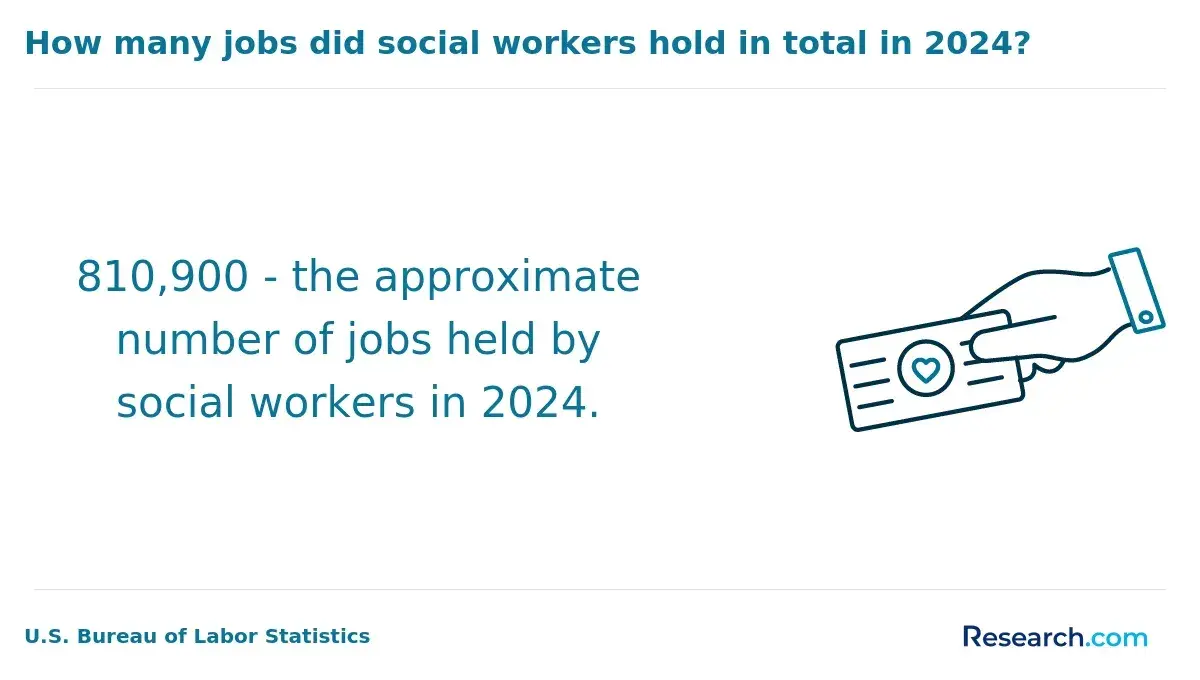
The job outlook for MSW professionals remains favorable because social workers are needed across healthcare, mental health, child welfare, schools, aging services, substance use treatment, and community-based support systems. The U.S. Bureau of Labor Statistics projects a 13% growth rate for social workers between 2024 and 2034, outpacing the average for all occupations.
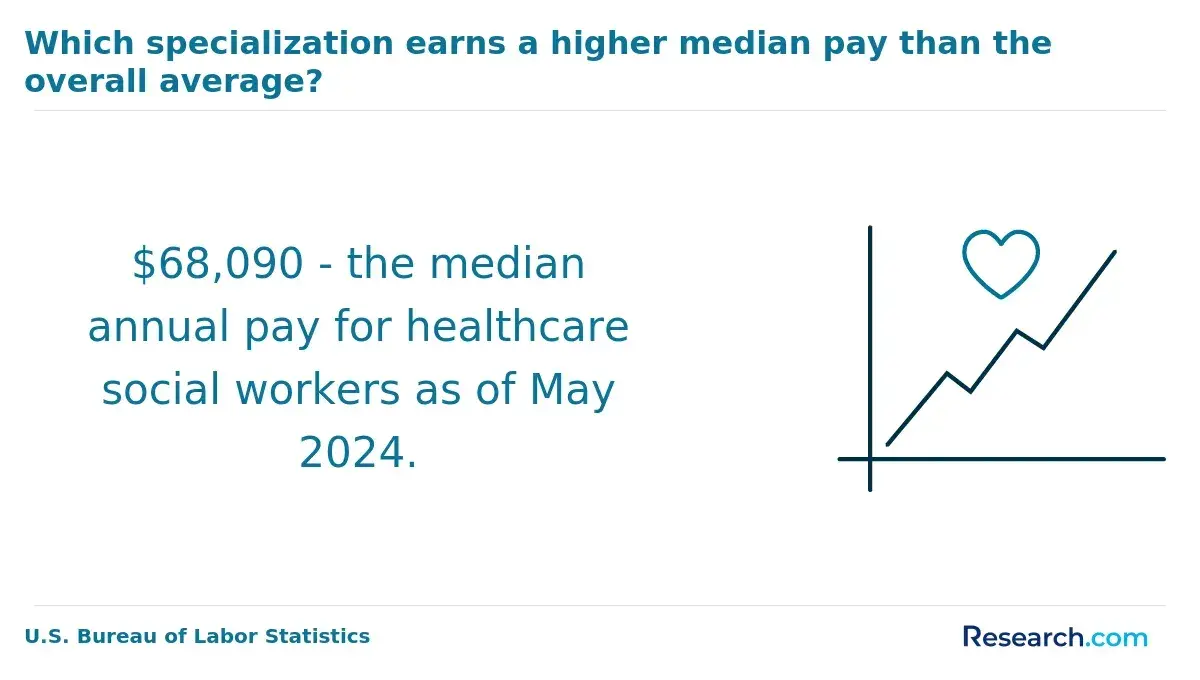
Median salaries hover around $59,000 annually, while clinical social workers often earn $70,000 or more, especially in metropolitan or specialized healthcare settings. Actual earnings depend on licensure, practice setting, location, years of experience, employer type, and specialization. Students should treat salary figures as planning benchmarks rather than guarantees.
Education format can also influence access and retention for working professionals. According to the CSWE Online vs. In-Person Workforce Data Brief, 17% of MSW graduates who completed most of their coursework online showed higher retention rates in their careers. Online MSW programs may help students remain employed while studying, which can be important for career continuity and financial stability.
Several factors affect job prospects and salary potential:
- Specialization area: Clinical, school, and healthcare social work can offer stronger compensation in many markets.
- Geographic location: Urban areas generally provide better compensation than rural regions, though cost of living and competition also matter.
- Licensure and certifications: Credentials such as clinical licensure can expand job eligibility and improve earning potential.
- Experience level: Entry-level roles often start lower, while salaries can increase with supervised experience, advanced licensure, and leadership responsibilities.
- Employer setting: Hospitals, government agencies, schools, nonprofits, and private practice settings may have very different pay structures.
Prospective students should choose accredited MSW programs that connect clearly to the roles they want. A program with relevant field placements, licensure preparation, and career support may offer stronger long-term value than a cheaper program with limited practical alignment.
How should you compare online MSW programs to ensure quality and reputation?
To compare online MSW programs effectively, start with CSWE accreditation, then evaluate curriculum fit, field placement support, licensure alignment, faculty expertise, student services, outcomes, and total cost. Reputation matters, but it should be measured through evidence rather than name recognition alone.
CSWE accreditation is the non-negotiable first screen because it signals that the program meets professional social work education standards trusted by employers and licensing boards. After that, review whether the curriculum supports your intended path: clinical practice, school social work, healthcare, policy, administration, community practice, or another specialization.
Look for courses that build practical competence, not just broad theory. Strong MSW curricula usually include evidence-based interventions, ethics, diversity and social justice content, research methods, policy analysis, assessment, and supervised practice preparation. According to the CSWE 2023-2024 Annual Survey of Social Work Programs, 625 international students pursuing MSW degrees as first-generation master's recipients highlight the growing global impact of these programs.
Faculty quality also matters. Instructors with active research, clinical practice, policy experience, or community partnerships can bring current professional insight into the online classroom. Review faculty bios for practice areas that match your interests, such as trauma, child welfare, healthcare, aging, mental health, or social policy.
Field placement support is one of the biggest quality indicators for online programs. Ask whether the school has a dedicated placement team, how sites are approved, what supervision standards apply, and whether the program has experience placing students in your state or region. A respected curriculum is less useful if field education is disorganized.
Reputable programs should be willing to share outcome information when available, including graduation rates, licensure exam pass rates, employment data, and student support resources. For online learners, advising, technical support, library access, writing help, mental health resources, and career counseling can make a significant difference in completion and job readiness.
Finally, compare cost against value. The lowest tuition is not always the best choice, and the highest tuition does not guarantee better outcomes. A quality online MSW program should be accredited, transparent, supportive, licensure-aware, and realistic for your schedule, budget, and career direction.
Other Things You Should Know About Social Work
Many online MSW programs allow transfer credits from regionally accredited institutions, especially if the previous coursework aligns with social work or related fields. However, policies vary widely, so it's important to review each program's transfer credit guidelines carefully before applying. Typically, programs limit the number of transferable credits and require official transcripts for evaluation.
Before applying to an online MSW program in 2027, check if the institution provides diverse field placements in areas like healthcare, schools, and community organizations. Assess if they offer placements in locations convenient for you, and if there is support in arranging these opportunities.
Yes, online MSW programs are designed to accommodate working professionals by offering flexible schedules, including asynchronous classes and part-time options. This flexibility allows students to balance employment, personal responsibilities, and their education. However, field placement hours may require on-site commitments during standard work hours, so planning ahead is necessary.
Most online MSW programs incorporate discussion boards, group projects, and virtual meetings to foster interaction among students and faculty. Some also host live webinars and networking events to connect peers and professionals in the field. Building a strong network in an online environment requires active participation and engagement but can be equally impactful as on-campus experiences.
References
- Types of Social Workers: Exploring the Many Fields in Which They Serve https://www.umassglobal.edu/blog-news/types-of-social-workers
- New Innovation in MSW Practicum Experience: Virtual Practicum Simulation https://online.une.edu/blog/new-innovation-in-msw-field-experience-virtual-field-simulation-now-available/
- Social Work Master's Degree Prerequisites https://www.psychology.org/social-work/masters/
- Accreditation | CASWE-ACFTS https://caswe-acfts.ca/our-activities/accreditation/
- MSW Curriculum Breakdown - MSW Degrees in Austin https://www.mswdegreeaustin.com/msw-curriculum-breakdown/
- Social Work Masters Prerequisites: Discover 7 Critical Pieces - Prereqcourses https://www.prereqcourses.com/social-work-masters-prerequisites/
- How Long Does it Take to Become a Social Worker? https://socialworklicensemap.com/become-a-social-worker/how-long-does-it-take/
- MSW Program Length: 1-4 Year Timeline Guide for 2025 https://www.socialworkdegrees.org/faq/how-long-does-it-take-to-complete-a-msw-program
- Say You’re a Social Worker https://www.socialworker.com/feature-articles/career-jobs/say-you-are-a-social-worker/
- MSW Specializations: Clinical, Macro, Advanced Generalist Programs https://www.masterofsocialwork.com/resources/msw-specializations