2027 How to Research State Social Work Licensure Requirements Before Enrolling

Co-Founder and Chief Data Scientist
Before choosing a BSW, MSW, or doctoral social work program, you need to know one thing first: whether the degree will qualify you for the license you want in the state where you plan to practice. Social work licensure is not fully standardized across the United States. States use different license names, degree rules, exam requirements, supervised practice requirements, fees, and renewal standards.
That variation matters because the wrong program choice can create real delays. A degree that looks reputable may still fail to satisfy a state board’s requirements if it lacks CSWE accreditation, required field education, state-specific coursework, or appropriate clinical preparation. This is especially important for students planning to become clinical social workers, move across state lines, study online, or pursue out-of-state field placements.
This guide explains how social work license types differ, what education and exams are commonly required, why accreditation matters, how long the process can take, what costs to plan for, and how to verify that a program matches your state’s licensure prerequisites before you enroll.
Key Things You Should Know
- State social work licensure requirements vary widely, including educational credentials, supervised experience, and examination standards, making it essential to review the specific rules of the intended practice state for 2026.
- Most states require a master's degree in social work (MSW) from a Council on Social Work Education-accredited program alongside passing the ASWB licensing exam for clinical or generalist practice.
- Approximately 45 states updated licensure policies in 2024-2025, emphasizing continuing education and supervision hours, reflecting evolving professional standards and regulatory compliance.
What are the different social work license types across U.S. states?
Social work license types vary by state, but most jurisdictions use a tiered system based on education level, supervised experience, and scope of practice. The names differ, yet the underlying progression is usually similar: bachelor’s-level practice, master’s-level supervised practice, and advanced or clinical independent practice.
Common license titles include Licensed Social Worker (LSW), Licensed Graduate Social Worker (LGSW), Licensed Master Social Worker (LMSW), Licensed Bachelor Social Worker (LBSW), Licensed Clinical Social Worker (LCSW), Licensed Independent Clinical Social Worker (LICSW), and state-specific associate or provisional credentials. Texas, for example, offers LBSW and LMSW credentials, while California uses credentials such as LCSW and Associate Clinical Social Worker (ASW).
Entry-level licenses such as LSW, LBSW, or LMSW generally require a BSW or MSW and a licensing exam. These credentials often allow social work practice under supervision, but they usually do not permit independent clinical diagnosis, psychotherapy, or private practice.
Clinical licenses such as LCSW or LICSW usually require an MSW, supervised post-graduate clinical experience, and a clinical licensing exam. The supervised experience requirement commonly falls between 2,000 and 4,000-plus hours, depending on the state. These licenses are typically required for independent clinical practice, including diagnosis and therapy.
Some states also recognize specialized credentials or endorsements for areas such as school social work, advanced macro practice, or independent nonclinical practice. Because license titles are not uniform, students should focus less on the abbreviation and more on what the license legally allows them to do.
- Bachelor’s-level licenses: Usually tied to a BSW and often intended for generalist or supervised practice.
- Master’s-level licenses: Usually tied to an MSW and may permit broader nonclinical or supervised clinical work.
- Clinical or independent licenses: Usually require an MSW, supervised post-degree experience, and a clinical exam.
- Associate or provisional licenses: Often used while candidates complete supervised hours toward full licensure.
The ASWB Social Work Workforce Study Series Report 2 notes that 4,354 licenses (0.8% of 547,555 total) were issued in 2025 to social workers without a social work degree. This illustrates why applicants should not assume every state applies the same educational rules or exceptions.
Before enrolling, confirm the degree type, exam, supervised hours, renewal rules, and scope of practice for your intended state. Students considering advanced study may also compare options such as online PhD social work programs, especially if their goals include research, teaching, leadership, or advanced practice roles beyond initial licensure.
What education and degree requirements must you complete before applying for social work licensure?
The education required for social work licensure depends on the license level and the state board’s rules. In most cases, bachelor’s-level licensure requires a BSW from a Council on Social Work Education (CSWE)-accredited program, while master’s and clinical licenses require an MSW from a CSWE-accredited program.
For entry-level credentials such as Licensed Bachelor Social Worker (LBSW), states commonly expect completion of a BSW. This degree prepares graduates for generalist practice, case management, community services, and supervised roles. It usually does not qualify graduates for independent clinical practice.
For advanced credentials such as Licensed Master Social Worker (LMSW), states commonly require an MSW and passing the Association of Social Work Boards (ASWB) master’s exam. LMSW-level licensure may support advanced nonclinical roles and supervised clinical practice, depending on state law.
For clinical licensure such as Licensed Clinical Social Worker (LCSW), applicants generally need an MSW, supervised post-master’s clinical experience, and a passing score on the clinical level ASWB exam. States may also require specific coursework in areas such as ethics, diagnosis, clinical assessment, cultural competency, or mandated reporting.
Applicants with degrees in related fields should be especially cautious. A degree in psychology, counseling, sociology, human services, or public administration may support admission to an MSW program, but it may not satisfy social work licensure education requirements by itself. Some boards require additional coursework, while others may not accept non-social-work degrees for certain licenses.
Internationally educated social workers should check whether a credential evaluation is required and whether the state board accepts the evaluated degree as equivalent to a CSWE-accredited social work degree. Policies for credit transfer, practicum evaluation, and exam eligibility vary by jurisdiction.
New York issued 4,018 LMSW licenses in 2025, up from 3,530 in 2024, showing continued demand for master’s-level social work credentials. Because education is a major investment, many prospective students compare tuition, aid, and outcomes while asking how much a master’s in social work costs before committing to a program.
How do state social work licensing exam requirements and passing scores vary by jurisdiction?
Most states use Association of Social Work Boards (ASWB) exams, but the required exam level, eligibility timing, passing score, and additional state exams can vary. Candidates should verify exam rules with both the state licensing board and ASWB before scheduling a test.
The exam level usually corresponds to the license sought. Bachelor’s-level licenses commonly use the ASWB bachelor’s exam. Master’s-level licenses such as LMSW commonly use the master’s exam. Clinical licenses such as LCSW commonly require the clinical exam after the applicant completes required supervised experience.
Passing scores also differ by jurisdiction. Commonly cited passing score ranges are 70% to 75%, with California requiring a 75% passing score on the clinical exam and New York set at 70%. Because each state sets or applies its own rules, students should not rely only on general national guidance.
Eligibility rules can affect when you are allowed to sit for the exam. Some states allow candidates to test near graduation or shortly after earning the degree. Others require completion of supervised clinical hours before a clinical exam application is approved. In Kings County, NY, with its 5,033 LMSWs, candidates may have access to a large urban professional environment, but the licensing process still depends on state eligibility rules rather than job-market size alone.
Some states also require a jurisprudence or law-and-ethics exam covering local statutes, professional conduct rules, reporting obligations, or board regulations. Texas and Florida are examples of states where candidates may encounter additional state-specific testing requirements.
- Check the correct ASWB exam level: Bachelor’s, master’s, or clinical.
- Confirm when you are eligible: Before graduation, after graduation, or after supervised hours.
- Look for state-specific exams: Jurisprudence or law-and-ethics exams may be separate from ASWB testing.
- Verify score rules: Do not assume the same passing score applies across states.
- Plan retake time: Exam delays can affect employment start dates and clinical supervision timelines.
Students who want a faster academic route may compare options such as a one year MSW online, but acceleration should never come at the expense of licensure eligibility, field placement quality, or exam preparation.
What is the difference between CSWE-accredited and non-accredited social work degree programs?
The key difference is licensure acceptance. CSWE-accredited social work programs have been reviewed against national standards for curriculum, faculty qualifications, field education, assessment, and professional preparation. Non-accredited programs may offer social work-related coursework, but they may not meet the educational standard required by state licensing boards.
For most students who plan to become licensed social workers, CSWE accreditation is one of the most important program checks. A CSWE-accredited BSW or MSW is commonly required for exam eligibility and licensure. It also gives licensing boards a clearer basis for evaluating whether the applicant completed recognized social work education.
Graduating from a non-accredited program can create significant barriers. Depending on the state, the applicant may need extra coursework, additional supervised experience, a credential review, or a different degree. In some cases, the degree may not qualify the person for the intended license at all.
| Program type | Typical licensure impact | Main risk for students |
| CSWE-accredited BSW or MSW | Generally aligned with state licensure education requirements | Still must confirm state-specific coursework, exams, and supervision rules |
| Non-accredited social work program | May not meet licensing board standards | Possible delays, extra requirements, or ineligibility for licensure |
| Related human services degree | May support admission to graduate study but may not satisfy licensure rules | May require an accredited MSW for licensed social work practice |
According to the ASWB Social Work Workforce Study Series Report 2, clinical social workers make up 62.29% (338,348) of the licensed social work workforce in the U.S., with most holding degrees from accredited schools. This reinforces the practical value of choosing a program that licensing boards are likely to recognize.
When evaluating a program, ask three direct questions:
- Is the program CSWE-accredited and recognized by the licensing board in the state where I plan to practice?
- If the program is not accredited, what additional barriers could I face before licensure?
- Will this degree qualify me for the license level I want, including advanced clinical licensure if that is my goal?
Choosing a CSWE-accredited program usually creates a more predictable path to licensing exams, supervised practice, and employment. Students also weighing long-term career value may ask, do social workers make good money, but earnings should be considered alongside licensure eligibility, debt, location, and specialization.
How long does it typically take to earn a social work degree and obtain licensure?
The full path to a social work degree and licensure often takes 6 to 8 years for candidates pursuing clinical licensure. The timeline depends on the degree path, whether the student studies full time or part time, the license level, and the state’s supervised experience requirements.
A traditional BSW usually takes 4 years of full-time study. An MSW usually adds about 2 years after the bachelor’s degree. Students with a BSW may qualify for advanced standing MSW options at some schools, but the exact length depends on program design and admission criteria.
Clinical licensure takes longer because candidates must complete supervised post-master’s practice after earning the MSW. For example, Connecticut mandates 3,000 hours of supervised practice, including 100 supervision hours, usually spanning about 2 years. The state currently suspends the master’s exam until January 1, 2026, easing exam requirements temporarily.
State requirements vary widely. Some states require 2,000 to 3,000 supervised hours, while others add coursework, documentation, background checks, jurisprudence exams, or additional board approvals. Part-time employment, supervisor availability, and agency policies can also affect how quickly hours are completed.
| Stage | Typical time commitment | Licensure relevance |
| BSW | Usually 4 years | Can support bachelor’s-level licensure or generalist practice |
| MSW | Around 2 years full-time | Commonly required for LMSW, LCSW, and similar advanced licenses |
| Post-master’s supervised experience | Often 2 or more years | Commonly required for independent clinical licensure |
| Exams and board processing | Varies by state and application timing | Can affect when the license is issued and when independent practice begins |
- BSW programs usually take 4 years; MSW programs take around 2 years full-time.
- Post-master’s supervised experience often spans 2 or more years and includes thousands of hours of practice.
- Licensing requirements differ by state, making it critical to verify each state’s exact mandates.
The best way to plan your timeline is to work backward from your intended license. Identify the required degree, exam, supervision hours, and application steps before choosing a program or accepting a supervised position.
What are the admission requirements for accredited Bachelor's and Master's social work programs?
Admission requirements for accredited social work programs depend on the degree level. Bachelor’s programs usually evaluate high school preparation and college readiness, while MSW programs focus on undergraduate performance, professional fit, writing ability, references, and readiness for field education.
For BSW programs, applicants usually need a high school diploma or equivalent. Schools may look for coursework or academic preparation in psychology, sociology, human services, statistics, writing, or related subjects. A minimum GPA around 2.5 to 3.0 on a 4.0 scale is common, though requirements vary by institution.
BSW applicants may also need a personal statement, letters of recommendation, an interview, or evidence of volunteer or service experience. These materials help programs evaluate whether the applicant understands the profession’s ethical responsibilities and client-centered nature.
MSW programs generally require a completed bachelor’s degree. The degree does not always have to be in social work, but applicants should be prepared to show relevant academic preparation, social service experience, or a clear commitment to the field. Many MSW programs expect undergraduate transcripts with a minimum GPA of about 3.0.
Fieldwork, employment, or volunteer experience in human services can strengthen an MSW application. GRE scores might be requested but are becoming less common. Personal statements and three recommendation letters remain standard at many schools because they help assess writing ability, judgment, resilience, interpersonal skills, and professional goals.
| Requirement | BSW programs | MSW programs |
| Prior education | High school diploma or equivalent | Completed bachelor’s degree |
| Common GPA expectation | Minimum GPA around 2.5 to 3.0 on a 4.0 scale | Minimum GPA of about 3.0 |
| Supporting materials | May include recommendation letters, personal statement, or interview | Often includes personal statement and three recommendation letters |
| Experience | Service or volunteer experience may help | Fieldwork, volunteer work, or social service experience is frequently expected |
Accreditation should be part of the admissions decision, not an afterthought. Selecting a CSWE-accredited program helps ensure the degree aligns with the educational standards commonly required for licensure.
Applicants should also compare admissions requirements with state professional regulations. For instance, Missouri’s LCSW and LAMSW applicants must complete 3,000 hours of supervised practice and suicide prevention training after graduation. Knowing these requirements early can help students choose the right field placements, electives, and post-graduate supervision opportunities.
Do online social work degree programs meet the same state licensure eligibility requirements as campus-based programs?
Online social work degree programs can meet the same state licensure education requirements as campus-based programs when they are CSWE-accredited and satisfy the state board’s rules. The delivery format alone is usually less important than accreditation, curriculum, field education, and state approval.
Nearly all states require graduation from a CSWE-accredited program for licensure eligibility, whether the coursework was completed online, on campus, or through a hybrid format. However, students should not assume that every online program is approved for every state. Some programs restrict enrollment or field placements in certain jurisdictions because of state authorization or licensure alignment issues.
The most important issue for online students is field education. Social work degrees require supervised practicum or internship experiences, and those placements must meet program and state expectations. An online program should be able to explain how it arranges or approves local field placements, who supervises them, and whether those placements support the student’s intended license level.
Some states may require specific in-person training, coursework, documentation, residency-related procedures, or state-specific content that an online program may not automatically provide. Licensing procedures and fees also apply regardless of program format. For example, New York requires applicants to pay a $294 fee for first-time Licensed Clinical Social Worker (LCSW) licensure, covering application, transcript evaluation, and verification.
Before enrolling in an online program, ask the school these questions:
- Is the program CSWE-accredited?
- Does the program accept students from my state?
- Has the program confirmed that its curriculum meets my state’s licensure education requirements?
- How are local field placements identified, approved, and supervised?
- Will the program provide documentation required by my state board?
- Are there any in-person requirements, campus visits, or state-specific courses?
Online students must also meet the same post-graduate supervision, exam, continuing education, and renewal requirements as campus-based graduates. A well-designed online program can be licensure-friendly, but only if its accreditation, field placement system, and state alignment are verified in advance.
What are the average costs and financial aid options for social work degree programs?
Social work degree costs vary by institution type, degree level, residency status, format, and program length. Public in-state universities generally charge $7,000 to $15,000 per year for bachelor’s degrees, while private colleges can exceed $30,000 annually. MSW programs range from $15,000 to $40,000 per year.
Tuition is only part of the cost. Students should also budget for fees, books, technology, transportation, background checks, immunizations, liability insurance, field placement travel, exam fees, application fees, and licensure-related expenses. Clinical licensure candidates may also face costs tied to supervision or documentation after graduation.
For example, Kansas LSCSW applicants must complete 3,000 hours of postgraduate supervised clinical experience, which might include supervision or placement fees. These post-degree costs can affect the total price of becoming independently licensed, even after tuition is paid.
Common financial aid options include:
- Federal and state grants like the Pell Grant and state-specific scholarships
- Institutional scholarships based on merit or need
- Work-study programs that provide relevant experience while earning income
- Federal student loans with low interest and income-driven repayment options
- Tuition reimbursement programs offered by employers for working professionals
Students should complete the FAFSA early to maximize federal aid opportunities and meet school priority deadlines. They should also ask each program about social work-specific scholarships, stipends for students entering high-need practice areas, graduate assistantships, and field placement funding.
Online programs may reduce relocation and commuting costs, but they are not automatically cheaper. Compare total program cost, not just per-credit tuition. A lower-cost program that does not meet licensure requirements can become more expensive if it forces you to take extra coursework or delay employment.
When comparing programs, estimate the full licensure pathway: degree cost, field placement logistics, exam and application fees, and any post-graduate supervision costs required in your state.
What career paths and salary expectations exist for licensed social workers by specialization?
Licensed social workers work in clinical care, healthcare, schools, child and family services, substance use treatment, aging services, policy, administration, community organizations, and private practice. Salary expectations vary by specialization, state, employer, licensure level, experience, and whether the role requires independent clinical authority.
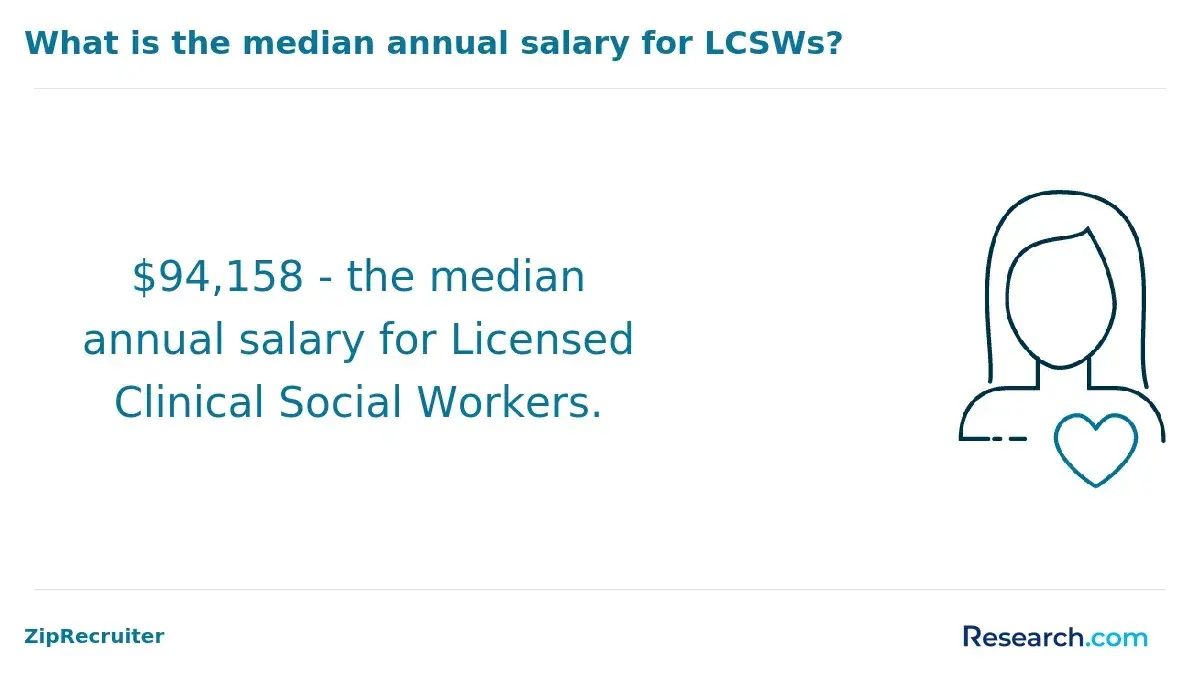
Clinical social workers providing psychotherapy or mental health treatment typically earn between $60,000 and $85,000 annually. Healthcare social workers, including those in hospital or hospice settings, usually make between $55,000 and $75,000. School social workers focused on student welfare often earn from $50,000 to $70,000.
Advanced licensure can expand both responsibility and career options. In Ohio, for example, the licensure system includes four tiers, requiring LISW candidates to complete 3,000 hours (about two years) of supervised post-MSW and post-LSW experience. This progression aligns with higher responsibility and specialization, granting access to clinical private practice, supervision, and administrative roles.
Specialization also affects work setting and earning potential. Substance abuse social workers earn between $53,000 and $70,000, while roles in policy or program management can exceed $80,000 depending on the agency’s size and funding.
| Specialization | Common settings | Salary expectation stated |
| Clinical social work | Mental health clinics, private practice, community agencies | Between $60,000 and $85,000 annually |
| Healthcare social work | Hospitals, hospice, care coordination, rehabilitation settings | Between $55,000 and $75,000 |
| School social work | K-12 schools, student support services, districts | From $50,000 to $70,000 |
| Substance abuse social work | Treatment centers, behavioral health agencies, recovery programs | Between $53,000 and $70,000 |
| Policy or program management | Government, nonprofits, advocacy organizations, agencies | Can exceed $80,000 depending on the agency’s size and funding |
Students should align their license pathway with their intended role. If the goal is independent therapy or private practice, clinical licensure is usually essential. If the goal is case management, school support, policy, or administration, a different license level may be sufficient depending on state law and employer requirements.
Interstate licensure compacts may support career mobility, but they do not eliminate the need to confirm state-specific rules. Social workers planning to relocate should verify degree, exam, supervision, and endorsement requirements before accepting a job or moving to another state.
How do you verify whether a social work program meets your state's specific licensure prerequisites?
To verify whether a social work program meets your state’s licensure prerequisites, start with the state licensing board—not the school’s marketing materials. The board is the authority that determines whether your education, exam, supervision, and documentation qualify you for a license.
First, identify the exact license you want. Requirements for bachelor’s-level, master’s-level, associate clinical, and independent clinical licenses can differ substantially. Then review the state board’s rules for approved degree type, CSWE accreditation, coursework, field education, supervised experience, exams, fees, background checks, and application timing.
Next, contact the program’s academic advisor, field education office, or licensure officer. Ask them to confirm CSWE accreditation and explain whether the curriculum is designed to meet the requirements of your state. If the school enrolls out-of-state or online students, ask whether it has a state-by-state licensure disclosure.
Compare the program curriculum to state-required coursework. Missing courses in ethics, cultural competency, clinical assessment, diagnosis, advanced clinical practice, or other required areas can delay licensure. Do not rely on course titles alone; review descriptions, credit hours, field requirements, and documentation practices.
Also verify supervised experience rules. For instance, DC LISW and LICSW candidates need 3,000 hours of supervised experience. Many MSW students also qualify to take licensure exams during their final semester, which can speed up entry into practice, but this depends on the jurisdiction and license level.
Use this checklist before enrolling:
- Find the state licensing board page for your intended license.
- Confirm whether a CSWE-accredited BSW or MSW is required.
- Check required coursework, field education, and documentation rules.
- Ask the program whether it meets your state’s licensure education requirements.
- Verify whether field placements can be completed in your state and approved by the program.
- Confirm exam eligibility timing and whether you can test before, during, or after graduation.
- Ask whether additional jurisprudence exams, training, or certifications are required.
- Save written confirmations from the board or program for your records.
When in doubt, contact the licensure board and ask direct questions:
- Is the program recognized for licensure qualification in this state?
- Do supervised clinical hours in the program meet state requirements?
- Can exam eligibility be obtained before or right after program completion?
- Are additional exams or certifications required?
Do not assume an out-of-state or online program automatically satisfies your state’s rules. Direct verification before enrollment is the safest way to avoid extra coursework, delayed exam eligibility, denied applications, or a longer path to licensed practice.
Other Things You Should Know About Social Work
Most states require applicants for social work licensure to complete a criminal background check as part of the application process. This usually involves fingerprinting and a review of any prior criminal offenses to ensure the applicant meets professional standards for ethical conduct. Background checks help protect the public and maintain trust in the social work profession.
Licensure portability varies widely. Some states have reciprocity agreements allowing licensed social workers to transfer their credentials without repeating exams, while others require a new application, additional coursework, or retaking the licensing exam. It is essential to check the specific rules of the state where you want to practice before assuming your license will transfer.
Research state-specific licensing boards online, review their education and exam requirements, and consult ASWB resources. Contact schools to ensure curricula align with state standards. Verify information through official state websites or directly with licensing authorities.
Yes, clinical social work licensure often has stricter requirements than non-clinical licenses. Beyond a general social work license, candidates generally need supervised clinical experience, usually between two to four years, and must pass a clinical-specific licensing exam. These standards ensure that clinical social workers have the skills needed to provide therapeutic services safely and effectively.
References
- Best Affordable Master's Degree In Social Work https://www.psychology.org/social-work/best-affordable-masters-programs/
- Licensed Clinical Social Worker - Florida Board of Clinical Social Work, Marriage & Family Therapy and Mental Health Counseling https://floridasmentalhealthprofessions.gov/licensed-clinical-social-worker/
- Social Work Careers https://socialworklicensemap.com/social-work-careers/
- Social Work Masters Prerequisites: Discover 7 Critical Pieces - Prereqcourses https://www.prereqcourses.com/social-work-masters-prerequisites/
- Social Work Licensure https://www.socialworktoday.com/archive/Winter26p20.shtml
- Accreditation and/or licensing requirements | SWTP https://socialworktestprep.com/blog/2024/october/25/accreditation-and-or-licensing-requirements/
- CSWE Accreditation Requirements and Standards https://lumivero.com/resources/blog/cswe-accreditation/
- Online Master’s in Social Work Programs https://onlinecounselingprograms.com/online-counseling-degrees/cswe-accredited-online-msw-programs/
- Accreditation | CASWE-ACFTS https://caswe-acfts.ca/our-activities/accreditation/