2027 Best Affordable CSWE-Accredited Online MSW Programs

Co-Founder and Chief Data Scientist
Choosing an online MSW is not just a tuition decision. The program must fit your schedule, support field placement where you live, and hold Council on Social Work Education accreditation if you want the broadest path toward social work licensure. For career changers, working adults, caregivers, and students trying to limit debt, the challenge is finding a program that is affordable without creating problems later with quality, practicum support, or licensing eligibility.
This guide explains how CSWE-accredited online MSW programs work, why accreditation matters, what costs to compare, how long programs take, and how these degrees connect to LCSW licensure and social work careers. It is designed to help you compare programs with the questions that matter most: total price, residency rules, field education support, pacing options, curriculum fit, and long-term return on investment.
Key Things You Should Know
- Accredited online MSW programs in 2026 maintain rigorous standards set by the CSWE, ensuring quality education equivalent to traditional on-campus degrees.
- Most affordable CSWE-accredited online MSW programs cost between $10,000 and $25,000 for tuition, offering flexible study schedules for working professionals.
- Graduates of these programs have a median starting salary around $50,000, with strong job growth projections of 12% in the social work field through 2030.
What Are CSWE-Accredited Online MSW Programs?
CSWE-accredited online MSW programs are Master of Social Work degrees delivered fully or primarily online that meet the educational standards set by the Council on Social Work Education. Accreditation matters because many state licensing boards use CSWE-accredited MSW education as a baseline requirement for social work licensure, including clinical pathways.
These programs are built for students who need graduate-level social work training but cannot relocate or attend a traditional campus schedule. Coursework is completed online, while field education is completed in supervised agencies, clinics, schools, hospitals, or community organizations. Most programs help students identify approved field sites near their location, although the level of placement support varies by school.
A CSWE-accredited online MSW typically includes study in:
- Human behavior and the social environment
- Social welfare policy and advocacy
- Ethics and professional practice standards
- Research methods and evidence-informed practice
- Clinical, community, or administrative social work practice
- Supervised field education tied to professional competencies
Students with a Bachelor of Social Work from a CSWE-accredited program may qualify for advanced standing, which can shorten the degree. Students with unrelated undergraduate majors usually enter a traditional MSW pathway and complete foundational social work coursework before moving into advanced practice.
Employment growth for social workers is projected at 7% from 2023 to 2033, faster than average, adding tens of thousands of jobs annually. For students who want to continue beyond the MSW, doctorate in social work online programs may support advanced clinical, leadership, research, or academic goals.
Why Choose Affordable Online MSW Programs?
Affordable online MSW programs can reduce one of the biggest risks of graduate education: borrowing more than your early-career salary can comfortably support. Social work can be meaningful and stable work, but students should still compare programs carefully because tuition, fees, field placement requirements, and residency rules can change the real cost of attendance.
For example, Georgia residents attending CSWE-accredited online social work degrees such as those at Valdosta State University can save around $15,000 in tuition compared to non-resident rates at comparable Southeastern schools. Savings of that size can affect monthly loan payments, career flexibility, and the ability to pursue lower-paid but mission-driven roles after graduation.
Affordability should not mean choosing the lowest listed tuition without checking quality. A strong online MSW should combine reasonable cost with CSWE accreditation, clear practicum expectations, responsive advising, and curriculum that aligns with your licensing or career goals.
Key reasons students choose affordable online MSW programs
- Lower debt exposure: Lower tuition can make it easier to manage repayment after graduation.
- Schedule flexibility: Online formats may work better for students balancing employment, caregiving, or military responsibilities.
- No relocation requirement: Students can often remain in their home community while completing coursework online and fieldwork locally.
- Licensure alignment: CSWE accreditation helps protect eligibility for many state social work licensing pathways.
- Better return on investment: A lower-cost accredited program may offer stronger value than a more expensive program with similar outcomes.
When comparing programs, look beyond tuition. Ask about technology fees, books, background checks, liability insurance, travel for fieldwork, and whether the school helps secure practicum placements. Some programs also offer part-time enrollment, specialized tracks, or residency-based tuition benefits. To plan realistically, review resources explaining how much does a masters in social work cost before applying.
What Are the Most Affordable CSWE-Accredited Online MSW Programs?
The most affordable CSWE-accredited online MSW programs are usually found at public universities with competitive per-credit tuition, flat-rate online pricing, or strong in-state tuition advantages. The best value is not always the lowest per-credit rate; students should compare the total number of credits, residency policies, fees, practicum support, and completion timeline.
Boise State University is recognized as one of the most affordable CSWE-accredited online MSW programs. It charges a flat tuition rate of $565 per credit for out-of-state students, offering a pricing advantage that is 20-40% lower than many in-state rates at costly universities in states like New York and California. For students who do not qualify for low in-state tuition elsewhere, a flat-rate model can make budgeting simpler and more predictable.
How to compare affordable online MSW programs
- Total program cost: Multiply tuition by the required credits and add mandatory fees, books, and field-related costs.
- Residency rules: Some public universities are affordable only for state residents, while others offer competitive online rates to all students.
- Program length: Accelerated or advanced standing tracks may reduce total time in school, but they can be intensive.
- Field placement support: A low-cost program may not be a good value if students struggle to secure approved practicum sites.
- Licensure fit: Confirm that the curriculum and field education structure align with the state where you plan to practice.
- Financial aid options: Scholarships, employer reimbursement, military benefits, and assistantships can change the final out-of-pocket cost.
Students trying to reduce both time and cost may also compare accelerated masters in social work online programs. Accelerated options can be efficient, especially for eligible advanced standing students, but they require careful planning because field hours and graduate coursework can be demanding.
What Admission Requirements Apply to Online MSW Programs?
Admission requirements for CSWE-accredited online MSW programs usually include a bachelor’s degree from an accredited institution, official transcripts, a personal statement, a resume, and letters of recommendation. Many schools expect a minimum GPA between 2.5 and 3.0, although policies vary. Programs may review applicants holistically, especially when professional experience, service work, or strong recommendations help explain academic readiness.
Most online MSW applicants should be prepared to submit:
- Official transcripts from all colleges attended
- A resume showing employment, volunteer work, internships, or human services experience
- A statement of purpose explaining career goals and interest in social work
- Two or three letters of recommendation from academic or professional references
- Additional essays on ethics, diversity, social justice, or community engagement, if required
The GRE is optional at many schools, but some competitive programs may still request scores or use them for applicants who need to strengthen their academic profile. Applicants without a Bachelor of Social Work generally enter the traditional MSW track. Applicants with a CSWE-accredited BSW may be considered for advanced standing, which can reduce the number of required courses.
International applicants may need credential evaluations, proof of English proficiency, and additional documentation. Some schools also use virtual interviews to assess communication skills, readiness for field education, and understanding of the profession.
Cost can be part of the admissions decision as well. Western New Mexico University’s online MSW charges $286 per credit, keeping total tuition under $17,160-well below the national average of $55,000, making it a more affordable option. Students comparing social work pathways may also find it useful to review discussions of is bsw worth it before deciding whether to pursue a BSW, MSW, or both over time.
How Long Do Online MSW Programs Take to Complete?
Online MSW programs usually take 2 to 3 years to complete, depending on whether the student enrolls full time, part time, or in an advanced standing pathway. Full-time traditional MSW students often finish in about 24 months. Part-time students may take up to 4 or 5 years, which can be more realistic for those working full time or managing family responsibilities.
Advanced standing programs are shorter because they are designed for students who already completed a CSWE-accredited Bachelor of Social Work. These pathways can shorten completion to 12-18 months by recognizing prior social work education and moving students into advanced coursework sooner.
Factors that affect completion time
- Enrollment pace: Full-time study is faster but more demanding; part-time study spreads out tuition and workload.
- Advanced standing eligibility: BSW graduates may complete the degree more quickly than students from unrelated majors.
- Field placement schedule: Practicum hours must fit agency availability, supervision requirements, and the student’s weekly schedule.
- Program structure: Cohort programs may have fixed course sequences, while flexible programs may allow students to adjust pacing.
- Work and caregiving demands: Students should plan for both coursework and field education, not just online class time.
Program requirements often include 900 to 1,200 practicum hours, and field placement timing can affect the overall graduation date. Before enrolling, ask whether evening, weekend, or employment-based placements are available and whether the school has placement partners in your area.
The University of West Florida, recognized as a top-ranked affordable MSW provider with tuition under $30,000, reports a 92% pass rate on the ASWB clinical exam within one year-15% above the national average. For students focused on return on investment, program length, tuition, exam preparation, and licensure support should be evaluated together.
What Is the Typical Cost of Affordable Online MSW Degrees?
The cost of affordable online MSW degrees varies widely, often ranging from $14,000 to $40,000 for the entire program. Public universities are often the lowest-cost options, especially for students who qualify for in-state tuition or state-supported online pricing.
California State University-Fresno offers particularly budget-friendly options with in-state costs averaging $14,000 to $25,000-50-60% below the national average. This affordability is largely supported by state funding focused on social work education, benefiting California residents (californiasocialworkedu.org, 2025 Cost Analysis).
Students should compare total cost rather than advertised tuition alone. A program with a low per-credit rate may still become expensive if it requires more credits, charges high fees, or requires travel for residencies or fieldwork. Conversely, a program with slightly higher tuition may be a better value if it offers strong placement support, faster completion, or meaningful scholarship aid.
Common cost categories to check
- Tuition: Review per-credit pricing and total required credits.
- Residency status: In-state eligibility can save thousands each year at some public universities.
- Technology and online learning fees: These may be charged per course, per term, or per credit.
- Books and course materials: Budget for required texts, software, and assessment tools.
- Field education expenses: Costs can include background checks, immunizations, transportation, parking, and professional attire.
- Travel requirements: Some online programs still require campus visits, intensives, or local travel for practicum work.
- Financial aid: Scholarships, grants, employer tuition support, and federal aid can reduce out-of-pocket costs.
Before committing, confirm that the program holds CSWE accreditation and ask for a full cost breakdown in writing. Students planning to pursue licensure should also check whether the program meets educational expectations in the state where they intend to practice.
What Curriculum Covers in CSWE-Accredited MSW Programs?
CSWE-accredited MSW programs combine classroom learning with supervised field education so students can build both conceptual knowledge and practice skills. The curriculum is designed to prepare graduates for professional social work roles in clinical, community, policy, healthcare, school, and administrative settings.
Most programs begin with generalist content and then move into specialized or advanced practice coursework. Core topics commonly include human behavior in the social environment, social welfare policy, ethics, research methods, social justice, assessment, intervention, and evaluation. Students also complete field education so they can apply classroom learning in real service settings.
Common curriculum areas
- Generalist practice: Work with individuals, families, groups, organizations, and communities.
- Clinical practice: Assessment, diagnosis, treatment planning, evidence-based intervention, and therapeutic skills.
- Policy and advocacy: Social welfare systems, public policy analysis, and strategies for advancing equity.
- Research and evaluation: Using data to assess programs, interventions, and client outcomes.
- Ethics and professional identity: Confidentiality, boundaries, mandated reporting, cultural humility, and ethical decision-making.
- Field education: Supervised practice in approved agencies or organizations.
Specializations vary by school. Students may find electives or tracks in trauma-informed care, gerontology, child welfare, substance use, healthcare social work, school social work, nonprofit leadership, or international social work. The right specialization depends on the population you want to serve and the license, credential, or job setting you plan to pursue.
For example, Louisiana State University offers flexible pacing combined with a clinical focus, producing graduates with a median salary of $58,000 one year post-graduation-12% higher than the national MSW median, according to the 2026 MSW Outcomes Report from humanservicesedu.org. Students interested in clinical practice should prioritize programs with strong clinical coursework, appropriate field placements, and clear guidance on licensure requirements.
How Do Online MSW Programs Prepare for LCSW Licensure?
Online MSW programs prepare students for LCSW licensure by providing the accredited graduate education, clinical coursework, and supervised field experience that many state boards require. However, earning an MSW does not automatically make someone an LCSW. Graduates typically must complete additional post-degree supervised clinical experience, meet state-specific requirements, and pass the required licensing exam.
CSWE-accredited online MSW programs commonly include between 900 and 1,200 supervised practicum hours. These placements help students develop professional judgment, client engagement skills, documentation habits, ethical decision-making, and intervention techniques under supervision. The strongest programs explain early how field education connects to licensure goals.
Licensure preparation features to look for
- Clinical coursework: Assessment, diagnosis, treatment planning, crisis intervention, and evidence-based practice.
- Approved field placements: Practicum sites that match the student’s goals and meet program standards.
- State-specific advising: Guidance on educational requirements for the state where the student intends to practice.
- ASWB exam preparation: Resources for understanding the Association of Social Work Boards clinical exam.
- Ethics and legal training: Coverage of confidentiality, informed consent, mandated reporting, boundaries, and scope of practice.
- Post-degree planning: Help understanding supervised experience requirements after graduation.
Students should contact the licensing board in the state where they plan to work before enrolling, especially if they live in one state and attend an online program based in another. Requirements can differ, and licensing boards—not universities—make final eligibility decisions.
Veterans may benefit from programs like Campbellsville University’s affordable MSW, which offers discounted tuition averaging $325 per credit, reducing total costs by 18% ($19,500 for 60 credits), making licensure education more accessible without excessive debt. For any student pursuing clinical licensure, the best program is one that combines affordability with strong field support and transparent licensing guidance.
What Careers and Salaries Follow an MSW Degree?
An MSW can lead to clinical, administrative, policy, school, healthcare, and community-based social work roles. The degree is often required for advanced social work practice and can support eligibility for clinical licensure, depending on state rules and post-degree experience. Career outcomes vary by specialization, location, license level, employer type, and years of experience.
Many graduates become licensed clinical social workers, providing psychotherapy, diagnosis, treatment planning, and mental health services after meeting state requirements. In clinical settings such as hospitals, private practices, schools, and outpatient clinics, 2025 median salaries approach $62,000. Other MSW graduates work in case management, program leadership, policy advocacy, nonprofit management, healthcare coordination, child welfare, substance abuse services, or aging services.
Common MSW career paths
- Clinical social worker: Provides therapy, assessment, diagnosis, and treatment services after meeting licensure requirements.
- School social worker: Supports students’ social, emotional, behavioral, and family-related needs.
- Healthcare social worker: Helps patients and families navigate care plans, discharge needs, benefits, and community resources.
- Substance abuse or behavioral health social worker: Supports clients dealing with addiction, recovery, and co-occurring mental health conditions.
- Child welfare social worker: Works with children, parents, foster families, courts, and agencies to promote safety and stability.
- Policy advocate: Analyzes laws, advances social justice initiatives, and works with agencies or advocacy organizations.
- Nonprofit director or program manager: Oversees services, staff, grants, budgets, and community programs.
A 2025 MSW ROI study by psychology.org reveals online MSW graduates gain a 25-year lifetime earnings premium of $1.2 million compared to those with only bachelor's degrees, reflecting both higher median wages and greater advancement opportunities. Students should still evaluate ROI personally by comparing tuition, expected debt, local salary ranges, and the type of work they want to do.
To improve career outcomes, choose electives and field placements that align with your target role. Students interested in therapy should prioritize clinical placements and licensure preparation. Students interested in leadership should look for coursework in administration, policy, grant writing, program evaluation, or community practice.
What Is the Job Outlook for MSW Graduates?
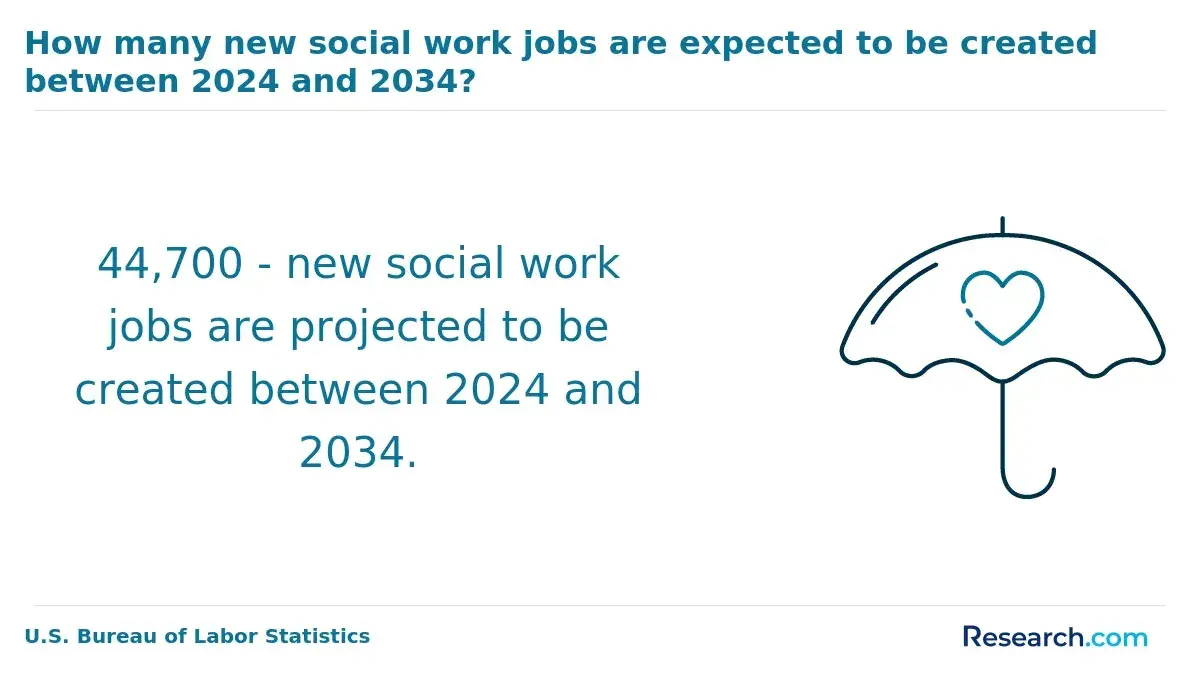
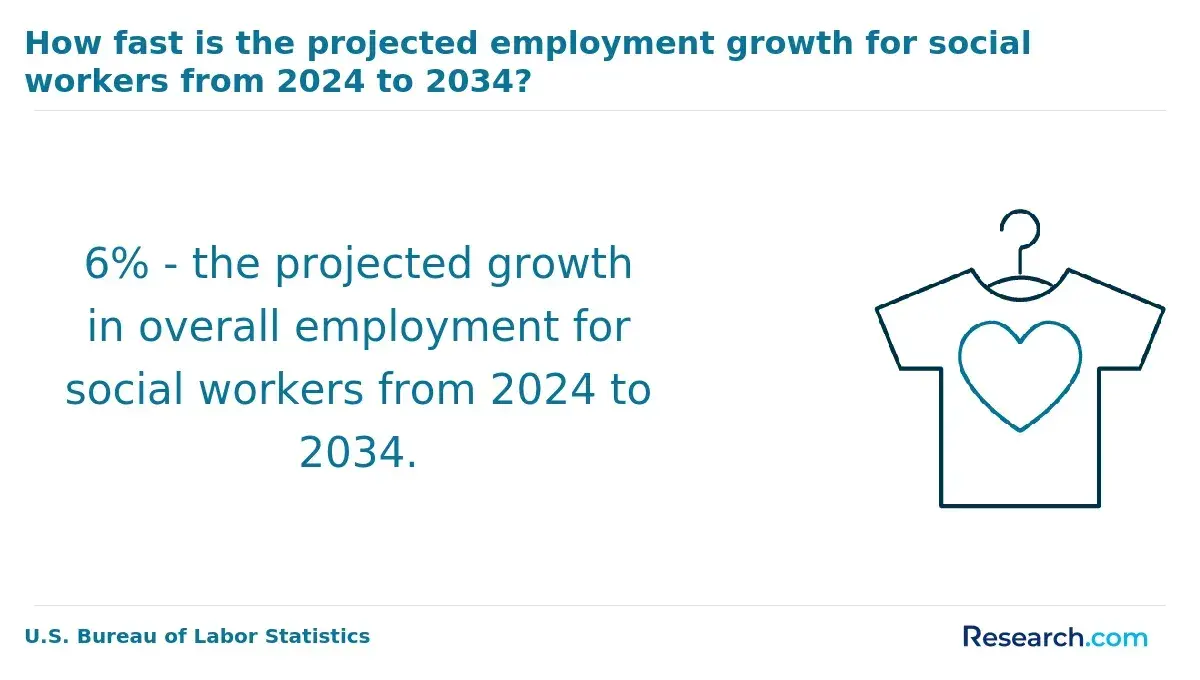
The job outlook for MSW graduates is strong, especially in clinical, healthcare, behavioral health, child welfare, school, and community service settings. Employment growth for social workers is expected to rise 12% from 2024 to 2034, outpacing many other fields. Demand is supported by expanding healthcare access, greater mental health awareness, aging populations, substance use treatment needs, and ongoing demand for family and community support services.
Clinical social workers with licensure often have the strongest prospects because they can provide therapy and counseling independently where state law allows. However, opportunities also exist for MSW graduates in policy, administration, case management, nonprofit leadership, and public agencies.
Where demand may be strongest
- Healthcare systems: Hospitals, clinics, hospice programs, and integrated care teams need social workers to coordinate services and support patients.
- Mental health and substance use services: Demand remains high for professionals trained in counseling, crisis response, and recovery support.
- Schools: Students and families often need support with behavioral health, attendance, trauma, disability services, and family instability.
- Child welfare and family services: Agencies need trained professionals for assessment, case planning, permanency work, and family support.
- Rural and underserved areas: These communities may have fewer providers and more difficulty recruiting licensed professionals.
Location and specialization matter. Urban areas may offer more job openings but also more competition and higher living costs. Rural areas may offer incentives to attract qualified professionals. Students can improve employability by selecting field placements in high-demand areas such as geriatric care, substance abuse, trauma-informed therapy, healthcare social work, or integrated behavioral health.
Financial access to MSW education is also improving. According to gradschools.com's 2026 MSW Trends Report, 65% of CSWE-accredited online programs will offer flat-rate out-of-state tuition under $600 per credit by 2026, easing relocation costs for students pursuing new career paths.
Before enrolling, research the licensure rules in the state where you plan to practice. Early planning can help you choose the right courses, field placements, supervision pathway, and exam preparation strategy for long-term career mobility.
Other Things You Should Know About Social Work
Admission requirements for 2027 CSWE-accredited online MSW programs typically include a bachelor's degree from an accredited institution, a minimum GPA (often 3.0), letters of recommendation, a personal statement, and relevant work or volunteer experience in social services.
Field experience is a crucial component of MSW programs that provides practical, hands-on training under professional supervision. It bridges classroom learning with real-world practice and is typically required for CSWE accreditation and licensure eligibility. This experience helps students develop essential skills and professional judgment.
The top affordable CSWE-accredited online MSW programs in 2027 include Boston University's School of Social Work, University of Central Florida's MSW Program, and University of Missouri's MSW Program. These programs offer cost-effective solutions without compromising on quality, preparing graduates with essential skills for diverse social work appointments.
References
- Online MSW Admissions Requirements | Tulane School of Social Work https://socialwork.tulane.edu/msw-programs/admissions/
- Cheapest MSW Programs | edX https://www.edx.org/masters/online-msw-programs/affordable-online-msw-programs
- Online Master of Social Work https://socialwork.pacific.edu/programs/online-msw-programs
- Most Affordable MSW Programs in California - CaliforniaSocialWorkEDU https://www.californiasocialworkedu.org/most-affordable-msw-programs-in-california/
- Quick Program Snapshot https://www.eastern.edu/eastern-university-best-online-msw-programs
- Master in Social Work https://www.umassglobal.edu/academic-programs/master-in-social-work
- Top 30 Most Affordable Online Master's in Social Work Programs 2021 https://www.bestcollegesonline.org/most-affordable/msw/
- What does a Social Worker (MSW) do? Career Overview, Roles, Jobs | NASW https://joblink.socialworkers.org/career/social-worker-msw
- Humanservicesedu https://humanservicesedu.org
- 5 High-Paying Jobs You Can Get with an MSW https://onlinedegrees.keuka.edu/blog/highest-paying-msw-jobs