2027 Public University vs Private University Online MSW: Which Offers Better Value?

Co-Founder and Chief Data Scientist
The main question when comparing public and private online MSW programs is not simply “Which school is better?” It is “Which accredited program gives you the right preparation for your social work goals at a cost you can reasonably manage?” For career changers, working adults, and students preparing for licensure, that decision affects debt, field placement quality, graduation timeline, and long-term career options.
Public universities often have a price advantage, especially for in-state students, while private universities may offer smaller cohorts, distinctive specializations, or stronger individual support in some programs. However, school type alone does not determine quality. For an MSW, the most important filters are CSWE accreditation, licensure alignment in your state, field education support, total cost after aid, and whether the curriculum matches your intended practice area.
This guide compares public and private online MSW programs across cost, admissions, accreditation, course load, licensure, career outcomes, and specialization options so you can make a practical, career-focused decision.
Key Things You Should Know
- Public universities typically offer lower tuition rates for online MSW programs, averaging 30-50% less than private institutions in 2025, significantly impacting overall educational costs.
- Private universities often provide enhanced networking opportunities and specialized curriculum tracks, which may contribute to higher post-graduation employment rates in competitive social work fields.
- Accreditation and program flexibility are comparable across public and private online MSW programs, with over 85% of students reporting satisfaction in balancing studies and professional commitments.
What is the difference between online and campus-based MSW programs at public versus private universities?
Online and campus-based MSW programs can lead to the same degree, but they differ in cost, scheduling, student experience, and access to campus resources. The public-versus-private distinction adds another layer: public universities are often less expensive, while private universities may offer smaller cohorts, more individualized advising, or a broader set of program features.
Cost is usually the most visible difference. Public universities typically offer more affordable tuition, averaging $12,394 annually, compared to private institutions, which charge about $26,621 per year. For many students, especially those planning to enter public service or nonprofit roles, that gap can significantly affect borrowing and repayment pressure after graduation.
| Program type | Typical advantages | Potential trade-offs |
| Public campus-based MSW | Lower tuition for many students, access to campus facilities, local field placement networks | Larger classes, less scheduling flexibility, possible relocation or commuting costs |
| Private campus-based MSW | Smaller cohorts, more in-person mentoring, strong alumni or institutional networks in some programs | Higher tuition, less geographic flexibility |
| Public online MSW | Lower cost, flexible access, practical for working adults and in-state residents | May have fewer niche specializations or less personalized support in some programs |
| Private online MSW | Flexible delivery, specialized tracks, potentially stronger student services or technology platforms | Higher tuition and greater need to compare scholarship offers carefully |
Campus-based programs provide a structured schedule, face-to-face interaction, and direct access to faculty offices, libraries, student organizations, and local professional events. These features can be valuable for students who learn best through in-person discussion or want a strong campus community. Public universities often serve larger student populations, which may mean bigger classes, while private universities may use smaller cohorts that allow more direct faculty engagement.
Online MSW programs are designed for flexibility. They are especially useful for students balancing employment, caregiving, military service, or a career transition. However, “online” does not mean less intensive. Students still complete graduate coursework and supervised field education, and they must meet the same accreditation expectations when the program is CSWE-accredited.
Accreditation by the Council on Social Work Education (CSWE) and reliable field placement support are essential in every format. Before enrolling, confirm that the program is accredited, that it supports placements in your area, and that its curriculum fits the licensure path in your state. Students who later want advanced credentials may also compare accredited DSW programs online as part of a longer-term career plan.
What are the accreditation requirements and standards for MSW programs in the United States?
In the United States, the key accreditation standard for MSW programs is accreditation by the Council on Social Work Education (CSWE). CSWE is the only accrediting body recognized by the U.S. Department of Education for social work education. For most students, this is nonnegotiable: graduating from a CSWE-accredited MSW program is usually required for licensure eligibility and professional social work practice in most states.
CSWE accreditation evaluates whether a program provides appropriate preparation in core social work competencies. These include ethical practice, human behavior, diversity, research, policy, assessment, intervention, and field education. Public and private universities may deliver the curriculum differently, but they cannot substitute marketing claims, institutional prestige, or a higher tuition price for programmatic accreditation.
Regional institutional accreditation also matters because it supports the legitimacy of the university as a whole. However, regional accreditation does not replace CSWE accreditation for an MSW. A school can be institutionally accredited while still lacking the program-specific approval social work graduates need for licensure.
Students comparing public and private options should understand that higher cost does not mean stronger accreditation quality. For example, private colleges in Maryland charge about $38,199 more per year than in-state public university tuition-a difference of 380.4% according to Education Data Initiative. That price difference may affect facilities, services, or scholarships, but it does not create a higher CSWE standard.
Before applying, verify accreditation directly through the program and CSWE, then confirm the degree meets your state licensing board’s education requirements. If affordability is a priority, compare cheap MSW programs that still meet CSWE standards rather than assuming a lower price means lower legitimacy.
How do admission requirements differ between public and private university online MSW programs?
Public and private online MSW programs usually ask for similar core materials, but they may weigh applicants differently. Public universities often use clearer academic thresholds, while private universities may place more emphasis on a holistic review of work history, leadership, personal statements, recommendations, and fit with the program’s mission.
Public universities typically require a minimum GPA around 3.0, prerequisite coursework in social sciences, and relevant social services experience. Many have recently waived GRE requirements to widen access. These programs may be more structured in how they evaluate applicants, especially when demand is high or when in-state tuition policies affect enrollment capacity.
Private universities often use more flexible admissions review. They may consider applicants with lower GPAs or without specific prerequisites if the candidate shows strong professional experience, a compelling statement of purpose, or evidence of readiness for graduate-level writing and fieldwork. Some may offer conditional admission or bridge coursework for applicants from nontraditional academic backgrounds.
| Admission factor | Public online MSW programs | Private online MSW programs |
| GPA expectations | Often use a minimum GPA around 3.0 | May be more flexible through holistic review |
| Prerequisites | May expect social science coursework or related preparation | May allow bridge coursework or conditional pathways |
| GRE | Many have recently waived GRE requirements | Often optional or not central to review |
| Experience | Relevant social services experience can strengthen an application | Professional experience and leadership may carry significant weight |
| Personal statement | Used to assess goals and readiness | Often central to evaluating mission fit and motivation |
Both public and private programs commonly request transcripts, a resume, letters of recommendation, and a statement of purpose that explains the applicant’s career goals and commitment to social work values. Because field education involves direct contact with clients and agencies, background checks and immunization documentation may also be required.
Applicants should also consider timing. Public programs may have fixed cohort starts and competitive deadlines, while private programs may offer multiple start dates. If you need to begin quickly, an accelerated or rolling-admission format may matter. Students comparing shorter timelines can review 16-month MSW programs online and evaluate whether the pace is realistic.
An MSW can improve earning potential. Graduates earn an average of $13,000 more annually than those with a BSW, often recouping educational costs in about two years. Still, admissions fit should be evaluated alongside total cost, field placement support, and licensure alignment.
What is the typical cost and financial aid availability for online MSW degrees at public versus private institutions?
Public online MSW programs usually cost less than private online MSW programs before financial aid. Online MSW programs at public universities generally range from $8,000 to $20,000, while private institutions often charge between $25,000 and $50,000. The difference often reflects state funding at public universities and heavier tuition reliance at private institutions.
That said, the listed tuition price is not the same as the amount you will pay. Net cost depends on residency status, federal aid eligibility, scholarships, employer tuition assistance, fees, technology costs, travel for field placements or intensives, and whether you study full time or part time.
| Cost or aid factor | Public online MSW programs | Private online MSW programs |
| Typical tuition range | $8,000 to $20,000 | $25,000 to $50,000 |
| Common price advantage | In-state tuition and state-supported pricing | Scholarship discounts may reduce the gap for some students |
| Financial aid profile | Federal aid, state-based grants, residency discounts | Merit scholarships, need-based aid, employer partnerships in some programs |
| Risk to watch | Out-of-state tuition may reduce affordability | High sticker price may still leave significant debt after aid |
Public institutions commonly provide state-based grants, residency discounts, and access to federal aid. A typical public online MSW student with in-state tuition and average federal aid may pay under $10,000 annually, including fees. Private schools often advertise larger merit scholarships and need-based awards, but the actual discount varies by student and program. Some private programs offer merit scholarships covering 20% to 50% of tuition, bringing costs down to $15,000-$30,000.
To compare costs accurately, request a full cost-of-attendance estimate from each school. Include tuition, mandatory fees, books, technology fees, travel, field placement requirements, and any residency or campus visit expenses. Then subtract grants, scholarships, employer assistance, and other aid that does not need to be repaid.
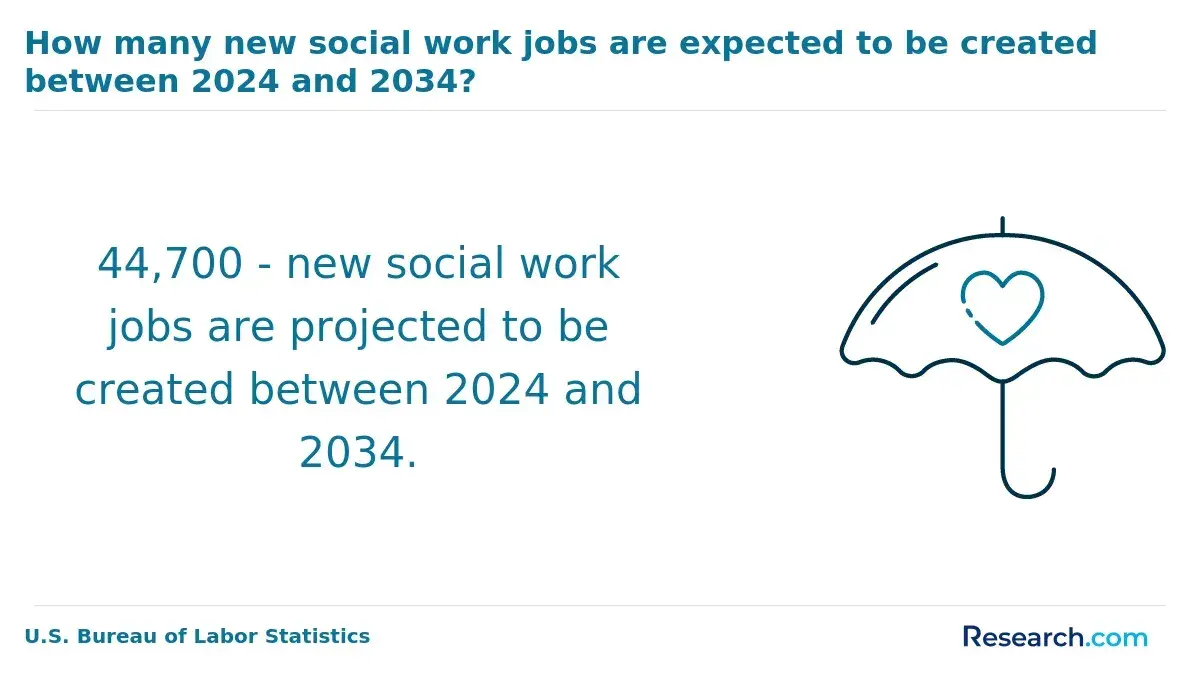
Financial planning matters because the social work field expects a growth of 53,800 new positions by 2032, yet salaries vary widely by role and location. A lower-cost CSWE-accredited program can improve return on investment, especially for students entering community, school, nonprofit, or public agency roles. If you are still weighing the value of the degree, reviewing whether is social work worth it can help connect cost with career goals.
How long does it take to complete an online MSW program, and what is the typical course load?
Most online MSW programs take two years of full-time study. Part-time students commonly take three to four years, which may be more realistic for those working full time, caring for family members, or completing field placements around an existing schedule.
A typical full-time course load is 9 to 12 credit hours per semester, or about three to four courses. Part-time students typically take 6 credit hours or fewer per semester. The right pace depends on your work hours, field placement schedule, family obligations, and comfort with graduate-level reading and writing.
Field education is one of the biggest time commitments. MSW programs require 900 to 1,200 hours of supervised practice integrated with coursework. Some online programs schedule fieldwork concurrently with classes, while others allow more sequential planning. Students should ask whether the program helps secure placements or expects students to identify agencies independently.
| Enrollment pace | Typical completion time | Typical course load | Best suited for |
| Full time | Two years | 9 to 12 credit hours per semester | Students who can manage intensive coursework and field hours |
| Part time | Three to four years | 6 credit hours or fewer per semester | Working adults and students needing more schedule flexibility |
Program length can affect total cost. A longer part-time schedule may make tuition easier to pay over time, but it can delay graduation and licensure progress. A faster schedule may reduce time to degree but can make it difficult to work enough hours to cover living expenses.
Public universities often have a cost advantage, especially for in-state students, though the gap varies by state. For example, in Mississippi, the tuition gap between private and in-state public online MSW programs is significantly narrower-private schools cost just $10,922 more, a 57.2% smaller difference compared to the national norm, according to Education Data Initiative.
Before enrolling, confirm the program’s pacing rules, transfer credit policies, advanced standing options, field placement expectations, and any limits on taking breaks. These details can determine whether the published timeline is realistic for your life.
What licensing and certification requirements must MSW graduates meet to practice social work?
MSW graduates must meet state-specific licensing requirements before practicing in many social work roles, especially clinical roles. The exact license title and requirements vary by state, but independent clinical practice generally requires advanced supervised experience after graduation and a licensing exam.
Common requirements include:
- Completion of a CSWE-accredited MSW program.
- Accumulating 2,000 to 3,000 hours of supervised clinical experience over 1 to 3 years.
- Passing the Association of Social Work Boards (ASWB) Clinical exam for LCSW licensing.
Many states also offer lower-tier licenses, such as Licensed Master Social Worker (LMSW) or Licensed Social Worker (LSW), which may allow supervised practice but not independent clinical work. Students who want to provide psychotherapy, diagnose mental health conditions where permitted, or open a private practice should pay close attention to the requirements for Licensed Clinical Social Worker (LCSW) status or the equivalent credential in their state.
Licensure portability is not automatic. Professionals who move between states may need to apply for endorsement, submit transcripts and supervision records, pass a different exam, complete additional coursework, or document more supervised hours. This can delay employment or independent practice if not planned in advance.
Cost should be considered alongside licensure requirements. Private online MSW programs may exceed $100,000 annually, while public programs average about $36,000 total, according to Reddit and Yocket data. Regardless of price, the program must meet your state’s education rules. A high-cost program that does not align with licensure requirements can create expensive barriers after graduation.
Before choosing a program, check your state licensing board’s requirements for curriculum, field hours, supervision, exams, background checks, and continuing education. Then ask each MSW program how it supports students pursuing licensure in your state, not just in the state where the university is located.
What career paths and job roles are available to MSW graduates in different social work specializations?
MSW graduates can work in clinical, healthcare, school, child welfare, community, policy, and administrative roles. The best path depends on specialization, licensure plans, field placement experience, and the populations you want to serve.
| Specialization area | Common job roles | Typical work settings |
| Clinical social work | Licensed clinical social worker, therapist, mental health counselor, crisis intervention specialist | Mental health clinics, hospitals, community agencies, private practice |
| Healthcare and medical social work | Medical social worker, discharge planner, patient advocate, care coordinator | Hospitals, hospice agencies, rehabilitation centers, public health organizations |
| Child and family social work | Child welfare specialist, family services worker, foster care or adoption coordinator | Child protective services, family agencies, courts, nonprofits |
| School social work | School social worker, student support specialist, behavioral intervention coordinator | K-12 schools, school districts, youth programs |
| Community and nonprofit practice | Program coordinator, community organizer, outreach manager, case management supervisor | Nonprofits, government agencies, advocacy organizations |
| Policy and administration | Policy analyst, program manager, social services administrator, advocacy director | Government offices, research organizations, foundations, large service agencies |
Clinical social workers provide therapy, counseling, assessment, and crisis support. These roles usually require post-graduate supervision and clinical licensure. Medical social workers help patients and families navigate illness, discharge planning, insurance barriers, long-term care, and community resources.
Community organization specialists build and manage programs addressing issues such as homelessness, poverty, food insecurity, and access to care. Child and family social workers focus on safety, permanency, family support, foster care, and adoption. School social workers help students manage behavioral, academic, family, and social challenges that affect learning.
Policy and administration roles are better suited for students interested in systems-level change. These professionals may conduct research, write policy briefs, manage budgets, supervise staff, evaluate programs, or advocate for reforms in housing, healthcare, justice, education, or social services.
Program cost can influence career flexibility after graduation. For instance, Arizona State University's MSW program costs about 70% less than private Texas universities and 20% less than Texas Division I public universities (Social Work Degree, 2026), potentially reducing graduate debt burdens. Lower debt can make it easier to accept public agency, nonprofit, or community-based roles that align with your mission but may not offer the highest salaries.
When comparing MSW programs, match the specialization, field placement network, licensure preparation, and total cost to the job you actually want. A prestigious or expensive program is not automatically the best choice if it does not place students in the settings where you plan to work.
What is the job outlook and salary potential for MSW graduates in the current labor market?
The labor market for MSW graduates is generally strong, especially in healthcare, mental health, child welfare, substance abuse services, and school-based support. Social work positions are expected to grow by 12% from 2022 to 2032, according to the U.S. Bureau of Labor Statistics. This is faster than the average for all occupations and reflects sustained demand for behavioral health, care coordination, and social services.
Salary potential depends on specialization, licensure, employer type, geographic location, and years of experience. The median annual wage for social workers was $59,980 in 2023, while clinical social workers earn around $68,000. In urban areas or government and healthcare sectors, salaries often exceed $80,000. Graduates who complete clinical licensure often have access to higher-paying roles than those in entry-level or non-clinical positions.
| Factor | How it affects salary or employment |
| Licensure | Clinical licensure can open access to therapy, supervisory, and independent practice roles |
| Specialization | Mental health, healthcare, and school social work often have strong demand |
| Location | Urban areas and high-need regions may offer more openings, though cost of living matters |
| Employer | Government and healthcare employers may pay more than some nonprofit organizations |
| Field experience | Strong internships and practicum placements can improve hiring prospects |
Tuition affects the real value of the degree. Cost differences between public and private online MSW programs can change the return on investment, even when graduates enter similar jobs. For example, out-of-state tuition at Massachusetts public universities is about 63.7% of private college tuition, making these public options financially competitive.
Students seeking the strongest employment outcomes should prioritize programs with high-quality field placements, licensure preparation, career services, and connections to employers in their target practice area. Online programs can also help students keep working while enrolled, which may reduce borrowing and preserve professional momentum.
Before committing, compare expected debt with likely earnings in your preferred specialization and region. An MSW can be professionally valuable, but the financial outcome is strongest when the program cost, licensure path, and local job market fit together.
How do curriculum and specialization options compare between public and private university online MSW programs?
Public and private online MSW programs must cover core social work competencies when they are CSWE-accredited, but they may differ in specialization depth, elective variety, and field placement networks. Public universities often emphasize broad preparation for generalist, clinical, community, policy, and research roles. Private universities may be more likely to market distinctive tracks or tightly focused practice areas.
Public programs usually provide a strong foundation in ethics, human behavior, research, policy, assessment, intervention, and field education. This broad approach is useful for students who want flexibility or are still deciding between clinical practice, community work, healthcare, schools, or policy roles.
Private programs often offer specialized tracks such as trauma-informed care, gerontology, substance abuse counseling, or nonprofit management. These tracks can be valuable if they match a clear career goal. However, specialization should be weighed against price. According to Social Work Degree (2026), private MSW programs can cost up to $89,000, while public programs average about $12,394 annually.
| Curriculum factor | Public online MSW programs | Private online MSW programs |
| Core curriculum | Broad, accreditation-aligned preparation | Broad core plus possible mission-driven emphasis |
| Specializations | May offer fewer niche tracks, though options vary by school | May offer more targeted or branded specializations |
| Field education | Often tied to public systems, community agencies, healthcare, and regional partners | May include specialized agency networks or individualized placement support |
| Cost consideration | Often lower tuition for comparable accredited preparation | Higher tuition may be justified only if the specialization and support fit your goals |
Students should not choose a specialization based only on its name. Ask what courses are required, which faculty teach in the area, what placements are available, and whether the track supports licensure or certification goals. A trauma, school, healthcare, or substance abuse concentration has limited value if the program cannot help you access relevant fieldwork.
Key considerations when choosing a program include:
- Availability of desired specializations relevant to career goals
- Cost relative to expected career outcomes
- Accreditation status supporting curriculum rigor and licensure eligibility
- Opportunities for diverse, hands-on fieldwork experiences
In general, public universities can be a strong choice for students who want an accredited, flexible, lower-cost MSW. Private universities may be worth the higher cost when they offer a specialization, placement network, faculty expertise, or support model that clearly advances a specific professional goal.
What factors should prospective students consider when choosing between public and private online MSW programs?
Prospective students should compare public and private online MSW programs by total value, not by ownership type alone. The right program is CSWE-accredited, affordable after aid, aligned with your state’s licensure requirements, realistic for your schedule, and strong in the practice area you want to enter.
Start with accreditation. CSWE accreditation is essential for licensure and employment in many social work roles. Do not assume a university’s general reputation is enough. Verify the MSW program itself and confirm that it meets your state licensing board’s education requirements.
Then compare cost carefully. Public universities typically offer lower tuition and more stable pricing, with tuition increases averaging 24% over two decades, compared to 32% at private colleges, according to U.S. News & World Report. Public programs may also offer state-funded grants or residency discounts. Private programs may provide merit scholarships, need-based aid, or employer partnerships, but the final net cost can vary widely.
| Decision factor | What to ask before enrolling |
| Accreditation | Is the MSW program CSWE-accredited? |
| Licensure fit | Does the curriculum meet requirements in the state where I plan to practice? |
| Total cost | What is the full cost after scholarships, grants, fees, and residency rules? |
| Field placement support | Will the school help secure approved placements near me? |
| Schedule | Can I realistically manage coursework, field hours, work, and family responsibilities? |
| Specialization | Does the program offer coursework and placements in my intended practice area? |
| Student support | Are advising, writing support, career services, and licensure guidance accessible online? |
| Alumni and employer network | Does the program connect students with agencies and employers in my target region? |
Residency rules are especially important for public universities. In-state tuition can make a public online MSW highly affordable, but out-of-state rates may narrow the savings. Private programs usually do not use the same residency pricing model, but their baseline tuition is often higher.
Also examine curriculum fit. Private schools may emphasize clinical practice, research, or specialized areas, while public institutions often provide broad preparation across community, policy, healthcare, school, and clinical settings. Neither approach is automatically better. The stronger choice is the one that prepares you for your intended role with manageable debt.
Avoid choosing based on brand recognition alone. Request tuition breakdowns, review field placement policies, compare licensure outcomes where available, speak with admissions and field education staff, and ask whether current students in your state have successfully completed placements. A careful comparison now can prevent costly surprises later.
Other Things You Should Know About Social Work
Yes, reputable online MSW programs coordinate field placements that comply with accreditation standards. These placements are often arranged locally, allowing students to gain practical experience in settings near their homes. The quality and supervision of field education are monitored closely to ensure hands-on learning.
Employment outcomes can vary widely based on program reputation, networking opportunities, and geographic location rather than whether the institution is public or private. Both types of programs can lead to successful careers if graduates leverage field experiences and career services effectively. It is important to research individual program outcomes rather than rely on university type alone.
Graduates from accredited online MSW programs are eligible for the same social work licensure as on-campus graduates, assuming they meet state-specific requirements. Licensing boards focus on program accreditation, fieldwork hours, and exam passage rather than the delivery format. Prospective students should confirm their chosen program's accreditation status and state licensing criteria.
References
- Best Affordable Master's Degree In Social Work https://www.psychology.org/social-work/best-affordable-masters-programs/
- 25 Most Affordable MSW Programs 2025 | Complete Cost Guide https://www.socialworkdegrees.org/most-affordable-msw-programs
- What CSWE Accreditation Tells You About an MSW Program https://www.chamberlain.edu/blog/what-is-cswe-accreditation-and-what-are-its-benefits
- Types of Social Work https://www.socialworkers.org/News/Facts/Types-of-Social-Work
- Private vs. Public Universities https://www.callutheran.edu/guides/private-public-universities/
- Accepted to Multiple MSW Programs? Here’s How to Choose the Right One https://www.mswhelper.com/blog/how-to-decide-on-an-msw-program
- Online MSW Programs No GRE Required - MasterofSocialWork.com https://www.masterofsocialwork.com/faqs/gre-requirements-online-msw-programs
- Wisconsin School Social Work Association - Certification https://wsswa.org/certification
- How Long Does it Take to Complete an MSW Program? Online or Campus https://www.onlineeducation.com/social-work/faqs/how-long-is-an-msw-program
- How to Become a Licensed Clinical Social Worker (LCSW) https://socialworklicensemap.com/social-work-careers/become-a-lcsw/