2027 MSW Student Loan Repayment and Forgiveness Options

Co-Founder and Chief Data Scientist
MSW graduates often enter public service careers with meaningful work, modest starting salaries, and a student loan balance that requires a deliberate repayment strategy. The right plan can lower monthly payments, preserve eligibility for forgiveness, and prevent costly mistakes such as using the wrong repayment plan, failing to certify employment, or overlooking state and employer assistance.
This guide explains the main MSW student loan repayment and forgiveness options for borrowers in social work, including income-driven repayment, Public Service Loan Forgiveness, Teacher Loan Forgiveness, state repayment assistance, and employer-sponsored benefits. It is designed for current MSW students, recent graduates, and working social workers who want to compare options, understand eligibility rules, and reduce long-term repayment costs without relying on guesswork.
Key Things You Should Know
- Federal income-driven repayment plans offer MSW graduates manageable monthly payments based on income, with forgiveness possible after 20-25 years of qualifying payments.
- Public Service Loan Forgiveness (PSLF) remains a key option, forgiving remaining debt after 10 years of qualifying payments while employed full-time in eligible social work roles.
- In 2025, approximately 40% of MSW borrowers qualify for some form of loan forgiveness or repayment assistance, highlighting the importance of understanding program specifics.
What are MSW student loan repayment options?
MSW student loan repayment options generally fall into four categories: federal repayment plans, federal forgiveness programs, state or local repayment assistance, and private refinancing. The best choice depends on loan type, employer, income, family size, career plans, and whether the borrower expects to work in public service.
For many social workers, federal income-driven repayment (IDR) plans are the starting point. These plans calculate payments using discretionary income and family size rather than the original loan balance. Common IDR options include Revised Pay As You Earn (REPAYE), Pay As You Earn (PAYE), Income-Based Repayment (IBR), and Income-Contingent Repayment (ICR). They can be especially useful for MSW graduates whose early-career salaries are lower than their graduate school debt.
The financial stakes are significant. Average MSW student debt reached $85,200 in 2025-a 12% increase since 2023, according to Education Data Initiative. A borrower with that level of debt should not choose a plan based only on the lowest monthly payment. A lower payment may help cash flow, but it can also increase total interest if the borrower is not on track for forgiveness.
| Option | Best for | Key trade-off |
| Income-driven repayment | Borrowers with federal loans and income that is modest compared with debt | Lower monthly payments may extend repayment and increase interest unless forgiveness applies |
| Public Service Loan Forgiveness | MSW graduates working full-time for qualifying government or nonprofit employers | Requires careful tracking of eligible loans, repayment plans, payments, and employment |
| Standard, Graduated, or Extended Repayment | Borrowers who want predictable repayment or do not qualify for forgiveness | May produce higher monthly payments or higher total interest depending on the plan |
| Private refinancing | Borrowers with strong credit, stable income, and no need for federal protections | Refinancing federal loans into private loans can remove access to federal IDR and forgiveness |
| State or employer assistance | Social workers in shortage areas, public agencies, child welfare, behavioral health, or nonprofit roles | Awards may require service commitments, annual applications, or employment verification |
Public Service Loan Forgiveness (PSLF) is often the most important option for MSW graduates employed by government agencies or nonprofit organizations. Under PSLF, the remaining balance on eligible federal loans may be forgiven tax-free after 120 qualifying monthly payments while the borrower works full-time for a qualifying employer. Because PSLF has strict rules, borrowers should regularly verify employer eligibility, confirm loan type, and keep documentation of qualifying payments.
State-specific loan repayment assistance programs can also help, particularly for social workers serving underserved communities or high-need populations. These programs often require a service commitment and may have limited funding windows, so applicants should review eligibility before accepting or changing jobs.
Private student loans usually offer fewer protections than federal loans. Some borrowers may refinance for a lower interest rate, but that decision should be made carefully. A borrower planning to use PSLF, IDR forgiveness, deferment, forbearance, or federal hardship protections should understand what benefits may be lost before refinancing federal loans.
For social workers considering additional credentials, some DSW schools offer affordable online doctorate programs that may support career advancement, but borrowers should weigh any new debt against expected salary gains and repayment options.
Which forgiveness programs apply to MSW graduates?
MSW graduates may qualify for several forgiveness or repayment assistance pathways, but eligibility depends heavily on the borrower’s loan type, employer, repayment plan, and service setting. The major options include Public Service Loan Forgiveness, income-driven repayment forgiveness, state repayment assistance, and employer-sponsored repayment benefits.
Public Service Loan Forgiveness is the most relevant federal forgiveness program for many social workers. It cancels the remaining eligible federal student loan balance after 120 qualifying monthly payments while the borrower works full-time for an eligible public service employer, such as a government agency or qualifying nonprofit. As of March 2026, over 1.1 million borrowers have received $76.8 billion in PSLF discharges, with social workers representing 15% of those approved.
Income-Driven Repayment forgiveness is another federal route. Plans such as Income-Based Repayment (IBR), Pay As You Earn (PAYE), and Revised Pay As You Earn (REPAYE) base payments on income and family size. After 20 or 25 years of qualifying payments, any remaining balance may be forgiven. This can help MSW graduates in lower-paying social service roles, but the timeline is much longer than PSLF.
| Forgiveness or assistance option | Typical MSW fit | Important eligibility issue |
| Public Service Loan Forgiveness | Government and nonprofit social workers | Requires eligible federal loans, qualifying payments, and full-time qualifying employment |
| Income-Driven Repayment forgiveness | Borrowers whose income is low relative to debt | Forgiveness generally comes after 20 or 25 years of qualifying payments |
| State repayment assistance | Social workers in child welfare, behavioral health, public agencies, or underserved communities | Rules vary by state and may require a service obligation |
| Employer-sponsored repayment | Employees of agencies, healthcare systems, schools, or nonprofits offering loan benefits | Benefit amounts, tax treatment, and vesting rules vary by employer |
State-specific and employer-sponsored MSW student loan repayment assistance options vary widely. Some states focus on child welfare, behavioral health, rural practice, public agencies, or shortage areas. These programs can be valuable, but they may require applicants to work in a specific location, serve a defined population, or remain employed for a minimum period.
The main risk is assuming forgiveness will happen automatically. Borrowers should keep copies of employment certifications, payment histories, loan servicer messages, income recertifications, and program applications. Forgiveness outside PSLF may also have different tax treatment, so borrowers should review current federal and state tax rules before making long-term plans.
Students who are still comparing degree options can reduce future repayment pressure by choosing a lower-cost program when appropriate. Flexible MSW online programs may help some students limit borrowing while preparing for social work licensure and public service careers.
Who qualifies for MSW loan forgiveness?
MSW loan forgiveness is not based on the degree alone. Borrowers generally qualify because they have eligible loans, work for an eligible employer, use an eligible repayment plan, make qualifying payments, and meet documentation requirements. Social workers in government, nonprofit, public health, child welfare, behavioral health, and public education settings are often strong candidates, but each program has its own rules.
For Public Service Loan Forgiveness, borrowers must work full time for a qualifying public service employer and make 120 qualifying payments under an eligible repayment plan. The employer matters more than the job title. A clinical social worker, school social worker, case manager, policy analyst, or program administrator may qualify if the employer meets PSLF rules and the borrower’s loans and payments are eligible.
Income-Driven Repayment forgiveness applies to borrowers enrolled in plans such as Income-Based Repayment (IBR) or Pay As You Earn (PAYE). After 20 to 25 years of qualifying payments, remaining balances may be forgiven. This option can help borrowers who do not work for a PSLF-eligible employer, but it requires a much longer repayment period.
State-specific loan forgiveness and repayment assistance programs often focus on social workers serving underserved communities or high-need specialties such as child welfare. These programs commonly require service commitments from 1 to 5 years. Applicants should review whether the program requires a specific license level, employer type, geographic area, caseload, or population served.
Common reasons eligible MSW borrowers lose forgiveness credit
- Working for an employer that does not meet the program’s definition of qualifying employment.
- Making payments on loans that are not eligible for the forgiveness program.
- Using a repayment plan that does not count toward the intended forgiveness path.
- Failing to submit employment certification or income documentation on time.
- Changing jobs without checking whether the new employer qualifies.
- Assuming state or employer assistance has the same rules as federal forgiveness.
Borrowers should track employer certifications and payment eligibility from the start. A borrower who waits until year nine or ten to check PSLF status may discover that earlier payments did not count. Social workers planning their education and debt strategy may also want to compare accelerated pathways; information on the fastest social work degree programs can help with planning, but speed should be weighed against accreditation, field placement quality, licensure requirements, and total cost.
How does Public Service Loan Forgiveness work for social workers?
Public Service Loan Forgiveness allows qualifying social workers to have the remaining balance on eligible federal student loans forgiven after 120 qualifying monthly payments while working full-time for a qualifying employer. For MSW graduates in government or nonprofit roles, PSLF can be the most powerful repayment strategy because it can shorten the effective forgiveness timeline to about 10 years.
PSLF eligibility has several moving parts. Borrowers generally need eligible federal loans, qualifying full-time employment, an eligible repayment plan, and 120 qualifying payments. Many MSW professionals in clinical, educational, community-based, public agency, and nonprofit roles may meet the employment requirement, but the borrower should verify the employer rather than assume eligibility based on the job title.
- Confirm loan type. PSLF applies to eligible federal student loans. Borrowers with older or mixed loan types should check whether consolidation is needed and how consolidation may affect payment counts.
- Enroll in a qualifying repayment plan. Many PSLF borrowers use an income-driven repayment plan because it can reduce monthly payments while preserving forgiveness eligibility.
- Verify employer eligibility. Government employers and many nonprofit employers qualify, but borrowers should document employment regularly.
- Make 120 qualifying monthly payments. Payments must meet program rules and be made while working in qualifying employment.
- Use official tracking tools. The Department of Education's PSLF Help Tool can help borrowers submit forms and monitor qualifying employment and payments.
Payments made under non-qualifying plans or while working outside eligible public service generally do not count. This is why social workers should review PSLF status after graduation, after changing jobs, after changing repayment plans, and after loan servicer transitions.
PSLF is especially relevant because debt burdens can exceed $50,000 for many social work graduates. Lower monthly IDR payments combined with PSLF can make public service employment more financially sustainable, but only if the borrower keeps accurate records and follows program rules.
Social workers may also consider specialized repayment options such as the National Health Service Corps, which allocated significant funds to support social workers in underserved rural areas. These programs usually require service commitments and may have separate eligibility rules from PSLF. Prospective students comparing flexible degree pathways can review MSW online programs, but they should also confirm accreditation, field placement support, and state licensure alignment before enrolling.
What is the Teacher Loan Forgiveness for MSW?
Teacher Loan Forgiveness is a federal program that may apply to MSW graduates who work as qualifying teachers in eligible low-income schools or educational service agencies. It is not designed specifically for social workers, but some MSW graduates in school-based roles may qualify if their position and credentials meet program rules.
The program can forgive up to $17,500 of eligible federal Direct Subsidized and Unsubsidized Loans for qualifying borrowers. Eligibility requires five consecutive years of qualifying teaching service after October 1, 1998. Perkins Loans and Parent PLUS Loans do not qualify.
MSW graduates should be careful not to assume that every school social work position qualifies for Teacher Loan Forgiveness. A school-based social worker may provide counseling, intervention, family support, crisis response, or special education services, but the program’s eligibility depends on whether the borrower meets the definition of a qualifying teacher and whether the school or educational service agency qualifies.
Questions MSW graduates should ask before relying on Teacher Loan Forgiveness
- Does my role meet the program’s definition of qualifying teaching service?
- Is my school or educational service agency listed as low-income for the required years?
- Are my loans eligible for this program?
- Will using Teacher Loan Forgiveness affect my strategy for Public Service Loan Forgiveness?
- Can my employer provide the required certification for the full five consecutive years?
Applicants should review current Department of Education instructions and submit the required employer certification forms. Borrowers should also confirm how any prior loan balances affect eligibility, since the program includes rules tied to outstanding federal student loan balances.
Employer-sponsored repayment benefits may provide another source of help for school-based social workers. According to the National Council of Nonprofits, 35% of nonprofit social service agencies offer benefits averaging $5,000 annually per eligible employee. MSW graduates in schools or education-adjacent nonprofits should ask whether this benefit can be used alongside federal forgiveness strategies.
Can MSW grads get state-specific repayment assistance?
Yes. MSW graduates may qualify for state-specific repayment assistance, especially if they work in child welfare, mental health, public agencies, shortage areas, rural communities, or other high-need settings. These programs are separate from federal forgiveness and can sometimes be combined with federal repayment strategies.
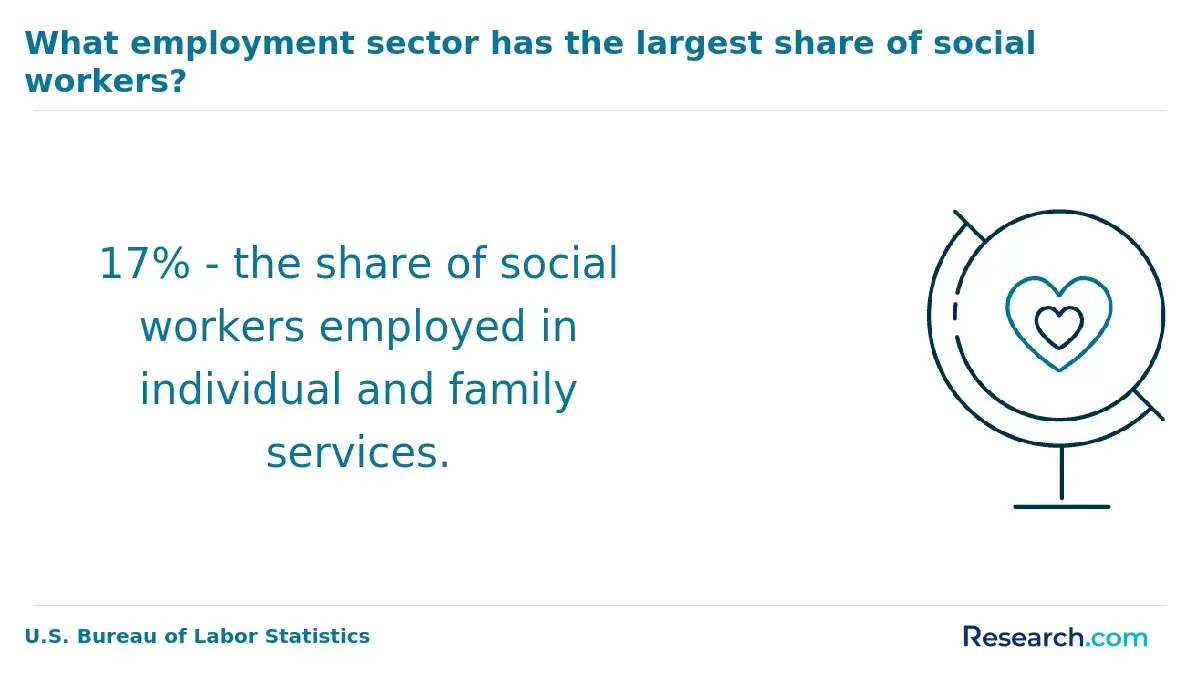
By 2026, 18 states have committed over $50 million to support MSW loan repayment, focusing on roles in child welfare, mental health, and public agencies, according to the National Conference of State Legislatures. New York offers a $15 million forgiveness program specifically for child welfare workers with MSW degrees. Other states may offer smaller or more targeted programs with different service requirements.
State programs vary widely. Some provide an annual award; others pay after a service period is completed. Some require a specific license, agency type, geographic location, or client population. Because funding can be limited, application timing matters.
| State program factor | Why it matters |
| Eligible job setting | Programs may be limited to child welfare, behavioral health, public agencies, rural areas, or shortage areas |
| Service commitment | Borrowers may need to remain in the role for a set period before receiving or keeping funds |
| Eligible loans | Some programs cover only certain education loans or require proof of outstanding balance |
| Award amount and funding limits | Annual caps and limited appropriations can affect how much help is available |
| Interaction with federal programs | Borrowers should confirm whether state assistance affects PSLF, IDR, taxes, or employer benefits |
Graduates should check state agency websites, licensing boards, workforce development offices, and public health or human services departments. They should also keep employment verification, job descriptions, licensure records, loan statements, and service documentation organized, since these documents are often required during application and renewal.
State repayment assistance usually does not eliminate the full loan balance. It works best as part of a broader plan that may include income-driven repayment, PSLF, employer repayment benefits, and careful borrowing decisions before or during graduate school.
What are employer-sponsored repayment for MSW?
Employer-sponsored repayment benefits are loan assistance programs offered by an employer as part of compensation. For MSW graduates, these benefits may come from public agencies, hospitals, community mental health providers, schools, nonprofits, or social service organizations competing to recruit and retain qualified social workers.
These programs may provide direct loan payments, monthly stipends, lump-sum annual contributions, retention bonuses earmarked for debt, or matching payments. The benefit can reduce principal faster, lower interest costs, and make lower-paying public service or nonprofit roles more financially manageable.
Employer programs are not automatic and are not standardized. Eligibility may depend on full-time status, job title, license level, department, tenure, performance standing, or agreement to remain employed for a minimum period. Some employers pay the loan servicer directly, while others reimburse the employee after proof of payment.
What to ask before accepting an employer repayment benefit
- How much does the employer contribute each month or year?
- Is there an annual or lifetime cap?
- Does the payment go directly to the loan servicer or to the employee?
- Are federal loans, private loans, or both eligible?
- Is the benefit taxable under current rules?
- Is there a service commitment, vesting period, or repayment obligation if I leave?
- Can the benefit be used while pursuing PSLF or income-driven repayment forgiveness?
Recent policy changes, such as removing the partial financial hardship requirement under income-based repayment, boosted enrollments by 40% among public sector social workers early in 2026. This makes coordination more important: a social worker may be using an income-driven plan, pursuing PSLF, and receiving employer contributions at the same time.
The best employer-sponsored repayment plan is one that supports the borrower’s larger strategy. A large contribution may be less valuable if it requires leaving PSLF-eligible employment or accepting an unsustainable workload. Borrowers should compare the benefit with salary, supervision for licensure, caseload expectations, career growth, and total compensation.
How much can you save with MSW loan forgiveness?
The amount an MSW graduate can save through loan forgiveness depends on the original loan balance, interest rate, income, family size, repayment plan, employer, and how consistently the borrower meets program rules. For borrowers with large federal balances and qualifying public service employment, the savings can be substantial.
Public Service Loan Forgiveness can erase the remaining eligible federal loan balance after 120 qualifying payments, typically over 10 years. For social workers with debt often exceeding $50,000, PSLF may remove a major balance that would otherwise take much longer to repay. The exact savings depend on how much remains after the borrower completes the required payment count.
Income-Driven Repayment plans can also reduce long-term costs for some borrowers by capping payments at a percentage of discretionary income, typically 10% to 20%, with forgiveness after 20 to 25 years. Depending on income and loan size, borrowers might save between $20,000 and $60,000 or more. However, a longer repayment period can also mean more accumulated interest, so borrowers should compare total repayment under multiple scenarios.
| Strategy | Potential savings source | Main risk |
| PSLF | Remaining eligible federal balance forgiven after 120 qualifying payments | Lost credit if loans, payments, repayment plan, or employment do not qualify |
| IDR forgiveness | Lower payments during repayment and possible forgiveness after 20 to 25 years | Longer timeline and possible tax considerations depending on applicable rules |
| State repayment assistance | Program awards that reduce loan balance in exchange for eligible service | Limited funding, service commitments, and varying state rules |
| Employer repayment benefits | Employer contributions that reduce principal or reimbursement burden | Caps, tax treatment, vesting rules, or repayment obligations if employment ends |
Loan forgiveness can improve the financial return of an MSW degree, especially for graduates committed to public service careers. Median salaries for MSW graduates reached $62,100, corresponding to a 15-year ROI of 185% when factoring in debt and opportunity costs per the Bureau of Labor Statistics. Lower monthly payments and eventual forgiveness can reduce financial stress and support earlier savings, housing, retirement contributions, or family financial goals.
To capture the full savings, borrowers must meet the technical requirements. That means submitting accurate income documentation, making on-time qualifying payments, certifying employment, monitoring payment counts, and keeping records. A missed recertification, wrong repayment plan, or unverified employer can increase lifetime loan costs substantially.
What are recent changes to MSW repayment programs?
Recent revisions to MSW repayment programs have generally focused on expanding access, simplifying documentation, and improving repayment flexibility for public service borrowers. These changes matter for social workers because many MSW graduates work in nonprofit, government, school, healthcare, and community-based settings where federal forgiveness may be available.
The federal Public Service Loan Forgiveness program now includes a wider variety of eligible employment settings and payment plans. Notably, partial payments under income-driven repayment plans can count toward PSLF, providing more flexibility for MSW graduates facing variable incomes. Borrowers should still verify current rules through official federal resources because PSLF requirements can change and are highly technical.
The Revised Pay As You Earn (REPAYE) plan offers MSW borrowers a fixed payment of 10% of discretionary income, with loan forgiveness after 20 years instead of the previous 25-year timeline. This can benefit MSW holders working in nonprofit and government roles, particularly when income is modest relative to debt. Several states have also expanded repayment assistance programs to support social workers in underserved communities.
Labor market trends make these repayment updates especially relevant. Social work jobs grew 13% between 2020 and 2025, with a 95% employment rate for new MSW graduates entering eligible public service positions, according to Georgetown University Center on Education and the Workforce. More graduates entering eligible roles means more borrowers need to understand how repayment choices affect forgiveness.
Actions borrowers should take after program changes
- Confirm whether each loan is eligible for the desired forgiveness program.
- Check whether the employer qualifies before assuming a role counts for PSLF.
- Compare all income-driven repayment options before choosing a plan.
- Save copies of employment certifications, payment histories, and income recertifications.
- Review state and employer assistance annually, since funding and eligibility can change.
MSW borrowers should not rely on informal advice from coworkers or outdated online discussions. The safest approach is to use official Department of Education tools, communicate with the loan servicer in writing when possible, and keep a personal record of every important repayment and forgiveness document.
How to maximize MSW loan repayment benefits?
MSW graduates can maximize repayment benefits by building a plan before payments become difficult. The strongest strategy usually starts with identifying loan types, choosing the right federal repayment plan, confirming whether employment qualifies for forgiveness, and adding state or employer benefits when available.
- Inventory every loan. List federal and private loans separately. Include balances, interest rates, servicers, repayment status, and whether each loan is eligible for federal programs.
- Choose a repayment plan based on the end goal. Borrowers pursuing PSLF often pair qualifying employment with an income-driven repayment plan. Borrowers not pursuing forgiveness may prioritize faster payoff or lower total interest.
- Certify public service employment early. MSW graduates working full-time for nonprofit social service agencies or government employers should submit employment certification and track qualifying payments toward the required 120 payments.
- Recertify income on time. Income-driven repayment plans such as Revised Pay As You Earn (REPAYE) or Income-Based Repayment (IBR) adjust payments based on income. Missing documentation can raise payments or disrupt progress.
- Layer benefits carefully. State and local loan repayment assistance programs can support MSWs in underserved areas or specialties such as mental health and child welfare. Employer contributions may add another source of repayment help.
- Avoid unnecessary refinancing of federal loans. Private refinancing may lower an interest rate, but it can remove federal forgiveness, IDR, and borrower protections.
- Keep records for the full repayment period. Save tax documents, income certifications, employer forms, loan statements, and servicer correspondence.
Combining PSLF with IDR can significantly reduce debt for borrowers in qualifying public service roles. For example, a social worker in a nonprofit earning a moderate salary may pay less each month under IDR, with any remaining eligible balance forgiven after 10 years through PSLF if all requirements are met.
State and local loan repayment assistance programs can further reduce debt for MSWs in underserved areas or specialty fields. These programs should be reviewed before job changes, since moving to a different employer or county can affect eligibility.
Projections estimate $200 billion in forgiveness opportunities for 2.5 million social workers by 2035 through expanded PSLF and IDR programs. To benefit from these opportunities, borrowers should act early, document carefully, and review repayment choices whenever income, employment, family size, or loan rules change.
Other Things You Should Know About Social Work
In 2027, MSW graduates might qualify for Public Service Loan Forgiveness (PSLF) if employed in government or non-profits for ten years. They could also benefit from Income-Driven Repayment (IDR) plans, which forgive remaining loans after 20-25 years of payments based on income and family size.
In 2027, MSW graduates can explore loan forgiveness programs such as Public Service Loan Forgiveness (PSLF) if employed by a government or non-profit organization, and the Income-Driven Repayment (IDR) plan which forgives remaining debt after 20-25 years of qualifying payments. State-specific programs may also offer additional opportunities.
Working in rural or underserved areas can enhance eligibility for certain federal and state loan repayment programs designed to support social workers in high-need locations. These programs often offer added incentives or forgiveness benefits to encourage practitioners to serve populations with limited access to social services. It is important to verify program details as availability and requirements can differ by state or funding cycles.
The PSLF Program forgives remaining Direct Loan balances for MSW graduates after 120 qualifying payments under a qualifying repayment plan while working full-time for a qualifying employer, such as a government or nonprofit organization, as of 2027.
References
- Managing the Cost of Your Education â Beyond Loan Forgiveness https://www.socialworktoday.com/archive/091514p14.shtml
- Public Service Loan Forgiveness Rule Change Undermines the Program - California Faculty Association https://www.calfac.org/public-service-loan-forgiveness-rule-change-undermines-the-program/
- Educational Debt Relief - National Association of Social Workers Ohio Chapter https://www.naswoh.org/page/debtrelief/www.SponsorChange.org
- Student Loan Debt Relief for Social Workers https://www.socialworkers.org/Advocacy/Policy-Issues/Student-Loan-Debt-Relief-for-Social-Workers
- Loan Forgiveness Eases Debt Burden for New Social Workers https://www.socialworker.com/feature-articles/education--credentials/Loan_Forgiveness_Eases_Debt_Burden_for_New_Social_Workers/
- Social Worker Student Loan Forgiveness: How to Get It https://www.tateesq.com/learn/student-loan-forgiveness-social-worker
- Federal student loan forgiveness for special situations https://www.salliemae.com/blog/student-loan-forgiveness-programs/
- NHSC Loan Repayment Program https://nhsc.hrsa.gov/loan-repayment/nhsc-loan-repayment-program
- Social Workers Student Loan Forgiveness Guide | SoFi https://www.sofi.com/learn/content/social-workers-student-loan-forgiveness/
- Social Work - Canada Student Loan Forgiveness Programme https://www.casw-acts.ca/en/social-work-canada-student-loan-forgiveness-programme