2027 Is a Doctorate in Social Work Worth It?

Co-Founder and Chief Data Scientist
For many MSW-prepared social workers, the next career decision is not simply whether to earn another degree. It is whether a doctorate will open roles that experience alone may not: executive leadership, advanced clinical supervision, program design, policy work, consulting, or teaching in practice-focused settings. The question matters because the investment is significant, and the payoff depends heavily on your target role, employer, location, and ability to keep working while enrolled.
The salary picture also makes the decision more complicated. In 2024, the median annual wage for social workers was $61,330, which means many master’s-level professionals eventually reach a compensation ceiling unless they move into management, administration, specialized clinical leadership, or related policy roles. A Doctorate in Social Work can help with that shift, but it is not the right choice for every social worker.
This guide is designed for newly licensed, soon-to-be-licensed, and experienced MSW holders who are weighing a DSW against a PhD, certificate, or continued career advancement without another degree. It explains what the credential is, where it can lead, how employers tend to view it, and how to judge whether the cost and workload make sense for your long-term goals.
What are the benefits of getting a doctorate in social work?
- It allows you to pursue roles such as university faculty, senior policy analyst, or organization-director in macro social work settings with a strong social-good impact in program design and systems change.
- You may increase your earning potential—with doctorate-level holders in social work averaging around $80,000 to $120,000 annually depending on role and region.
- Many programs offer online delivery, enabling you to continue working while completing your studies and minimizing relocation or full-time leave disruptions.
What makes a Doctorate in Social Work different from an MSW or PhD?
A Doctorate in Social Work is a practice-focused doctorate built for experienced social workers who want to lead, supervise, design programs, shape policy, or solve complex organizational problems. It is different from an MSW, which prepares students for professional social work practice, and from a PhD in Social Work, which is primarily designed for research, scholarship, and academic theory development.
The clearest way to choose among these credentials is to start with the work you want to do after graduation. If your goal is to provide direct clinical services, case management, or community-based practice, the MSW is usually the core professional degree. If your goal is to become a university researcher or produce original scholarship, the PhD is typically the stronger fit. If your goal is to lead agencies, supervise advanced practitioners, improve systems, evaluate programs, or influence applied policy, the DSW is often the more relevant route.
| Credential | Primary focus | Common fit | Typical career direction |
| MSW | Professional social work practice | Students preparing for direct service, clinical, or community roles | Clinical social work, case management, community practice, agency-based roles |
| DSW | Advanced practice, leadership, policy, and applied problem-solving | MSW-prepared professionals seeking senior practice or administrative roles | Executive leadership, program design, clinical supervision, policy implementation |
| PhD in Social Work | Research, theory, and academic scholarship | Professionals pursuing research-intensive or tenure-track academic careers | University research, scholarly publication, academic teaching, policy research |
Social Work License Map and Rutgers School of Social Work describe DSW programs as preparation for executive, supervisory, and program design roles. Most DSWs can be completed in about three years, compared to five to seven years for a PhD in Social Work. That shorter timeline can matter for working professionals who want doctoral-level preparation without stepping away from practice for an extended period.
The number of affordable DSW programs in the U.S. continues to grow, reflecting demand for applied leadership credentials. Still, affordability should be evaluated carefully. A lower tuition program is not automatically the best choice if it lacks the right specialization, faculty expertise, scheduling format, or employer recognition in your field.
The main takeaway: choose a DSW when you want to use doctoral study to lead systems, not primarily to conduct academic research. Choose an MSW when you need the entry professional credential for practice. Choose a PhD when research production and scholarly careers are the priority.
What are the career paths for graduates of a Doctorate in Social Work program?
DSW graduates typically pursue roles that expand their influence beyond one-on-one practice. The degree is most useful when it helps a social worker move into leadership, supervision, policy implementation, program evaluation, consulting, or high-level practice administration. It does not guarantee a specific job title, but it can strengthen a candidate’s profile for roles that require advanced judgment, management ability, and credibility with interdisciplinary teams.
Executive and administrative leadership
Many DSW-prepared professionals move into agency or organizational leadership. These roles may involve managing budgets, supervising departments, setting service priorities, improving compliance systems, leading strategic planning, or evaluating outcomes. Examples include nonprofit director, executive administrator, social services director, program manager, or senior leader in a healthcare, behavioral health, child welfare, or community services setting.
This path is best for social workers who enjoy organizational problem-solving and are prepared to spend less time in direct client service. The trade-off is important: leadership roles may offer broader impact and stronger compensation potential, but they also bring responsibility for staffing, funding, performance metrics, and difficult institutional decisions.
Policy, advocacy, and systems-change roles
Some graduates use the DSW to move toward policy design, public administration, advocacy leadership, or consulting. These roles may focus on mental health access, child welfare, housing, aging services, school systems, healthcare equity, or community-based prevention. DSW training can be useful when it connects practice experience with policy analysis, implementation planning, and measurable outcomes.
For this path, the strongest programs are usually those that include policy coursework, applied research methods, program evaluation, and opportunities to complete doctoral projects tied to real agencies or communities.
Advanced clinical supervision and workforce development
Some DSW graduates remain close to practice but move into supervisory, training, and quality-improvement roles. They may oversee clinical teams, mentor newer practitioners, develop ethical practice standards, or contribute to field education. In some settings, doctoral preparation can support credibility when supervising MSW-level staff or teaching students from online MSW programs.
Licensure rules still matter. A DSW does not replace state clinical licensure requirements, and it does not automatically expand a professional’s legal scope of practice. Social workers considering clinical leadership should verify requirements in their state and with their target employers.
Teaching and practice education
A DSW may also support teaching in practice-oriented programs, continuing education, field instruction, or professional training. However, research universities may still prefer or require a PhD for tenure-track faculty appointments. If your main goal is full-time academic research, the PhD remains the more traditional path.
According to the Bureau of Labor Statistics, demand for social and community service managers continues to grow, which supports the case for leadership-oriented preparation. The best career fit will depend on whether your intended job values doctoral-level practice expertise, management experience, licensure, or a combination of all three.
What is the job market for graduates of a Doctorate in Social Work program?
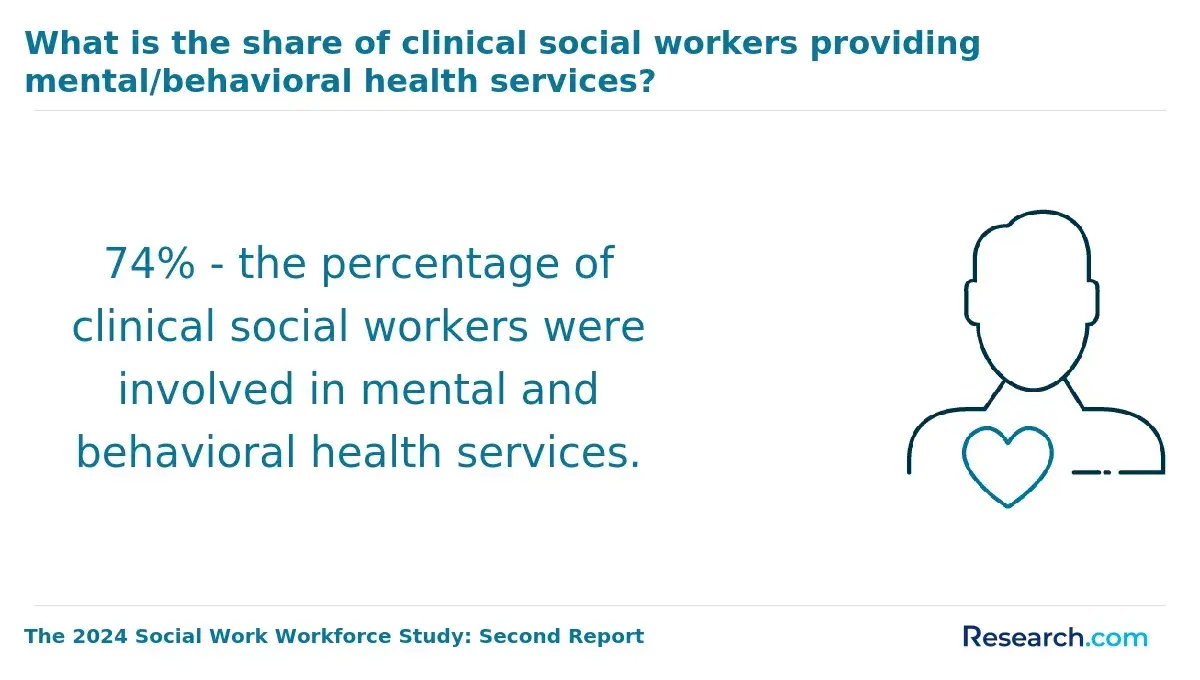
The job market is generally favorable for social work and human services leadership roles, but a DSW should be viewed as a strategic credential rather than a universal requirement. Overall employment for social workers is projected to grow by about 6% from 2024 to 2034, faster than many occupations. For managerial roles in social and community services, growth is also around 6%.
Those projections suggest continued need for professionals who understand client services, community systems, compliance, funding pressures, and program outcomes. A DSW can help candidates compete for leadership-oriented positions, especially when paired with strong MSW experience, relevant licensure, supervision history, and evidence of program or policy impact.
However, the job market is not the same everywhere. Salary and advancement opportunities can vary by state, metro area, employer type, funding source, and specialization. A DSW may have stronger labor-market value in large healthcare systems, government agencies, universities, behavioral health organizations, and multi-service nonprofits than in smaller agencies with limited salary bands.
How to evaluate the market before enrolling
- Search current job postings. Look for roles you would actually want after graduation and note whether they require, prefer, or do not mention a doctorate.
- Compare titles, not just degrees. A DSW may be most relevant for director, senior manager, clinical supervisor, policy director, consultant, or faculty-of-practice roles.
- Check compensation by location. Evaluating which states pay social workers the most can help you estimate whether the degree is likely to improve your financial return.
- Ask employers directly. If you work in a large agency or health system, speak with HR, senior leaders, or supervisors about whether a DSW affects promotion eligibility or pay bands.
- Review alumni outcomes. Strong programs should be able to describe where graduates work and how the degree has supported advancement.
The strongest job-market case for a DSW exists when your target roles already align with doctoral-level leadership, applied research, policy implementation, or advanced supervision. If the jobs you want value experience and licensure more than doctoral education, a certificate, targeted management training, or a lateral move may produce a better return.
How does a DSW advance your leadership and policy influence?
A DSW helps social workers shift from responding to individual cases to improving the systems that shape those cases. The degree is designed to build the skills needed to lead programs, supervise teams, interpret evidence, manage change, and connect practice realities to policy decisions.
- Develop system-level leadership skills. DSW coursework often emphasizes organizational strategy, supervision, ethics, finance, evaluation, and change management. These skills are useful for professionals who want to manage agencies, guide interdisciplinary teams, or lead service redesign.
- Shape and implement public policy. Policy influence is not limited to elected office. DSW-prepared professionals may help determine how services are funded, structured, delivered, monitored, and improved within social programs, schools, healthcare systems, and government agencies.
- Lead impactful social programs. Graduates may direct public or nonprofit initiatives that expand access to social services, improve service coordination, or address gaps in mental health, child welfare, aging, housing, or community care.
- Strengthen advocacy and accountability. A strong DSW program should help students use evidence-based decision-making to support equitable policy frameworks, measure outcomes, and explain the practical effects of policy choices.
The leadership value of the DSW is strongest when students use the program to solve real problems from their professional setting. A doctoral project tied to workforce retention, service access, client outcomes, program evaluation, or policy implementation can become more than a graduation requirement; it can become proof of leadership capacity.
Questions to ask before choosing a program
- Does the curriculum include policy analysis, administration, finance, supervision, and program evaluation?
- Can you complete applied projects connected to your current workplace or target field?
- Do faculty have experience in practice leadership, not only academic research?
- Will the program help you build a portfolio that demonstrates measurable impact?
A DSW does not automatically create influence. It provides a framework, credential, and applied skill set. The career benefit depends on how deliberately you connect the degree to leadership roles, employer needs, and visible outcomes.
What are the financial returns of earning a DSW in 2027??
Earning a DSW can improve long-term earning potential, but the financial return is not automatic. The degree is most likely to pay off when it leads to a higher-paying leadership, supervisory, consulting, policy, or teaching role that would have been difficult to reach with the MSW alone.
- Higher earning potential. DSW graduates may qualify for leadership roles such as social and community service managers, which had a median annual wage of $78,240 in May 2024.
- Return on investment depends on cost. Tuition, fees, books, residency travel, technology costs, reduced work hours, and loan interest all affect the true price of the degree.
- Working while enrolled can reduce risk. Many students continue full-time work while pursuing a DSW, which can help preserve income and benefits during the program.
- The payoff is conditional. If the DSW helps you move into a better-paid or more secure leadership role, it may justify the investment. If your employer does not reward the credential or your target role does not require it, the financial benefit may be limited.
How to estimate your personal ROI
Before enrolling, compare your current earnings trajectory with the realistic salary range for the roles you want after graduation. Then subtract the total cost of attendance and consider how long it may take to recover that investment. Be conservative. Promotions can take time, and doctoral credentials rarely override limited management experience, weak professional networks, or geographic salary constraints.
| ROI factor | Why it matters | What to check before enrolling |
| Total program cost | A lower-cost program can reduce debt pressure and shorten the payback period. | Tuition, fees, residency costs, books, technology, and loan interest. |
| Ability to keep working | Maintaining income can make a DSW more financially manageable. | Part-time options, asynchronous coursework, employer flexibility, and workload expectations. |
| Target role salary | The degree is only financially useful if it supports access to better compensation or stability. | Current job postings, employer pay bands, state salary differences, and promotion requirements. |
| Employer support | Tuition assistance or promotion pathways can improve the return. | Tuition reimbursement, professional development funds, release time, and internal leadership tracks. |
| Licensure and experience | A doctorate may not compensate for missing clinical licensure or limited management background. | State licensure rules, supervisory requirements, and minimum years of experience in target postings. |
The practical financial test is simple: identify three to five roles you want, confirm that a DSW is valued for those roles, estimate the compensation difference, and compare that difference with your total degree cost. If the numbers only work under the most optimistic scenario, consider a less expensive leadership certificate or employer-sponsored training first.
Is it better to pursue a DSW, PhD, or a leadership certificate?
The best option depends on the career problem you are trying to solve. A DSW, PhD, and leadership certificate can all support advancement, but they serve different purposes. Choosing the wrong one can cost time, money, and momentum.
| Option | Time commitment | Main focus | Best fit | When it may not be worth it |
| Doctorate in Social Work (DSW) | About three years full-time | Applied practice, leadership, supervision, policy, and organizational management | Experienced MSW holders seeking agency leadership, advanced clinical supervision, consulting, or policy influence | If your target roles do not value a doctorate or if you mainly want a research career |
| PhD in Social Work | Usually requires four to seven years; some paths are compared with five to seven years for a PhD in Social Work | Research, theory, scholarly methods, and academic preparation | Professionals pursuing full-time university teaching, research, or scholarly publication | If your goal is primarily applied leadership rather than research production |
| Leadership certificate | Shorter, less expensive, and less intensive | Focused management, supervision, policy, or executive skills | Professionals who need targeted leadership development without a full doctorate | If senior roles in your field require or strongly prefer doctoral preparation |
Choose a DSW if...
- You already have an MSW and want to move into higher-level practice leadership.
- You want a doctoral credential but do not want a primarily research-focused program.
- You plan to lead teams, redesign programs, supervise clinicians, consult, or influence policy implementation.
- You can connect doctoral projects to your current or desired professional setting.
Choose a PhD if...
- You want to conduct original research as a central part of your career.
- You are targeting tenure-track faculty roles or research-intensive positions.
- You are prepared for a longer academic timeline and a dissertation-centered experience.
- You want deep preparation in theory, methods, and scholarly publication.
Choose a leadership certificate if...
- You need practical management skills quickly.
- You are not sure a doctorate will improve your promotion or salary prospects.
- Your employer values experience and internal training more than additional degrees.
- You want to test your interest in administration before committing to doctoral study.
Also consider where you are in the broader social work education pathway. Professionals still comparing MSW routes, including online MSW options for students without a BSW, should usually focus first on the credential needed for licensure and professional entry. The DSW decision becomes more relevant after the MSW, licensure planning, and several years of practice experience are in place.
How flexible are online DSW programs for working professionals?
Online DSW programs are often designed for working social workers, but flexibility varies widely. Some programs are mostly asynchronous and part-time friendly, while others require scheduled live sessions, intensive residencies, cohort meetings, or major doctoral project milestones that can strain a full-time work schedule.
- Asynchronous coursework. Programs with asynchronous content allow students to complete lectures, readings, and assignments on a more flexible schedule. This is helpful for social workers with evening, weekend, on-call, or field-based responsibilities.
- Part-time enrollment. Part-time formats can make it easier to balance work, study, caregiving, and personal obligations, although they may extend the time to completion.
- Minimal campus residencies. Programs with limited in-person requirements can reduce travel costs and time away from work. Students should still budget for any required residencies, intensives, or project presentations.
- Predictable doctoral project expectations. The capstone, dissertation-in-practice, or applied research project can become the most demanding part of the degree. Ask how projects are structured, supervised, and scheduled.
- Program research metrics. Look at the percentage of programs fully online, retention rates, and average student experience when comparing options.
What working professionals should verify
Do not assume that “online” means easy to fit around a full-time job. Before applying, ask admissions staff or current students about weekly workload, live class times, group project expectations, residency dates, faculty responsiveness, and how the program supports students who are employed full time.
| Flexibility feature | Helpful if... | Potential drawback |
| Asynchronous classes | Your work schedule changes or includes evenings and weekends. | You need strong self-discipline and may have less real-time interaction. |
| Part-time pathway | You want to reduce weekly academic pressure. | The program may take longer to finish. |
| Online advising and library access | You cannot regularly visit campus. | Support quality can vary by institution. |
| Limited residencies | You want to avoid frequent travel. | Short residencies can still create scheduling and cost challenges. |
For many students, the ability to maintain income and professional momentum is the main advantage of an online DSW. The experience can resemble the flexibility students look for in online MSW programs, but doctoral work is more independent, more writing-intensive, and more closely tied to leadership or applied research outcomes.
How do employers perceive a DSW compared to a PhD?
Employers usually interpret the DSW and PhD differently. A DSW signals advanced practice, leadership, supervision, and applied problem-solving. A PhD signals research training, scholarly expertise, and preparation for academic or research-intensive work. Neither credential is universally “better”; the stronger option depends on the employer and role.
Leadership and applied practice
Practice-oriented organizations may value the DSW because it aligns with real-world service delivery. In healthcare systems, behavioral health agencies, nonprofits, government programs, and community organizations, employers may see the DSW as relevant preparation for managing programs, improving services, supervising teams, evaluating outcomes, and leading change.
That said, employers rarely evaluate the degree alone. They also consider licensure, years of experience, management history, reputation, communication skills, grant or budget experience, and evidence that the candidate can lead people through complex problems.
Academic and research roles
Universities typically prefer PhD graduates for faculty and research positions, especially when the role involves producing original scholarship, securing research funding, or teaching research methods. A DSW may be competitive for practice-oriented teaching, field education, clinical instruction, continuing education, or faculty-of-practice roles, depending on the institution.
How to read employer signals
- If postings say “PhD required,” a DSW may not meet the minimum qualification unless the employer explicitly accepts professional doctorates.
- If postings say “doctorate preferred,” a DSW may be competitive, especially for leadership or applied practice roles.
- If postings emphasize licensure and supervision experience, the DSW may strengthen your profile but probably will not replace required credentials.
- If postings emphasize research methods and publications, the PhD is usually the clearer fit.
Metrics such as employer preference rates for DSW vs. PhD, the proportion of DSW graduates in faculty vs. administrative roles, and employment rates within six months can help gauge recognition in your sector. Because those patterns vary by field and location, applicants should review alumni outcomes and speak with employers before committing to a program.
What challenges come with earning a DSW while working full-time?
Pursuing a DSW while working full-time is possible, but it is demanding. The challenge is not only the number of assignments. Doctoral study requires sustained reading, writing, applied research, project planning, revision, and independent thinking over several years. For social workers already managing emotionally intensive caseloads or leadership responsibilities, the workload can become difficult without a realistic plan.
- Significant study hours. Doctoral coursework and research require substantial weekly commitment. Students should expect heavy reading, writing, discussion, and project development.
- Balancing employment and academics. Many students continue full-time work while enrolled, but busy seasons, crisis response, supervision duties, or agency demands can conflict with deadlines.
- Higher attrition risk. Professional doctoral programs often see higher dropout rates than master’s programs, especially when students underestimate the time, cost, or personal strain.
- Time management and discipline. Online or hybrid formats can be flexible, but they also require self-direction. Falling behind early can make later doctoral milestones harder.
- Employer support. Flexible schedules, reduced responsibilities, tuition assistance, or protected project time can make completion more realistic.
- Well-being risks. Without boundaries, work, study, family responsibilities, and personal life may compete in ways that increase stress and burnout.
Common mistakes to avoid
- Choosing the fastest program without confirming workload and support.
- Assuming online study will require only a few hours per week.
- Failing to discuss schedule flexibility with an employer before enrollment.
- Starting without a clear doctoral project idea or professional purpose.
- Ignoring the emotional load of combining social work practice with doctoral-level academic work.
How to make completion more manageable
Before enrolling, map a typical week and identify when coursework will actually happen. Ask whether your employer can offer tuition help, flexible scheduling, adjusted caseloads, or permission to connect your doctoral project to organizational priorities. Build a support system early, including faculty advisors, peers, family members, and professional mentors.
A DSW can be manageable for full-time professionals, but it should be treated like a major multi-year commitment, not a side project. The students most likely to persist are those with a clear career goal, a realistic schedule, and support from both their academic program and workplace.
Is a Doctorate in Social Work worth it for your long-term career goals?
A Doctorate in Social Work is worth it when it directly supports the career you want: executive leadership, policy influence, advanced clinical supervision, program development, consulting, or practice-focused teaching. It is less likely to be worth it if you are satisfied with your current role, if your employer does not reward doctoral preparation, or if a shorter leadership certificate would meet the same need at a lower cost.
The strongest reason to earn a DSW is alignment. The degree should connect to a specific next step, not a vague hope that “more education” will automatically create opportunity. Graduates often move into executive roles, policy leadership, or advanced supervision positions, but outcomes depend on professional experience, licensure, geography, employer demand, and the quality of the program.
A practical decision checklist
- Your target role is clear. You can name the positions you want and explain how a DSW improves your competitiveness.
- The credential is valued in your market. Job postings, supervisors, alumni, or employers indicate that a DSW is useful or preferred.
- The program fits your life. The schedule, workload, residency requirements, and doctoral project expectations are realistic.
- The cost is manageable. You have compared tuition, debt, employer support, and likely salary gains.
- Licensure requirements are understood. You know whether your target roles require state clinical licensure, supervision credentials, or other qualifications in addition to the doctorate.
- You have considered alternatives. A PhD, leadership certificate, management experience, or targeted professional development may be a better fit depending on your goal.
Consider metrics such as average career advancement timeline, job satisfaction scores, and the number of DSW graduates in executive roles when comparing programs. Just as important, ask programs for concrete alumni examples rather than relying only on broad career claims.
Before committing, compare the DSW with alternatives such as leadership certificates, PhD programs, or broader social work degree value assessments. If the doctorate accelerates your path to the roles you want and the cost is sustainable, it can be a strong long-term investment. If the connection between the degree and your career goal is weak, your current credentials plus experience, licensure, and targeted leadership training may be enough.
Other Things You Should Know about Doctorate in Social Work Programs
In 2027, DSW students can explore financial aid through federal student loans, scholarships, grants, and assistantships. Many universities also offer specific scholarships for social work students, while professional organizations, such as the National Association of Social Workers, may provide additional funding opportunities.
Admission prerequisites for a Doctorate in Social Work program in 2027 typically include a Master’s degree in Social Work from an accredited institution, relevant work experience, letters of recommendation, a personal statement, and sometimes GRE scores. Requirements may vary by institution.
References
- Bureau of Labor Statistics. (n.d.). Social and community service managers. Occupational Outlook Handbook. U.S. Department of Labor. Retrieved October 27, 2025, from https://www.bls.gov/ooh/management/social-and-community-service-managers.htm
- Bureau of Labor Statistics. (n.d.). Social workers. Occupational Outlook Handbook. U.S. Department of Labor. Retrieved October 27, 2025, from https://www.bls.gov/ooh/community-and-social-service/social-workers.htm
- Bureau of Labor Statistics. (n.d.). Community and social service occupations. Occupational Outlook Handbook. U.S. Department of Labor. Retrieved October 27, 2025, from https://www.bls.gov/ooh/community-and-social-service
- Council on Social Work Education. (n.d.). Annual survey of social work programs. Retrieved October 27, 2025, from https://www.cswe.org/research-statistics-0a2756984f2446870db6e935f0e44221/annual-survey-of-social-work-programs
- Social Work License Map. (n.d.). DSW vs. PhD in social work: What's the difference?. Retrieved October 27, 2025, from https://socialworklicensemap.com/social-work-degrees/doctorate-in-social-work/dsw-vs-phd
- Walden University. (n.d.). The benefits of earning a PhD in social work. Retrieved October 27, 2025, from https://www.waldenu.edu/online-doctoral-programs/phd-in-social-work/resource/the-benefits-of-earning-a-phd-in-social-work
- Zhao, X., Thoma, A. I., Hertwig, R., & Wulff, D. U. (2025). Mapping the gender attrition gap in academic psychology. arXiv:2510.13273. https://arxiv.org/abs/2510.13273