2027 Hidden Benefits of Choosing a CSWE-Accredited Online MSW Program

Co-Founder and Chief Data Scientist
Choosing an online MSW is not just a question of convenience. For students who want to become licensed social workers, move into clinical practice, or qualify for leadership roles, the accreditation status of the program can determine whether the degree is accepted by state licensing boards and employers.
This guide explains why CSWE accreditation matters, how accredited online MSW programs support licensure and field education, what coursework and timelines to expect, and how to compare costs, admissions requirements, career outcomes, and online versus campus formats. It is designed for prospective MSW students, including career changers, working professionals, and BSW graduates considering advanced standing options.
Key Things You Should Know
- CSWE-accredited online MSW programs ensure compliance with rigorous educational standards, enhancing graduate eligibility for state licensure and boosting employment prospects by up to 25% more than non-accredited programs.
- The online format offers flexibility while maintaining curriculum quality, with 2025 data showing 40% of accredited students report improved work-life balance and sustained field practicum opportunities.
- Graduates benefit from access to a nationwide network of accredited peers and faculty, supporting ongoing professional development and specialized certifications valued in evolving social work fields.
What is CSWE accreditation and why does it matter for online MSW programs?
CSWE accreditation means an MSW program has been reviewed by the Council on Social Work Education and found to meet national standards for social work education. For online MSW programs, this matters because the delivery format may be virtual, but the professional expectations are not. Accredited programs must demonstrate that their curriculum, faculty, field education, assessment practices, and student outcomes prepare graduates for competent social work practice.
The biggest practical reason to choose a CSWE-accredited online MSW is licensure eligibility. State licensing boards commonly require applicants to graduate from a CSWE-accredited program. If you enroll in a non-accredited program, you may complete a degree but still face barriers when applying for social work licensure, clinical supervision, or certain agency roles.
Accreditation also affects employer confidence. Hospitals, public agencies, schools, behavioral health organizations, and nonprofits often prefer or require degrees from CSWE-accredited institutions because the credential signals that the graduate completed recognized professional training, including supervised field education.
Cost makes accreditation even more important. Online MSW programs generally range from $25,000 to $45,000, while on-campus programs can cost $30,000 to $70,000. A program that is not properly accredited may cost less upfront but can be a poor investment if it does not support licensure or career mobility. A well-chosen accredited program can produce a return on investment typically within 3-5 years, depending on role, location, and prior experience.
CSWE accreditation also protects the quality of field education. Accredited programs must provide structured, supervised practice experiences that connect classroom learning with real client, community, policy, or agency work. This is especially important in online programs, where students need clear support in securing appropriate local placements.
Students who plan to continue beyond the MSW may also compare doctoral pathways later. For affordability-focused options, Research.com provides rankings for doctorate social work online programs.
How do online MSW programs meet licensing and professional requirements?
CSWE-accredited online MSW programs support licensing by aligning the degree with nationally recognized social work education standards. While licensing rules are set by each state, accreditation helps ensure that the academic portion of the pathway is accepted by licensing boards that require a CSWE-accredited MSW.
These programs typically meet professional requirements through three connected components: coursework, supervised field education, and licensing preparation. Coursework covers core competencies such as assessment, ethics, human behavior, policy, research, cultural responsiveness, and intervention methods. Field placements provide supervised practice experience in agencies, clinics, schools, hospitals, or community organizations. Many programs also introduce students to the Association of Social Work Boards (ASWB) exam structure and professional documentation expectations.
Licensure is not automatic after graduation. Students still need to meet their state’s post-degree requirements, which may include supervised hours, exams, background checks, and applications. For example, California mandates 3,200 supervised post-master's hours. A CSWE-accredited online MSW can satisfy the educational requirement, but graduates must still complete state-specific steps after the degree.
Strong online programs help students avoid common licensing mistakes by providing advising on state requirements, field placement documentation, and exam preparation timelines. This is especially important for students who live in one state, attend an online program based in another, or may relocate after graduation.
- Before applying: confirm that the program is CSWE-accredited and that it supports students in your state.
- During enrollment: track field placement hours, supervision details, and required competencies carefully.
- Before graduation: review your state board’s application process, ASWB exam requirements, and post-master’s supervision rules.
Online formats can also help students maintain employment while completing the degree. Many students finish in a 2-4 year degree period depending on full-time, part-time, or advanced standing status. Those comparing lower-cost options can review affordable MSW online programs that align with accreditation and professional preparation standards.
What career outcomes and job roles do CSWE-accredited MSW graduates pursue?
Graduates of CSWE-accredited MSW programs can pursue direct practice, clinical, administrative, policy, and community-focused roles. The best fit depends on the student’s specialization, licensure goals, field placement experience, location, and interest in micro, mezzo, or macro social work.
Many graduates work toward licensed clinical social worker roles, where they may provide counseling, assessment, treatment planning, and therapeutic services in settings such as hospitals, community mental health centers, private practice, or integrated care teams. Clinical roles typically require additional supervised post-master’s experience and state licensure after graduation.
Other graduates choose child welfare, school social work, medical social work, aging services, substance abuse treatment, disability advocacy, victim services, housing programs, or crisis intervention. MSW training can also lead to program management, grant administration, policy analysis, nonprofit leadership, and community outreach positions.
- Clinical practice: mental health counseling, behavioral health treatment, trauma-informed care, and private practice pathways after licensure.
- Healthcare and hospitals: discharge planning, patient advocacy, care coordination, palliative care, and family support.
- Child and family services: child protective services, foster care, adoption support, family preservation, and school-based intervention.
- Macro and leadership roles: program director, policy analyst, community organizer, nonprofit administrator, and advocacy specialist.
- Specialized practice: substance abuse, gerontology, disability advocacy, prevention programming, and clinical supervision.
Salary outcomes vary by state, setting, license level, and years of experience. According to Social Work Degrees' analysis, graduates see an average annual increase of $15,000 to $25,000 post-MSW. Students interested in clinical pay by location can review Research.com’s licensed clinical social worker salary guide.
The key advantage of CSWE accreditation is that it keeps more career doors open. It supports licensure eligibility, satisfies many employer requirements, and signals that the graduate completed a recognized professional curriculum and supervised field education.
What is the typical curriculum and coursework in an accredited online MSW program?
A CSWE-accredited online MSW curriculum is built around professional competencies rather than simple content coverage. Students learn how to assess client needs, apply ethical standards, understand social systems, use evidence-informed interventions, analyze policy, and evaluate practice outcomes.
Most programs begin with foundation courses for students who do not hold a CSWE-accredited BSW. These courses commonly include human behavior and the social environment, social welfare policy, research methods, social work ethics, diversity and oppression, generalist practice, and field education. The goal is to build a broad base for working with individuals, families, groups, organizations, and communities.
Advanced coursework depends on the program’s concentration. Clinical tracks may include mental health assessment, diagnosis, trauma-informed practice, family therapy, crisis intervention, substance abuse treatment, and advanced clinical methods. Macro or leadership tracks may focus on community organizing, program evaluation, policy advocacy, nonprofit management, and systems-level change.
Field education is central in both online and campus programs. Online students usually complete supervised practicum hours in their local area, with program approval and oversight. A strong program should clearly explain how placements are identified, who approves them, how supervision works, and what happens if a student cannot secure an appropriate site independently.
According to MSW Degrees' 2026 database, growth to over 72 CSWE-accredited online MSW programs nationwide has improved geographic accessibility and quality parity with onsite degrees. Online coursework often combines asynchronous lessons, live class sessions, discussion boards, video lectures, skills simulations, case analyses, and capstone or comprehensive assessments.
- Review course sequencing: make sure prerequisites, field placement timing, and concentration courses fit your schedule.
- Check specialization depth: confirm that the program offers enough advanced courses in your intended area of practice.
- Ask about field placement support: local practicum access can determine whether the online format is realistic for you.
- Evaluate technology expectations: understand live session requirements, software platforms, and simulation tools before enrolling.
Students weighing the value of the degree can also read Research.com’s guide on is an MSW worth it.
How long does a CSWE-accredited online MSW program take to complete?
A CSWE-accredited online MSW program usually takes 24 to 36 months for students entering without a CSWE-accredited bachelor’s degree in social work. Full-time students often finish closer to two years, while part-time students who continue working may need up to 36 months.
Students who already hold a CSWE-accredited BSW may qualify for Advanced Standing. This option can reduce the program length to about 12 months by cutting roughly two-thirds of the coursework. Advanced Standing is not available to every applicant, and schools may require a recent BSW, minimum GPA, strong field evaluations, or specific prerequisite grades.
Program length depends on several factors: enrollment status, course format, field placement schedule, term length, transfer policies, and state licensure expectations. Some schools offer accelerated terms or intensive summer sessions, while others use a cohort model with a fixed sequence. Field education can also affect pacing because students must be available for agency hours, supervision, and required practice activities.
- Fastest path: Advanced Standing students with a CSWE-accredited BSW may finish in about 12 months.
- Standard full-time path: students without a BSW commonly complete the degree in 24 to 36 months.
- Part-time path: working students may extend the timeline to manage coursework, employment, and field placement obligations.
Before choosing a program, ask whether field placements are available during evenings or weekends, whether live classes are required, and whether the school allows students to pause or reduce course loads. Consulting program advisors early can help you build a realistic timeline that matches your work schedule, family responsibilities, and licensing goals.
What are the admission requirements for online MSW programs?
Admission requirements for online MSW programs usually include a bachelor’s degree from an accredited institution, official transcripts, recommendation letters, a personal statement, and a resume. Applicants do not always need an undergraduate degree in social work, but those without a BSW should expect to complete the full foundation curriculum.
Many programs look for a strong academic record, often with a minimum GPA of around 3.0. Schools may consider the full application, especially for applicants with relevant work, volunteer, internship, military, public service, or community advocacy experience. Standardized test scores are seldom mandatory, although individual schools may still request them.
The personal statement is especially important because social work programs evaluate readiness for ethical, client-centered, culturally responsive practice. A strong essay should explain why the applicant wants to enter social work, which populations or systems they hope to serve, what experience shaped their goals, and why the online format fits their circumstances.
- Academic materials: transcripts, GPA review, prerequisite confirmation, and sometimes writing samples.
- Professional materials: resume, volunteer or human services experience, and two or three letters of recommendation.
- Reflective materials: personal statement explaining motivation, values, career goals, and readiness for graduate study.
- Field-related requirements: background checks, immunization records, interviews, or documentation needed for practicum eligibility.
Applicants with a Bachelor of Social Work from a CSWE-accredited program may qualify for advanced standing, which can shorten the degree and reduce the number of required courses. Others should be prepared for foundational coursework before entering advanced practice classes.
Some online programs are designed for working professionals through multiple start dates or compressed course formats. Louisiana State University, for example, offers accelerated 7-week courses. Applicants should still confirm whether the pace is manageable alongside employment and future field placement requirements.
How much does a CSWE-accredited online MSW program cost?
The cost of a CSWE-accredited online MSW program can vary significantly, usually ranging from $15,000 to over $40,000 for the entire degree. Public universities may be less expensive for in-state students, while private institutions often charge higher tuition. In-state tuition at public universities may fall between $15,000 and $25,000, while private institutions often charge $30,000 to $45,000.
Students should compare total program cost, not just the per-credit tuition rate. A program with lower tuition may still have added fees, while an accelerated or advanced standing option may reduce the number of semesters and lower total expenses. Technology fees, textbooks, background checks, travel to field sites, liability insurance, and practicum-related costs can add several hundred to a few thousand dollars.
Financial aid can make a major difference. Students should complete the required aid applications, ask about institutional scholarships, compare graduate assistantship options if available, and check whether their employer offers tuition reimbursement. Some students also reduce costs by choosing in-state public options or Advanced Standing tracks when eligible.
- Tuition structure: per-credit, per-term, in-state, out-of-state, or flat-rate pricing.
- Program length: standard, part-time, accelerated, or advanced standing formats.
- Extra costs: fees, books, technology, background checks, travel, and practicum expenses.
- Aid options: scholarships, federal aid, employer reimbursement, and payment plans.
CSWE accreditation is part of the value calculation. According to Social Work Degree Center's 2026 accreditation analysis, accredited online MSW programs are treated as equivalent to on-campus options for licensure eligibility and employer recognition. That equivalency helps students avoid paying for a degree that may not support the professional credentials they need.
What is the job outlook and salary potential for MSW graduates?
The job outlook for MSW graduates is supported by demand in healthcare, behavioral health, child welfare, aging services, schools, public agencies, and community programs. Employment for social workers is projected to grow 13% from 2024 to 2034, significantly faster than the average for all jobs.
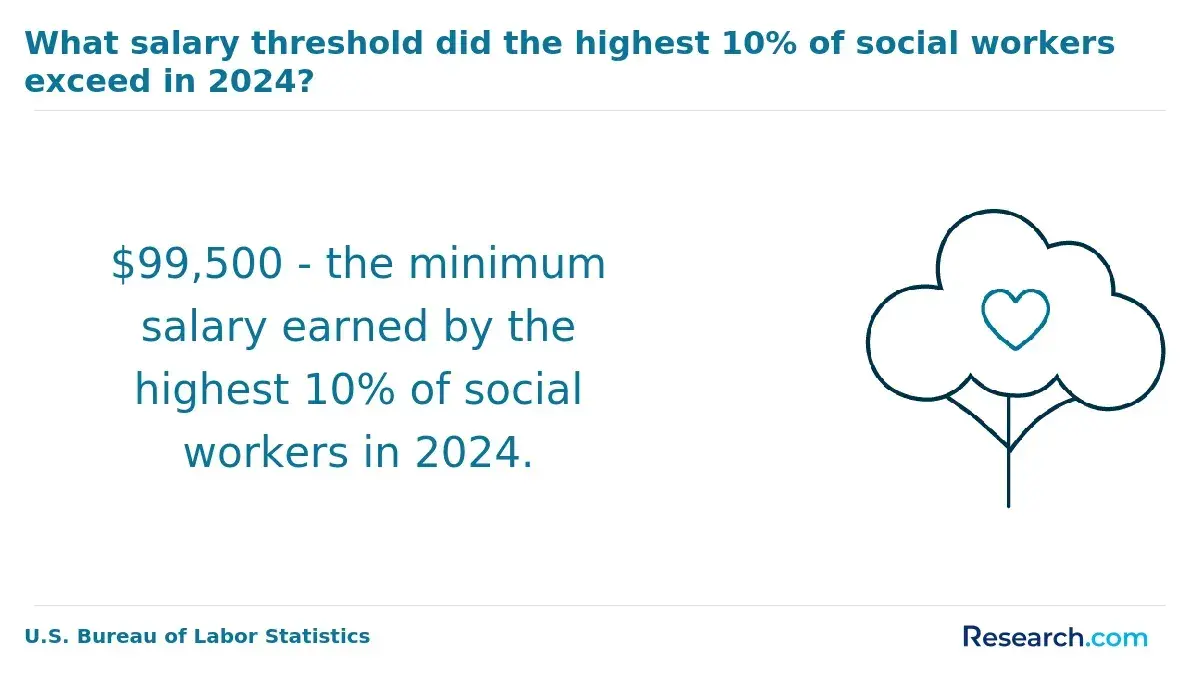
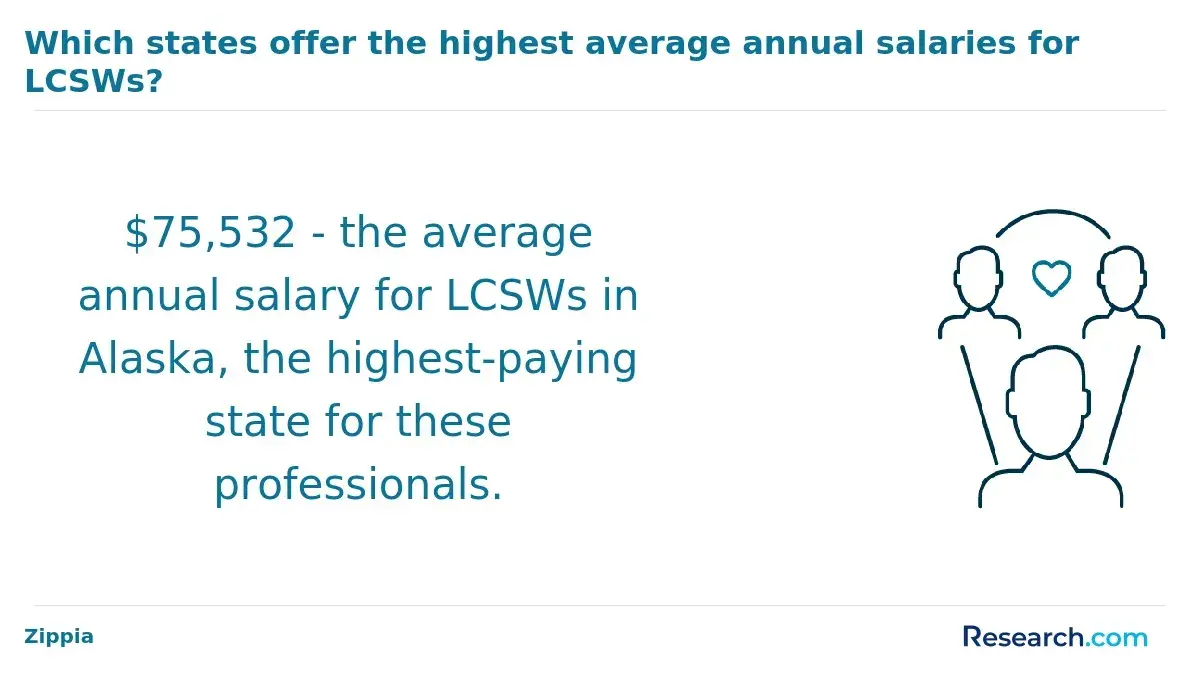
Salary potential depends on specialization, employer, license level, region, and experience. Median wages for clinical social workers reached around $62,000, with top professionals earning over $90,000. Higher salaries often appear in healthcare administration and policy advisory roles, typically exceeding $75,000 annually.
Graduates who pursue clinical licensure may improve their long-term earning potential, but licensure requires more than completing the MSW. Most states require supervised post-master’s hours, an exam, and continued compliance with licensing rules. Non-clinical graduates can still pursue strong career paths in program management, policy, advocacy, community development, and agency leadership.
Online CSWE-accredited MSW programs can strengthen career preparation by allowing students to complete 900-1,200 fieldwork hours locally. According to Social Work Degree Center's 2026 data, this flexibility can enhance career prospects because students gain experience in agencies and communities where they may later seek employment.
Regional differences matter. Urban areas may offer more specialized clinical and hospital-based roles, while rural communities may need generalist social workers who can handle broader case management, outreach, crisis response, and community support responsibilities. Certifications in areas such as clinical social work or substance abuse counseling can also improve employability and income potential.
For students evaluating the degree, the strongest salary outcomes usually come from combining a CSWE-accredited MSW with targeted field placements, licensure planning, relevant specialization, and a realistic understanding of local labor markets.
How do you evaluate and choose a reputable CSWE-accredited online MSW program?
To choose a reputable CSWE-accredited online MSW program, start by verifying accreditation directly rather than relying only on marketing language. The program should be accredited by the Council on Social Work Education, not merely housed at an accredited university. Institutional accreditation and programmatic CSWE accreditation are different, and both matter for quality and credential recognition.
Next, evaluate whether the program fits your licensing goals. If you plan to become a clinical social worker, confirm that the curriculum, concentration, field education, and advising support align with your state’s requirements. If you are more interested in administration, policy, or community practice, look for relevant advanced coursework and field placements.
- Accreditation: confirm CSWE status and make sure the specific MSW program is covered.
- Licensure support: ask how the program advises students in your state and tracks field documentation.
- Field placement process: determine whether the school finds placements, whether students must locate sites, and what support is available if a placement falls through.
- Faculty expertise: review whether instructors have clinical, policy, research, or agency leadership experience aligned with your goals.
- Specializations: compare options such as clinical social work, macro practice, healthcare, school social work, substance abuse, or community practice.
- Student support: assess advising, tutoring, library access, technology help, career services, and exam preparation resources.
- Outcomes: request graduation rates, licensure exam pass rates, placement outcomes, and alumni career data when available.
- Total cost: compare tuition, fees, aid, program length, and lost work time.
Also consider fit. A highly ranked program may not be the best choice if it cannot support field placement in your area, requires live classes during your work hours, or lacks your intended specialization. Likewise, the lowest-cost option may not be the best value if it offers limited advising or weak practicum support.
The best online MSW program is the one that is accredited, affordable enough to complete, realistic for your schedule, accepted for your intended license pathway, and strong in the type of social work you plan to practice.
What are the differences between online and campus-based MSW program formats?
Online and campus-based MSW programs can lead to the same degree outcome when both are CSWE-accredited, but the learning experience differs. The main differences involve scheduling, interaction, field placement logistics, networking, and access to campus resources.
Online programs often use asynchronous coursework, live virtual sessions, or a mix of both. This format can work well for working adults, caregivers, military students, rural students, and those who cannot relocate. Campus programs provide more in-person interaction, set class schedules, immediate access to physical campus resources, and local agency networks tied to the university.
Field education remains required in both formats. Online students usually complete internships in or near their own communities with program approval, while campus students often use nearby agencies or established university placement partners. In either format, the quality of field supervision can be just as important as the coursework.
| Factor | Online MSW | Campus-based MSW |
| Schedule | More flexible; may include asynchronous coursework | More structured; classes meet at set times and locations |
| Best fit | Working professionals, caregivers, rural students, and students who cannot relocate | Students who prefer face-to-face learning and campus involvement |
| Field placement | Often completed locally with program oversight | Often completed through nearby or affiliated agencies |
| Networking | Virtual networking, local practicum contacts, online cohorts | In-person faculty, peer, alumni, and agency connections |
| Resources | Digital libraries, online advising, virtual support services | Physical libraries, campus offices, in-person events, and local support |
Income data from CSWE's 2018 Workforce Data Brief shows that 61% of online MSW graduates earn $40,000 or more annually, compared to 74% of campus graduates. This difference should not be read as proof that one credential is inherently stronger. It may reflect differences in student demographics, work status, geography, job type, and career timing.
Choose online if flexibility, local fieldwork, and continuing employment are priorities. Choose campus-based study if you value in-person learning, fixed structure, and direct access to campus-based networks. In both cases, CSWE accreditation, field education quality, licensure alignment, and total cost should drive the final decision.
Other Things You Should Know About Social Work
A hidden benefit of specialization tracks in CSWE-accredited online MSW programs is the tailored expertise they offer. In 2027, students can gain in-depth knowledge in a specific area, enhancing their job prospects by aligning closely with their career goals and meeting diverse client needs.
Yes, many accredited online MSW programs offer specialization tracks such as clinical social work, community organization, or school social work. These tracks allow students to focus on their career interests by tailoring coursework and field experiences. Completing a specialization may enhance job prospects in specific social work sectors.
In 2027, CSWE-accredited online MSW programs offer financial aid options like federal student loans, grants, and scholarships. Eligibility often includes maintaining a minimum GPA. Check with specific programs for deadlines and application processes to secure funding.
References
- Types of Social Work Degrees https://www.socialworkers.org/Careers/Career-Center/Explore-Social-Work/Types-of-Social-Work-Degrees
- High-demand social work roles in 2026: trends and opportunities https://socialwork.pacific.edu/blog/high-demand-social-work-roles-2026-trends-and-opportunities
- Social work salaries: How much can I earn with an MSW degree? https://www.masterofsocialwork.com/faqs/social-work-salaries
- Best Online MSW Programs - CSWE-Accredited https://www.onlinemastersdegrees.org/best-programs/social-work-msw/cswe-accredited/
- CSWE Accredited Online & On-Campus MSW Programs | Tulane University https://socialwork.tulane.edu/msw-programs/
- Social Work (MSW) https://www.wlu.ca/programs/social-work/graduate/social-work-msw/index.html
- FAQ: MSW vs. LCSW https://www.onlinemswprograms.com/faqs/msw-vs-lcsw/
- Online MSW Programs Guide: Accredited & Affordable - AU https://online.aurora.edu/program-resources/choosing-best-msw-degree/
- Best Online Master's Programs For Social Work 2025 https://www.psychology.org/social-work/best-masters-programs/
- What Are the Licensed Social Worker Requirements? https://www.tuw.edu/school-news/licensed-social-worker-requirements/