2027 What to Look for in an Online MSW Career Services Office

Co-Founder and Chief Data Scientist
Choosing an online MSW program is not only an academic decision. It is also a career decision: where you will complete field education, how you will prepare for licensure, which employers you can access, and whether the program can support your goals from a distance.
Career services can make a major difference for online MSW students because many are balancing work, family responsibilities, practicum hours, and state-specific licensing requirements. A strong office does more than review resumes. It helps students choose a practice path, understand credentialing rules, connect with agencies, prepare for interviews, build a professional network, and move from field placement into employment.
This guide explains what to look for in an online MSW career services office, including staff qualifications, CSWE alignment, licensure support, job placement outcomes, field placement help, alumni networking, specialized career guidance, and salary expectations across social work roles.
Key Things You Should Know
- Comprehensive career services for online MSW students should offer tailored job placement support, with 75% of graduates securing roles within six months, reflecting workforce demand in 2025.
- Effective offices provide up-to-date labor market data and networking opportunities, crucial as 60% of social workers find employment through professional connections.
- Accessibility and personalized advising are vital, as 85% of online learners report higher satisfaction when services accommodate flexible scheduling and virtual consultations.
What qualifications and credentials should an online MSW career services office staff possess?
An effective online MSW career services office should be staffed by professionals who understand both career development and the realities of social work practice. General career counseling experience is useful, but MSW students also need guidance on field education, licensure, supervision, public-sector hiring, clinical pathways, and specialty practice areas.
Ideally, staff should include advisors with social work training or direct experience in settings such as mental health, child welfare, healthcare, schools, community organizations, or public agencies. Credentials such as Licensed Clinical Social Worker (LCSW) or Licensed Master Social Worker (LMSW) are especially valuable for students who plan to pursue clinical practice. Career counseling credentials, including National Certified Counselor (NCC) or Certified Career Counselor (CCC), can also signal training in job search strategy, career assessment, interview preparation, and professional development.
Credentials are helpful, but role-specific expertise matters more
Prospective students should not evaluate staff quality by credentials alone. A strong career services team should be able to explain how social work hiring differs by setting, what employers expect from MSW graduates, and how licensure rules affect job options. For example, a student pursuing LCSW licensure may need different guidance than a student interested in macro practice, policy, nonprofit leadership, or case management.
- For clinical students: advisors should understand supervised clinical hours, exam timelines, documentation, and entry-level roles that qualify for post-MSW supervision.
- For school social work students: advisors should understand state education requirements, school district hiring cycles, and any added certification steps.
- For healthcare or behavioral health students: advisors should know how hospitals, community mental health agencies, integrated care settings, and managed care organizations hire MSW graduates.
- For macro or administrative students: advisors should be prepared to discuss program management, advocacy, grant-funded roles, policy work, and leadership pathways.
Because licensure requirements vary across U.S. states, career staff should be able to help students identify the correct licensing board, clarify common application steps, and distinguish between LMSW, LCSW, and other state-specific credentials. They should avoid giving legal or regulatory advice beyond their authority, but they should know how to direct students to official licensing sources and help them plan realistic timelines.
Online programs also require strong virtual advising skills
For distance learners, staff must be comfortable delivering career support through video appointments, email, online workshops, digital job boards, virtual mock interviews, and asynchronous resources. Online MSW students may be working full time or completing field hours during the day, so evening appointments, recorded sessions, and clear response-time expectations matter.
Career staff should also understand labor market demand and how it affects job search strategy. For example, the projected 74,000 annual job openings for social workers can help advisors point students toward areas with consistent demand, including healthcare, school social work, behavioral health, and community-based services.
Finally, look for evidence that staff continue their own professional development. Social work practice, telehealth, state licensing rules, workforce needs, and hiring technology change frequently. A career office that trains staff regularly is more likely to provide accurate, current, and useful support. Students considering long-term academic advancement may also compare options such as the best online PhD social work programs.
How do online MSW programs ensure career services meet CSWE accreditation standards?
Online MSW programs support CSWE accreditation standards by connecting career preparation to social work competencies, field education, professional ethics, and measurable student outcomes. Career services are not a substitute for accreditation requirements, but they can strengthen how students translate MSW training into competent professional practice.
A strong online MSW program should be able to show that career support is integrated with the larger academic and field education experience. That means students receive guidance on professional identity, ethical practice, résumé presentation, interview readiness, licensing pathways, and employment options that fit their concentration or area of interest.
What CSWE-aligned career support should look like
- Career readiness tied to social work competencies: workshops and advising should reinforce professional behavior, ethical decision-making, communication, cultural responsiveness, and evidence-informed practice.
- Field education coordination: career staff, field offices, and faculty should communicate so practicum experiences support both learning outcomes and career goals.
- Licensure and credentialing guidance: students should receive clear information on state-specific pathways, exam preparation resources, supervision planning, and post-graduation next steps.
- Employer and professional connections: programs should maintain relationships with agencies, healthcare organizations, schools, nonprofits, and professional associations.
- Outcome tracking: schools should collect employment data, student feedback, employer feedback, and alumni input to improve services over time.
Professional organization partnerships can also strengthen career support. For example, the National Association of Social Workers (NASW) offers resources such as the NASW JobLink job board, accessed by over 50,000 users monthly. Access to these networks can help online students find openings beyond their immediate geographic area and learn how employers describe MSW-level roles.
Programs may also use virtual job fairs, alumni panels, career development webinars, employer information sessions, and digital networking events to serve students who cannot attend campus-based events. The key question is not whether a service exists on a website, but whether students can actually use it at the right point in their program.
Prospective students should ask how the program documents career outcomes for accreditation and continuous improvement. Useful indicators include graduate employment rates, licensure preparation support, employer engagement, alumni feedback, and evidence that career services adapt to student needs. Cost also matters when weighing program value, so applicants may want to review MSW degree cost alongside career support quality.
What specific career support services should an online MSW program offer students?
An online MSW program should offer career services that support students from enrollment through post-graduation employment. At minimum, this means individualized advising, field placement guidance, licensure planning, resume and cover letter support, interview preparation, job search tools, and employer or alumni connections.
The best offices tailor those services to social work rather than offering generic career advice. A resume for a hospital social work role, for example, should highlight assessment, discharge planning, interdisciplinary collaboration, documentation, and crisis response differently than a resume for a policy or community organizing position.
Core services every online MSW student should expect
- Personalized career advising: guidance on choosing practice areas such as clinical social work, policy, community organizing, child welfare, healthcare, school social work, or nonprofit administration.
- Social-work-specific resume and cover letter reviews: feedback that emphasizes competencies, field experience, client populations, interventions, documentation, and measurable impact.
- Mock interviews: practice for behavioral questions, ethical scenarios, agency fit, crisis response questions, and role-specific expectations.
- Licensure planning: state-by-state guidance on application steps, exam preparation, supervision requirements, and timelines.
- Job boards and employer partnerships: access to MSW-level positions, field placement partners, practicum-to-employment pipelines, and specialty hiring events.
- Networking support: alumni introductions, employer panels, peer groups, mentorship programs, and professional association guidance.
- Postgraduate planning: advice on advanced certifications, continuing education, doctoral study, or specialized training.
Licensure support is especially important because many MSW students pursue roles that require state credentials. Career offices should help students understand the difference between graduating with an MSW and becoming eligible for independent clinical practice. They should also help students plan for exam preparation, supervised experience, and early-career roles that align with their licensing goals.
The University of Pittsburgh MSW Program illustrates the value of dedicated support: part-time online MSW graduates achieved a first-time licensure pass rate 15% above the national average. While results vary by student and program, this kind of outcome shows why exam preparation, advising, and counseling can matter.
Prospective students should ask whether services are available to online learners on the same terms as campus students. That includes appointment access, evening availability, recorded workshops, virtual networking events, and career support after graduation. Applicants comparing programs can also review top online MSW programs with attention to career counseling and job placement resources.
How do online MSW career services prepare students for licensing exams and LCSW certification?
Online MSW career services prepare students for licensing exams and LCSW certification by helping them understand requirements early, organize a realistic timeline, access exam preparation resources, and identify appropriate supervised clinical opportunities after graduation. This support is most effective when it begins before the final semester.
Licensure is state-specific, so career offices should be careful and precise. They should not simply tell students to “take the exam.” Instead, they should help students identify the correct licensing board, understand the difference between master’s-level licensure and independent clinical licensure, and plan for supervised post-MSW experience where required.
Key licensure support services
- State-specific licensing checklists: clear steps for applications, forms, fees, exams, background checks, and supervision documentation.
- Exam preparation workshops: sessions covering ethics, clinical practice, assessment, diagnosis-related content where relevant, interventions, documentation, and professional judgment.
- Practice tests and study planning: structured schedules, question review, test-taking strategies, and ways to identify weak content areas.
- Supervision planning: guidance on finding eligible supervisors, asking employers about supervision, and tracking hours accurately.
- Mentor and alumni connections: introductions to licensed professionals who can discuss preparation strategies and early-career decisions.
- Role-specific job search support: resume, interview, and job search help for positions that align with clinical licensure pathways.
Career advisors should also help students distinguish between clinical and nonclinical goals. Not every MSW graduate needs LCSW certification. Some pursue case management, community practice, school social work, policy, advocacy, administration, or program evaluation. A strong office helps students choose a path based on career goals, state rules, and the type of work they want to do.
Because many online MSW students are working adults, flexible exam preparation matters. Asynchronous modules, recorded reviews, evening sessions, digital study plans, and virtual office hours can make licensing support more usable. This flexibility aligns with data showing online graduates return to previous employers at higher rates (46% vs. 20% for in-person), which means many students may be preparing for licensure while remaining employed.
Students who are still deciding whether social work fits their academic and professional goals may find broader context in Is social work an easy major?
What job placement rates and employment outcomes do reputable online MSW programs achieve?
Reputable online MSW programs can produce employment outcomes comparable to campus-based programs, but applicants should examine the details behind any job placement claim. A placement rate is only useful if the school explains what it measures, when it is measured, which graduates are included, and what types of jobs count.
Data from the CSWE National Workforce Initiative 2018 shows that 52% of online MSW graduates had less difficulty securing satisfying employment compared to 43% of their in-person peers. This suggests that online delivery can support strong career outcomes, particularly when students receive effective advising, field placement support, and licensure preparation.
What employment data to request
- Percentage of graduates employed within six to twelve months
- Percentage employed in social work or closely related roles
- Types of employers hiring graduates, such as healthcare systems, schools, nonprofit agencies, government offices, mental health clinics, and child welfare organizations
- Share of graduates pursuing clinical licensure, school certification, or other credentials
- Number of field placements that lead to job offers
- Geographic regions where graduates are employed
- Career outcomes by concentration or specialization, if available
Applicants should be cautious with broad statements such as “high placement rate” or “strong employment outcomes” if the program does not provide definitions. For example, a school may count any employment, only full-time employment, only social work employment, or only graduates who responded to a survey. Each method produces a different picture.
Employment outcomes also depend on factors outside the career office, including local labor markets, state licensing rules, student mobility, prior work experience, field placement quality, and the program’s reputation with employers. Schools with dedicated career advisors and strong connections in child welfare, mental health, healthcare, schools, and community agencies may be better positioned to help students move into relevant roles.
Questions to ask before enrolling
- What is the most recent graduate employment data, and how was it collected?
- How many online MSW students use career services each year?
- Are online students eligible for the same employer events and alumni networking as campus students?
- Which employers have hired recent online MSW graduates?
- How does the program support students who live outside the school’s home state?
- What help is available after graduation?
The strongest programs are transparent about both outcomes and limitations. They do not promise employment, but they can show a clear system for helping students prepare, connect, apply, interview, and advance.
How should online MSW career services support students in specialized social work fields?
Online MSW career services should help students translate broad social work training into specific career pathways. Specialized fields such as clinical social work, school social work, child welfare, gerontology, healthcare, community practice, policy, and nonprofit leadership each have different hiring expectations, credentials, supervision needs, and work environments.
A useful career office does not treat all MSW students the same. It helps students identify the population, setting, and level of practice they want, then builds a job search and field placement strategy around that goal.
Examples of field-specific support
- Clinical social work: guidance on supervised clinical roles, LCSW pathways, exam preparation, documentation skills, and interviewing for behavioral health or therapy-related positions.
- School social work: information on education system requirements, school district hiring timelines, student support teams, special education processes, and state-specific credentials.
- Child welfare: preparation for public agency hiring, court-involved work, safety assessment, trauma-informed practice, and secondary traumatic stress management.
- Healthcare social work: resume and interview support for hospitals, hospice, integrated care, discharge planning, care coordination, and interdisciplinary teams.
- Gerontology: connections to aging services, long-term care, hospice, caregiver support, benefits navigation, and community-based aging programs.
- Macro practice and policy: support for advocacy, program evaluation, grant-funded roles, coalition work, nonprofit management, and public policy organizations.
Specialized support should also include targeted field placements and employer relationships. A student interested in hospital social work, for example, benefits from different practicum sites and interview preparation than a student pursuing community organizing or policy advocacy.
Regional labor market information can help students make more strategic decisions. With social work employment in California projected to grow 14% through 2033—exceeding the national average—career services should help students understand where demand is growing, which specialties are hiring, and how regional licensing or credentialing rules affect employment.
Career offices should also offer workshops on specialized resumes, cover letters, case-based interviews, credentialing boards, continuing education, and certifications. Students should ask whether advisors have expertise in their intended field, not just general knowledge of social work careers.
What salary expectations should MSW graduates have across different social work career paths?
MSW salaries vary widely by role, location, employer type, licensure status, years of experience, and whether the work is clinical, administrative, school-based, healthcare-based, government-funded, or private practice-oriented. Students should use salary information as a planning tool, not as a guarantee.
According to the CSWE National Workforce Initiative 2018 Data Brief, 61% of online MSW graduates earn $40,000 or more annually, compared to 74% of those who graduated in person. This difference may reflect factors such as geography, student employment patterns, prior experience, program choice, or the types of jobs graduates pursue.
Typical salary patterns by career path
- Licensed clinical social work and mental health roles: direct clinical roles such as licensed clinical social workers (LCSWs) typically start between $45,000 and $60,000, with experienced professionals often surpassing $65,000, especially with state licensure.
- Child welfare and government roles: these positions generally offer $40,000-$50,000 due to public service budget limits, though benefits, pension systems, union structures, or loan forgiveness options may add value.
- School social work and community organizations: these roles often pay $42,000-$55,000 initially, with benefits such as loan forgiveness sometimes available depending on employer and location.
- Administration, policy, and research: these roles can range from $55,000 to $75,000 or more, reflecting management, analysis, program design, or leadership responsibilities.
Location can significantly affect pay. Metropolitan areas may offer higher wages but also higher housing, transportation, and childcare costs. Rural or underserved areas may pay less in base salary but offer strong mission fit, loan repayment opportunities, or faster responsibility growth.
Employer type also matters. Nonprofit agencies may have tighter salary bands but provide meaningful client-facing experience. Government roles may offer stability and benefits. Healthcare systems may pay more for specialized experience. Private practice can eventually offer higher earnings for licensed clinicians, but it also involves business development, insurance, supervision, compliance, and income variability.
How career services can help with salary planning
A strong online MSW career office should help students read job postings critically, compare total compensation, prepare for salary conversations, and understand how licensure affects long-term earning potential. Students should ask advisors for salary context by region, specialty, and employer type rather than relying on one national figure.
How do online MSW programs connect students with internship and field placement opportunities?
Online MSW programs connect students with internships and field placements by coordinating with approved agencies in or near the student’s location, verifying that sites meet program and accreditation expectations, and matching placements to the student’s learning goals, schedule, and career interests.
This support is especially important for online learners who may not live near campus. According to the CSWE National Workforce Initiative, 54% of online MSW students have six or more years of prior work experience compared to 23% of in-person students. Many online students are also balancing employment, caregiving, and coursework, so placement planning must be realistic and early.
What the placement process should include
- Early planning: students should receive timelines, hour requirements, site expectations, and application steps well before placement begins.
- Location-based agency outreach: the field office should help identify eligible agencies near the student when possible.
- Fit assessment: placements should align with student interests, concentration, licensure goals, and required competencies.
- Agency approval: programs should confirm that sites and supervisors meet school and accreditation standards.
- Interview preparation: students should receive help presenting their experience and goals to potential field sites.
- Ongoing monitoring: faculty, field liaisons, and site supervisors should stay connected throughout the placement.
Career offices and field education teams should also help students navigate challenges unique to remote placement. These may include state-specific requirements, agency paperwork, background checks, workplace scheduling, supervision availability, and whether a student can complete field hours at an existing employer.
Support should include help navigating varying state licensure and agency approval requirements, advice on balancing internship hours with ongoing employment, workshops on professional development tuned to remote fieldwork, and access to alumni networks and employer contacts for expanded opportunities.
Digital platforms can make the process more efficient by tracking student interests, approved sites, required documents, supervisor information, and deadlines. However, technology should not replace human support. Students should be able to contact a placement coordinator when problems arise, especially if a site falls through, supervision changes, or the placement no longer meets learning objectives.
What alumni networking and professional development resources should an online MSW program provide?
An online MSW program should provide alumni networking and professional development resources that help students build relationships beyond their classes and field sites. Because online students may not have the same informal campus interactions as in-person students, structured networking is especially important.
The most useful alumni networks are searchable, active, and relevant. Students should be able to connect with graduates by location, specialty, employer type, licensure status, or practice area. A general alumni directory is less valuable than a system that helps a student find, for example, an LCSW supervisor in behavioral health, a school social worker in a specific state, or a policy advocate working in child welfare.
High-value alumni and professional development resources
- Mentorship programs: structured matches between students and alumni based on interests, geography, or practice area.
- Virtual networking events: panels with alumni working as clinical social workers, policy advocates, healthcare social workers, school social workers, administrators, and community organizers.
- Career workshops: sessions on resumes, interviews, salary conversations, licensure steps, supervision, and professional branding.
- Exclusive job boards: postings from employers who want MSW graduates or have hired from the program before.
- Continuing education support: access to trainings that help alumni maintain licensure and stay current in practice.
- Professional association connections: guidance on joining organizations such as the National Association of Social Workers (NASW) and using their career resources.
Professional development should continue after graduation. New MSW graduates often need help with early-career decisions, licensing paperwork, supervision questions, first clinical or agency roles, and advancement into specialized positions. Alumni access to workshops, job postings, and networking events can increase the long-term value of the degree.
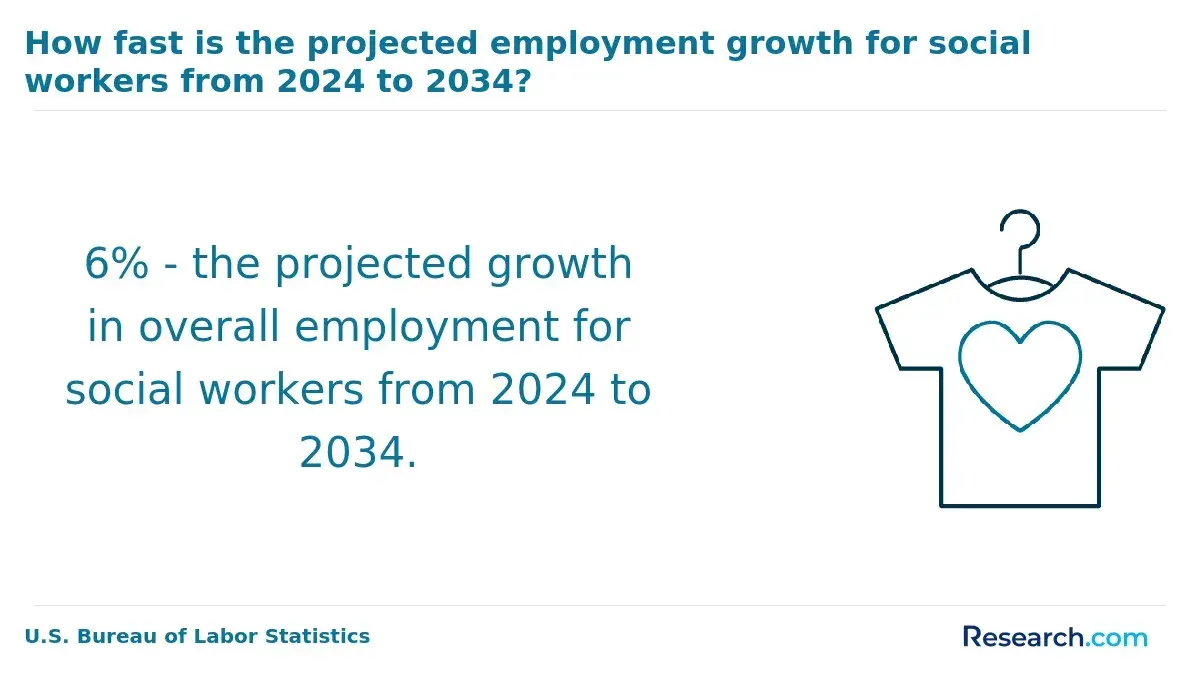
With social worker employment in the U.S. projected to grow 6% from 2024 to 2034—faster than the average for all occupations according to the U.S. Bureau of Labor Statistics—students benefit from programs that help them stay visible, connected, and prepared for changing workforce needs.
Applicants should ask whether alumni resources are available to online graduates, how often events are held, whether employers participate, and whether the network includes graduates in the student’s intended field or region.
How can prospective students evaluate the quality and responsiveness of an online MSW career services office?
Prospective students should evaluate an online MSW career services office before enrolling, not after problems arise. The best way to assess quality is to test responsiveness, review outcomes, ask specific questions, and compare the answers across programs.
Start by contacting the office as an applicant. Ask how online students schedule appointments, how quickly staff respond, whether advising is available by video, email, and chat, and whether support continues after graduation. Quality offices typically provide clear communication and responses within 48 hours.
Questions to ask career services before choosing a program
- Are online MSW students served by the same career office as campus students?
- Do advisors specialize in social work careers, licensure, or field-specific pathways?
- How do you help students find field placements near their location?
- What job boards, employer partnerships, or hiring events are available to online students?
- Do you track graduate employment rates, job titles, employer types, and salary outcomes?
- How do you support students pursuing LCSW certification or other credentials?
- Are mock interviews and resume reviews tailored to social work roles?
- Can students access alumni mentors by location or specialty?
- What support is available in the first year after graduation?
Look for concrete evidence rather than broad assurances. A strong office can describe its services, timelines, employer relationships, licensure resources, and outcome tracking. It should also be honest about what it cannot guarantee. Career services can improve preparation and access, but they cannot guarantee a job, salary, licensure approval, or placement at a specific agency.
Employment and salary data can help you judge value. According to the U.S. Bureau of Labor Statistics, the median annual wage for social workers is $61,330. Ask whether the program provides outcome data that helps students understand how graduates perform by role, region, and setting, rather than relying only on national wage figures.
Student and alumni feedback is also important. Reviews, information sessions, alumni panels, and direct conversations can reveal whether career services are responsive in practice. Pay attention to patterns: repeated praise for field placement help, licensure guidance, and job search support is meaningful; repeated complaints about slow communication or generic advising are warning signs.
The strongest online MSW career services offices are accessible, specialized, transparent, and accountable. They help students make informed career decisions before enrollment, stay on track during field education, prepare for licensure, and move into roles that fit their professional goals.
Other Things You Should Know About Social Work
Strong communication, empathy, and problem-solving skills are critical for social work professionals. Additionally, social workers must be adept at case management, active listening, and cultural competence to effectively support diverse client populations. Analytical thinking and ethical decision-making also play important roles in navigating complex social issues.
In 2027, an online MSW career services office should offer virtual networking opportunities, access to job databases, and personalized career counseling. Support in resume building and interview training, along with a focus on tech-savvy skill development, can ensure graduates are prepared for evolving social work environments.
Continuing education is essential for social workers to maintain licensure and stay current with evolving best practices and regulations. Many states require ongoing professional development credits, which can include workshops, seminars, or advanced certifications. Staying informed on new research and intervention strategies benefits both practitioners and clients.
Social work is governed by a code of ethics that emphasizes respect for client dignity, confidentiality, and professional integrity. Practitioners must prioritize client well-being while navigating conflicts of interest and maintaining clear boundaries. Ethical social work practice requires adherence to laws, cultural sensitivity, and a commitment to social justice.
References
- Is it really possible to make a living helping others? https://online.une.edu/blog/is-it-really-possible-to-make-a-living-helping-others/
- How I Passed the Licensing Exam: 10 Tips https://www.socialworker.com/feature-articles/education--credentials/How_I_Passed_the_Licensing_Exam%3A_10_Tips/
- Social Work Careers https://socialworklicensemap.com/social-work-careers/
- Internet Sites for Career Planning https://ncda.org/resources/
- The Time is Right to Advance Your Career as a Social Worker https://onlinedegrees.keuka.edu/blog/advance-your-career-social-worker
- The Pros and Cons of Online MSW Programs – Should I Pursue an MSW Online? https://www.masterofsocialwork.com/resources/pros-and-cons-online-msw-programs
- Online Master of Social Work (MSW) Program https://online.pennwest.edu/programs/social-work-grad/index.php
- How to Become a Social Worker https://www.onlinemswprograms.com/careers/how-to-become-a-social-worker/
- The Importance of a CSWE Accredited Program in Social Work - Tulane School of Social Work https://socialwork.tulane.edu/blog/importance-of-cswe-accredited-program/
- Best Online MSW Programs - CSWE-Accredited https://www.onlinemastersdegrees.org/best-programs/social-work-msw/cswe-accredited/