2027 Child Welfare vs School Social Work: Which Career Path Is Right for You?

Co-Founder and Chief Data Scientist
The choice between child welfare and school social work is not just a question of where you want to work. It shapes your daily schedule, stress level, supervision, licensure path, client relationships, and long-term career options. Both careers serve children and families, but they do so in different systems: child welfare is centered on safety, family stability, foster care, and court involvement, while school social work is centered on student well-being, attendance, behavior, family support, and educational access.
This guide compares the two paths for students considering a BSW or MSW, career changers exploring social work, and current human services professionals deciding where to specialize. You will learn how the roles differ, what education and licensing requirements apply, how salaries and demand compare, and what to look for in accredited online or campus-based social work programs.
Key Things You Should Know
- Child welfare social workers primarily handle crisis intervention and safety assessments, with a 12% projected job growth by 2030, reflecting high demand due to increasing child protection needs.
- School social workers focus on student mental health and academic support, with 11% employment growth expected through 2030, driven by rising awareness of mental health in education.
- Both careers require a Master's in social work and licensure, but child welfare roles often involve more fieldwork and legal interaction, while school social work emphasizes collaboration with educators and families.
What is the difference between child welfare and school social work?
Child welfare social work focuses on child safety and family preservation. These professionals respond to reports of abuse, neglect, or exploitation; assess whether a child is safe at home; coordinate foster care or reunification services; and work with courts, child protective services, and community agencies. The work often involves urgent decisions, legal documentation, home visits, and difficult conversations with parents, caregivers, and children.
School social work focuses on helping students succeed academically, socially, and emotionally. School social workers typically work in K-12 settings, where they support students dealing with anxiety, bullying, family stress, homelessness, attendance problems, behavioral concerns, disability-related needs, or crisis events. They collaborate with teachers, counselors, administrators, parents, and community providers to reduce barriers to learning.
The practical difference is the system you work inside. Child welfare social workers operate mainly in protective services, family courts, foster care, and community agencies. School social workers operate mainly in educational systems, where the goal is to keep students safe, supported, and engaged in school.
| Factor | Child welfare social work | School social work |
| Main focus | Child safety, abuse or neglect response, family preservation, foster care, reunification | Student mental health, attendance, behavior, academic access, family-school support |
| Common setting | Child protective services, foster care agencies, family service agencies, courts, homes | Elementary, middle, and high schools; school districts; alternative education settings |
| Daily pace | Often crisis-driven and case-management heavy | More structured around the school calendar, with urgent situations as they arise |
| Key partners | Courts, attorneys, law enforcement, foster families, medical providers, family agencies | Teachers, administrators, parents, school counselors, psychologists, community providers |
| Best fit for | People comfortable with fieldwork, legal systems, risk assessment, and high-stakes decisions | People interested in prevention, counseling, student advocacy, and educational equity |
Regarding child welfare careers versus school social work roles, child welfare caseworkers make up about 42% of California's combined child, family, and school social work workforce, demonstrating strong demand. Both careers require assessment, advocacy, communication, and documentation skills. The difference is how those skills are used: child welfare leans more toward crisis intervention and legal compliance, while school social work leans more toward prevention, counseling, and school-based support.
If you plan to move into advanced practice, leadership, or teaching, flexible doctoral options such as DSW online programs may be relevant later in your career. For most entry and mid-level roles, however, the first major decision is usually whether to pursue a BSW, MSW, state licensure, or school-specific certification.
What education and degree requirements do child welfare and school social workers need?
Most child welfare and school social work careers begin with a Bachelor of Social Work (BSW) or a Master of Social Work (MSW). A BSW can qualify graduates for some entry-level child welfare and case management roles, depending on the state and employer. An MSW is more commonly required for clinical practice, advanced roles, supervisory positions, and many school social work positions.
For child welfare, employers often look for coursework or field experience in child protection, family systems, trauma, substance use, poverty, domestic violence, foster care, and crisis intervention. For school social work, programs should include training in child and adolescent development, educational policy, school-based assessment, special education systems, family engagement, and counseling methods used with students.
Accreditation matters. Students should prioritize programs accredited by the Council on Social Work Education (CSWE), especially if they plan to pursue licensure. A non-accredited program can create serious barriers when applying for social work licenses, school credentials, or advanced standing MSW options.
- BSW: Often used for entry-level case management, child welfare support roles, and preparation for advanced standing MSW programs.
- MSW: Commonly needed for clinical roles, higher-level child welfare practice, school social work certification, and many supervisory positions.
- Field placement: Especially important because employers want graduates who have worked in relevant settings, such as child protective services, foster care agencies, schools, or youth-serving nonprofits.
- Continuing education: Often needed to maintain licensure and stay current in trauma-informed care, mandated reporting, ethics, and state-specific practice rules.
Employment growth in Michigan projects a 4.1% increase for child, family, and school social workers from 2022 to 2032, resulting in about 1,080 job openings annually due to greater needs in parenting support and child abuse prevention. Students who need a flexible route to graduate study may compare options such as 1 year MSW programs online no bsw, while confirming accreditation, field placement support, and eligibility for their intended state license or school credential.
What are the licensing and certification requirements for each career path?
Licensing rules are set by each state, so requirements differ by location and job title. In general, child welfare roles may accept a BSW or MSW depending on the position, while clinical and supervisory roles usually require licensure. School social work often requires both social work licensure and a school-specific certification, endorsement, or approval from the state education agency.
For child welfare careers, common credentials include Licensed Social Worker (LSW) or Licensed Clinical Social Worker (LCSW), depending on the state and scope of practice. Many clinical licenses require 2,000 to 4,000 hours of supervised clinical experience after graduation. Some professionals also pursue voluntary credentials through organizations such as the National Association of Social Workers (NASW), including the Certified Child Welfare Specialist (CCWS).
For school social work, requirements often include an MSW with relevant school social work preparation, supervised fieldwork in K-12 settings, and a state department of education certification or endorsement. Some states require a state-specific exam or the Praxis exam. Maintaining an LSW or LCSW may also be necessary, particularly for roles involving counseling, assessment, or clinical services. NASW also offers voluntary certification as a School Social Work Specialist (SSWS).
| Requirement | Child welfare | School social work |
| Typical degree | BSW for some entry-level roles; MSW for advanced and clinical roles | Often MSW for school certification or advanced school-based roles |
| Common license | LSW or LCSW, depending on role and state | LSW or LCSW may be required, plus school-specific certification or endorsement |
| Supervised experience | Often required for clinical licensure; may include 2,000 to 4,000 hours | Often includes supervised fieldwork in K-12 or school-related settings |
| Optional credential | Certified Child Welfare Specialist (CCWS) | School Social Work Specialist (SSWS) |
Child, family, and school social workers earned a mean annual wage of $59,190, while those in elementary and secondary schools made a higher average of $70,070 (Bureau of Labor Statistics). Because pay, title protection, and practice authority vary by state, prospective students should review both licensing rules and regional compensation data. A resource on the highest paying states for social workers can help frame salary expectations alongside local credential requirements.
What is the typical job outlook and employment demand for child welfare vs. school social work?
Demand exists in both fields, but it is driven by different needs. Child welfare hiring is tied to child abuse and neglect reports, foster care caseloads, family instability, court mandates, and public agency staffing needs. School social work demand is tied to student mental health concerns, attendance issues, behavioral support, family engagement, and the growing recognition that nonacademic barriers affect learning.
In California, child welfare employment trends in the United States indicate that around 28,540 child, family, and school social workers are currently employed with an average annual salary of $51,410. Demand for child welfare workers tends to be steady because agencies must respond to safety concerns regardless of economic conditions. However, the work can be affected by public budgets, turnover, high caseloads, and local agency resources.
School social work job growth and demand are shaped by district funding, state staffing rules, mental health initiatives, and student support priorities. School-based roles may offer structured schedules, district benefits, and the possibility of working within an academic calendar. Competition can vary by district, especially in areas where school social work positions are limited or funded through grants.
- Child welfare may offer: consistent need, varied fieldwork, early responsibility, and experience with courts and family systems.
- Child welfare may require: comfort with crisis response, safety decisions, extensive documentation, and emotionally difficult cases.
- School social work may offer: a structured environment, prevention-focused work, student-centered practice, and collaboration with educators.
- School social work may require: navigating school bureaucracy, managing multiple student needs, and aligning services with educational policies.
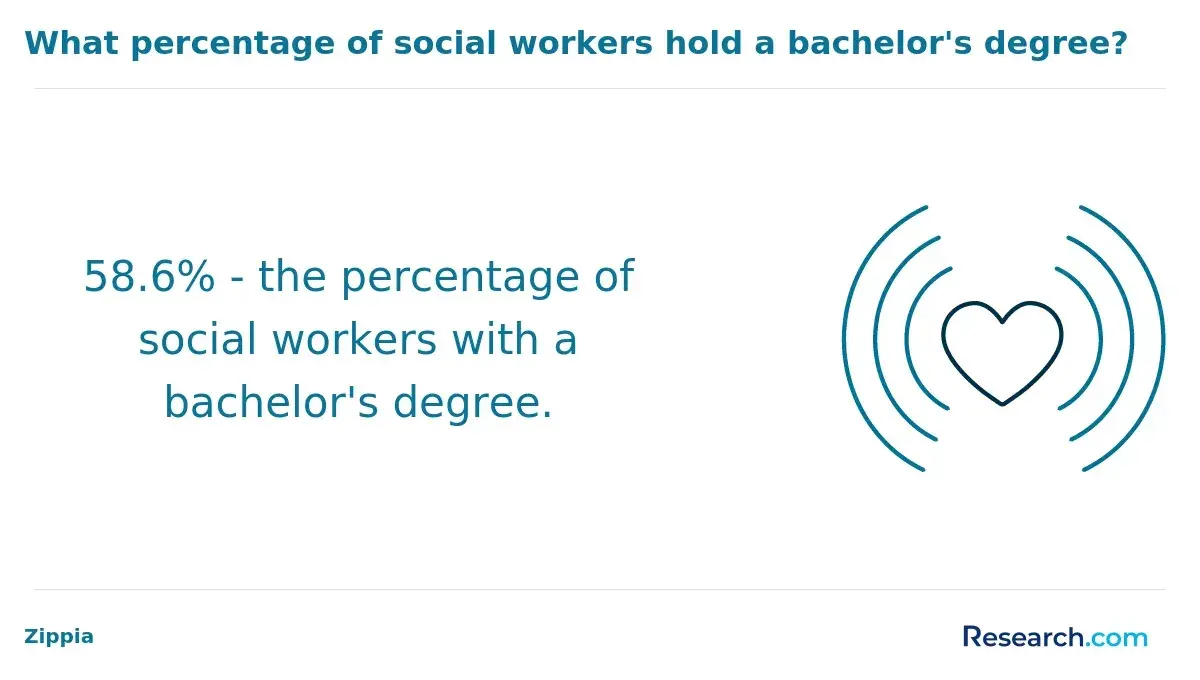
Prospective social workers should weigh employment stability, compensation, caseload expectations, location, and emotional demands. Students asking what can i do with a bachelor's in social work should also note that a BSW may open some entry-level roles, but many specialized or clinical positions require graduate education and licensure.
How do salaries compare between child welfare workers and school social workers?
Salaries often differ because child welfare and school social workers are employed by different systems. School social workers may be paid through school district salary schedules, which can include predictable steps based on education and years of service. Child welfare workers are often employed by government or nonprofit agencies where compensation may be more constrained by public budgets or agency funding.
School social workers earned an average wage of $33.69 per hour, which roughly converts to an annual salary near $70,000 for full-time roles. Child welfare workers generally earn less, with salaries ranging from $40,000 to $55,000 annually, varying by state and agency resources.
Key factors behind these differences include:
- School social workers often benefit from well-funded educational institutions offering structured salary scales.
- Child welfare workers usually work for government or nonprofit agencies that may have tighter budgets.
- Non-monetary benefits like loan forgiveness and diverse career advancement opportunities may be more common in child welfare.
For example, a new school social worker in an urban district might start around $60,000, increasing up to $85,000 with experience. Conversely, a child welfare worker in rural areas may begin closer to $38,000 with slower growth. The field of school social work reported 57,700 positions recently, reflecting a growing demand for specialized support in educational settings.
Salary should not be the only comparison. Look at benefits, union coverage, retirement plans, workload, travel requirements, supervision quality, safety protocols, tuition support, and advancement paths. A lower starting salary may be more manageable if the role provides strong supervision and a clear route to licensure; a higher salary may be less attractive if caseloads or district expectations are unsustainable.
What are the main job responsibilities and daily tasks in each role?
Child welfare social workers are responsible for assessing risk, protecting children, and helping families stabilize. Their work may begin with a report of abuse or neglect and continue through investigation, safety planning, service coordination, foster care placement, reunification planning, or court involvement. Because decisions can affect custody and family structure, documentation must be timely, factual, and legally defensible.
Common child welfare tasks include:
- Investigating reports of abuse, neglect, or unsafe living conditions.
- Conducting home visits and interviewing children, parents, caregivers, and collateral contacts.
- Creating safety plans and service plans for families.
- Coordinating counseling, substance use treatment, parenting support, housing resources, or financial aid.
- Preparing reports for court and testifying when required.
- Working with foster families, kinship caregivers, attorneys, law enforcement, and medical providers.
School social workers focus on removing barriers that prevent students from learning and participating in school. Their work may include short-term counseling, crisis response, attendance interventions, family outreach, behavioral support, and referrals to outside services. They must understand both social work ethics and school rules, including confidentiality limits, mandated reporting, disability-related supports, and district procedures.
Common school social work tasks include:
- Assessing students' social, emotional, behavioral, and family-related needs.
- Providing individual or group counseling for issues such as anxiety, bullying, grief, or conflict.
- Supporting attendance, dropout prevention, and re-engagement efforts.
- Collaborating with teachers, parents, administrators, counselors, and psychologists.
- Connecting families with food, housing, health care, mental health, or community resources.
- Participating in crisis response and schoolwide prevention programs.
Both roles require strong assessment, communication, case management, cultural humility, and ethical judgment. The main difference is context: child welfare workers operate within legal and protective frameworks, while school social workers operate within educational systems focused on student development and access to learning.
The Bureau of Labor Statistics reports 83,280 social workers employed in individual and family services with a mean annual salary of $50,780, underlining the importance of these professions in social services.
What social work degree programs and specializations prepare you for these careers?
The most relevant degrees are the Bachelor of Social Work (BSW) and Master of Social Work (MSW). A BSW builds foundational skills in human behavior, policy, research, ethics, interviewing, and case management. An MSW provides advanced preparation for clinical practice, specialized child and family services, school-based practice, leadership, and licensure.
Students interested in child welfare should look for programs with coursework and field placements in foster care, family preservation, child protection, trauma, substance use, domestic violence, poverty, and legal-ethical decision-making. Students interested in school social work should look for coursework and field placements tied to K-12 systems, school law, special education, child and adolescent mental health, behavior intervention, and family-school collaboration.
Relevant specializations include:
- Child Welfare Practice: Focuses on foster care, adoption, child protection, family preservation, and permanency planning.
- School Social Work: Emphasizes school-based interventions, counseling, attendance, behavior support, and collaboration with educators.
- Clinical Social Work with Children and Adolescents: Prepares students for assessment and treatment of youth mental health needs in school or community settings.
- Policy and Administration: Supports careers in program management, agency leadership, advocacy, and child- or education-related social services.
Licensure varies by state but generally requires completing an accredited MSW program coupled with supervised clinical experience. Some states also offer specialized certification in child welfare or school social work to enhance professional credentials.
According to Data USA, the average annual wage for child, family, and school social workers was $56,891, with elementary and secondary schools as the largest employers. Data USA highlights strong job prospects in these educational settings, encouraging students to select programs with accreditation from the Council on Social Work Education (CSWE) and access to relevant field placements.
Are online social work programs accredited and suitable for child welfare or school social work careers?
Yes, online social work programs can be suitable for child welfare and school social work careers if they are properly accredited and include approved field education. The key is not whether the coursework is online; it is whether the program is accredited by the Council on Social Work Education (CSWE), prepares students for the relevant state license or credential, and provides field placements aligned with the student's career goal.
For child welfare, an online program should offer coursework in trauma-informed care, child protection, family systems, crisis intervention, ethics, and mandated reporting. Field placements should give students experience with agencies serving children and families, such as child welfare departments, foster care agencies, family service organizations, or youth-focused nonprofits.
For school social work, an online program should prepare students for school-based practice and any state education requirements. Students should ask whether the program can support field placements in K-12 settings and whether graduates meet eligibility rules for school social work certification or endorsement in their state.
Hands-on practicum experience is essential. Accredited programs typically arrange or approve field placements in relevant settings, but the level of placement support can vary. Before enrolling, ask how placements are secured, whether evening or weekend placements are available, whether school placements are possible in your area, and whether the program has experience placing students in your state.
Local government agencies employed 69,170 child, family, and school social workers in 2023, with a mean annual wage of $68,500, reflecting ongoing demand. Online study can make social work education more accessible, but students should verify accreditation, licensure alignment, practicum expectations, and state-specific requirements before committing.
What are the admission requirements and prerequisites for accredited social work degree programs?
Admission requirements depend on degree level. BSW programs usually require a high school diploma or equivalent, official transcripts, and completion of general education or prerequisite coursework. MSW programs require a bachelor's degree, and advanced standing MSW programs generally require a BSW from an accredited program.
Undergraduate applicants may be asked to complete or show readiness for coursework in psychology, sociology, statistics, human development, writing, or social sciences. Volunteer work, human services experience, or community involvement can strengthen an application, especially for programs with limited seats.
Applicants to master of social work (MSW) programs typically need a bachelor's degree in social work (BSW) or a related field, with a minimum GPA around 3.0, although some schools accept lower GPAs if balanced by professional experience. Additional requirements often include letters of recommendation, personal statements outlining career goals, interviews, and background checks. GRE scores may be required by some programs but are increasingly waived depending on prior academic performance or experience. Advanced standing options enable BSW graduates to shorten the MSW timeline by skipping foundational courses.
Students planning to enter child welfare or school social work should use the admissions process to evaluate fit, not just eligibility. Ask whether the program offers child and family courses, school social work preparation, relevant field placements, licensure advising, and support for state-specific certification. For online programs, confirm whether field placements can be completed near your home and whether the school has placement approval processes in your state.
To ensure eligibility for state licensure, verify that your program is accredited by the Council on Social Work Education (CSWE), especially if you plan to work in child welfare or school social work. Because requirements can vary, directly contacting admissions offices for details is recommended.
In Michigan, 15,690 child, family, and school social workers earned a median hourly wage of $28.38, slightly above the national median of $28.16. This reflects steady demand and opportunities for career advancement in the region (Michigan Department of Civil Rights & Labor Market Information).
How do you choose between a child welfare or school social work career path?
Choose child welfare if you want to work directly on child safety, family crisis intervention, foster care, reunification, and legal decision-making. Choose school social work if you want to support students within an educational setting through counseling, prevention, attendance support, family outreach, and collaboration with school teams.
The better path depends on your temperament, preferred work environment, and long-term goals. Child welfare can be highly meaningful for people who can make careful decisions under pressure, document thoroughly, and tolerate conflict, uncertainty, and trauma exposure. School social work can be a strong fit for people who enjoy working with students over time, collaborating with educators, and addressing barriers before they become deeper crises.
- Choose child welfare if you are comfortable with: home visits, court involvement, crisis response, safety assessment, complex family dynamics, and urgent decision-making.
- Choose school social work if you are comfortable with: school routines, student counseling, teacher collaboration, attendance and behavior interventions, and educational systems.
- Think carefully about child welfare if: you prefer predictable days, limited legal involvement, or less exposure to acute trauma.
- Think carefully about school social work if: you do not want to work within school policies, academic calendars, district procedures, or multidisciplinary teams.
Key considerations include:
- Comfort with crisis management and legal involvement, which is higher in child welfare.
- Preference for community outreach versus school routines.
- Interest in reactive intervention versus preventive support.
- Ability to handle emotional stress from trauma cases.
- Desire to influence educational outcomes and student retention.
Employment for social workers is growing by 6% with 74,000 openings annually, indicating strong demand in both fields. Before choosing a specialization, compare job postings in your state, speak with professionals in both settings, review licensure and certification rules, and choose field placements that let you test the work before committing to a long-term path.
Other Things You Should Know About Social Work
Both child welfare and school social work require strong communication, empathy, and problem-solving skills. Professionals must be able to work well under stress, manage difficult situations, and collaborate with families, schools, and community agencies. Cultural competence and the ability to advocate for vulnerable populations are also essential.
Yes, social workers can pursue additional certifications and training to specialize further within their chosen field. For example, child welfare social workers often obtain advanced expertise in trauma-informed care or family reunification, while school social workers may specialize in behavioral interventions or school district policy development. Continuing education is common to maintain licensure and grow professionally.
Social workers often encounter high caseloads and emotionally demanding situations that can lead to workplace stress or burnout. In child welfare, dealing with cases of abuse or neglect requires resilience and careful decision-making. In school settings, social workers must balance administrative duties with the needs of diverse student populations while navigating educational policies.
In 2027, success in child welfare social work is often measured by the safety and stability achieved for at-risk children. In school social work, success may be gauged by students' improved academic performance and social behavior, highlighting the distinct goals of each field.
References
- The 3 parts of every job - ITML Institute https://itmlinstitute.org/the-3-parts-of-every-job/
- Pharmacy Technicians: The Unsung Heroes of Medication Safety https://cpht.org/what-is-the-difference-between-licensure-registration-and-certification/
- Types of Social Work https://www.socialworkers.org/News/Facts/Types-of-Social-Work
- What Can You Do with a Social Work Degree? | Explore Career Pathways https://www.degreesforgood.org/what-can-you-do/social-work-degree/
- Child, Family & School Social Workers https://www.assessment.com/community-and-social-service-careers/child-family-school-social-workers
- How to Become a Child Welfare Social Worker https://socialwork.tulane.edu/blog/child-welfare-social-worker/
- Social Work Week: How to become a child and family social worker https://educationhub.blog.gov.uk/2023/03/social-work-week-how-to-become-a-child-and-family-social-worker/
- 10 Careers for Social Work Majors https://www.umassglobal.edu/blog-news/careers-for-social-work-majors
- Unlocking the Potential: Roles and Responsibilities in Organizations https://usewhale.io/roles-and-responsibilities/
- Become a Child and Family Social Worker https://socialworklicensemap.com/social-work-careers/child-family-social-worker/