2027 MSW Careers in Juvenile Justice and Youth Services

Co-Founder and Chief Data Scientist
Choosing an MSW path for juvenile justice or youth services is a career decision with real stakes: you are preparing to work with young people whose legal, educational, family, behavioral health, and safety needs often overlap. These roles require more than a general interest in helping youth. They call for clinical judgment, knowledge of court and child-serving systems, strong documentation habits, and the ability to advocate without losing sight of public safety, rehabilitation, and family stability.
This guide explains what MSW careers in juvenile justice and youth services involve, which jobs are available, how salaries and job demand vary, what accreditation and licensing requirements matter, and how to compare MSW programs. It is designed for prospective MSW students, current social workers considering a youth-focused specialization, and career changers who want a practical view of the education, field experience, and credentials needed to serve justice-involved and at-risk youth effectively.
Key Things You Should Know
- Employment in juvenile justice and youth services with an MSW is projected to grow 8% by 2030, reflecting increased demand for trauma-informed care and rehabilitation programs.
- MSW professionals frequently work in multidisciplinary teams, addressing behavioral health, family reunification, and recidivism reduction for youth aged 10-18.
- Average starting salaries range from $50,000 to $65,000 nationally, with specialized clinical licensure enhancing job prospects and earning potential.
What are MSW careers in juvenile justice and youth services?
MSW careers in juvenile justice and youth services focus on helping young people who are at risk of court involvement, already involved in the juvenile legal system, returning home after detention or residential treatment, or receiving services through schools, child welfare agencies, behavioral health programs, and community organizations. The work combines direct practice, case coordination, family engagement, advocacy, and systems navigation.
Common roles include juvenile probation-related social work, youth counseling, case management, child welfare advocacy, detention or residential treatment services, reentry support, and program coordination. MSW-trained professionals may work in juvenile courts, detention centers, diversion programs, schools, nonprofit agencies, mental health clinics, residential facilities, or public child-serving systems.
The core purpose is rehabilitation and stability. A social worker may assess trauma history, coordinate therapy, help a youth return to school, connect a family with housing or food support, prepare a reentry plan, or advocate for services that reduce the likelihood of deeper system involvement. The best-fit roles depend on whether the professional wants to provide clinical treatment, coordinate services, manage programs, or influence policy.
| Career focus | Typical work setting | Primary responsibilities |
| Clinical youth services | Mental health clinics, residential programs, detention settings | Assessment, therapy, crisis intervention, treatment planning |
| Case management and reentry | Courts, community agencies, diversion programs | Service coordination, school support, family referrals, transition planning |
| Advocacy and systems support | Child welfare agencies, legal aid, nonprofits | Rights advocacy, resource access, interdisciplinary collaboration |
| Program leadership | Government agencies, nonprofits, youth programs | Program design, supervision, evaluation, grant or policy work |
These jobs require a strong understanding of trauma, adolescent development, family systems, substance use, behavioral health, and structural barriers that affect youth outcomes. They also require comfort working with courts, schools, law enforcement, caregivers, clinicians, and community providers.
Employment growth for social workers is projected at 6% from 2024 to 2034, faster than average, with approximately 74,000 openings annually due to replacement demands, according to the Bureau of Labor Statistics Occupational Outlook Handbook. That broader growth is important for MSW students because juvenile justice systems increasingly rely on mental health services, diversion, family-based interventions, and community supports rather than custody alone.
Students who want to compete for these roles should look for coursework or field placements in trauma-informed care, substance abuse counseling, family systems, adolescent mental health, forensic or juvenile justice practice, and crisis intervention. Clinical roles often require licensure such as LCSW, while case management and advocacy positions may accept earlier-stage licensure depending on state and employer rules.
Professionals interested in research, senior leadership, teaching, or policy work may later consider advanced study such as an online doctorate social work program, but an MSW is the key graduate credential for most direct practice and supervisory roles in this field.
What jobs can you get with an MSW in juvenile justice?
With an MSW in juvenile justice, graduates can pursue clinical, case management, supervision, advocacy, and program roles serving justice-involved youth. The right job depends on licensure level, field placement experience, state requirements, and whether the position involves psychotherapy, court supervision, crisis response, or service coordination.
Licensed clinical social workers in juvenile justice settings conduct psychosocial assessments, diagnose and treat behavioral health concerns where permitted by state law, provide individual and group therapy, develop treatment plans, and coordinate with families and multidisciplinary teams. They often work with trauma, substance abuse, aggression, depression, anxiety, family conflict, and school disengagement.
Juvenile probation officers and probation-related social workers supervise youth under court orders, monitor compliance, prepare reports, connect clients to services, and support rehabilitation plans. In some jurisdictions, probation officer roles have specific hiring and training rules separate from social work licensure, so MSW graduates should check local requirements before assuming the degree alone qualifies them.
Case managers focus on practical stability: education, housing, behavioral health referrals, family services, transportation, employment readiness, and reentry support. These roles are common in diversion programs, community-based nonprofits, child welfare agencies, and transitional services for youth leaving residential or detention settings.
Other MSW-aligned roles include youth counselor, restorative justice facilitator, child welfare advocate, family therapist, residential treatment clinician, detention center social worker, youth service coordinator, victim-offender mediation program staff member, and program evaluator. Some positions are direct-service roles; others focus on program improvement, compliance, grants, or policy.
| Job title | Best fit for | Licensure considerations |
| Licensed clinical social worker | Graduates who want to provide therapy and clinical assessment | Usually requires post-MSW supervised hours and clinical licensure |
| Juvenile probation officer | Graduates comfortable with court orders, accountability, and rehabilitation planning | May require agency-specific certification or training in addition to degree requirements |
| Case manager | Graduates who want to coordinate services and reduce barriers to stability | May require LMSW or state-specific credential depending on employer |
| Youth counselor | Graduates interested in behavioral support, groups, and crisis intervention | Clinical counseling duties may require supervised or independent licensure |
| Program coordinator | Graduates interested in prevention, diversion, or community youth programming | Licensure may be preferred but not always required for nonclinical roles |
Licensed clinical social workers with an MSW earn median gross earnings of $77,250 from primary jobs, according to the Association of Social Work Boards' Social Work Workforce Study Series Report 2. Actual pay depends on location, employer type, union coverage, funding source, experience, licensure, and whether the role includes clinical or supervisory responsibilities.
Applicants become stronger candidates when they can show experience with trauma-informed care, motivational interviewing, de-escalation, adolescent development, family engagement, documentation, and collaboration with schools, courts, and behavioral health providers. Students comparing MSW options may start with the most affordable MSW programs to understand cost-conscious routes into the field.
What is the salary outlook for MSW juvenile justice professionals?
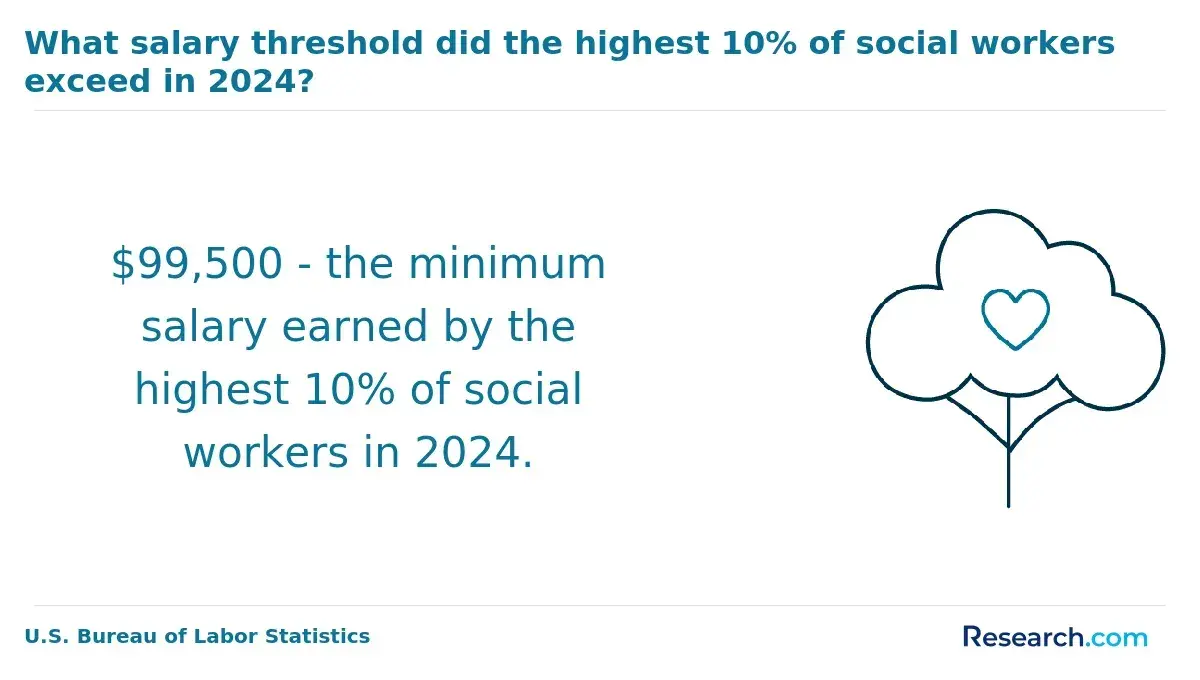
The salary outlook for MSW juvenile justice professionals varies widely because the field includes public agencies, nonprofits, courts, detention facilities, residential programs, schools, and healthcare-linked services. In general, MSW professionals in juvenile justice and youth services can expect median salaries ranging from $48,000 to $65,000 annually, influenced by location, employer type, and experience.
Entry-level public agency or nonprofit roles typically offer $45,000 to $50,000, while experienced clinicians and program directors in government or specialized youth services may earn $60,000 to over $70,000. Positions requiring clinical licensure (LCSW), supervision, crisis coverage, specialized therapy, or program management often pay more than entry-level case management roles.
| Role or career stage | Typical salary pattern stated in the article | Why pay may differ |
| Entry-level public agency or nonprofit role | $45,000 to $50,000 | Often funded by public budgets or grants; may focus on case management or support services |
| General MSW juvenile justice or youth services role | $48,000 to $65,000 annually | Pay depends on region, employer, licensure, and job duties |
| Experienced clinician or program director | $60,000 to over $70,000 | Higher responsibility, clinical credentials, supervision, or specialized program oversight |
Local juvenile justice trends can also affect hiring patterns. For instance, Utah experienced a decline in youth referrals for serious offenses to 3.4 per 1,000 youth in FY24, following a 35% decrease in overall delinquency referrals since FY17, according to the University of Utah College of Social Work, Juvenile Justice Research Summary. A decline in referrals may reduce demand for some detention- or court-heavy roles, while increasing the importance of community-based prevention, diversion, treatment, and reentry services.
The strongest salary prospects often appear in urban areas, government agencies with structured pay scales, healthcare-affiliated youth programs, residential treatment facilities, and roles that combine mental health treatment with juvenile justice expertise. Clinical licensure can be a major salary lever because it expands eligibility for therapy, diagnosis-related work, supervision, and leadership roles.
To improve earning potential, MSW students should choose field placements that match their target role, pursue licensure as early as allowed, document specialized training, and build relationships with juvenile courts, county agencies, school-based programs, and behavioral health providers. For students trying to shorten the time to credential completion, an accelerated masters in social work may be worth comparing, provided the program is accredited and meets licensure requirements.
What is the job outlook for MSW roles in youth services?
The job outlook for MSW roles in youth services is supported by continuing demand for mental health care, family support, diversion programs, reentry planning, and community-based services for young people. Need is especially strong where agencies are trying to reduce detention, address trauma, and connect youth with treatment before problems escalate.
Justice-involved youth often have complex behavioral health needs. Studies indicate that about 65-70% of U.S. youth in the juvenile justice system have at least one diagnosable mental health disorder, and 20-25% face significant emotional difficulties. These needs create demand for MSW professionals who can assess risk, provide therapeutic support, coordinate care, and work across legal, educational, family, and healthcare systems.
MSW graduates may find opportunities in juvenile detention centers, diversion programs, residential treatment facilities, community youth programs, schools, child welfare agencies, mental health clinics, and nonprofit organizations. Roles may include case manager, school-based youth services social worker, reentry coordinator, clinical therapist, family support specialist, crisis intervention worker, program supervisor, or youth advocacy specialist.
Employers often value candidates who combine clinical skills with practical understanding of juvenile court processes. A strong candidate can write clear case notes, communicate with judges or probation staff, engage caregivers, understand mandated reporting, recognize trauma responses, and recommend services that are realistic for the youth and family.
Regional variation matters. Urban areas with larger youth populations may offer more openings, while rural regions may have fewer agencies but broader generalist roles. Public sector positions may include benefits, supervision structures, and potential loan forgiveness programs, though applicants should verify eligibility rather than assume every position qualifies.
Additional preparation can improve mobility. Training in trauma-informed care, family systems therapy, substance abuse treatment, restorative justice, forensic social work, crisis intervention, and culturally responsive practice can help MSW graduates compete for specialized youth services roles. Students still deciding on the broader value of social work education can review is bsw worth it for perspective on social work degree pathways and career returns.
What accreditation do MSW programs for juvenile justice require?
MSW programs for juvenile justice careers should be accredited by the Council on Social Work Education (CSWE). CSWE accreditation is the key quality marker for MSW education in the United States because it shows that the program meets recognized standards for social work curriculum, field education, ethics, diversity, assessment, and professional preparation.
Accreditation matters for a practical reason: graduates of non-CSWE-accredited programs may face barriers to state licensure, clinical supervision, government hiring, and social work positions that explicitly require an accredited MSW. Because juvenile justice and youth services roles often involve vulnerable populations, courts, public agencies, and regulated clinical duties, accreditation should be treated as a nonnegotiable requirement.
A CSWE-accredited MSW does not automatically mean a program has a juvenile justice specialization. Students should verify both accreditation and fit. A strong youth-focused program may include coursework or electives in adolescent development, trauma-informed practice, juvenile justice policy, child welfare, substance use, family therapy, school social work, forensic social work, or community violence prevention.
Field education is equally important. Look for practicum options in juvenile courts, detention centers, diversion programs, child welfare agencies, residential treatment centers, school-based services, public defender or legal advocacy organizations, or community nonprofits serving at-risk youth. A program that is accredited but lacks relevant field placements may be less useful for students targeting juvenile justice work.
Justice-involved transition-age youth frequently lack essential employment skills, such as workplace experience and time management, due to their encounters with punitive systems. MSW programs that prepare students for this work should teach evidence-informed approaches to vocational support, reentry planning, education coordination, family engagement, and community resource development.
Before applying, confirm accreditation directly with the program and review state licensure requirements where you plan to work. Also ask whether the program supports licensure preparation, offers supervision guidance, and maintains partnerships with youth-serving agencies.
What are MSW admission requirements for youth services tracks?
Admission requirements for MSW youth services tracks are similar to general MSW admissions, with added value placed on experience, motivation, and readiness to work with young people in complex systems. Applicants generally need a bachelor's degree from an accredited institution, often in social work, psychology, sociology, criminal justice, education, public health, or a related field.
A minimum GPA of 3.0 is typical, though some competitive programs may accept GPAs as low as 2.75 if the rest of the application is strong. Applicants with a BSW from an eligible program may qualify for advanced standing in some MSW programs, while applicants from other majors usually enter a traditional track.
Common application materials include:
- Official transcripts showing completion of a bachelor's degree and relevant academic preparation
- Letters of recommendation from faculty, supervisors, or professionals who can speak to the applicant's judgment, communication skills, reliability, and experience with youth or vulnerable populations
- A personal statement explaining interest in juvenile justice, trauma-informed care, youth development, equity, and long-term career goals
- A resume showing employment, volunteer work, internship experience, advocacy, research, or service involving children, adolescents, families, behavioral health, schools, courts, or community programs
- Background checks, which are common because field placements often involve minors and other vulnerable populations
- Interviews in some programs, especially when the track includes intensive fieldwork or specialized youth services placements
GRE scores are sometimes required, but many programs are waiving this. Applicants should not assume a waiver; they should check each program's current admissions page and deadline requirements.
Strong applicants do more than state that they want to help youth. They show evidence of preparation: mentoring, tutoring, crisis hotline work, residential youth care, school support, child welfare exposure, behavioral health volunteering, restorative justice involvement, or advocacy for justice-involved populations. Participation in initiatives such as JOBS, which raised school and employment engagement for justice-involved youth from 23% to 96% at graduation, demonstrates meaningful impact when described clearly and honestly.
Applicants with limited direct experience can still be competitive if they connect their academic background, work history, lived experience, and career goals to the program's mission. The personal statement should be specific: name the population you want to serve, explain what you have learned from prior experience, and describe why an MSW is the appropriate credential.
What does the MSW curriculum cover in juvenile justice?
An MSW curriculum with a juvenile justice or youth services focus combines general social work foundations with specialized training in adolescent development, trauma, behavioral health, legal systems, family intervention, and community-based rehabilitation. The goal is to prepare students to work ethically and effectively with youth whose needs cross multiple systems.
Students typically study social work practice methods, human behavior, social welfare policy, research, ethics, diversity, assessment, and field education. In a youth or juvenile justice concentration, those foundations are applied to court-involved youth, diversion, detention, reentry, child welfare overlap, school discipline, family conflict, mental health treatment, and community violence prevention.
Key curriculum areas often include:
- Juvenile justice law and policy, including how federal and state systems affect youth rights, court processes, confinement, diversion, and reentry
- Adolescent development and developmental psychology, with attention to decision-making, identity, peer influence, trauma, and family context
- Trauma-informed care for youth who have experienced violence, neglect, instability, exploitation, or system involvement
- Behavioral health assessment, including substance use, mental illness, self-harm risk, aggression, grief, and emotional regulation
- Family systems and caregiver engagement, including how to work with parents, guardians, foster families, kinship caregivers, and multidisciplinary teams
- Case management and reentry planning, including coordination of education, housing, treatment, transportation, employment readiness, and community supports
- Culturally competent and anti-oppressive practice, especially in systems where racial, ethnic, socioeconomic, disability, and LGBTQ+ disparities may shape outcomes
- Crisis intervention, de-escalation, safety planning, and mandated reporting
- Documentation, court communication, ethical decision-making, and confidentiality in settings where clinical care and legal oversight intersect
Programs also emphasize employment preparation and reentry planning, reflecting national priorities informed by surveys from the Council of Juvenile Correctional Administrators. Students learn to coordinate education, job training, and community resources to aid youth post-release stability.
Field practicums are where the curriculum becomes practical. A student may complete supervised work in a detention center, probation department, school-based program, diversion agency, residential treatment facility, community mental health clinic, or nonprofit youth organization. These placements build skills in assessment, engagement, crisis response, interdisciplinary teamwork, court navigation, and ethical judgment.
When comparing programs, students should ask whether juvenile justice content is a true concentration, a certificate, a few electives, or simply a possible field placement. The more specific the training and practicum network, the easier it is to build a resume aligned with youth services careers.
How long does an MSW in youth services take and cost?
An MSW focused on youth services or juvenile justice usually takes about two years of full-time study. This timeline typically includes foundation coursework, advanced practice courses, electives or concentration classes, and supervised field practicums. Students in accelerated programs may finish in 12 to 18 months, while part-time students may take three or more years.
Program length depends on enrollment status, advanced standing eligibility, field placement requirements, and whether the program is online, hybrid, or campus-based. Students with a qualifying BSW may be eligible for a shorter advanced standing pathway at some schools. Students without a BSW usually complete the full traditional MSW sequence.
Costs vary widely by institution, residency, and program format. Public universities typically charge $10,000 to $30,000 annually for in-state students, with out-of-state tuition ranging from $20,000 to $45,000 per year. Private schools often exceed $40,000 annually in tuition. Additional expenses like textbooks, fees, and field placement can add $2,000 or more per year.
| Program option | Typical time frame stated in the article | Best for |
| Full-time MSW | About two years | Students who can prioritize school and field placement |
| Accelerated MSW | 12 to 18 months | Students who qualify and can handle a compressed schedule |
| Part-time MSW | Three or more years | Working adults or students with caregiving responsibilities |
Financial aid, scholarships, assistantships, employer tuition reimbursement, and public service-focused repayment options can affect affordability. Students should compare total program cost, not just tuition. Field placement logistics can also create indirect costs if students must reduce work hours, commute to an agency, complete unpaid practicum hours, or pay for background checks and professional requirements.
CSWE accreditation remains essential because it affects licensure eligibility. A lower-cost program that does not meet licensure requirements can create expensive career barriers later.
Licensed social workers with master's degrees make up roughly 30% of the social work workforce, about 433,263 professionals nationwide, highlighting the importance of advanced credentials in many social work roles. For youth services careers, the MSW can open doors to clinical practice, supervision, program leadership, and specialized juvenile justice positions.
When comparing cost and length, students should weigh four factors together: accreditation, licensure preparation, field placement quality, and youth-focused coursework. The cheapest or fastest program is not always the best choice if it lacks relevant practicum partnerships or support for state licensing.
What licensing is needed for MSW juvenile justice careers?
Licensing for MSW juvenile justice careers depends on the state and the job duties. In general, MSW graduates begin with a master's-level social work license, often called Licensed Master Social Worker (LMSW), or an equivalent state-specific credential. Clinical, therapy, diagnostic, or independent practice roles usually require additional supervised experience and a higher-level clinical license such as Licensed Clinical Social Worker (LCSW).
Most states require passing an Association of Social Work Boards (ASWB) exam for master's-level or clinical licensure. The LMSW typically allows practice under supervision, while the LCSW generally allows more independent clinical practice once supervised hours and other state requirements are completed.
Common licensing steps include:
- Completing a CSWE-accredited MSW program
- Passing the ASWB master's exam and completing background checks to obtain LMSW licensure
- Working under approved supervision after graduation
- Completing 2-3 years or approximately 3,000 supervised clinical hours to qualify for LCSW licensure
- Passing the required clinical exam, if required by the state
- Maintaining continuing education after licensure
Not every juvenile justice role requires the same credential. Case management, advocacy, reentry coordination, and program support roles may accept an LMSW or another state-recognized license. Counseling, psychotherapy, clinical assessment, diagnosis, treatment planning, and supervisory clinical roles typically require LCSW-level licensure or supervised clinical status.
Some states and professional associations also offer specialized certifications for work with youth, juvenile offenders, forensic populations, trauma, substance use, or school-based services. These credentials may strengthen a resume, but they usually do not replace state social work licensure.
Prospective MSW students should check licensing rules in the state where they plan to work before enrolling. This is especially important for online programs and for students who may relocate, because reciprocity rules and supervised hour requirements can vary. Employers in juvenile justice settings often require active licensure, clean background checks, and continuing education in areas such as ethics, trauma, mandated reporting, and safety.
According to the Association of Social Work Boards' Social Work Workforce Study Series Report 2, MSW graduates typically carry student loan debt between $40,000 and $45,000. Understanding the licensing timeline before borrowing is important because the highest-paying clinical roles may require several years of supervised practice after graduation.
How to choose the best MSW program for juvenile justice?
The best MSW program for juvenile justice is the one that is accredited, affordable enough to complete, aligned with your state's licensure rules, and connected to field placements serving justice-involved or at-risk youth. A program does not need to use the exact phrase "juvenile justice" in its title, but it should offer meaningful coursework, practicum options, and faculty expertise related to youth services.
Start with CSWE accreditation. Without it, licensure and employment options may be limited. Then review whether the program offers a concentration, certificate, elective sequence, or practicum pathway in juvenile justice, youth services, child welfare, forensic social work, school social work, trauma-informed care, or behavioral health.
Field placement quality should carry major weight. Look for partnerships with juvenile detention centers, probation departments, diversion programs, courts, community youth organizations, residential treatment facilities, schools, child welfare agencies, or behavioral health providers serving adolescents. Ask whether placements are available in your area, whether supervision is provided by qualified social workers, and whether students can pursue youth-focused placements early enough to build experience before graduation.
Faculty expertise also matters. Instructors with professional practice, research, or policy experience in youth services can help students understand current challenges, secure relevant placements, and connect coursework to real agency work. Programs with active research or community partnerships may expose students to restorative justice, prevention, reentry, family-based intervention, and evaluation models.
Use the following checklist when comparing programs:
- Is the MSW program CSWE-accredited?
- Does it meet licensure requirements in the state where you plan to work?
- Does it offer coursework in adolescent development, trauma, juvenile justice, child welfare, family systems, substance use, or forensic practice?
- Are field placements available in juvenile courts, detention, diversion, reentry, schools, residential treatment, or youth nonprofits?
- Does the program support online, hybrid, part-time, or evening study if you need flexibility?
- What is the total cost, including fees, books, travel, background checks, and field placement expenses?
- Does the school provide licensure exam support, career advising, and connections to youth-serving employers?
- Are graduate employment outcomes or agency partnerships available for review?
Job outlook for social and human service assistants in youth services is strong, with a projected 6% growth and 50,600 openings annually according to the Bureau of Labor Statistics Occupational Outlook Handbook. While that occupation is not identical to MSW-level social work, it reflects steady demand across human services systems that support youth and families.
A strong program choice balances mission with practicality. Choose a school that helps you graduate eligible for licensure, gain supervised experience with youth, manage debt responsibly, and build the skills employers need in juvenile justice and youth services.
Other Things You Should Know About Social Work
Yes, social workers with expertise in juvenile justice often work within school settings to support at-risk youth. They address behavioral issues, provide counseling, and collaborate with educators and families to implement supportive strategies that help students succeed. Their role is critical in preventing juvenile delinquency and promoting positive development.
MSW graduates entering juvenile justice careers in 2027 need skills like crisis intervention, legal knowledge of juvenile law, and proficiency in therapeutic techniques. Understanding adolescent psychology and effective communication are crucial, as is staying informed of evolving regulations in juvenile justice systems.
Continuing education for social workers in youth services includes workshops, certifications, and specialized training in areas like trauma-informed care, substance abuse, and family dynamics. Many states require ongoing professional development to maintain licensure, allowing social workers to stay current on best practices and emerging challenges in juvenile justice.
References
- Community and Youth Services Courses | TAFE NSW https://www.tafensw.edu.au/course-areas/community-and-youth-services
- Social Worker (LCSW, MSW) Salary Guide By State https://socialworklicensemap.com/social-work-careers/social-work-salary/
- How Long Does It Take to Become a Social Worker? https://www.onlinemswprograms.com/careers/how-to-become-a-social-worker/how-long-does-it-take/
- Accepted to Multiple MSW Programs? Here’s How to Choose the Right One https://www.mswhelper.com/blog/how-to-decide-on-an-msw-program
- High-demand social work roles in 2026: trends and opportunities https://socialwork.pacific.edu/blog/high-demand-social-work-roles-2026-trends-and-opportunities
- SOCIAL WORKER I, CRIMINAL JUSTICE *** https://www.jobapscloud.com/MD/sup/bulpreview.asp
- Best MSW Programs in California: Editor's Picks https://www.californiasocialworkedu.org/editors-top-picks-msw-programs-in-california/
- Support for social workers https://support-for-social-workers.education.gov.uk/explore-areas-of-practice/youth-justice
- The Ultimate Youth & Juvenile Social Work Guide for 2025 https://www.socialworkportal.com/youth-social-work/
- Youth justice careers https://www.justice.vic.gov.au/careers/youth-justice-careers