2027 Online MSW vs On-Campus Social Work Degrees: Which Is Better?

Co-Founder and Chief Data Scientist
Choosing between an online and on-campus Master of Social Work is less about which format is “better” and more about which one fits your schedule, learning style, field placement needs, and licensure goals. Both options can prepare students for social work practice, clinical training, advocacy, case management, community leadership, and advanced human services roles when the program is properly accredited.
The key is to compare the factors that actually affect your experience: accreditation, field education, time to completion, cost of attendance, access to faculty, networking, flexibility, and state licensure requirements. This guide explains how online and on-campus MSW programs differ, where they are usually the same, and how to decide which route is the stronger fit for your career plans.
Key Things You Should Know About Online MSW vs On-Campus Social Work Degrees
- Online MSW programs allow students to study from anywhere and at any time, making them ideal for working professionals, parents, or caregivers who need to balance multiple responsibilities.
- On-campus MSW programs offer direct, face-to-face engagement with professors and classmates. This interaction can lead to deeper discussions, immediate feedback, and a strong sense of community.
- Most online MSW programs coordinate field placements within a student’s local community. This makes it easier to complete required practicum hours without relocating or sacrificing current employment.
What are MSW programs?
A Master of Social Work (MSW) is a graduate degree designed for students who want advanced preparation in social work practice, policy, leadership, community services, and, in many cases, clinical social work. The degree builds on social work values such as service, ethical practice, social justice, cultural responsiveness, and evidence-informed intervention.
Most MSW programs combine classroom learning with supervised field education. Coursework often covers human behavior, social welfare policy, research methods, assessment, practice with individuals and families, group work, community practice, and professional ethics. Field placements give students supervised experience in agencies, schools, hospitals, behavioral health settings, nonprofit organizations, government programs, or community-based services.
Most MSW degrees take two years to complete full-time, though accelerated and part-time options are available. Students who already hold a Bachelor of Social Work from a CSWE-accredited program may qualify for advanced standing, while students from other academic backgrounds usually enter a traditional MSW track.
Some graduates later pursue a doctorate of social work online if they want to move into advanced leadership, applied research, higher education, program development, or executive roles in human services.
What are the advantages of online MSW programs?
Online MSW programs are built for students who need flexibility but still want the same graduate-level preparation required of accredited social work programs. The strongest online options combine virtual coursework with in-person field education arranged in or near the student’s community.
The main advantage is control over where and, in some programs, when you study. Asynchronous courses allow students to complete lectures and assignments on a set schedule without attending live class meetings at a fixed time. Synchronous courses use live online sessions and may feel more structured. Some programs combine both formats.
Key advantages of an online MSW
- Location flexibility: Students can enroll without relocating or commuting to campus, which is especially useful for rural students or those who do not live near a university offering an MSW.
- Better fit for working adults: Online scheduling can make it easier to continue working while completing graduate coursework and field placement requirements.
- Reduced indirect costs: Students may avoid relocation, parking, campus housing, and daily commuting expenses, even when tuition is similar to an on-campus option.
- Access to more programs: Online delivery can expand the number of schools, concentrations, and enrollment tracks available to a student.
- Local field experience: Field placements are typically completed in the student’s region, which can help build professional contacts in the community where the student plans to work.
Online learning is not automatically easier. Students must manage deadlines, participate actively, communicate with faculty, and stay organized without the daily rhythm of a physical campus. Before enrolling, ask how the program supports online students, how field placements are approved, whether classes are live or self-paced, and how students connect with faculty, advisors, and peers.
For students who need speed and flexibility, an accredited social work online degree may provide a practical path, as long as it meets the academic and field education requirements needed for the student’s intended state license.
What are the advantages of on-campus MSW programs?
On-campus MSW programs offer a structured, face-to-face graduate experience. Students attend classes in person, interact directly with faculty and classmates, and use campus-based resources more naturally. This format can be especially helpful for learners who want regular in-person discussion, immediate feedback, and a stronger sense of cohort community.
Key advantages of an on-campus MSW
- In-person faculty access: Students can meet professors during office hours, speak after class, and build mentoring relationships more easily.
- Stronger peer interaction: Campus programs often create close cohorts through class discussions, group projects, student organizations, and informal networking.
- Structured schedule: Fixed class times can help students stay accountable and maintain a predictable academic routine.
- Campus resources: Students may have easier access to libraries, career centers, writing support, counseling services, research opportunities, and professional events.
- Local agency connections: Universities often have established relationships with nearby field placement sites, employers, alumni, and community organizations.
The trade-off is flexibility. On-campus students may need to live near the university, commute regularly, adjust work schedules around class times, and absorb expenses tied to transportation, relocation, housing, or parking. For students who learn best in person and can commit to a campus schedule, those trade-offs may be worth it.
Is the curriculum content and academic rigor identical for online and on-campus MSW students?
In accredited programs, the core curriculum content and academic expectations are generally the same for online and on-campus MSW students. The delivery format may differ, but accreditation standards require comparable learning outcomes, field education, and professional preparation.
The Council on Social Work Education (CSWE) is the national accrediting body for social work education. CSWE requires accredited MSW programs, whether online, on-campus, or hybrid, to meet the same educational standards. These include the nine core social work competencies and a minimum of 900 hours of field education.
That means an accredited online MSW should not be treated as a shortcut or a lighter version of the campus degree. Students still complete graduate-level readings, papers, group work, exams, skills assignments, practice courses, and supervised field placement. The degree requirements are tied to professional standards, not to whether classes meet in a classroom or online.
What is usually the same?
- Core social work competencies
- Required field education hours
- Faculty expectations for graduate-level work
- Eligibility to pursue licensure when state requirements are met
- The academic value of a CSWE-accredited MSW from the same institution
What may differ?
- Class format: Online courses may be asynchronous, synchronous, or a mix of both, while campus courses meet in person.
- Participation style: Online students may use discussion boards, video meetings, and virtual group work; campus students participate face to face.
- Networking: Online students must be more intentional about connecting with classmates, faculty, alumni, and local agencies.
- Field placement logistics: Online students often complete fieldwork near home, while campus students may use established placement networks near the university.
Students comparing programs should focus first on CSWE accreditation, licensure alignment, field placement support, faculty access, and student outcomes. Cost also matters, which is why many prospective students consult an affordable online MSW programs guide before narrowing their choices.
How long does it take to complete online vs. on-campus MSW programs?
The time required to complete an MSW usually depends more on the enrollment track than on whether the program is online or on campus. Accredited programs must meet degree and field education requirements, so the format alone typically does not reduce the total academic workload.
| MSW track | Typical student profile | Common completion time | Applies to online and on-campus? |
| Full-Time Traditional Track | Students without a BSW | Two academic years, about 16-24 months | Yes |
| Part-Time Traditional Track | Students balancing school with work, family, or other responsibilities | Three to four years | Yes |
| Advanced Standing Track | Students with a BSW from a CSWE-accredited program | One year, or 10-12 months full-time | Yes |
The fastest common route is Advanced Standing Full-Time, which can take around one year. The longest common route is the Traditional Track Part-Time option, which may take up to four years. Students should also account for field placement scheduling, because practicum hours can affect how manageable the program feels even when the academic calendar looks flexible.
When comparing timelines, look beyond the advertised completion time. Ask how many courses students take each term, whether summer enrollment is required, how many field hours are scheduled each week, and whether the program allows students to slow down or accelerate if their work or family responsibilities change.
Who should choose an online MSW?
An online MSW is usually the better fit for students who need flexibility, cannot relocate, or want to keep working while earning the degree. It can also be a strong option for students who are comfortable with digital learning and can manage a demanding graduate schedule independently.
Online MSW programs are often best for:
- Working professionals: Students already employed in human services, education, healthcare, nonprofit work, public service, or another field may need evening, part-time, or asynchronous coursework.
- Students with caregiving responsibilities: Online learning can reduce travel time and make it easier to coordinate school with family obligations.
- Students who cannot relocate: Learners in rural areas or regions without a nearby MSW program can access universities outside their immediate area.
- Self-directed learners: Online students need strong time management, written communication, organization, and follow-through.
- Students who want local field experience: Completing fieldwork near home may help students build connections with agencies and employers in their target job market.
Questions to ask before choosing an online MSW
- Is the program CSWE-accredited?
- Does the program meet the educational requirements for the state where you plan to seek licensure?
- Who finds and approves field placements: the school, the student, or both?
- Are classes live, asynchronous, or a mix?
- How accessible are faculty, advisors, career services, and technical support?
- Are there any required campus visits or in-person intensives?
Online students must still complete the required in-person field placement hours. This is not optional and cannot be replaced by online coursework. For that reason, students evaluating a social work online degree should pay close attention to field placement support, not just course flexibility.
Who would benefit from on-campus MSW programs?
An on-campus MSW is often the stronger choice for students who want a highly structured learning environment, frequent face-to-face interaction, and direct access to campus resources. It may also be preferable for students who are new to social work and want a more immersive graduate school experience.
On-campus MSW programs may be best for:
- Recent undergraduates: Students moving directly from a bachelor’s program into graduate school may appreciate the routine, advising, and cohort structure of campus learning.
- Students who learn best in person: Face-to-face discussion can make it easier to practice clinical skills, receive immediate feedback, and build confidence in professional communication.
- Learners who need external structure: A fixed weekly class schedule can help students stay on track and reduce procrastination.
- Students seeking close mentorship: In-person office hours, research projects, student organizations, and campus events can help students develop stronger faculty and peer relationships.
- Students who want campus-based opportunities: Some scholarships, assistantships, fellowships, research roles, or leadership opportunities may be easier to access in person.
The main limitation is convenience. Students may need to commute, relocate, reduce work hours, or build their schedule around daytime or evening classes. Before choosing a campus program, compare the weekly class schedule, field placement expectations, transportation costs, and the availability of part-time enrollment.
Students with a BSW may be eligible for advanced standing MSW programs and may complete the degree in about one year. If you are still evaluating undergraduate options, this guide to what can I do with a bachelor's in social work can help connect bachelor’s-level pathways with future graduate study.
Are online MSW programs as reputable and reliable as on-campus programs?
Yes, online MSW programs can be as reputable and reliable as on-campus programs when they are properly accredited. The most important factor is not the classroom format; it is whether the program is accredited by the Council on Social Work Education (CSWE) and whether it meets the requirements for the state where the student plans to practice.
Employers and licensing boards generally focus on the MSW degree, CSWE accreditation, supervised experience, exam requirements, and the appropriate professional license. A CSWE-accredited online program must meet the same core academic and field education standards as an accredited campus program.
How to judge program reliability
- Confirm CSWE accreditation: Do not rely only on marketing language. Verify the program’s accreditation status before applying.
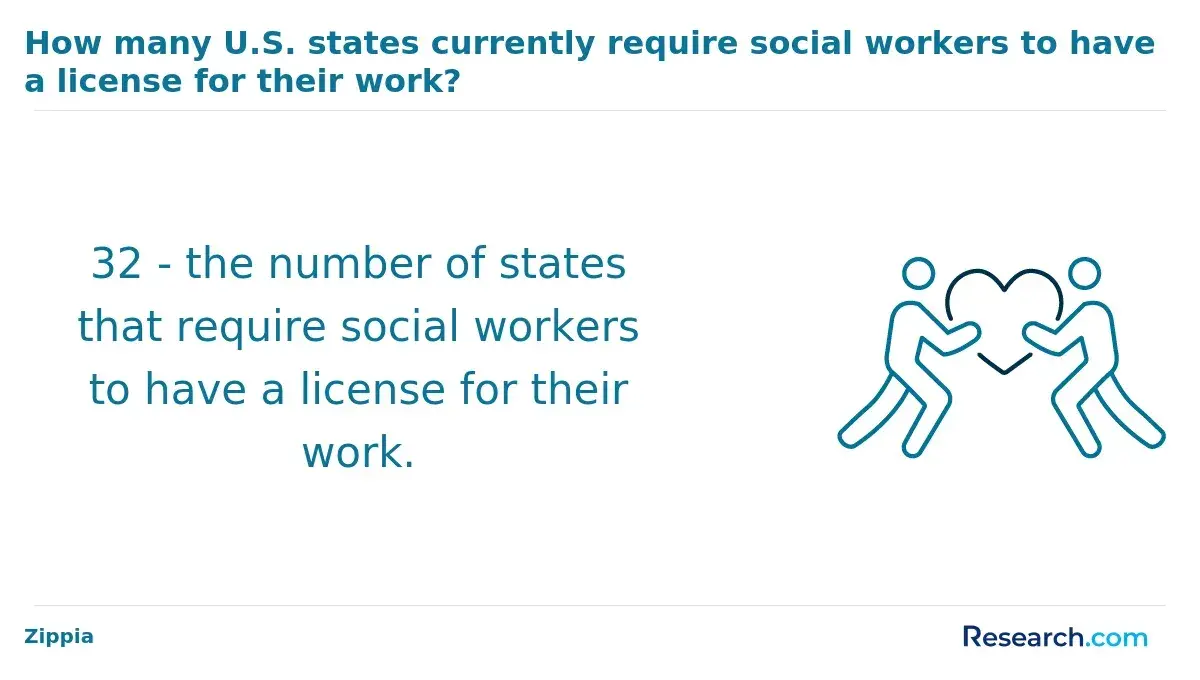
- Check licensure alignment: Requirements vary by state, so students should confirm that the program supports their intended license pathway.
- Review field placement support: A reputable program should clearly explain how placements are identified, approved, supervised, and evaluated.
- Look for student support: Advising, faculty access, technology support, career services, and writing support matter more in online programs than many students expect.
- Compare outcomes carefully: Graduation rates, licensure exam preparation, alumni networks, and employer relationships can help reveal program quality.
Students should be cautious with any program that is vague about accreditation, promises licensure without explaining state requirements, or leaves students entirely on their own to secure field placements. A reliable online MSW should be transparent about expectations, workload, field education, and licensure preparation.
How do online and on-campus MSW programs compare in cost and financial aid?
Online MSW programs can be more cost-effective, but they are not automatically cheaper. The right comparison is total cost of attendance, not just tuition. Students should calculate tuition, fees, books, technology costs, transportation, housing, lost work time, and field placement-related expenses.
| Cost factor | Online MSW | On-campus MSW |
| Tuition | May be lower, similar, or higher depending on the school | May vary by public or private institution and residency status |
| Commuting and parking | Usually lower because classes are remote | Often higher due to regular campus attendance |
| Housing or relocation | Often avoidable if the student stays in place | May be required if the student does not live near campus |
| Campus-based fees | May still apply, depending on the institution | Common and sometimes tied to campus services |
| Work schedule impact | May be easier to combine with employment | May require schedule changes or reduced work hours |
Both online and on-campus students may be eligible for federal financial aid, including Stafford Loans and Graduate PLUS Loans, as long as the program meets eligibility requirements and the student qualifies. Students should complete the FAFSA, review institutional aid, and ask each school about scholarships, grants, employer tuition benefits, and payment plans.
On-campus students may have more access to some assistantships, fellowships, or campus-based roles that require physical presence. Online students, however, may save on indirect costs such as commuting, parking, relocation, and campus housing. The better financial choice depends on the full aid offer and the student’s personal situation.
Before enrolling, compare each school’s Cost of Attendance (COA), because it determines the maximum aid package. Also ask whether tuition is charged per credit, per term, or by program; whether online students pay separate technology or distance-learning fees; and whether field placement hours may reduce the number of hours you can work.
Are career outcomes and salaries different between online and on-campus MSW graduates?
Career outcomes and salaries are generally not determined by whether the MSW was completed online or on campus. For graduates of accredited programs, the more important factors are CSWE accreditation, state licensure, specialization, supervised experience, location, employer type, and the student’s professional network.
Employers typically care that the applicant earned an MSW from an accredited program and meets the requirements for the role. For clinical positions, licensure such as the LCSW may be especially important. The diploma or transcript does not typically emphasize whether classes were completed online or in person.
Factors that influence MSW career outcomes
- Licensure: Clinical roles may require specific supervised experience, exams, and state approval after graduation.
- Specialization: Clinical practice, healthcare, school social work, community practice, policy, and macro social work can lead to different job paths.
- Field placement quality: Strong placements can lead to references, job leads, and practical experience in the student’s target area.
- Geographic location: Local demand, cost of living, and state requirements can affect opportunities and pay.
- Employer type: Private practice, hospitals, government agencies, VA settings, schools, and nonprofit organizations may differ in compensation and advancement paths.
Salary differences are better understood through specialization, location, and employer setting than through program format. Students comparing career potential should review labor market information, licensure rules, and a current social worker salary guide for state-level context.
An online MSW may offer one career advantage: students can sometimes continue working while studying, which may help them build experience before graduation. An on-campus MSW may offer stronger in-person networking through faculty, classmates, alumni, and campus events. In both formats, students who choose accredited programs, complete strong field placements, and plan carefully for licensure are better positioned for long-term career mobility.
Other Things You Should Know About Online MSW vs On-Campus Social Work Degrees
In 2027, employers generally recognize accredited online MSW programs as equally credible to on-campus programs. The key is accreditation, ensuring the program meets educational standards. Graduates from both formats are considered competent, with their choice impacting personal convenience and learning style rather than job prospects.
Online MSW programs in 2027 generally require a reliable computer, high-speed internet, and software like Zoom or Microsoft Teams for virtual classes and meetings. Familiarity with learning management systems such as Canvas or Blackboard is also essential for coursework and communication.
In 2027, both online and on-campus MSW programs ensure fieldwork is integral to the curriculum. Online programs provide flexibility, often allowing students to arrange local placements. On-campus programs may offer more direct faculty guidance and established local partnerships for internships.
References
- Council on Social Work Education. (n.d.). Directory of accredited programs. CSWE. https://www.cswe.org/accreditation/directory-of-accredited-programs/
- U.S. Bureau of Labor Statistics. (2024). Social workers: Occupational outlook handbook. U.S. Department of Labor. https://www.bls.gov/ooh/community-and-social-service/social-workers.htm
- National Association of Social Workers. (n.d.). About social work and licensure. NASW. https://www.socialworkers.org/Practice/Licensure
- U.S. News & World Report. (2024). Best online master’s in social work programs. https://www.usnews.com/education/online-education/social-work-masters-programs
- American Psychological Association. (n.d.). Field education and practicum guidelines for social work students. APA. https://www.apa.org/ed/graduate/social-work-field-education
- National Center for Education Statistics. (2024). Postsecondary education data on online learning. U.S. Department of Education. https://nces.ed.gov/fastfacts/display.asp?id=80