2027 Clinical vs Macro Social Work: Which Path Is Right for You?

Co-Founder and Chief Data Scientist
Choosing between clinical and macro social work is not just a question of job title. It determines whom you help each day, how you measure impact, what credentials you need, and which work environment is likely to fit your strengths. Clinical social workers usually work directly with clients through assessment, therapy, crisis support, and care coordination. Macro social workers focus on larger systems, such as community programs, policy reform, nonprofit leadership, research, and advocacy.
Both paths can lead to meaningful careers, but they reward different interests. If you want to sit with individuals and families through mental health, trauma, addiction, illness, or life transitions, clinical practice may be the better fit. If you want to change how services are funded, designed, delivered, and evaluated, macro practice may align better with your goals. This guide compares responsibilities, education, salaries, work settings, skills, challenges, and hybrid career options so you can make a more informed decision.
Key Benefits Of Pursuing a Career in Clinical and Macro Social Work
- Clinical social work provides direct support to clients, helping to improve their mental health and daily functioning.
- Macro social work creates broad, systemic change through the development of policies, programs, and community initiatives.
- Social work offers flexible career paths, with opportunities in hospitals, schools, government agencies, nonprofits, and private practice.
- The field also supports professional growth, providing paths for licensure, specialization, leadership, and increased influence within the profession.
What are the primary job responsibilities of a clinical social worker?
Clinical social workers provide direct services to individuals, families, couples, and groups. Their work centers on assessing client needs, diagnosing or supporting treatment for mental health and behavioral health concerns where permitted by state law, developing treatment plans, delivering therapy, and coordinating care with other professionals. Clients may be facing depression, anxiety, trauma, substance use, family conflict, chronic illness, grief, housing instability, or other stressors that affect daily functioning.
A clinical social worker’s responsibilities often include:
- Conducting psychosocial assessments to understand a client’s history, risks, strengths, supports, and treatment needs.
- Creating treatment plans with measurable goals and updating them as client circumstances change.
- Providing individual, family, or group counseling using evidence-informed approaches.
- Responding to crises, including safety planning, hospitalization referrals, abuse reporting, or emergency intervention when required.
- Coordinating with physicians, psychiatrists, nurses, schools, courts, case managers, and community agencies.
- Maintaining accurate documentation for legal, ethical, billing, and licensure requirements.
- Monitoring progress and adjusting services when the current plan is not working.
Clinical social workers are often employed in hospitals, mental health clinics, schools, rehabilitation centers, community agencies, and private practices. Hospital and healthcare roles may require especially strong care coordination skills because clients often need help navigating medical systems, insurance issues, discharge planning, and family communication. The medical social worker salary can reflect the added responsibilities and specialized knowledge required in these settings.
What are the primary job responsibilities of a macro social worker?
Macro social workers work at the community, organizational, and policy levels rather than primarily providing one-on-one therapy. Their goal is to improve systems that shape people’s lives, such as housing access, healthcare delivery, child welfare programs, school supports, criminal justice policies, aging services, poverty reduction initiatives, and nonprofit service models.
Typical macro social work responsibilities include:
- Designing, managing, and improving programs that serve communities or specific populations.
- Advocating for policy changes at the local, state, or national level.
- Analyzing laws, budgets, regulations, and service gaps that affect vulnerable groups.
- Building partnerships among nonprofits, government agencies, funders, schools, healthcare systems, and community leaders.
- Collecting and interpreting data to evaluate whether programs are effective.
- Writing grants, preparing reports, and supporting funding proposals.
- Training staff, supervising teams, or leading organizational change efforts.
- Facilitating community meetings and incorporating input from the people most affected by a problem.
Macro work can be a strong fit for people who want broad impact and are comfortable working through systems, timelines, budgets, politics, and stakeholder negotiations. For readers asking what can I do with a social work degree, macro social work can lead to roles in administration, advocacy, program evaluation, public policy, community organizing, research, and nonprofit leadership.
What educational requirements are needed for clinical vs macro social work?
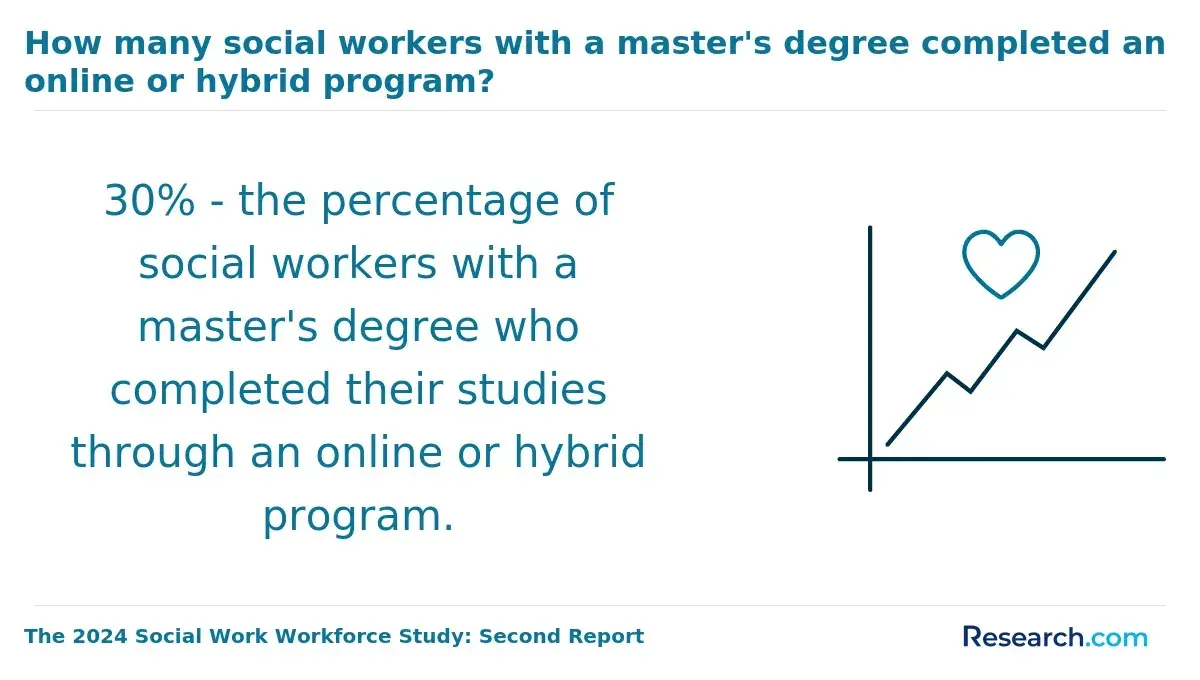
Clinical social work generally has more formal licensure requirements than macro social work because clinical practitioners may provide therapy, diagnose or support treatment of mental health conditions where allowed, and operate independently after meeting state standards. Most clinical social workers need a Master of Social Work (MSW), supervised post-graduate clinical hours, and state licensure such as LCSW or LICSW. Requirements vary by state, so students should review the licensing board rules in the state where they plan to practice.
Macro social workers may also benefit from an MSW, especially for leadership, policy, research, or administrative roles. However, some macro positions accept a bachelor’s degree with relevant experience, particularly in community outreach, case management, program coordination, nonprofit operations, or advocacy. At the graduate level, macro-focused students often choose coursework in policy analysis, program evaluation, grant writing, organizational leadership, public administration, and community practice rather than advanced clinical therapy methods.
| Requirement | Clinical social work | Macro social work |
| Common degree path | MSW is typically needed for advanced clinical practice. | BSW may qualify for some roles; MSW is often preferred for leadership, policy, and advanced program roles. |
| Licensure focus | State licensure such as LCSW or LICSW is usually required for independent clinical practice. | Licensure may be less central unless the role includes clinical supervision, direct services, or requirements set by the employer. |
| Training emphasis | Assessment, therapy, diagnosis-related practice where permitted, ethics, crisis intervention, and supervised clinical hours. | Policy, administration, research, community development, program design, evaluation, advocacy, and leadership. |
| Best fit for | Students who want to provide direct therapeutic services to clients. | Students who want to change programs, organizations, policies, and systems. |
Online MSW programs can help working adults complete graduate training while managing job and family responsibilities. Cost matters, but it should not be the only factor. Students comparing the cheapest online masters in social work should also verify accreditation, field placement support, licensure alignment, faculty expertise, and whether the curriculum matches their intended path.
How do salaries and job prospects compare between the two paths?
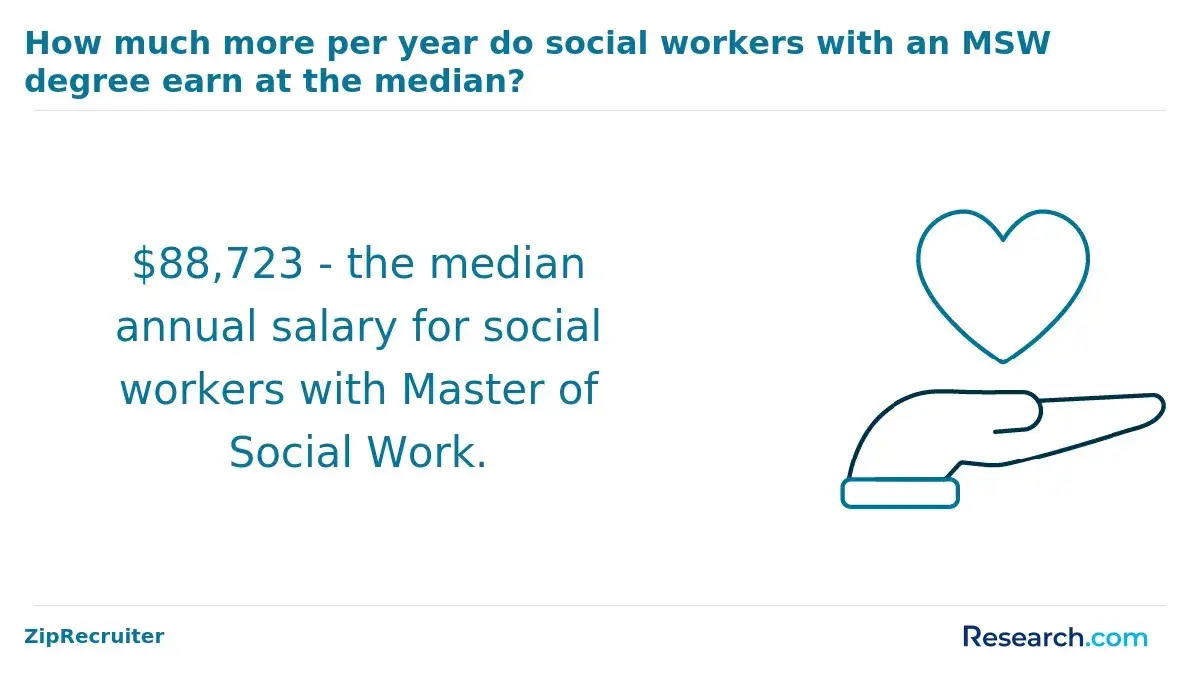
Clinical and macro social work salaries overlap, but pay can differ by licensure, role, location, employer, specialty, and level of responsibility. Clinical social workers, particularly Licensed Clinical Social Workers (LCSWs), typically earn an average annual salary of around $75,130, or about $36.12 per hour. The top 10% can earn over $100,000 per year, while the bottom 10% earn approximately $55,000 per year. Higher pay is often associated with hospitals, healthcare systems, specialized clinical roles, private practice, and areas with higher demand or cost of living.
For example, the medical social worker salary may reflect the complexity of hospital-based responsibilities, including discharge planning, patient advocacy, crisis response, and collaboration with medical teams. States such as California, Hawaii, Rhode Island, and Michigan tend to offer the highest compensation due to demand and cost-of-living factors. Employment for social workers overall is projected to grow 6% from 2024 to 2034, with roughly 74,000 openings annually.
Macro social workers earn slightly lower average salaries, around $72,953 per year, or about $35.07 per hour, though top earners can make up to $132,500 annually. Entry-level or lower-percentile positions may pay around $40,000 per year, while certain cities, including Nome, AK, Berkeley, CA, and Sitka, AK, offer salaries exceeding $90,000. Macro pay may rise with leadership duties, grant management, policy expertise, research skills, supervisory responsibility, or senior roles in government and nonprofit organizations.
| Comparison point | Clinical social work | Macro social work |
| Average annual salary stated | Around $75,130 | Around $72,953 |
| Hourly equivalent stated | About $36.12 per hour | About $35.07 per hour |
| Higher-earning opportunities | Hospitals, healthcare roles, specialized clinical practice, private practice, and high-demand locations. | Program leadership, policy roles, administration, research, grant-funded initiatives, and senior nonprofit or government positions. |
| Job outlook driver | Demand for mental health services, healthcare navigation, crisis support, and family services. | Need for policy development, community programs, social equity work, and organizational change. |
Job prospects for macro social workers are strong, driven by the ongoing need for policy development, community programs, and systemic change initiatives. Both clinical and macro social work careers are expected to grow steadily in 2027, reflecting increasing demand for mental health services and social equity programs.
What skills are most important for clinical social work success?
Clinical social work requires strong interpersonal judgment, emotional steadiness, ethical decision-making, and the ability to build trust with people in vulnerable circumstances. The work is not only about being compassionate; it also requires structure, documentation, boundary-setting, risk assessment, and collaboration with other professionals.
The most important clinical social work skills include:
- Empathy with boundaries: Clients need to feel heard, but clinical social workers must also maintain professional limits and avoid over-identifying with a client’s situation.
- Active listening: Effective assessment depends on hearing both what clients say and what they may be unable or afraid to say directly.
- Assessment and treatment planning: Clinical workers must identify needs, risks, strengths, goals, and appropriate interventions.
- Crisis intervention: Many roles require quick, calm responses to safety concerns, trauma reactions, suicidal ideation, abuse, or family emergencies.
- Cultural competence: Social workers serve clients across different cultures, identities, languages, family structures, and lived experiences. Respectful, informed practice improves trust and outcomes.
- Documentation accuracy: Notes, treatment plans, referrals, and reports must be clear, timely, and compliant with legal and organizational standards.
- Communication: Clinical social workers must explain care plans, coordinate with teams, and advocate for clients without confusing jargon.
- Time management: Heavy caseloads make prioritization essential, especially when balancing sessions, paperwork, case conferences, and emergencies.
- Self-awareness and resilience: Exposure to trauma and crisis can affect the worker. Reflective practice, supervision, and healthy boundaries help reduce burnout risk.
Students considering this path should be honest about whether they want intensive client-facing work. Clinical practice can be deeply rewarding, but it requires comfort with emotional complexity, ambiguity, and slow progress.
What skills are most important for macro social work success?
Macro social work success depends on the ability to move ideas through systems. A strong macro practitioner understands community needs, listens to stakeholders, works with data, communicates persuasively, and turns limited resources into workable programs or policy recommendations.
Key macro social work skills include:
- Leadership: Macro social workers may guide teams, coalitions, committees, volunteers, or cross-agency partnerships.
- Policy analysis: They need to understand how laws, regulations, budgets, and administrative rules affect real people and service delivery.
- Advocacy: Effective advocates can present a problem clearly, support claims with evidence, and persuade decision-makers to act.
- Community engagement: Programs are stronger when affected communities help define problems and shape solutions.
- Project management: Macro roles often involve deadlines, budgets, deliverables, reporting requirements, and multiple stakeholders.
- Data and evaluation skills: Funders, agencies, and policymakers often want evidence that a program is reaching the right people and producing intended outcomes.
- Grant writing and resource development: Many community programs depend on external funding, making clear proposals and outcome reporting valuable skills.
- Strategic communication: Macro social workers must translate complex social problems into language that community members, funders, boards, and policymakers can understand.
- Adaptability: Funding priorities, public policies, community needs, and political conditions can change quickly.
People who enjoy systems thinking, coalition-building, writing, planning, and long-term change may find macro social work more satisfying than a primarily clinical role. The trade-off is that results may take longer to see, and progress can depend on forces outside one worker’s control.
How do work environments differ between clinical and macro social workers?
Clinical and macro social workers may share the same professional values, but their daily work environments can look very different. Clinical roles are usually client-facing and often involve appointments, assessments, treatment plans, crisis calls, case notes, and team coordination. Macro roles tend to involve meetings, program planning, community engagement, policy review, reports, budgets, and evaluation.
| Work environment factor | Clinical social workers | Macro social workers |
| Common settings | Hospitals, mental health clinics, private practice, schools, rehabilitation centers, and community agencies. | Government agencies, nonprofits, advocacy organizations, policy centers, research institutions, foundations, and administrative offices. |
| Daily focus | Client assessment, counseling, crisis response, case documentation, treatment planning, and care coordination. | Program development, policy analysis, coalition meetings, grant work, community planning, research, and evaluation. |
| Interaction style | Frequent direct interaction with individuals, families, or groups. | Frequent interaction with stakeholders, agency leaders, community groups, funders, and policymakers. |
| Pace and pressure | Often shaped by client acuity, crises, caseload size, and documentation deadlines. | Often shaped by funding cycles, political timelines, reporting requirements, and organizational priorities. |
| Impact timeline | May see client progress more directly, though change can still be gradual. | Impact may be broader but slower and harder to attribute to one person’s work. |
Students and working professionals often use accelerated online MSW programs to prepare for these roles while continuing to work. Before choosing a program, they should consider field placement options carefully. A clinical placement in a therapy-focused setting builds different experience than a macro placement in policy, administration, evaluation, or community organizing.
What challenges are unique to clinical social work?
Clinical social work can be emotionally demanding because practitioners often work with clients experiencing trauma, crisis, mental illness, addiction, abuse, grief, severe stress, or unstable living conditions. The work requires compassion, but compassion alone is not enough. Clinical social workers also need supervision, boundaries, manageable caseload practices, and a realistic understanding of what they can and cannot control.
Common clinical social work challenges include:
- Emotional strain: Repeated exposure to trauma and crisis can increase the risk of compassion fatigue and burnout.
- High caseloads: Heavy workloads can limit preparation time, follow-up, and the depth of support a worker wants to provide.
- Crisis responsibility: Safety planning, mandated reporting, and emergency response can carry high stakes.
- Documentation burden: Clinical notes, treatment plans, billing records, and compliance requirements take significant time but are essential.
- Licensure requirements: Supervised hours, exams, continuing education, and state-specific rules can be expensive and time-consuming.
- Ethical complexity: Confidentiality, client autonomy, risk, family involvement, and agency policy can create difficult decisions.
Students sometimes look for the easiest MSW programs to get into because they want to enter the field quickly. Accessibility matters, but clinical students should not sacrifice program quality. Accreditation, supervised field placements, licensure preparation, and strong clinical training are critical for safe and effective practice.
What challenges are unique to macro social work?
Macro social work comes with a different kind of difficulty: the problems are large, the timelines are long, and success often depends on institutions, politics, funding, and public support. A well-designed program or policy proposal may still stall because of budget constraints, leadership changes, competing priorities, or resistance from stakeholders.
Common macro social work challenges include:
- Bureaucracy: Government agencies, nonprofits, and large organizations often require approvals, reports, compliance reviews, and long decision cycles.
- Funding limitations: Programs may depend on grants or budgets that can change, expire, or restrict how money is used.
- Political pressure: Policy and advocacy work can be affected by elections, public opinion, lobbying, and changing administrative priorities.
- Measuring impact: Community-level outcomes can be difficult to isolate, especially when many factors influence poverty, health, housing, education, or public safety.
- Community trust: Engagement requires listening, transparency, cultural sensitivity, and follow-through, especially in communities that have been underserved or harmed by institutions.
- Delayed feedback: Unlike clinical work, macro practice may not provide immediate evidence that a person or family is better off because of your work.
Macro social workers need persistence as much as vision. The work can be frustrating when change is slow, but it can also create durable improvements that reach far more people than one practitioner could serve individually.
How can social workers combine clinical and macro approaches in their careers?
Clinical and macro social work are not mutually exclusive. Many effective social workers use both perspectives over the course of their careers. Clinical experience can reveal service gaps, policy barriers, and program failures that are invisible from a conference room. Macro experience can help clinicians understand how funding, law, organizational design, and community conditions shape client outcomes.
Hybrid career paths may include:
- Program directors at mental health agencies who understand both client care and organizational operations.
- Clinical supervisors who improve agency policies, training systems, and service quality.
- Policy advisors who use direct practice experience to recommend realistic reforms.
- Researchers or evaluators who study whether interventions work in real-world settings.
- Community mental health leaders who combine therapy-informed practice with population-level planning.
- Hospital or healthcare administrators who use social work values to improve patient support systems.
- Advocates who translate client experiences into testimony, reports, or legislative recommendations.
For students wondering what can I do with a social work degree, a blended path can offer flexibility. A social worker might begin in direct practice, move into supervision, then transition into program leadership or policy work. Others may start in community organizing and later pursue clinical licensure to deepen their direct-service skills.
The best choice depends on your preferred type of impact. Choose clinical social work if you want to help people directly through assessment, counseling, and crisis support. Choose macro social work if you want to redesign systems, improve programs, and influence policy. Consider a hybrid path if you want your client-level insight to shape broader change.
Frequently Asked Questions About Clinical vs Macro Social Work
Clinical social work focuses on providing therapy and counseling to individuals and families, addressing mental health issues. Macro social work involves creating and implementing policies and programs that influence larger communities or populations, aiming for systemic changes.
Yes, many social workers blend practices. For example, clinical social workers might advocate for mental health policy changes, while macro social workers may collaborate with individuals during community programs. The versatility of social work allows for hybrid roles, enabling professionals to address both individual needs and systemic issues.
In 2027, consider your interest in direct client interaction versus systemic change. Clinical social work focuses on individual therapy, requiring strong interpersonal skills. Macro social work involves policy-making and community organizing, suitable for those interested in societal issues. Both require different educational paths and can lead to distinct career opportunities.
References
- National Association of Social Workers. (2025). Social work career paths: Clinical vs. macro practice. https://www.socialworkers.org/Careers/Clinical-vs-Macro
- Psychology.org. (n.d.). Clinical vs. direct services social work: Understanding the differences. https://www.psychology.org/social-work/clinical-vs-direct-services-social-work
- Social Work Portal. (n.d.). Macro vs. direct vs. clinical social work. https://www.socialworkportal.com/macro-vs-direct-vs-clinical-social-work
- U.S. Bureau of Labor Statistics. (2025). Social workers: Occupational outlook handbook. https://www.bls.gov/ooh/community-and-social-service/social-workers.htm
- ZipRecruiter. (2025). Macro social work salary. https://www.ziprecruiter.com/Salaries/Macro-Social-Work-Salary