2027 What Classes Do You Take in an Online MSW Program?

Co-Founder and Chief Data Scientist
Choosing an online MSW program is really a decision about preparation: Will the coursework build the practice skills, field experience, and licensure foundation you need for the kind of social work career you want? For career changers, working adults, and recent graduates, the course list can be hard to interpret because MSW programs combine academic theory, clinical methods, policy training, research, and supervised fieldwork.
This guide explains the classes commonly found in online Master of Social Work programs and how they fit together. It also covers curriculum structure, online-versus-campus differences, admissions, program length, accreditation, career paths, salary expectations, job outlook, and how to evaluate program quality before enrolling.
Key Things You Should Know
- Online MSW programs in 2026 typically include core courses on human behavior, social welfare policy, and advanced clinical practice to prepare students for licensure.
- Field practicum components are integrated with coursework to ensure practical experience; about 60-75% of programs require 900+ field hours.
- Specializations like mental health, child and family services, and healthcare social work are common, allowing tailored career paths in diverse social work settings.
What classes are taken in an online MSW program?
Online MSW programs usually include a mix of foundation courses, advanced practice courses, research and policy classes, electives, and supervised field education. The exact course titles vary by school, but CSWE-accredited programs are designed to build the same broad competencies: ethical practice, client assessment, intervention planning, cultural responsiveness, policy analysis, and evidence-based decision-making.
Common online MSW classes
- Human Behavior and the Social Environment: Examines how biological, psychological, family, community, cultural, and social systems affect people across the lifespan.
- Social Work Practice Methods: Teaches assessment, interviewing, case planning, intervention, documentation, and evaluation with individuals, families, groups, organizations, and communities.
- Social Welfare Policy: Covers how public policy shapes access to services, eligibility, funding, advocacy, and social justice outcomes.
- Research Methods and Evidence-Based Practice: Prepares students to read research critically, evaluate programs, and apply data to practice decisions.
- Ethics and Professional Practice: Focuses on confidentiality, boundaries, mandated reporting, informed consent, dual relationships, and professional standards.
- Advanced Clinical or Direct Practice Courses: May cover mental health, trauma-informed care, substance abuse, child welfare, gerontology, family therapy, or crisis intervention.
- Macro Practice or Administration Courses: Often address nonprofit leadership, community organizing, program development, supervision, grant writing, or policy advocacy.
- Field Practicum or Internship: Places students in supervised social work settings where they apply classroom learning with real clients, agencies, and communities.
Students should look beyond course names and review what each class actually teaches. A strong online MSW should connect theory to practice through case examples, role plays, simulations, applied assignments, and field supervision. This matters especially for students who want clinical licensure, because classroom learning alone is not enough preparation for therapy, assessment, crisis response, or case management.
Electives can also shape your career direction. Students interested in hospitals may prioritize healthcare social work and end-of-life planning. Those drawn to schools may look for child development, school systems, and family engagement. Students interested in leadership may choose courses in nonprofit management, program evaluation, or community practice.
The flexibility of part-time and full-time options supports the needs of the 55,935 students enrolled nationwide, with most pursuing full-time study. Prospective students comparing typical classes in an online MSW degree should favor programs that balance theory, skills practice, fieldwork, and electives aligned with their goals. Those planning for advanced study after the MSW may also explore affordable online DSW programs.
What is the typical curriculum for an online MSW degree?
The typical online MSW curriculum is built in stages. Students first complete foundation courses that introduce the profession, then move into advanced practice coursework, electives, and field education. Advanced standing students, who already hold a BSW from an eligible program, may be able to skip some foundation content, while traditional MSW students usually complete the full sequence.
Foundation curriculum
Foundation courses give students a broad understanding of social work across client systems. They usually include human behavior and the social environment, social welfare policy, research methods, diversity and oppression, professional ethics, and generalist practice with individuals, families, groups, organizations, and communities. These courses are especially important for students entering social work from another field.
Advanced curriculum
Advanced practice courses let students focus on a professional pathway. Common options include clinical practice, mental health, child welfare, substance abuse, community engagement, administration, policy analysis, or integrated health. Students may also take electives in trauma-informed care, gerontology, evidence-based intervention techniques, nonprofit leadership, or specialized populations.
Field education
Field practicum is not optional in a reputable MSW program. Online students usually complete fieldwork in an approved agency near where they live, while taking seminar courses that connect field experience to classroom concepts. These placements allow students to practice assessment, documentation, professional communication, advocacy, crisis response, and ethical decision-making under supervision.
A useful way to compare online MSW curricula is to ask three questions: Does the program prepare students for the type of practice they want? Does the field placement structure work in their location? Does the curriculum meet the educational requirements needed for licensure in the state where they plan to practice?
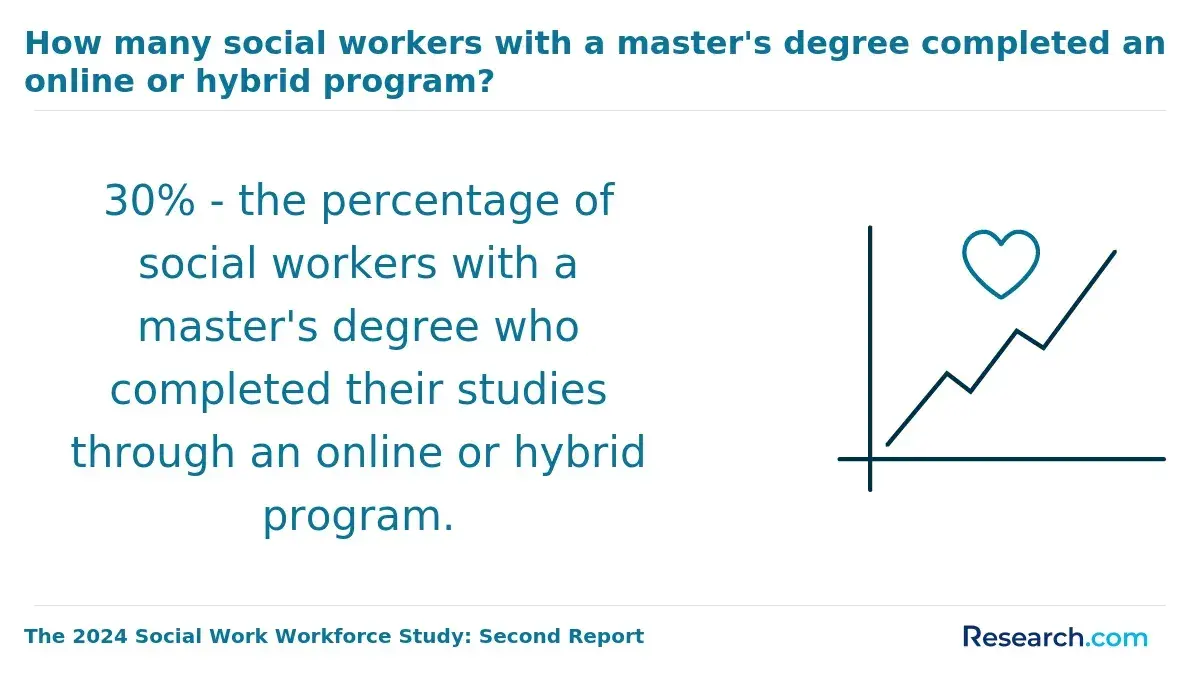
Graduates from online MSW programs report higher employment satisfaction-52% versus 43% for in-person graduates-according to the Council on Social Work Education's data. Prospective students should still examine individual programs carefully, comparing curriculum depth, specialization options, faculty experience, field placement support, and licensure alignment. Cost-conscious students can begin by reviewing the cheapest MSW online options.
How does online MSW coursework differ from campus programs?
Online and campus MSW programs generally cover the same core academic areas: Human Behavior in the Social Environment (HBSE), policy, research, practice methods, ethics, and field education. The main difference is not what students study, but how they access classes, interact with faculty and peers, and coordinate field placements.
Key differences between online and campus MSW coursework
- Scheduling and pacing: Online programs often use asynchronous lectures, recorded materials, and weekly deadlines, which can help students who work or have family responsibilities. Campus programs may provide more built-in structure through set class meetings.
- Class participation: Campus students participate through in-person discussion, group exercises, and live classroom activities. Online students usually use discussion boards, video meetings, digital simulations, written reflections, and collaborative tools.
- Communication style: Online coursework often requires stronger written communication because students must explain practice decisions, ethical reasoning, and case analysis in writing. Synchronous online sessions can still support live discussion and role play.
- Field practicum coordination: Both formats require supervised field education. Online students, however, may need to work more closely with the program to identify approved agencies in their local area, which can be easier in some regions than others.
- Peer networking: Campus programs may make informal networking easier. Online students need to be more intentional about building relationships with classmates, faculty, alumni, field supervisors, and professional associations.
- Self-management: Online students need reliable technology, organized study habits, and the discipline to keep up with readings, assignments, live sessions, and practicum hours without frequent in-person reminders.
The Council on Social Work Education's 2022-2023 survey found that 83.4% of MSW students in HBSE classes identified as female, a rate consistent across delivery methods. Student diversity, professional background, geography, and lived experience can enrich class discussions in both online and campus programs.
Students comparing online and campus MSW coursework should be honest about their learning style. Online study can be an excellent fit for independent learners who need flexibility. Campus study may be better for students who want frequent in-person interaction, a fixed weekly routine, or easier access to campus-based services. Those seeking a shorter online pathway may consider an accelerated social work program.
What are admission requirements for online MSW programs?
Admission requirements for online MSW programs typically start with a bachelor's degree from an accredited institution. Applicants do not always need an undergraduate social work degree, but programs often value coursework or experience in fields such as psychology, sociology, human services, public health, education, criminal justice, or related areas.
Common admission requirements
- Bachelor's degree: A completed undergraduate degree from an accredited college or university is usually required.
- Minimum GPA: Many programs expect a minimum GPA between 2.5 and 3.0 on a 4.0 scale. Some may consider applicants below that range if other parts of the application are strong.
- Transcripts: Schools review academic history to evaluate writing ability, social science preparation, and readiness for graduate-level work.
- Letters of recommendation: Recommendations often come from professors, supervisors, volunteer coordinators, or professionals who can speak to the applicant's maturity, ethics, communication skills, and ability to work with people.
- Statement of purpose: This essay should explain why the applicant wants to enter social work, what populations or issues they hope to address, and how the program fits their goals.
- Resume or experience summary: Paid or volunteer experience in social services, schools, healthcare, advocacy, community programs, or crisis work can strengthen an application.
- GRE scores: Standardized test scores like the GRE are less frequently required, though some schools may still request them.
- Background checks: Criminal background checks may be required because field agencies often screen students before placement.
Applicants should also check whether the program offers traditional and advanced standing pathways. Advanced standing is generally intended for students with prior accredited BSW preparation, while traditional tracks are designed for students entering from other undergraduate majors.
For applicants asking is social work school hard, the better question is whether they are ready for graduate reading, emotionally complex topics, intensive writing, ethical reflection, and supervised practice with vulnerable populations. Enrollment is diverse, with 83,610 students across 285 programs and 34.2% attending part-time, reflecting varied applicant profiles and flexible admission pathways.
How long does an online MSW program take to complete?
Online MSW programs generally take 2 to 3 years for full-time students. Part-time options often take 3 to 5 years, which may be more realistic for students working full time, raising families, or managing other responsibilities. Accelerated programs may be completed in 12 to 18 months, but they require a demanding pace and are not the right fit for every student.
Several factors determine the actual timeline. Traditional MSW programs typically require around 60 credit hours, while advanced standing pathways may be shorter for eligible students with prior social work education. Field practicum requirements also affect pacing because students must complete supervised hours in approved settings, not just online coursework.
Field placements usually total 900 to 1,200 supervised hours. This requirement can shape a student's weekly schedule more than the online classes themselves. A student may be able to watch lectures in the evening, but fieldwork often happens during regular agency hours, depending on the placement site.
Factors that can speed up or slow down completion
- Enrollment status: Full-time students usually finish faster, while part-time students have more flexibility.
- Advanced standing eligibility: Students with qualifying BSW preparation may have a shorter path.
- Specialization: Clinical social work specializations often require careful field placement planning, especially for students pursuing licensure.
- Cohort structure: Some programs follow fixed schedules, while others offer more flexible pacing or rolling admissions.
- Field placement availability: Limited local placement options can delay progress if a program cannot approve a suitable site.
- Financial aid and work obligations: Tuition planning, employer support, and work schedules can all influence how many courses a student takes each term.
Salary data shows 61% of online MSW graduates earn $40,000 or more annually, compared to 74% of in-person graduates, highlighting how program choice and timely completion impact career outcomes (CSWE 2018 workforce data brief). Students should evaluate program length alongside cost, field placement support, licensure preparation, and the workload they can realistically sustain.
What accreditation should online MSW programs have?
Online MSW programs should have accreditation from the Council on Social Work Education (CSWE). CSWE accreditation is the key programmatic accreditation for social work education in the United States, and it signals that the curriculum, faculty qualifications, competencies, and field education structure meet national professional standards.
Regional accreditation is also important at the institutional level, but it does not replace CSWE accreditation for an MSW program. A university can be institutionally accredited while a specific MSW program is not CSWE-accredited. Students should verify both, especially if they plan to pursue licensure, public-sector employment, clinical practice, or future doctoral study.
Why CSWE accreditation matters
- Licensure eligibility: Many state licensing boards require or strongly prefer graduation from a CSWE-accredited MSW program.
- Employer recognition: Agencies, hospitals, schools, and government employers often use CSWE accreditation as a quality marker.
- Field education standards: Accredited programs must include supervised field learning that connects classroom theory to professional practice.
- Transferability and future study: Accreditation can affect whether credits, degrees, or credentials are recognized by other institutions and licensing bodies.
Field education remains central even when coursework is online. For instance, Rutgers' 100% Online MSW Advanced Standing program requires 12.5 hours of practicum weekly for three semesters, highlighting the role of practical experience in remote learning formats. CSWE mandates that MSW programs include approved in-person or supervised field practicum to develop essential skills.
Before enrolling, students should confirm that the program is currently CSWE-accredited and that its field placement model works in the state where they live. Licensure requirements vary by state and may include additional supervised clinical hours, exams, background checks, or specialized coursework beyond the minimum degree requirements.
What careers can you pursue with an online MSW?
An online MSW can prepare graduates for clinical, healthcare, school, child welfare, community, administrative, and policy-focused social work roles. The degree format matters less than accreditation, field training, specialization, and licensure alignment. Employers and licensing boards typically focus on whether the program meets professional standards, not whether the academic courses were delivered online.
Common career paths for MSW graduates
- Licensed clinical social worker: Provides therapy, assessment, diagnosis-related services where allowed, crisis intervention, treatment planning, and mental health support after meeting state licensure requirements.
- Healthcare social worker: Helps patients and families navigate illness, discharge planning, chronic care, end-of-life decisions, insurance issues, and community resources.
- School social worker: Supports students facing behavioral, emotional, attendance, family, housing, or community challenges while collaborating with educators and caregivers.
- Child and family social worker: Works in foster care, adoption, family preservation, child protection, parenting support, and poverty-related services.
- Substance abuse or behavioral health social worker: Supports clients dealing with addiction, co-occurring disorders, crisis needs, treatment planning, and recovery resources.
- Community program manager: Designs, coordinates, evaluates, or improves programs serving specific populations or neighborhoods.
- Policy or advocacy specialist: Works on legislation, public benefits, social justice initiatives, agency reform, research translation, or community organizing.
- Social work administrator or supervisor: Manages staff, budgets, compliance, service delivery, grant reporting, or agency operations.
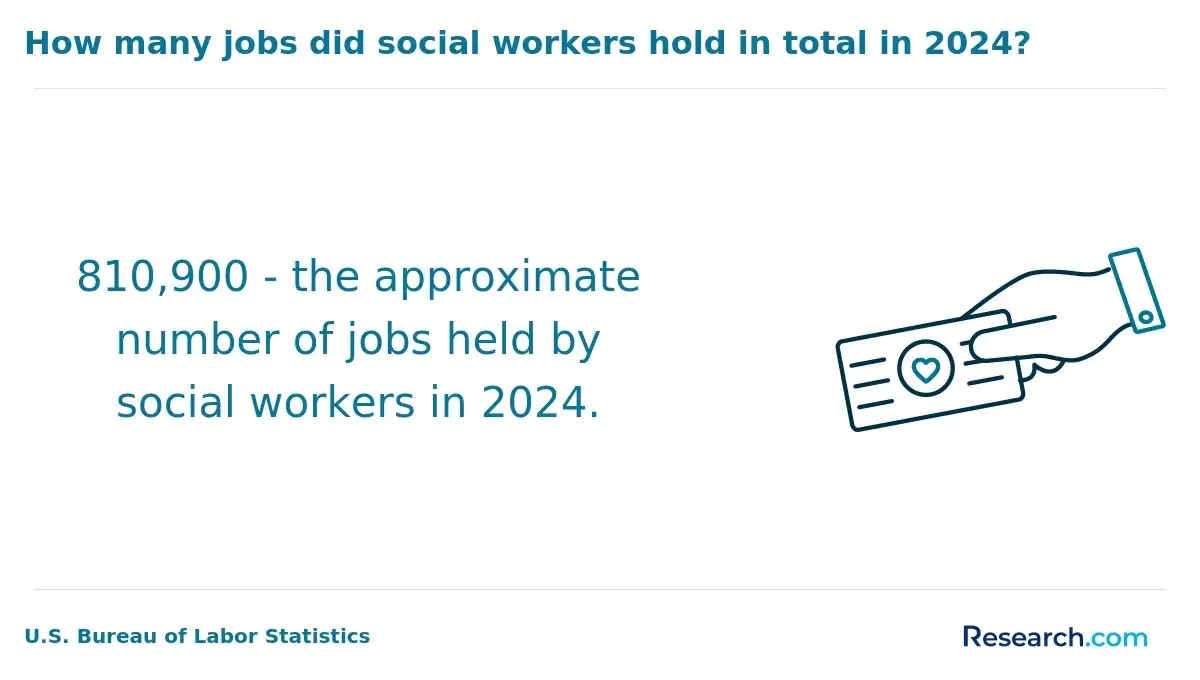
The U.S. Department of Labor projects 12% job growth in social work from 2022 to 2032, driven by aging populations and increased behavioral health needs. According to the CSWE annual survey summary, MSW students in 2022-2023 were 54.8% White, highlighting ongoing efforts to recruit diverse candidates. A more diverse workforce can strengthen culturally responsive practice and improve service delivery across communities.
Licensure is often the dividing line between broader social service roles and independent clinical practice. Students who want to become LCSWs should choose programs that clearly prepare them for the coursework, field experience, and post-graduate supervised hours required in their state.
What is the average salary after an online MSW?
Salaries after an online MSW vary by role, state, employer, specialization, licensure status, and experience. Entry-level social workers earn about $50,000 to $60,000 annually, while those with Licensed Clinical Social Worker (LCSW) credentials often see increases to $65,000-$85,000 per year. Experienced clinical social workers, particularly in healthcare or private practice, can earn more than $90,000 annually.
The online format itself does not determine salary. What usually matters more is whether the program is accredited, whether the graduate becomes licensed, what population they serve, and whether they work in healthcare, government, schools, nonprofit agencies, behavioral health, or private practice.
Factors that affect MSW earning potential
- Licensure: Clinical credentials such as LCSW status can expand eligibility for therapy, supervisory, and independent practice roles.
- Practice setting: Healthcare, behavioral health, government, and private practice roles may pay differently from community nonprofit positions.
- Specialization: Mental health, substance abuse, trauma, medical social work, and advanced clinical practice can influence compensation.
- Location: Salaries differ by state, region, cost of living, and local demand.
- Experience and supervision: Leadership, program management, clinical supervision, and specialized certifications can support higher earnings over time.
Programs such as the Clinical Practice and Interventions track at Simmons University prepare students for LCSW licensure and may be completed in as little as nine months full-time. Licensure does not guarantee a specific income, but it can improve access to clinical roles and long-term advancement opportunities.
Students should compare salary expectations with tuition, fees, fieldwork demands, living costs, and time away from full-time employment. An online MSW can be a strong investment for students committed to social work, but the return depends on choosing a reputable program and pursuing the credentials required for the roles they want.
What is the job outlook for MSW graduates?
The job outlook for MSW graduates remains favorable because social workers are needed in healthcare, behavioral health, schools, aging services, child welfare, substance abuse treatment, community agencies, and public programs. Employment of social workers is expected to increase by 13% from 2022 to 2032, outpacing the average growth rate for all occupations.
Demand is especially strong in areas tied to mental health, trauma-informed care, substance use treatment, care coordination, and services for aging populations. Graduates with clinical preparation and state licensure may have broader options, particularly in counseling, crisis intervention, integrated health, and behavioral health settings.
Programs like the University of Denver's online MSW provide customizable concentration pathways that can be completed in 12 to 27 months, preparing students for roles in clinical counseling and crisis intervention. Concentrations can help students align coursework and field placements with local labor market needs.
Job availability can still vary by location. Urban areas may offer a larger number of agencies and specialized roles, but they can also be competitive. Rural and underserved communities may have fewer employers but stronger demand for qualified social workers who can provide mental health, case management, school, or healthcare support.
Students can improve their outlook by choosing field placements strategically, building licensure readiness into their plan, gaining experience with high-need populations, and developing practical skills in documentation, assessment, crisis response, interdisciplinary teamwork, and evidence-based intervention.
How to choose a reputable online MSW program?
Choosing a reputable online MSW program starts with accreditation, but it should not end there. Students should evaluate whether the program fits their career goal, state licensure plan, budget, schedule, learning style, and field placement needs.
What to check before applying
- CSWE accreditation: Confirm that the MSW program itself is accredited by the Council on Social Work Education (CSWE), not just that the university has institutional accreditation.
- Licensure alignment: Ask whether the curriculum and fieldwork meet educational requirements in the state where you plan to practice. State rules vary.
- Field placement support: Find out whether the school finds placements for online students, helps identify local agencies, or expects students to secure sites independently.
- Specializations: Choose a program with coursework and field options that match your goals, such as clinical practice, child welfare, healthcare, substance abuse, policy, administration, or community practice.
- Faculty qualifications: Look for instructors with relevant doctoral preparation, clinical experience, policy expertise, research activity, or agency leadership experience.
- Course format: Compare asynchronous courses, live online sessions, cohort models, part-time options, and practicum schedules. Flexibility should not come at the expense of supervision and interaction.
- Student support: Review advising, writing support, technology help, career services, licensure guidance, and access to faculty.
- Total cost: Look beyond tuition and include fees, books, travel to field sites, lost work hours, and financial aid availability.
- Graduate outcomes: Ask about licensure exam preparation, employment support, alumni networks, field agency partnerships, and typical career pathways.
Be cautious with programs that make vague promises about licensure, do not clearly explain field placement responsibilities, lack transparent tuition information, or cannot confirm current accreditation status. A strong program should be able to explain exactly how online coursework, field education, advising, and licensure preparation work together.
The best online MSW program is not always the fastest or cheapest option. It is the program that provides accredited training, realistic field support, credible faculty, manageable scheduling, and a clear path toward the type of social work practice you plan to pursue.
Other Things You Should Know About Social Work
In 2027, core classes in an online MSW program typically include Human Behavior and the Social Environment, Social Work Practice, Social Welfare Policy, Research Methods, and Diversity and Social Justice. These courses build foundational knowledge and skills necessary for professional practice in social work.
In 2027, an online Master of Social Work (MSW) program typically takes two to three years to complete. The duration may vary depending on part-time or full-time enrollment and any accelerated tracks offered by the institution.
Many online MSW programs include curriculum components designed to prepare students for licensure exams, such as the Licensed Clinical Social Worker (LCSW) exam. These courses review essential topics like ethics, clinical assessment, and intervention strategies. However, students should verify each program's specific offerings to ensure they align with their state's licensing requirements.
References
- Online MSW Programs https://socialworklicensemap.com/social-work-degrees/online-msw-programs/
- Social Work Salaries - How Much Do Social Workers Make? https://www.onlinemswprograms.com/careers/social-worker-salaries/
- The Pros and Cons of Online MSW Programs – Should I Pursue an MSW Online? https://www.masterofsocialwork.com/resources/pros-and-cons-online-msw-programs
- Best Online Master's Programs For Social Work 2025 https://www.psychology.org/social-work/best-masters-programs/
- MSW online program https://socialwork.wayne.edu/msw/online
- 5 High-Paying Jobs You Can Get with an MSW https://onlinedegrees.keuka.edu/blog/highest-paying-msw-jobs
- MSW Program Length: 1-4 Year Timeline Guide for 2025 https://www.socialworkdegrees.org/faq/how-long-does-it-take-to-complete-a-msw-program
- Online MSW Degree - Social Work Standard | IWU https://www.indwes.edu/program/master-social-work/standard/
- What CSWE Accreditation Tells You About an MSW Program https://www.chamberlain.edu/blog/what-is-cswe-accreditation-and-what-are-its-benefits
- Online MSW Admissions Requirements | Tulane School of Social Work https://socialwork.tulane.edu/msw-programs/admissions/