2027 Online Social Work Degrees for Nontraditional Students

Co-Founder and Chief Data Scientist
Changing into social work as an adult learner usually means solving three problems at once: choosing the right degree level, keeping school manageable around work and family, and making sure the program can lead to the license or job you want. Online social work degrees can help, but flexibility alone is not enough. Students also need accreditation, local field placement support, clear admissions rules, realistic cost planning, and a curriculum that matches their career goal.
This guide explains how online social work degrees work for nontraditional students, including career changers, working adults, parents, part-time learners, and students returning to college after time away. It covers program types, admissions, timelines, tuition, bachelor’s and MSW coursework, career paths, salary considerations, and licensing requirements so you can compare options with fewer surprises.
Key Things You Should Know
- Online social work degrees in 2026 offer flexible schedules designed for nontraditional students balancing careers or family, with over 65% of programs providing asynchronous coursework.
- Most accredited online programs include virtual field placements compliant with state licensing boards, ensuring graduates meet requirements for professional licensure.
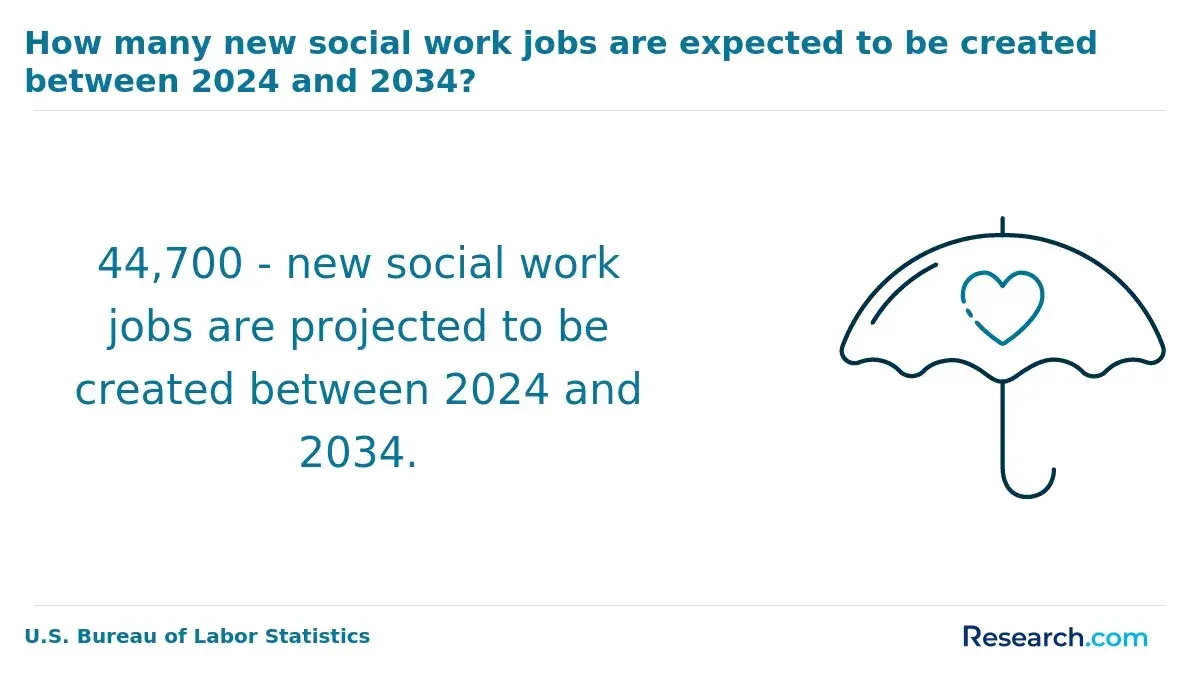
- Employment in social work is projected to grow by 13% through 2032, driving demand for accessible online education options geared towards adult learners seeking career advancement.
What are online social work degrees for nontraditional students?
Online social work degrees for nontraditional students are BSW, MSW, and sometimes doctoral pathways designed for learners who cannot relocate, attend daytime classes regularly, or pause their careers. They usually deliver academic coursework online while still requiring supervised field education, because social work is a practice-based profession.
For adult learners, the main advantage is scheduling control. Many programs use asynchronous lectures, online discussions, digital assignments, and remote advising so students can complete coursework outside standard classroom hours. This format can be especially useful for career changers, parents, caregivers, military-connected students, and professionals who need part-time enrollment.
Common online social work degree options
- Bachelor of Social Work (BSW): A common entry route for students who do not already have a bachelor’s degree and want preparation for generalist social work roles.
- Master of Social Work (MSW): The usual graduate path for students seeking advanced practice, clinical eligibility, leadership roles, or broader career mobility.
- Advanced Standing MSW: A shorter MSW route for students who already hold a qualifying BSW from an accredited program.
- Doctoral study: A later-stage option for experienced professionals interested in advanced leadership, teaching, research, policy, or specialized practice; readers can compare online doctoral programs in social work.
The key limitation is that “online” does not mean “fieldwork-free.” Accredited programs must still ensure students complete supervised practice experiences. Strong programs help arrange placements near the student’s community instead of leaving learners to find agencies on their own.
Demand for accessible social work education is clear. Arizona State University's online Bachelor of Social Work program enrolled more than 400 students in its second semester, significantly exceeding expectations, as reported by news.asu.edu. For nontraditional students, that growth reflects a larger shift: social work education is becoming more available to people who need flexible formats but still want a recognized professional degree.
Which accredited online social work programs suit nontraditional students?
The best online social work programs for nontraditional students are accredited, flexible, transparent about field placement requirements, and realistic about the time commitment. Accreditation matters because it affects program quality, transferability, employer confidence, and, in many cases, whether graduates can pursue state licensure.
Adult learners should not choose a program based only on tuition or convenience. A low-cost online degree can become a poor investment if it lacks the accreditation, practicum support, or advising needed for the student’s intended career path. Over 40% of higher education students are older than 22, with nearly 70% employed while studying, which is why program design matters as much as the degree name.
Features to look for
- CSWE accreditation or clear accreditation status: The Council on Social Work Education is the central accreditor for social work education in the United States.
- Part-time and full-time plans: Working adults often need a slower pace, while career changers may prefer accelerated study.
- Local field placement support: Ask whether the school has staff who help secure placements near your location.
- Asynchronous coursework: Recorded lectures and flexible deadlines can make a major difference for students with rotating shifts or caregiving duties.
- Advising for licensure: Students should receive guidance on how coursework and fieldwork connect to state licensing rules.
- Support for returning students: Tutoring, writing support, career services, and technology help are especially important for adults returning after years away from school.
Program formats that may fit adult learners
- Fully online programs: Best for students who need maximum location flexibility, though fieldwork still happens in person.
- Hybrid programs: Useful for students who want some face-to-face skill building, campus networking, or occasional intensive sessions.
- Part-time programs: A practical choice for learners who must keep working while enrolled.
- Accelerated programs: Better for students with strong academic preparation and enough time each week to handle a compressed pace.
The Council on Social Work Education maintains an updated database of accredited programs. Students comparing graduate options can also review online MSW programs to understand cost, structure, and fit.
What admission requirements apply to online social work degrees?
Admission requirements depend on the degree level. Online BSW programs generally require a high school diploma or equivalent, while online MSW programs require a bachelor’s degree. Many programs expect a minimum GPA, often between 2.5 and 3.0 on a 4.0 scale, though schools may review applicants holistically.
For nontraditional students, admissions committees often look beyond grades. Work history, volunteer service, lived experience, communication skills, and a clear understanding of social work ethics can strengthen an application. However, applicants should be careful not to treat personal experience as a substitute for academic readiness; social work programs require writing, research, policy analysis, and supervised professional practice.
Common application materials
- Official transcripts from high school, colleges, or universities attended
- Letters of recommendation from academic, professional, or volunteer supervisors
- A personal statement explaining motivation, career goals, and fit with social work values
- A resume or curriculum vitae showing employment, volunteer work, leadership, or human services experience
- Prerequisite coursework, which may include introductory psychology or sociology
- Background checks, immunization records, or other documentation required for field placements
Some graduate programs still request standardized tests such as the GRE, but many are waiving this requirement to broaden accessibility. Applicants should confirm requirements directly with each school because online programs may have different deadlines, start dates, and field placement policies.
Students who already hold a bachelor’s degree in another field may want to compare pathways carefully. Some MSW programs are designed for applicants without a BSW, while Advanced Standing options are usually reserved for students with a qualifying social work bachelor’s degree. Career changers can review accelerated MSW programs without bsw to understand available routes.
Career outcomes also vary by program and region. Graduates from Aurora University's online social work program report a median salary of $51,486, demonstrating why applicants should evaluate admissions standards alongside curriculum, accreditation, and career support.
How long do online social work programs take for adult learners?
Online social work programs typically take two to four years for many adult learners, but the real timeline depends on transfer credits, degree level, enrollment pace, field placement scheduling, and personal obligations. Students with some college credits or an associate degree may finish an accelerated bachelor’s program in about two years, while students starting from the beginning may need closer to four years.
Part-time study can make the weekly workload more manageable, but it often extends the program to five years or more. That trade-off is common for working professionals and caregivers. A shorter program is not always better if it creates unsustainable pressure or interferes with fieldwork performance.
Typical timeline considerations
- Transfer credits: Prior college coursework can reduce the number of required classes if accepted by the school.
- Course load: Taking fewer courses per term lowers weekly demands but lengthens completion time.
- Field placement availability: Practicum scheduling can affect graduation, especially for students who need evening, weekend, or local placements.
- Advanced Standing eligibility: Students with a qualifying BSW may complete an MSW faster than students entering from another major.
- Work and family obligations: Adult learners should choose a pace they can sustain through exams, papers, and fieldwork.
For students who already hold a bachelor’s degree, MSW programs generally last from one to three years. Advanced Standing MSW options can reduce this to one year full-time for those with related bachelor’s degrees, while part-time plans give working adults more time to complete the same requirements.
Cost can also influence pacing. Tuition ranges widely-Liberty University's online BSW costs about $11,700 annually, whereas Wayne State University's reaches $32,037, according to onlineu.com. Some students finish faster to limit total costs, while others choose part-time enrollment to make payments and workload more manageable.
Before enrolling, ask an advisor for a written degree plan showing the expected course sequence, field placement timeline, and total estimated time to completion. Students still weighing the value of the degree can review whether is social work worth it for their goals.
What is the cost of online social work degrees?
The cost of an online social work degree varies by school type, residency status, degree level, enrollment pace, and fees. Public universities typically charge between $5,000 and $15,000 annually for in-state online bachelor's programs, while out-of-state tuition can surpass $20,000 per year. Private schools often range from $15,000 to $35,000 annually, regardless of residency. For master's degrees in social work (MSW), tuition at public institutions might start around $10,000 yearly, while private universities can exceed $40,000.
Students should budget beyond tuition. Additional expenses like technology fees, course materials, and clinical placements generally add $1,000 to $3,000 each year. Field education can also create indirect costs, including transportation, background checks, required documentation, reduced work hours, or schedule changes.
Cost questions to ask before enrolling
- Is tuition charged per credit, per term, or per academic year?
- Are online students charged the same tuition regardless of residency?
- How many total credits are required to graduate?
- Are field placement, technology, graduation, or student service fees separate?
- Can transfer credits reduce the total cost?
- Does the school offer scholarships, payment plans, employer tuition benefits, or graduate assistantship options?
- Will part-time enrollment affect financial aid eligibility?
Financial aid can include federal grants, loans, scholarships, employer tuition assistance, and school-based awards. Working adults should also ask employers whether social work coursework qualifies for professional development support, especially if their current role overlaps with health care, education, nonprofit work, public service, or human services.
Demand for online programs is increasing-nearly 90% of adults aged 18-24 considering college would consider an online option, up from 73% in recent years, according to PR Newswire. As more students consider online study, comparing net price rather than advertised tuition becomes especially important.
What curriculum covers online social work bachelor's degrees?
Online BSW programs prepare students for generalist social work practice. The curriculum usually combines social work theory, human behavior, policy, research, ethics, diversity, and supervised field education. A strong bachelor’s curriculum should help students understand individuals and families in the context of communities, institutions, and social systems.
Common BSW course areas
- Human behavior and the social environment: How development, relationships, culture, trauma, and systems affect people across the lifespan.
- Social welfare policy: How laws, benefits, public systems, and institutions shape access to services.
- Social work practice: Skills for engagement, assessment, planning, intervention, documentation, and referral.
- Research methods: How to read studies, evaluate programs, and apply evidence to practice.
- Ethics and professional values: Decision-making, boundaries, confidentiality, informed consent, and responsibility to clients and communities.
- Diversity, equity, and social justice: Practice with individuals and groups across race, class, gender, age, disability, culture, and other identities.
- Field education: Supervised practice in an approved agency or community setting.
Specialized topics may include child and family services, mental health, substance abuse, community practice, aging, school social work, crisis intervention, and case management. Online students should confirm how field education is arranged and whether placements are available in their area.
Programs differ in emphasis. Some focus more on direct service and case management, while others highlight policy, advocacy, administration, or community organizing. Herzing University's online bachelor of social work program earned Pre-Candidacy accreditation from the Council on Social Work Education's Commission on Accreditation in 2025, reflecting rigorous academic and practical standards.
Accreditation is especially important at the bachelor’s level because a CSWE-accredited BSW may support smoother entry into some MSW pathways, including Advanced Standing options where available. Students who plan to continue to graduate school should ask whether the curriculum aligns with MSW admissions expectations.
What courses are in online MSW programs?
Online MSW programs build advanced knowledge for social work practice, leadership, advocacy, and, where state rules allow, eventual clinical licensure. Most programs begin with a generalist foundation and move into advanced coursework or a concentration. Students entering without a BSW usually take more foundational content than Advanced Standing students.
Typical MSW course areas
- Human behavior and the social environment: Advanced study of individuals, families, groups, organizations, communities, and social systems.
- Social welfare policy and advocacy: Analysis of policy decisions and their effects on vulnerable populations and service delivery.
- Practice with individuals, families, and groups: Engagement, assessment, intervention planning, and professional communication.
- Research methods and program evaluation: Skills for using evidence, measuring outcomes, and improving services.
- Clinical assessment and intervention: Advanced preparation for students pursuing mental health or clinical practice tracks.
- Community practice or macro practice: Work in advocacy, program development, administration, organizing, or policy-focused roles.
- Field education: Supervised internships in approved agencies where students apply classroom learning in practice settings.
Many programs offer specialization options such as clinical social work, community practice, child welfare, or mental health. The right concentration depends on the student’s career goal. A learner seeking therapy-related roles should examine clinical coursework and state licensure alignment, while a student interested in systems change may prefer policy, administration, or community practice coursework.
Field education remains central even when coursework is fully online. Students should ask who identifies placements, what happens if a placement falls through, whether employment-based placements are allowed, and how supervision is verified.
Support matters for adult learners. Data from NACEweb.org found only 38% of students aged 25 and older used career centers compared to 51% of younger students. Online MSW students should be intentional about using advising, career counseling, faculty office hours, alumni networks, and licensure guidance instead of waiting until graduation.
What careers follow online social work degrees?
Online social work degrees can lead to roles in healthcare, schools, mental health, child welfare, aging services, community organizations, government agencies, corrections, housing programs, and nonprofits. The specific jobs available depend on the degree level, state licensure rules, field experience, and whether the graduate completed a CSWE-accredited program.
Common career paths by degree level
- BSW graduates: Often pursue case manager, social services assistant, family support worker, community outreach worker, intake coordinator, or child welfare-related roles.
- MSW graduates: May qualify for more advanced roles in clinical practice, school social work, healthcare social work, program management, policy, advocacy, and supervision, depending on licensure.
- Licensed clinical social workers: With the required MSW, supervised experience, and state license, LCSWs may diagnose and treat mental health disorders independently where permitted by state law.
Social work career planning should start before enrollment. Students who want to work in schools should check school social work requirements in their state. Those who want therapy roles should choose an MSW pathway aligned with clinical licensure. Students interested in nonprofit leadership or public policy may benefit from macro practice, administration, research, or advocacy coursework.
Job growth in social work is expected to be robust, with a 12% increase projected from 2022 to 2032 by the U.S. Bureau of Labor Statistics. The field is predominantly female, with 65% of online social work enrollees identifying as women according to study.com. These patterns may shape classroom networks, mentoring, and professional communities, but individual career outcomes still depend heavily on credentials, licensure, location, experience, and specialization.
Accreditation and state licensure are especially important for clinical practice. Before committing to a program, students should compare the school’s curriculum and field education requirements with the licensing rules in the state where they plan to work.
What is the salary outlook for social work graduates?
Salary outcomes for social work graduates vary by degree level, license, specialization, employer, and location. According to the U.S. Bureau of Labor Statistics, median annual wages hover around $50,000, while clinical social workers typically earn between $60,000 and $65,000. Entry-level positions in community or school settings may start near $40,000, with advanced roles in healthcare or policy exceeding $75,000.
Students should read salary figures as broad benchmarks, not guarantees. Social work compensation can differ significantly between public agencies, hospitals, schools, nonprofit organizations, private practice settings, and government roles. Rural and urban markets may also differ in pay, competition, cost of living, and demand for specialized services.
Factors that can affect earnings
- Degree level: MSW graduates generally have access to more advanced roles than BSW graduates.
- Licensure: Licensed clinical social workers (LCSWs) generally receive higher pay due to specialized skills and therapy capabilities.
- Specialization: Healthcare, clinical, policy, and leadership roles may offer stronger salary potential than some entry-level direct service positions.
- Experience: Supervised practice, field placements, and post-graduate experience can improve competitiveness.
- Location: States with higher living costs or major urban centers typically pay more.
- Employer type: Pay structures can vary between hospitals, schools, public agencies, nonprofits, and private organizations.
Field education and practicum experiences can influence employability. Programs like the University of Pikeville's accelerated social work pathways, introduced in 2025, emphasize practicum placements in community environments. Hands-on preparation can help students build references, clarify specialty interests, and demonstrate readiness for entry-level or advanced roles.
For career changers, the best salary strategy is to align the degree with a specific path early: clinical licensure, healthcare, school social work, policy, administration, or community practice. A clear goal helps students choose the right concentration, field placement, and post-graduation licensing plan.
What licensing is needed after online social work degrees?
Licensing requirements after an online social work degree depend on the state and the type of work a graduate plans to do. Online graduates are generally evaluated by the same licensing rules as campus-based graduates, but the program must meet the state’s education requirements. This is why accreditation and state-by-state planning are essential.
Graduates commonly pursue licensure as a Licensed Social Worker (LSW), Licensed Master Social Worker (LMSW), or Licensed Clinical Social Worker (LCSW), depending on state regulations and career objectives. The LMSW is often the first license obtained, requiring passage of the Association of Social Work Boards (ASWB) Master's exam and meeting specific state application criteria.
For clinical practice, the LCSW license is mandatory in most states. It generally requires an additional 2,000 to 4,000 supervised clinical hours post-degree over two to three years, plus successful completion of the ASWB Clinical exam. Graduates should confirm whether supervision must be completed by a board-approved supervisor and whether telehealth, private practice, or employment settings have extra rules.
Licensing steps to verify before choosing a program
- Does the program meet education requirements in the state where you plan to practice?
- Is the program accredited in the way your state licensing board requires?
- Which license matches your goal: LSW, LMSW, LCSW, or another state-specific credential?
- How many supervised hours are required after graduation?
- Which ASWB exam is required?
- Are there background checks, jurisprudence exams, ethics requirements, or state-specific coursework?
- How often must the license be renewed, and what continuing education is required?
Nonclinical roles such as community organization or policy work typically require only the LMSW, though all licenses require continuing education. Most states enforce annual or biennial renewals with 20 to 40 continuing education hours, often including ethics and cultural competency training.
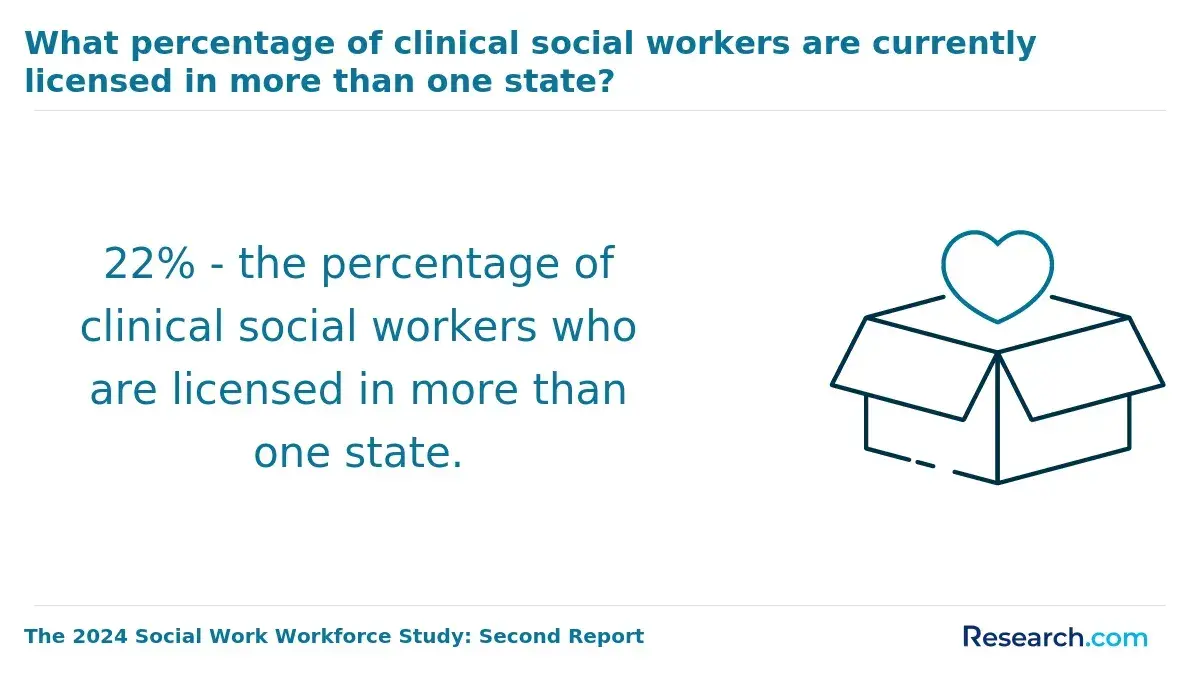
The Council on Social Work Education's 2024-25 Annual Survey shows about 66% of MSW students take some online courses, with nearly 30% completing fully online programs. As online pathways grow, students should still contact their state licensing board early because reciprocity, temporary permits, supervised practice rules, and online program recognition can vary.
Other Things You Should Know About Social Work
Yes, many online social work programs offer the option to specialize in areas such as clinical social work, child and family welfare, gerontology, or school social work. These specializations allow students to tailor their studies to specific populations or practice settings. Specialization requirements and availability vary by program, so it's important to review curriculum details while selecting an online degree.
Accredited online social work degrees, especially those from programs approved by the Council on Social Work Education (CSWE), are widely recognized by employers. Graduates from these programs are eligible to pursue licensure and are considered on par with those holding traditional, campus-based degrees. Verifying program accreditation is essential to ensuring employer recognition and eligibility for professional certification.
Online social work degree programs in 2027 incorporate field experiences through local partnerships, allowing students to complete hands-on practica in their own communities. These experiences are supervised by professionals and align with the same standards required by traditional campus programs, ensuring practical skill development.
Many online social work programs are designed with flexibility to accommodate working adults, allowing students to balance full-time employment with coursework. Part-time enrollment options and asynchronous classes enable students to progress at their own pace. However, field placement hours may require scheduled time that needs to be coordinated with employers.
References
- What Are the Licensed Social Worker Requirements? https://www.tuw.edu/school-news/licensed-social-worker-requirements/
- Bachelor of Science in Social Work | Online BSW Program https://programs.keuka.edu/online-bachelors-of-social-work/
- Careers With a Degree in Social Work | University of Phoenix https://www.phoenix.edu/articles/social-work/careers-with-a-degree-in-social-work.html
- Online Social Work Degree Programs | Pacific Oaks College https://www.pacificoaks.edu/social-work-degree-programs/
- 17 Best Online MSW Programs for Working Adults in 2026 - Social Work Education Center https://www.socialworkdegree.net/online-msw-programs/working-adults/
- Types of Social Work Jobs: 4 Career Paths https://onlinedegrees.keuka.edu/blog/types-of-social-work-jobs
- Fast Track MSW Programs https://www.onlinemswprograms.com/online-social-work-degrees/accelerated-online-msw-programs/
- Social Work (Online) | Huntington University https://www.huntington.edu/online/programs/social-work-online
- How Long Does it Take to Become a Social Worker? https://socialworklicensemap.com/become-a-social-worker/how-long-does-it-take/
- Naceweb https://www.naceweb.org