
2027 Online BA in Psychology - General Psychology for Childcare Center Staff: Choosing a Program Without Leaving Your Job
Audited and Verified:
Our Editorial and Data Verification Process
Research.com uses government datasets, official education statistics and primary institutional information to support its career and degree guides. Our review process checks factual accuracy, occupational definitions, source dates and the requirements associated with the credentials discussed.
How This Article Was Fact-Checked
Our editorial team verifies salary estimates, employment projections, education requirements and program information against original data providers and official organizations. Salary figures are checked against the relevant occupational definitions and reporting periods. Information about licensure, accreditation and required in-person training is reviewed separately.
Fact-checked and verified on:

Co-Founder and Chief Data Scientist
Working in a childcare center gives you firsthand experience with children's development, but it does not make room in your schedule for a traditional campus degree. An online BA in general psychology may broaden your options while you keep earning a paycheck - provided its deadlines, costs, and any field requirements fit your workweek.
This guide explains what to verify before enrolling, how the degree differs from childcare credentials, and when a more direct education pathway may serve you better.
Key Things You Should Know
- An online BA can fit childcare work, but "online" does not guarantee asynchronous classes, flexible deadlines, or a placement you can complete at your current center.
- A psychology bachelor's commonly requires about 120 credits in total; the school's written evaluation of your prior coursework - not its advertised transfer maximum - determines what remains.
- Choose general psychology for broad academic preparation, not as a shortcut to childcare licensing, teaching certification, or clinical practice.
What Is an Online BA in General Psychology for Childcare Staff?
An online BA in general psychology is a bachelor's degree covering psychological science across areas such as development, learning, social behavior, and research methods. It is not usually a childcare-specific qualification. For a center employee, its value may lie in understanding developmental evidence, communicating with families within your role, and preparing for broader nonclinical work or later study.
"General psychology" usually describes a broad major, while a formal concentration has its own published requirements. A BA may offer more room for general education or electives than some BS programs, but the actual course plans matter more than the letters on the diploma. If your aim is to stay in early childhood education, compare the psychology curriculum with an early childhood education degree before committing. A justice-focused goal warrants a different comparison, including shorter forensic psychology BA and BS timelines; speed alone does not make that specialization a better fit for childcare work.
Is an Online Psychology Bachelor's Degree Accredited and Recognized?
Start with the institution's accreditation: confirm its status through the accreditor or the U.S. Department of Education's accreditation database, and check that it covers the institution awarding the degree. Also verify that the program is authorized to enroll students in your state. Employers and graduate schools set their own requirements, so accreditation supports recognition but does not guarantee either acceptance or admission.
Do not reject a general psychology BA because it lacks American Psychological Association accreditation. APA accreditation applies to specified professional psychology training programs, not general psychology bachelor's degrees. Likewise, a school's accreditation does not establish that a particular degree meets a state's teaching or clinical licensing rules. When assessing claims made for a specialized alternative, the same distinction between institutional standing and professional eligibility applies to forensic psychology degree program quality checks.
Can You Earn a Psychology Degree Online While Working in Childcare?
Yes, if the program's actual schedule fits your shifts. Asynchronous lectures can be completed outside center hours, but discussion deadlines, timed exams, group meetings, and live classes may still fall during pickup, closing, or staff-meeting periods. Ask for sample syllabi from required courses rather than relying on an "online" label.
Compare programs against a normal workweek and the weeks when staffing is hardest. A faster calendar may mean less room to recover from illness or changing shifts; use shorter routes to an online psychology major as a scheduling comparison, not an assumption that accelerated study will be manageable. Before enrolling, ask whether research projects require live collaboration, whether any campus visits are required, and what happens if you need to reduce your course load or take a leave.
If an internship or capstone is required, do not assume your paid job counts. The psychology department may require advance site approval, distinct learning duties, qualified supervision, and permission from your employer. Work involving children also calls for careful attention to safeguarding and confidentiality; access to center records is not automatic permission to use them for coursework.
Expect introductory psychology and upper-level work in areas such as developmental, social, cognitive, and biological psychology. Statistics and research methods are especially important: they help you distinguish a well-supported developmental claim from an appealing but weak one. Check the catalog for prerequisites and how often required courses run online, since a course offered infrequently can delay completion.
For childcare staff, child development and learning electives are useful, but inspect their depth and availability rather than assuming the major includes an early childhood focus. Courses on disorders or counseling teach academic subject matter; they do not authorize diagnosis or therapy. If your intended role is specifically substance-use counseling rather than broader child and family support, an addiction counseling degree comparison resource is more relevant than selecting an unrelated psychology elective. Check the credential rules in the state where you intend to work.
Requirements vary by school and by whether you apply as a first-time or transfer student. Schools generally ask for an application and official records from prior schools; they may have separate rules for admission to the psychology major. A childcare job can strengthen your statement of purpose, but experience does not automatically replace academic requirements.
If you have community-college, early childhood education, or other prior credits, request a written degree audit. It should distinguish credits the school accepts from credits that satisfy general education, psychology-major, prerequisite, and graduation requirements. Ask specifically whether previous statistics or child-development courses count toward the major and how many credits must be earned through the degree-granting school. Psychology programs that accept transfer credits can help you find candidates, but only each institution can determine how your courses apply.
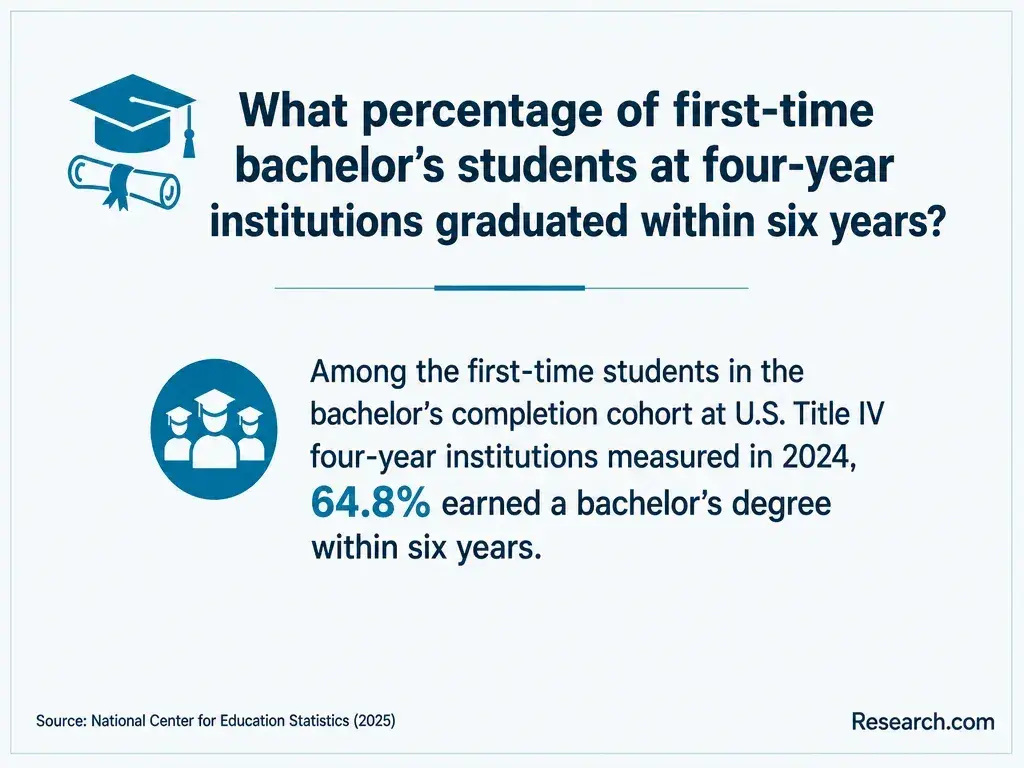
A bachelor's degree commonly totals about 120 semester credits, but your remaining time depends on the approved degree audit, course availability, prerequisites, and the pace you can sustain while employed. A part-time plan may protect your income and make study manageable while extending the period over which you pay fees. Ask an advisor for a term-by-term plan based on your evaluated credits - not a generic completion estimate.
Compare the full cost of the remaining degree, not tuition alone. Request the current per-credit or per-term charge, mandatory online and technology fees, books or software costs, and any internship or graduation charges. Then ask your employer whether education assistance is available and whether it requires you to remain employed afterward. Federal aid eligibility depends on your circumstances and enrollment; complete the FAFSA and confirm the school's aid rules before relying on a projected award.
If a specialized credential is competing for your budget, undergraduate substance abuse counseling education funding provides a separate point of comparison. Do not assume aid for that pathway - or for a psychology BA - will cover the same costs.
Your existing childcare experience is an asset when applying for roles involving family communication, developmental observation within a defined job scope, and coordination with colleagues. A psychology BA can add research literacy and broader behavioral-science preparation. It does not, by itself, qualify you for every position serving children.
Potential next steps include center administration where employer requirements permit, family-support or community-service coordination, and entry-level research or program-support roles. For each vacancy, compare its actual duties with your experience and identify missing qualifications - such as supervisory experience, data skills, a teaching credential, or a particular human-services degree. If you later consider justice-system or victim-service work, assess those requirements independently; choosing a shorter forensic psychology graduate pathway does not itself confer investigative or clinical authority.
For licensed mental-health work, plan for an appropriate qualifying graduate program and the jurisdiction's supervised-practice and licensing requirements. A general psychology BA can provide preparation, but it is not a clinical practice credential.
There is no single salary attached to a psychology BA. Pay depends on the job, employer, location, experience, and any required credentials. Childcare work, center management, and human-services support have different pay structures; a bachelor's degree does not automatically move an employee into a higher-paid title.
For a useful comparison, look up the Bureau of Labor Statistics' Occupational Outlook Handbook entry for the specific occupation you want, then compare its typical entry requirements and occupation-wide median pay with local job postings. That median is not a forecast of what a new psychology graduate - or a particular center employee - will earn. If the expected role change is modest, weigh the full cost of study against employer advancement rules and budget-conscious psychology program comparisons rather than assuming the degree will pay for itself.
Not automatically. Childcare centers are subject to state licensing rules, while qualifications for staff, directors, and teachers vary by state, setting, and position. A psychology BA may satisfy an employer's bachelor's-degree preference without meeting a state's specific early childhood coursework, training, experience, or teaching-certification requirements.
Before choosing a major for advancement, take the exact job title you want to your state childcare licensing agency or relevant education department and compare its rules with the proposed degree plan. Ask the program to identify qualifying courses in writing, but treat the regulator as the authority on eligibility. If your long-term goal is licensed counseling rather than childcare leadership, investigate a qualifying professional degree separately; accelerated counseling study and accreditation requirements are distinct from those of a general psychology BA.
How Do You Choose a Reputable Online Psychology Bachelor's Program?
Make a short list based on your intended outcome: continued childcare work, advancement into an eligible center role, a nonclinical transition, or preparation for graduate study. Comparing schools for an online psychology major can help you identify options, but the deciding evidence should come from each school's current catalog, written credit evaluation, and answers about your schedule.
Before paying an enrollment deposit, request the documents and answers that determine whether the program is workable for you:
- Obtain a written degree audit showing remaining requirements, prerequisite sequences, and courses available online.
- Ask for sample schedules or syllabi showing live sessions, weekly deadlines, exams, and any campus visits.
- Confirm whether a placement is required, whether your center could be considered, and who must approve and supervise it.
- Request a personalized cost estimate for your remaining credits, including mandatory fees, and check leave and part-time aid policies.
- Verify institutional accreditation, state enrollment eligibility, and any separate requirements for the job or future degree you want.
Choose the program that meets your objective at a sustainable pace and documented cost. If your immediate goal is a particular childcare credential or promotion, check whether targeted early childhood coursework, employer training, or a different degree meets that requirement more directly.
Other Things You Should Know About Psychology
Possibly, if a school offers an approved prior-learning assessment process. Ask what evidence it accepts, what it charges, and whether any awarded credit applies to your degree requirements.
Neither label is inherently better. Compare developmental coursework, research requirements, eligible electives, and the qualifications for your target job.
Not necessarily. Ask whether the program offers projects using published research or approved datasets. Never collect information about children at work without the required school and center permissions.
Many schools have leave or reentry policies, but deadlines, catalog requirements, and financial aid consequences vary. Get the policy for your entry term before enrolling.
- Rule 1301:11-7-03 | Distance education. https://codes.ohio.gov/ohio-administrative-code/rule-1301:11-7-03
- Class Description and Minimum Qualifications for H7C | colorado.gov https://dhr.colorado.gov/state-hr-professionals/job-classifications/class-description-and-minimum-qualifications-for-h7c
- Cost of Attendance (Budget) | 2025-2026 Federal Student Aid Handbook https://fsapartners.ed.gov/knowledge-center/fsa-handbook/2025-2026/vol3/ch2-cost-attendance-budget
- Types of Financial Aid: Grants, Work-Study, and Loans | studentaid.gov https://studentaid.gov/understand-aid/types
- Psychology - Bachelor - Empire | SUNY Online https://explore.suny.edu/programs/empire-state-college-psychology-bachelor-1571852596383
- What are Asynchronous Classes? | University of Bridgeport https://www.bridgeport.edu/news/what-are-asynchronous-classes/
- Synchronous versus Asynchronous - Our Mission https://www.sfcc.edu/online-learning-at-sfcc-synchronous-versus-asynchronous/
- Career Outcomes - Psychology Major https://www.scranton.edu/academics/cas/psychology/professional-outcomes/careers-with-bachelors-degree.shtml
- Qualifications & Educational Supports - Early Childhood Workforce Index 2024 - CSCCE https://cscce.berkeley.edu/workforce-index-2024/state-policies-to-improve-early-childhood-educator-jobs/early-childhood-educator-workforce-policies/qualifications-educational-supports/
- Transfer Credit and Credit for Prior Learning | University of the District of Columbia https://www.udc.edu/admissions/transfer-students/transfer-credit-policy


