2027 Trauma-Informed Social Work Careers: What Students Should Know

Co-Founder and Chief Data Scientist
Moving into trauma-informed social work from another field takes more than choosing a caring profession. You need the right degree, accredited training, supervised experience, and a clear understanding of state licensure rules before you can provide clinical services to people affected by trauma.
This guide is for career changers, working adults, and prospective graduate students who want to enter social work with a focus on trauma-informed practice. It explains what trauma-informed social work means, which degrees are most useful, how licensure works, what online options can and cannot provide, and how career outcomes vary by role and setting.
The goal is to help you compare pathways realistically. A flexible online MSW may be a good fit for an adult learner with a full-time job, but accreditation, field placement support, and licensure alignment matter more than convenience alone.
Key Things You Should Know
- Trauma-informed social work careers focus on understanding clients' traumatic experiences to provide empathetic, effective support, with 75% of agencies in 2025 adopting trauma-informed practices.
- Employment in trauma-informed roles is projected to grow 12% by 2030, driven by increased demand for mental health services and public awareness of trauma's impact.
- Master's degrees in social work with trauma specialization enhance job prospects, with a median salary of $65,000 and licensure required for clinical positions.
What is trauma-informed social work?
Trauma-informed social work is an approach to practice that recognizes how trauma affects behavior, relationships, health, learning, and decision-making. Instead of asking only what problem a client has, trauma-informed practitioners also consider what the person has experienced and how those experiences may shape current needs.
In the United States, trauma-informed social work is used across clinical, school, healthcare, child welfare, veteran, crisis response, and community settings. The approach does not assume that every client has the same trauma history. It requires careful assessment, cultural humility, client choice, and attention to safety so that services do not unintentionally retraumatize the people they are meant to help.
Core principles of trauma-informed practice
- Safety: creating physical, emotional, and relational environments where clients can participate without fear of harm or judgment.
- Trust and transparency: explaining processes, limits of confidentiality, timelines, and decisions clearly.
- Choice and collaboration: involving clients in goal setting and service planning rather than imposing solutions.
- Empowerment: building on strengths, resilience, and client-defined recovery goals.
- Cultural responsiveness: recognizing the role of identity, community, historical trauma, discrimination, and lived experience.
Trauma-informed social workers learn to identify trauma-related symptoms such as anxiety, depression, emotional dysregulation, avoidance, substance use, or behavioral changes. They also learn to match interventions to a client’s trauma history, age, support system, culture, and current level of risk.
This specialization is especially relevant in high-need systems. The University of the Pacific projects a 14% job growth for social workers in California through 2033, driven by mental health needs and an aging population.
Students who want to build expertise in this area should look for coursework in trauma theory, crisis intervention, clinical assessment, cultural competence, and evidence-informed treatment. Field placements in hospitals, schools, behavioral health agencies, child welfare offices, or domestic violence programs can be particularly valuable. For professionals planning advanced leadership or practice roles, accredited DSW programs may provide a pathway into higher-level trauma-informed practice, policy, teaching, or administration.
What education is required for trauma-informed social work careers?
The education required depends on the role you want. Entry-level social service positions may be available with a Bachelor of Social Work (BSW) or a related bachelor’s degree, but clinical trauma-informed practice generally requires a Master of Social Work (MSW) from a Council on Social Work Education (CSWE)-accredited program.
For career changers with a non-social-work bachelor’s degree, the MSW is usually the central credential. An engineering, business, education, psychology, or healthcare background can still be useful, but it does not replace accredited social work training or state licensure requirements.
| Education level | Typical purpose | Trauma-informed relevance |
| BSW | Preparation for entry-level social work and human services roles | Builds a foundation in social work values, case management, policy, and practice with individuals and communities |
| MSW | Preparation for advanced generalist, macro, or clinical social work roles | Often includes trauma-focused electives, field placements, crisis work, assessment, and intervention training |
| Post-MSW training or certification | Specialized professional development after graduate school | May focus on PTSD, emergency response, child abuse, domestic violence, grief, or specific therapy models |
| DSW or PhD | Advanced leadership, research, teaching, policy, or specialized practice development | Useful for professionals who want to lead programs, conduct trauma research, or influence systems-level practice |
An MSW program typically includes coursework in human behavior, social welfare policy, ethics, research, clinical or advanced practice methods, and field education. Students interested in trauma-informed work should prioritize programs that offer relevant electives, faculty expertise, and field placements in trauma-focused settings.
After the MSW, clinical licensure usually requires supervised clinical experience—usually between 2,000 and 4,000 hours—plus passing a clinical examination. Requirements vary by state, so students should confirm rules with the licensing board in the state where they plan to practice.
Additional training in emergency response, PTSD treatment, child abuse, domestic violence, or hospital-based crisis work can strengthen preparation for specialized positions. Continuing education is also important because trauma-informed care evolves as research, ethics, and best practices change.
Advanced preparation can affect career options and earnings. Salary expectations reflect the level of expertise and specialization, with hospital-based trauma social workers earning a median annual wage of $68,090 and top professionals reaching $100,870. Students who need a flexible pathway can compare masters in social work online options, but should verify CSWE accreditation, field placement support, and state licensure alignment before enrolling.
How do I become a licensed trauma-informed social worker?
To become a licensed trauma-informed social worker, you first need to become a licensed social worker in your state. Trauma-informed practice is a specialization or practice orientation, while licensure is the legal credential that determines what services you may provide, especially if you want to offer clinical assessment, diagnosis, or psychotherapy.
Typical pathway to licensure
- Earn a bachelor’s degree. A BSW can provide the most direct undergraduate foundation, but many MSW programs also admit students with bachelor’s degrees in other fields.
- Complete a CSWE-accredited MSW. Choose trauma-informed electives, clinical coursework, and field placements that match your career goals.
- Apply for post-graduate supervised practice. Most states require 2,000 to 4,000 hours of supervised practice—usually over two to three years—under a licensed clinical social worker (LCSW) or equivalent.
- Pass the required licensing exam. Many states use a clinical licensing exam, such as the Association of Social Work Boards (ASWB) Clinical Exam.
- Meet state-specific rules. Requirements for titles, scopes of practice, jurisprudence exams, background checks, renewal, and continuing education differ by state.
- Continue trauma-focused professional development. Training in trauma-informed care, PTSD, crisis response, domestic violence, grief, or evidence-based clinical methods can support specialization.
Students should be cautious about programs or certificates that sound like licensure shortcuts. A certificate in trauma-informed care can improve your knowledge, but it does not replace an accredited MSW, supervised clinical hours, or a state license when those are required for the job you want.
The need for trained professionals is substantial. Around 6% of U.S. adults experience PTSD annually, with women twice as likely as men to develop it. Trauma-informed skills are valuable in mental health, child welfare, healthcare, schools, corrections, veterans services, and community-based programs.
Before choosing a school, confirm that the curriculum and field placement structure meet licensure expectations in your intended state. If salary and location are part of your decision, review how much does an LCSW make to compare earning potential by state and credential level.
What degrees are best for trauma-informed social work?
The best degree for trauma-informed social work depends on whether you want entry-level service work, licensed clinical practice, leadership, or research. For most students aiming to become trauma-informed clinicians, the MSW is the key degree because it is the standard graduate pathway to clinical social work licensure.
| Degree | Best for | Important limitation |
| BSW | Entry-level social work roles, case management, community services, and preparation for graduate study | Usually not enough for independent clinical trauma therapy |
| MSW | Clinical, school, healthcare, child welfare, policy, and advanced social work roles | Licensure still requires supervised hours and state exams after graduation |
| DSW | Advanced practice leadership, administration, teaching, program design, and applied expertise | Usually intended for experienced social workers rather than entry-level students |
| PhD in Social Work | Research, academia, policy analysis, and scholarship on trauma and social systems | Less practice-focused than a clinical MSW or applied doctorate |
| Related degrees in counseling or psychology | Mental health roles outside social work, depending on state rules and program accreditation | May not qualify graduates for social work licensure without additional social work education |
A BSW gives students a strong introduction to social work ethics, policy, human behavior, and generalist practice. It may also qualify some students for advanced standing MSW pathways, depending on the school and applicant background. However, students who want to provide trauma-focused therapy typically need graduate education and clinical licensure.
An MSW is the most flexible and widely recognized degree for trauma-informed social work practice. Strong programs may offer electives in childhood trauma, domestic violence, crisis intervention, grief, substance use, behavioral health, or school-based trauma support. Field education is especially important because it allows students to practice assessment, engagement, documentation, advocacy, and interdisciplinary collaboration with supervision.
The value of graduate education is reflected in the profession’s licensing profile. According to the ASWB Social Work Workforce Study (2025), 59% of licensed social workers hold clinical licenses, and 94% possess master's degrees or higher.
Students comparing degree options should prioritize CSWE accreditation, field placement quality, faculty expertise, licensure pass support, and access to trauma-informed coursework. Cost and flexibility matter, but they should not outweigh accreditation or licensing fit. If you are weighing the return on graduate study, the question “Is an MSW worth it?” is useful to examine before committing to a program.
What does trauma-informed social work curriculum cover?
A trauma-informed social work curriculum teaches students to understand trauma, recognize its effects, and respond in ways that support safety, dignity, and recovery. It should combine theory, ethics, assessment, intervention, cultural competence, and supervised practice rather than treating trauma as a single elective topic.
Common curriculum areas
- Trauma theory and neurobiology: how traumatic stress can affect the brain, nervous system, memory, attachment, emotion regulation, and behavior.
- Assessment and engagement: how to identify trauma symptoms, ask sensitive questions, assess safety, and avoid retraumatizing clients during intake or treatment planning.
- Clinical and community interventions: how to select appropriate strategies for individuals, families, groups, and communities.
- Evidence-based approaches: methods such as Cognitive Behavioral Therapy (CBT) adapted for trauma, Eye Movement Desensitization and Reprocessing (EMDR), and narrative approaches.
- Cultural and historical trauma: how racism, displacement, poverty, violence, discrimination, and institutional harm can shape individual and community well-being.
- Ethics and boundaries: informed consent, confidentiality, mandated reporting, documentation, dual relationships, and client self-determination.
- Interdisciplinary collaboration: working with healthcare providers, educators, courts, law enforcement, child welfare staff, and community organizations.
- Practitioner self-care: recognizing vicarious trauma, burnout, compassion fatigue, and the need for supervision and professional support.
Strong programs use case studies, simulations, reflective assignments, research reviews, and field placements to connect classroom learning with practice. Students may work through scenarios involving child abuse, intimate partner violence, community violence, medical trauma, refugee experiences, grief, substance use, or crisis intervention.
Curriculum quality matters because trauma-informed work requires judgment, not just empathy. Students need to learn when to provide support, when to refer, how to manage risk, and how to document ethically. They also need to understand the limits of their training, especially before independent clinical licensure.
This preparation is increasingly relevant as clinician and private practice roles grow to 35% of social work positions, noted in the Agents of Change 2026 State of Social Work Report. Graduates with strong trauma-informed training may be better prepared for roles in hospitals, schools, child welfare agencies, mental health clinics, community organizations, and private practices.
What are admission requirements for social work programs?
Admission requirements vary by degree level, school, and program format, but most social work programs look for academic readiness, communication skills, ethical maturity, and evidence that applicants understand the profession’s responsibilities. For trauma-informed pathways, relevant work or volunteer experience can strengthen an application, but it is not always required.
| Program level | Common admission requirements | How to strengthen your application |
| BSW | High school diploma, GPA between 2.5 and 3.0, prerequisite or general education coursework, letters of recommendation, and a personal statement | Highlight service experience, maturity, writing ability, and understanding of social work ethics |
| MSW | Bachelor’s degree, often a minimum GPA of 3.0, transcripts, personal statement, recommendations, resume, and sometimes GRE scores | Connect prior academic or professional experience to social work goals and explain why trauma-informed practice fits your career plan |
| DSW or PhD | MSW or equivalent degree, strong academic record, professional experience, faculty recommendations, statement of purpose, and sometimes standardized test scores | Show a clear advanced practice, leadership, research, or policy focus related to social work |
BSW applicants often benefit from prior coursework in psychology, sociology, human development, statistics, or related fields. Schools may also evaluate interpersonal readiness because social work education includes field placements with real clients and agencies.
MSW applicants do not always need a BSW. Career changers with bachelor’s degrees in engineering, business, education, criminal justice, healthcare, or the humanities may be admitted if they can show academic readiness and a credible commitment to social work. Applicants should use the personal statement to explain the transition clearly, without overstating clinical experience they do not yet have.
Doctoral applicants should be prepared to describe a focused professional or research agenda. DSW programs often emphasize applied leadership and advanced practice, while PhD programs generally emphasize research, scholarship, and teaching.
Employment in mental health and substance use social work is projected to grow 12% from 2023 to 2033—twice the overall job market average—so competitive applicants should treat admissions materials seriously. Common mistakes include submitting a generic personal statement, failing to address ethical responsibilities, ignoring field placement requirements, or choosing a program based only on convenience rather than accreditation and licensure fit.
Are there online trauma-informed social work programs?
Yes. Many universities offer online social work programs with trauma-informed coursework, electives, certificates, or concentrations, especially at the MSW level. Online programs can be a practical option for working adults, military families, rural students, and career changers who need flexibility while completing graduate education.
The most important factor is accreditation. Students who intend to pursue social work licensure should confirm that the MSW is accredited by the Council on Social Work Education (CSWE). An online format can still meet professional standards, but only if the program’s accreditation, curriculum, and field education satisfy licensing expectations.
What online programs usually include
- Asynchronous courses that let students complete lectures and assignments on a flexible schedule
- Live seminars or synchronous classes for discussion, skills practice, and faculty interaction
- Field placements completed in approved local agencies
- Trauma-informed electives or certificates focused on areas such as crisis work, child welfare, behavioral health, or family violence
- Academic advising, field placement coordination, and career services
Online does not mean fully remote in practice. Social work education requires supervised fieldwork, and students should ask how the school helps secure placements near their location. A weak field placement process can delay graduation or limit access to trauma-focused experience.
When comparing online trauma-informed social work programs, review tuition, program length, part-time options, technology requirements, faculty expertise, licensure disclosures, field placement support, and student support services. Ask whether the program has relationships with hospitals, schools, mental health clinics, child welfare agencies, domestic violence organizations, or community-based trauma programs.
The Bureau of Labor Statistics projects approximately 74,000 job openings annually due to retirements and occupational transfers. Online education can help meet workforce needs, but students should choose carefully. The best online program is not simply the fastest or cheapest; it is the one that prepares you for licensure, field competence, and the type of trauma-informed role you want.
What jobs can I get in trauma-informed social work?
Trauma-informed social work can lead to roles in clinical practice, case management, advocacy, crisis response, policy, schools, hospitals, child welfare, and community services. The specific jobs available depend on your degree, license, field experience, and state rules.
| Role | Common settings | Typical focus |
| Child, family, and school social worker | Schools, child welfare agencies, family service organizations, community programs | Supporting children and families affected by abuse, neglect, violence, grief, instability, or school-related trauma |
| Trauma-focused clinical social worker | Outpatient clinics, hospitals, private practices, behavioral health centers | Providing assessment, therapy, treatment planning, and referrals for clients with trauma histories |
| Hospital or emergency department social worker | Hospitals, trauma centers, emergency departments, rehabilitation units | Crisis intervention, discharge planning, family support, resource coordination, and acute trauma response |
| Domestic violence or sexual assault advocate | Advocacy centers, shelters, nonprofits, crisis hotlines | Safety planning, emotional support, legal referrals, community education, and survivor advocacy |
| Child protective services or juvenile justice social worker | Government agencies, courts, residential programs, community supervision settings | Assessment, case planning, family engagement, court coordination, and trauma-informed intervention |
| Policy or program specialist | Government agencies, nonprofits, research organizations, foundations | Designing, evaluating, or improving trauma-informed systems and services |
Clinical roles usually require an MSW and licensure, especially if the job involves diagnosis, psychotherapy, or independent practice. Case management, advocacy, and program roles may have broader degree requirements, although trauma-informed training is still valuable.
Specialized roles in advocacy centers, child protective services, or juvenile justice programs often require advanced trauma training and command higher median salaries. According to socialworkdegrees.org, those addressing childhood trauma earn a median salary of $58,570, with specialized trauma-related settings offering salaries up to $94,030.
Students can improve employability by choosing field placements in trauma-focused settings, documenting relevant training, building crisis intervention skills, and learning to collaborate across agencies. Employers often look for cultural competence, ethical judgment, strong documentation, de-escalation skills, and the ability to work with clients who may distrust systems because of prior harm.
- Common work settings include schools, healthcare organizations, community agencies, outpatient clinics, nonprofits, advocacy centers, and justice programs.
- Key functions include intervention, counseling, psychotherapy, case management, advocacy, policy development, and resource coordination.
- Advanced training and licensure often lead to greater responsibility, more clinical autonomy, and stronger salary potential.
What is the salary for trauma-informed social workers?
Trauma-informed social worker salaries vary by degree, license, employer, location, and job duties. In the United States, trauma-informed social workers earn median annual salaries typically between $50,000 and $65,000, but clinical, hospital-based, and high-demand roles may pay more.
| Career stage or role | Salary information | What affects pay |
| Entry-level positions, often with a BSW | Around $45,000 to $50,000 | Agency type, location, caseload, and whether the role is direct service or administrative |
| MSW with trauma training | $55,000 to $70,000 | Graduate preparation, field experience, specialization, and employer demand |
| Clinical trauma social workers | Over $75,000 | Licensure, clinical responsibilities, setting, and regional labor market |
| Private practice or high-demand clinical roles | Can be higher in urban or specialized settings | Client volume, reimbursement, specialty, business expenses, and licensure status |
Work setting has a major influence on earnings. Hospitals, government agencies, and clinical mental health settings may pay differently from nonprofits, schools, or community programs. Roles involving emergency response, forensic work, or complex clinical intervention may offer higher pay, but they can also involve heavier emotional demands.
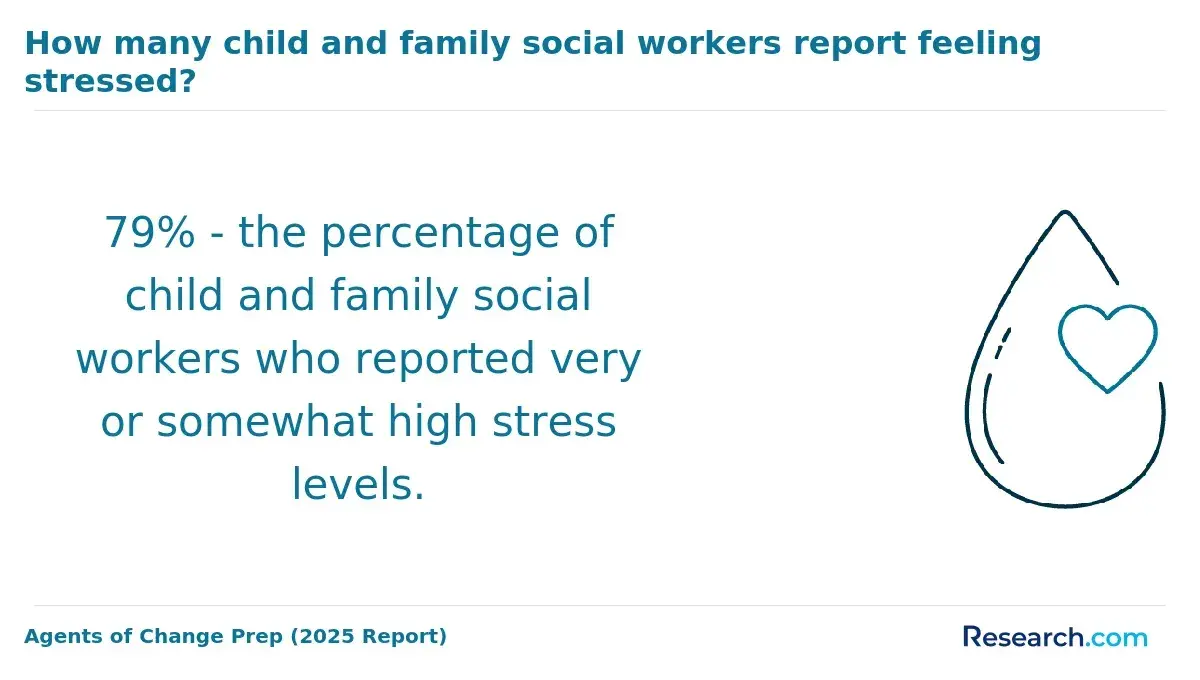
Job stress should be part of the salary calculation. Trauma-informed case management roles tend to have lower stress, with only 43% reporting high stress levels, improving job satisfaction and retention. In contrast, emergency, forensic, or intensive clinical roles may pay more because they require specialized skills, rapid decision-making, and exposure to high-acuity situations.
Geography also matters. States with higher living costs like California and New York offer higher salaries, though higher pay may be offset by housing, taxes, commuting, and licensure costs. Licensure status, particularly Licensed Clinical Social Worker (LCSW) credentials, can increase earning potential and expand job options.
- Median salary range: $50,000-$65,000
- Entry-level BSW: $45,000-$50,000
- MSW with trauma training: $55,000-$70,000
- Clinical trauma social workers: $75,000+
- Lower-stress case management roles may support long-term retention and job satisfaction
- Higher cost-of-living states may pay more
- Licensure and trauma-specific training can improve earning potential
What is the job outlook for trauma-informed social work?
The job outlook for trauma-informed social work is positive because more employers recognize the long-term effects of trauma on mental health, education, family stability, healthcare use, and community well-being. Demand is especially visible in behavioral health, child welfare, schools, hospitals, veterans services, crisis response, and private practice.
Trauma-informed training is not a separate occupation in most labor data; it is a specialization that can strengthen many social work roles. Employers increasingly value social workers who can respond to trauma while also managing documentation, risk assessment, referrals, family systems, cultural considerations, and interagency coordination.
Private practice is especially promising for Licensed Clinical Social Workers (LCSWs), with median annual earnings between $65,000 and $85,000. The top 10% can earn over $100,000, reflecting strong demand and opportunities for those specializing in trauma care outside traditional settings.
Settings with continued demand
- Hospitals and mental health clinics treating trauma-related disorders and co-occurring conditions
- Nonprofit organizations providing crisis intervention, advocacy, housing support, and survivor services
- School systems adopting trauma-sensitive approaches to behavior, attendance, learning, and family engagement
- Government agencies focused on child welfare, veterans services, corrections, juvenile justice, and community health
- Private practices serving clients with PTSD, grief, complex trauma, domestic violence histories, or related concerns
Strong candidates typically combine clinical or case management skill with cultural competence, ethical judgment, and the ability to work across systems. Evidence-based intervention training, supervised trauma-focused field experience, and licensure can improve job prospects.
Opportunities will still vary by region, funding, reimbursement policies, agency budgets, and local demand. Students should compare state licensure rules, salary expectations, cost of living, and the availability of trauma-focused field placements before choosing a program or location.
Other Things You Should Know About Social Work
In 2027, certifications like the Certified Clinical Trauma Professional (CCTP) are often required for trauma-informed social work. Additionally, a Master of Social Work (MSW) degree may be necessary, along with state licensure, to practice in trauma-informed roles professionally.
Social workers in trauma-informed roles often encounter secondary traumatic stress and burnout due to continuous exposure to clients' traumatic experiences. Navigating complex systems and limited resources can hinder effective client support. Maintaining professional boundaries while providing compassionate care is another common challenge in this field.
In 2027, students in trauma-informed social work can pursue roles such as clinical social worker, trauma specialist, or program director. Opportunities also exist in policy development, education, and research, focusing on trauma-sensitive interventions and community support initiatives.
References
- Working definition of trauma-informed practice https://www.gov.uk/government/publications/working-definition-of-trauma-informed-practice/working-definition-of-trauma-informed-practice
- MSW - Trauma-Informed Practice https://socialwork.ucalgary.ca/trauma-informed-practice
- How to Become a Social Worker https://www.onlinemswprograms.com/careers/how-to-become-a-social-worker/
- Trauma Informed Jobs in All Sydney NSW - May 2026 | SEEK https://au.seek.com/trauma-informed-jobs/in-All-Sydney-NSW
- Trauma-Informed School Social Work https://www.socialworktoday.com/archive/090915p16.shtml
- Trauma-Informed Care Certification - TIC Training Center https://traumainformedcaretraining.com/trauma-informed-care-certification/
- Trauma-Informed Approaches and Programs | SAMHSA https://www.samhsa.gov/mental-health/trauma-violence/trauma-informed-approaches-programs
- MSW Programs That Teach About Trauma-Informed Social Work | edX https://www.edx.org/masters/online-msw-programs/trauma-social-work
- Social Work Masters Prerequisites: Discover 7 Critical Pieces - Prereqcourses https://www.prereqcourses.com/social-work-masters-prerequisites/
- What Every New Social Worker Needs To Know...Trauma Informed Care in Social Work https://www.socialworker.com/feature-articles/practice/trauma-informed-care-in-social-work/