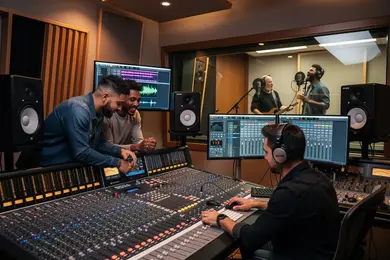
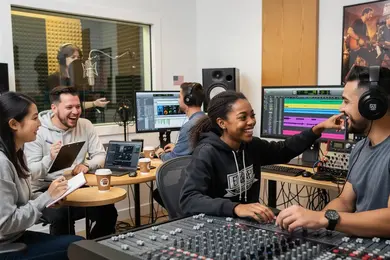
2026 Online Audio & Music Master's Curriculum Breakdown: Core Courses & Specializations

Co-Founder and Chief Data Scientist
The ongoing shift toward diversified media platforms and immersive audio experiences presents a nuanced challenge for students in online audio & music master's programs. Curriculum structures and specialization choices directly shape not only technical competence but also adaptability to evolving industry roles, where employers increasingly seek candidates with targeted certifications and applied skillsets. Strategic course selection impacts workload balance and timely credentialing, while overspecialization can limit versatility in a fluid labor market. Constraints such as rigid sequencing may delay entry into emerging sectors like spatial audio or AI-driven production. This article evaluates how program designs influence career positioning, workforce relevance, and long-term professional resilience.
Key Things to Know About Online Audio & Music Master's Curriculum
- Core courses often balance technical audio engineering skills against creative music production, requiring students to prioritize specializations aligned with specific career trajectories rather than a broad but shallow curriculum.
- Employers increasingly value mastery in emerging audio technologies like spatial audio; programs lacking these focus areas may limit graduates' competitiveness in evolving media and entertainment sectors.
- Online delivery expands access but can extend completion times by 20% on average, impacting cost and opportunity choices for professionals weighing immediate workforce reentry versus extended study.
What Core Courses Are Included in an Online Audio & Music Master's Program?
Core coursework in online audio & music master's programs signals a program's commitment to developing both technical mastery and applied problem-solving ability in a demanding curriculum structure. The sequencing and workload intensity of these foundational courses often reflect an alignment with employer expectations, preparing students to tackle real-world audio challenges through rigorous training in industry-relevant tools and analytical frameworks. For many learners aiming to specialize, these core classes form the prerequisite knowledge base that supports diverse advanced applications.
- Advanced Audio Engineering: This course emphasizes hands-on proficiency with digital audio workstations (DAWs) and contemporary recording, mixing, and mastering workflows. Its practical focus ensures students can meet studio production standards and adapt swiftly to evolving audio technologies used in professional settings.
- Digital Signal Processing: Covering the mathematical and algorithmic underpinnings of audio manipulation, this course equips students to understand and innovate within areas such as filtering, effects, and spatial audio. Such expertise is critical for those pursuing specialized work in immersive sound environments and emerging multimedia platforms.
- Music Theory and Composition: Integrated deeply into the curriculum, these classes go beyond basics by fostering creative skills in arrangement and scoring. Their role is foundational for projects that embed audio into broader multimedia contexts, ensuring graduates can creatively and technically contribute to complex productions.
- Acoustics and Psychoacoustics: Offering a scientific approach to the physical behavior of sound and human auditory perception, this course prepares students to address practical concerns in studio design, sound reinforcement, and product development. Given that a majority of employers seek proficiency with acoustic measurement and analysis, this component responds directly to workforce demand.
- Sound Design and Synthesis: Focused on creating and manipulating original audio content, this course enables students to master synthesis techniques essential for applications like game audio, film scoring, and interactive media. It supports professional readiness by bridging technical skills with creative sound production.
- Capstone Project or Thesis: Serving as a culminating experience, this requirement integrates technical knowledge and creative practice into a professional-level deliverable. The scope and rigor of this project reflect employer emphasis on portfolio evidence that demonstrates comprehensive competence and applied problem-solving in real-world audio & music contexts.
Many programs also incorporate complementary courses in audio programming and music business fundamentals to round out the comprehensive skill set required by today's industry. Prospective students evaluating program structure should note how this core curriculum supports specialization options while aligning closely with workplace realities. For learners balancing a significant workload or considering accelerated pathways, programs with clear sequencing and interconnected core courses-as seen in many 1 year master's programs online-may offer strategic advantages.
Table of contents
What Specializations Are Available in Online Audio & Music Master's Programs?
Specializations within online Audio & Music master's programs are far from mere academic labels; they strategically structure skill acquisition and significantly influence employability and long-term career trajectories. Choosing a specialization is a pragmatic decision that affects the depth of technical expertise, exposure to industry-specific practices, and competitive positioning, particularly as demand fluctuates across subfields with varying intensity and skill requirements.
- Audio Production and Engineering emphasizes hands-on proficiency with recording technologies, mixing techniques, and mastering audio quality. Online programs typically integrate virtual studio environments and internship opportunities that mirror industry workflows, preparing graduates for technically demanding roles though often at the expense of broader creative training.
- Music Technology and Sound Design develops skills in synthesizing audio and leveraging emerging platforms like spatial audio and interactive media. This specialization aligns with fast-growing sectors such as gaming and VR, which saw a 12% increase in skilled sound designer demand in 2024 according to labor market analyses, highlighting its appeal to those targeting innovative tech-driven careers.
- Music Composition and Arranging centers creative aptitude alongside compositional theory, catering primarily to media scoring and contemporary classical music markets. While rich in artistic development, this path generally offers fewer applied studio projects, which may limit technical readiness for certain production-oriented roles.
- Music Business and Entrepreneurship focuses on the commercial infrastructure behind music, including management, marketing, and legal aspects. Growing digital distribution and independent artist initiatives demand pragmatic understanding here, with many programs incorporating case studies and practicum experiences that foster industry connections critical to deal-making and market navigation.
- Interdisciplinary or Hybrid Tracks allow blending of creative, technical, and business skills, offering versatility but requiring deliberate curriculum planning to ensure cohesive skill sets that meet specific employer expectations without sacrificing depth.

Can Students Choose Electives Outside Their Specialization?
Elective selection in online Audio & Music master's programs is typically governed by structured curricula that prioritize foundational coursework within a chosen specialization. Students often face program-imposed caps on the proportion of credits allowed outside their concentration, frequently limited to about 20-30% of total requirements, as reflected in 2024 data from the National Center for Education Statistics. Access to electives beyond the specialization usually requires advisor approval and adherence to prerequisite chains, while availability may be restricted by limited course capacity or sequencing constraints. This design reflects a balance between ensuring skill depth in areas like sound design or music production and providing some opportunity for cross-disciplinary study.
Choosing electives outside the core focus carries practical tradeoffs: while broadening academic exposure-such as incorporating music business or digital media-can enhance adaptability and appeal to employers seeking multidisciplinary skills, it may also dilute time spent mastering technical expertise critical for certain roles. Additionally, pursuing diverse electives can prolong time-to-degree completion when additional prerequisites or schedule conflicts arise. In competitive creative industries, depth of specialization often outweighs breadth, yet professionals with versatile skill sets can navigate adjacent fields more effectively. For example, a student expanding into audio programming electives found it challenging to maintain project deadlines within the core production sequence, impacting timely graduation and immediate job readiness.
A graduate from an online Audio & Music master's program recalled the challenge of planning electives amid rolling admissions and uncertain course offerings. Early in enrollment, their advisor cautioned about limited spots in cross-specialization courses and the strict sequencing of core classes. Faced with registration deadlines while still awaiting final admission decisions, the student hesitated to commit to a broader elective path, worrying it might extend the program beyond the planned timeframe. Ultimately, they prioritized core courses first and only incorporated an elective outside their specialization once their standing was secure, which caused initial schedule adjustments but ensured progression without delay.
How Are Online Audio & Music Master's Courses Delivered?
Online audio & music master's programs predominantly utilize a combination of asynchronous and synchronous instructional methods to balance flexibility with structured engagement. Asynchronous elements like recorded lectures and self-paced modules allow learners to manage coursework around other responsibilities. Synchronous sessions, including live virtual workshops and group critiques, create spaces for immediate feedback and collaborative problem-solving, which are essential for practical skill development in areas such as audio engineering. Programs often adopt a hybrid participation model to harness the strengths of both approaches, aligning instructional delivery with evolving professional demands.
This blended format directly influences students' time management and interaction levels. Working professionals and career changers benefit from the adaptable pacing of asynchronous content, though they must exercise discipline to keep up with core competencies. Meanwhile, synchronous activities require scheduled attendance, fostering real-time engagement but potentially constraining learners juggling multiple commitments. According to a 2024 report from the National Center for Education Statistics, around 68% of graduate-level music and audio programs employ such hybrid delivery, optimizing the balance between flexibility and consistent learning outcomes.
Choosing between flexibility and immediacy involves tradeoffs affecting experiential learning and program completion. Asynchronous formats can limit spontaneous collaboration crucial for creative growth, while synchronous sessions demand regular participation, which some students find challenging. Mastery of cloud-based digital audio workstations during hands-on tasks often hinges on real-time guidance, emphasizing how delivery structure shapes practical skills development. Prospective students should weigh how these course formats support their learning preferences and long-term employability in a field where both technical proficiency and collaborative experience are increasingly valued. For further insight on balancing cost and accessibility in related technical disciplines, consider exploring the cheapest online mechanical engineering degree options.
Which Core Classes Are Considered the Most Challenging?
Core classes in online audio & music master's programs that demand the greatest effort often combine abstract technical rigor with practical application pressures. Courses in audio signal processing stand out due to their reliance on advanced mathematical models and specialized software, requiring students to engage deeply with quantitative reasoning while also mastering complex, real-time sound manipulation tools. Similarly, critical listening and mastering classes challenge students to cultivate refined auditory discernment alongside precise technical adjustments, blending subjective interpretation with measurable outcomes. Project management courses present a distinct type of difficulty, pushing learners to adopt leadership, budgeting, and scheduling competencies that are less intuitive for those primarily trained in creative or technical roles.
These demanding courses influence student progression and professional readiness by serving as gatekeepers for technical proficiency and collaborative leadership essential in studio and production environments. For instance, a student who struggles with signal processing fundamentals may find their ability to specialize in sound design limited, while another who underperforms in workflow and project leadership might face hurdles transitioning into managerial roles. According to a 2024 survey by the National Center for Education Statistics, nearly 38% of audio & music graduate students report these technical core subjects as notably more difficult than theoretical or artistic ones, reflecting their critical role in workforce preparedness. This difficulty often translates into extended study time or retaking courses, highlighting the importance of balancing technical mastery with creative skill development for long-term employability.
One online audio & music master's student described hesitation during the application cycle after realizing the technical demands of signal processing classes could slow their progress. They delayed submitting final materials to strengthen prerequisite coursework, aware that rolling admission timelines might require a strategic balance between demonstrating readiness and seizing enrollment opportunities. This uncertainty about timing underscored how technical core challenges influence not only academic success but the very timing of admission decisions and career planning within the program.

Do Online Audio & Music Master's Programs Require Internships or Practicums?
Online audio & music master's programs differ widely in whether they require internships or practicums to graduate, often reflecting institutional focus and accreditation standards. Around 58% of accredited programs mandate some form of experiential learning, typically integrating internships or practicums that emphasize applied skills and professional networking vital for careers in sound engineering, production, and audio post-production. Programs prioritizing research, composition, or remote collaboration frequently treat these practical components as optional, offering virtual or project-based alternatives that students may choose depending on their career trajectory. Understanding audio & music master's program practicum and internship requirements involves examining how these experiences are structured within the curriculum, rather than relying solely on program descriptions, since requirements may vary not only by school but also by specialization track.
For working professionals and career changers, mandatory internships can introduce scheduling challenges and extend time-to-completion, particularly when suitable placements are scarce or require physical presence. Conversely, programs without formal experiential mandates often expect students to compensate through digital portfolios or freelance projects, which may limit direct industry networking but provide greater flexibility. Employers increasingly value demonstrable practical experience; however, the balance between required internships and coursework reflects real-world tradeoffs regarding job readiness and professional connections. Prospective students should weigh these factors carefully alongside program design and outcomes, especially if they consider combining studies with full-time employment or varying personal obligations, much like those reviewing options for a data science masters online.
Which Courses Are Required for Professional Certification Exams?
Online audio & music master's programs that target professional certification exams usually design their required courses to closely reflect the competencies outlined by certifying bodies. Core subjects such as digital audio engineering, acoustics, signal processing, and mixing/mastering are deliberately chosen because they map directly to the technical knowledge domains emphasized by certifications like the Certified Audio Engineer and Audio Engineering Society credentials. This alignment ensures the curriculum addresses both theoretical frameworks and practical skills that correspond with industry standards, embedding required proficiencies within the program rather than treating exam preparation as an add-on.
The practical implications of this curriculum alignment are significant for students planning their certification timelines. Skipping or substituting foundational courses can delay exam eligibility or necessitate supplementary study, as some certifying authorities require documented training hours in specific topic areas. For example, a student focusing solely on sound design without completing digital audio foundations might find themselves underprepared for core exam sections or needing to pursue additional coursework before sitting for the certification. According to recent data from the National Center for Education Statistics, graduates with targeted technical coursework aligned to certification criteria pass their exams on the first attempt 35% more often, underlining how curriculum choices directly influence readiness and employability in certification-based roles within the audio and music industries.
Do Specialization Requirements Extend Graduation Timelines?
Specialization requirements within online Audio & Music master's programs often hinge on a layered curriculum structure that integrates focused coursework, practicum experiences, and capstone projects tailored to niche fields like audio engineering or sound design. These elements typically introduce sequential prerequisites and tightly scheduled courses, which can extend or maintain the standard program length depending on how they're arranged and how students pace their studies. For instance, some programs incorporate specialization electives that must be taken in specific semesters or after completing foundational courses, limiting flexibility in course sequencing. According to a recent analysis by the National Center for Education Statistics, approximately 35% of students in creative arts specializations experience an extension of one to two semesters compared to those following a broader curriculum, underscoring that specialization demands can translate to longer completion times rather than expedited progress.
The practical outcomes of these structural constraints manifest in real student experiences with delayed course availability and limited options for substituting electives, leading to potential bottlenecks that affect projected graduation dates. Consider a working professional who selects a concentration requiring a mandatory internship and a thesis project; if these components are offered only in certain terms or limited cohorts, the student may face a heavier workload in fewer semesters or a postponement in entering the workforce. Such delays carry tangible tradeoffs-extended tuition payments, slower career transitions, and the challenge of balancing academic rigor with professional responsibilities. Employers in the Audio & Music sector often expect specialized competencies, but prospective students must weigh whether these time investments align with their career timeline or if a streamlined core approach better suits immediate employment goals and livelihood stability.
How Do Audio & Music Specializations Affect Career Opportunities?
Specializations within online audio and music master's programs serve as critical signals to employers by highlighting candidates' precise technical training and applied competencies. Recruiters assess how a student's coursework focus and project experience align with specific subfields such as audio engineering, sound design, or music technology. This alignment helps employers gauge readiness for distinct role requirements in studio production, post-production, or software-related music applications. Given that many employers prioritize candidates with practical, specialized skill sets closely mapped to evolving industry standards, choosing a relevant concentration enhances clarity in the hiring pipeline and improves job targeting prospects within complex audio and music fields.
However, these specializations also introduce practical tradeoffs, particularly concerning career flexibility and entry-level eligibility. For instance, a graduate focused on spatial audio may find concentrated opportunities in immersive media but face challenges transitioning into broader roles like general sound editing without additional skill development. Specialization can limit cross-sector mobility, requiring students to weigh immediate employability in niche domains against the potential need for adaptability in related industries later. Data from the U.S. Bureau of Labor Statistics (2024) underscores an 8% growth rate in jobs demanding advanced audio and music technical skills, outpacing average growth in the sector, reflecting how these specializations shape labor demand. Prospective students balancing career change considerations or active work commitments should also explore complementary pathways from related fields, such as engineering, where programs like the cheapest mechanical engineering degree online may offer alternative routes to technology expertise applicable in audio and music technology roles.
How Should Students Compare Online Audio & Music Master's Curriculum?
Comparing online audio & music master's curricula requires evaluating specific structural tradeoffs rather than simple preferences. Differences in course sequencing, specialization offerings, and experiential learning elements directly influence job readiness and program pacing, which in turn affect workload balance and time-to-completion. Understanding these nuances can clarify how well a program fits one's professional trajectory and personal constraints.
- Core Course Composition and Industry Relevance: Examine how foundational courses align with current industry standards in sound design, audio engineering, and digital production. Strong core curricula provide essential skills but may limit elective flexibility, impacting the ability to tailor studies for niche interests.
- Specialization Depth and Focus: Assess whether programs offer rigorous concentrations in areas like music technology, composition, or audio post-production. Greater depth often demands more intensive coursework but enhances expertise sought by specialized employers.
- Elective and Curriculum Flexibility: Flexible elective options allow customization, accommodating working professionals and career changers aiming to integrate new skills without extending time-to-degree unduly.
- Delivery Format and Progression Sequence: Consider how courses are structured across semesters or sessions. Programs with dense sequencing may accelerate completion but increase workload, while those with spaced delivery support balancing studies with employment.
- Internship and Practicum Integration: Programs incorporating hands-on experience, industry collaboration, or internships better prepare graduates for practical challenges, reflecting employer preferences highlighted by the National Center for Educational Statistics.
- Certification and Credential Alignment: Evaluate if curriculum prepares students for relevant certifications or industry credentials, which can directly improve employability and professional standing.
Comparing online audio & music master's program features with this structured lens supports targeted decision-making. Prospective students, especially specialization-focused learners, should weigh these dimensions against personal career goals and existing commitments. For broader context on program comparisons in applied fields, see GIS degree programs.
What Graduates Say About Online Audio & Music Master's Curriculum
- Jason: "After completing the core audio & music courses, I quickly realized that building a solid portfolio was more critical than simply having certifications when applying for studio and production roles. Employers really valued hands-on projects and internships I secured during my studies, which ultimately opened doors faster than I expected. The program's emphasis on practical skills helped me adapt to remote collaboration tools that many studios are now using."
- Camilo: "The specialization courses gave me a strong theoretical foundation, but transitioning to a professional role required me to be very proactive about networking and freelance gigs. While the certification was a plus, I found that some companies prioritize candidates with prior industry experience over educational credentials alone. That said, the program's flexibility allowed me to keep working while upgrading skills, which was crucial for my gradual career pivot into sound design."
- Alexander: "I approached the master's program with a focus on advancing my audio & music career, hoping for significant salary growth. However, I discovered that without licensure or specialized credentials in audio engineering, growth can plateau in certain areas. Still, completing the courses helped me qualify for roles I wouldn't have before, especially in post-production and mixing, and the ability to work remotely has been a major advantage in maintaining steady employment."
Other Things You Should Know About Audio & Music Degrees
The balance between core courses and specialization electives can significantly affect time management, especially for working professionals. Core courses tend to be more structured and foundational, often requiring consistent weekly engagement and cumulative projects that build technical proficiency. Specialization electives, while typically fewer in number, may involve more independent or creative work with less predictable deadlines. Students should prioritize programs with clear scheduling and workload transparency for both to avoid unexpected spikes in effort that can disrupt work-life balance.
Choosing a highly specialized track may deepen expertise in niche areas like sound design or music production but risks limiting adaptability if industry demands shift. Conversely, programs that maintain a broad curriculum alongside specializations foster versatile skillsets valued by employers seeking multidisciplinary team members. For those aiming for roles in dynamic or evolving sectors of audio and music, prioritizing broader learning with specialization electives is often more strategic than a hyper-focused approach.
Many online audio and music master's programs incorporate virtual labs or studio simulations, but these can vary widely in fidelity and interactivity. Limited hands-on access to professional-grade equipment or in-person collaboration can constrain the depth of practical experience. Students must assess whether the program's remote studio setups meet industry standards and provide sufficient guidance to achieve real-world proficiency, as gaps here may require supplementary hands-on training post-graduation.
Curriculum intensity-measured by course load, project complexity, and required synchronous activities-directly impacts the feasibility of balancing education with employment. Programs with high-intensity core courses may accelerate skill acquisition but risk burnout or diminished job performance if managed poorly. Working professionals should seek curricula that align rigor with flexible deadlines, emphasizing quality over quantity, to ensure progress without sacrificing current career responsibilities. Prioritizing programs that offer modular pacing or asynchronous options often provides the best balance.
References
- MM in Music Technology https://www.uu.edu/dept/music/academics/master-music/music-technology/
- MA in Performing Arts - Master Degree in Music Production Course https://aaft.com/ma-in-performing-arts-music-production
- Why music education matters: Advancing your career through a master’s in music or conducting https://www.messiah.edu/news/2025/11/why-music-education-matters-advancing-your-career-through-a-masters-in-music-or-conducting
- MMus Music & Sound | Masters Degree | AMS Online https://www.academyofmusic.ac.uk/our-courses/m-mus-music-sound/
- Online Electronic Music Program/Electronic Music Production Degree | MI Online https://www.mi.edu/electronic-music-production-2/
- Music Education Master’s Programs Online: Review Top Schools https://www.onlinemastersdegrees.org/best-programs/education/music-education/
- Online Audio and Music Production Certifications That Help You Succeed https://abbeyroadinstitute.com/losangeles/blog/online-audio-music-production-certifications/
- Audio Engineering, MS https://www.belmont.edu/academics/majors-programs/ms-audio-engineering/
- Professional Specialization Master - Nexus Music Academy https://nexusmusicacademy.com/en/corso/professional-specialization-master/
- How to choose the best online music classes https://www.interlochen.org/stories/how-to-choose-best-online-music-classes