2027 MSW Admissions Interview Questions and How to Answer Them

Co-Founder and Chief Data Scientist
An MSW admissions interview is not a test of whether you already think like a licensed social worker. It is a structured conversation about your readiness for graduate study, your understanding of social work values, and your ability to reflect on people, systems, ethics, and power with maturity. For applicants coming from another field, the interview is also a chance to connect prior work, volunteer service, lived experience, or advocacy with a clear reason for pursuing social work now.
This guide explains the MSW interview questions applicants commonly hear, how to answer them with substance, and how to prepare for online, in-person, part-time, and working-professional program formats. It also covers why accreditation matters, what to ask interviewers, and how an MSW can connect to career paths, salaries, and job outlook.
Key Things You Should Know
- MSW admissions interviews in 2026 prioritize assessing applicants' understanding of social justice, ethical practice, and cultural competence, reflecting the field's evolving focus.
- About 60% of programs now include scenario-based questions to evaluate critical thinking and problem-solving skills essential for effective social work practice.
- Successful candidates demonstrate knowledge of current social policies and a commitment to underserved populations, aligning with the profession's goal to reduce systemic inequalities.
What are common MSW admissions interview questions?
Common MSW admissions interview questions usually fall into five categories: motivation, readiness, values, ethics, and career direction. Programs want to understand why you are pursuing social work, how you handle difficult interpersonal situations, and whether your goals fit the training they provide.
Motivation and background questions
Expect direct questions about your path into the field. These prompts help interviewers distinguish applicants with a thoughtful commitment to social work from those with only a general interest in helping people.
- Why do you want to earn an MSW? Connect your answer to specific experiences, populations, social issues, or practice interests.
- Why social work rather than counseling, psychology, public health, or nonprofit management? Show that you understand social work’s person-in-environment perspective and focus on systems, advocacy, and client well-being.
- Tell us about yourself. Give a focused summary of your academic background, professional experience, service work, and reason for applying.
“Tell us about yourself” can sound informal, but it is often one of the most important interview questions for masters in social work programs. Competitive programs may use it to assess whether you can communicate clearly and stay relevant. For example, Boston College's MSW has an average undergraduate GPA of 3.8, so applicants should be prepared to present more than strong grades.
Experience and readiness questions
Interviewers may ask about employment, internships, volunteer work, caregiving, advocacy, or community involvement. If you do not have formal social work experience, discuss transferable skills such as crisis communication, case coordination, conflict resolution, documentation, teaching, mentoring, or work with diverse communities.
- What personal or professional experiences have prepared you for graduate social work education?
- Describe a time you worked with someone whose background or views differed from yours.
- Tell us about a time you received difficult feedback. What did you do with it?
Ethics, social justice, and cultural humility questions
MSW programs look for applicants who can think beyond good intentions. You may be asked how you approach privilege, bias, confidentiality, mandated reporting, boundaries, or unequal access to services.
- Describe an ethical dilemma you faced. How did you handle it?
- How do you define cultural competence in social work practice?
- What social justice issue matters to you, and why?
Strong answers use a specific example, explain the competing responsibilities, and show reflection. Avoid implying that you already have every answer. Social work programs value applicants who can identify complexity and learn from supervision.
Career goals and fit questions
Programs also need to know whether their curriculum, field placements, faculty expertise, and delivery format match your goals.
- Where do you see yourself in five years after graduation?
- What populations are you interested in working with and why?
- Why are you applying to this MSW program?
If you are considering additional graduate study after the MSW, you may also want to compare affordable DSW programs available online.
How should you answer MSW admissions interview questions?
The best MSW interview answers are specific, reflective, and connected to social work values. A strong answer does not sound memorized. It gives the interviewer enough evidence to see how you think, how you learn, and how you might perform in graduate coursework and field education.
Use a clear answer structure
For most questions, use a simple four-part structure: answer the question directly, give one concrete example, explain what you learned, and connect the lesson to graduate social work training.
- Direct answer: State your main point in the first sentence.
- Evidence: Use an example from work, volunteering, school, caregiving, advocacy, or community involvement.
- Reflection: Explain what changed in your thinking or behavior.
- Program fit: Connect the experience to fieldwork, coursework, supervision, or your career goal.
How to answer common prompts
- Why do you want to pursue an MSW? Discuss a specific issue, population, or practice setting that shaped your decision. Avoid broad statements such as “I want to help people” unless you explain what that means in social work practice.
- Describe a challenging situation you faced and how you handled it. Show judgment, emotional regulation, communication, and willingness to seek consultation when appropriate.
- How do you manage stress or ethical dilemmas? Name practical strategies such as supervision, documentation, policy review, consultation, boundary-setting, and self-care that supports professional functioning.
Admissions can be highly selective. The University of Toronto's regular track MSW program admits just 17% of applicants, so interview answers should be prepared but not scripted. Authenticity matters, but it should be supported by clear examples and a realistic understanding of the profession.
Common answer mistakes to avoid
- Being too vague: “I am passionate about social justice” is weaker than a specific example of advocacy, service, or learning.
- Over-centering yourself: Social work requires humility. Avoid framing clients or communities as people you are there to “save.”
- Ignoring ethics: If a question involves confidentiality, safety, or boundaries, acknowledge the ethical tension instead of giving a quick emotional response.
- Criticizing past employers or clients: Discuss difficult situations professionally and focus on your own actions and growth.
- Forgetting program fit: Interviewers should hear why this program, format, or field placement structure makes sense for your goals.
Preparation should include practice, but not memorization. Rehearse enough to speak concisely, listen carefully to the actual question, and adapt your answer. If affordability and flexibility are major factors in your school search, compare the cheapest online MSW programs as part of your planning.
Why do MSW programs conduct admissions interviews?
MSW programs conduct admissions interviews because transcripts and resumes cannot fully show whether an applicant is ready for graduate social work education. The interview helps admissions committees evaluate communication, judgment, self-awareness, ethical reasoning, cultural humility, and commitment to the profession.
What interviewers are really assessing
- Professional motivation: Whether you understand the work and have a reason for pursuing social work beyond general interest.
- Interpersonal readiness: Whether you can listen, respond respectfully, and discuss difficult topics with care.
- Ethical awareness: Whether you recognize boundaries, confidentiality, power differences, and the role of supervision.
- Capacity for reflection: Whether you can examine your own assumptions and learn from feedback.
- Program fit: Whether your goals align with the curriculum, field placements, and delivery format.
For non-BSW applicants, the interview can be especially important. It gives candidates a chance to explain relevant experience that may not appear as traditional social work preparation. Reddit r/socialworkcanada user data shows that non-BSW candidates with over 3000 hours of related experience and strong GPAs succeeded in competitive Canadian admissions. That example reinforces the value of showing how experience, academic preparation, and professional goals fit together.
Why interviews matter for field education
Social work graduate programs include field placements where students work in real agencies with clients, communities, or systems. Programs need to admit students who can handle supervision, respect agency policies, communicate professionally, and respond to stress without compromising client care.
Interview formats vary. Some programs use one-on-one interviews, while others use panels, group discussions, written reflection, or scenario-based questions. In any format, prepare examples that show advocacy, cultural competence, teamwork, resilience, and ethical decision-making.
If you already hold a BSW or are looking for a faster route, review the best MSW advanced standing programs to understand how accelerated pathways may fit your background.
What CSWE accreditation means for MSW admissions?
CSWE accreditation means that an MSW program has been evaluated against nationally established standards for social work education. For applicants, it is one of the most important quality checks because it affects curriculum expectations, field education, licensure preparation, and employer recognition.
Why accreditation should be part of your admissions decision
A CSWE-accredited program is expected to provide a structured social work curriculum, qualified faculty, and supervised field education. These elements matter because social work is a regulated profession, and many roles require licensure or clear evidence that your degree meets professional standards.
- Licensure alignment: Graduating from a CSWE-accredited program is frequently mandatory for state licensure.
- Field education: Only CSWE-accredited programs are required to offer supervised field placements.
- Career mobility: Accreditation can make it easier for employers and licensing boards to evaluate your degree.
- Program legitimacy: Accreditation helps applicants avoid programs that may not meet professional education expectations.
During an admissions interview, you do not need to overstate accreditation as a personal achievement. Instead, you can show that you understand why CSWE accreditation matters by asking informed questions about field placements, licensure preparation, and how the program evaluates practice competencies.
How to use accreditation in your school search
Before applying, verify the accreditation status of each program rather than relying only on marketing language. This is especially important for online, hybrid, and newer programs. Applicants comparing accessible admission pathways may also want to review online MSW programs with low gpa requirements while still confirming accreditation and licensure alignment.
Accredited programs may also prepare students for the realities of social work practice, including stress, burnout, and ethical complexity. Data from Stony Brook School of Social Welfare indicates 85% of MSW graduates from accredited programs secure social work employment within three months. That kind of outcome data can be useful, but applicants should still ask each program how it supports field placement quality, licensure preparation, and career advising.
How to prepare effectively for MSW interview?
Effective MSW interview preparation starts with understanding the program, then building clear examples that show readiness for graduate social work education. Do not prepare only by reading sample questions. Prepare by knowing your own story, your career direction, and the program’s training model.
Research the program before you practice answers
Review the program’s mission, curriculum, field placement model, specialization options, faculty interests, online or campus requirements, and licensure preparation. This helps you explain why the program fits your goals. Wilfrid Laurier University's online advanced standing MSW program accepts only 15-30% of applicants each term, which shows why focused preparation and clear career goals can matter in competitive admissions.
Build a small set of strong examples
Prepare five to seven examples you can adapt to different questions. Good examples may come from employment, volunteer service, internships, undergraduate projects, advocacy, peer support, caregiving, or community involvement.
- A time you supported someone in distress
- A time you worked across difference
- A time you made a mistake or received feedback
- A time you handled conflict on a team
- A time you faced an ethical or boundary-related concern
- A time you advocated for a person, group, or policy change
Use the STAR method without sounding robotic
The STAR method can help you organize behavioral answers: Situation, Task, Action, Result. For MSW interviews, add one more step: reflection. Interviewers want to know not only what happened, but what you learned and how it shaped your readiness for social work.
- Situation: Briefly describe the context.
- Task: Explain your role or responsibility.
- Action: State what you did and why.
- Result: Describe the outcome without exaggerating.
- Reflection: Explain what you learned about practice, ethics, systems, or yourself.
Practice professional delivery
Practice aloud so your answers are concise and natural. Prepare to discuss your career objectives in measurable terms, such as specializing in child welfare and obtaining licensure within two years of graduation. Also prepare thoughtful questions about field placements, supervision, mentorship, and student support. Professional body language, active listening, and calm pacing matter because the interview itself is a sample of how you communicate.
What questions to ask MSW interviewers?
The best questions to ask MSW interviewers help you evaluate program fit while showing that you understand what matters in graduate social work education. Avoid asking questions that are answered clearly on the website unless you are requesting clarification. Focus on field education, supervision, curriculum, student support, licensure preparation, affordability, and outcomes.
Questions about field placements
- What types of agencies do students usually work with, and how are placements matched to student goals?
- How does the program support students who need evening, weekend, or employment-compatible field placements?
- What happens if a field placement is not a good fit?
Field placement is central to MSW training, so these questions are more useful than broad questions about “hands-on experience.” They also help working professionals identify potential scheduling conflicts early.
Questions about curriculum and practice focus
- How is diversity training integrated into the curriculum and practicum?
- How does the program teach ethical decision-making in real practice situations?
- Are there opportunities to work with faculty on research, policy, community practice, or clinical topics?
Cultural humility and diversity experience are especially relevant in social work admissions. Carleton University's advanced standing MSW program, with its 31% acceptance rate compared to the regular track's 14%, values demonstrated diversity experience, making questions about inclusive practice and practicum training appropriate.
Questions about support, cost, and outcomes
- What academic, field, and wellness supports are available to MSW students?
- What scholarships, assistantships, or financial aid options are commonly available?
- What is the average program completion time for students in this format?
- What percentage of graduates find employment in their chosen social work field within six months?
These questions help you assess return on investment without sounding narrowly focused on salary. They also show that you are thinking realistically about graduate school, fieldwork, licensure, and long-term career planning.
How do online MSW interviews differ from in-person?
Online MSW interviews assess the same core qualities as in-person interviews, but the format changes how you communicate. You must manage technology, reduce distractions, and make your answers clear enough to overcome the loss of some nonverbal cues.
Technical preparation matters more online
Before the interview, test your camera, microphone, internet connection, lighting, and platform login. Have a backup plan in case your connection fails. Use a quiet space, close unnecessary tabs, silence notifications, and keep your resume or notes nearby without reading from them.
- Camera: Position it at eye level and look into it when making key points.
- Audio: Use headphones or a reliable microphone to reduce echo.
- Lighting: Face a light source so your expression is visible.
- Background: Keep it simple, neutral, and free of interruptions.
Communication needs to be more explicit
Because online interviews reduce subtle body language and in-room energy, explain your reasoning clearly. This is especially important when answering ethical dilemma questions. State the values involved, the information you would need, who you would consult, and how you would protect client dignity and safety.
Pause briefly before answering if there is an audio delay. Speak at a steady pace and avoid overly long responses, since screen-based interviews can feel more tiring for both applicants and interviewers.
What online interviews may reveal to programs
Online interviews can also show how well you adapt to remote professional communication, a skill that is increasingly relevant in modern social work settings. Interviewers may notice whether you remain calm during minor technical issues, handle interruptions professionally, and maintain rapport through a screen.
With acceptance rates as low as 7-10% at highly competitive programs like University of Manitoba's two-year foundation MSW (MSW Helper blog), professionalism in an online interview can matter. The goal is not to create a perfect studio setup. The goal is to remove avoidable distractions so the committee can focus on your judgment, preparation, and fit.
What MSW program formats best suit working professionals?
Working professionals usually need MSW formats that combine academic quality with scheduling flexibility. The strongest options are often part-time, evening, online, hybrid, and advanced standing pathways, but the right fit depends on your BSW status, work schedule, field placement availability, financial situation, and licensure goals.
Formats to compare
- Part-time MSW programs: Best for students who need a manageable course load while continuing employment.
- Evening or weekend programs: Useful for applicants whose jobs follow standard weekday hours, though field placements may still require daytime availability.
- Online MSW programs: Helpful for students who need location flexibility, especially when coursework is asynchronous.
- Hybrid MSW programs: A good fit for students who want online coursework with some face-to-face learning or campus connection.
- Advanced standing programs: Designed for eligible BSW graduates and may shorten completion time.
Field placement is the biggest scheduling issue
Coursework may be flexible, but field education can be harder to fit around full-time work. Practicum hours often depend on agency schedules, supervisor availability, and client needs. Before enrolling, ask whether the program permits employment-based placements, evening or weekend options, local agency matching, or flexible field planning.
How admissions interviews address working-professional readiness
Programs may ask how you will manage employment, coursework, family responsibilities, and field education. Laurentian University's MSW advanced standing acceptance rates vary from 16% to 40%, with 40-50 applicants vying for 8-16 spots, underscoring the importance of showing adaptability, planning, and teamwork.
Applicants should be ready for questions such as:
- How do you plan to manage coursework alongside your current job?
- Describe a challenging team experience and your role in resolving it.
- What support structures will you utilize to balance fieldwork and employment commitments?
A strong answer should name realistic supports: employer flexibility, childcare planning, reduced work hours, a financial plan, academic advising, peer support, and communication with field staff. Avoid suggesting that motivation alone will solve scheduling conflicts.
What career paths follow MSW degree?
An MSW degree can lead to clinical, community, policy, administrative, school, healthcare, and advocacy roles. The right path depends on your specialization, licensure goals, field placements, state requirements, and the populations or systems you want to serve.
Common MSW career paths
- Clinical social work: Providing therapy, counseling, assessment, and treatment support in mental health clinics, healthcare settings, community agencies, or private practice, depending on licensure.
- School social work: Supporting student well-being, family engagement, attendance, crisis response, and access to community resources.
- Healthcare social work: Coordinating patient care, discharge planning, resource referrals, and family support in hospitals and health systems.
- Child welfare and protection services: Working with children, families, courts, and agencies to address safety, permanency, and family support.
- Gerontological social work: Assisting elderly populations with social, medical, housing, caregiving, and end-of-life needs.
- Policy and advocacy: Working in nonprofits, government agencies, research organizations, or coalitions to address systemic barriers and improve services.
- Community organizing and social justice advocacy: Addressing issues such as homelessness, domestic violence, access to care, and community safety.
- Research and teaching: Contributing to social work knowledge, evaluation, training, and education.
- Leadership and administration: Managing programs, supervising staff, developing grants, evaluating services, and guiding social impact organizations.
Leadership is increasingly relevant in MSW admissions and career planning. The University of Calgary's advanced standing MSW acceptance rate of 17.5% emphasizes candidates demonstrating leadership and initiative. Applicants interested in administration, policy, or program development should be ready to discuss examples of collaboration, project management, advocacy, or systems-level thinking.
How career goals affect your interview
MSW interviewers often ask about crisis intervention experience, ethical dilemmas, teamwork, and your preferred population or setting. If you want a clinical path, be clear that licensure requirements vary and that the MSW is part of a longer professional process. If you want policy or community practice, explain how you understand social work beyond direct counseling. In every case, show that you can connect individual needs with broader systems.
What salary and job outlook for MSW graduates?
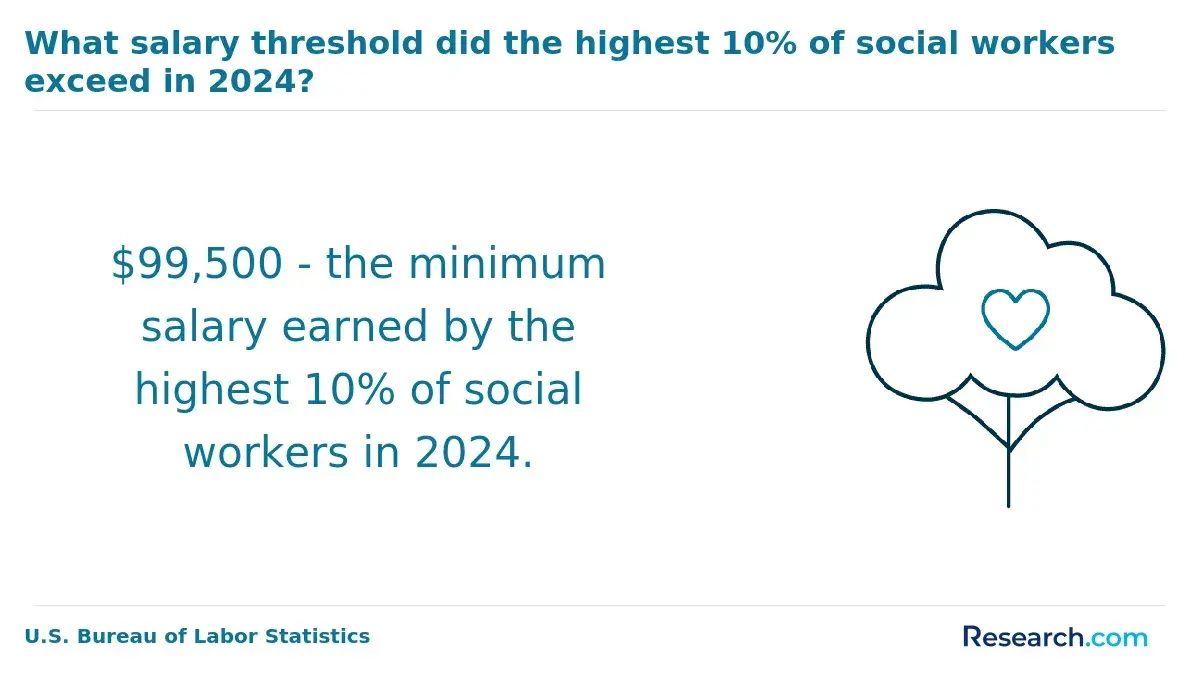
MSW graduate salaries vary by role, location, employer type, licensure, experience, and specialization. In the U.S., MSW graduates can anticipate median annual salaries between $55,000 and $75,000. Entry-level roles typically start from $50,000 to $60,000, while experienced social workers, especially in clinical or supervisory positions, often earn over $80,000.
Where salaries may be higher or lower
Salaries tend to be higher in healthcare, government agencies, and private practice compared to nonprofits or school social work. Clinical specialization, supervisory responsibilities, and work in high-demand geographic areas can also affect pay. Rural and urban settings may differ in both salary and job availability, so applicants should research local labor markets before assuming a national figure applies to their situation.
Job outlook
The demand for qualified social workers remains strong, with the U.S. Bureau of Labor Statistics projecting a 13% growth rate from 2024 to 2034. This growth exceeds the average for all occupations and is fueled by needs in mental health, aging populations, substance abuse treatment, and healthcare social work.
Employment outcomes can also be favorable for MSW graduates. Data from Stony Brook School of Social Welfare show a 90% employment rate for MSW holders, compared to 45% admission rates for BSW applicants. Applicants should treat outcome data as one decision factor among several, along with accreditation, licensure preparation, field placement quality, cost, and program format.
How to improve career prospects while in an MSW program
- Choose field placements strategically: Practicum experience often shapes first job opportunities.
- Understand licensure requirements early: Requirements vary, especially for clinical roles.
- Build sector-specific skills: Documentation, crisis response, care coordination, program evaluation, and grant writing can improve employability.
- Network through supervision and field agencies: Many social work opportunities come through professional relationships.
- Match specialization to demand: Mental health, healthcare, aging, and substance abuse treatment are major areas of need.
Other Things You Should Know About Social Work
In a 2027 MSW admissions interview, applicants might discuss ethical challenges like managing confidentiality in digital communications, addressing systemic inequities in service delivery, or balancing professional boundaries with empathy. These discussions help assess an applicant's awareness and readiness to engage with ethical dilemmas in social work practice.
MSW interviewers in 2027 seek candidates with strong empathy, communication skills, and cultural competence. Applicants should also demonstrate a commitment to social justice and resilience, reflecting qualities vital for effective social work practice and successful program completion.
Yes, many MSW programs consider prior professional or volunteer experience in social services as a strength in applicants. Relevant experience demonstrates commitment and familiarity with social work environments, which can enhance an applicant's chances. However, strong academic performance and personal statements also play key roles.
References
- Social Worker Salary and Jobs in Social Work https://teach.com/online-ed/social-work-degrees/online-masters-social-work/salary-and-career-outlook/
- Social Work University Interview Questions https://www.studential.com/university/applying/UCAS-application-guide/interviews/social-work-questions
- Social Work Interview Questions & Answers | Liquid Personnel https://www.liquidpersonnel.com/news/social-work-interview-questions-and-how-to-answer-them/
- Your Guide to Choosing an Online Master of Social Work Program https://onlinedegrees.keuka.edu/blog/online-msw-worth-it
- Types of Social Work https://www.socialworkers.org/news/facts/types-of-social-work
- MSW Career Outlook https://www.kysu.edu/academics/college-as/school-of-social-work/careers/msw-career-outlook.php
- Welcome to the Master of Social Work for Working Professionals https://www.uwindsor.ca/msw/435/welcome-master-social-work-working-professionals
- Best Advanced-Standing Online MSW Programs https://www.onlinemastersdegrees.org/best-programs/social-work-msw/advanced-standing/
- MSW Programs - 5 Tips for Interview Success https://www.socialworker.com/feature-articles/education--credentials/msw-programs-5-tips-interview-success/
- Job interview tips for social work students - Community Care https://www.communitycare.co.uk/content/news/job-interview-tips-for-social-work-students