2027 Macro Social Work Careers in Policy, Advocacy, and Administration

Co-Founder and Chief Data Scientist
Choosing macro social work is a different decision from preparing for one-on-one clinical practice. Instead of focusing primarily on individual therapy or case management, macro social workers work on the policies, budgets, programs, institutions, and community strategies that shape people’s lives at scale. That path can be especially appealing if you want to influence housing policy, mental health funding, child welfare reform, nonprofit leadership, public benefits, equity initiatives, or social service administration.
For career changers and prospective graduate students, the main questions are practical: What degree do you need? Is licensure important if you do not plan to be a therapist? Which programs offer real macro training rather than only clinical preparation? How much time and money will graduate school require? This guide explains the education, curriculum, accreditation, costs, job roles, salaries, and program-selection factors that matter most for careers in macro social work policy, advocacy, and administration.
Key Things You Should Know
- Macro social work careers in policy, advocacy, and administration focus on systemic change, with projected 12% job growth from 2024 to 2034, driven by increased demand for community programs and social justice initiatives.
- Advanced degrees, such as MSW with a concentration in policy or administration, are often required for leadership roles managing budgets, legislation, or nonprofit organizations impacting social welfare.
- Salary ranges vary widely: median earnings reported at $68,000 annually in 2025, with policy analysts and administrators earning notably higher in government and advocacy sectors.
What are macro social work careers in policy, advocacy, and administration?
Macro social work careers focus on changing systems rather than providing services only to individual clients. Professionals in these roles analyze social problems, design programs, influence legislation, manage organizations, advocate for communities, and evaluate whether public and nonprofit interventions are working.
In practice, macro social workers may work in government agencies, nonprofit organizations, foundations, healthcare systems, universities, research centers, coalitions, and advocacy groups. Their work often addresses issues such as homelessness, mental health funding, child welfare reform, public assistance, disability rights, immigration services, community safety, health equity, and access to care.
Common macro social work functions
- Policy work: researching proposed laws, preparing policy briefs, advising legislators or agency leaders, and assessing how rules affect communities.
- Advocacy: organizing campaigns, building coalitions, educating the public, and representing the needs of vulnerable or under-resourced populations.
- Administration: overseeing social service programs, managing staff and budgets, ensuring compliance, and improving service delivery.
- Program development: designing interventions, writing grants, building partnerships, and measuring outcomes.
- Community practice: working with residents, local organizations, and public agencies to identify priorities and create collective solutions.
The U.S. Bureau of Labor Statistics projects 6% growth in social work from 2024 to 2034, outpacing the average across occupations, with approximately 74,000 annual openings. That outlook includes many forms of social work, so macro-focused candidates still need to build a targeted skill set in policy analysis, program evaluation, budgeting, research, grant writing, stakeholder engagement, and leadership.
Some professionals move into senior policy, research, or academic leadership through doctoral study, including an online PhD social work. A doctorate is not required for every macro role, but it can be useful for advanced research, teaching, executive leadership, or high-level policy work.
What education is required for macro social work careers?
Most macro social work careers require at least a Master of Social Work (MSW), especially for roles involving policy leadership, administration, program design, supervision, or advanced advocacy. A Bachelor of Social Work (BSW) can support entry-level work in human services, community outreach, case coordination, or nonprofit support, but graduate training is usually the stronger route for policy and administrative advancement.
An MSW is valuable because it combines social welfare policy, research, ethics, human behavior, community practice, and field education. For macro careers, students should look for programs that offer courses or concentrations in policy practice, administration, community organizing, nonprofit leadership, public management, or program evaluation.
Is licensure necessary for macro social work?
Licensure requirements vary by state and by job. Some macro roles do not require clinical licensure, especially policy analyst, program manager, research, advocacy, and nonprofit leadership positions. However, licensure can still help in organizations that prefer licensed social workers for supervisory, administrative, or credibility reasons. It may also preserve flexibility if you later want to move between macro and direct-practice roles.
Completing supervised practice hours after the degree is often required for licensure, particularly for clinical credentials. Macro-focused students should ask each program and state board how macro field placements, supervision, and post-graduate experience count toward licensing requirements.
What strengthens an application or early career path?
- Relevant work or volunteer experience in social services, policy, government, public health, organizing, or nonprofit administration.
- Field placements in legislative offices, advocacy organizations, public agencies, research centers, or community-based organizations.
- Skills in statistics, writing, public speaking, budgeting, grant writing, coalition-building, and evaluation.
- Clear career goals that explain why macro practice, not only clinical practice, fits your interests.
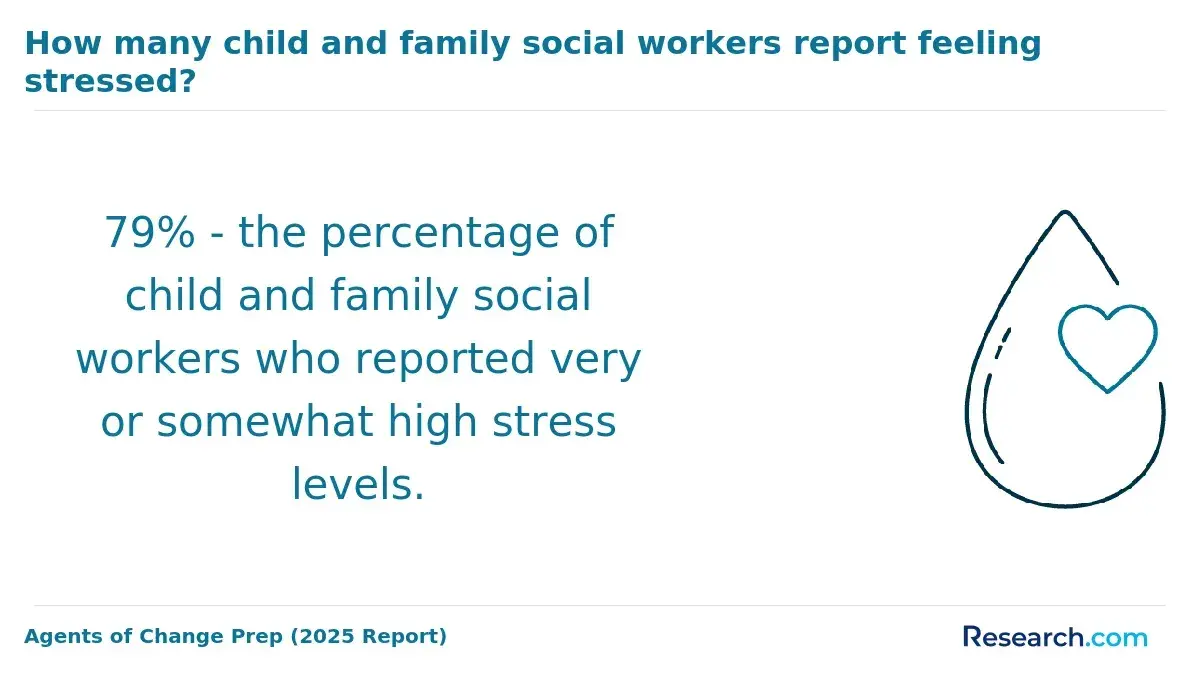
With 76.8% of new MSWs perceiving fewer policy and advocacy roles available, competition is high and robust credentials are critical. Students comparing costs may want to review options such as the cheapest online social work degree, while still checking accreditation, field placement quality, and macro coursework.
What degrees lead to macro social work roles?
The most direct degree for macro social work is an MSW with a concentration or coursework in policy, administration, community practice, or advocacy. However, macro careers are often interdisciplinary. Depending on the role, employers may also value degrees in public administration, public policy, public health, nonprofit management, political science, sociology, law, or organizational leadership.
| Degree path | Best fit | Important considerations |
| BSW | Entry-level human services, outreach, community support, nonprofit program assistance | Often not enough for advanced policy or administration roles without additional experience or graduate study |
| MSW with macro concentration | Policy practice, advocacy, program administration, community organizing, nonprofit leadership | Usually the strongest social-work-specific credential for macro roles |
| MPA or DPA | Public administration, government management, budgeting, public sector leadership | Strong for administration; may need social work experience for specialized social service roles |
| MPP or PhD in public policy | Policy analysis, research, evaluation, legislative work, think tanks | Strong analytical route; may be less practice-focused than an MSW |
| Public health, sociology, political science, or related graduate degree | Research, advocacy, community systems, social policy, equity initiatives | Can be effective when paired with field experience in social services or policy |
Certifications and continuing education in grant writing, program evaluation, nonprofit management, data analysis, or public budgeting can improve competitiveness, especially for candidates moving from direct service into leadership or policy roles.
Macro social workers in government, consulting, and policy organizations earn a mean salary of $83,694, with the top 10% earning $137,613, according to University of the Pacific's High-Demand Social Work Roles in 2026: Trends and Opportunities. Pay varies by region, employer, responsibility level, and funding source. Readers comparing geographic pay differences may also want to examine what states pay social workers the most.
What is the macro social work curriculum like?
A strong macro social work curriculum teaches students how to understand social problems at the systems level and translate that understanding into policy, programs, advocacy strategies, and organizational change. While every school structures its MSW differently, macro-focused students should expect both foundational social work courses and advanced training in policy and administration.
Typical macro social work coursework
- Social welfare policy: how public programs are created, funded, implemented, and changed.
- Policy analysis and advocacy: how to evaluate legislation, write policy briefs, communicate with decision-makers, and build support for reform.
- Community organizing: how to work with communities, coalitions, and grassroots groups to identify priorities and pursue collective action.
- Program development and evaluation: how to design services, set measurable goals, collect data, and assess outcomes.
- Organizational leadership: how nonprofits, public agencies, and healthcare systems manage staff, budgets, compliance, and change.
- Research methods and data use: how to interpret evidence, conduct needs assessments, and use findings responsibly.
- Human rights, ethics, and social justice: how to make decisions that account for power, equity, accountability, and community voice.
Field education is especially important. Macro placements may be in government offices, advocacy organizations, planning agencies, policy research groups, foundations, nonprofit headquarters, or large service systems. Students should look for placements that involve real policy, evaluation, organizing, or administrative work rather than only indirect support tasks.
With an estimated 750,000 social workers required across 16 practice areas in the U.S., government agencies especially seek professionals skilled in policy development and advocacy. Prospective students should evaluate whether a program teaches the legal, economic, political, and administrative context of social welfare—not only interpersonal practice.
If you are still deciding whether the investment fits your goals, this overview of is a degree in social work worth it can help frame the broader value of the credential and its career paths.
What are common admission requirements for macro social work programs?
Admission requirements for macro social work programs usually resemble general MSW admissions requirements, but applicants should use the process to show a clear interest in systems change, policy, advocacy, administration, or community practice. Schools want evidence that you can handle graduate study and understand the social justice, ethical, and professional responsibilities of social work.
Common requirements
- Bachelor’s degree: Applicants typically need a bachelor’s degree. A BSW can be helpful, but many programs also admit students from fields such as sociology, psychology, political science, public administration, public health, education, or related areas.
- Academic record: A minimum GPA of around 3.0 is often expected, though policies vary by school.
- Letters of recommendation: Programs commonly request two or three letters from professors, supervisors, or professionals who can speak to your writing, judgment, leadership, and readiness for graduate work.
- Personal statement: Applicants usually explain their goals, relevant experience, commitment to social work values, and interest in policy, advocacy, or administration.
- Resume or CV: Work, volunteer, internship, research, organizing, or public service experience can strengthen the application.
- Prerequisite coursework: Some schools may expect or recommend prior coursework in statistics, social welfare policy, human behavior, or social science research.
- Interview: Some programs use interviews to assess communication skills, professionalism, and fit.
Entrance exams are uncommon, but some schools may request them. Applicants should always verify requirements directly with each program because admissions policies, advanced standing rules, and prerequisite expectations differ.
With a 12% projected growth in mental health social work jobs through 2033, fueled by expanding employee assistance programs, programs emphasize leadership readiness in policy analysis, advocacy, and program development. Macro applicants can stand out by showing how their experience connects individual or community needs to larger systems, funding structures, laws, and institutional practices.
How long do macro social work programs take and what do they cost?
The length and cost of a macro social work program depend on the degree level, enrollment status, school type, residency status, delivery format, and whether the student qualifies for advanced standing. The fastest route is usually for students who already hold a BSW and qualify for an accelerated or advanced standing MSW. Students entering without a BSW usually complete the full MSW curriculum.
| Program type | Typical time to complete | Cost considerations |
| Full-time MSW with policy, advocacy, or administration focus | Typically two years | Public universities often charge between $10,000 and $25,000 annually for in-state students, while private schools can exceed $40,000 per year |
| Accelerated or part-time MSW options | Can range from one to three years | Part-time study may reduce semester-by-semester pressure but can extend total time in school |
| Doctoral programs, such as PhDs in social work administration or policy | May require four to six years | Funding, assistantships, research expectations, and opportunity costs vary widely |
Additional expenses, including fees, books, and living costs, can add $5,000 to $15,000 yearly. Online and hybrid programs may help working professionals reduce commuting and scheduling barriers, but students should still ask about field placement requirements, technology fees, travel for residencies, and whether tuition differs by residency.
Ways to reduce the cost
- Apply for federal aid, institutional scholarships, fellowships, and assistantships.
- Ask employers about tuition reimbursement or professional development benefits.
- Compare in-state public options with private and online programs.
- Review eligibility for loan forgiveness programs for public service social workers.
- Choose a program with strong field placement support in your target sector so the degree leads to usable experience.
- Program accreditation and curriculum alignment with high-demand fields such as climate justice and community organizing are essential considerations.
- California projects a 14% growth in social work jobs through 2033, outpacing national averages (University of the Pacific, High-Demand Social Work Roles in 2026).
- Choosing specialized concentrations in macro social work policy or administration enhances career readiness.
- Comparing accelerated and part-time program options helps balance time and financial commitments.
What accreditation should macro social work programs have?
Macro social work programs should be accredited by the Council on Social Work Education (CSWE) when the credential is a BSW or MSW. CSWE accreditation signals that the program meets recognized standards for social work education, including curriculum quality, faculty qualifications, ethics, competencies, and field education.
Accreditation matters even if your goal is policy, advocacy, or administration rather than therapy. Many employers prefer or require graduates from accredited social work programs. Accreditation can also affect financial aid eligibility, transferability, advanced standing, and state licensure pathways. Because licensure rules vary by state, students should confirm requirements with the state board where they plan to practice.
How to evaluate accreditation and fit
- Verify the program’s CSWE accreditation status before enrolling.
- Confirm whether the macro concentration, certificate, or track is part of the accredited MSW program.
- Ask how the school supports macro field placements, not only clinical placements.
- Review whether courses cover policy, administration, advocacy, research, community practice, and evaluation.
- Check whether graduates pursue roles in government, nonprofits, healthcare administration, research, or advocacy organizations.
Employers in macro social work often look for evidence that a candidate can lead programs, interpret policy, manage budgets, supervise teams, evaluate outcomes, and communicate across communities and institutions. A CSWE-accredited degree provides the professional foundation; the macro coursework and field placement determine how well the program prepares you for systems-level work.
The career benefits of attending an accredited macro program are clear:
- Higher earning potential: healthcare social workers in administrative roles earn an average of $99,729, with the top 10% earning up to $145,350.
- Better qualification for leadership roles in hospitals, government, and nonprofits.
- Recognition of specialized skills essential for high-level macro practice positions.
What are top job roles and salaries in macro social work?
Macro social work roles vary widely because they sit at the intersection of social services, public policy, nonprofit management, research, and community advocacy. Salaries depend on location, employer type, funding, experience, supervision duties, and whether the position is in government, healthcare, consulting, academia, or the nonprofit sector.
Salaries generally range from $55,000 to $110,000 annually, depending on experience and responsibility. Entry-level policy analysts earn between $55,000 and $70,000, while seasoned advocacy directors may surpass $100,000.
| Role | What the role does | Salary information stated |
| Policy Analyst | Analyzes legislation, regulations, budgets, and social policy proposals; prepares briefs and recommendations | Median salary around $65,000 |
| Program Administrator | Oversees social service programs, staff, reporting, budgets, compliance, and service quality | Salaries range from $60,000 to $90,000 |
| Advocacy Director | Leads campaigns, coalition strategy, public education, and policy advocacy for social justice goals | Often earns $80,000 to $110,000 |
| Community Organizer | Mobilizes residents, community groups, and partners around shared priorities and systems change | Usually $50,000 to $70,000 |
| Research Coordinator | Manages data collection, evaluation projects, reports, and research operations | Median salary about $60,000 |
The macro social work workforce faces a notable shortage, as 23% of new MSWs pursue careers outside tracked social work fields shortly after graduation, limiting growth opportunities in policy roles. Candidates who want to stay competitive should build evidence of practical impact: policy briefs, evaluation reports, grant proposals, campaign plans, budget experience, stakeholder presentations, or program improvement projects.
Key skills that can improve job stability and salary prospects include funding analysis, legislative procedure, data interpretation, grant writing, supervision, coalition-building, public communication, and the ability to translate community needs into actionable policy or program recommendations.
What is the job outlook for macro social work professionals?
The job outlook for macro social work professionals is positive, but it is also competitive and less linear than the outlook for some direct-practice roles. Macro jobs may not always carry the title “social worker.” They may appear as policy analyst, program manager, community engagement director, grants manager, advocacy specialist, planning coordinator, evaluation manager, or nonprofit executive.
Across the United States, over 463,000 licensed social workers are employed, yet only about 30% hold masters-level roles focused on macro social work tasks, while 59% primarily serve in clinical positions (ASWB Social Work Workforce Study Series Report 2, 2025). This suggests room for professionals who intentionally prepare for macro practice, but it also means job seekers must know how to market their skills beyond traditional social work titles.
Where demand comes from
- Government agencies need professionals who understand social service regulation, program design, community needs, and implementation challenges.
- Nonprofits need leaders who can manage funding, staff, compliance, advocacy, and measurable outcomes.
- Healthcare systems need administrators and policy-focused professionals who can address access, equity, care coordination, and community benefit priorities.
- Advocacy organizations need staff who can combine lived community knowledge, research, communications, and coalition strategy.
- Research and evaluation organizations need professionals who can measure whether programs and policies improve outcomes.
Challenges include proving impact when work is indirect, competing with graduates in public administration and political science, and finding positions that are funded by grants or public budgets. To improve prospects, students should pursue internships in policy or community planning, develop strong writing samples, learn evaluation methods, and consider certifications in nonprofit management, program evaluation, or related areas.
How to choose the best macro social work program?
The best macro social work program is the one that matches your career goal, provides accredited training, and gives you real experience in policy, advocacy, administration, or community practice. Do not choose a program based only on convenience or reputation. A highly regarded clinical program may not be the best fit if it offers limited macro coursework or weak field placement options in your target sector.
Use this checklist before applying
- Accreditation: Confirm CSWE accreditation and verify how the program supports licensure eligibility if you want that option.
- Macro curriculum: Look for courses in policy analysis, advocacy, administration, community organizing, program evaluation, budgeting, research, and leadership.
- Field placements: Ask whether students can complete placements with government agencies, nonprofits, advocacy groups, policy organizations, foundations, or administrative offices.
- Faculty expertise: Review whether faculty publish, consult, or work in policy, advocacy, community systems, organizational leadership, or social service administration.
- Career outcomes: Ask where graduates work, what roles they obtain, and whether the school tracks macro-specific outcomes.
- Flexibility: Compare online, hybrid, evening, part-time, and full-time formats if you plan to work while enrolled.
- Cost and aid: Review tuition, fees, scholarships, assistantships, employer support, and loan forgiveness possibilities.
- Networking: Look for alumni networks, policy events, practicum partnerships, student groups, and professional conference opportunities.
Accreditation by the Council on Social Work Education (CSWE) guarantees educational quality and is often required for licensure. Since about 52% of nonlicensed bachelor's- and master's-level social workers aim for licensure to advance in macro roles (Social Work Census, The Nonlicensed Social Work Workforce, Report 3, 2025), a CSWE-accredited program improves your career prospects.
Before enrolling, speak with admissions staff, field education coordinators, current students, and alumni. Ask direct questions: How many macro placements are available? Can online students access local placements? Are policy and administration courses offered every year? What support exists for students who do not want a clinical career? The answers will tell you whether the program is truly built for macro social work or simply allows a few macro electives within a mostly clinical pathway.
Other Things You Should Know About Social Work
Strong communication, advocacy, and leadership skills are critical for success in macro social work. Professionals must be able to navigate complex organizational and policy environments, work collaboratively with diverse stakeholders, and effectively influence social change. Analytical abilities and cultural competence are also important to address systemic issues sensitively and strategically.
Yes, macro social work professionals often engage in legislative advocacy to shape policies that impact communities. They work with lawmakers, stakeholders, and community groups to promote social justice and equitable resource distribution. Their expertise helps craft informed policy proposals and monitor policy implementation.
Macro social workers adhere to ethical principles such as social justice, respect for human dignity, and professional integrity. They must balance competing interests and navigate power dynamics responsibly while advocating for marginalized groups. Confidentiality, transparency, and accountability are key components in their ethical decision-making processes.
References
- WHAT - Translation in Polish - bab.la https://en.bab.la/dictionary/english-polish/what
- Accreditation | CASWE-ACFTS https://caswe-acfts.ca/our-activities/accreditation/
- MSW Specializations: Clinical, Macro, Advanced Generalist Programs https://www.masterofsocialwork.com/resources/msw-specializations
- Micro Vs. Mezzo Vs. Macro Social Work | Psychology.org https://www.psychology.org/social-work/micro-vs-mezzo-vs-macro-social-work/
- #MacroSW: Professional Licensure and Macro Social Work Practice https://www.socialworker.com/feature-articles/practice/macrosw-professional-licensure-and-macro-social-work-practice/
- Top 15 Highest‑Paying Pharmacy Jobs in the UK 2025 (Including Salaries) https://apexlearning.org.uk/highest-paying-social-work-jobs-uk-2026/
- Find MSW programs that teach macro social work | edX https://www.edx.org/masters/online-msw-programs/macro-social-work
- Choosing a Master of Social Work Specialization: Generalist vs. Direct Practice vs. Macro https://www.mswhelper.com/blog/choosing-a-master-of-social-work-specialization
- Online Master's in Macro Social Work Programs (Macro MSW Programs) https://www.onlineeducation.com/social-work/macro-msw-programs
- WhatsApp Web https://web.whatsapp.com/