2027 Mental Health Social Work Careers in Community Agencies

Co-Founder and Chief Data Scientist
Choosing a mental health social work career in a community agency means deciding whether you want to work at the intersection of clinical care, advocacy, crisis response, and public systems. These roles serve people who may be managing depression, anxiety, trauma, substance use, housing insecurity, poverty, family conflict, or barriers to healthcare access. The work can be demanding, but it is also one of the most direct ways to improve mental health access for people who might otherwise go without support.
This guide is for students, career changers, and human services workers who want to understand what it takes to enter community-based mental health social work. It explains the degrees, licensure steps, online and campus program options, admissions expectations, field training, salaries, and job outlook connected to this career path.
The key decision is not simply whether to study social work. It is whether you want a nonclinical support role, a licensed clinical role, or a long-term path into supervision, program leadership, policy, research, or advanced practice. Understanding those differences early can help you choose the right degree, avoid licensure setbacks, and prepare for the realities of agency-based mental health work.
Key Things You Should Know
- Community agencies increasingly seek mental health social workers, with a 12% job growth projected from 2024 to 2034, reflecting expanded public funding and recognition of mental health's importance.
- Advanced licensure and specialized training in trauma-informed care or substance abuse significantly enhance employment prospects and salary potential in 2026.
- Collaboration with multidisciplinary teams and cultural competence remain critical skills as agencies prioritize holistic, client-centered service models to address diverse populations.
What Are Mental Health Social Work Careers in Community Agencies?
Mental health social work careers in community agencies focus on helping individuals and families access care, stabilize during crises, manage behavioral health conditions, and navigate complex social service systems. These roles are common in non-profits, outpatient clinics, community mental health centers, schools, shelters, substance use programs, government agencies, and integrated healthcare settings.
The work varies by agency and licensure level. A bachelor’s-level social worker may focus on intake, resource coordination, advocacy, outreach, and referrals. A master’s-prepared and licensed clinical social worker may provide assessment, psychotherapy, treatment planning, crisis intervention, and diagnosis within the limits of state law.
Common responsibilities in community mental health agencies
- Conducting psychosocial assessments and identifying client needs.
- Creating service plans or treatment plans with measurable goals.
- Connecting clients to counseling, medication management, housing, food assistance, employment support, benefits, and support groups.
- Providing individual, family, or group interventions when properly licensed.
- Responding to crises involving suicidal ideation, domestic violence, homelessness, relapse, or psychiatric symptoms.
- Advocating for clients in schools, courts, hospitals, housing systems, and public benefit programs.
- Collaborating with psychiatrists, nurses, counselors, case managers, peer specialists, probation officers, teachers, and primary care providers.
- Documenting services accurately for clinical, legal, funding, and compliance purposes.
Clients may be coping with anxiety, depression, trauma, substance abuse, severe mental illness, grief, family instability, or chronic stress related to poverty and discrimination. In a school setting, a social worker might provide counseling and crisis support for students. In a community mental health center, the role may involve coordinating care for adults with chronic psychiatric conditions. In a shelter or outreach program, the focus may be stabilization, safety planning, and access to housing or healthcare.
Community agency careers for mental health social workers are projected to grow 10% from 2024 to 2034, reflecting continued demand for mental health services, greater public awareness, and expanded access to care. Still, growth does not mean every role is easy to obtain. Employers often prefer candidates with field experience, strong documentation skills, cultural competence, and familiarity with local service systems.
Clinical experience through internships, practicum placements, and supervised work is especially important. For independent clinical practice, many professionals pursue licensure such as Licensed Clinical Social Worker (LCSW). Those interested in teaching, leadership, research, or advanced specialization may also consider doctoral study, including a PhD in social work online, depending on career goals.
What Education Is Required for Mental Health Social Workers?
The education required depends on the level of responsibility you want. A bachelor's degree in social work (BSW) can qualify graduates for many entry-level community agency roles, especially in case management, outreach, intake, advocacy, and service coordination. However, clinical therapy, independent diagnosis, and most advanced mental health treatment roles generally require a master's degree in social work (MSW) and state licensure.
MSW programs often include two years of study and supervised clinical internships that prepare students for mental health practice and licensure. Students with a BSW may qualify for advanced standing options at some schools, which can shorten the graduate pathway, but requirements vary by program.
| Education level | Typical community agency roles | Clinical authority |
| BSW | Case manager, outreach worker, intake coordinator, client advocate, community support specialist | Usually nonclinical or supervised support roles |
| MSW | Clinical social worker, therapist under supervision, program coordinator, behavioral health specialist | Clinical practice under supervision; licensure pathway begins |
| MSW plus clinical license | Licensed clinical social worker, therapist, supervisor, independent clinician, clinical program lead | May independently diagnose and treat mental health disorders, depending on state law |
Licensure varies by state but generally requires an MSW, completion of 2,000 to 4,000 supervised clinical hours, and passing a clinical exam. Licensed clinical social workers (LCSWs) can independently diagnose and treat mental health disorders. Social workers without a clinical license typically provide case management, referrals, advocacy, and supervised services rather than independent psychotherapy.
Some professionals begin with a BSW and gain agency experience before enrolling in graduate school. Others enter from psychology, counseling, public health, criminal justice, education, or human services backgrounds. Those with related degrees may still need social work-specific coursework and field education to meet licensed social work degrees for mental health careers.
Continuing education is part of the career. Many states require annual credits to maintain licensure, and social workers often pursue additional training in trauma-informed care, substance use, crisis response, ethics, telehealth, child welfare, or work with specific populations.
Salary data also reflects the value of education and licensure. Mental health and substance abuse social workers earn a median salary of $55,290, with the top 10% earning over $97,660. Higher earnings are not guaranteed, but advanced credentials, clinical licensure, specialized experience, and work setting can improve long-term prospects.
Students who already hold a bachelor’s degree in another field may look for flexible graduate pathways, including 1 year MSW programs online no bsw, while confirming that any option meets accreditation and state licensure requirements.
How Do You Become a Licensed Mental Health Social Worker?
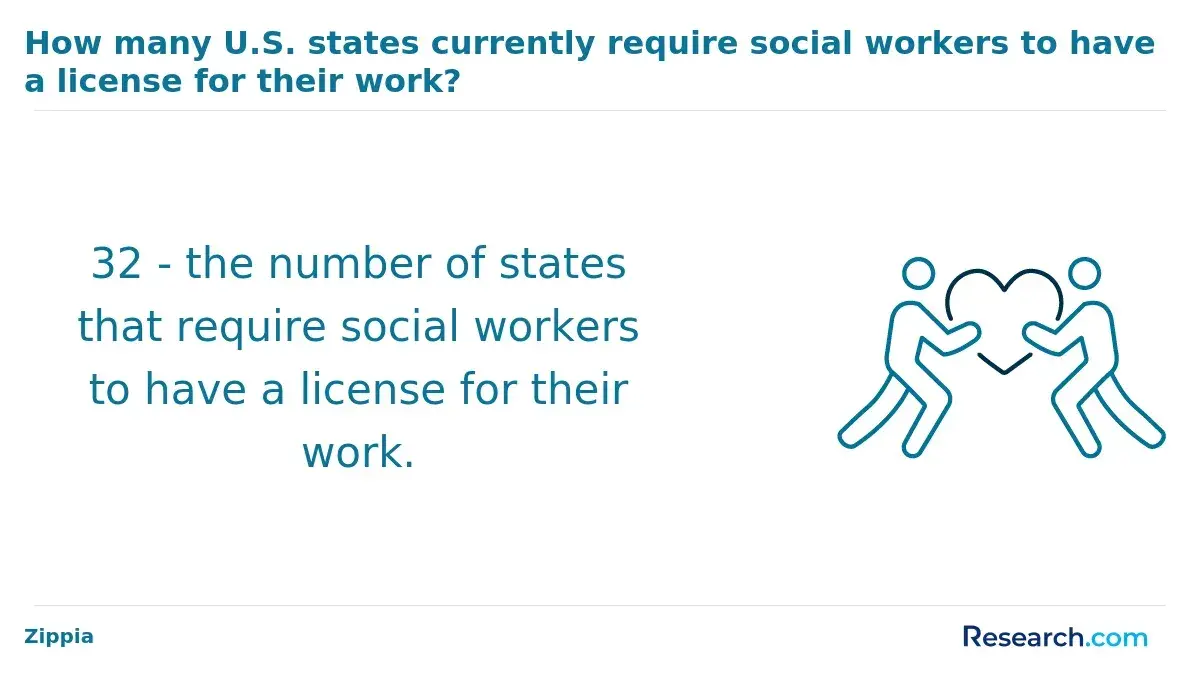
To become a licensed mental health social worker in community settings, you typically need an MSW from a CSWE-accredited program, supervised post-graduate clinical experience, and a passing score on the required licensing exam. The exact title, process, and scope of practice vary by state, so students should check their state social work board before choosing a program or accepting supervision.
Accreditation matters because state boards commonly require a degree from a program accredited by the Council on Social Work Education. Students who need a faster or more flexible pathway may compare accelerated online MSW programs, but speed should not outweigh accreditation, field placement quality, or licensure alignment.
Typical licensure pathway
- Earn a bachelor's degree, ideally in social work or a related field if planning for graduate study.
- Complete an MSW from a CSWE-accredited program.
- Finish required field placements during the MSW, including mental health or clinical practice experience when possible.
- Apply for the appropriate associate, provisional, or supervised clinical license if required by the state.
- Complete supervised clinical experience, which ranges from 2,000 to 4,000 hours over two to three years depending on the state.
- Pass the Licensed Clinical Social Worker (LCSW) exam administered by the Association of Social Work Boards (ASWB), when required for the license level.
- Submit documentation, fees, background checks, and continuing education records as required by the state board.
The LCSW exam assesses clinical knowledge and judgment needed for independent practice. Candidates should expect questions related to assessment, diagnosis, treatment planning, ethics, human development, diversity, safety, documentation, and professional boundaries.
Outpatient care centers employ the largest number of mental health and substance abuse social workers, followed by offices of other health practitioners. These settings often expect clinicians to understand documentation standards, treatment planning, evidence-based interventions, and coordinated care.
A common mistake is assuming that graduation from an MSW program automatically grants the ability to practice independently. It does not. Licensure requires state approval, supervised hours, exam completion, and ongoing compliance. Before enrolling, confirm that the program's curriculum and field education satisfy the state where you plan to practice.
What Bachelor's and Master's Degrees Lead to These Careers?
The most direct degrees for community mental health social work are the Bachelor of Social Work (BSW) and Master of Social Work (MSW). A BSW can open the door to entry-level agency roles, while an MSW is the standard degree for clinical social work licensure and advanced mental health practice.
Bachelor's degrees in social work for community mental health commonly prepare students for case management, client support, community outreach, advocacy, intake, and service coordination. These roles are important in agencies that help clients access housing, food assistance, healthcare, crisis services, benefits, employment support, and behavioral health referrals.
For clinical mental health careers, a master's degree programs in social work for mental health careers is essential. An MSW provides advanced training in assessment, diagnosis, treatment planning, ethics, policy, human behavior, and clinical intervention. These programs also include supervised internships that are required for licensure preparation.
| Degree | Best fit for | Important limitation |
| BSW | Students seeking entry-level community agency work, advocacy, outreach, and case management | Usually does not qualify graduates for independent clinical therapy |
| MSW | Students pursuing clinical practice, therapy, diagnosis, supervision, or advanced agency roles | Requires field education and usually additional supervised hours after graduation for clinical licensure |
| Counseling or psychology master's degree | Students focused on therapy, counseling, or behavioral science from another professional framework | May not meet social work licensure requirements without a social work degree |
Some students choose MSW specializations in substance abuse, child welfare, trauma, school social work, healthcare, or community practice. These concentrations can help align field placements and coursework with the populations served by local agencies.
Social work degrees differ from many counseling or psychology pathways because they emphasize person-in-environment practice: the idea that mental health is shaped not only by symptoms, but also by housing, income, family systems, discrimination, disability, safety, community resources, and public policy. That systems focus is one reason social workers are heavily represented in community agencies.
The financial decision deserves careful review. Pursuing an MSW can be challenging, as these programs have an average cost-adjusted return of -2%, despite strong job demand. Students should compare tuition, debt, licensing requirements, field placement support, employer reimbursement, and likely salaries in their region before enrolling.
Individuals wondering should i major in social work should evaluate both mission fit and financial fit. The degree can lead to meaningful work, but the best choice depends on your tolerance for emotionally demanding roles, your interest in direct service, and your plan for licensure or advancement.
What Does the Curriculum Cover in Mental Health Social Work Programs?
Mental health social work programs combine clinical preparation with social justice, policy, ethics, and field-based learning. The goal is to prepare graduates to understand symptoms and diagnoses while also addressing the social conditions that affect mental health.
Coursework often covers clinical assessment, diagnosis, treatment planning, crisis intervention, case management, group work, family systems, substance use, trauma-informed care, cognitive-behavioral approaches, and other evidence-informed interventions. Students also study human development, psychopathology, social welfare policy, research methods, and professional ethics.
Core areas students can expect
- Clinical practice: assessment, interviewing, treatment planning, safety planning, therapeutic methods, and documentation.
- Community and systems practice: resource navigation, advocacy, program development, policy analysis, and interagency collaboration.
- Diversity and cultural competence: practice with clients across race, ethnicity, gender, sexuality, disability, religion, immigration status, age, and socioeconomic background.
- Ethics and law: confidentiality, informed consent, mandated reporting, boundaries, scope of practice, and professional responsibility.
- Research and evaluation: using evidence, interpreting data, evaluating programs, and improving service quality.
- Field education: supervised practice in settings such as community mental health centers, hospitals, schools, shelters, outpatient programs, and social service agencies.
Many programs teach the biopsychosocial model, which integrates biological, psychological, and social influences on mental health. This model is especially relevant in community agencies, where clients often need both clinical care and practical assistance with housing, transportation, food access, benefits, or safety.
Field placements are a defining part of social work education. They allow students to practice engagement, assessment, documentation, interdisciplinary teamwork, and ethical decision-making under supervision. A strong placement can also help students build a professional network and clarify whether they prefer work with children, adults, families, older adults, people with substance use disorders, or people with serious mental illness.
Programs increasingly address telehealth and digital mental health tools because community agencies may use virtual therapy, remote case management, electronic health records, and hybrid service models. Students should ask how a program trains them in confidentiality, crisis response, and documentation in telehealth environments.
With 433,263 licensed social workers holding at least a master's degree reported between 2018 and 2022, specialized training can help graduates stand out. Before enrolling, confirm that the program is accredited, includes adequate field education, and aligns with licensure requirements in the state where you intend to work.
What Are Admission Requirements for Social Work Programs?
Admission requirements for social work programs depend on the degree level, school selectivity, and program format. In general, schools look for academic readiness, communication skills, ethical awareness, relevant experience, and a clear commitment to serving individuals, families, or communities.
For bachelor's programs, applicants need a high school diploma or GED and typically a GPA between 2.5 and 3.0. Some schools consider standardized tests like the SAT or ACT, while others place more weight on transcripts, essays, and prerequisite coursework. Classes in psychology, sociology, statistics, government, writing, and human development can strengthen preparation.
MSW programs require a completed bachelor's degree, preferably in social sciences or related fields. Competitive GPA scores usually range from 3.0 to 3.5. Applicants usually submit letters of recommendation, a resume, transcripts, and a personal statement explaining their goals and readiness for social work education.
What strengthens an MSW application
- Volunteer or paid experience with vulnerable populations.
- Work in behavioral health, education, healthcare, shelters, child welfare, disability services, corrections, advocacy, or public benefits.
- A personal statement that connects lived experience or professional experience to realistic social work goals.
- Strong references from supervisors, faculty, or professionals who can speak to judgment, reliability, empathy, and communication skills.
- Evidence of readiness for field placements, including time management and professionalism.
Advanced clinical social work focuses on licensure and hands-on training. The ASWB Workforce Study Series Report 2 from 2025 shows over 74% of clinical social workers deliver mental and behavioral health services to adults, a sharp contrast to less than 30% among bachelor's-level social workers. This difference shows why graduate clinical training matters for students who want mental health roles involving therapy, diagnosis, and treatment planning.
PhD or DSW candidates should have an MSW, relevant professional experience, and sometimes research samples. These programs are usually designed for advanced practice leadership, teaching, research, policy, or high-level clinical expertise rather than entry-level agency work.
Applicants should read each program's admissions page carefully. Prerequisites, GPA standards, field placement policies, background check requirements, transfer credit rules, and advanced standing criteria can differ significantly by institution.
What Online vs Campus Options Exist for Social Work Degrees?
Social work degrees are available online, on campus, and in hybrid formats. The best option depends on your schedule, location, learning style, access to field placements, and state licensure goals. Format matters, but accreditation and practicum quality matter more.
Online programs are often appealing to working adults, parents, rural students, and career changers who need flexibility. Many use asynchronous coursework, allowing students to complete lectures and assignments around work schedules. The trade-off is that online students may need to be more proactive about field placement logistics, local supervision, and time management.
Campus-based programs provide direct access to faculty, classmates, libraries, student services, and established local agency partnerships. They may be a better fit for students who value face-to-face discussion, structured schedules, or easier access to practicum coordination. The limitation is reduced flexibility, especially for students who work full time or live far from campus.
Hybrid programs combine online coursework with in-person classes, weekend intensives, campus visits, or local fieldwork. They can offer a balance between flexibility and relationship-building, but students should review travel requirements and scheduling expectations before enrolling.
| Program format | Main advantage | Main concern to check |
| Online | Flexible scheduling for working professionals and students outside campus regions | How field placements are arranged locally |
| Campus | In-person faculty access, peer connection, and established agency partnerships | Commute, schedule rigidity, and relocation needs |
| Hybrid | Combines online learning with some in-person engagement | Travel requirements, intensive dates, and field placement expectations |
Most reputable programs are accredited by the Council on Social Work Education (CSWE). Students should also verify that the program meets licensing requirements in the state where they plan to practice, especially if the school is located in another state.
Field placement support is one of the most important differences among programs:
- Online students may need to locate practicum supervisors and agencies locally, although some programs provide placement assistance.
- Campus students typically benefit from school-arranged placements with community agencies serving low-income populations.
With 38-45% of social workers serving clients with limited incomes across diverse settings, programs with strong community partnerships can provide valuable experience. Before choosing a format, ask where recent students completed field placements, what types of mental health agencies are available, and whether placements can support your intended licensure pathway.
How Long Do Programs Take and What Do They Cost?
The timeline to become a mental health social worker in a community agency depends on the degree, enrollment pace, transfer credits, field placement schedule, and licensure requirements. A Bachelor of Social Work (BSW) usually requires four years of undergraduate study. A Master of Social Work (MSW) generally takes about two years of full-time study. Accelerated MSW programs can reduce this to 12 to 18 months for those who already hold a BSW or related degree.
Clinical licensure adds time after the MSW. Clinical licenses, which allow independent mental health practice, typically require about two years of supervised post-MSW experience and passing a state exam. Students should include this post-graduate period in their career planning because it affects income, supervision options, job eligibility, and mobility across states.
| Pathway | Typical time | Purpose |
| BSW | Four years | Entry-level agency roles, case management, advocacy, outreach |
| Traditional MSW | About two years of full-time study | Graduate clinical and advanced social work preparation |
| Accelerated MSW | 12 to 18 months | Faster graduate route for eligible students, often those with a BSW or related degree |
| Post-MSW clinical supervision | About two years | Required for many independent clinical licenses |
Costs vary widely by institution, residency status, and program format. Public universities tend to charge between $10,000 and $20,000 annually for in-state students, while private schools can exceed $50,000 per year. Students should also budget for books, technology, transportation to field placements, background checks, liability insurance if required, licensing exam fees, application fees, and ongoing continuing education after graduation.
Tuition reimbursement or loan forgiveness programs may be available through some employers, particularly for social workers serving in underserved communities. These benefits can reduce the financial burden, but they may require service commitments, eligible employment settings, or specific repayment documentation.
When comparing costs, look beyond tuition. A lower-cost program may be less useful if it offers weak field placement support or does not align with your state licensure plan. A higher-cost program may not be worth the debt if expected wages in your region are modest. Ask programs for placement outcomes, licensure exam preparation resources, graduation timelines, and employment support.
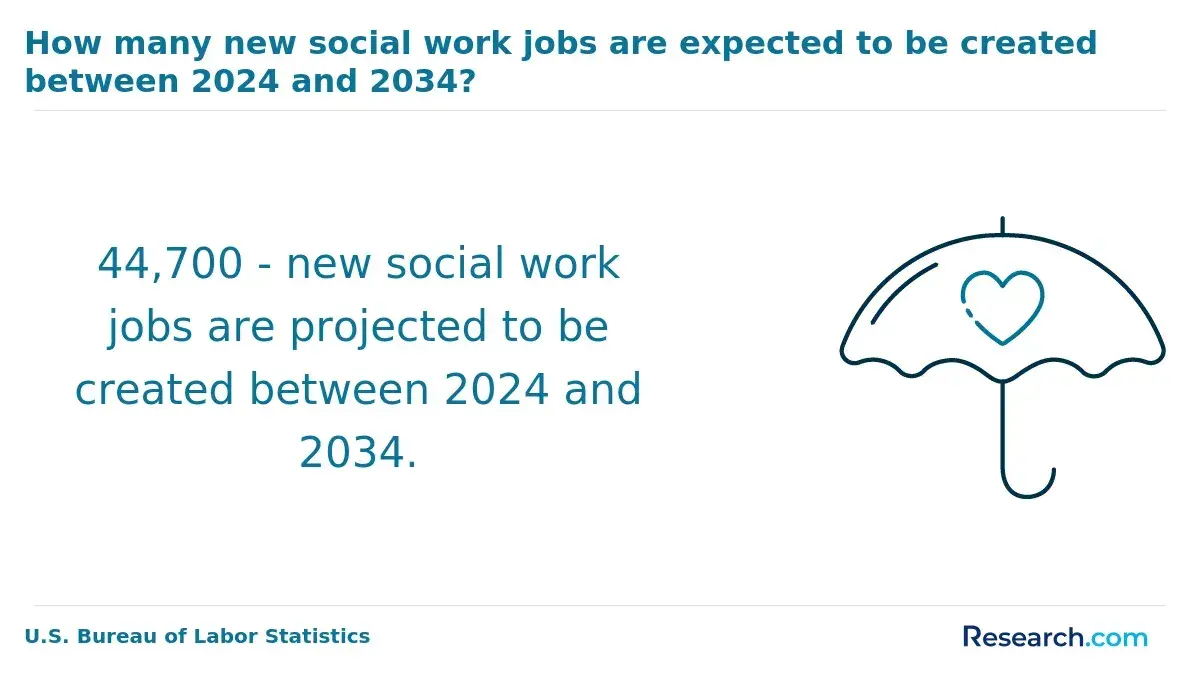
With the Bureau of Labor Statistics projecting 74,000 new social work jobs annually from 2024 to 2034, the field offers strong job growth prospects. Even so, students should make a financially informed plan that accounts for debt, supervised practice wages, licensure costs, and the type of community agency work they want to do.
What Is the Salary Outlook for Mental Health Social Workers?
Salary for mental health social workers depends heavily on setting, location, licensure, specialization, experience, and funding source. Community agency work can be deeply meaningful, but pay varies significantly across employers. Students should compare local wages before choosing a degree program or taking on graduate debt.
Social workers employed in home health care services receive the highest average annual wage at $93,400, nearly double the $49,150 mean wage typical in residential facilities. This difference shows how strongly the work setting can influence earning potential. Residential and institutional settings may offer valuable experience, supervision, and benefits, but they may not provide the highest wages.
Factors that influence pay
- Employer type: hospitals, outpatient clinics, private agencies, government programs, schools, and residential facilities often pay differently.
- Geographic location: urban areas may offer higher wages, though cost of living can reduce the practical value of that difference.
- Education level: an MSW can qualify graduates for more advanced and clinical roles than a BSW alone.
- Licensure: clinical licensure can improve eligibility for therapy, supervisory, and independent practice roles.
- Specialization: experience in substance abuse, trauma, child welfare, crisis intervention, or serious mental illness may improve competitiveness.
- Funding structure: grant-funded agencies, public programs, and private healthcare organizations may have different compensation limits.
For those pursuing social work careers with stronger financial outlooks, home health care, outpatient mental health clinics, healthcare systems, and roles requiring clinical licensure may offer better earning potential than some residential or entry-level agency positions. However, compensation should not be the only factor. Supervision quality, caseload expectations, safety protocols, documentation demands, benefits, and opportunities for advancement also matter.
Prospective students should ask employers and alumni about realistic starting salaries, pay increases after licensure, supervision availability, and benefits. A well-planned path to licensure can make a significant difference in long-term options.
What Is the Job Outlook and Demand in Community Agencies?
Demand for mental health social workers in community agencies is supported by the need for accessible behavioral healthcare, crisis response, substance use services, school-based support, housing-related interventions, and integrated care. Community agencies need professionals who can combine clinical skills with practical knowledge of public benefits, housing systems, healthcare navigation, and local resources.
The landscape is also changing. Clinician and private practice roles now account for 35% of employment pathways for social workers, up from 29% the previous year. This points to growing opportunities beyond traditional agency employment, including independent or semi-independent clinical practice, while still serving clients who may be connected to community systems.
Community agencies employ social workers in case management, counseling, crisis intervention, program development, outreach, intake, care coordination, family support, and behavioral health navigation. Many agencies serve underserved and diverse populations, so employers value candidates who understand cultural humility, trauma-informed care, harm reduction, disability access, and the effects of poverty and discrimination on mental health.
How to improve employability
- Obtain licensure and advanced clinical certifications for clinician roles.
- Gain experience in telehealth services due to wider adoption in mental health programs.
- Develop flexibility to work with varied populations including children, veterans, and those with substance use disorders.
- Acquire skills in grant writing and program evaluation relevant to agency funding and reporting.
- Build strong documentation habits, since accurate records affect care quality, reimbursement, compliance, and continuity of services.
- Choose field placements that match your target population or setting, such as outpatient mental health, schools, shelters, crisis programs, or integrated healthcare.
Competition is increasing for roles that combine clinical expertise with community advocacy. Candidates who can provide direct service, collaborate across systems, manage risk, document effectively, and adapt to changing agency needs will be better positioned.
For long-term career growth, consider whether you want to remain in direct practice, move into supervision, specialize clinically, work in program administration, pursue private practice, or enter policy and research. Community mental health social work can lead in several directions, but the strongest path usually begins with accredited education, intentional field experience, licensure planning, and a clear understanding of the populations you want to serve.
Other Things You Should Know About Social Work
Mental health social workers need strong communication and active listening skills to effectively support clients. They must also demonstrate empathy, problem-solving abilities, and cultural competence to address diverse community needs. Additionally, organizational skills and the ability to work collaboratively with other professionals are essential in managing caseloads and coordinating care.
Social workers often encounter challenges such as high caseloads, limited resources, and complex client situations including co-occurring disorders. They may face emotional stress related to trauma exposure and must navigate systemic barriers in healthcare and social services. Managing these challenges requires resilience and ongoing professional support.
Collaboration involves coordinating care plans with healthcare providers, counselors, and community organizations to ensure comprehensive support for clients. Mental health social workers often participate in multidisciplinary teams to address physical, emotional, and social factors affecting mental health. Effective teamwork enhances service delivery and client outcomes.
References
- What does a Community Mental Health Social Worker do? Career Overview, Roles, Jobs | NASWVA https://careers.naswva.org/career/community-mental-health-social-worker
- Support for social workers https://support-for-social-workers.education.gov.uk/become-a-social-worker/ways-to-qualify-as-a-social-worker
- Social Work Careers https://socialworklicensemap.com/social-work-careers/
- What Is a Certified Social Worker? https://www.webmd.com/mental-health/what-is-a-certified-social-worker
- Ten Reasons to Start a Career in Community Services https://mwtglobal.me/blog/ten-reasons-to-start-a-career-in-community-services
- Mental Health Qualified Social Worker jobs https://jobs.communitycare.co.uk/jobs/mental-health/qualified-social-worker/
- Types of Social Work https://www.socialworkers.org/News/Facts/Types-of-Social-Work
- How to Become a Mental Health Social Worker https://www.saintmarys.edu/mental-health-social-work-careers
- Job demand for community work professionals in Australia https://www.communitywork.org.au/about-community-work/job-demand-in-australia