2027 Job Placement Rates for Art History Master's Graduates: Employment Outcomes

Co-Founder and Chief Data Scientist
Graduates of art history master's programs often confront a complex job market shaped by industry demands, regional opportunities, and the specificity of their program focus. Variations in internship experience and employer perception critically influence how quickly graduates secure relevant roles and advance sustainably. Recent data from the National Center for Education Statistics highlights a growing cohort of adult learners enrolling in flexible, often online, graduate programs-reflecting shifts in higher education access that affect enrollment timing and career mobility. Understanding these factors equips prospective students to assess which pathways offer realistic employment prospects and long-term professional growth within a competitive cultural sector.
Key Things to Know About the Job Placement Rates for Art History Master's Graduates
- Industry sector concentration shows museum and gallery roles dominate placements, yet limited openings create stiff competition, requiring graduates to consider alternative cultural heritage or education roles for stable careers.
- Employer perception heavily favors candidates with internship experience, correlating with quicker hiring and credibility in nonacademic sectors, highlighting the critical role of practical skills over solely academic credentials.
- Geographic location influences access to jobs, with urban centers offering more openings but higher living costs; remote or online programs expand accessibility but may delay early career network-building, impacting long-term mobility.
What Are the Typical Job Placement Rates for Art History Master's Graduates?
Job placement rates for art history master's graduates often obscure critical distinctions in employment quality and relevance, creating challenges for prospective students who must judge the credential's real-world value. Placement commonly refers to the proportion of graduates employed or enrolled in further education within a set timeframe after graduation, but this figure can mean very different things depending on the program's reporting standards. For instance, a graduate employed part-time at a retail bookstore might be counted alongside one working full-time curating museum exhibits. Such conflation inflates perceived success and can mislead those aiming to assess how an art history master's degree translates into sustainable career outcomes. In regions with limited cultural infrastructure or for students without access to robust internships, closer scrutiny of placement definitions is essential to avoid overestimating immediate job prospects.
Looking at typical job placement rates for art history master's graduates in the United States requires careful interpretation of data from the National Center for Education Statistics (NCES), the U.S. Bureau of Labor Statistics (BLS), and individual program outcome reports. Generally, full-time, field-related employment falls between 50% and 70% within 12 to 18 months post-degree, yet these rates spike when including any employment or further academic pursuits like Ph.D. studies. Geographic and industry sector factors, along with the program's emphasis on internship experiences, significantly affect these rates. The practical consequence is that a graduate's ability to transition into a relevant role hinges less on the degree alone and more on these contextual variables and the clarity of reported metrics.
- Employment Type: Differentiates full-time, relevant roles in museums, academia, or cultural institutions from any form of employment or continuing education, affecting how placement success is portrayed.
- Data Sources: Reliance on NCES and BLS statistics anchors program-specific outcomes within national labor market trends, providing a broader evaluative framework.
- Measurement Variance: Programs vary in counting alumni outcomes; some include temporary or unrelated jobs, while others exclude those in graduate study, complicating direct comparisons.
- Influential Factors: Internship experience, program reputation, and local job market density dramatically influence how quickly graduates find suitable art history-related roles.
- Methodology Transparency: Clear reporting is critical; opaque or overly broad definitions can inflate perceived placement rates, distorting student expectations and workforce alignment.
Prospective students balancing the decision to pursue an art history master's must weigh these nuances carefully-especially relative to alternative pathways like a 1 year bachelor degree online in other fields that may offer more predictable or direct employment outcomes. Understanding how employment outcomes for art history master's degree holders by industry sector vary dramatically is key to setting realistic goals and strategically navigating an often-opaque job market.
How Does Art History Master's Graduate Employment Compare to the National Average?
Graduates with an art history master's frequently face employment challenges not typically encountered by the broader population of master's degree holders. This disparity stems largely from the specialized nature of the field and fewer direct career pathways, influencing both the speed of job placement and long-term career sustainability.
Compared to national benchmarks-where master's graduates in general achieve employment rates near or above 80% within six months-art history graduates often see lower rates, reflecting a more competitive, niche labor market. Data from the Bureau of Labor Statistics Occupational Outlook Handbook and NCES outcomes reports indicate that while overall master's degree holders benefit from diverse and plentiful opportunities, art history credentials operate largely within constrained sectors and geographic regions, which impacts outcomes.
- Employment Rates: Art history master's graduates typically record employment figures below national averages six months and one year after graduation due to limited job openings in associated fields.
- Field Demand: Career opportunities concentrate in museums, galleries, cultural institutions, and academia, sectors with slower hiring cycles and fewer positions than STEM or business fields.
- Credential Specificity: Success often hinges on additional qualifications like curatorial internships or certifications, making the degree insufficient alone for broad employability.
- Regional Labor Markets: Graduates in urban areas with vibrant cultural industries find more roles, while those in less dynamic locations face significant hurdles.
- Data Definitions: Variations in what counts as "employment" (full-time, temporary, related roles) affect comparative statistics and perceptions of career success.
- Graduation Timing Factors: Recent bachelor's graduates, mid-career changers, and returning learners access different opportunities and networks, influencing how swiftly they attain relevant employment.
Which Industries and Sectors Hire the Most Art History Master's Graduates?
Employment pathways for art history master's graduates reflect a dual dynamic: a concentration in a few key sectors alongside meaningful opportunities in diverse fields. Data sourced from IPEDS graduate outcome surveys, professional association studies, and BLS industry reports illustrate that while education and cultural organizations remain predominant, graduates also navigate roles in nonprofit, private consulting, and government settings. This spread presents a tradeoff between sector specialization and broader career flexibility, heavily influenced by program concentration, geographic location, and academic choices such as thesis versus non-thesis tracks.
- Education: The largest portion of graduates secure positions in academia, museum education, and K-12 settings, where a master's degree is often mandatory for roles like curators, archivists, and arts administrators. This pathway typically offers clearer job placement but may require geographic mobility toward cultural hubs.
- Nonprofit Sector: Graduates frequently engage with organizations dedicated to cultural and historic preservation or community arts facilitation. These roles demand grant-writing and project management expertise, extending the value of research skills developed in graduate study.
- Private Consulting and Art Market: Urban centers with robust art markets hire graduates to authenticate artwork, evaluate provenance, and assist acquisitions-positions that also benefit from strong interpersonal and analytical abilities.
- Government and Cultural Agencies: Federal and state bodies employ graduates in curatorial, conservation, and policy roles, with successful placement often tied to targeted internships and proximity to cultural agencies.
- Industry Flexibility: Though less common, some graduates enter technology firms specializing in digital archiving or finance sectors managing art investment funds, where supplemental skills like data analysis or finance are essential.
Prospective students weighing career outcomes in top industries hiring art history master's graduates should carefully consider how specialization, internship experience, and location affect both entry speed and salary potential. Those seeking to maintain versatility might prioritize non-thesis tracks or interdisciplinary skills, while others aiming for sector-specific roles should target concentrations aligned with clear employer demands. For broader business acumen alongside humanities expertise, exploring an online executive MBA could complement an art history background.
What Types of Job Titles Do Art History Master's Graduates Most Commonly Hold?
Job titles commonly held by master's graduates in art history reveal both the practical entry points into the field and pathways toward more specialized institutional roles. These titles serve as a functional map for prospective students and career changers, highlighting positions for which the degree equips candidates in the short term and signaling the additional experience required to advance. Early-career roles frequently blend academic knowledge with hands-on institutional tasks, whereas mid-level titles often reflect accrued expertise and professional networks leveraged post-degree.
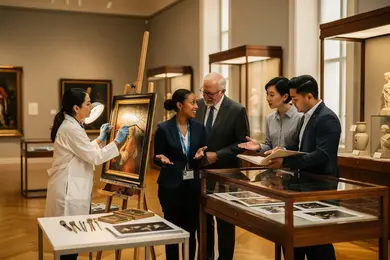
- Curatorial Assistant: Predominantly an entry-level position engaging graduates in collection management, exhibition preparation, and foundational research. Success in this role often depends on supplementary internships or volunteer work that provide necessary on-the-ground experience.
- Museum Educator: This role combines communicative ability with subject matter knowledge to design and implement educational programs. It demands interpersonal skills alongside art historical scholarship, making it a suitable option for graduates interested in public engagement.
- Research Analyst: Typically found within academic, governmental, or cultural institutions, this position requires detailed investigation into provenance, art context, and potentially cultural policy, aligning with graduates who pursue research-intensive trajectories.
- Collections Manager: Considered mid- to senior-level, this title involves stewardship over artwork conservation, storage, and documentation. It usually presupposes prior practical experience beyond the master's curriculum, such as extended institutional employment or specialized training.
- Art Registrar: A role focused on logistical and administrative oversight of artwork loans and acquisitions, indicating a career progression toward operational leadership within museums or galleries. This position reflects a need for legal acumen and organizational expertise built over time.
These job titles provide a realistic lens on what art history master's graduates can expect soon after completing the degree and help gauge demand in the labor market. Searching for openings under these titles can clarify where professional opportunities lie and the level of experience employers require.
One graduate recalled the uncertainty encountered during the rolling admissions process of their program. Although academically prepared, the fluctuating admission windows created tension as they balanced job applications with waiting on acceptance notifications. They hesitated to commit fully to opportunities outside the field until admission was confirmed, a situation illustrating how timing and admissions strategies can shape a graduate's transition into roles typical for art history master's holders. This experience underscores the benefit of early planning and proactive engagement with hiring cycles linked to these common job titles.
How Soon After Graduation Do Art History Master's Graduates Typically Find Employment?
Employment timing for art history master's graduates hinges on nuanced definitions and sector-specific realities. The distinction between time-to-offer-when a candidate formally accepts a position-and time-to-start-often delayed by academic calendars or contract negotiations in museums or educational institutions-means reported placement rates can obscure actual job commencement. Many programs track graduates securing offers within a three-to-six-month span post-graduation, yet this window varies widely, with some extending measurements to a full year, significantly influencing perceived success rates.
Moreover, some institutions include graduates who began their job search or accepted positions before completing their degree, a practice that may inflate placement figures relative to the median experience. Prospective students should critically assess whether placement data reflect outcomes at three months, six months, or one year, as shorter windows often look more favorable but may not represent typical employment trajectories.
- Measurement Window: Placement rates based on varying post-graduation intervals drastically affect reported outcomes and should shape realistic expectations.
- Sector Variation: Museum and academic roles typically require extended job searches compared to galleries or cultural organizations.
- Geographic Impact: Graduates in metropolitan areas often find positions faster due to more abundant opportunities.
- Internship and Network Value: Candidates with prior field experience and professional contacts enjoy accelerated hiring timelines.
- Employer Preferences: Demonstrated specialization and practical experience weigh more heavily than degree reputation alone in hiring decisions.
Understanding these variables helps contextualize placement rates and align job search strategies with the field's competitive labor market dynamics.
What Is the Average Salary for Art History Master's Graduates in Their First Job?
Starting salaries for art history master's graduates are shaped heavily by context rather than fixed benchmarks. For many entering their first professional role, the decision to pursue this credential must be weighed against sectoral realities and geographic disparities that influence compensation more than the degree itself. For instance, a graduate accepting a museum or academic position might expect a salary that underperforms compared to what peers in auction houses or cultural consulting firms earn. Those relocating to major art hubs such as New York or Washington D.C. often face higher living costs, yet these regions typically offer more competitive pay.
Entry-level salary expectations for art history master's degree holders vary notably depending on whether the individual is switching careers or building on previous experience. Career changers may accept lower initial salaries as a tradeoff for gaining access to the field, whereas continuing practitioners tend to leverage specialized expertise or network advantages.
- Industry Sector: Museum and academic roles generally range from $35,000 to $50,000 annually, while positions in auction houses, galleries, or heritage consulting start between $45,000 and $60,000.
- Geographic Region: Metropolitan areas with active art markets see higher salaries, compensating partly for increased cost of living.
- Program Selectivity and Concentration: Graduates from selective programs or those with skills in emerging areas like digital curation can command higher starting pay.
- Career Background: Prior relevant experience often yields better compensation than entry-level hiring for career changers.
- Data Awareness: Relying solely on median salaries published by programs risks misjudging prospects; multiple sources such as BLS Occupational Employment and Wage Statistics (OEWS) and NACE surveys offer a fuller picture.
Those considering a master's degree might also explore alternative fast-track options related to their goals, such as a 1 year master's in psychology online, which can offer distinct trajectories with potentially different salary outcomes.
How Do Art History Master's Program Rankings Affect Graduate Employment Outcomes?
Program rankings in art history master's degrees often serve more as indicators of institutional prestige or academic research strength than accurate predictors of immediate graduate employment. Labor market success depends less on a program's ranking and more on tangible factors such as geographic proximity to cultural centers, the robustness of alumni networks, and practical collaborations with employers. For instance, graduates from a highly ranked program located in a remote area may face limited access to relevant job markets compared to those from moderately ranked schools embedded in vibrant art communities. These dynamics show that prioritizing rankings without scrutinizing placement rates, employer connections, or skill alignments may lead to unrealistic expectations about job prospects.
- Rankings: Rankings typically emphasize faculty achievements and research output, which only indirectly relate to graduate hiring success.
- Location: Proximity to museums, galleries, and cultural institutions plays a critical role in expanding job opportunities for graduates.
- Alumni Network: Active alumni who engage in mentoring and job referrals often bridge the gap between education and employment.
- Employer Partnerships: Internships and collaborations with industry partners provide students with practical experience, boosting job readiness and direct hiring chances.
- Program Concentrations: Specialized tracks that respond to evolving sector needs-such as digital curation or museum education-improve long-term employability beyond what ranking alone can measure.
A graduate recalled applying to several programs during rolling admissions, feeling stressed by delays in acceptance notifications. Although initially drawn to a well-ranked university, the slower response pushed them to commit elsewhere where timely communication and clear internship placements better matched their career goals. This experience reinforced that strategic timing and program responsiveness could have as much impact on employment outcomes as the prestige conveyed by rankings.
What Role Does Geographic Location Play in Art History Master's Graduate Job Placement?
The geographic location of an art history master's program plays a decisive role in shaping graduate job placement rates, salary outcomes, and the pace of securing employment after graduation. Graduates from programs near major metropolitan cultural hubs typically experience faster hiring timelines due to proximity to employers, established internship pipelines, and concentrated alumni networks. Conversely, those who relocate post-graduation often encounter extended job searches and diminished network advantages, even when moving to markets with considerable opportunities. This dynamic underscores the importance of geographic alignment between program location and intended job market for optimizing career outcomes in the art history field.
- Access: Graduates in or near large cities with prominent museums, galleries, and universities benefit from direct access to on-campus recruiting and specialized internships, which serve as critical pipelines to employment.
- Networks: Local alumni and employer connections tend to concentrate regionally, so attending a program in your target job market often results in stronger support systems and referral opportunities.
- Mobility Trade-Offs: Graduates who relocate post-graduation to another city or region may face longer job search durations and weaker access to network ties, even if opportunities in the new market are plentiful.
- Salary Outcomes: Metropolitan areas with higher living costs generally offer greater salary potential, but these gains can be offset by competitive markets where supply of qualified graduates exceeds demand.
- Job Market Alignment: Prospective students with geographic flexibility should evaluate how well a program's location aligns with their intended employment region, considering both immediate placement prospects and longer-term career growth.
- Local Prioritization: Those fixed in place should prioritize programs known for establishing strong collaborations with nearby cultural institutions and employers, maximizing chances for steady employment and industry integration.
For students examining art history master's employment rates by region, workforce trends drawn from BLS state-level employment data and program outcome reports reinforce that location-specific factors significantly influence career trajectories. Notably, many employers in art history-related fields recruit during late fall and early spring, so enrolling in programs aligned geographically with target job markets can leverage timely access to these hiring cycles. Additionally, adult learners and working professionals should approach geographic considerations alongside program quality and hands-on internship opportunities.
For those seeking information on the best degree for felons, geographic barriers can be especially critical, as local employer networks and regionally concentrated opportunities often dictate reintegration pathways into the labor market. This further highlights the interplay between location and employment accessibility in art history and related humanities fields.
How Do Internship and Practicum Experiences Influence Art History Master's Employment Rates?
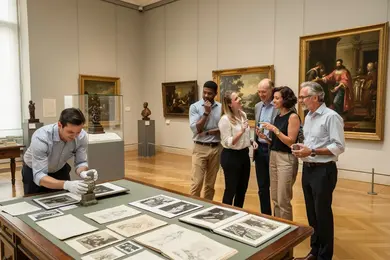
Internship and practicum experiences have a measurable influence on art history master's employment rates by providing essential applied skills and professional connections that coursework alone does not offer. Evidence from program outcomes and workforce studies, including insights from the National Association of Colleges and Employers (NACE), suggests that graduates engaged in supervised fieldwork and curated placements secure faster job placement and generate stronger employer confidence. For example, a candidate who completed an internship at a metropolitan museum gains hands-on familiarity with collection management and exhibition preparation, making them more competitive than peers without such experience. This is especially relevant in sectors like museums or galleries where employer perception highly favors candidates with verifiable applied experience.
The practicum experience influence on art history graduate job placement hinges on the structural integration of these opportunities within the curriculum. Thesis track programs may offer research assistantships but often lack formalized internships, whereas professional or hybrid tracks systematically embed externally supervised placements connected to employers in target sectors. Prospective students should critically evaluate not just whether internships are required, but how these are organized, supervised, and linked to relevant institutions. Internships that cultivate employer relationships and provide professional references are key for sustainable career development in art history fields.
- Skill Development: Internships grant practical exposure to curatorial practices and archival research, transcending theoretical learning.
- Employer Perception: Employers value documented applied experiences that demonstrate readiness and adaptability in professional roles.
- Networking Opportunities: Practicum participation often leads to connections that facilitate job referrals and industry insights.
- Industry Sector Influence: Placement quality aligned with target sectors like museums enhances employment probabilities.
- Geographic and Institutional Factors: Access to prestigious cultural centers amplifies internship value and post-graduate prospects.
Regarding tuition cost variations in online art history master's programs, delivery format plays an important role. Synchronous live-online models entail higher technological and staffing expenses, pushing per-credit prices upward due to limited enrollment scalability. In contrast, asynchronous formats benefit from flexible pacing and lower overhead, which typically reduce tuition costs but may lack the immediate interaction found in live sessions. Hybrid programs can introduce hidden costs such as travel or lodging for required on-campus components, impacting total expenditure. These structural differences carry operational implications for prospective students balancing work and study commitments as they assess financial and time investments.
- Asynchronous: More scalable and cost-efficient due to flexible scheduling.
- Synchronous: Higher operational expenses from live technology and live instructor involvement.
- Hybrid: Potentially balanced costs with added travel or personal expenses.
- Indirect Costs: Scheduling constraints in synchronous formats may extend time to degree for working adults.
- Student Fit: Aligning delivery method with learning style and work schedules optimizes educational returns.
For those exploring graduate credentials in adjacent or evolving fields, options like a PhD in AI online provide contrasting model pathways emphasizing technology-driven learning and research.
What Career Services and Job Placement Support Do Art History Master's Programs Offer?
Access to robust career services and job placement support is a pivotal factor influencing how quickly and effectively graduates of art history master's programs transition into relevant employment. Programs that invest substantially in these resources often enable graduates to navigate the competitive art sector more successfully, especially those entering the field without prior experience or professional networks. Without such infrastructure, graduates frequently face prolonged job searches and limited employer exposure, which can delay earnings and career progression.
Well-resourced art history programs typically offer several targeted services designed to close this gap:
- Career Advising: Specialized advisors provide tailored guidance to help students identify viable career paths within galleries, museums, academia, and related sectors.
- Employer Recruiting Events: Programs often host on-campus or virtual fairs connecting students directly with cultural institutions and auction houses actively seeking graduates.
- Alumni Mentorship Platforms: These systems facilitate professional networking and real-world insights by linking current students with established alumni.
- Resume and Interview Coaching: Workshops and one-on-one coaching focus on aligning presentations with sector expectations and storytelling techniques valued by employers.
- On-Campus Recruiting Partnerships: Long-term relationships with key organizations open pathways to internships and entry-level roles, providing vital practical experience.
A candidate weighing program options should seek detailed data regarding student engagement with these services and concrete placement outcomes rather than rely on generic descriptions. For instance, understanding what proportion of students secure positions through employer connections cultivated by the program can differentiate institutions meaningfully. Given findings from recent workforce studies, the presence of a comprehensive career services infrastructure correlates closely with shortened job placement timelines and broader employer networks, thus enhancing salary potential and sustainable career paths in the art history labor market.
What Graduates Say About the Job Placement Rates for Art History Master's Graduates
- Derrick: "Balancing a full-time job while pursuing my master's in art history was a major hurdle, but I chose a program that offered evening classes and remote access to lectures. This flexibility allowed me to maintain steady income, although my workload was intense. After graduating, I landed an internship at a local museum, where hands-on experience was clearly more valued than formal licenses, which shaped my portfolio and ultimately helped me secure a permanent position."
- Arjun: "I had to make a tough call between entering the workforce immediately or investing the time and money in a master's degree in art history. Opting for advanced studies delayed my income growth, but exposed me to specialized curatorial skills and research projects that many employers prioritize. However, I learned firsthand how competitive the market is; without obtaining additional certifications or networking aggressively during my program, I faced challenges breaking into high-level roles."
- Elias: "Choosing a specialized art history master's over a broader humanities degree meant a narrower but more focused career trajectory. Although the program's workload was demanding, it provided critical opportunities for internships and portfolio development, which are essential in this field. Despite limited salary advancement early on, gaining international museum experience through these internships has opened doors to remote consultancy roles, which I didn't initially expect."
Other Things You Should Know About Art History Degrees
Employment outcomes within art history master's programs can differ significantly depending on specialization. Graduates focusing on museum studies, curatorial practice, or arts administration tend to see higher placement rates in cultural institutions compared to those concentrating solely on theoretical or broad historical research. This reflects employer demand for practical skills like exhibition planning or collection management, which many academic-heavy tracks may not emphasize sufficiently. Prospective students should prioritize programs with strong applied components and connections to local or national arts organizations to improve job prospects.
Employers in the art world frequently view a master's in art history as a valuable but insufficient qualification on its own, favoring candidates who demonstrate relevant internships, technical competencies, and practical experience. The degree can serve as an entry ticket but does not guarantee competitive pay or seniority without demonstrated results in applying historical knowledge to real-world projects. Applicants with polished communication skills, grant writing, digital curation, or public engagement experience tend to outperform peers holding the same degree without such skills. For job seekers, investing in practical experience alongside academic work is crucial.
Prospective students should request detailed, disaggregated employment data that breaks down outcomes by specialization, geographic location, and time since graduation. It's also important to ask how many graduates secure positions related directly to art history versus those working in unrelated fields or pursuing further study. Inquiring about the program's career services, internship placements, and employer networks can reveal how actively the institution supports job placement. Prioritizing schools that provide transparent data and strong experiential learning opportunities will help students align expectations with realistic employment outcomes.
References
- The Art Institute https://www.theartinstitute.co.uk/us/en/blog-art-history-graduates-1
- Career Opportunities and Salary Outlook With an M.A. in History https://online.ewu.edu/degrees/education/master-arts-history/career-and-salary-outlook/
- One moment, please... https://jisem-journal.com/index.php/journal/article/download/6316/2918/10525
- Statistics on fine arts majors https://employedhistorian.com/humanities/fine-arts-majors-statistics/
- What can you do with a master’s degree in art history? https://graduateguide.com/what-can-you-do-with-a-masters-degree-in-art-history/
- Art History and Performing Art Majors Face Highest Rates of Unemployment, New Study Finds – https://www.ocaa.uk/4728.html
- Career Prospects https://www.uni-bamberg.de/en/ma-art-history/career-prospects/
- Arts and Design Alumni Employment and Perspectives on Their Work and⦠https://snaaparts.org/findings/reports/arts-and-design-alumni-employment-and-perspectives-on-their-work-and-careers
- Careers in Art History - For Art History https://forarthistory.org.uk/careers-in-art-history/
- What Can You Do With an Art History Degree? https://willamette.edu/academics/college/art-history/career-options