2027 Is Demand for Art History Degree Graduates Growing or Declining?

Co-Founder and Chief Data Scientist
Choosing an art history degree is not just a question of interest in museums, visual culture, or cultural heritage. It is also a labor-market decision. Students need to know whether the degree can lead to paid work, what kinds of roles are realistic, and which skills make graduates more competitive in a field where openings can be limited.
The outlook is mixed. The Bureau of Labor Statistics projects only 2% growth in curator and museum technician jobs through 2032, which points to a selective job market rather than broad expansion. At the same time, digital archives, virtual exhibitions, cultural preservation work, and public interest in diverse histories are changing how art history expertise is used. This guide explains where demand is strongest, which employers hire art history graduates, how degree level affects employability, and what students can do to improve their career options.
Key Things to Know About the Demand for Art History Degree Graduates
- Employment for art history degree graduates is steady, with museums, galleries, and academic roles accounting for most opportunities despite modest overall growth.
- The U.S. Bureau of Labor Statistics projects a 2% increase in related curator and archivist positions through 2032, reflecting slow but positive job growth.
- Specializing in digital curation or art conservation can significantly enhance long-term career prospects amid evolving museum technologies and cultural sector trends.
What Factors Are Driving Demand for Art History Degree Professionals?
Demand for art history professionals is shaped by more than the number of museum jobs posted each year. Hiring depends on institutional funding, public interest in cultural programming, technology adoption, collection needs, and the ability of graduates to apply art historical training in practical settings.
- Museum, gallery, and cultural institution activity: Museums, galleries, historical societies, and cultural nonprofits continue to need people who can research objects, organize exhibitions, interpret collections, and support public programming. These roles are often competitive, so graduates from accredited art history degree programs in the US may have an advantage when employers expect strong academic preparation.
- Digital collections and virtual exhibitions: Institutions are digitizing archives, building online exhibits, and expanding access to collections. This creates demand for graduates who can combine visual analysis, metadata work, image research, copyright awareness, and digital storytelling.
- Cultural heritage preservation: Interest in preserving historical sites, objects, archives, and community histories supports work in museums, libraries, public agencies, and nonprofits. Demand is strongest for candidates who understand both historical context and preservation workflows.
- More inclusive collection and exhibition practices: Institutions are reassessing how they represent culture, identity, colonial histories, and underrepresented artists. Art history graduates with strong research skills and the ability to work across cultural perspectives may be better positioned for curatorial, education, and public-facing roles.
- Employer preference for hybrid skills: Art historical expertise alone is rarely enough for the broadest range of jobs. Employers often look for writing ability, project coordination, grant support, database skills, public communication, and comfort with digital tools.
- Funding and policy decisions: Public grants, donor support, university budgets, and cultural preservation policies can expand or restrict hiring. Because many employers depend on external funding, job demand can shift with economic and political conditions.
Students should also evaluate program quality carefully. Regional accreditation for art history degrees can affect credit transfer, graduate school eligibility, and employer confidence. Those considering interdisciplinary options may also compare unrelated but career-focused programs, such as BCBA masters programs online, to understand how different graduate pathways connect education with professional outcomes.
Which Art History Occupations Are Seeing the Highest Growth Rates?
The strongest opportunities for art history graduates tend to be in specialized roles connected to collections, preservation, archives, public interpretation, and the art market. The U.S. Bureau of Labor Statistics projects an average employment growth rate of about 5% across all occupations through 2032, so art history students should look closely at roles that meet or exceed that benchmark.
Several career paths show more promising growth signals than general art history employment:
- Museum curators: Expected to grow by 10% in the next decade, curator roles are supported by collection development, exhibition planning, public programming, and institutional efforts to reinterpret collections. A master's degree in art history or a related field is typically required, especially for larger museums.
- Conservators and restorers: With projected growth around 11%, conservation work benefits from heritage preservation needs and advances in conservation technology. These positions usually require specialized graduate training, technical preparation, and supervised experience beyond a general bachelor's degree.
- Art appraisers: Growing steadily near 7%, appraisal work is tied to the art market, estate planning, insurance, auctions, and authentication. An art history degree can provide useful object knowledge, but professional certification and market expertise may be important for credibility.
- Gallery managers: Also growing at about 7%, gallery management combines exhibition coordination, artist relations, sales support, client communication, and operations. Practical experience, business awareness, and networking often matter as much as formal coursework.
- Archivists: With an outlook of roughly 9% growth, archivists preserve records, images, artist papers, institutional documents, and other research materials. Many positions require a master's degree in library science or information science, while art history knowledge can strengthen specialization in visual or cultural collections.
The main takeaway is that growth is strongest where art history overlaps with another professional function: preservation, digital records, valuation, education, or collection management. Students comparing humanities-related careers may also review options such as CACREP accredited online counseling programs when weighing passion, licensure pathways, and long-term employment structure across fields.
Which Industries Hire the Most Art History Degree Graduates?
Art history graduates are hired by organizations that need expertise in visual culture, historical interpretation, collections, research, and public education. The best fit depends on whether a graduate wants to work with objects, audiences, archives, sales, scholarship, or cultural policy.
- Museums and cultural institutions: Museums, historical societies, cultural centers, and heritage organizations employ art history graduates in collections support, research, education, exhibitions, visitor engagement, and curatorial assistance. These jobs are often mission-driven but can be competitive and funding-dependent.
- Academia and education: Colleges, universities, schools, and continuing education programs use art history expertise for teaching, research, advising, curriculum development, and public lectures. Stable academic roles generally require advanced degrees, and demand can be affected by humanities enrollment and institutional budgets.
- Auction houses and the art market: Auction houses, galleries, dealers, and appraisal firms value graduates who can identify works, research provenance, write catalog descriptions, support client services, and understand market context. These roles may favor candidates with internships, language skills, sales awareness, and specialized knowledge of a period or region.
- Cultural heritage and government agencies: Public agencies, preservation offices, archives, and grant-funded cultural programs may hire graduates to document historical assets, support preservation projects, prepare interpretive materials, and assist with outreach. These jobs often require careful research, strong writing, and familiarity with public-sector processes.
- Libraries, archives, and digital collections: Art history graduates can work with image databases, special collections, artist records, exhibition histories, and digital humanities projects. Additional training in information science, cataloging, metadata, or digital asset management can improve competitiveness.
- Publishing, media, and cultural communications: Some graduates use their writing and visual analysis skills in arts journalism, museum communications, educational content, publishing, and nonprofit marketing. These roles may not always carry an art history job title, but they can use the degree directly.
How Do Art History Job Opportunities Vary by State or Region?
Location matters greatly in art history careers. Jobs cluster where museums, universities, galleries, auction houses, archives, donors, and arts nonprofits are concentrated. A graduate’s region can affect the number of openings, the level of competition, salary expectations, and the type of work available.
- High-demand states: States like New York, Illinois, and Massachusetts have dense networks of museums, galleries, universities, libraries, foundations, and cultural institutions. These markets may offer more openings, but they also attract highly qualified applicants.
- Regional industry concentration: The Northeast and West Coast regions generally provide more art history-related opportunities than many parts of the Midwest and South because they often have larger arts ecosystems and more institutional employers. However, strong regional museums, universities, and heritage organizations can create meaningful opportunities outside the largest hubs.
- Urban versus rural settings: Major cities tend to offer more specialized roles in curation, conservation, archives, education, and the art market. Rural areas may have fewer formal art history positions, but graduates may find broader roles that combine education, community engagement, preservation, administration, and programming.
- Cost-of-living trade-offs: Cultural hubs can provide better networking and more openings, but high living costs may reduce the financial benefit of early-career roles. Students should compare expected pay, rent, commuting costs, and unpaid or low-paid internship requirements before relocating.
- Remote and hybrid work: Digital archives, online exhibitions, image research, content development, and virtual programming have made some work less location-bound. Remote roles can expand access, but they usually require strong writing, digital organization, communication, and self-management skills.
Students who cannot relocate should build a regional strategy early. That may include internships with local museums, volunteering in archives, joining state humanities or arts organizations, developing digital portfolio work, and targeting roles that use art history skills even when the job title is broader.
How Does Degree Level Affect Employability in Art History Fields?
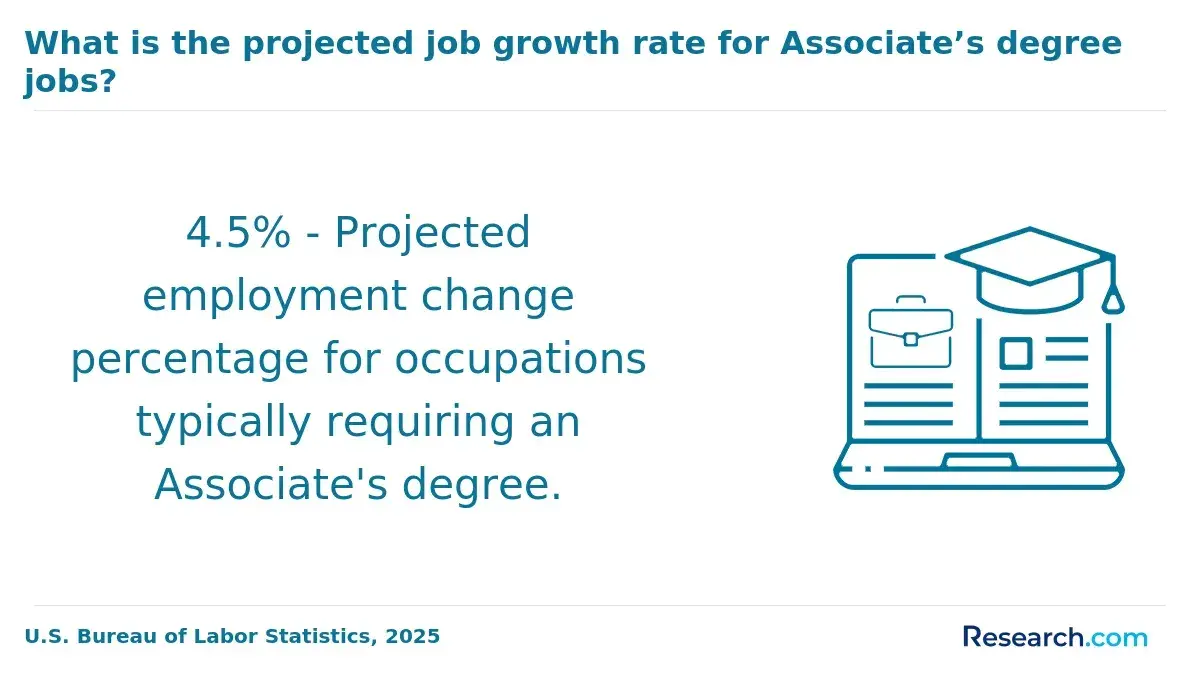
Degree level has a major effect on employability in art history. Entry-level support roles may be available with an associate or bachelor’s degree, but many curatorial, archival, conservation, research, and academic positions expect graduate education or specialized training.
- Associate degree: An associate degree may qualify graduates for support roles such as gallery assistant, museum front-desk staff, collections aide, or cultural program assistant. It can be a cost-conscious starting point, but advancement is usually limited without additional education or experience.
- Bachelor's degree: A bachelor’s degree is the common foundation for art history careers. Graduates may pursue roles in museums, galleries, nonprofits, education, publishing, or arts administration. However, competition can be strong, and graduates often need internships, writing samples, digital skills, or related work experience to stand out.
- Master's degree: A master’s degree can significantly improve access to specialized roles, including curator, registrar, archivist, collections manager, art conservator, educator, or researcher. Students interested in archives and cultural collections may also consider a library master's degree for related career paths.
- Doctorate degree: A doctorate is most relevant for university-level teaching, advanced research, museum leadership, high-level curatorial work, and specialized consulting. It offers the strongest academic credential, but it also requires a long time commitment and should be weighed against the number of available positions.
The practical rule is simple: the more specialized the role, the more important advanced training becomes. Students should not choose a higher degree automatically; they should compare program cost, funding, faculty expertise, internship access, placement outcomes, and whether the credential is commonly required for their target job.
What Skills Are Employers Seeking in Art History Graduates?
Employers want art history graduates who can do more than discuss style, period, and theory. The strongest candidates can research accurately, communicate clearly, manage information, work with objects or images responsibly, and adapt their knowledge for public, academic, or commercial audiences.
- Research proficiency: Graduates should know how to use archives, scholarly databases, collection records, exhibition catalogs, provenance documents, and primary sources. Strong research supports accurate labels, catalog entries, grant materials, appraisals, and scholarly interpretation.
- Critical thinking: Employers value candidates who can analyze visual evidence, compare interpretations, recognize bias, and connect artworks to historical, political, social, and economic contexts. This is essential in curatorial, education, and conservation-adjacent work.
- Writing and communication: Art history graduates need to explain complex ideas to different audiences, including scholars, donors, students, visitors, clients, and the general public. Clear writing is especially important for exhibition text, web content, catalog essays, reports, and funding proposals.
- Digital literacy: Collection databases, digital asset management systems, image editing tools, online archives, virtual exhibitions, and digital humanities platforms are increasingly common. Graduates who can manage digital information responsibly have stronger options beyond traditional roles.
- Project coordination: Exhibitions, publications, public programs, and archival projects require deadlines, budgets, communication, and collaboration. Even entry-level candidates benefit from showing they can organize tasks and follow professional workflows.
- Interdisciplinary awareness: Art history intersects with anthropology, history, literature, religious studies, conservation, museum studies, data management, law, and the art market. Graduates who can work across fields are better prepared for modern cultural-sector jobs.
- Professional judgment: Employers need people who understand ethical issues such as provenance, cultural property, repatriation, copyright, representation, and donor influence. Sound judgment can be as valuable as technical knowledge.
How Does Job Demand Affect Art History Graduate Salaries?
Job demand affects salaries in art history because many roles are concentrated in nonprofit, academic, public-sector, or grant-funded settings. Median annual wages for curators—a common career path for these graduates—were around $60,000, reflecting moderate salary growth linked to cultural funding and hiring trends.
Salary outcomes vary by employer type, location, degree level, experience, and specialization. Demand influences pay in several ways:
- Starting salaries: When qualified candidates are scarce for specialized roles, employers may offer stronger starting pay. When many applicants compete for a small number of openings, entry-level salaries may remain modest.
- Wage growth: Steady hiring in museums, archives, galleries, and cultural organizations can support raises and promotions. Slow demand, limited budgets, or flat institutional funding can restrict salary growth even for experienced professionals.
- Job availability: Higher demand means graduates are more likely to find roles that match their training. Lower demand can push graduates into part-time, temporary, unrelated, or underemployed work while they build experience.
- Specialization premiums: Candidates with conservation training, archival expertise, digital collection skills, appraisal knowledge, grant-writing ability, or advanced language skills may be more competitive than those with only general art history preparation.
- Long-term earning potential: Graduates who move into leadership, administration, consulting, the art market, or specialized collection roles may improve earning potential. Those who remain in narrow entry-level tracks may see slower advancement.
Students should evaluate salary expectations before enrolling, especially if they plan to borrow for school. A realistic budget should include tuition, living costs, internship requirements, relocation costs, and the possibility that a graduate degree may be needed for preferred roles.
How Is AI Changing Demand for Art History Professionals?
AI is changing art history work by automating some routine tasks while increasing demand for professionals who can interpret, verify, contextualize, and ethically manage cultural data. Advances in artificial intelligence are transforming workforce demands within art history, with nearly half of cultural heritage institutions expanding AI-related roles as of 2023.
- Automation of routine tasks: AI tools can support cataloging, image tagging, transcription, pattern recognition, and preliminary research. This may reduce some manual work, but it does not replace the need for expert judgment, especially when historical context, attribution, cultural sensitivity, or provenance is involved.
- New hybrid roles: Institutions increasingly need people who understand both art history and digital systems. Opportunities may appear in digital humanities, computational analysis, collection data management, virtual exhibitions, and AI-assisted research.
- Higher expectations for digital fluency: Graduates may be expected to work with databases, metadata, image repositories, visualization tools, and AI-supported workflows. Those who resist digital training may face fewer opportunities in modern collection environments.
- Greater need for verification: AI can generate errors, misidentify images, flatten cultural context, or reproduce bias. Art history professionals are needed to review outputs, correct inaccuracies, and ensure that interpretation remains responsible.
- Changes in hiring patterns: Employers may prioritize candidates with hybrid skills: art historical knowledge, technical comfort, ethical awareness, and strong communication. This can improve job stability for adaptable graduates while making the field harder for candidates with only traditional academic preparation.
AI is unlikely to eliminate the need for art history professionals, but it is changing what “qualified” means. Students should treat digital literacy as a core career skill, not an optional add-on.
Is Art History Considered a Stable Long-Term Career?
Art history can lead to a stable long-term career, but it is not one of the most predictable degree paths. Stability depends on specialization, location, employer type, funding conditions, graduate education, and the ability to adapt skills beyond traditional museum roles.
- Employment trends: Demand for curators, archivists, educators, and cultural workers tends to be steady rather than fast-growing. Because openings can be limited, the long-term job prospects for art history graduates in the United States are strongest for those who build specialized and transferable skills.
- Reliance on institutional funding: Museums, galleries, universities, nonprofits, and cultural agencies are central employers, but their budgets can fluctuate. Economic downturns, donor priorities, public funding changes, and enrollment shifts can affect hiring and job security.
- Technology and adaptability: Digital archives, virtual exhibitions, online teaching, and AI-supported research are expanding the types of work available. Graduates who learn digital tools can improve career resilience.
- Career advancement limits: Some traditional roles have narrow promotion ladders, especially in small institutions. Graduates may need to move between employers, relocate, pursue advanced education, or shift into administration, archives, education, development, publishing, or digital media to grow.
- Transferable skill value: Research, writing, visual analysis, project coordination, and cultural literacy can apply outside museums. Graduates who can translate these skills for employers in communications, nonprofit work, education, media, and cultural consulting may have more stable options.
Students should balance passion with planning. Art history may be worth pursuing for those who understand the competitive market and intentionally build experience, credentials, and technical skills. For financial comparison, students may review highest paying college majors to see how art history’s likely outcomes differ from fields with more direct salary growth.
Is a Art History Degree Worth It Given the Current Job Demand?
An art history degree can be worth it for students who have a clear career strategy, understand the competitive job market, and are willing to build practical experience alongside academic study. It is less likely to pay off for students who expect the degree alone to lead quickly to a stable, well-paid museum job.
Employment opportunities for graduates with an art history degree remain limited compared with more technical or vocational fields. The U.S. Bureau of Labor Statistics projects growth for related occupations like museum curators and archivists at roughly 5% over the next decade, near the average for all jobs. The market is specialized, and many art-related positions require advanced degrees, internships, or additional skills such as digital curation, conservation science, archives, or arts administration.
The degree’s value depends on how it is used. Students are more likely to see a return when they pursue internships early, build a writing or research portfolio, learn digital collection tools, develop grant or project-management experience, and choose programs with strong institutional connections. Graduate education may be necessary for curatorial, archival, conservation, and academic work, so students should include potential graduate costs in their planning.
For undergraduates, the safest approach is to pair art history with employable adjacent skills. Useful complements may include museum studies, digital humanities, library science, education, business, communications, data management, foreign languages, or nonprofit administration. Prospective students can also compare shorter skill-building options, including online certifications, to strengthen practical qualifications before entering a competitive job market.
The bottom line: art history is not a high-demand major in the broad labor-market sense, but it can support meaningful careers for students who specialize, network, gain experience, and remain flexible about job titles and industries.
What Graduates Say About the Demand for Their Art History Degree
- : "Pursuing an art history degree was initially a leap of faith for me, but it turned out to be one of the best decisions I've made. The deep understanding of cultural contexts and visual analysis skills provided a surprisingly strong return on investment, opening doors in the museum world and beyond. Every project sharpened my professional perspective and made me confident in my unique expertise. — Fallon"
- : "Reflecting on my time studying art history, I appreciate how it broadened my worldview while equipping me with analytical tools that proved valuable in my career. While the path wasn't the most conventional, the degree's ROI became evident with roles in galleries and historical consultancy that demanded a sophisticated grasp of art movements. It's a discipline that rewards patience and curiosity, much like my own journey. — Peyton"
- : "From a professional standpoint, my art history degree was more than just an academic achievement—it was a strategic career asset. The rigorous training in research and critical thinking translated directly into success in auction houses and cultural institutions. It's satisfying to see how the degree's practical application has fueled my growth and credibility in the arts sector. — Elix"
Other Things You Should Know About Art History Degrees
In 2027, the demand for art history degree graduates is slightly declining. While some traditional art fields show reduced opportunities, rising interest in digital humanities and online art curation provides new avenues. Graduates are advised to supplement their skills with digital literacy to enhance employability.
In 2027, the demand for art history graduates is shaped by trends such as increased digitalization of art collections, a growing emphasis on cultural heritage preservation, and rising interest in global art perspectives. These factors influence job opportunities in museums, galleries, and educational institutions.
In 2027, art history graduates may face hurdles in securing jobs due to shifts in industry needs and competition. While opportunities exist in museums, galleries, and academia, graduates need to adapt by acquiring skills in digital curation and interdisciplinary collaboration, which are increasingly sought after.
Yes, technology is impacting the demand for art history graduates in 2027. The integration of digital tools and online platforms in museums and galleries increases the need for professionals who understand both art history and digital technology, driving demand for tech-savvy graduates.
References
- Client Challenge https://academicjobs.fandom.com/wiki/Art_History_2025-2026
- Are Art History Majors More In Demand Than Computer Scientists? https://hyperallergic.com/are-art-history-majors-more-in-demand-than-computer-scientists/
- Jobs and Opportunities - For Art History https://forarthistory.org.uk/jobs/
- What Can You Do With an Art History Degree? https://willamette.edu/academics/college/art-history/career-options
- Art History Degree Can Help Art Lovers Advance Their Careers https://www.apu.edu/articles/a-modern-art-history-degree-can-help-art-lovers-advance-their-careers/
- Say Goodbye to Starving Artists - Arts Grads are Thriving | art-K https://www.art-k.co.uk/say-goodbye-to-starving-artists-arts-grads-are-thriving/
- AI in Museums: What Does Artificial Intelligence Mean for the Industry? â terentia https://terentia.io/blog/ai-in-museums
- The Job Market for Young Academics Was Already Bleak—Then the Pandemic Hit. Here’s How Art-History Grad Students Are Coping With the Fallout https://news.artnet.com/art-world/pandemic-impact-on-art-historians-1896601
- What you can do with a degree in... history of art https://www.unifrog.org/know-how/what-you-can-do-with-a-degree-in-history-of-art
- How AI Analyzes Art for Historical Context https://www.museumfy.com/blog/how-ai-analyzes-art-for-historical-context