2027 Private Practice for Social Workers: What MSW Students Should Know

Co-Founder and Chief Data Scientist
Opening a private practice after an MSW is not just a clinical career move; it is a licensing, business, ethics, and financial decision. New graduates often have the therapy skills to help clients but still need a clear path for supervision, state licensure, insurance billing, client referrals, recordkeeping, telehealth compliance, and sustainable income.
This guide is for MSW students, recent graduates, and licensed social workers who want to understand what private practice actually requires. It explains the difference between having an MSW and being legally able to practice independently, how long the process usually takes, what to look for in an MSW program, and how salary, job outlook, online study, and accreditation should factor into your plan.
Key Things You Should Know
- In 2026, private practice for social workers offers growing opportunities, with 32% of MSW graduates exploring independent practice as a career path post-licensure.
- Licensure prerequisites typically include 2-3 years of supervised clinical experience and passing the ASWB clinical exam, essential for private practice eligibility.
- Successful private practices depend on business skills, proper insurance, and understanding evolving telehealth regulations, which impact 40% of client interactions nationwide.
What is private practice for social workers?
Private practice for social workers means providing clinical or therapeutic services outside a traditional agency, hospital, school, or government employer. A private practice may be a solo practice, a partnership, or a group practice where licensed clinicians share space, referrals, administrative support, or branding.
In most cases, private practice social workers provide services such as individual therapy, family therapy, couples counseling, trauma treatment, substance use counseling, grief support, or behavioral health services. Some accept insurance, some use private pay only, and others combine both models. Many also provide telehealth, which can expand access but adds state-specific compliance and technology requirements.
The appeal is clear: more control over schedule, caseload, clinical focus, fees, and practice culture. The trade-off is that the clinician also becomes responsible for business operations. That includes client intake, documentation, billing, taxes, marketing, liability coverage, record retention, and legal compliance.
The role is also becoming more common. Clinician/private practice positions have risen to 35% of the workforce, according to the Agents of Change 2026 State of Social Work Report. That growth reflects both demand for mental health services and increased interest among social workers in independent clinical careers.
Common private practice models
- Solo practice: One licensed social worker manages the full practice, including clinical care, scheduling, billing, and marketing.
- Group practice: Several clinicians operate under one business structure or shared administrative system.
- Part-time private practice: A clinician keeps an agency, hospital, or school role while building a smaller independent caseload.
- Telehealth-focused practice: Services are delivered mainly online, subject to state licensure and telehealth rules.
Private practice is best suited for social workers who are clinically prepared, comfortable with independent decision-making, and willing to learn the business side of care. Advanced education, such as affordable online DSW programs, may also support clinicians who want stronger leadership, advanced practice, or program development skills.
Can MSW graduates open a private practice?
MSW graduates can eventually open a private practice, but the MSW degree alone usually does not authorize independent clinical practice. In most states, graduates must first complete supervised post-MSW clinical experience, pass the required licensing exam, and obtain a clinical license such as an LCSW or an equivalent state credential.
The distinction matters. An MSW may qualify a graduate for social work roles, case management, program work, or supervised clinical employment. Independent diagnosis, psychotherapy, treatment planning, and insurance billing typically require a clinical license. According to the ASWB 2024 Social Work Workforce Survey, 59% of the 463,000 licensed social workers in the US hold clinical licenses, which authorize independent private practice.
Typical steps before opening a private practice
- Earn an MSW from a program that meets state licensure requirements.
- Apply for the appropriate associate, provisional, or supervised license if the state requires one.
- Complete post-MSW supervised clinical hours required by the state licensing board.
- Pass the clinical licensing exam administered by the Association of Social Work Boards (ASWB).
- Meet state-specific requirements such as background checks, jurisprudence exams, ethics training, or continuing education.
- Obtain malpractice or professional liability insurance before seeing clients independently.
- Set up business, billing, intake, privacy, and recordkeeping systems.
Some MSW graduates work in agencies, hospitals, community mental health centers, schools, or group practices while accumulating supervised hours. This period is useful not only for licensure but also for learning documentation standards, crisis protocols, referral coordination, and insurance processes.
The safest approach is to verify requirements directly with the state licensing board where you plan to practice. Rules vary by state, and telehealth may trigger additional requirements if clients are located in a different state. Students comparing degree options can begin with affordable online MSW programs that support clinical field placement and licensure preparation.
What licenses are required for private practice?
Private practice usually requires a clinical social work license, commonly called Licensed Clinical Social Worker (LCSW), though exact titles differ by state. This license confirms that the social worker has completed graduate education, supervised clinical experience, an exam, and state-specific requirements for independent practice.
In nearly every state, a private practice clinician must earn an MSW from a Council on Social Work Education (CSWE) accredited program, complete 2,000 to 4,000 supervised clinical hours, and pass the Association of Social Work Boards (ASWB) clinical exam. Many states also require an interim license during supervision before a candidate can apply for full independent licensure.
Core licensing requirements
- MSW degree from an accredited program
- Post-degree clinical supervision lasting 2-3 years under a licensed social worker
- Passing the ASWB Clinical Exam covering diagnosis, therapy, and ethical practice
State requirements are not identical. New York mandates 4,000 supervised hours, while Texas requires 3,000. Some states issue provisional or associate licenses that allow supervised clinical work before full licensure. Full clinical licensure generally allows independent assessment, diagnosis, treatment, and insurance billing within the state’s defined scope of practice.
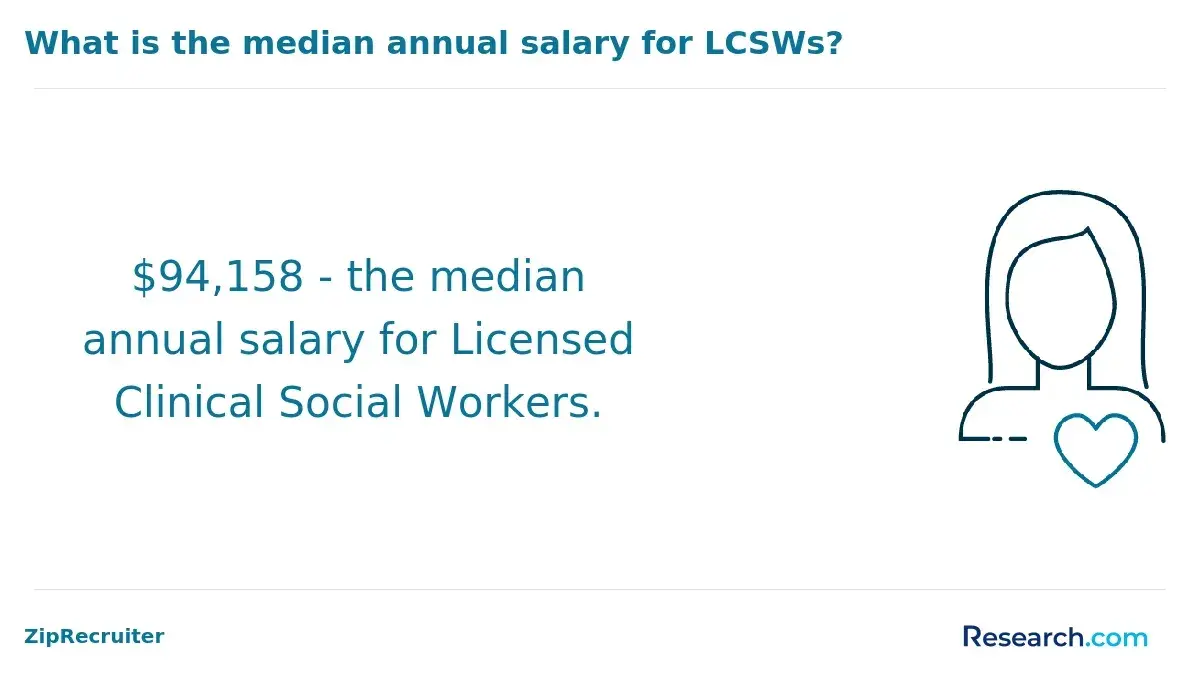
Licensure also affects earning power and practice options. According to the ASWB Historic Workforce Study, median earnings for full-time clinical social workers were $82,400. That figure should be interpreted as a workforce benchmark rather than a guaranteed private practice income, because revenue depends on caseload, fees, payer mix, overhead, and location.
Licensing mistakes to avoid
- Assuming one state’s license automatically permits practice in another state.
- Starting telehealth with clients in states where you are not authorized to practice.
- Counting supervised hours before confirming that the supervisor and setting meet state rules.
- Choosing an MSW program before checking whether it supports your target state’s licensure pathway.
- Waiting until graduation to learn about exam, supervision, and documentation requirements.
Students who need a flexible path to the required graduate degree may compare online master’s degree in social work options, but the program should still align with CSWE accreditation standards and the student’s state licensing rules.
Which MSW programs prepare for private practice?
The best MSW programs for private practice are not simply the most convenient or fastest options. They are programs that combine CSWE accreditation, strong clinical training, supervised field placements, licensure preparation, and exposure to the practical realities of independent work.
Students planning for private practice should prioritize clinical concentrations such as mental health, behavioral health, trauma, family therapy, substance use, or advanced clinical practice. These tracks usually provide more relevant preparation than programs focused mainly on policy, administration, macro practice, or community organizing.
What to look for in a private practice-oriented MSW
- CSWE accreditation: This is essential for licensure eligibility in most states.
- Clinical curriculum: Look for assessment, diagnosis, treatment planning, ethics, crisis intervention, and evidence-based therapy content.
- Relevant field placements: Strong placements include community mental health, outpatient behavioral health, integrated care, substance use treatment, school-based counseling, or private/group practice settings when available.
- Licensure support: Programs should explain how coursework and field education align with state licensing requirements.
- Business exposure: Courses, workshops, or advising on billing, documentation, insurance, marketing, and private practice ethics can be valuable.
- Faculty expertise: Faculty with clinical practice backgrounds can help students understand real-world therapy work and professional boundaries.
Online and hybrid MSW programs can be good options for students who need flexibility, but field placement quality is critical. A program that is easy to enter or convenient to attend may still be a poor fit if it does not help students secure appropriate clinical internships. Students considering flexible study can compare online MSW programs while checking clinical placement support carefully.
The University of Southern California and the University of Denver offer clinical emphases combined with private practice guidance. Program names alone, however, should not drive the decision. Students should ask whether a program’s curriculum and field education meet the licensing expectations in the state where they plan to practice.
Demand also supports careful program selection. With projections from WifiTalents showing an annual need for 63,800 additional social workers through 2032, MSW graduates with strong clinical and entrepreneurial preparation may have broader career flexibility. Still, private practice readiness depends on licensure, supervised experience, and business competence, not only job demand.
What does private practice MSW curriculum cover?
A private practice-oriented MSW curriculum should build three capabilities at the same time: clinical competence, ethical judgment, and practice management. Private practitioners must be able to assess and treat clients, document services appropriately, protect confidentiality, manage risk, and keep the business financially viable.
Clinical training
Clinical coursework usually covers assessment, diagnosis, treatment planning, crisis response, case formulation, and intervention with individuals, families, and groups. Students may study cognitive-behavioral therapy (CBT), trauma-informed care, family systems therapy, motivational interviewing, and other evidence-informed approaches. The goal is not to memorize therapy models but to learn when and how to apply them safely with diverse clients.
Ethics, law, and risk management
Private practice raises ethical issues that can be more complex than they appear. Coursework should address confidentiality, informed consent, mandated reporting, documentation, boundaries, dual relationships, crisis planning, termination, referrals, telehealth, and record retention. Case studies and role-plays are especially useful because private practitioners often make decisions without immediate agency oversight.
Business and administrative skills
Many MSW programs still give limited attention to business operations, so students interested in private practice should look for electives, workshops, or field experiences that cover billing, insurance reimbursement, electronic health records, HIPAA compliance, marketing, client intake, accounting basics, and fee setting. These skills matter because 26% of clinical social workers are self-employed in sole or group practices, per the ASWB 2024 Workforce Survey Report 2.
Specialization options
Electives or certificates can help students prepare for specific client populations or service lines, such as telehealth, substance use disorders, child welfare, trauma, school social work, or family services. A specialization can make a future practice more focused, but it should be supported by supervised experience and continuing education rather than branding alone.
How long does it take to start private practice after MSW?
Most MSW graduates should expect the path to independent private practice to take about 1 to 3 years after graduation, depending on state rules, supervised hour requirements, work setting, and exam timing. The supervised clinical period is usually the longest step because most states require 2 to 3 years of post-MSW supervised experience before full clinical licensure.
This does not mean graduates must wait passively. The post-MSW supervision period is the right time to strengthen clinical judgment, learn insurance documentation, observe how agencies handle risk, build referral relationships, and prepare a realistic business plan.
Typical timeline
- Immediately after MSW: Apply for any required supervised, associate, or provisional license and secure a qualifying clinical role.
- During supervised practice: Accumulate approved clinical hours, meet regularly with an eligible supervisor, document hours correctly, and prepare for the ASWB clinical exam.
- Before independent practice: Pass the exam, apply for full clinical licensure, and confirm the legal scope of practice in your state.
- Practice launch phase: Register the business, obtain professional liability insurance, choose an electronic health record system, create intake and consent forms, and establish billing and referral processes.
Administrative preparation can add several months, especially for clinicians who plan to accept insurance or build a full-time solo practice. Common launch tasks include:
- Registering the practice as a business entity
- Obtaining liability insurance
- Developing marketing strategies and client intake systems
- Understanding billing and reimbursement processes
Stress management should also be part of the plan. According to the 2026 Agents of Change State of Social Work Report, 45% of clinician/private practice social workers report high stress, though this remains low compared to other professions. New practitioners can reduce risk by starting part time, joining a group practice, using consultation groups, or contracting with billing and administrative support before scaling.
What are private practice social worker salaries?
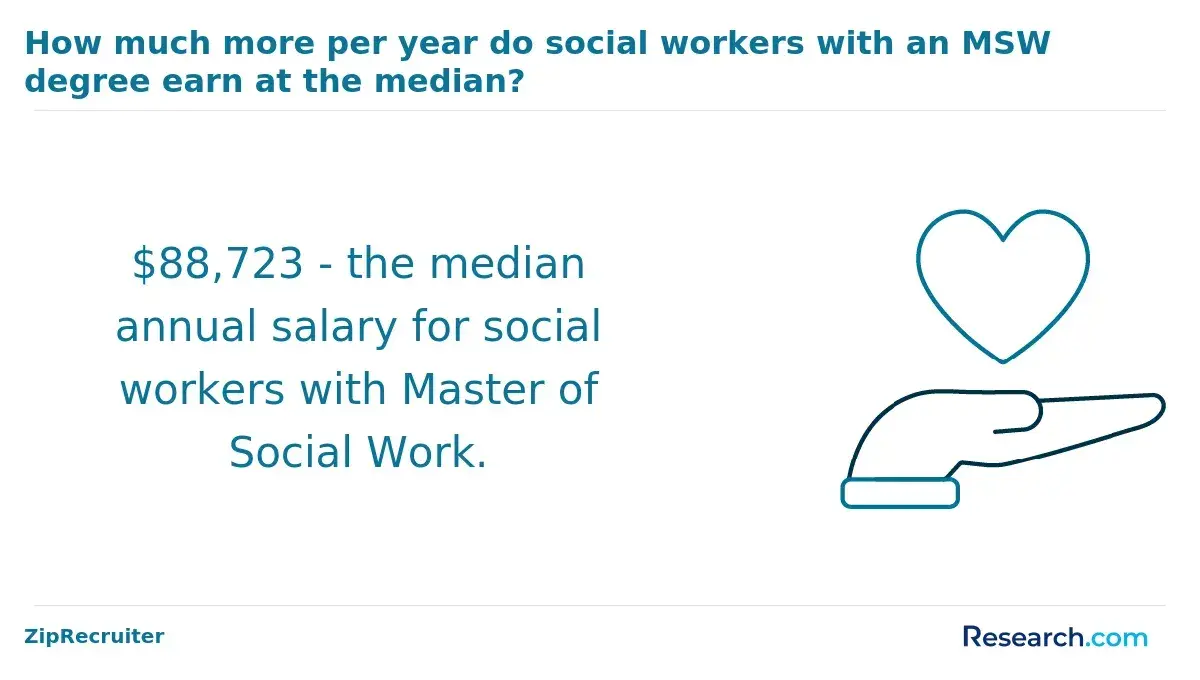
Private practice social worker income varies widely because it depends on client volume, hourly rates, payer mix, cancellations, overhead, specialization, location, and whether the clinician works full time or part time. Clinical social workers in private practice generally earn between $60,000 and $120,000 annually. MSW-level clinicians may set hourly rates ranging from $75 to $150, influenced by credentials and regional demand. Licensed Clinical Social Workers (LCSWs) typically have stronger earning potential because independent licensure expands the ability to diagnose, treat, and bill within state rules.
Private practice income should be viewed as business revenue minus expenses, not the same as a fixed salary. Rent, telehealth platforms, electronic health records, malpractice insurance, billing fees, payment processing, continuing education, marketing, taxes, and unpaid administrative time can reduce take-home income.
Main factors that affect earnings
- Number of client sessions per week
- Hourly fees and insurance reimbursement rates
- Expenses for office space, administrative help, and marketing
- Specialization, such as trauma, substance abuse, or family therapy
Telehealth can change the financial model. Remote work is increasingly common among clinical social workers, with 26% primarily delivering services online according to the ASWB Social Work Workforce Survey. Telehealth may reduce office costs and make scheduling easier, but it does not remove licensing, privacy, documentation, or emergency planning obligations.
New private practitioners should expect income variability during the early years. Referral networks take time to build, insurance credentialing can be slow, and caseloads may fluctuate seasonally. A realistic financial plan should include an emergency fund, conservative client-volume projections, and a clear understanding of how many paid sessions are needed each week to cover expenses and income goals.
What is the job outlook for private practice LCSWs?
The job outlook for private practice licensed clinical social workers is favorable, but demand alone does not guarantee a successful independent practice. The U.S. Bureau of Labor Statistics expects employment to grow 12% from 2024 to 2034. Growth is tied to greater recognition of mental health needs, expanded access to behavioral health services, and continued demand for trained clinicians.
Private practice can be attractive because it offers more control over schedule, clinical niche, treatment style, and client population. However, LCSWs must also manage competition, insurance reimbursement challenges, cancellations, administrative work, and the need for steady referrals. Many clinicians build stronger foundations by working first in community agencies, hospitals, schools, integrated care, or group practices before moving fully into solo practice.
What improves private practice prospects?
- Strong clinical credentials and specialization
- Diversified services such as couples or trauma therapy
- Networking with healthcare providers and community organizations
- Adapting to teletherapy and telehealth technologies
Pay patterns are also worth understanding. Data from WifiTalents 2026 Social Worker Data Reports shows male social workers earn about 96% of female social workers' income, indicating relatively narrow gender gaps. For private practitioners, rate setting should be based on credentials, market conditions, payer contracts, experience, specialization, and ethical access considerations rather than assumptions about what other clinicians charge.
Long-term success usually comes from combining clinical quality with business discipline. LCSWs who document carefully, maintain referral relationships, invest in continuing education, understand billing, and use secure digital systems are better positioned to adapt as private practice models evolve.
Online or campus MSW for private practice?
Both online and campus MSW programs can prepare students for private practice if they are accredited, clinically rigorous, and aligned with state licensure rules. The better choice depends on how the program delivers field education, how much structure the student needs, and where the student plans to become licensed.
Campus programs may offer more face-to-face interaction, easier access to faculty, stronger peer networks, and established local practicum relationships. They can be especially useful for students who learn best through in-person discussion, want local professional connections, or need close mentorship while developing clinical skills.
Online MSW programs offer flexibility for students balancing work, caregiving, relocation limits, or rural access challenges. The main question is not whether the coursework is online; it is whether the program can secure high-quality, approved field placements and provide licensure guidance for the student’s state. Some states may have specific requirements related to in-person, hybrid, or field-based training, so students should verify regulations early.
Online versus campus MSW: key trade-offs
| Factor | Online MSW | Campus MSW |
| Flexibility | Often better for working students or those with location constraints | May require fixed class times and commuting |
| Field placement | Quality depends heavily on the program’s local placement support | May have established relationships with nearby agencies |
| Networking | Requires more intentional effort through virtual events and local placements | Often easier through classmates, faculty, and local practicum sites |
| Licensure planning | Must be checked carefully if studying in one state and practicing in another | Often more locally aligned, but still requires state board verification |
States like Maine and Massachusetts, with higher concentrations of licensed social workers per 1,000 people compared to the national average per the ASWB Workforce Study Report 2, may provide better licensure pathways and networking opportunities locally. Still, students should not rely on state concentration alone. Field placement quality, supervision access, and licensing alignment matter more for private practice preparation.
Before choosing a format, ask these questions:
- Does the online MSW program offer adequate clinical hours in approved agencies?
- Are campus programs flexible enough to fit your personal obligations?
- Which option aligns best with your target state's licensing requirements?
For a future private practitioner, convenience should never outweigh accreditation, clinical training, and licensure eligibility. Contact both the program and the relevant state licensing board before enrolling.
How to choose an accredited MSW for private practice?
To choose an MSW for private practice, start with accreditation and licensure alignment. Accreditation by the Council on Social Work Education (CSWE) confirms that the program meets national educational standards commonly required for social work licensure. Graduating from a non-CSWE program can create serious barriers when pursuing Licensed Clinical Social Worker (LCSW) credentials.
After confirming accreditation, evaluate whether the program is built for clinical practice. A program with a clinical or mental health concentration will usually be more relevant to private practice than one centered on policy, administration, or community practice. Review actual course descriptions rather than relying only on marketing language.
Private practice MSW selection checklist
- CSWE accreditation: Confirm accreditation status directly, not only through program advertising.
- State licensure fit: Ask whether the curriculum and field education meet requirements in the state where you plan to practice.
- Clinical concentration: Look for therapy, diagnosis, assessment, trauma, behavioral health, and treatment planning content.
- Field placement support: Confirm who finds placements, what settings are available, and whether placements can count toward later clinical goals.
- Faculty and supervision access: Programs with experienced clinical faculty may offer stronger mentorship.
- Licensure exam preparation: Ask whether the program provides exam resources or guidance for post-graduate supervision.
- Cost and aid: Compare tuition, fees, scholarships, employer assistance, and loan repayment options tied to social work careers.
- Format: Choose full-time, part-time, online, hybrid, or campus study based on both life constraints and clinical training quality.
Cost is important, but the cheapest program is not always the best value if it lacks field support or licensure guidance. Similarly, a prestigious program may not be the right fit if it does not help you meet your target state’s requirements or build the clinical skills needed for independent therapy work.
With the Bureau of Labor Statistics projecting 74,000 social work openings annually and 6% growth over the decade, an accredited MSW can be a strong professional investment. For students aiming at private practice, the best program is the one that creates a clear path from graduate education to supervised clinical experience, licensure, and ethical independent practice.
Other Things You Should Know About Social Work
In 2027, social workers in private practice should be familiar with electronic health record (EHR) systems, encrypted communication apps for client confidentiality, and teletherapy platforms to conduct secure online sessions. Mastering these tools ensures compliance with privacy laws and improves service delivery.
Social workers in private practice often handle billing through a combination of self-pay clients and insurance reimbursements. They must understand coding systems such as CPT codes and comply with insurance requirements, including verifying client coverage and submitting claims. Many social workers also track payments and maintain clear financial records to ensure transparency and accuracy.
Licensed social workers typically must complete continuing education units (CEUs) to maintain their professional licenses, with specific requirements varying by state. These CEUs often cover ethics, clinical skills, and updates in social work practice. Staying current through continuing education ensures that private practitioners offer evidence-based and legally compliant services.
References
- Private practice: How can Social Workers go Private? — The Social Work Café Podcast https://www.thesocialworkcafe.com/blog/private-practice-how-can-social-workers-go-private
- Should I Open A Private Practice After Graduating From My MSW? — Liberation Healing Seattle https://www.liberationhealingseattle.com/supervision-blog/should-i-go-into-private-practice-after-graduating-from-my-msw-or-wait-until-im-licensednbsp
- Frequently Asked Questions: Starting a Private Practice - National Association of Social Workers https://www.naswma.org/page/177
- Welcome to the Private Practice Portal for Social Workers! https://www.casw-acts.ca/en/welcome-private-practice-portal-social-workers-0
- Private Practice - OCSWSSW https://www.ocswssw.org/registrants/private-practice/
- 5 Things Every Social Work Graduate Should Know https://therapistdevelopmentcenter.com/blog/5-things-every-social-work-graduate-should-know
- How to Become a Private Practice Social Worker in 2023 https://mastersinsocialworkonline.org/careers/private-practice-social-worker/
- Guide to Private Practice Social Work for Prospective LCSWs https://www.onlinemswprograms.com/careers/private-practice-social-work/
- Clinical Social Work Programs in the USA https://www.mswhelper.com/blog/clinical-social-work-programs-in-the-usa
- How to Start a Private Therapy Practice: Complete 2026 Guide https://pabau.com/blog/how-to-start-a-private-therapy-practice/