2027 MSW Salary by State: Where Social Workers Earn the Most

Co-Founder and Chief Data Scientist
MSW pay can look very different depending on where you live, the population you serve, the license you hold, and the type of employer that hires you. A salary that seems high in one state may feel modest after housing, taxes, transportation, and supervision costs are considered. For students choosing a master of social work program and professionals comparing job offers, state-by-state salary context is one of the most practical ways to plan a sustainable career.
This guide explains how MSW salaries vary across the United States, which states and metro areas tend to pay more, and what factors can raise or limit your earnings. It also covers education, accreditation, admissions, online versus campus study, licensure-related considerations, career options, job outlook, and how to choose an MSW program that fits your long-term goals.
Key Things You Should Know
- In 2026, MSW salaries vary widely by state, with California, New York, and Massachusetts offering the highest average annual incomes above $80,000.
- Cost of living and state funding for social services significantly influence salary differences, with rural and southern states typically paying less than coastal regions.
- Specializations like clinical social work and healthcare social work drive higher earnings, especially in states expanding Medicaid and mental health programs.
Which states pay MSW social workers the highest salaries?
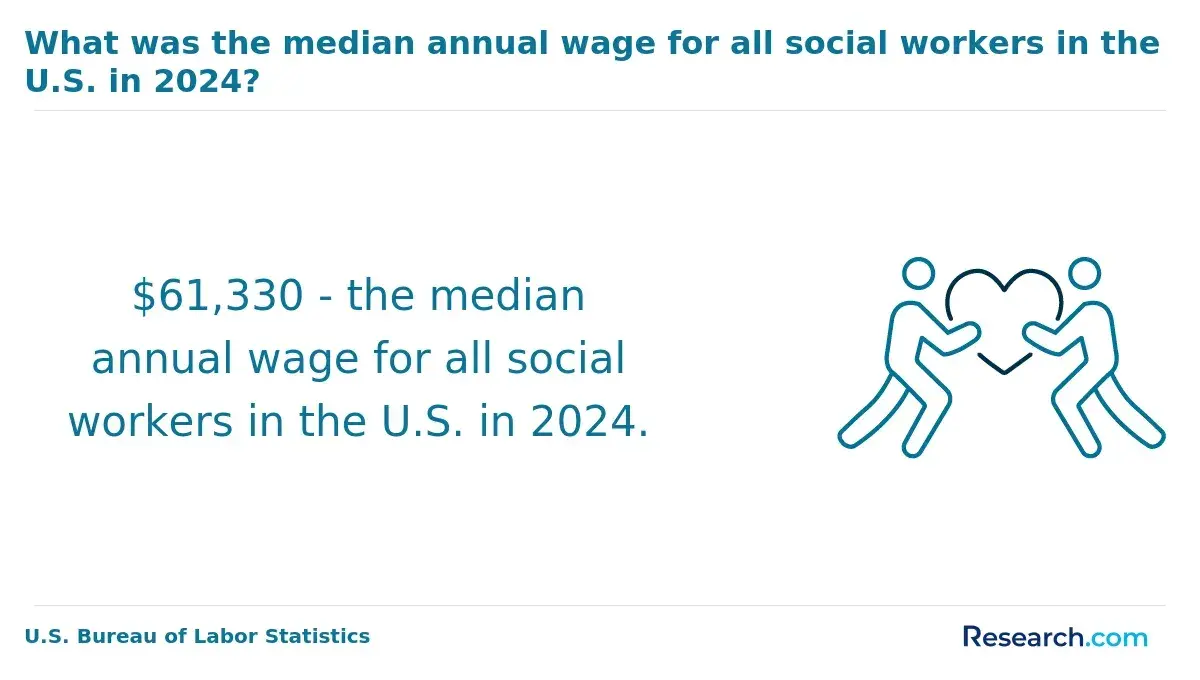
The states that often stand out for MSW social worker pay include California, New York, and Massachusetts, where reported salaries exceed the national average of $63,835. California leads with average annual wages above $75,000, while New York, especially in large urban labor markets such as New York City, often offers salaries surpassing $72,000. Massachusetts and Washington also provide competitive pay, with salaries ranging from $70,000 to $72,000.
Higher pay in these states is usually tied to several conditions: larger healthcare systems, broader public service networks, higher living costs, stronger demand for licensed clinicians, and more specialized roles in hospitals, schools, behavioral health agencies, and government programs. However, a higher paycheck does not automatically mean better financial comfort.
- California: Strong demand and higher pay, but housing and commuting costs can reduce take-home value.
- New York: Urban employers may pay more, but competition and living expenses are also high.
- Massachusetts and Washington: Competitive salaries are supported by robust healthcare, mental health, and social service systems.
- Lower-cost states: Arkansas and West Virginia often report pay below $55,000, but lower expenses may make some offers more livable than they appear at first glance.
When comparing top paying states for MSW social workers, evaluate the full offer rather than the salary alone. Benefits, retirement contributions, union protections, supervision for licensure, caseload expectations, paid time off, and loan repayment options can change the real value of a job. For example, $70,000 in California may not provide the same lifestyle as $60,000 in Texas because of housing and tax differences.
Professionals seeking higher earnings often improve their prospects by targeting metropolitan areas with large hospitals, behavioral health providers, school systems, and public agencies. Specializations such as healthcare social work, clinical social work, and mental health practice may also command stronger pay in higher-wage regions. Those planning academic, leadership, or advanced research careers may also consider pathways such as an online PhD social work program after earning the appropriate graduate and professional experience.
What is the average MSW salary by state in the US?
The average MSW salary by state in the US varies widely because state labor markets do not pay social workers under one national standard. Local cost of living, public funding, Medicaid reimbursement, employer type, licensure rules, and the concentration of healthcare and mental health jobs all influence compensation.
According to Psychology.org data, New Hampshire ranks highest, with a median annual wage of $93,910. States in the Northeast and parts of the West Coast, including California, Massachusetts, and Washington, also report median salaries near or above $85,000. At the lower end, some southern states such as Mississippi and Arkansas report median wages between $45,000 and $55,000.
Urban areas frequently offer higher wages than rural communities, but they may also bring higher rents, longer commutes, and more competitive hiring. Rural employers may pay less, yet some roles offer broader practice experience, stronger community ties, or incentives that can make them attractive for early-career social workers.
Salary also depends on specialization. Clinical, healthcare, school, child welfare, substance use, and community practice roles can have different pay structures even within the same state. Advanced licensure and experience often boost income by 10% to 30% beyond median salaries, particularly for professionals who move into clinical practice, supervision, administration, or specialized healthcare settings.
Students comparing MSW salary rankings across US states should ask three questions before making a decision:
- What does the salary buy locally? Compare pay with rent, transportation, childcare, taxes, and healthcare costs.
- What license does the job require? Some higher-paying roles require supervised hours, exams, and state-specific credentials.
- What career ladder exists? Look for employers that support supervision, continuing education, promotion, and specialization.
If affordability is a major concern, prospective students can compare accredited MSW programs online while also confirming that each program supports the licensure path in the state where they plan to practice.
What factors influence MSW social worker salaries by state?
MSW social worker salaries by state are shaped by more than geography. Pay reflects the interaction of employer budgets, demand for services, licensure requirements, specialization, local economic conditions, and the cost of maintaining a qualified workforce.
Cost of living is one of the clearest salary drivers. States and metro areas with expensive housing, transportation, and healthcare costs often pay more to attract and retain social workers. For instance, California's tech and healthcare hubs elevate salaries significantly; healthcare social workers in the San Jose-Sunnyvale-Santa Clara area earn an average of $110,250 annually, making it the highest paid metro region.
Employer setting also matters. Healthcare systems, specialized clinics, and some private organizations may pay more than many nonprofit or government agencies. That said, public and nonprofit roles may offer benefits that are valuable over time, such as pension plans, predictable schedules, union representation, student loan support, or structured supervision.
- Specialization: Clinical social work, healthcare social work, behavioral health, and substance use treatment may offer stronger earnings than some generalist roles.
- Licensure: Independent clinical credentials can open access to higher-paying therapy, supervisory, and private practice roles.
- Demand: Regions with shortages may raise salaries or offer incentives to recruit qualified MSW professionals.
- Urban versus rural market: Metro areas often pay more, while rural roles may offer broader responsibilities and less competition.
- State policy and funding: Medicaid reimbursement, public welfare budgets, school funding, and mental health priorities directly affect agency salary structures.
The cost of living impact on MSW social worker pay should be part of every salary comparison. A job with a lower advertised wage may be financially stronger if it includes paid supervision, lower commuting costs, manageable caseloads, and better benefits. Conversely, a high salary can be less attractive if it comes with burnout risk, weak support, or high living expenses.
Students who want to enter the field more quickly may explore accelerated options, including one year MSW programs online, while carefully confirming accreditation, field placement quality, and state licensure compatibility.
What education is required for MSW social work careers?
Advanced social work careers typically require a master of social work degree from a program accredited by the Council on Social Work Education (CSWE). An MSW is generally required for clinical licensure and is commonly expected for advanced practice, supervisory, school, healthcare, behavioral health, policy, and administrative roles.
Students who already hold a bachelor of social work may qualify for advanced standing, which can shorten the time needed to complete the MSW. Students from other academic backgrounds usually complete a full two-year MSW program. Core study commonly includes human behavior, social policy, research methods, ethics, evidence-based practice, diversity and oppression, assessment, intervention, and supervised field education.
Field education is not a formality. It is the bridge between classroom learning and professional judgment. Strong placements help students build documentation skills, client assessment abilities, crisis response judgment, interprofessional communication, and an understanding of real agency operations.
Licensure requirements vary by state, but independent clinical practice usually requires post-graduate supervised experience and a licensing exam. Many states require thousands of supervised post-graduate hours before a social worker can practice independently. Because rules differ, students should review the licensing board requirements in the state where they intend to work before choosing a program or specialization.
State salary differences also show why credentials matter. States like New York offer high earning potential; mental health and substance use social workers there earn an average of $92,470 annually. Advanced credentials can be especially valuable in high-demand urban markets where licensed clinicians, behavioral health providers, and healthcare social workers are needed.
MSW concentrations can shape career direction. Clinical social work supports therapy and assessment roles. School social work prepares graduates for work with students, families, and education teams. Community organization and policy tracks may fit students interested in systems change, advocacy, or program leadership. For broader career planning, reviewing what can you do with a degree in social work can help connect education choices with realistic job paths.
How do online vs campus MSW programs compare?
Online and campus MSW programs can both prepare students for professional social work careers when they are properly accredited and include approved field education. The main difference is not degree legitimacy; it is how the learning format fits your schedule, support needs, location, and career goals.
Online MSW programs often work well for students who are employed, caregiving, living far from a campus, or unable to relocate. They reduce commuting and may provide more scheduling flexibility. However, students still need to complete field placements, participate in supervision, and meet program expectations. Online study requires strong time management and comfort communicating with faculty, classmates, and field instructors through digital platforms.
Campus programs may offer more face-to-face interaction, easier access to faculty, and stronger local networking. Students in metropolitan regions such as New Jersey, Connecticut, and Massachusetts may benefit from campus relationships with nearby agencies, hospitals, school districts, and public service organizations. For some learners, in-person discussion and peer connection are important parts of professional development.
- Choose online if: flexibility, location, or continued employment is a priority.
- Choose campus if: in-person networking, structured routines, and local agency connections matter most.
- Evaluate both by: CSWE accreditation, field placement support, licensure alignment, faculty expertise, student services, and total cost.
Salary outcomes usually depend more on location, specialization, licensure, and employer setting than on whether the degree was completed online or on campus. For example, child, family, and school social workers in Washington, D.C., earn an average annual salary of $76,330, according to Psychology.org. That figure reflects the local labor market, not a specific delivery format.
The practical question is whether the program can place you in high-quality field settings, prepare you for the license you need, and connect you with employers in your intended practice area. A flexible online format is useful only if it still provides rigorous training and state-appropriate practicum options.
What accreditation should MSW programs have?
MSW programs should have accreditation from the Council on Social Work Education (CSWE). CSWE accreditation indicates that the program meets national standards for curriculum, faculty qualifications, field education, ethics, and professional competencies. For students planning to become licensed social workers, this is a critical requirement rather than a minor preference.
Graduating from a CSWE-accredited program is required for licensure in nearly every state for clinical social workers. A non-CSWE accredited program can limit or block eligibility for licenses such as the Licensed Clinical Social Worker (LCSW) or Licensed Master Social Worker (LMSW), depending on state rules. It may also create problems when applying for jobs, transferring credentials, or pursuing advanced practice roles.
Accreditation is especially important for online and hybrid programs. Students should confirm that the program's accreditation applies to the delivery format they plan to complete and that field placements meet state licensing board expectations. Do not assume that a university's general institutional accreditation is enough for social work licensure; professional CSWE accreditation is the key standard for MSW preparation.
Students with a bachelor of social work from a CSWE-accredited school may qualify for advanced standing at some MSW programs, reducing the time required to graduate. This can lower total cost and shorten the path to employment, but eligibility rules vary by program.
Employers, particularly in healthcare, often prefer or require candidates with CSWE-accredited degrees. For example, healthcare social workers in California earn the highest average salary nationally-around $93,200 annually according to Psychology.org. Competitive roles like these typically require the right education, field experience, and licensure pathway.
Specialized certificates, international credentials, or niche training can add value, but they do not replace CSWE accreditation for U.S. licensure. Before enrolling, verify accreditation directly, review state licensing board requirements, and ask how the program supports field placement, supervision documentation, and licensure preparation.
What are typical MSW program admission requirements?
MSW admission requirements usually begin with a bachelor's degree from an accredited college or university. The degree does not always have to be in social work, although applicants with a bachelor of social work may qualify for advanced standing if the degree meets program standards. Related backgrounds such as psychology, sociology, education, public health, criminal justice, and human services can also be relevant.
Many programs set a minimum GPA requirement, often around 3.0. Applicants with a lower GPA may still be considered if they show strong professional experience, recent academic improvement, compelling recommendations, or a clear commitment to social work practice.
Common application materials include:
- Official college transcripts
- Two or three letters of recommendation
- A personal statement explaining motivation, career goals, and readiness for graduate social work education
- A resume that highlights employment, internships, volunteer work, advocacy, or community service
- Proof of English proficiency, such as TOEFL or IELTS exams, for many international applicants
GRE scores are less commonly requested than they once were, but some selective programs may still require them. Interviews may also be part of the process, especially for programs that want to evaluate communication skills, ethical reasoning, self-awareness, and readiness to work with vulnerable populations.
Strong applicants do more than express a desire to help people. They show evidence of reliability, cultural humility, emotional maturity, ethical awareness, and exposure to social issues. Experience with shelters, schools, hospitals, crisis lines, youth programs, elder services, disability support, domestic violence organizations, or community agencies can strengthen an application.
Admissions planning should also connect to career goals. For example, in the Mid-Atlantic area (MD, DC), child, family, and school social workers earn an average of $71,870 annually, ranking fourth nationally. Students interested in this path should look for programs with school social work coursework, child and family placements, and state-relevant credential guidance.
What jobs can you get with an MSW degree?
An MSW degree can lead to direct practice, clinical, administrative, policy, school, healthcare, and community leadership roles. The best fit depends on whether you want to work primarily with individuals and families, manage programs, influence policy, coordinate systems of care, or lead organizations.
Common MSW career paths include:
- Licensed clinical social worker: Provides counseling, assessment, treatment planning, and therapy in clinics, hospitals, private practice, or community mental health settings.
- Medical or healthcare social worker: Supports patients and families dealing with illness, discharge planning, treatment barriers, insurance issues, grief, and care coordination.
- School social worker: Helps students address emotional, behavioral, social, family, and attendance-related challenges in educational settings.
- Child and family social worker: Works with children, parents, foster care systems, family service agencies, and protective service organizations.
- Substance use or behavioral health social worker: Supports clients experiencing addiction, co-occurring disorders, trauma, or crisis needs.
- Program director or administrator: Oversees staff, budgets, grants, compliance, and service delivery in nonprofit, government, or healthcare organizations.
- Policy analyst or advocate: Develops, evaluates, or promotes policies that affect communities, benefits, healthcare access, housing, disability services, or child welfare.
Some roles are available immediately after graduation, while others require licensure, supervised hours, and exams. Clinical practice, private practice, and independent diagnosis or treatment usually involve stricter state licensing requirements. Administrative and policy jobs may place more weight on leadership experience, data skills, grant writing, and systems knowledge.
Salary varies significantly by location and specialization. For example, Oklahoma offers a median social worker salary of $91,090, ranking among the highest nationwide despite lower living costs. New Hampshire and Rhode Island also provide competitive wages, showing that strong earning potential is not limited to the largest coastal states.
When choosing a job path, weigh pay against workload, supervision quality, emotional demands, advancement options, and mission fit. Clinical roles may offer higher long-term earnings but can require additional credentials and careful attention to burnout. Policy and administrative roles may appeal to professionals who want to improve systems rather than provide ongoing one-on-one services.
What is the job outlook for MSW social workers?
The job outlook for MSW social workers is strong, with a projected 12% growth rate from 2024 to 2034. Demand is supported by ongoing needs in mental health, substance abuse treatment, healthcare coordination, school support, crisis response, and services for aging populations.
MSW graduates with clinical, healthcare, and behavioral health preparation are often well positioned because many communities need providers who can assess needs, coordinate care, support families, and connect clients with resources. Licensure can further improve job flexibility, especially for roles involving therapy, independent practice, supervision, or advanced clinical responsibility.
Geography still matters. Job openings, pay, caseloads, and employer stability differ by state and region. Connecticut leads in cost-of-living adjusted salaries, paying $70,176 annually with a cost-of-living index of 107.8, according to SocialWorkDegrees.org. This illustrates why salary should be evaluated alongside local expenses rather than viewed in isolation.
MSW social workers can find opportunities in hospitals, schools, private practices, community mental health centers, substance use programs, government agencies, nonprofits, correctional settings, elder services, and advocacy organizations. Each setting has a different growth pattern. Healthcare and mental health employers may prioritize clinical credentials, while government and nonprofit agencies may value case management, policy knowledge, community partnerships, and program administration.
To improve long-term career security, prospective social workers should research local labor markets before enrolling or relocating. Review state licensure rules, common job titles, supervision availability, salary ranges, and employer demand. Building skills in trauma-informed practice, policy advocacy, healthcare coordination, crisis intervention, and data-informed program evaluation can also make an MSW graduate more competitive.
How to choose the best MSW program for career goals?
The best MSW program is the one that prepares you for the specific work you want to do, in the state where you expect to practice, at a cost you can manage. Start with your career target, then evaluate programs against that goal. A student aiming for clinical therapy should prioritize licensure preparation and supervised clinical field placements. A student interested in policy should look for research, advocacy, and government or nonprofit leadership opportunities.
CSWE accreditation should be the first requirement. Without it, licensure and employment options may be limited. After accreditation, compare specialization tracks, field placement quality, faculty expertise, student support, licensure exam preparation, alumni outcomes, and relationships with local employers.
Career goals should guide specialization. For instance, healthcare social work specialists nationally average $97,090 annually, the highest among social work fields, highlighting the value of clinical training and internships in medical environments. Students interested in healthcare should look for placements in hospitals, clinics, hospice, integrated care, or care coordination settings.
Use the following criteria when comparing programs:
- Licensure alignment: Does the curriculum meet requirements in the state where you plan to work?
- Field education: Are placements relevant to your intended specialty, and does the school help secure them?
- Faculty expertise: Do faculty members teach and research in areas such as mental health, child welfare, trauma, gerontology, healthcare, school social work, or policy?
- Format: Does the online, hybrid, part-time, or campus schedule fit your work and family responsibilities?
- Total cost: Compare tuition, fees, travel, lost income, books, technology, and field placement requirements.
- Student outcomes: Ask about licensure exam pass rates, job placement, alumni roles, and employer partnerships.
- Support services: Look for advising, writing support, career coaching, supervision guidance, and help with practicum challenges.
Do not choose a program based only on prestige or convenience. A well-matched MSW program should reduce friction between school, licensure, and employment. Speak with alumni and current students, ask direct questions about field placement quality, and confirm how the program supports your intended career path before committing.
Other Things You Should Know About Social Work
In 2027, MSW social workers earn the most in California, New York, and Massachusetts due to higher cost of living and demand for social services. Salaries vary based on state-funded programs, with California offering the highest average annual wage due to its broad healthcare opportunities.
MSW salary differences among states in 2027 are influenced by factors such as cost of living, state funding for social services, demand for social workers, and local economic conditions. States with higher living costs and demand often offer higher salaries to attract qualified professionals.
Besides salary, MSW social workers often receive benefits such as health insurance, retirement plans, paid time off, and professional development stipends. Some employers also offer loan forgiveness programs or tuition reimbursement to support continuing education. These benefits can vary widely depending on the employer and work setting.
References
- Social Worker Salary (May 2026) | NASW https://joblink.socialworkers.org/salary/social-worker-2
- Accepted to Multiple MSW Programs? Here’s How to Choose the Right One https://www.mswhelper.com/blog/how-to-decide-on-an-msw-program
- School Social Worker https://socialworklicensemap.com/social-work-careers/school-social-worker/
- CSWE Accreditation Requirements and Standards https://lumivero.com/resources/blog/cswe-accreditation/
- Social Work Salary Overview | Psychology.org https://www.psychology.org/social-work/salary/
- 8 Career Paths You Can Pursue with a Social Work Degree https://www.sacredheart.edu/news-room/news-listing/8-career-paths-you-can-pursue-with-a-social-work-degree/
- Types of Social Work Degrees https://www.socialworkers.org/Careers/Career-Center/Explore-Social-Work/Types-of-Social-Work-Degrees
- How Much Do Social Workers Make? https://agentsofchangeprep.com/blog/how-much-do-social-workers-make/
- How Much Can a Social Worker Make? https://www.herzing.edu/salary/social-worker
- Social Work Masters Prerequisites: Discover 7 Critical Pieces - Prereqcourses https://www.prereqcourses.com/social-work-masters-prerequisites/