2027 Comparing Online MSW Programs by Cost, Flexibility, and Field Support

Co-Founder and Chief Data Scientist
Choosing an online MSW program is not just a question of tuition. The right program must be affordable enough to finish, flexible enough to fit around work and caregiving, and organized enough to help you complete supervised field education in a setting that supports your licensure and career goals.
This guide is for prospective MSW students comparing accredited online options, including career changers, working human services professionals, BSW graduates considering advanced standing, and students planning for clinical licensure. It explains how to evaluate online MSW programs by cost, scheduling format, field placement support, accreditation, admissions requirements, completion time, career outcomes, and post-graduation licensing steps.
Use it as a decision framework: verify accreditation first, compare the full cost of attendance rather than tuition alone, ask detailed questions about field placement support, and choose a format you can realistically complete without delaying graduation or licensure.
Key Things You Should Know
- Online MSW program costs vary widely, ranging from $10,000 to over $60,000, with public universities generally offering more affordable tuition than private institutions as of 2025.
- Flexibility in online MSW programs, including asynchronous coursework and part-time options, supports working professionals balancing education and field placements effectively.
- Field support, such as virtual supervision and diverse practicum locations, is increasingly emphasized, ensuring accreditation standards and effective experiential learning for remote students.
What Are the Best Online MSW Programs?
The best online MSW programs are accredited, financially realistic, flexible enough for working adults, and strong in field placement support. A low tuition rate matters, but it should not come at the expense of CSWE accreditation, practicum coordination, faculty access, or preparation for the type of social work you plan to practice.
Western New Mexico University stands out for affordability because it offers the lowest-cost fully online MSW at $286 per credit, with a total range of $8,580 to $17,160. For students whose first priority is minimizing debt, that price point can make a major difference, especially if they are balancing graduate school with employment or family responsibilities.
Flexibility is also central to program quality. Universities such as the University of Southern California and University of Michigan offer asynchronous courses and both part- and full-time enrollment options. That type of structure helps students manage coursework around work schedules, caregiving, commuting limits, and field education hours.
Strong programs also help students translate online coursework into supervised practice. Look for dedicated field advisors, clear placement timelines, partnerships with agencies, and support for securing placements that match your career interests. Remote learning does not remove the need for in-person field education; it makes reliable field coordination even more important.
How to compare strong online MSW programs
| Decision factor | Why it matters | What to ask before applying |
| Accreditation | CSWE accreditation is typically required for licensure eligibility and employer recognition. | Is the online MSW CSWE-accredited, and does accreditation cover the specific program format? |
| Total cost | Per-credit tuition can be misleading if fees, field expenses, and residency charges are not included. | What is the full estimated cost from enrollment to graduation? |
| Schedule format | Asynchronous, synchronous, part-time, and full-time formats suit different students. | Are live class meetings required, and can I slow down or accelerate if needed? |
| Field support | Field education is essential for skills development and licensure preparation. | Will the school help secure placements in my area, or must I find them independently? |
| Career focus | Clinical, school, healthcare, nonprofit, policy, and community practice paths may require different electives and placements. | Does the program offer coursework and field settings aligned with my goals? |
Students interested in advanced or doctoral-level social work pathways can also review related DSW degree programs to understand longer-term academic and leadership options.
How Much Do Online MSW Programs Cost?
Online MSW costs vary widely because schools price programs differently by residency, credit load, fees, and institutional type. Public universities may offer much lower in-state tuition, while private universities often use one flat rate for all online students. The result is that two programs with similar academic formats can have very different total prices.
East Carolina University illustrates how much residency can affect cost. In-state students pay approximately $19,320 total at $322 per credit hour, while out-of-state students pay about $65,340. That difference is large enough that applicants should never compare programs by reputation or format alone; they need the actual cost for their residency status and enrollment track.
Tuition is only one part of the cost. Students should also budget for required fees, books, technology, background checks, transportation to field sites, possible travel for orientations, and unpaid or reduced-work hours during practicum semesters. These expenses can affect affordability even when advertised tuition appears low.
What to include in your cost comparison
- Per-credit tuition: Confirm the rate and the number of credits required for your track.
- Residency pricing: Ask whether online students pay in-state, out-of-state, or a separate online tuition rate.
- Program fees: Include technology, student services, graduation, placement, and course-specific fees.
- Field education costs: Consider commuting, scheduling limitations, background checks, and potential income reduction.
- Financial aid: Compare scholarships, grants, employer tuition reimbursement, assistantships, and federal aid eligibility.
- Time to completion: A longer part-time plan may be easier to manage but can extend fees and delay full-time earnings after graduation.
Most programs require between 60 and 65 credits, so even a modest difference in per-credit tuition can change the final bill substantially. Students comparing affordable MSW programs online should calculate the total program cost, not just the listed semester or credit-hour price.
For more detailed cost comparisons, review affordable MSW programs online. A good financial decision balances low cost with accreditation, field placement reliability, and a schedule you can complete.
What Makes Online MSW Programs Flexible?
Online MSW flexibility comes from more than being able to study from home. The most flexible programs give students realistic control over when they complete coursework, how quickly they progress, and how field education is arranged in relation to work, caregiving, and location.
Asynchronous classes are one of the most useful scheduling features. Recorded lectures, online discussion boards, and flexible assignment windows allow students to participate without attending class at fixed times each week. This can be especially important for students working shifts, serving clients during the day, or managing family responsibilities.
Enrollment pacing also matters. Many programs offer part-time and full-time options, while some include accelerated tracks for students who can handle a heavier workload. A fast program may reduce time to graduation, but it can also make field placement and employment harder to balance.
Common flexibility features in online MSW programs
| Feature | How it helps | Potential trade-off |
| Asynchronous coursework | Allows students to complete lectures and assignments around work or caregiving. | Requires strong time management and self-direction. |
| Part-time enrollment | Reduces weekly workload and may make field hours easier to manage. | Extends time to graduation. |
| Accelerated tracks | Can shorten completion time for prepared students. | May create intense course and field placement demands. |
| Multiple start dates | Lets students begin when finances, work, and personal schedules allow. | Course sequencing may still limit when certain classes are available. |
| Local field placement options | Helps students complete practicum requirements without relocating. | Placement availability depends on agency capacity and supervision requirements. |
Financial flexibility can also affect access. Florida State University provides a 90% tuition waiver for out-of-state students, cutting per-credit costs from $1,044.24 to $478.83. For students who cannot relocate, pricing policies like this can make an online MSW more feasible.
Before choosing a program, ask how coursework is delivered, whether live attendance is required, how many hours per week students typically spend on classes and fieldwork, and what happens if you need to slow down. Students who want a shorter path should also compare options such as a fast track social work degree online.
Which Online MSW Programs Offer Strong Field Support?
Online MSW programs with strong field support do more than tell students to find a practicum site. They provide advising, placement coordination, agency vetting, supervisor approval, and ongoing communication between the school, student, and field site. This support is critical because field education is where students apply social work theory, build professional judgment, and prepare for licensure-related practice requirements.
Strong field support is especially important for online students who live far from campus. A good program should explain whether it has national agency partnerships, how it approves local placements, what types of settings are available, and how it helps if a placement falls through. Students should be cautious about programs that place most of the responsibility on the student without clear guidance or staff support.
The University of Arkansas is one example of a program with notable field support in its advanced standing online MSW program. It provides individualized coordination and connections with community organizations for internships. The program also offers cost advantages, with instructional expenses ranging from $17,064 to $23,760-around 50% less than traditional MSW tracks, according to mswdegrees.org.
Questions to ask about field placement support
- Will the program identify and secure potential placement sites, or will I be expected to find them?
- Can placements be completed near my home or workplace?
- What types of agencies are commonly approved for clinical, healthcare, school, child welfare, nonprofit, or policy-focused students?
- How are field instructors evaluated and approved?
- Does the program provide virtual check-ins or seminars during fieldwork?
- How does the program help students meet state licensure criteria?
- What happens if an agency cannot provide enough hours or supervision?
Students should prioritize programs that combine affordability with dependable field coordination. A low-cost program can become difficult to complete if field support is weak, while a more expensive program may be worth considering if it provides structured placement help that keeps students on track. Readers weighing earlier social work education decisions, including whether is BSW worth it, should consider how well each degree path supports practical training and licensure preparation.
What Accreditation Do Online MSW Programs Need?
Online MSW programs should be accredited by the Council on Social Work Education (CSWE). CSWE accreditation indicates that the program meets professional standards for curriculum, faculty qualifications, assessment, and field education. For students planning to pursue licensure, this is one of the most important checks to complete before applying.
Graduating from a non-accredited program can create serious problems. State licensing boards and many employers commonly require a CSWE-accredited MSW, especially for clinical social work pathways. A program may be fully online, affordable, or convenient, but those benefits do not outweigh the risk of limited licensure eligibility.
Some fully online MSW programs combine accredited graduate study with flexible delivery. For example, East Texas A&M's online MSW program costs $23,237 total in-state and supports working professionals through 100% asynchronous learning and part-time enrollment, as noted by counselingdegreesonline.org 2026. Even when a program appears convenient and affordable, students should still independently verify current CSWE accreditation status.
How to verify accreditation before enrolling
- Search the program directly in the CSWE accreditation directory.
- Confirm that the accreditation applies to the MSW program, not only to the institution as a whole.
- Ask whether the online format, advanced standing track, or part-time pathway is included under the accredited program.
- Check your state licensing board’s education requirements before committing.
- Request written clarification from the program if accreditation status is pending, conditional, or unclear.
Accreditation and field placement support should be evaluated together. Accredited programs must include field education, but students still need to know how placements are arranged for online learners. Without local practicum options and approved supervision, students may face delays that affect graduation and licensure timelines.
What Are Admission Requirements for Online MSW?
Online MSW admission requirements usually include a bachelor's degree from an accredited institution, transcripts, a statement of purpose, letters of recommendation, and a minimum GPA around 3.0. Many programs also value paid or volunteer experience in social work, behavioral health, education, public service, or related human services fields.
Applicants may need prerequisite coursework in areas such as psychology, sociology, or statistics. These courses help programs confirm that students have enough social science and research preparation for graduate-level study. GRE requirements vary, but many programs waive the GRE for applicants with strong academic records or relevant professional experience.
Advanced standing applicants face additional requirements. Students with a Bachelor of Social Work (BSW) typically must show that the degree came from a CSWE-accredited program and that they met a required grade threshold. Advanced standing can shorten the path, but it may also require students to begin at a more intensive level of coursework and field education.
Field readiness is another admissions consideration. The Council on Social Work Education (CSWE) mandates upwards of 900 field hours for traditional online MSW programs, so applicants should be prepared to discuss how they will complete supervised fieldwork in their communities. Programs like Boise State assist with local agency placements for these field hours and charge a total in-cost (TIC) of $22,194 for their advanced standing option.
How to strengthen an online MSW application
- Write a focused statement of purpose: Explain why you want an MSW, which populations or systems interest you, and how the program fits your goals.
- Choose relevant recommenders: Supervisors, faculty, or community leaders who can speak to your judgment, ethics, communication, and readiness are stronger than generic references.
- Document service experience: Include work, internships, volunteer roles, advocacy, crisis work, case management, or community engagement.
- Address academic weaknesses directly: If your GPA is below the target, explain improvement, later coursework, professional maturity, or other evidence of readiness.
- Plan for field placement early: Know whether your work schedule, transportation, and local agency availability can support practicum hours.
Some programs also use interviews and writing samples to evaluate fit. Applicants who understand the academic, financial, and field placement expectations before applying are more likely to choose programs they can complete successfully.
How Long Do Online MSW Programs Take?
Online MSW programs usually take 2 to 3 years, depending on enrollment status, prior education, field placement scheduling, and program structure. Full-time students often finish in about 2 years, while part-time students may take beyond 3 years to accommodate work, caregiving, and practicum requirements.
Accelerated options can shorten the timeline. Some students, especially those with a bachelor's degree in social work or relevant preparation, may complete the degree in 12 to 18 months. These tracks are not automatically easier because they compress coursework and field placement into a shorter period.
Field education is often the factor that determines whether students finish on time. Many programs require 900 to 1,200 hours of supervised local placements arranged alongside coursework. Even when classes are online and asynchronous, field hours usually require scheduled in-person work at approved agencies.
Typical online MSW timelines
| Program pace | Common completion time | Best fit |
| Accelerated or advanced standing | 12 to 18 months | Students with a BSW or strong preparation who can manage an intensive schedule. |
| Full-time traditional MSW | About 2 years | Students who can carry a full graduate course load while completing field hours. |
| Part-time online MSW | Beyond 3 years | Working adults, caregivers, and students who need a lower weekly workload. |
Graduates of online MSW programs benefit from strong employment rates, with about 15% higher placement in behavioral health fields. Median salaries for MSW holders reached $61,420 annually, showing why many students are willing to invest the time required to complete the degree.
When comparing timelines, do not choose the fastest option unless it fits your actual schedule. A slower, well-supported route may be more effective than an accelerated plan that leads to burnout, delayed field placement, or reduced performance in practicum.
What Is the MSW Career Outlook and Salary?
The MSW career outlook is strong, with job openings expected to grow 13% by 2032, faster than the average for all occupations. Demand is especially tied to behavioral health, child welfare, healthcare, school-based services, community programs, and support for underserved populations.
Online MSW graduates can be particularly important in areas with workforce shortages. Graduates of online MSW programs are positioned to fill nearly 65% of new behavioral health roles in rural areas where qualified social workers are scarce. This is one reason flexible, accredited online programs matter: they can prepare students who already live in communities with unmet service needs.
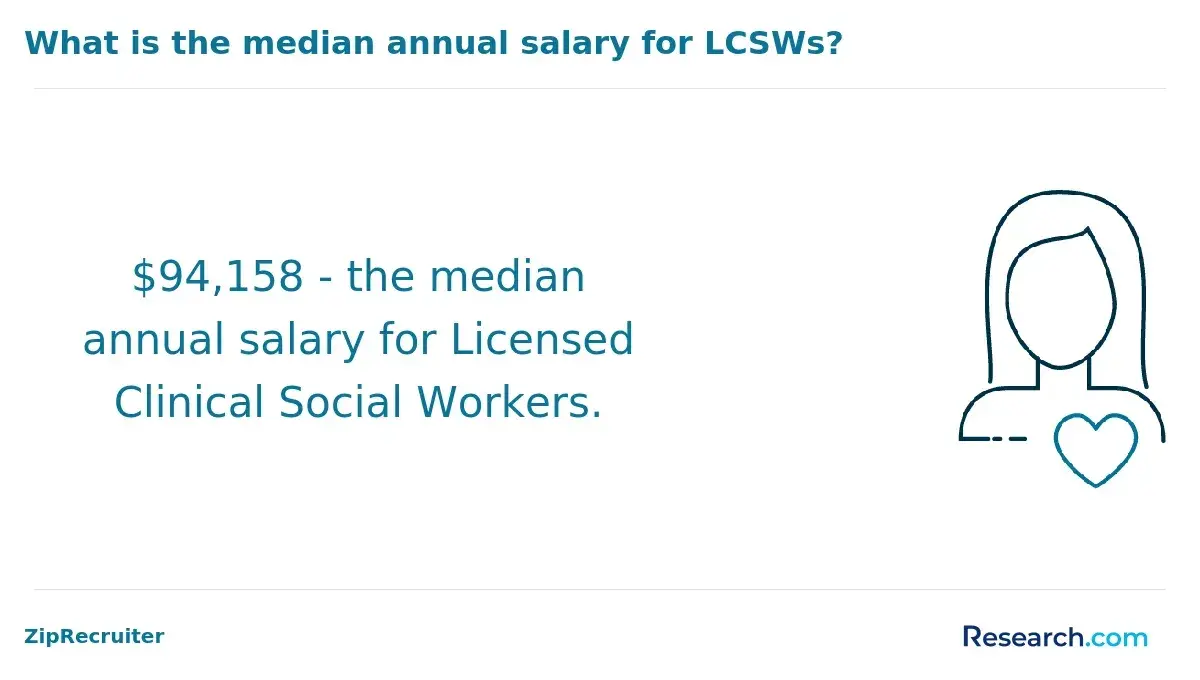
Salary depends on role, specialization, experience, licensure, employer type, and location. Entry-level roles in public agencies or non-profits generally start around $45,000 annually. Clinical social workers or those in healthcare can earn between $60,000 and $75,000, while senior administrative or policy positions may exceed $90,000. Licensure, such as LCSW, can expand job eligibility and improve earning potential.
Factors that affect MSW salary and advancement
- Licensure: Clinical licensure can open independent practice, therapy, supervisory, and higher-responsibility roles.
- Specialization: Clinical, school, healthcare, child welfare, substance use, policy, and community practice roles may have different salary ranges and hiring demand.
- Location: Urban areas may offer higher salaries, while rural areas may have stronger demand and different service needs.
- Employer type: Hospitals, government agencies, schools, nonprofits, private practices, and community organizations compensate differently.
- Experience: Supervisory, program management, and administrative responsibilities can increase compensation over time.
Students who want strong employment outcomes should choose programs that align field placements with their intended career path. For example, a student aiming for clinical work should seek supervised behavioral health or healthcare placements, while a student interested in policy or administration may benefit from nonprofit, government, or community-based settings.
What Licensing Is Required After Online MSW?
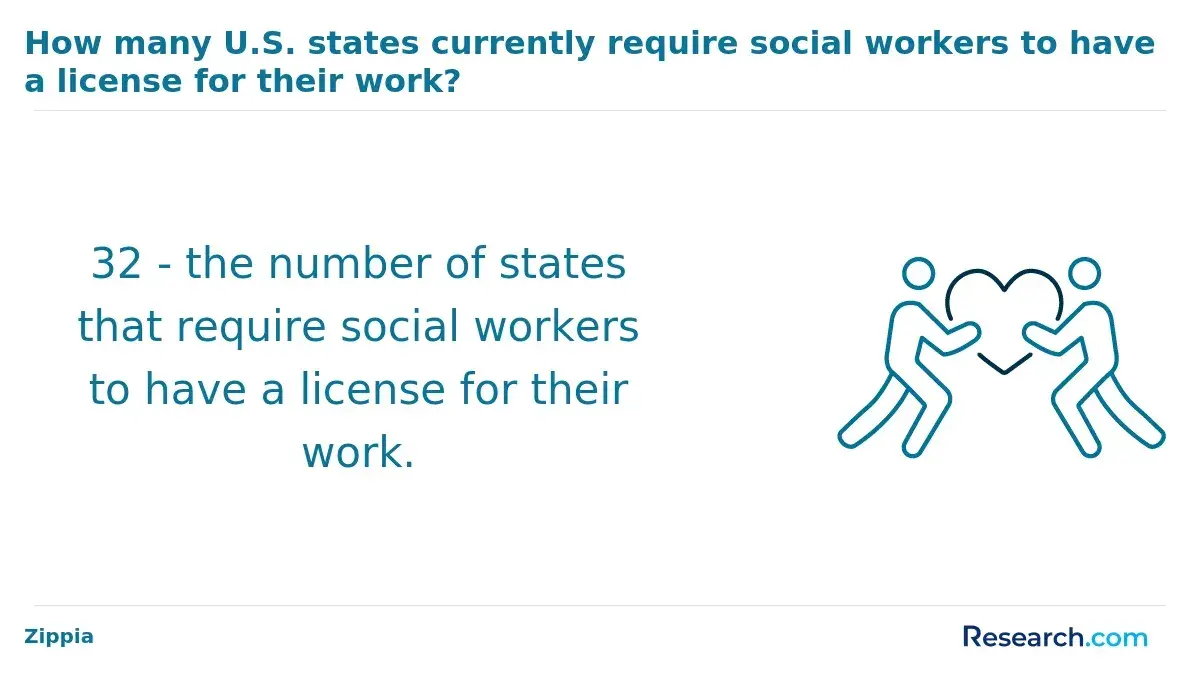
Licensing after an online MSW depends on the state and the type of social work you plan to practice. Most candidates who want to provide independent clinical services pursue credentials such as Licensed Clinical Social Worker (LCSW) or Licensed Certified Social Worker (LCSW-C). These pathways typically require a CSWE-accredited MSW, supervised post-MSW experience, and a licensing exam.
Supervised experience requirements vary by state. Many licenses require between 2,000 and 4,000 hours of supervised post-MSW fieldwork over two to three years. California requires 3,200 hours, while New York requires 3,000 hours. Because requirements differ, students should check the licensing board in the state where they intend to practice before enrolling.
Graduates must pass the Association of Social Work Boards (ASWB) clinical exam before applying for licensure. Some states also require bachelor's or master's level exams, jurisprudence exams, ethics assessments, or additional documentation.
Licensing steps to plan for
- Confirm that your MSW program is CSWE-accredited.
- Review your state licensing board’s requirements before selecting electives or field placements.
- Complete the MSW and required field education.
- Apply for the appropriate associate, provisional, or supervised practice credential if your state requires one.
- Complete the required supervised post-MSW hours.
- Pass the ASWB clinical exam and any state-specific exams.
- Submit final documentation, fees, and supervision verification to the licensing board.
The financial investment can include exam fees, application charges, renewal fees, and supervision costs. Online MSW programs with lower tuition or financial aid can reduce the total burden. For example, graduate assistantships at CSUSB lower tuition to $180-$310 per credit, potentially bringing total costs down to $6,491-$18,636.
Licensure planning should begin before admission, not after graduation. If you know where you want to practice, verify that the online MSW, field placement structure, and post-graduation supervision pathway match that state’s rules.
How to Choose the Right Online MSW Program?
To choose the right online MSW program, start with non-negotiables: CSWE accreditation, a total cost you can manage, a schedule you can realistically complete, and field placement support that works in your location. After that, compare specialization options, faculty access, student services, licensure support, and career outcomes.
Cost should be evaluated as a full investment, not a sticker price. Include tuition, fees, books, technology costs, travel, background checks, and the possible income impact of field placement hours. A program with higher tuition may still be reasonable if it offers strong placement support, predictable scheduling, and faster completion. A cheaper program may cost more in time and stress if support is weak.
Flexibility also deserves close review. Programs combining asynchronous coursework with scheduled live sessions may offer a useful balance of convenience and interaction. Hybrid models featuring synchronous elements have driven a 28% enrollment increase between 2024 and 2026, showing that many students value formats that are both adaptable and connected.
Field placement support is often the deciding factor. Ask whether the school has staff who help arrange placements, whether placements can be completed near you, how supervision is handled, and whether the program has experience supporting students in your state. This is especially important for students outside major urban areas.
Online MSW selection checklist
- Is the program CSWE-accredited?
- Does the program meet education requirements for the state where you plan to seek licensure?
- What is the full cost, including fees and field-related expenses?
- Are courses asynchronous, synchronous, hybrid, part-time, full-time, or accelerated?
- How many hours per week do students typically spend on coursework and field education?
- Who is responsible for finding and approving field placements?
- Are electives and placements available in your intended area, such as clinical, healthcare, school, community, or policy practice?
- What advising, writing, technology, mental health, and career services are available online?
- Can you speak with current students or recent graduates before enrolling?
The best choice is not always the most prestigious or the cheapest program. It is the accredited program you can afford, complete on schedule, and use to build the field experience and licensure pathway required for your social work goals.
Other Things You Should Know About Social Work
Online MSW programs in 2027 often integrate field learning by partnering with local agencies to facilitate internships. These programs typically offer virtual simulation labs, field placement coordinators, and community partnerships to ensure students gain relevant practical experience, essential for their future career in social work.
Yes, online MSW programs accredited by the Council on Social Work Education (CSWE) hold the same recognition as traditional in-person programs. Accreditation ensures academic rigor and prepares students for licensure and professional practice. Employers and licensing boards generally accept degrees from reputable online programs without distinction.
Online MSW programs in 2027 typically require a reliable internet connection, a computer with up-to-date operating systems, and software for virtual classrooms like Zoom or Blackboard. Specific requirements may vary, so check with your chosen programs for detailed technology prerequisites.
Students in online MSW programs often qualify for federal financial aid, including loans and grants, provided they attend accredited institutions. Some schools also offer scholarships, assistantships, or employer tuition reimbursement. It is important to consult the financial aid office of each program for specific opportunities and eligibility criteria.
References
- After Your MSW: A State-by-State Guide to Social Work Licensing https://www.onlinemastersdegrees.org/student-resources/social-work/license-requirements/
- Online Master’s in Social Work Programs https://onlinecounselingprograms.com/online-counseling-degrees/cswe-accredited-online-msw-programs/
- Online MSW Admissions Requirements | Tulane School of Social Work https://socialwork.tulane.edu/msw-programs/admissions/
- Most Affordable Online MSW Programs: Review Low-Cost Options https://www.degreesforgood.org/online-degrees/social-work-programs/masters-msw/most-affordable/
- Online MSW - Advanced Track https://onlinedegrees.keuka.edu/programs/msw/advanced-standing
- Online Master of Social Work https://socialwork.pacific.edu/programs/online-msw-programs
- Admission Requirements and Available Intakes https://www.uwindsor.ca/msw/401/admission-requirements
- CSWE Accreditation for the UNE Online Master of Social Work Program https://online.une.edu/blog/cswe-accreditation-for-the-une-online-master-of-social-work-program/
- Best Affordable Master's Degree In Social Work https://www.psychology.org/social-work/best-affordable-masters-programs/
- Homepage https://socialworklicensemap.com/