2027 Social Work Specializations Explained for Future MSW Students

Co-Founder and Chief Data Scientist
Choosing an MSW specialization is a career-shaping decision. The track you select can influence your field placement, licensure route, first job, client population, work setting, and long-term earning potential. A student who wants to provide therapy will need a different path than someone drawn to school systems, child welfare, healthcare, policy, or community advocacy.
This guide explains the main Master of Social Work specializations, how accreditation and licensing affect your options, what to expect from online and campus-based programs, and how to evaluate cost, curriculum, practicum quality, admissions requirements, and career outcomes. It is designed for prospective MSW students, career changers, and working professionals who want a practical way to compare programs before committing time and money.
Key Things You Should Know
- Social work specializations in 2026 include clinical, school, and healthcare social work, each with unique licensure and field requirements influencing MSW curriculum and career paths.
- Employment in specialized social work fields is projected to grow 13% from 2024 to 2034, driven by increased demand for mental health and medical social services.
- MSW students should consider specialization early, as distinct skill sets and practicum experiences directly affect job placement and professional licensure eligibility post-graduation.
What are the main specializations within Master of Social Work programs?
The main specializations within Master of Social Work programs typically fall into three broad categories: clinical practice, community practice, and policy or administration. Many programs also offer focused tracks in child and family services, school social work, healthcare, gerontology, substance use, trauma, and behavioral health. The right choice depends on whether you want to work primarily with individual clients, families, organizations, communities, or public systems.
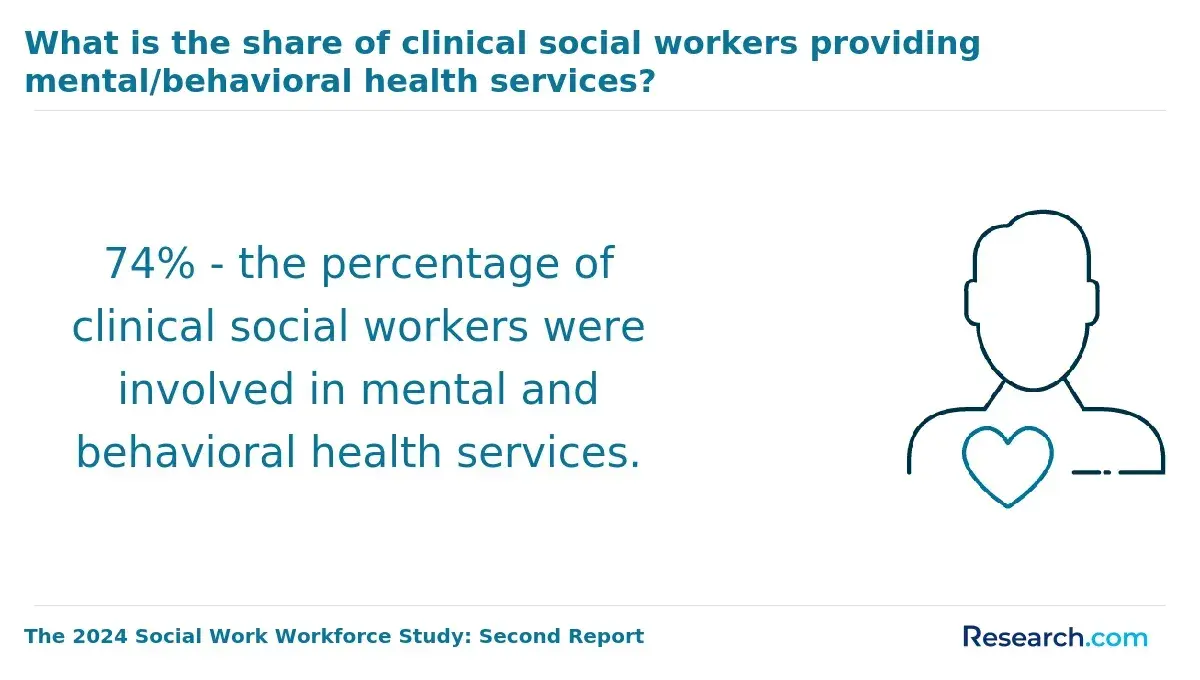
Clinical social work is the most common MSW specialization. Clinical social workers make up 59% of the licensed social work workforce and focus on assessing, diagnosing, and treating mental, emotional, and behavioral disorders. Graduates often work in mental health clinics, hospitals, community agencies, integrated care settings, or private practice after meeting state licensure requirements.
Community practice and policy-oriented specializations are built for students who want to address social problems at the systems level. These tracks emphasize advocacy, program design, community organizing, grant development, research, leadership, and policy implementation. Graduates may work for non-profits, government agencies, foundations, advocacy organizations, or public service departments.
| MSW specialization | Best fit for students who want to... | Common work settings |
| Clinical social work | Provide therapy, counseling, assessment, and behavioral health services | Mental health clinics, hospitals, private practices, community agencies |
| Community practice | Build programs, organize communities, and address systemic barriers | Non-profits, local agencies, advocacy groups, community organizations |
| Policy and administration | Manage programs, influence legislation, evaluate services, or lead agencies | Government offices, research organizations, public agencies, non-profits |
| Child, youth, and family social work | Support families, protect children, and coordinate services | Child welfare agencies, family service organizations, foster care programs |
| School social work | Support students’ social, emotional, behavioral, and family needs | PK-12 schools, school districts, youth-serving organizations |
| Geriatric social work | Serve older adults and families navigating aging-related needs | Hospitals, long-term care facilities, senior service agencies, hospice programs |
Before choosing a specialization, compare three factors: the population you want to serve, the type of daily work you prefer, and the license or credential required for your target role. A clinical track may be the best fit for therapy-focused careers, while macro-level tracks may better serve students interested in leadership, advocacy, or policy change. Students planning advanced leadership or academic roles may also explore a DSW online as a later step after the MSW.
What are the accreditation and licensing requirements for social work degrees?
For most MSW students in the United States, accreditation is the first requirement to verify. A Master of Social Work should come from a Council on Social Work Education (CSWE)-accredited program because CSWE accreditation confirms that the curriculum, field education, faculty qualifications, and professional competencies meet recognized social work standards. Without this accreditation, licensure eligibility and employment options can be severely limited.
Licensing rules are set by each state, so students should check requirements in the state where they plan to practice. In general, master’s-level social work licensure requires a CSWE-accredited MSW, completion of supervised experience when required, and a passing score on the relevant professional exam. Supervised clinical experience typically ranges between 2,000 and 4,000 hours over two to three years.
The two most common license categories are the Licensed Master Social Worker (LMSW) and the Licensed Clinical Social Worker (LCSW). The LMSW generally allows supervised practice or non-clinical master’s-level practice, depending on the state. The LCSW usually permits independent clinical practice, including therapy and diagnosis where allowed by state scope-of-practice rules. Some states use different titles, such as Licensed Certified Social Worker (LCSW-C) or Licensed Independent Social Worker (LISW), with similar but state-specific scopes.
Licensure is not a one-time step. Social workers must renew their licenses and complete continuing education. This is especially important for specialized fields such as mental health social work, where demand has grown by 22% over the last decade (ZipDo, 2025).
- Choose a CSWE-accredited MSW program before enrolling.
- Confirm whether your target state requires LMSW, LCSW, LISW, LCSW-C, or another title.
- Plan for supervised clinical hours if you want independent clinical practice.
- Prepare for your state’s required social work licensing exam.
- Track continuing education requirements for license renewal.
A common mistake is choosing a program based only on convenience or tuition without checking whether it supports the license you need. If affordability is a major concern, compare options through this guide on how much does a masters in social work cost.
How do online and campus-based MSW programs differ in curriculum and outcomes?
Online and campus-based MSW programs can lead to similar academic outcomes when both are CSWE-accredited, but they differ in delivery format, student experience, networking, and practicum logistics. The curriculum usually covers the same core competencies: human behavior, social welfare policy, research, ethics, practice methods, diversity, and field education. The bigger difference is how students learn, build relationships, and complete supervised fieldwork.
Campus-based MSW programs provide face-to-face instruction, live classroom discussion, immediate access to faculty, and stronger informal networking with peers. Students may also benefit from campus resources such as libraries, advising offices, counseling centers, career events, and established local field placement relationships. This format can be valuable for students who learn best through direct interaction and structured schedules.
Online MSW programs are designed for flexibility. They can work well for students balancing employment, caregiving, military service, relocation limits, or rural access issues. Many online programs use a mix of asynchronous coursework, live virtual classes, simulations, discussion boards, and remote advising. However, online students must be disciplined with time management and should ask detailed questions about how field placements are secured in their local area.
| Factor | Online MSW | Campus-based MSW |
| Schedule | More flexible; often better for working adults | More structured; set class times and campus expectations |
| Networking | Depends heavily on virtual engagement and program support | Often stronger for local relationships and peer interaction |
| Field placement | May require more coordination if placements are remote or local to the student | Often tied to established regional agency partnerships |
| Learning style | Best for self-directed students comfortable with technology | Best for students who prefer in-person discussion and accountability |
| Employer perception | Generally accepted when the program is accredited and reputable | Traditional format with familiar local recognition |
Program quality matters more than format. Students should verify accreditation, field placement support, faculty access, licensure alignment, and graduate outcomes. Those interested in school social work should pay special attention to programs with strong school district relationships. No state currently meets the recommended ratio of one school social worker per 250 PK-12 students, which underscores ongoing demand but also the importance of preparation for school-based practice.
If income by location is part of your decision, review this resource on where do lcsw make the most money before choosing a program and licensure path.
What are typical admission requirements and prerequisites for MSW programs?
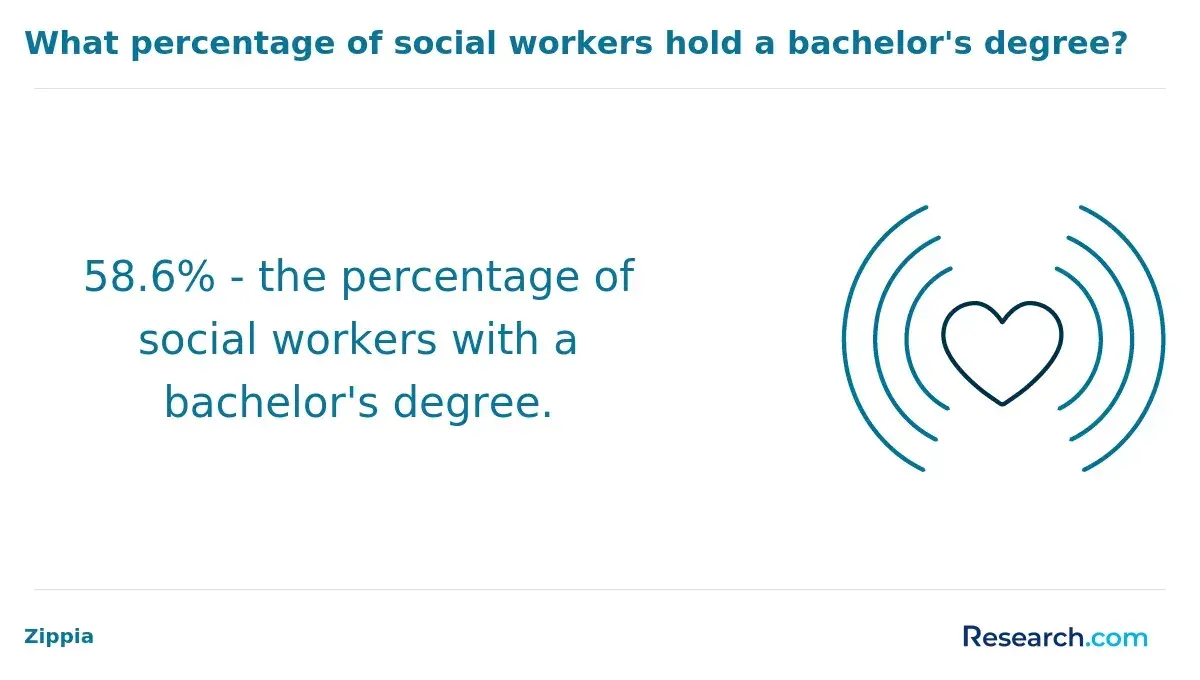
Typical MSW admission requirements include a bachelor’s degree from an accredited institution, transcripts, a personal statement, letters of recommendation, a resume, and evidence of readiness for graduate-level study. A Bachelor of Social Work (BSW) is not always required, but applicants with a BSW from an accredited program may qualify for advanced standing options that shorten the time to degree.
Applicants without a BSW may need prerequisite or foundational coursework in areas such as human behavior, social welfare policy, research methods, psychology, sociology, or statistics. Some programs require this coursework before admission, while others embed it in the first phase of the MSW. Many institutions set a minimum undergraduate GPA, commonly around 3.0, although requirements vary by program competitiveness.
Most programs ask for two or three letters of recommendation from professors, supervisors, volunteer coordinators, or professionals who can speak to the applicant’s judgment, writing ability, ethics, maturity, and service experience. The personal statement is especially important because it helps admissions committees understand why the applicant wants to enter social work and whether their goals match the program’s strengths.
Relevant experience can strengthen an application. This may include internships, case management work, crisis hotline service, advocacy, behavioral health support, AmeriCorps-style service, domestic violence program work, youth mentoring, healthcare support roles, or volunteer experience with community organizations. Applicants interested in geriatric social work, for example, should explain their understanding of aging-related needs, a field that has seen a 10% rise in specialization demand between 2015 and 2020 (ZipDo, 2025).
- Academic records: Official transcripts and proof of a completed bachelor’s degree.
- GPA: Often around 3.0, depending on the program.
- Recommendations: Usually two or three letters from academic or professional references.
- Personal statement: A focused essay explaining career goals, readiness, and fit.
- Resume: Documentation of paid, volunteer, internship, or community service experience.
- Testing: Some programs still require GRE scores, but many waive them for qualified applicants.
- International applicants: English proficiency exams such as TOEFL or IELTS may be required.
- Field placement readiness: Background checks and immunization records are often required before practicum work begins.
Students who are concerned about competitiveness can compare MSW programs with high acceptance rate, but they should still prioritize accreditation, field placement quality, and licensure alignment over ease of admission alone.
How long does an MSW program take, and what are typical tuition costs?
A traditional full-time MSW program generally takes two years to complete. Part-time options often take three or four years and are designed for students who need to continue working or manage family responsibilities. Accelerated tracks may take 12-18 months, but they usually require prior social work coursework or a Bachelor of Social Work. Advanced standing options are available for BSW holders and can shorten the pathway to completion.
Tuition varies widely by institution type, residency status, delivery format, and program length. Public universities charge between $10,000 and $20,000 annually for in-state students, while out-of-state and private institutions can run from $25,000 to $50,000 per year. Online programs often fall within similar ranges, though they may reduce commuting, relocation, or campus-related costs. Students should also budget for technology fees, field placement requirements, books, background checks, transportation, and licensure exam costs.
| Program format | Typical time to completion | Best fit |
| Traditional full-time MSW | Two years | Students who can study full time and want a standard pace |
| Part-time MSW | Three or four years | Working professionals and students with major personal commitments |
| Accelerated MSW | 12-18 months | Students prepared for an intensive schedule and eligible prior coursework |
| Advanced standing MSW | Shorter than the traditional route | Students who already hold a BSW |
Financial aid can significantly affect the final cost. Students should compare scholarships, grants, federal aid, employer tuition assistance, assistantships, public service loan options, and agency-based stipends where available. The lowest tuition is not always the best value if a program has weak field placement support or does not align with your intended license.
Specialized training can also affect career readiness. Research from ZipDo (2025) reports specialists in trauma and crisis intervention feel 85% prepared compared to generalists, which highlights the practical value of focused coursework when it matches your career goals. When comparing programs, weigh duration, cost, specialization, field placement quality, and licensure outcomes together rather than treating tuition as the only deciding factor.
What career paths and job roles do MSW graduates pursue after graduation?
MSW graduates pursue roles in clinical practice, healthcare, behavioral health, schools, child welfare, aging services, community organizations, policy, advocacy, research, and administration. The degree is flexible, but the best job options depend on specialization, field placement experience, licensure status, and the population a graduate is prepared to serve.
Clinical and behavioral health roles are among the most recognized MSW pathways. Many graduates work toward becoming licensed clinical social workers (LCSWs), providing therapy, counseling, crisis support, substance use treatment, trauma-informed care, and mental health assessment in hospitals, community clinics, private practices, and integrated care settings. Independent clinical roles generally require supervised post-graduate experience and state licensure.
Healthcare social workers help patients and families navigate illness, disability, discharge planning, chronic conditions, palliative care, insurance barriers, and community resources. These roles require strong case coordination, communication, and crisis-management skills. Child welfare and family service roles include case managers, foster care coordinators, adoption specialists, family preservation workers, and child protection staff.
School social workers collaborate with teachers, administrators, families, and community providers to address attendance, behavioral concerns, trauma, family instability, disability-related needs, and student well-being. Gerontological social workers support older adults and caregivers through counseling, resource navigation, long-term care planning, and end-of-life services.
Graduates interested in systems change may enter policy, advocacy, research, program evaluation, grant management, or agency leadership. These roles often require skills in data analysis, communication, coalition-building, budgeting, public policy, and organizational management.
- Clinical social worker providing mental health services
- Healthcare social worker coordinating patient support
- Child welfare case manager or family service worker
- School social worker addressing student needs
- Gerontological social worker supporting older adults
- Policy analyst or community organizer advocating for social change
- Program manager or administrator in a social service agency
- Substance use or behavioral health counselor in approved settings
Students should work backward from their desired role. If the goal is therapy, prioritize clinical coursework, supervised placements, and LCSW eligibility. If the goal is public systems change, choose programs with policy, administration, research, or community practice depth. If the goal is school, healthcare, or child welfare practice, seek field placements in those environments before graduation.
What is the job outlook and salary potential for social work professionals?
The job outlook for social work professionals is strong, with a 12% growth rate from 2024 to 2034 according to the U.S. Bureau of Labor Statistics. Demand is driven by needs in healthcare, mental health, schools, aging services, substance use treatment, and community-based support systems. Job prospects are often strongest for graduates with licensure, specialized field experience, and willingness to work in high-need settings.
Salary potential varies by specialization, employer, location, license, and years of experience. The median annual wage is around $60,000, with clinical and healthcare social workers earning between $65,000 and $90,000. Roles in hospitals, behavioral health systems, urban service markets, and licensed clinical practice may offer stronger earning potential than some entry-level nonprofit or case management roles.
Policy and macro social work roles can start with lower salaries, and only 5% of graduates pursue these roles immediately, based on WifiTalents data. However, macro social work can lead to long-term opportunities in leadership, research, public policy, program management, and executive administration. Students considering this path should build skills in budgeting, data analysis, grant writing, policy research, and stakeholder communication.
| Career direction | Salary and outlook considerations | How to improve competitiveness |
| Clinical social work | Often higher salary potential after independent licensure | Pursue LCSW eligibility, strong clinical supervision, and behavioral health experience |
| Healthcare social work | Can offer stronger pay in hospital and medical settings | Complete fieldwork in hospitals, palliative care, discharge planning, or integrated care |
| School social work | School social workers earn about $57,000 with stable employment in public systems | Choose school-based placements and verify state school social work credential rules |
| Child and family social work | Broad availability, but often lower pay in nonprofit and public service settings | Build experience in child welfare, family systems, trauma, and mandated reporting |
| Policy and macro practice | May start lower but can lead to leadership and research opportunities | Develop public policy, program evaluation, law, administration, and networking skills |
To improve salary potential, MSW graduates should pursue the license required for their target role, choose field placements strategically, document specialized training, and consider settings where demand is highest. Location also matters; salaries can differ substantially by state, urban area, employer type, and cost of living.
What core coursework and practicum requirements are included in MSW curricula?
MSW curricula combine classroom study with supervised field education. The academic side builds the knowledge base for ethical practice, while the practicum develops applied skills with real clients, organizations, and communities. A strong curriculum should prepare students for both generalist practice and advanced specialization.
Core coursework typically includes human behavior, social welfare policy, research methods, ethics, diversity and oppression, practice with individuals and families, group work, community practice, and organizational systems. Clinical tracks may add assessment, diagnosis, treatment planning, trauma-informed practice, substance use, and evidence-based interventions. Macro tracks may include program evaluation, advocacy, administration, budgeting, leadership, and policy analysis.
Practicum requirements usually involve 900 to 1,200 supervised hours in approved settings such as hospitals, schools, child welfare agencies, mental health clinics, community organizations, substance use programs, or government agencies. These placements are not simply internships; they are a central part of professional training. Students are expected to demonstrate assessment, intervention, documentation, ethical decision-making, advocacy, cultural responsiveness, and professional communication.
| Curriculum component | What students learn | Why it matters |
| Human behavior and social environment | How individuals, families, groups, and systems develop and interact | Supports assessment and intervention planning |
| Social welfare policy | How laws, benefits, institutions, and public systems affect clients | Prepares students for advocacy and systems navigation |
| Research methods | How to interpret evidence, evaluate programs, and apply data | Strengthens evidence-based practice |
| Ethics and professional practice | Boundaries, confidentiality, mandated reporting, and professional standards | Protects clients and guides responsible decision-making |
| Field practicum | Supervised practice in real-world settings | Builds competence, confidence, and employability |
According to the Bureau of Labor Statistics, social worker employment is projected to grow by 6% from 2024 to 2034, creating roughly 74,000 new job openings annually. This projected demand makes field readiness important. Students should ask programs how placements are assigned, whether placements match specialization goals, how supervision is handled, and what happens if a placement does not meet learning needs.
Because CSWE accreditation is tied to curricular and field education standards, students should verify accreditation before enrolling. Early planning is especially important for students targeting clinical, school, healthcare, or child welfare roles, where placement experience can directly influence job readiness after graduation.
How do I choose between CSWE-accredited programs and evaluate program quality?
Start by limiting your search to CSWE-accredited MSW programs. CSWE accreditation is essential because the Council on Social Work Education is the only accrediting body recognized by the U.S. Department of Education for social work education. It indicates that a program follows professional competencies, ethical guidelines, curriculum expectations, and field education requirements. In many states, a non-accredited MSW can create serious barriers to licensure and employment.
After confirming accreditation, evaluate program quality rather than relying only on rankings, tuition, or convenience. The strongest programs align coursework, practicum placements, faculty expertise, advising, and licensure preparation with the career outcomes students are seeking.
- Field placement strength: Ask where students are placed, how placements are secured, and whether placements match clinical, school, healthcare, child welfare, or policy interests.
- Licensure outcomes: Review LMSW licensure pass rates where available and ask how the curriculum prepares students for state exams.
- Faculty expertise: Look for faculty with doctoral degrees in social work or related fields, active practice experience, research, or specialization in your area of interest.
- Student support: Compare advising, writing support, field education staff, career services, mental health resources, and support for online students.
- Graduation outcomes: Review graduation rates, alumni employment patterns, employer partnerships, and graduate testimonials when available.
- Format and flexibility: Decide whether full-time, part-time, online, hybrid, or campus-based study best fits your schedule and learning style.
- Total cost: Compare tuition, fees, travel, technology, lost work time, and financial aid rather than tuition alone.
Cost should be weighed against outcomes. The median annual wage for social workers is $61,330, so students should be realistic about borrowing and repayment. Scholarships, grants, assistantships, employer tuition support, and public service-focused aid can help reduce the financial burden.
A good program should be able to answer practical questions clearly: Will this degree meet licensure requirements in my state? How are field placements approved? What support is available if I am an online student? What percentage of graduates pass licensing exams? Which agencies regularly host students? If a program cannot provide transparent answers, continue comparing options.
For more details on accreditation and professional standards, visit the Council on Social Work Education.
What professional certifications and credentials can social workers pursue after their MSW?
After earning an MSW, social workers can pursue state licensure and optional professional certifications that demonstrate specialized expertise. The most widely recognized credential for independent clinical practice is the Licensed Clinical Social Worker (LCSW). Earning the LCSW typically requires supervised clinical hours, a passing score on a state licensing exam, and ongoing continuing education, although exact requirements vary by state.
Licensure and certification are not the same. Licensure is issued by a state and determines legal scope of practice. Certifications are usually professional credentials that signal advanced knowledge in a specialty area. Some roles require state licensure, while certifications may improve competitiveness, credibility, or access to specialized positions.
| Credential | Purpose | Best fit |
| Licensed Clinical Social Worker (LCSW) | Allows independent clinical practice where permitted by state law | MSW graduates seeking therapy, diagnosis, and private practice pathways |
| Certified Advanced Social Work Case Manager (C-ASWCM) | Recognizes advanced case management expertise | Social workers managing complex client needs and service systems |
| Certified School Social Work Specialist (C-SSWS) | Supports specialization in educational settings | Social workers serving students, families, and school communities |
| Diplomate in Clinical Social Work (DCSW) | Signals advanced clinical social work competence through the National Association of Social Workers (NASW) | Experienced clinicians seeking professional recognition |
| Certified Hospice and Palliative Nurse Social Worker (CHPNSW) | Supports end-of-life and palliative care roles | Social workers in hospice, palliative care, and serious illness settings |
Other targeted credentials may focus on child welfare, gerontology, substance abuse counseling, healthcare, trauma, or case management. Requirements often include documented practice hours, formal training, exams, supervision, or continuing education. Because rules vary by state and credentialing body, graduates should verify requirements before paying for a certification program.
- Credentials can strengthen professional legitimacy.
- They may improve employment prospects and salary potential.
- They help demonstrate specialized preparation in competitive practice areas.
According to ZipDo (2025), licensed clinical social workers increased by 15% from 2010 to 2020, reflecting the growing need for recognized expertise across social work practice areas. The best credential is the one that matches your actual career goal: clinical practice, school services, healthcare, hospice, case management, or another specialized field.
Other Things You Should Know About Social Work
Yes, for certain specializations like clinical social work, passing the Association of Social Work Boards (ASWB) exam is required in 2027 to obtain licensure. Each specialization may have its own certification requirements linked to relevant professional bodies.
Social workers must adhere to a strict code of ethics that emphasizes client confidentiality, respect for client autonomy, and professional integrity. They are responsible for maintaining boundaries while advocating for social justice and fairness. Ethical dilemmas often require careful reflection and consultation with colleagues or supervisors.
In 2027, MSW students can specialize in areas such as clinical social work, school social work, healthcare social work, and social work administration. These specializations focus on providing targeted skills and knowledge to address specific community needs and professional environments.
References
- 8 Career Paths You Can Pursue with a Social Work Degree https://www.sacredheart.edu/news-room/news-listing/8-career-paths-you-can-pursue-with-a-social-work-degree/
- Master of Social Work Programs https://socialworklicensemap.com/social-work-degrees/master-of-social-work-programs/
- Accreditation | CASWE-ACFTS https://caswe-acfts.ca/our-activities/accreditation/
- Types of Social Workers: Exploring the Many Fields in Which They Serve https://www.umassglobal.edu/blog-news/types-of-social-workers
- Credentials & Certifications https://www.socialworkers.org/Careers/CredentialsCertifications
- Master of Social Work - Wikipedia https://en.wikipedia.org/wiki/Master_of_Social_Work
- Accreditation and/or licensing requirements | SWTP https://socialworktestprep.com/blog/2024/october/25/accreditation-and-or-licensing-requirements/
- The Evolution of Online Social Work Education https://www.socialworktoday.com/news/enews_0317_1.shtml
- Social Worker Certifications: Best Credentials to Advance Your Career | Teal https://www.tealhq.com/career-paths/social-worker-certifications
- California Master of Social Work Degree Specializations https://www.californiasocialworkedu.org/california-master-of-social-work-degree-specializations/