2027 Social Work Licensing Exams Explained for MSW Students

Co-Founder and Chief Data Scientist
Licensure is the point where an MSW degree becomes permission to practice in a specific role. For many students, the difficult part is not only passing an exam; it is knowing which exam applies, when to apply, what supervised experience is required, and how state rules affect the path from graduation to employment.
This guide explains the main social work licensing exams MSW students and graduates encounter, how ASWB exam levels differ, what CSWE accreditation means for eligibility, and how credentials such as LSW, LMSW, and LCSW connect to career options. It also highlights preparation strategies, common planning mistakes, and program-selection factors that can reduce delays in licensure.
Key Things You Should Know
- The 2026 social work licensing exams include the ASWB Bachelor's, Master's, Advanced Generalist, and Clinical exams, required for state licensure and career advancement.
- Passing rates for the 2024 Master's level exam averaged 70%, reflecting stable national trends and emphasizing thorough preparation for clinical practice eligibility.
- Updated exam content focuses on evidence-based practices, ethics, and diversity, aligning with evolving state requirements to ensure competent, culturally responsive social work professionals.
What are social work licensing exams for MSW students?
Social work licensing exams are standardized tests used by state licensing boards to determine whether a candidate has the knowledge, judgment, and ethical foundation needed for professional practice. For MSW graduates, these exams are most often administered through the Association of Social Work Boards (ASWB), although eligibility rules and final licensing decisions are set by each state.
The key decision for MSW students is which license they are pursuing. Students who want to provide therapy, diagnose mental health conditions where permitted, and eventually practice independently usually follow a clinical licensure path. Students aiming for leadership, administration, policy, program management, or community practice may follow a nonclinical or advanced generalist path, depending on state rules.
MSW students primarily encounter two advanced exam pathways: the Clinical exam and the Advanced Generalist exam. The Clinical exam is designed for candidates seeking clinical social work licensure and focuses on assessment, diagnosis, treatment planning, intervention, evaluation, ethics, and professional judgment. The Advanced Generalist exam is aimed at broader advanced practice roles, including administration, supervision, advocacy, policy, and community-based work.
| Exam pathway | Best fit | Main focus |
| Clinical | MSW graduates pursuing clinical social work licensure | Assessment, diagnosis, treatment, intervention, ethics, and clinical decision-making |
| Advanced Generalist | MSW graduates pursuing advanced nonclinical or broader practice roles where recognized | Leadership, policy, supervision, administration, advocacy, and systems-level practice |
The distinction matters because choosing the wrong pathway can delay licensure, employment, or eligibility for independent practice. A candidate planning to provide psychotherapy typically prepares for the Clinical exam after completing required supervised experience. A candidate interested in agency leadership or macro-level work may need to understand whether the Advanced Generalist exam is accepted or required in their state.
Pass rates also show why exam choice and preparation should be taken seriously. The Clinical exam has a 75.3% first-time pass rate, while the Advanced Generalist exam has a 50.0% first-time pass rate. These figures do not mean one career path is automatically better than another, but they do show that candidates should study from the correct exam blueprint, practice timed questions, and build a plan around the competencies tested.
Students considering long-term academic, leadership, or research careers may also explore whether an online PhD in social work fits their goals after licensure and professional experience.
Which licensing exams must MSW graduates pass?
MSW graduates generally need to pass an ASWB exam that matches the license they are seeking. The exact exam depends on state law, the applicant’s education level, and whether the license allows clinical practice, nonclinical practice, supervised practice, or independent practice.
The main ASWB exam categories commonly referenced in social work licensing are:
- Bachelor's Level, for BSW degree holders seeking licensure as LBSW or an equivalent credential.
- Master's Level, the most common exam for MSW graduates pursuing LMSW or similar master’s-level licensure.
- Clinical Level, usually required for LCSW or clinical social worker licensure after supervised clinical experience.
- Advanced Generalist, used less frequently and typically connected to broader advanced practice roles.
For many MSW graduates, the first licensing step is the Master's Level exam. Passing it may qualify a candidate for a master’s-level license, such as LMSW, depending on the state. This license often allows professional social work practice under defined limits, but it usually does not authorize fully independent clinical practice.
The Clinical Level exam usually comes later. Candidates often need to complete two to three years or 3,000 hours of supervised clinical experience before becoming eligible for LCSW licensure. Some states also require jurisprudence exams, background checks, specific coursework, or board approval before a candidate can register for the exam.
| Typical stage | Common exam | Common outcome |
| After earning an MSW | Master's Level | Eligibility for LMSW or a similar master’s-level credential, depending on the state |
| After supervised clinical experience | Clinical Level | Eligibility for LCSW or a similar independent clinical credential, depending on the state |
| Advanced nonclinical practice where recognized | Advanced Generalist | Eligibility for a broader advanced practice credential in states that use this pathway |
State rules can differ substantially. In New York, an MSW graduate must pass the Master's Level exam for LMSW licensure and later the Clinical Level exam for LCSW status. California requires passing the Clinical Level exam after provisional licensing. Because rules change and vary by jurisdiction, candidates should confirm requirements directly with the licensing board in the state where they plan to practice.
Program preparation can also affect outcomes. Tulane School of Social Work reported an 84% pass rate on these licensing exams, surpassing Louisiana's 61% and the North American average of 73%. Prospective students comparing cost and licensure preparation may want to review the cheapest MSW programs while also checking accreditation, field placement quality, and exam support.
What are ASWB exam levels and requirements?
ASWB exam levels are tied to different points in a social work career. The exam a candidate takes is not chosen only by preference; it must match the license type approved by the state licensing board. MSW students should therefore read both the ASWB exam description and their state board’s eligibility rules before applying.
Commonly referenced ASWB exam levels and related licensing uses include:
- Associate level, for candidates seeking an entry or associate-level credential where a state recognizes that pathway.
- Basic level, a term sometimes used in older or state-specific discussions for initial licensure connected to foundational practice.
- Master's level, designed for Master of Social Work graduates pursuing licensed social worker credentials at the graduate level.
- Clinical level, for MSW graduates who have completed supervised clinical experience and seek independent clinical practice authority.
In practice, requirements usually combine education, board approval, supervised experience, and an exam. A master’s-level license typically requires an MSW from an eligible program and a passing score on the appropriate exam. Clinical licensure generally adds post-degree supervised clinical hours, often usually 2,000 to 4,000, before the candidate can sit for the Clinical exam or receive the clinical license.
The Clinical exam requires strong preparation in diagnosis, assessment, safety planning, intervention selection, therapeutic relationships, ethics, and documentation. Field education and supervised practice are especially important because the exam often tests judgment rather than simple recall.
Pass-rate data also show that access to preparation is not equal across all candidate groups. Between 2018 and 2021, white candidates passed the clinical exam on their first attempt 83.9% of the time, compared to 45% of Black candidates, according to the Association of Social Work Boards 2022 Pass Rate Analysis. Candidates should not interpret these disparities as individual deficits. They point to the importance of fair preparation resources, transparent advising, mentoring, study groups, and institutional support.
Before registering, candidates should complete a basic eligibility check:
- Confirm that the MSW program meets the state board’s education requirements.
- Identify the exact license title being pursued.
- Verify whether supervised hours are required before exam approval.
- Check whether the state requires a jurisprudence exam, background check, or additional application materials.
- Use the correct ASWB exam blueprint for the required level.
Licensure can also affect earnings by state and setting. Candidates comparing career outcomes can review how lcsw therapist salary varies by location, experience, and role.
How to prepare effectively for social work licensing exams?
Effective preparation starts with the correct exam blueprint. Social work licensing exams are not general knowledge tests; they assess defined competencies, professional reasoning, ethics, and the ability to choose the best answer among plausible options. A strong study plan should match the specific ASWB exam level required by the candidate’s license.
Most candidates should begin by downloading the official ASWB exam content outline and using it to organize study time. High-yield areas commonly include human development, diversity and cultural responsiveness, assessment, intervention planning, ethics, professional values, documentation, and safety-related decision-making.
Build a study plan that matches the exam
A practical preparation window is 8 to 12 weeks, with 1 to 2 hours daily for focused study. Candidates who have been out of school longer, are working full time, or are retaking the exam may need a longer timeline. The goal is not to memorize every social work concept, but to build accuracy, pacing, and judgment under timed conditions.
- Start with the official exam outline and mark weak areas.
- Use timed practice questions early, not only at the end.
- Review explanations for both correct and incorrect answers.
- Track missed questions by topic to identify patterns.
- Schedule full-length practice exams to build stamina and pacing.
- Study ethics and professional responsibility repeatedly, because these concepts appear across many scenarios.
Use practice questions the right way
Practice questions are most useful when candidates analyze why an answer is best. Many ASWB-style questions ask for the first, best, or most ethical response. That means two answers may look reasonable, but only one fits the professional priority in the scenario. Candidates should pay attention to wording such as safety risk, client self-determination, mandated reporting, supervision, confidentiality, and scope of practice.
In 2024, the Masters exam had a 73.0% pass rate among 20,566 first-time candidates. That figure suggests that many candidates pass on the first try, but the exam is still challenging enough to require deliberate preparation.
Reduce exam-day risk
Preparation should include logistics as well as content. Candidates should confirm testing location, identification requirements, appointment time, permitted items, break policies, and rescheduling rules before exam day. Small administrative mistakes can create unnecessary stress or even prevent a candidate from testing.
For students still deciding whether the field is a good fit, understanding the licensing process is part of answering whether is social work a good major for their career goals, finances, and tolerance for regulated professional requirements.
What MSW degree requirements lead to exam eligibility?
Exam eligibility usually begins with earning an MSW from a program that meets state licensing standards. In 2026, the safest route for most students is a master's degree in social work from a program accredited by the Council on Social Work Education (CSWE), because state boards commonly use CSWE accreditation as the education benchmark for licensure.
An eligible MSW program should include graduate social work coursework, field education, and preparation in core professional competencies. These typically connect to the same areas tested in licensing exams: human behavior, social welfare policy, ethics, assessment, intervention, research-informed practice, diversity, and professional practice with individuals, families, groups, organizations, or communities.
Clinical licensure usually requires more than the degree. Many states require supervised clinical hours during and/or after the MSW program. Licensed clinical social workers often need between 2,000 and 4,000 supervised hours, but the exact number, supervisor qualifications, documentation rules, and allowed practice settings vary by state.
Students in part-time, online, or hybrid MSW programs can still be eligible for licensure if the program is CSWE-accredited and satisfies the state board’s requirements. Format alone is not the issue; accreditation, curriculum, field placement quality, and compliance with state rules matter more. Non-accredited programs generally create serious licensure barriers and may disqualify candidates from standard exam eligibility.
| Requirement | Why it matters |
| CSWE-accredited MSW | Often required by state boards for exam and license eligibility |
| Required coursework | Builds knowledge tested on licensing exams and required for professional practice |
| Field education | Provides supervised practice experience tied to social work competencies |
| Post-degree supervised hours | Commonly required for clinical licensure and independent practice authority |
| Board application materials | Usually include transcripts, supervision documentation, fees, and other state-specific forms |
Exam success rates also vary by age and recency of education. Data from the Association of Social Work Boards show that first-time pass rates on the Clinical exam were 80.1% for ages 18-29 and dropped to 62.8% for those over 50 from 2018 to 2021. Candidates who have been away from academic testing for several years may benefit from a longer preparation period and more structured review.
Applicants should expect to submit proof of graduation from an accredited MSW program and documentation of required supervised experience when applying for exam approval or licensure. Because state boards control eligibility, students should check requirements before enrolling, before choosing a field placement, and before beginning post-degree supervision.
Which CSWE-accredited MSW programs qualify for licensing?
MSW programs accredited by the Council on Social Work Education generally qualify graduates for the education portion of social work licensure in most states. CSWE accreditation signals that the program meets national standards for curriculum, field education, faculty qualifications, and professional competencies. For licensing purposes, this accreditation is often more important than whether the program is online, hybrid, or campus-based.
Students should verify accreditation before applying and again before enrolling. A program may be accredited, in candidacy, or not accredited, and those distinctions can affect licensing options. The most reliable source is the official CSWE directory, followed by written confirmation from the state licensing board where the student plans to practice.
CSWE accreditation does not automatically guarantee every licensure requirement is complete. States may also require specific coursework, supervised post-graduate clinical experience, a jurisprudence exam, background checks, or additional documentation. This is especially important for students who study in one state but plan to practice in another.
What to confirm before choosing a program
- Current CSWE accreditation status, not only the school’s general institutional accreditation.
- Whether the curriculum meets the licensing requirements of the state where you plan to practice.
- Availability of field placements that align with your intended license, especially clinical placements for future LCSW candidates.
- Licensure advising for online and out-of-state students.
- Support for documenting supervised hours and preparing for ASWB exams.
Graduates of non-CSWE-accredited programs often face more complicated alternative pathways, and in some states they may not be eligible for standard licensure. Before accepting admission to any program, applicants should ask the school for clear information on licensure eligibility and then confirm that information with the relevant state board.
Data from the Association of Social Work Boards highlight that states with larger annual test-taker populations, such as Maine, Wisconsin, and Minnesota, consistently show high first-time and eventual pass rates on ASWB exams. While pass rates should not be the only measure of program quality, they can help students ask better questions about advising, exam preparation, and graduate outcomes.
What are LSW, LMSW, and LCSW licensure differences?
LSW, LMSW, and LCSW credentials represent different levels of authority, education, supervision, and scope of practice. The exact names and permissions vary by state, but the progression usually moves from entry or supervised practice to master’s-level practice and then to independent clinical practice.
| Credential | Typical education | Typical practice authority | Best fit |
| LSW | Often a BSW, depending on state rules | Supervised or entry-level social work practice with limited autonomy | Case management, community services, intake, advocacy, and agency-based roles |
| LMSW | MSW | Master’s-level social work practice, often with limits on independent clinical services | Advanced direct practice, program work, supervised clinical practice, and nonclinical roles |
| LCSW | MSW plus supervised clinical experience | Independent clinical practice where permitted, including diagnosis and treatment | Therapy, mental health practice, private practice, healthcare, and clinical supervision pathways |
The Licensed Social Worker credential is typically an entry point. It often requires a bachelor's degree in social work and a foundational exam. LSWs may work in agencies, nonprofit organizations, public programs, and case management settings, usually with supervision and a narrower scope than master’s-level or clinical licensees.
The Licensed Master Social Worker credential usually requires an MSW and a master’s-level exam. LMSWs can often take on more advanced responsibilities, but they usually cannot provide independent clinical therapy or clinical supervision without additional authorization. For many graduates, the LMSW is the bridge between earning the MSW and completing supervised hours for clinical licensure.
The Licensed Clinical Social Worker credential is commonly the highest clinical practice license. It requires an MSW, supervised clinical experience, and a passing score on the clinical exam. LCSWs may diagnose and treat mental health conditions independently where state law allows, and many work in psychotherapy, hospitals, behavioral health agencies, schools, and private practice.
Data from the University of Michigan School of Social Work shows a 93% pass rate on the LMSW exam and 77% on the clinical exam, reflecting the increased rigor and expectations from LMSW to LCSW levels.
The right credential depends on the work you want to do. Students who want agency-based or supervised practice may not need the same pathway as students who want to provide independent psychotherapy. Students who want maximum clinical mobility should plan early for the LCSW requirements in the state where they intend to practice.
What career paths and salaries follow passing exams?
Passing the required licensing exam can expand the roles an MSW graduate may legally hold, especially in clinical, healthcare, school, government, and nonprofit settings. Licensure can also affect eligibility for insurance reimbursement, supervision roles, private practice, and jobs that require protected professional titles.
Licensed Clinical Social Workers who pass the clinical exam commonly work in mental health counseling, healthcare, school social work, community behavioral health, substance use treatment, and private practice. Salaries typically range from $60,000 to $75,000 a year for clinical roles. Pay can vary by state, employer, experience, specialization, union coverage, and whether the role includes supervision or administrative duties.
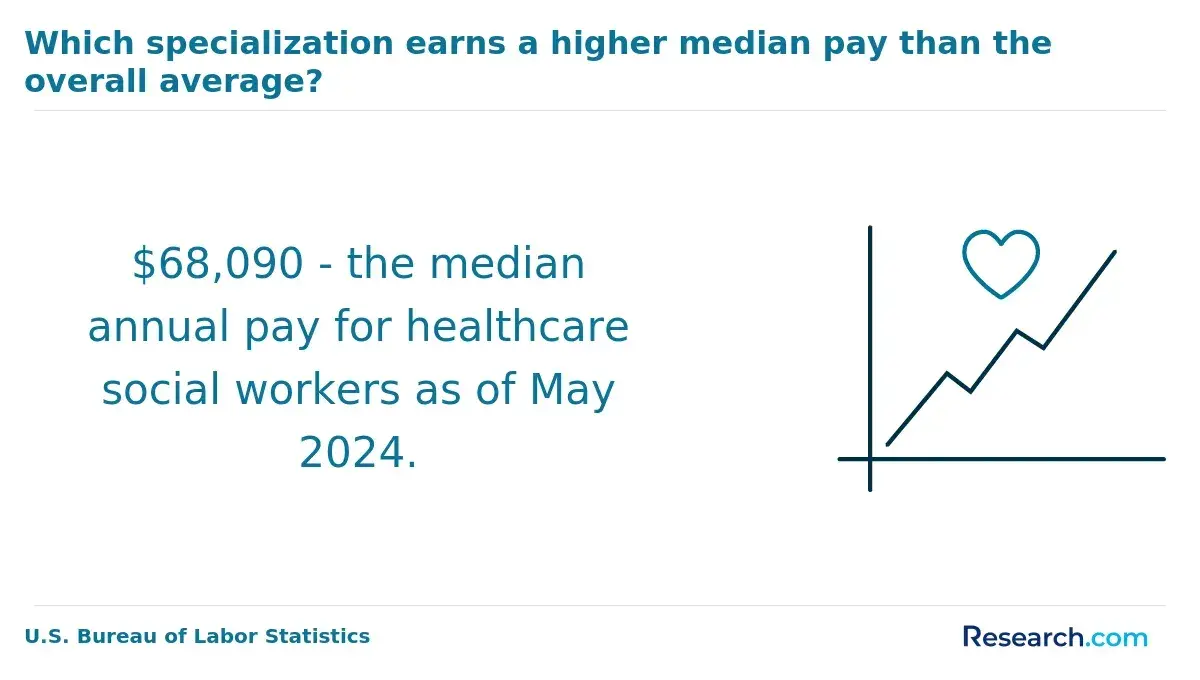
Other licensed roles include child welfare specialist, substance abuse counselor, geriatric social worker, medical social worker, school social worker, forensic social worker, and program administrator. School social workers earn about $55,000 annually, while healthcare social workers can make $70,000 or more, depending on experience and credentials.
| Career path | How licensure helps | Salary information stated |
| Clinical social worker or therapist | Clinical licensure may allow diagnosis, treatment, and independent practice where permitted | $60,000 to $75,000 a year for clinical roles |
| School social worker | Licensure may support eligibility for school-based or student support roles | About $55,000 annually |
| Healthcare social worker | Licensure can strengthen eligibility for hospital, clinic, and care coordination roles | $70,000 or more, depending on experience and credentials |
| Administrative or policy role | Licensure and MSW training can support leadership, compliance, advocacy, and program roles | Compensation varies by role and employer |
Exam timing can influence career progression. The Association of Social Work Boards 2022 Pass Rate Analysis shows a 91.0% pass rate for candidates aged 18-29, declining to 64.8% for those over 50. These figures reinforce the importance of structured preparation for all candidates, especially those returning to testing after time away from school.
Students should connect licensure planning to career planning. A future therapist should prioritize clinical supervision opportunities and Clinical exam preparation. A future administrator may focus on program management, policy, grant writing, and leadership experience. A future healthcare social worker should seek field placements and jobs that build interdisciplinary care skills.
Early licensure can widen job options, but salary growth is not automatic. Candidates should evaluate local demand, employer requirements, supervision availability, loan obligations, and the cost of maintaining licensure through continuing education.
Is job outlook strong for licensed social workers?
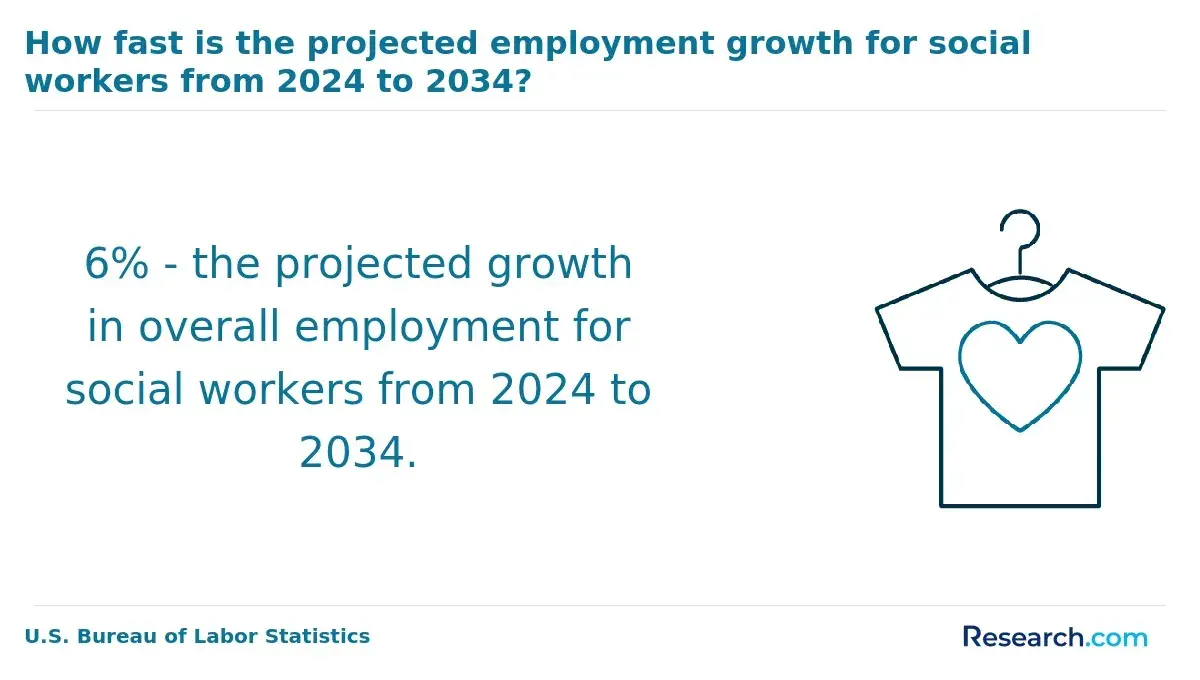
The job outlook for licensed social workers is strong in many practice areas because demand is tied to healthcare access, mental health needs, aging populations, schools, public agencies, and community-based support services. The U.S. Bureau of Labor Statistics projects a 12% growth in employment for social workers from 2024 to 2034, much faster than the average across all occupations.
Clinical social workers may see especially steady demand because they can provide mental health assessment and treatment where state law allows. Medical social workers are needed in hospitals, outpatient clinics, hospice, rehabilitation, and care coordination. Child welfare social workers support vulnerable children and families, while school social workers address student mental health, attendance, family support, and crisis response.
| Specialization | Demand drivers | Planning considerations |
| Clinical social work | Mental health treatment needs, behavioral health integration, private and agency practice | Usually requires supervised clinical hours and the Clinical exam |
| Healthcare social work | Hospitals, aging populations, chronic illness, discharge planning, care coordination | Medical experience and interdisciplinary communication skills can be valuable |
| School social work | Student mental health, family support, crisis response, special education collaboration | May require school-specific credentials depending on the state |
| Child welfare | Family services, protective services, foster care, court-involved systems | Emotional resilience, documentation skills, and policy knowledge are important |
Licensure outcomes are not equally accessible for all candidates. In 2022, the CSWE removed exam pass rates from accreditation standards after identifying race and age disparities in ASWB exam data, pointing to systemic barriers affecting licensure outcomes for some groups. Students should look for programs and employers that provide transparent advising, exam preparation resources, mentoring, and support for supervised practice.
Graduates can strengthen their prospects by targeting states and employers with strong social service budgets, earning relevant certifications, maintaining active licensure, and building experience with underserved populations. Cultural competence, documentation ability, crisis response skills, and interdisciplinary teamwork are frequently valuable across settings.
While salary growth for social workers can be moderate, about 19% of licensed clinical social workers transition into supervisory or administrative roles within five years, increasing earnings and job stability. For students who want leadership opportunities, it is wise to build supervision, budgeting, program evaluation, and staff management skills early.
How to choose the best MSW program for licensing success?
The best MSW program for licensing success is one that is accredited, transparent about outcomes, aligned with your state’s requirements, and strong in field education. A low tuition price or convenient online format can be valuable, but it should not come at the expense of licensure eligibility or supervised practice opportunities.
Start with CSWE accreditation. Graduates of CSWE-accredited programs are generally positioned to meet the education requirement for licensure in most states. Then check whether the curriculum and field placements support your intended license. A student aiming for LCSW licensure should look closely at clinical coursework, behavioral health placements, supervision pathways, and preparation for the Clinical exam.
Licensure pass rates can provide useful context, but they should be interpreted carefully. They may reflect student demographics, institutional support, preparation resources, and reporting practices. The bachelor's exam first-time pass rate of 67.2% among 3,080 test-takers underscores the need for strong foundational preparation before advanced licensure steps.
Questions to ask before enrolling
- Is the MSW program currently accredited by CSWE?
- Does the program meet education requirements in the state where I plan to practice?
- What licensure exams do graduates commonly take?
- Does the school publish or provide licensure exam pass-rate information?
- Are field placements available in clinical, healthcare, school, policy, or community settings that match my goals?
- How does the program support online or out-of-state students seeking local placements?
- Are licensure workshops, practice exams, advising, or study resources included?
- Do faculty or advisors understand state-specific licensing rules?
Flexible formats can be helpful for working adults, caregivers, and career changers. However, online and part-time students should confirm that field placement support is realistic in their location. The program should explain how placements are arranged, who approves supervisors, and whether the placement experience supports future supervised clinical hours if the student plans to pursue LCSW licensure.
Faculty expertise also matters. Programs with instructors experienced in clinical practice, policy, child welfare, healthcare, community organizing, or licensing-related advising can help students connect coursework to exam content and career goals.
- Evaluate faculty expertise in licensing exam content and practice areas of interest.
- Seek programs with instructors involved in licensing boards or exam development for mentoring advantages.
- Review alumni licensure success and job placement data to gauge program outcomes.
The strongest choice is usually the program that fits your budget, meets licensing rules, provides credible field placements, and offers practical support from admission through exam preparation. Before committing, compare at least a few programs using the same criteria so you do not discover licensure barriers after graduation.
Other Things You Should Know About Social Work
The timeline to become a licensed social worker following the exam varies by state but often includes completing supervised clinical experience after passing the licensing exam. Typically, MSW graduates must accumulate 2 to 3 years of supervised practice before obtaining full licensure, such as the LCSW. The licensing board then reviews the application, which may take several weeks to months.
International students holding MSW degrees from accredited programs may be eligible to take U.S. social work licensing exams, but they must meet state-specific requirements. This often involves credential evaluation to verify the equivalency of their education and may require additional coursework or supervised experience. Each state licensing board determines eligibility on a case-by-case basis.
Most social work licensing exams, including the ASWB tests, are administered on a computer at approved testing centers. This allows for flexible scheduling and immediate scoring in many cases. Paper-based exams are rare and typically only offered under special accommodations or in areas without computer testing facilities.
References
- Social Work Exam https://therapistdevelopmentcenter.com/social-work-exam
- Best Online Master's Programs For Social Work 2025 https://www.psychology.org/social-work/best-masters-programs/
- Top 10 Career Options After Board Exams | High-Paying Career https://www.curominds.com/blog/career-options-after-board-exams/
- What CSWE Accreditation Tells You About an MSW Program https://www.chamberlain.edu/blog/what-is-cswe-accreditation-and-what-are-its-benefits
- Accreditation and/or licensing requirements | SWTP https://socialworktestprep.com/blog/2024/october/25/accreditation-and-or-licensing-requirements/
- Breaking Down CPA Career Paths and Jobs | Secrets to Career Success https://accounting.uworld.com/cpa-review/cpa-career/jobs/
- What Are the ASWB Social Work Exams? https://www.academicreview.com/social-work/social-work-faq/what-are-the-aswb-social-work-exams
- West Virginia Board of Social Work > Licensure > License Types https://www.wvsocialworkboard.org/Licensure/License-Types/Regular-License
- What is a Master of Social Work (MSW) Degree? https://socialworklicensemap.com/social-work-degrees/master-of-social-work-programs/what-is-msw-degree/
- I Have My Social Work Degree—Why Do I Have To Take an Exam To Get a License? https://www.socialworker.com/feature-articles/education--credentials/i-have-my-social-work-degree-why-take-exam-to-get-license/