2027 First-Generation Student Guide to Applying for an MSW

Co-Founder and Chief Data Scientist
Applying to a Master of Social Work program can feel especially unclear if you are a first-generation college graduate or your bachelor’s degree is outside social work. The main questions are practical: Which programs will consider your background? What prerequisites matter? How do accreditation, field placements, licensure, cost, and online formats affect your path?
An MSW can lead to clinical, school, healthcare, community, policy, and nonprofit leadership roles, but the right program depends on your career goal and the state where you plan to practice. This guide explains how to evaluate MSW programs in the United States, what admissions committees typically look for, how online and campus options compare, and how to plan for tuition, financial aid, field education, and licensure requirements.
Key Things You Should Know
- First-generation students applying for an MSW in 2026 should focus on demonstrating resilience and personal motivation, as 45% of programs value lived experience alongside academic achievements.
- Financial aid is critical for first-generation applicants, with over 60% receiving scholarships or grants to offset rising MSW program costs, which average $25,000 annually.
- Networking through university advisors and professional social work organizations enhances acceptance chances, as 70% of admitted students cite mentorship or guidance as a key factor.
What is a Master of Social Work degree and who should pursue it?
A Master of Social Work, or MSW, is a graduate degree for students who want advanced preparation in social work practice, clinical care, policy, advocacy, research, or human services leadership. It is the standard graduate credential for many higher-responsibility social work roles and is usually required for those who plan to become licensed clinical social workers.
The degree is designed for people who want to work directly with individuals, families, groups, and communities, as well as those who want to improve systems that affect health, housing, education, child welfare, aging, disability services, substance use treatment, and mental health care. Students learn how social conditions, policy, trauma, inequality, and access to resources shape client outcomes.
Who is a strong fit for an MSW?
- Recent graduates in psychology, sociology, human services, criminal justice, public health, education, or related fields who want professional social work training.
- Career changers who have experience in schools, nonprofits, healthcare, community organizations, government agencies, or direct service roles.
- Students who want to pursue clinical practice, including counseling or therapy roles that require additional state licensure after graduation.
- Professionals interested in macro social work, including policy, program administration, research, community organizing, and nonprofit leadership.
- First-generation college graduates who want a structured path into a mission-driven profession with multiple practice settings.
Many MSW programs allow students to choose concentrations such as clinical social work, macro practice, school social work, child welfare, healthcare, gerontology, substance abuse, or community practice. That choice matters because it shapes electives, field placements, faculty mentorship, and post-graduation job options.
First-generation students are already well represented in social work education. Berkeley Social Welfare reports that 48% of their MSW entrants identify as first-generation, showing that MSW pathways can be accessible to students who may not have family experience with graduate school.
Before applying, confirm that the program is accredited by the Council on Social Work Education (CSWE), review field internship requirements, and compare financial aid options. Students who may eventually pursue doctoral study can also review the best online PhD social work programs to understand longer-term academic and research pathways.
What are the accreditation and licensing requirements for MSW programs in the United States?
For most students, the most important rule is simple: choose a CSWE-accredited MSW program. In the United States, accreditation by the Council on Social Work Education signals that the program meets national standards for curriculum, faculty qualifications, assessment, and field education. It also affects licensure eligibility, employer recognition, and access to certain financial aid pathways.
Graduating from a non-CSWE-accredited program can create serious problems. In many states, graduates from non-accredited programs are typically ineligible for professional licensure, especially for clinical social work roles. If your goal is to become an LCSW or another licensed social work professional, accreditation should be verified before you apply, not after you enroll.
Typical licensing pathway after an MSW
Licensure rules vary by state, but the general process commonly includes:
- Completing a CSWE-accredited MSW program, either through a standard two-year track or an advanced standing option for qualifying students.
- Passing the Association of Social Work Boards (ASWB) clinical or generalist exam.
- Completing 2,000 to 4,000 supervised post-graduate clinical hours over two to three years.
Some states offer provisional or associate-level licensure that allows graduates to practice under supervision while they complete post-degree requirements. Others have specific rules about supervision, telehealth practice, background checks, jurisprudence exams, or continuing education. Because licensing is state-based, students should check the board requirements in the state where they intend to work.
Why field placement location matters
Field education is not just an internship requirement; it is part of professional preparation and may affect your future licensure pathway. Online and hybrid students should confirm that the program can support placements in their state and that the placement aligns with their intended practice area. Not all programs have placement networks in every location.
This planning is especially important for first-generation students, who may be navigating graduate school, financial aid, and licensure systems without family guidance. Graduate enrollment has increased by 7.2% since 2020 (NSC Research Center via FirstGen Forward), and many programs now offer flexible formats for working adults. Flexibility is helpful, but it should never come at the expense of accreditation or licensure preparation.
Students comparing cost and flexibility can review the most affordable MSW online programs, but each option should still be checked against state licensing requirements.
What is the typical curriculum and core coursework in an MSW program?
An MSW curriculum combines classroom study, skills training, ethics, research, policy, and supervised field education. The goal is to prepare students to work across micro, mezzo, and macro levels: with individuals and families, groups and organizations, and broader communities and systems.
Most programs begin with foundation courses that introduce social work theory, professional ethics, human development, policy, research, and generalist practice. Students then move into advanced coursework connected to their concentration, such as clinical practice, school social work, healthcare, child welfare, substance abuse, aging, or community organizing.
Common MSW course areas
| Course area | What students learn | Why it matters |
| Human behavior in the social environment | How development, family systems, culture, trauma, institutions, and environment shape behavior. | Builds the foundation for assessment and intervention. |
| Social welfare policy | How laws, benefits, public systems, and institutional decisions affect communities and clients. | Prepares students to advocate for clients and understand structural barriers. |
| Research methods | How to read, evaluate, and apply evidence in social work practice. | Supports ethical, evidence-informed decision-making. |
| Clinical or direct practice | Assessment, engagement, diagnosis, treatment planning, crisis response, and interventions with individuals, families, and groups. | Essential for students pursuing therapeutic or clinical roles. |
| Field education | Supervised practice in settings such as schools, hospitals, community agencies, mental health clinics, and nonprofits. | Connects classroom learning to real client and organizational work. |
| Ethics, diversity, and advocacy | Professional boundaries, cultural humility, anti-oppressive practice, and client rights. | Protects clients and prepares students to work responsibly across diverse communities. |
Students with a Bachelor of Social Work from other institutions may qualify for advanced standing, which can reduce required credits and shorten the time to graduation. A CSWE study cited in MSW Admission Requirements reported that applicants with a BSW from other institutions were admitted at about 74.4%.
Students without a BSW can still be strong applicants, especially if they have relevant coursework, volunteer experience, human services employment, or a clear explanation of why they are entering social work. The key is to show readiness for graduate-level writing, ethical reflection, fieldwork, and sustained engagement with vulnerable populations.
Because specialization can influence job options and compensation, applicants should compare coursework with career outcomes and location-specific pay. Reviewing social worker salary information by state can help students connect their academic choices to labor market realities.
How do online MSW programs compare to campus-based options for first-generation students?
Online and campus-based MSW programs can both work well for first-generation students, but they offer different kinds of support, structure, and flexibility. The better choice depends on your work schedule, family responsibilities, learning style, budget, location, and need for in-person networking.
Online MSW programs are often attractive to students who cannot relocate, commute regularly, or leave full-time employment. Many use asynchronous coursework, allowing students to complete lectures and assignments around work and caregiving. However, online students still need reliable technology, strong time-management habits, and access to approved field placements.
Campus-based MSW programs may offer more face-to-face mentoring, structured routines, peer relationships, and easier access to faculty, student services, and field placement offices. They can be especially valuable for students who benefit from in-person accountability or who want to build local professional networks.
Online vs. campus-based MSW programs
| Factor | Online MSW | Campus-based MSW |
| Schedule flexibility | Often stronger, especially with asynchronous courses. | More fixed class times and commuting requirements. |
| Peer and faculty connection | Requires proactive participation in virtual advising, discussion boards, and office hours. | Often easier to build through in-person classes, events, and informal contact. |
| Field placement support | Must be confirmed by state and location before enrollment. | May have stronger local placement relationships near campus. |
| Cost considerations | May reduce commuting and relocation costs. | May offer access to on-campus scholarships, assistantships, or local partnerships. |
| Best fit | Working adults, caregivers, rural students, and students who need geographic flexibility. | Students who want structure, in-person support, and local professional networking. |
Retention and completion support should be a major part of the decision. Berkeley Social Welfare's data for 2021-2025 reported that 98% of MSW graduates, including many first-generation learners, completed their degrees within three years. That kind of outcome depends on more than course delivery format; advising, field placement quality, financial support, and student belonging all matter.
First-generation applicants should ask each program how it supports students who are new to graduate education. Useful supports include orientation to graduate writing, clear field placement guidance, financial aid counseling, mentorship, tutoring, affinity groups, and career advising. Students comparing accessible online options can explore online MSW programs while still checking accreditation and licensure fit.
What are the admission requirements and prerequisites for entering an MSW program?
Most MSW programs require a bachelor’s degree from an accredited college or university. The degree does not always need to be in social work. Applicants from psychology, sociology, education, criminal justice, public health, communications, liberal arts, and other fields may be considered if they can show academic readiness and a serious commitment to social work values.
A minimum undergraduate GPA of about 3.0 is typical, although requirements vary by institution and more selective programs may expect stronger academic records. Some programs review applicants holistically, which means work experience, service, leadership, personal background, recommendations, and the statement of purpose may help offset weaker grades.
Common MSW application requirements
- A completed graduate application and application fee.
- Official transcripts from all colleges attended.
- A bachelor’s degree from an accredited institution.
- A personal statement or statement of purpose explaining career goals, social work values, relevant experience, and readiness for graduate study.
- Two or three letters of recommendation from academic, professional, or service supervisors.
- A resume showing work, volunteer, internship, leadership, or human services experience.
- Prerequisite coursework if required, often in social welfare, statistics, psychology, sociology, or behavioral sciences.
- An interview, when required, to assess communication skills, ethical awareness, and fit for the profession.
- English proficiency results such as TOEFL or IELTS and degree evaluation for some international applicants.
GRE requirements vary, and many schools now waive standardized tests for some or all applicants. If the GRE is optional, applicants should consider whether their scores strengthen the file. A strong score may help if the GPA is lower, but it may not be worth submitting if the rest of the application is stronger without it.
How to strengthen an MSW application
- Explain why social work specifically fits your goals, rather than describing only a general desire to help people.
- Connect your background to social work ethics, service, advocacy, cultural humility, or systems change.
- Use specific examples from employment, caregiving, volunteering, internships, or community involvement.
- Ask recommenders who can speak to your judgment, reliability, writing ability, empathy, and readiness for fieldwork.
- Address academic challenges honestly if needed, then show evidence of growth and preparation.
Financial planning should begin during the application stage. The Council on Social Work Education (CSWE) notes that 34.6% of MSW graduates graduate with an average loan debt of $38,500. First-generation students should contact financial aid offices early, ask about scholarships and assistantships, and compare total program cost before committing.
How long does it take to complete an MSW degree and what are typical program costs?
A traditional MSW usually takes two to three years for full-time students and includes about 60 credit hours plus required field internships. Part-time students often take three or more years, which can make the degree more manageable for students balancing employment, caregiving, or financial responsibilities.
Accelerated or advanced standing pathways may allow some students to finish in one year, but these options are usually intended for applicants with prior social work preparation, such as a qualifying BSW. The shorter timeline can reduce time away from the workforce, but the pace can be demanding because coursework and field education are compressed.
Typical MSW timelines
| Program format | Typical completion time | Best suited for |
| Full-time traditional MSW | Two to three years | Students who can prioritize school and fieldwork. |
| Part-time MSW | Three or more years | Working adults, caregivers, and students who need a lower course load. |
| Accelerated or advanced standing MSW | One year | Students with qualifying prior social work education or related preparation. |
Program cost varies widely by institution type, residency status, delivery format, and location. Public universities generally charge $10,000 to $30,000 annually for in-state students, while private universities can exceed $50,000 per year. Students should also budget for university fees, books, technology, transportation, background checks, liability insurance, and field placement-related expenses.
Online MSW programs may reduce commuting or relocation costs, but tuition is not always lower. Some online programs charge the same tuition regardless of state residency, while others follow public university in-state and out-of-state rates. Before enrolling, compare the total cost of attendance, not just tuition per credit.
First-generation bachelor's graduates enroll in MSW programs at a higher rate, 65%, than continuing-generation students, 56%, according to an RTI International report via FirstGen Forward, 2024-2025. That makes cost planning especially important for students using graduate education for career mobility.
Ways to manage MSW costs
- Apply early for university scholarships, assistantships, and need-based aid.
- Ask whether field placements are paid, unpaid, or eligible for stipends.
- Compare part-time and full-time attendance based on income, time to graduation, and loan borrowing.
- Explore employer tuition reimbursement if you already work in human services, healthcare, education, or government.
- Research loan forgiveness options for social workers in public service or qualifying nonprofit roles.
What career paths and job roles are available to MSW graduates?
MSW graduates work in a wide range of settings, including hospitals, schools, mental health clinics, child welfare agencies, substance use treatment programs, correctional facilities, long-term care organizations, nonprofits, public agencies, community organizations, and private practice environments. The right role depends on specialization, field placement experience, state licensure, and whether the graduate wants direct practice, clinical work, administration, advocacy, or policy.
Common roles for MSW graduates
- Clinical social worker: Provides assessment, counseling, treatment planning, and mental health support in clinics, hospitals, agencies, or private practice settings, depending on licensure.
- Child, family, and school social worker: Supports children and families through school systems, child welfare agencies, family service organizations, and community programs.
- Healthcare social worker: Helps patients and families navigate medical decisions, discharge planning, chronic illness, long-term care, insurance issues, and support services.
- Substance abuse or behavioral health social worker: Works with individuals and groups affected by addiction, co-occurring disorders, trauma, or crisis situations.
- Geriatric social worker or care manager: Supports older adults and families with aging services, care planning, housing, benefits, and end-of-life resources.
- Community organizer or policy advocate: Works on systems-level change, public programs, housing, social justice, community development, and legislative advocacy.
- Program coordinator or administrator: Manages services, staff, budgets, grants, evaluation, and operations in nonprofits or public agencies.
- Correctional or forensic social worker: Provides services related to courts, reentry, incarceration, family reunification, or behavioral health in justice-involved settings.
Licensure can significantly affect career options. Clinical licensure, such as LCSW status, is generally required for independent clinical practice and many therapy roles. Macro-focused graduates may not need the same clinical credential for policy, administration, or community leadership positions, but they still benefit from strong field experience and professional networks.
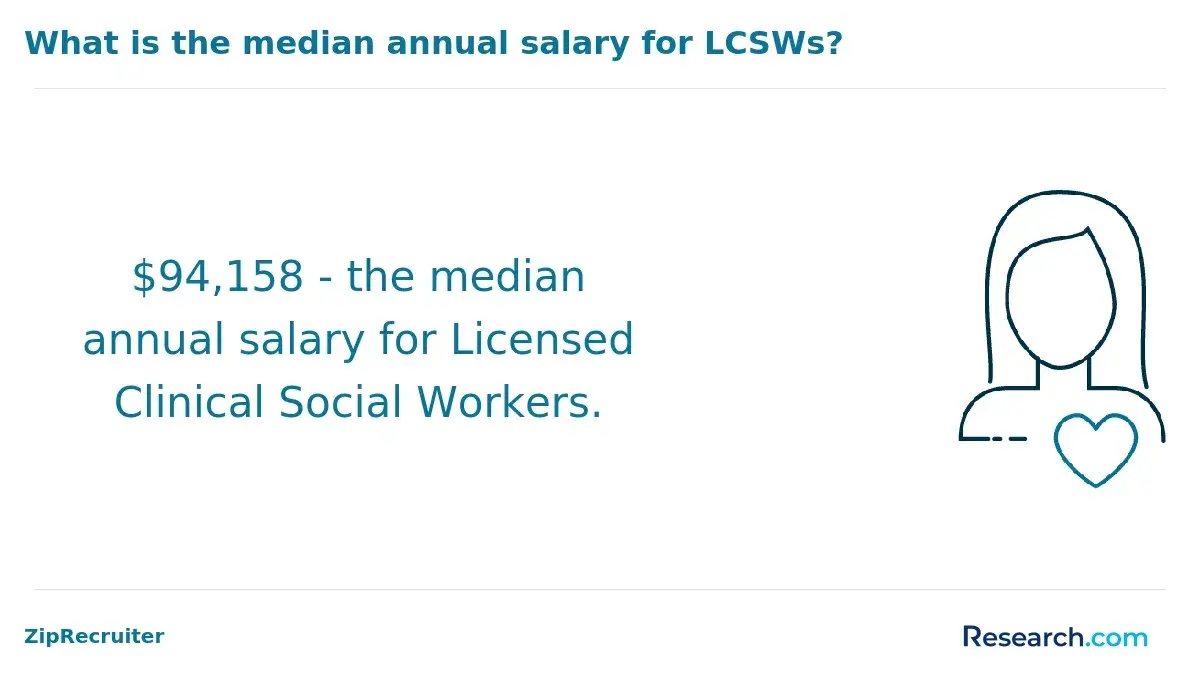
Salaries vary by role, state, employer, and licensure. Clinical social workers typically earn $60,000-$80,000 annually, while administrators and policy experts may exceed $90,000 based on experience. Students should be cautious about treating salary ranges as guarantees; local labor markets and licensure level can make a large difference.
Admissions timelines also matter for career planning. Admissions decisions usually take 3-12 weeks, with some universities, like Florida State University, averaging 3-6 weeks. Applicants who need to coordinate resignation dates, relocation, childcare, or field placement availability should build that waiting period into their plans.
Field placement is often the strongest bridge to employment. Students should choose placements strategically, build relationships with supervisors, document measurable accomplishments, and ask programs about employer partnerships in healthcare facilities, schools, public agencies, and community organizations.
What is the average salary and job outlook for social workers with an MSW?
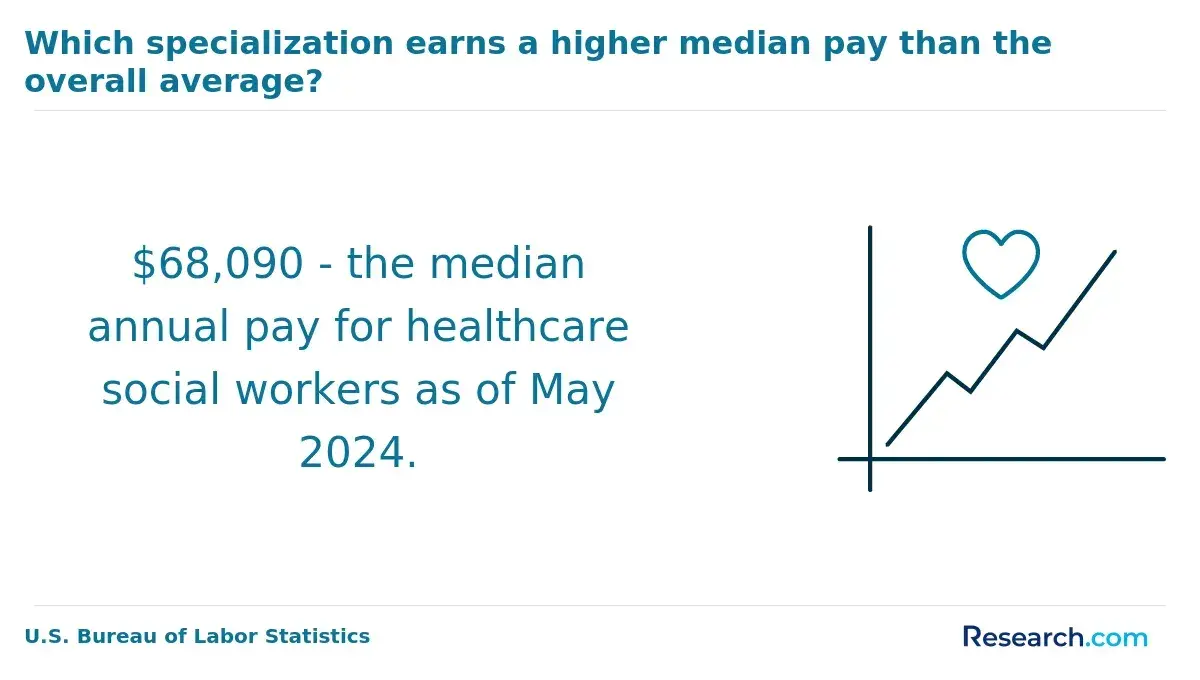
Social workers with an MSW earn a median annual salary of about $62,000, but pay depends heavily on specialization, state, employer, years of experience, and licensure. Entry-level roles often start near $50,000, while clinical and administrative positions can exceed $85,000. Healthcare social workers and school-based social workers often earn more than professionals in some nonprofit or community outreach roles.
The job outlook is strong. The U.S. Bureau of Labor Statistics projects 12% growth from 2024 to 2034, faster than the average for all occupations. Demand is tied to mental health needs, healthcare access, child welfare services, aging populations, substance use treatment, school support services, and community-based care.
What affects MSW salary?
- Licensure: Clinical licensure can open access to therapy, supervisory, and independent practice roles.
- Specialization: Healthcare, clinical, and administrative roles may pay more than some entry-level community service positions.
- Location: Urban areas may offer higher salaries but also higher living costs and more competition.
- Employer type: Hospitals, government agencies, schools, and large healthcare systems may offer different compensation than small nonprofits.
- Experience: Supervisory, program management, and advanced clinical experience can improve earnings over time.
Rural areas may have fewer job openings, but some employers offer loan repayment options or incentives for licensed social workers. Students should compare salary with cost of living, commute, supervision opportunities, and benefits rather than focusing only on the highest advertised wage.
The field is also becoming more diverse. UCLA's Class of 2026 includes 27% first-generation college students, one of the highest among top-ranked universities, pursuing social work. For first-generation students, this can be an advantage in community-focused organizations that value lived experience, cultural awareness, and commitment to access.
How should first-generation students evaluate and choose a reputable MSW program?
First-generation students should evaluate MSW programs with two goals in mind: professional eligibility and personal completion support. A program may look appealing because it is flexible or inexpensive, but it must also prepare you for licensure, fieldwork, employment, and long-term career growth.
Start with CSWE accreditation. This is the baseline requirement for most licensure pathways and a key sign that the curriculum and field education meet national social work standards. Then look beyond accreditation to determine whether the program has the advising, financial guidance, and career support needed to help first-generation students persist and graduate.
Graduation rates for first-generation undergraduates average 24%, compared to 59% for continuing-generation peers, according to FirstGen Forward, 2024. That gap shows why support services should not be treated as optional extras. They can directly affect whether students complete the degree.
Checklist for choosing an MSW program
- CSWE accreditation: Confirm the program is accredited before applying.
- Licensure alignment: Ask whether the curriculum and field education meet requirements in the state where you plan to practice.
- Field placement quality: Review placement sites, supervision support, and whether placements match your career goals.
- First-generation support: Look for mentoring, tutoring, writing support, financial aid counseling, and graduate school orientation.
- Format and schedule: Compare online, hybrid, evening, weekend, full-time, and part-time options.
- Total cost: Compare tuition, fees, books, travel, lost wages, and field placement expenses.
- Faculty expertise: Review whether faculty work in your intended area, such as clinical practice, child welfare, healthcare, policy, or community organizing.
- Career outcomes: Ask about licensure exam support, job placement, alumni networks, and employer partnerships.
- Student experience: Speak with current students or alumni about workload, advising, field placements, and program culture.
First-generation applicants should contact admissions and financial aid offices with specific questions. Ask how the program supports students who are new to graduate school, how field placements are arranged, what happens if a placement falls through, and whether scholarships or emergency funds are available. A reputable program should answer clearly and provide documentation rather than vague reassurance.
What financial aid, scholarships, and funding options are available for MSW students?
MSW students may use a combination of federal aid, state aid, institutional scholarships, private scholarships, employer support, assistantships, work-study, and loan forgiveness programs. Because graduate school can create significant debt, students should build a funding plan before enrollment and revisit it each year.
The first step is completing the FAFSA, the Free Application for Federal Student Aid. This determines eligibility for federal aid such as Pell Grants, Federal Direct Loans, and Graduate PLUS Loans. Some states also provide targeted grants for social work, behavioral health, education, or related health sciences fields.
Common funding options for MSW students
- University scholarships: Awards based on need, merit, service, leadership, identity, specialization, or commitment to underserved communities.
- Professional organization scholarships: Opportunities from groups such as the National Association of Social Workers (NASW) and related social work organizations.
- Program-specific awards: Scholarships or stipends tied to child welfare, behavioral health, school social work, public service, or specific field placements.
- Federal loans: Graduate students commonly use Federal Direct Loans and Graduate PLUS Loans to cover remaining costs.
- Work-study or assistantships: Campus-based work opportunities that may provide wages, tuition support, or professional experience.
- Employer tuition assistance: Funding from employers in healthcare, schools, nonprofits, public agencies, or human services.
- Loan forgiveness: Public Service Loan Forgiveness (PSLF) may forgive remaining federal loan balances after 10 years of qualifying payments for eligible borrowers working in qualifying public service roles.
Scholarship amounts vary. Some regional or demographic scholarships provide awards ranging from $1,000 to full tuition coverage. First-generation students should ask whether the school has awards specifically for first-generation graduate students, students with financial need, or students entering shortage areas.
Flexible MSW pathways, including part-time, online, and evening programs, can help nontraditional students aged 21 and over remain employed while studying. Enrollment for this group grew significantly, according to the NSC Research Center. Keeping a job may reduce borrowing, but students should still account for field placement hours, which can limit work availability.
Financial aid questions to ask before enrolling
- What is the total cost of attendance, including fees and field placement expenses?
- Are scholarships renewable, and what GPA or enrollment status is required?
- Are field placements paid, unpaid, or stipend-supported?
- Can part-time students receive the same scholarships as full-time students?
- Does the program provide help with PSLF planning or loan counseling?
- Are assistantships available to MSW students?
- What deadlines apply to institutional scholarships and financial aid forms?
First-generation students should work closely with financial aid offices early, keep copies of all award letters, and compare net cost across programs. A lower tuition price is helpful, but the best financial decision also considers accreditation, licensure eligibility, completion support, and the likelihood that the program will lead to the kind of social work career you want.
Other Things You Should Know About Social Work
MSW programs require supervised field placements that provide hands-on experience in social Work settings. These placements often occur at nonprofit agencies, hospitals, schools, or government organizations. Students can expect to complete hundreds of hours working directly with clients under professional supervision to develop practical skills.
Yes, many MSW programs offer specializations in areas such as clinical social Work, child and family services, community practice, or policy advocacy. Choosing a concentration allows students to tailor their education toward specific populations or career goals and often influences the type of field placement they undertake.
First-generation MSW students may encounter challenges such as navigating unfamiliar academic environments, balancing school with personal responsibilities, and limited access to mentorship. Support services like academic advising, peer groups, and counseling can help address these barriers and improve retention and success.
A common challenge first-generation students face is the lack of guidance on navigating graduate application processes. They may not have access to family members with knowledge about applying for an MSW, making it important to seek support from mentors, advisors, or online resources tailored for first-generation applicants.
References
- Social Work Careers https://socialworklicensemap.com/social-work-careers/
- Accredited Master of Social Work (MSW) Programs (2026 Update) - MasterofSocialWork.com https://www.masterofsocialwork.com/
- A First-Generation College Student’s Guide to Navigating the Application Process| Chase https://www.chase.com/personal/banking/education/student/first-generation-college-student-guide
- Social Work Salaries https://www.socialworkers.org/careers/career-center/kickstart-your-job-hunt/social-work-salaries
- Full-time online MSW programs https://www.onlinemswprograms.com/online-social-work-degrees/full-time-online-msw-programs/
- Financial Aid Resources for California MSW Students https://www.californiasocialworkedu.org/financial-aid-resources-for-california-msw-students/
- Master of Social Work - Wikipedia https://en.wikipedia.org/wiki/Master_of_Social_Work
- How Long Does it Take to Complete an MSW Program? Online or Campus https://www.onlineeducation.com/social-work/faqs/how-long-is-an-msw-program
- Accreditation and/or licensing requirements | SWTP https://socialworktestprep.com/blog/2024/october/25/accreditation-and-or-licensing-requirements/
- Master of Social Work Curriculum | University of Nevada, Reno https://onlinedegrees.unr.edu/blog/master-of-social-work-curriculum