
2027 Is Grand Canyon University School of Nursing Worth It?

Co-Founder and Chief Data Scientist
With the demand for qualified nurses continuing to grow, more students are exploring flexible, accredited programs that can help them enter or advance in the profession.
Grand Canyon University (GCU), one of the largest private Christian universities in the United States, has become a popular choice for aspiring nurses thanks to its wide range of nursing programs, including traditional BSN, accelerated BSN, RN-to-BSN, and graduate-level pathways.
But with tuition costs, program intensity, and mixed student experiences in the spotlight, many prospective students ask: Is Grand Canyon University School of Nursing really worth the investment? Evaluating the value of GCU involves looking beyond its reputation to consider program quality, NCLEX pass rates, student support, affordability, and long-term career outcomes.
What are the benefits of studying at Grand Canyon University School of Nursing?
- GCU nursing graduates are well-prepared for licensure, with consistently high NCLEX pass rates that open doors to careers in hospitals, clinics, and community health settings.
- Earning a BSN or higher degree from GCU can lead to strong job prospects, with registered nurses earning a median salary of around $86,000 per year in 2025.
- Flexible study options, including online RN-to-BSN and accelerated BSN tracks, make it easier for working professionals or career changers to advance without pausing their careers.
- Students benefit from state-of-the-art simulation labs, dedicated faculty, and career support services designed to help graduates transition into the workforce quickly.
- How much does it cost to attend GCU’s nursing programs in 2027? Cost of Attendance
- Is Grand Canyon University School of Nursing Worth It in 2027? Is GCU Worth It?
- What nursing programs does GCU offer? Programs at GCU
- Is GCU’s School of Nursing accredited? Accreditation
- Is GCU’s School of Nursing programs online, hybrid, on-campus or accelerated? Mode of Learning
- How does GCU prepare students for licensure and practice? Licensure Support
- What student support services and learning resources (labs, simulation, faculty) are available? Services and Resources
- What scholarships, grants, or financial aid options are available? Financial Aid
- How does GCU’s nursing program compare with other nursing schools in Arizona and nationwide? How does GCU’s nursing program compare with other nursing schools in Arizona and nationwide?
- Who is GCU’s nursing program best suited for in 2027? Who is GCU’s nursing program best suited for in 2027?
How much does it cost to attend GCU’s nursing programs in 2027?
Choosing Grand Canyon University’s School of Nursing is not just an admissions decision; it is a cost, time, licensure, and career-planning decision. GCU offers several nursing pathways, including traditional BSN, accelerated BSN, RN to BSN, MSN, post-master’s certificates, and DNP programs, but the total price can vary widely depending on your format, transfer credits, clinical requirements, and living arrangements.
This guide explains what students should know before enrolling in GCU’s nursing programs in 2027: estimated tuition, program formats, accreditation, licensure preparation, student support, financial aid options, comparisons with other nursing schools, and the types of students most likely to benefit from GCU’s model.
Quick answer
GCU nursing tuition depends on the degree level and delivery format. Online RN to BSN students pay about $340 per credit hour, MSN students generally pay $565 to $715 per credit depending on specialization, traditional on-campus undergraduates pay about $8,250 per semester for 12 to 18 credits, and the accelerated BSN costs roughly $40,000 per year. Students should also budget for lab, simulation, clinical, textbook, technology, transportation, and living expenses.
| GCU nursing pathway | Reported tuition or cost | Best fit | Cost factors to verify before enrolling |
| Online RN to BSN | About $340 per credit hour | Licensed RNs who want to complete a bachelor’s degree while working | Transfer credits, employer tuition assistance, course sequencing, and total credits required |
| Traditional on-campus BSN | About $8,250 per semester for 12 to 18 credits | Students beginning their nursing education and seeking a campus-based experience | Lab fees, clinical fees, housing, transportation, supplies, and semester-by-semester course load |
| Accelerated BSN | Roughly $40,000 per year | Students with a prior bachelor’s degree or sufficient college credits who want a faster nursing route | Clinical site location, required in-person labs, living costs, prerequisite gaps, and pace of the program |
| MSN programs | Generally $565 to $715 per credit | Registered nurses pursuing advanced practice, leadership, education, informatics, or related roles | Specialization tuition, practicum requirements, certification eligibility, and state authorization |
Students comparing online completion programs may also want to review how an RN to BSN online program is typically structured, especially if they are trying to balance work schedules, transfer credits, and clinical or practicum expectations.
What can increase the total cost?
- Clinical and lab requirements: Nursing programs often require simulations, skills labs, supplies, background checks, health documentation, and clinical placement-related expenses.
- Books and technology: Online and hybrid courses may require learning platforms, software, testing tools, and digital or printed materials.
- Transportation and relocation: Students attending the Phoenix campus or ABSN learning sites should account for commuting, parking, housing, and living costs.
- Transfer credit limits: The fewer credits accepted, the more credits a student may need to complete at GCU.
- Program pace: Accelerated programs can shorten the timeline, but the intensity may reduce a student’s ability to work while enrolled.
Before committing, ask GCU for a full program cost estimate that includes tuition, fees, expected credits, clinical costs, books, supplies, and any projected living expenses. The published tuition rate is only one part of the financial decision.
Is Grand Canyon University School of Nursing worth it in 2027?
GCU’s School of Nursing can be worth considering for students who want a nursing program with multiple entry points, flexible learning formats, CCNE accreditation, and strong licensure preparation. Recent NCLEX pass rates averaging above 92% suggest that students have performed well on the exam required for RN licensure, but outcomes are never guaranteed and depend on preparation, academic performance, clinical readiness, and state licensure requirements.
The value of GCU depends on your starting point. A licensed RN completing a bachelor’s degree online will evaluate cost and return differently than a career changer entering a fast-paced accelerated BSN. Likewise, an MSN or DNP student should focus on certification eligibility, practicum placement, state authorization, and whether the specialization aligns with long-term career plans.
When GCU may be a strong choice
- You need flexibility: Online and hybrid options can help working nurses continue employment while earning an advanced credential.
- You want several nursing pathways at one institution: GCU offers options from BSN through DNP, which can support long-term academic planning.
- You value structured licensure preparation: NCLEX-style practice, simulation, clinical training, and faculty support can help students build exam and practice readiness.
- You are considering an accelerated route: The ABSN may appeal to students who already have prior college credit and want to enter nursing faster.
When another school may be a better fit
- You need the lowest possible tuition: Some public universities or community college-to-BSN pathways may cost less, especially for in-state students.
- You need guaranteed local clinical placement: Clinical availability can depend on location, program track, healthcare partner capacity, and state requirements.
- You prefer fully face-to-face instruction: Some GCU pathways include online components, which may not suit students who learn best in a traditional classroom.
- You are unsure about nursing: Nursing programs are demanding. Students still comparing professions may want to research other career paths, such as robotics engineering careers, before choosing a healthcare route.
| Decision factor | Why it matters | Question to ask GCU |
| Accreditation | Accreditation affects licensure, employer recognition, graduate study, and financial aid eligibility. | Is my specific nursing program currently accredited and approved for my intended state of licensure? |
| Total cost | Tuition alone does not show the full price of attendance. | What is the estimated total cost including fees, books, labs, supplies, clinical expenses, and living costs? |
| NCLEX preparation | Pre-licensure students must pass the NCLEX-RN to become licensed RNs. | What NCLEX preparation tools are built into the curriculum, and how are struggling students supported? |
| Clinical placement | Hands-on training is required for nursing practice and may vary by location. | Where are clinical rotations typically completed, and what happens if placements are limited? |
| Program format | Online, hybrid, accelerated, and campus formats require different time commitments. | Which parts of my program are online, in person, synchronous, asynchronous, or completed at clinical sites? |
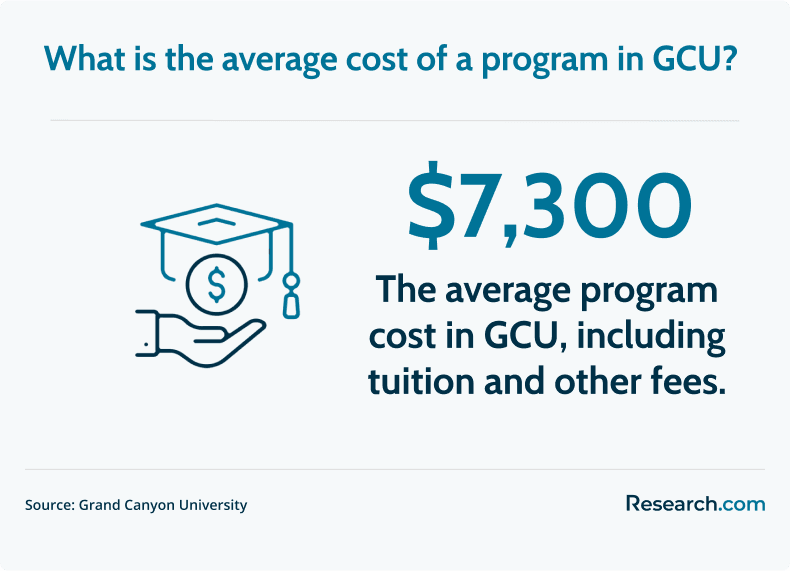
As a tuition reference, the average cost of an on-campus program at GCU is $7,300, which has not increased since 2009.
What nursing programs does GCU offer?
Grand Canyon University’s nursing portfolio is designed for students at different points in the profession: first-time nursing students, current RNs, nurses moving into leadership or advanced practice, and graduate-prepared nurses seeking additional credentials. The right option depends on your current license status, prior credits, career target, and state requirements.
For current healthcare professionals, GCU’s options can support both skill expansion and career redirection. If you are deciding whether to deepen your current nursing skills or move into a new specialty, it may help to understand the difference between upskilling and reskilling.
| Program | Who it is designed for | Typical goal | Key consideration |
| Pre-Licensure BSN | Students preparing to become registered nurses | Build foundational nursing knowledge, complete clinical training, and prepare for the NCLEX-RN | Verify admission requirements, clinical expectations, and state board approval |
| RN to BSN | Licensed RNs who hold an associate degree or diploma in nursing | Complete a bachelor’s degree and strengthen leadership, evidence-based practice, and population health knowledge | Confirm transfer credits and whether employer tuition benefits can be used |
| MSN | Registered nurses seeking graduate-level preparation | Move into areas such as nursing leadership, education, informatics, or family nurse practitioner preparation | Check practicum requirements, certification alignment, and state authorization |
| Post-Master’s Certificates | Graduate-prepared nurses seeking an added specialization | Add advanced practice, leadership, or specialty-focused preparation | Confirm eligibility rules, required clinical hours, and certification pathways |
| DNP | Nurses pursuing a practice-focused doctoral degree | Prepare for high-level clinical, organizational, quality improvement, or systems leadership roles | Review project requirements, practicum expectations, and professional goals |
According to the US Bureau of Labor Statistics, demand for registered nurses is expected to grow by 5%, higher than the average of 3% among all occupations, as shown in the chart below.
Is GCU’s School of Nursing accredited?
Yes. GCU’s nursing programs hold Commission on Collegiate Nursing Education accreditation across baccalaureate, master’s, doctoral, and post-graduate certificate levels. This matters because nursing accreditation is one of the first items students should verify before comparing tuition, convenience, or rankings.
GCU’s master’s programs are accredited through 2026, while its baccalaureate, doctoral, and post-graduate programs are accredited through 2031. GCU is also institutionally accredited by the Higher Learning Commission (HLC), and its nursing programs are approved by state boards of nursing for relevant licensure pathways.
Why accreditation should be checked before enrollment
- Licensure eligibility: Pre-licensure students need a program that satisfies state board requirements for NCLEX-RN eligibility.
- Employer acceptance: Hospitals, clinics, government agencies, and graduate schools often prefer or require degrees from accredited institutions and programs.
- Financial aid: Accreditation can affect access to federal financial aid and other funding sources.
- Transfer and graduate study: Credits and degrees from accredited programs are more likely to be recognized by other institutions.
- Advanced nursing roles: Students comparing advanced pathways, including differences such as FNP and AGNP career and salary considerations, should confirm that their program aligns with certification and practice requirements.
Accreditation is also relevant for nurses who plan to move into healthcare administration. Leaders who supervise clinical teams often need to understand staffing, performance, compliance, and workforce planning; a guide to human resources roles and responsibilities can help nursing administrators see how people-management functions intersect with healthcare operations.
How to verify accreditation yourself
- Check GCU’s current nursing accreditation page and note the exact program name.
- Confirm CCNE accreditation dates for the degree level you plan to enter.
- Review your state board of nursing requirements if you plan to seek licensure outside Arizona.
- Ask admissions whether your program format and location meet requirements in your state.
- Save written confirmation before enrolling, especially if you are an online or out-of-state student.
Are GCU’s nursing programs online, hybrid, on-campus, or accelerated?
GCU uses several delivery models rather than a single format. Some nursing students study primarily on campus, some complete theory coursework online, and others use hybrid or accelerated structures that combine online learning with required in-person labs, simulations, and clinical rotations.
Students should not assume that “online nursing program” means fully online. Pre-licensure nursing education requires hands-on clinical preparation. Even when lectures or theory courses are delivered online, labs and clinical experiences are still essential for practice readiness.
| Format | How it works | Best for | Watch for |
| On-campus | Students attend in-person classes, labs, simulations, and clinical preparation through the campus-based model. | Traditional students who want direct faculty access, campus resources, and face-to-face learning. | Housing, commuting, schedule rigidity, and campus-related fees. |
| Hybrid | Online coursework is combined with in-person clinical, lab, or practicum requirements. | Working adults and students who need some flexibility but can travel for required hands-on training. | Clinical site availability, travel requirements, and scheduling conflicts. |
| Accelerated BSN | The ABSN is designed to be completed in about 16 months, with online coursework and in-person labs, simulations, and clinicals at GCU ABSN learning sites. | Career changers or students with prior college coursework who can handle a rigorous schedule. | Prerequisite requirements, intensity, reduced work capacity, and location requirements. |
| Online coursework | Certain prerequisite, theory, bridge, or graduate courses may be completed online depending on the program. | RNs completing a degree, graduate students, or students preparing before clinical coursework. | State authorization, practicum rules, and whether any synchronous sessions are required. |
Students considering a nursing specialty should also think ahead about clinical exposure. For example, learners interested in acute or specialty care can review how to become a cardiac nurse to understand how foundational nursing education connects to later specialization.
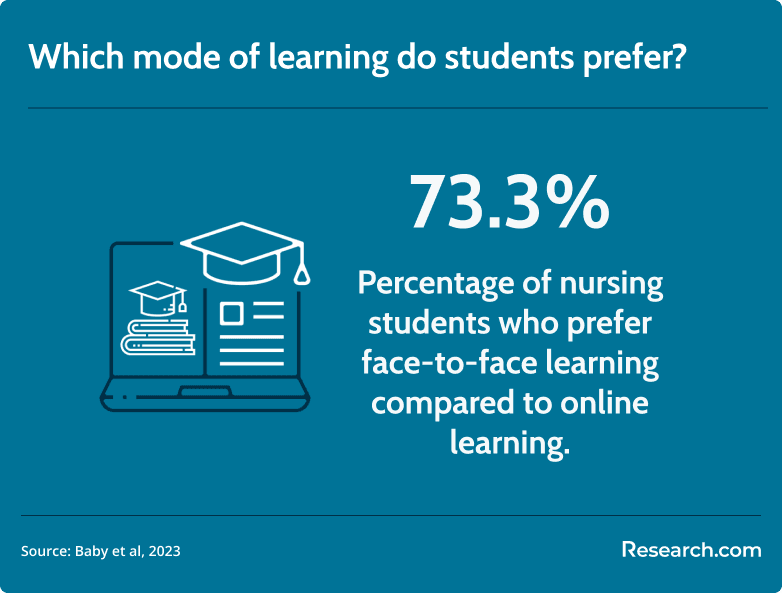
A study of undergraduate nursing students who attended online classes during the COVID-19 pandemic found that most students preferred face-to-face classes. That finding is a useful reminder: online flexibility can help with access, but nursing students still need strong in-person practice opportunities and faculty support.
Students comparing nursing ROI with other fields can also look at salary-focused guides in other disciplines, such as a master’s in library science salary outlook, to see how program cost, career mobility, and credential value differ across professions.
How does GCU prepare students for licensure and professional practice?
GCU’s pre-licensure nursing preparation combines classroom learning, NCLEX-style assessment, simulation, and supervised clinical experience. The goal is not only to help students pass the NCLEX-RN, but also to develop safe judgment, communication skills, documentation habits, and patient-care confidence.
Core preparation features
- NCLEX-focused learning: Practice questions, exams, and test-taking strategies are built into the academic experience so students encounter licensure-style thinking before graduation.
- Simulation and skills labs: Students practice procedures and clinical decision-making in controlled settings before providing care to real patients.
- Clinical rotations: Supervised experiences in hospitals and community healthcare settings help students apply theory to patient care.
- Professional formation: Nursing students study leadership, ethics, evidence-based practice, communication, and accountability alongside clinical skills.
- Student guidance: Success coaches and faculty support can help students understand academic expectations, licensing steps, and preparation strategies.
Students who eventually want advanced practice roles can use undergraduate clinical experiences as a foundation. If you are exploring long-term options, a guide explaining what a family nurse practitioner does can help you understand how RN preparation connects to graduate-level practice.
Licensure checklist for prospective students
- Confirm that your intended GCU program qualifies you for the licensure or certification pathway you want.
- Check state board requirements for the state where you plan to practice, not only where the school is located.
- Ask how NCLEX readiness is measured throughout the program.
- Review clinical attendance rules, background check requirements, immunization requirements, and professional conduct policies.
- Make a plan for study time, test preparation, transportation, and clinical scheduling before the program begins.
What student support services and learning resources are available?
GCU nursing students can access academic, clinical, and personal support resources designed to help them move from coursework to clinical practice. The most important resources to evaluate are faculty access, simulation quality, tutoring, NCLEX preparation, clinical coordination, and student success services.
| Support resource | How it helps nursing students | Question to ask |
| Simulation and skills labs | Students practice assessments, procedures, emergencies, and patient-care decisions in a safer training environment. | How often will I use simulation labs, and what skills are practiced before clinical rotations? |
| Faculty guidance | Faculty can clarify complex material, provide feedback, and help students connect theory to practice. | How accessible are faculty outside class, and what support is available if I fall behind? |
| Clinical and virtual training | Clinical rotations provide hands-on practice, while virtual simulation can support decision-making when placements are constrained. | What types of clinical settings are used, and how are virtual simulations integrated? |
| Student Success Center | Tutoring, writing support, counseling, and disability services can help students manage academic and personal challenges. | Which services are available online, on campus, and outside standard business hours? |
| NCLEX-style tools | Adaptive quizzing and exam-style practice can strengthen readiness for licensure testing. | How does the program identify students at risk of failing the NCLEX and intervene early? |
Students interested in teaching, mentoring, or academic roles can also explore what nurse educators do, since faculty support in nursing school often shows how instruction, coaching, and clinical judgment development work in practice.
Simulation can be especially valuable when it is structured, realistic, and followed by meaningful debriefing. Different types of simulation support are used in undergraduate nursing education, as shown in the chart below.
What scholarships, grants, or financial aid options are available?
GCU nursing students may be able to reduce out-of-pocket costs through scholarships, grants, federal aid, loans, employer benefits, and outside funding. The right mix depends on program level, citizenship status, academic profile, financial need, employer policies, and whether a scholarship includes a work commitment.
| Aid option | Who may use it | Important caution |
| Arizona Nursing Scholarships | Students in the Accelerated BSN program who meet eligibility rules | Recipients may need to work as a nurse in Arizona for at least four years after graduation. |
| GCU scholarships | Students who qualify for need-based, merit-based, academic, or leadership awards | Ask whether awards cover partial or full tuition and whether they are renewable. |
| Federal grants and loans | Eligible U.S. students who complete the FAFSA | Grants do not need to be repaid, but loans do; graduate students may also qualify for Direct PLUS loans. |
| External scholarships | Students who apply through foundations, nonprofits, professional associations, or community groups | Deadlines, eligibility rules, and award restrictions vary widely. |
| Employer tuition assistance | Working nurses or healthcare employees whose employers offer education benefits | Some employers require continued employment after funding is provided. |
Practical ways to lower nursing school costs
- Complete the FAFSA early so you can see federal aid eligibility before making a final enrollment decision.
- Ask for a transfer credit evaluation before committing to a program.
- Compare total program cost, not just cost per credit.
- Check whether scholarships can be combined with grants, employer assistance, or other awards.
- Read service-obligation scholarship terms carefully before accepting funding.
- Budget for clinical transportation, uniforms, equipment, testing, background checks, and health documentation.
How does GCU’s nursing program compare with other nursing schools in Arizona and nationwide?
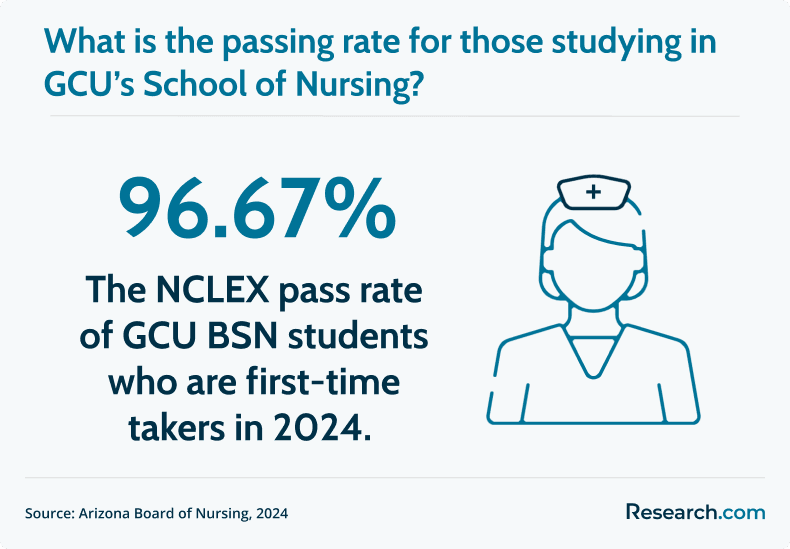
GCU is often considered a competitive nursing option in Arizona because it combines program variety, flexible formats, accreditation, and strong NCLEX outcomes. The BSN program recently reported a 96% first-time NCLEX pass rate, above the state average. Nationally, its online, hybrid, and accelerated pathways may appeal to students who need more flexibility than a traditional campus-only model provides.
Still, “best” depends on the student. A lower-cost public university, a community college ADN-to-BSN route, or another Arizona university such as Northern Arizona University or Arizona State University may be a better choice depending on residency, admission competitiveness, location, clinical access, and total cost.
| Comparison point | GCU strength | What to compare with other schools |
| Program variety | Offers traditional BSN, Accelerated BSN, RN to BSN, MSN, post-master’s certificates, and DNP pathways. | Whether other schools offer the exact pathway and specialization you need. |
| NCLEX outcomes | Recent outcomes include NCLEX pass rates averaging above 92% and a recently reported 96% first-time NCLEX pass rate for the BSN program. | Multi-year pass rates, attrition, graduation rates, and how pass rates compare with admission selectivity. |
| Flexibility | Online, hybrid, accelerated, and campus-based options can serve different student schedules. | Required in-person attendance, clinical scheduling, synchronous sessions, and location limits. |
| Cost | Online RN to BSN pricing may appeal to working nurses, while other pathways require larger investment. | Total program cost, public university tuition, community college transfer pathways, and aid packages. |
| Accreditation | CCNE-accredited nursing programs and HLC institutional accreditation. | Programmatic accreditation, state board approval, and eligibility in your intended practice state. |
How to use comparisons wisely
- Do not choose a nursing school based only on rankings or one NCLEX result.
- Compare total cost after aid, not sticker price.
- Ask each school how clinical placements are arranged.
- Check whether the program is approved for your state if you are an online or out-of-state student.
- Look for student support systems, not only admission speed.
- Consider how much you can realistically work while enrolled.
Who is GCU’s nursing program best suited for in 2027?
GCU’s nursing programs are best suited for students who want multiple academic pathways, can manage the cost, and value a mix of structured support, clinical preparation, and flexible delivery. The strongest fit is usually a student who has already confirmed licensure alignment, understands the time commitment, and has a realistic funding plan.
| Student type | Why GCU may fit | What to confirm first |
| Career changers | The accelerated BSN may help students with prior education transition into nursing more quickly. | Prerequisites, pace, clinical site location, and whether working during the program is realistic. |
| Working RNs | Online and hybrid options can support degree completion or graduate study while employed. | Transfer credits, employer reimbursement, practicum requirements, and weekly time demands. |
| Future nurse leaders | MSN, post-master’s certificate, and DNP pathways can support leadership, education, informatics, and advanced practice goals. | Specialization alignment, certification eligibility, state rules, and practicum placement. |
| Students focused on licensure preparation | NCLEX-style preparation, simulation, clinical rotations, and faculty support can help students build readiness. | Most recent NCLEX outcomes, academic progression policies, and support for students who struggle. |
| Students who need campus resources | On-campus learning can provide direct access to facilities, faculty, and peer support. | Housing, commute, fees, schedule, and campus-based availability. |
Common mistakes to avoid before enrolling
- Looking only at tuition: Fees, supplies, transportation, clinical expenses, and living costs can change the total price substantially.
- Assuming online means fully remote: Nursing programs often require in-person labs, simulations, clinicals, or practicums.
- Skipping state licensure checks: Students should confirm requirements in the state where they plan to practice.
- Ignoring accreditation details: Verify both institutional and nursing program accreditation for your specific pathway.
- Overestimating work capacity: Accelerated and clinical-heavy programs can make full-time employment difficult.
- Relying on one outcome metric: NCLEX pass rates are important, but students should also evaluate support, cost, admissions standards, and graduation expectations.
What graduates say about Grand Canyon University’s School of Nursing
- Faith: "The online nursing format gave me room to manage school, work, and family responsibilities at the same time. The courses were interactive, the instructors were accessible, and the assignments connected clearly to practice. By the time I entered my first nursing role, I felt ready for the transition."
- Barbara: "Most of my academic work was completed online, but the in-person labs, simulations, and clinical rotations gave me the hands-on confidence I needed. Those experiences helped me feel prepared for the NCLEX and for the realities of patient care."
- June: "I appreciated being able to learn with classmates and instructors from different places while still receiving guidance throughout the program. The mentorship helped me stay motivated and prepared me to handle challenges in nursing practice."
Questions to ask before choosing GCU’s nursing program
- What is the full estimated cost from start to finish, including fees and clinical expenses?
- How many of my credits will transfer, and how does that affect my graduation timeline?
- Is my chosen program approved for licensure or certification in the state where I plan to work?
- Where are clinicals, labs, simulations, or practicums completed?
- What happens if I cannot secure or attend a required clinical placement?
- How does GCU support students who are struggling academically or clinically?
- What are the most recent NCLEX pass rates for my specific program track?
- Can I combine scholarships, grants, loans, and employer tuition assistance?
- How many hours per week should I expect to study, attend class, and complete clinical work?
- What are the withdrawal, repeat-course, and progression policies if I fail or pause a course?
Key Insights
- GCU nursing costs vary by pathway: online RN to BSN students pay about $340 per credit hour, MSN students generally pay $565 to $715 per credit, traditional on-campus undergraduates pay about $8,250 per semester for 12 to 18 credits, and the ABSN costs roughly $40,000 per year.
- GCU may be worth considering for students who value flexible formats, CCNE accreditation, multiple degree levels, simulation-based learning, and strong NCLEX preparation.
- Accreditation is a nonnegotiable factor. GCU’s master’s programs are accredited through 2026, while its baccalaureate, doctoral, and post-graduate programs are accredited through 2031.
- “Online” nursing education still includes hands-on requirements. Students should confirm labs, simulations, clinicals, practicums, and state authorization before enrolling.
- GCU’s recent NCLEX outcomes, including pass rates averaging above 92% and a recently reported 96% first-time NCLEX pass rate for the BSN program, are positive signals, but students should review multi-year outcomes and support services.
- The best financial decision comes from comparing total cost after aid, not tuition alone. Transfer credits, scholarships, grants, employer assistance, fees, and living expenses can all change the real price.
- Before applying, students should verify accreditation, state licensure eligibility, clinical placement expectations, total costs, and whether the program format fits their schedule and learning style.
References:
- Abderrahim, F. B. Q. R. K. (2023). Simulation in Basic Nursing Student Education: Uses and Barriers. The Open Nursing Journal. https://opennursingjournal.com/VOLUME/17/ELOCATOR/e187443462307030/FULLTEXT/
- Arizona Board of Nursing. (2024). NCLEX-RN® Results for All First-Time Candidates. https://azbn.gov/sites/default/files/EDU-NCLEX-Statewide-Annual-Pass-Rates.pdf https://doi.org/10.2174/18744346-v17-230717-2023-198
- Baby, Priya; Philip, Angelina; Simon, Anna E.; Sibi, Ann M.; Shaju, Anitta M.; Abraham, Ann M.; Kathyayani, B. V. Undergraduate Nursing Students’ Experiences of Attending Online Classes During the COVID-19 Pandemic. Education in the Health Professions, 6(1), 42-45, Jan–Apr 2023. https://journals.lww.com/ehpf/fulltext/2023/06010/undergraduate_nursing_students__experiences_of.7.aspx
Other Things You Should Know About Grand Canyon University’s School of Nursing
Prospective students should consider alumni feedback on faculty support, program rigor, and career outcomes. Alumni highlight the hands-on clinical experience and accessible professors, while some express concerns over program workload. Examining these experiences can provide insights into the strengths and challenges of the program.
The program provides comprehensive preparation including NCLEX-RN review courses, simulations, and practice exams. Students have access to faculty who offer guidance and strategies, enhancing readiness and aiming for high pass rates on the licensing exam in 2027.


