
2027 Library Science Salary Outlook: What Master's Graduates Can Expect?

Co-Founder and Chief Data Scientist
In 2024, the US BLS recorded about 142,100 jobs for librarians and library media specialists, demonstrating the profession’s stability and demand. Average library science salary data reveal how graduate credentials shape earning power, with master’s-trained professionals earning more than paraprofessionals. These figures emphasize how education and specialization directly influence compensation in the field.
In this article, I will share what master’s in library science graduates can expect in today’s job market, from salaries to career paths. I will also provide guidance on aligning qualifications with rewarding library science work opportunities.
What are the benefits of a master’s in library science?
- Earning a master’s in library science increases salary potential, allowing graduates to qualify for higher-paying leadership roles.
- The degree provides professional recognition, positioning librarians as experts in information management, research support, and advancing digital literacy in educational and community settings.
- It supports career mobility, opening pathways to specialized roles, administrative positions, and opportunities in diverse sectors, including academia, public institutions, and corporate environments.
- What is the average salary for graduates with a master’s in library science? Average Salary
- What is the starting salary for MLIS graduates entering the workforce? Starting Salary
- How much more can librarians earn with a master’s degree compared to a bachelor’s? MLIS Salary
- Which states offer the highest salaries for library science master’s degree holders? High-Paying States
- What are the lowest-paying states for library science professionals? Lowest-Paying States
- Which library science jobs pay the most? High-Paying Jobs
- How do salaries for library science professionals compare to other education degree jobs? How do salaries for library science professionals compare to other education degree jobs?
- Should MLIS Graduates Explore Advanced Doctoral Degrees for Career Growth? Should MLIS Graduates Explore Advanced Doctoral Degrees for Career Growth?
- Do ALA-accredited or specialized MLIS programs lead to higher salaries? Do ALA-accredited or specialized MLIS programs lead to higher salaries?
- What is the projected job outlook for librarians and related roles? Job Outlook
- What skills or credentials help master’s in library science graduates maximize their salary potential? What skills or credentials help master’s in library science graduates maximize their salary potential?
What is the average salary for graduates with a master’s in library science?
Graduates with a master’s in library science (MLIS) earn an average annual salary of $72,983 in the US. This translates to $35.09 per hour, $1,403 per week, or $6,081 per month (Salary.com, 2025). This figure provides an essential benchmark for career planning for students and professionals alike to gauge the economic value of the degree.
For those exploring accessible academic pathways, pursuing the easiest library science degree may serve as a stepping stone, though higher earnings generally align with completing a master’s program.
While this national average highlights the financial stability of the profession, it is important to recognize that earnings vary widely depending on several factors. Geographic location, institutional type, and professional specialization all play critical roles in shaping individual salary outcomes.
Moreover, experience level has a significant influence on earnings. Entry-level MLIS graduates may start at lower salary brackets, but with years of service, additional certifications, or managerial responsibilities, salaries can rise well above the national average. The degree also positions graduates for advancement into administrative or director-level roles.
Thus, while $72,983 represents a reliable midpoint, the true library science salary outlook for MLIS graduates is best understood as a range shaped by professional choices, institutional settings, and regional dynamics. This perspective underscores the importance of aligning career goals with both salary expectations and personal interests in the field of library and information science.
What is the starting salary for MLIS graduates entering the workforce?
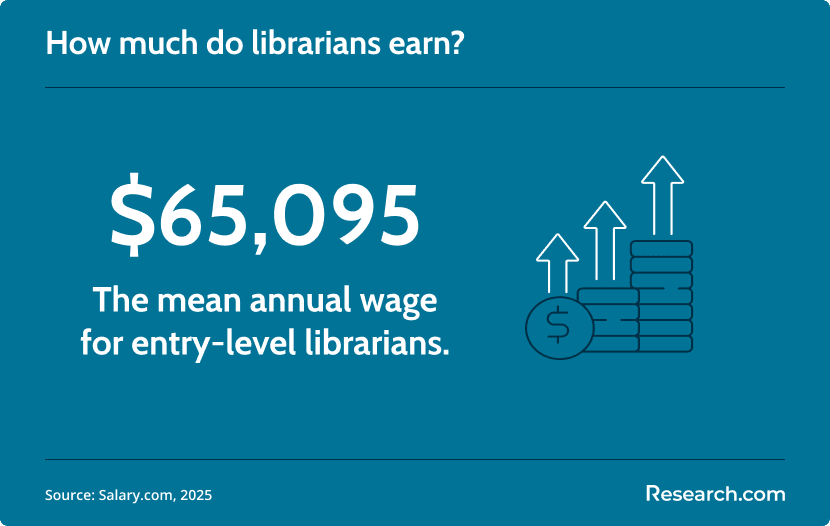
Recent graduates with an MLIS often rely on their starting library science salary to shape both professional expectations and long-term career growth. Entry-level librarians typically earn $65,095 annually, but this amount shifts depending on institutional type, funding levels, and regional cost of living.
Students from some of the largest online universities by enrollment are increasingly entering MLIS programs online, taking advantage of flexible study options that prepare them for roles in both academic and public libraries. Large urban centers and specialized academic or corporate libraries usually provide higher initial pay, while rural or community libraries offer lower salaries but valuable early career experience.
Although starting salaries may seem modest compared to other graduate-level professions, they establish a stable foundation with strong potential for growth. Librarians steadily increase their earning power as they gain experience, pursue continuing education, and develop expertise in areas such as digital archives, data management, or information systems.
In this way, initial compensation for MLIS graduates not only reflects current labor market conditions but also signals the long-term opportunities available to those who advance strategically within the profession.
How much more can librarians earn with a master’s degree compared to a bachelor’s?
The salary gap between librarians with a bachelor’s degree and those with a master’s in library science (MLIS) is both clear and significant. Bachelor’s-level graduates often move into paraprofessional roles such as library assistants or technicians, which serve as valuable entry points but usually come with modest pay.
By contrast, earning an MLIS, including options such as the cheapest masters in library science programs, opens the door to professional and leadership positions that offer higher salaries, greater responsibility, and stronger long-term growth.
While bachelor’s holders often remain in support roles, the MLIS elevates professionals into higher-paying, credentialed positions where leadership, specialization, and institutional impact are rewarded.
Librarians who hold a bachelor’s degree earn:
- Library Assistants: Average $38,859 annually, providing essential frontline support with circulation, shelving, and basic patron services.
- Library Technicians: Typically earn $43,143 per year, assisting with cataloging, interlibrary loans, and database maintenance, but without decision-making authority.
With an MLIS, however, graduates unlock a different tier of opportunities and compensation, often accessing the highest levels of library science salary across academic, corporate, and specialized library settings. According to Zippia data, 19.8% of librarians hold a master’s degree, underscoring how advanced credentials remain a critical pathway to professional roles and competitive pay.
- Librarians: Usually start at $65,193 per year, taking on professional responsibilities in reference services, instruction, and specialized collection management.
- Library Directors: Average $99,246 annually, overseeing budgets, staff, and strategic initiatives that shape the vision and impact of an entire library system.
This chart from ZipRecruiter shows the earnings difference between bachelor’s and MLIS graduates.
Which states offer the highest salaries for library science master’s degree holders?
Geography shapes librarian salaries, influencing not only immediate earnings but also long-term career opportunities. States with higher costs of living and significant investments in education, research, and cultural institutions consistently provide stronger compensation packages.
For master's in library science degree graduates, evaluating relocation options requires balancing competitive pay against housing costs, professional development opportunities, and access to robust library systems.
The top-paying regions for librarians highlight this trend, showing how geography significantly influences library science salary by reflecting differences in demand, cost of living, and institutional investment.
- Washington ($73,838 annually): Librarians in Washington benefit from competitive wages fueled by the state’s metropolitan hubs, thriving higher education sector, and sustained public investment in library infrastructure.
- District of Columbia ($73,670 per year): The nation’s capital offers exceptional opportunities due to its dense concentration of federal agencies, policy think tanks, and research libraries that demand specialized expertise.
- New York ($71,324 annually): With its vast network of public libraries, prestigious academic institutions, and cultural organizations, New York rewards librarians with salaries that reflect both demand and the state’s high cost of living.
This chart from ZipRecruiter details the top-paying states for librarians in the US.
What are the lowest-paying states for library science professionals?
The salary landscape for library and information science professionals varies significantly across the United States, with certain states offering more modest compensation due to economic structures, funding priorities, or regional demographics.
Interestingly, understanding what are the roles of human resources can provide insight into why salary variations occur, since HR departments play a major part in shaping pay scales, recruitment policies, and funding allocations within libraries and educational institutions.
While these lower-paying states may not match the earnings available in metropolitan or research-driven regions, they often balance reduced salaries with lower costs of living, closer-knit communities, or greater accessibility to entry-level positions that can serve as gateways to professional growth.
The lowest-paying states for library science professionals include:
- Florida ($48,718 annually): Pays among the lowest nationwide, reflecting limited state funding but offering opportunities in growing community libraries.
- West Virginia ($50,470 annually): Provides modest wages, with rural demographics shaping demand and resources for library services.
- Arkansas ($53,908 annually): Offers below-average pay, yet entry-level professionals often find accessible roles in local public and academic libraries.
- Georgia ($55,048 annually): Maintains moderate salaries, influenced by budgetary constraints despite serving diverse and expanding populations.
- Louisiana ($55,748 annually): Sits on the higher end of the lower-paying states, with compensation reflecting regional funding patterns and cost of living.
Which library science jobs pay the most?
Compensation in library science increases when professionals take on leadership duties, develop specialized expertise, or apply advanced knowledge beyond the MLIS. While community librarians typically earn steady salaries, roles in corporate, legal, medical, and managerial contexts often provide significantly higher pay due to the specialized skills they require.
Here are the roles where graduates can achieve the highest library science salary, reflecting the value of specialized expertise and leadership.
- Corporate Librarians ($65,193 annually): Manage information systems and research for businesses, earning competitive salaries in industries such as finance, consulting, and technology.
- Law Librarians ($69,347 annually): Support attorneys and legal scholars with specialized legal research, often earning more when paired with a Juris Doctor (JD) degree.
- Medical Librarians ($77,408 annually): Guide healthcare professionals through complex research databases, commanding strong salaries due to their critical role in patient care and evidence-based medicine.
- Knowledge Managers ($86,119 annually): Oversee organizational knowledge systems outside traditional library environments, earning high compensation for blending information science with business strategy.
- Library Directors ($99,246 annually): Lead large institutions, often surpassing six-figure earnings by managing budgets, staff, and long-term strategic initiatives.
How do salaries for library science professionals compare to other education degree jobs?
Many graduates actively compare library science salaries with other education-related professions when evaluating career choices. Librarians with an MLIS typically earn more than paraprofessionals and support staff but less than high-level administrators.
For those seeking flexibility and career advancement, enrolling in a masters in library science online program provides a practical pathway to higher-paying professional roles while balancing work and study commitments.
The compensation of librarians demonstrates the value of advanced training and highlights their specialized role in promoting information literacy, research, and student learning. They, therefore, occupy a middle ground in the education salary spectrum.
Librarians earn above many support roles but below leadership positions, while maintaining strong opportunities for advancement through specialization and administrative pathways. Their library science salary aligns closely with comparable education degree jobs, as illustrated in the following examples:
- Elementary School Teachers ($52,101 annually): These educators earn slightly more than many librarians, reflecting their direct classroom responsibilities.
- High School Teachers ($57,056 annually): Salaries vary by region but tend to surpass average librarian pay, especially in urban districts.
- Instructional Coordinators ($69,627 annually): Comparable to advanced librarian roles, these professionals design curricula and guide instructional practices.
- Academic Advisors ($47,454 annually): This figure falls below librarian salaries, despite both roles requiring strong mentoring and guidance skills.
- Education Administrators ($76,985 annually): Their compensation far exceeds librarian pay, as administrators oversee budgets, staff, and institutional policies.
- Teacher Assistants ($32,572 annually): These support roles earn well below MLIS-level positions, highlighting the financial advantage of graduate credentials.
Should MLIS Graduates Explore Advanced Doctoral Degrees for Career Growth?
For library science professionals aiming to ascend into leadership and specialized research roles, advancing education beyond an MLIS can be a pivotal strategy. Doctoral credentials foster a deepened expertise in information science management and policy development, positioning graduates for high-level administrative or academic appointments. This pathway can also support a transition into roles focused on strategic decision-making and innovative research, thereby enhancing career trajectories. Professionals weighing further study may benefit from accelerated doctoral programs in education online, which blend rigorous academic frameworks with practical career advancement.
Do ALA-accredited or specialized MLIS programs lead to higher salaries?
American Library Association accredited and specialized MLIS programs often lead to higher salaries by enhancing employability and aligning graduates with advanced professional opportunities. Employers regularly favor ALA-accredited degrees, as they serve as a recognized standard of quality and, in many cases, a requirement for professional librarian positions.
Specialized MLIS tracks further differentiate candidates by equipping them with advanced knowledge in high-demand areas, positioning them for roles that offer greater compensation and long-term career advancement. These pathways often lead to a higher library science salary by matching expertise with market needs and expanding access to diverse library science degree jobs across academic, corporate, medical, and legal settings.
Here are the examples of program-based impacts:
- Archival Science Concentrations ($72,781): Prepare graduates for federal and research library careers.
- Digital Librarianship Tracks ($67,806): Provide expertise in e-resources and data systems.
- Law Librarianship Focus ($69,347): Support careers in legal research, with salaries increasing significantly when paired with a JD.
- Health Informatics Integration ($77,408): Prepares graduates to manage clinical data and biomedical resources as medical librarians, supporting research, education, and patient care, with earnings noted in the previous section.
This chart from ZipRecruiter highlights specialized MLIS program career paths that lead to higher salaries.
What is the projected job outlook for librarians and related roles?
The job outlook for librarians and related professionals shows a field that is evolving rather than shrinking. While overall growth remains modest, demand is shifting toward roles that address digital resources, cultural preservation, and advanced research needs.
Libraries, schools, and cultural institutions increasingly seek professionals who combine traditional skills in information organization with modern expertise in data management and digital literacy. This balance ensures that librarians continue to connect communities with reliable and well-curated knowledge.
The projected employment growth for librarians and related roles from 2024 to 2034, according to the US BLS (2025), is:
- Library Technicians and Assistants (3% growth): These roles support daily library operations by handling cataloging, circulation, and patron assistance, ensuring consistent demand for paraprofessionals.
- Librarians and Library Media Specialists (2% growth): Schools, public systems, and universities continue to hire certified librarians who can teach information literacy, manage digital collections, and guide research.
- Archivists, Curators, and Museum Workers (6% growth): Institutions expand their investment in preserving cultural assets, building digital archives, and engaging communities, which fuels stronger demand in this sector.
The salary outlook for librarians and related roles reflects steady growth, with incremental gains more pronounced for MLIS graduates who pursue specialized, leadership, or well-funded institutional positions. Overall, credentialed professionals who continue building expertise can expect moderate but reliable wage progression in the coming years (Zippia, n.d.).
Library Technician
Library technician salaries demonstrate gradual year-over-year growth, reflecting stable demand for entry-level support roles in library services.
- 2023 ($34,727): The average annual salary reflects a solid foundation for those beginning careers in library services.
- 2024 ($35,604): The average salary shows modest growth, supported by steady demand for technical and support roles.
- 2025 ($37,757): The average earnings highlight continued incremental wage gains for early-career professionals.
Librarian
Librarian salaries show steady growth, emphasizing both the value of advanced academic preparation and the stability of professional roles.
- 2023 ($50,131): The average salary underscores the professional training and academic preparation required for the role.
- 2024 ($51,185): Average annual earnings demonstrate consistent growth, reflecting the stability of librarian positions across institutions.
- 2025 ($53,096): The average salary rise indicates how credentials such as the MLIS enhance long-term earning potential.
Archivist
Archivist salaries highlight gradual but meaningful increases, reflecting the growing recognition of specialized expertise in preservation and records management.
- 2023 ($43,391): The average annual salary reflects the specialized nature of archival work in preserving cultural and historical records.
- 2024 ($44,811): Average earnings continue to grow, pointing to institutional reliance on archival expertise.
- 2025 ($47,145): The average salary increase signals greater recognition of specialized skills and preservation-focused roles.
What skills or credentials help master’s in library science graduates maximize their salary potential?
To maximize salary potential, graduates with an MLIS must complement their academic training with additional skills and credentials that meet the profession’s changing demands.
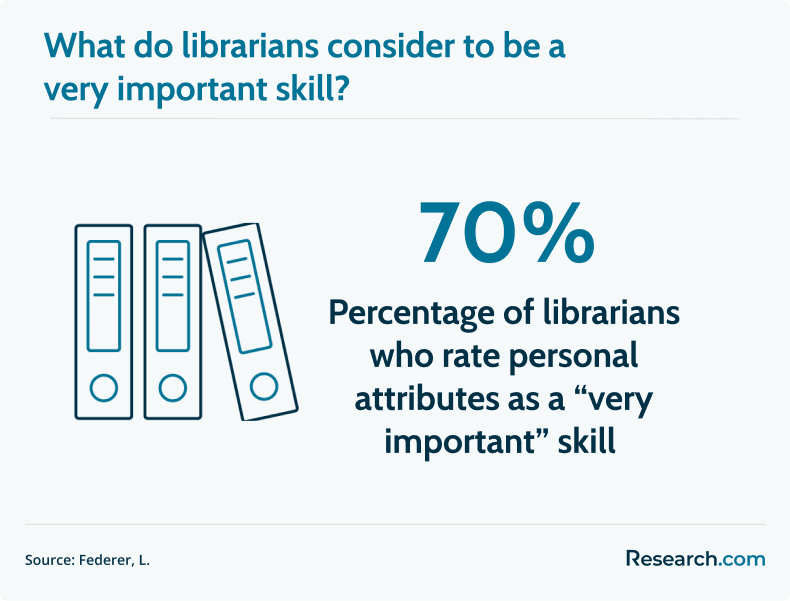
70% of librarians rate personal attributes, such as curiosity, adaptability, and creative problem-solving, as “very important. They often value them even more than technical skills. This combination of technical expertise and strong personal traits positions MLIS graduates for advancement into higher-paying roles.
Other skills and credentials that enhance a master's in library science salary potential include:
- Digital Literacy Skills: Strengthen employability in electronic resource management, digital archives, and information systems.
- Project Management Certification: Opens pathways to administrative and leadership positions where oversight and strategic planning are rewarded.
- Subject-Matter Expertise: Specializations in law, healthcare, or business significantly raise salaries in corporate and special library settings.
- Teaching Credentials: Enable access to school librarian roles that provide stable salaries and alignment with academic calendars.
- Language Skills: Support positions in academic and multicultural libraries, broadening reach and service capacity.
- Fundraising and Grant Writing: Add measurable value in public and nonprofit institutions by securing resources that sustain and expand library programs.
Key Findings
- Graduates with a master’s in library science (MLIS) earn an average annual salary of $72,983, reflecting the value of advanced training.
- Library Directors earn an average of $99,246 annually, showing the higher pay that comes with leadership responsibilities.
- Librarians in Washington earn an average of $73,838, making it one of the better-paying states for the profession.
- Librarians see a projected 2% job growth from 2024 to 2034, indicating steady but modest demand.
- 70% of librarians rate personal attributes as a “very important” skill, emphasizing the role of interpersonal strengths in the field.
References:
- Federer, L. (2018). Defining Data Librarianship: A Survey of Competencies, Skills, and Training. Retrieved from https://pmc.ncbi.nlm.nih.gov/articles/PMC6013124/
- Salary.com (2025). Librarian Salary in the United States. Retrieved from https://www.salary.com/research/salary/benchmark/librarian-salary
- US BLS (2025). Archivists, Curators, and Museum Workers. Retrieved from https://www.bls.gov/ooh/education-training-and-library/curators-museum-technicians-and-conservators.htm#tab-6
- US BLS (2025). Librarians and Library Media Specialists. Retrieved from https://www.bls.gov/ooh/education-training-and-library/librarians.htm#tab-6
- US BLS (2025). Library Technicians and Assistants. Retrieved from https://www.bls.gov/ooh/education-training-and-library/library-technicians-and-assistants.htm#tab-6
- Zippia (n.d.). Job Outlook for Archivists in the United States. Retrieved from https://www.zippia.com/archivist-jobs/trends/
- Zippia (n.d.). Job Outlook for Librarians in the United States. Retrieved from https://www.zippia.com/librarian-jobs/trends/
- Zippia (n.d.). Job Outlook for Library Technicians in the United States. Retrieved from https://www.zippia.com/library-technician-jobs/trends/
- ZipRecruiter (2025). Academic Advisor Salary. Retrieved from https://www.ziprecruiter.com/Salaries/Academic-Advisor-Salary
- ZipRecruiter (2025). Archivist Salary. Retrieved from https://www.ziprecruiter.com/Salaries/Archivist-Salary
- ZipRecruiter (2025). Corporate Librarian Salary. Retrieved from https://www.ziprecruiter.com/Salaries/Corporate-Librarian-Salary
- ZipRecruiter (2025). Education Administrator Salary. Retrieved from https://www.ziprecruiter.com/Salaries/Education-Administrator-Salary
- ZipRecruiter (2025). Elementary Teacher Salary. Retrieved from https://www.ziprecruiter.com/Salaries/Elementary-Teacher-Salary
- ZipRecruiter (2025). High School Teacher Salary. Retrieved from https://www.ziprecruiter.com/Salaries/High-School-Teacher-Salary
- ZipRecruiter (2025). Instructional Coordinator Salary. Retrieved from https://www.ziprecruiter.com/Salaries/Instructional-Coordinator-Salary
- ZipRecruiter (2025). Knowledge Manager Salary. Retrieved from https://www.ziprecruiter.com/Salaries/Knowledge-Manager-Salary
- ZipRecruiter (2025). Law Librarian Salary. Retrieved from https://www.ziprecruiter.com/Salaries/Law-Librarian-Salary
- ZipRecruiter (2025). Library Assistant Salary. Retrieved from https://www.ziprecruiter.com/Salaries/Library-Assistant-Salary#Yearly
- ZipRecruiter (2025). Library Director Salary. Retrieved from https://www.ziprecruiter.com/Salaries/Library-Director-Salary
- ZipRecruiter (2025). Librarian Salary. Retrieved from https://www.ziprecruiter.com/Salaries/Librarian-Salary
- ZipRecruiter (2025). Library Technician Salary. Retrieved from https://www.ziprecruiter.com/Salaries/Library-Technician-Salary#Yearly
- ZipRecruiter (2025). Master Of Library Science Salary. Retrieved from https://www.ziprecruiter.com/Salaries/Master-Of-Library-Science-Salary#
- ZipRecruiter (2025). Medical Librarian Salary. Retrieved from https://www.ziprecruiter.com/Salaries/Medical-Librarian-Salary
- ZipRecruiter (2025). Research Librarian Salary. Retrieved from https://www.ziprecruiter.com/Salaries/Research-Librarian-Salary
- ZipRecruiter (2025). Teachers Assistants Salary. Retrieved from https://www.ziprecruiter.com/Salaries/Teachers-Assistants-Salary#Yearly
- ZipRecruiter (2025). What Is the Average Librarian Salary by State. Retrieved from https://www.ziprecruiter.com/Salaries/What-Is-the-Average-Librarian-Salary-by-State
Other Things You Should Know About Library Science Salaries
In 2027, master's graduates in Library Science can expect an average salary increase due to a growing need for information management experts. Salaries will vary by region and specialization, with data management and digital librarianship offering higher earning potential, especially in urban areas and specialized institutions.
MLIS graduates should research industry standards, highlight specialized skills, and leverage internships or relevant work experience during negotiations. Networking with professionals in the field and demonstrating unique contributions to prospective employers can also enhance bargaining power for a competitive salary.


