
2027 Key Roles of Human Resources

Co-Founder and Chief Data Scientist
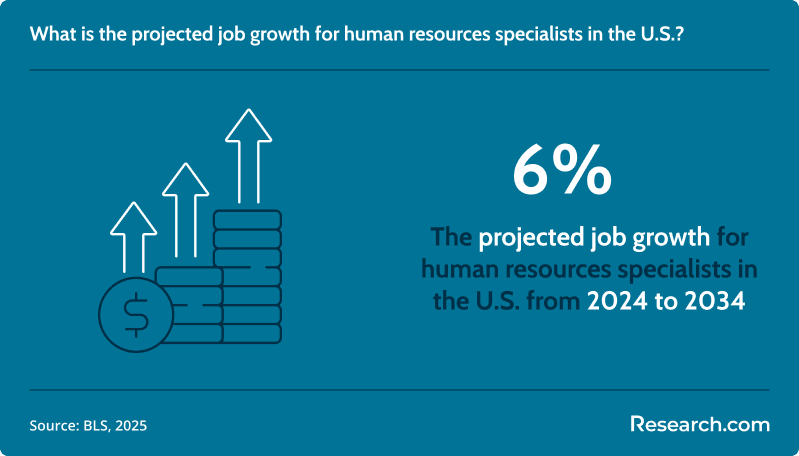
Outdated views of human resources are becoming a thing of the past. HR is no longer just an administrative department; it's now a vital strategic partner that helps businesses succeed. The need for skilled HR experts is growing, with the field expected to see a 6% increase in jobs between 2024 and 2034. This trend highlights the importance of keeping up with new responsibilities and developing the right skills to thrive in this changing profession.
With more than 10 years of experience in career planning, our team at Research.com has created a detailed guide to modern HR roles, using only reliable information. This article will help you navigate industry changes, whether you're a student thinking about a career in HR, a professional wanting to advance, or a business owner aiming to build a stronger team.
Key Things You Should Know About the Roles of Human Resources
- The modern HR role has evolved from a transactional, "back-office" function to a proactive, strategic partner, with job growth for specialists projected at 6% from 2024 to 2034, underscoring its growing importance in business.
- The key functions of HR span the entire employee lifecycle, covering talent acquisition, compensation, employee relations, and training, all while ensuring legal compliance and managing performance to foster a skilled and engaged workforce.
- Strategic HR is crucial for a company's success and competitive edge, as evidenced by studies showing that companies with a focus on continuous learning are 46% more likely to adopt new technologies successfully and that 26% of CEOs rate talent shortages as their top business threat.
- What are the key roles of human resources? Key Roles
- What is strategic human resource management (SHRM)? What is SHRM
- How has the role of human resources evolved from a traditional to a strategic function? How has the role of human resources evolved from a traditional to a strategic function?
- Why is strategic HR important for a company's growth and competitive advantage? Why is strategic HR important for a company's growth and competitive advantage?
- What is performance management, and why is it important in HR? What is performance management, and why is it important in HR?
- How is technology transforming the HR profession? Tech in HR
- What skills are required to work in HR analytics? Required Skills
- What are the key elements of a healthy organizational culture? What are the key elements of a healthy organizational culture?
- What is the role of HR in providing feedback and coaching to employees? What is the role of HR in providing feedback and coaching to employees?
- What are the main legal and ethical responsibilities of an HR professional? Legal Responsibilities
- What are diversity, equity, and inclusion (DEI) in the context of human resources? DEI in HR
- What are the emerging trends shaping the future of HR? What are the emerging trends shaping the future of HR?
What are the key roles of human resources?
Human resources roles are pivotal in managing a company's workforce. HR is not just an administrative department; it also serves as the company’s strategic partner in achieving business goals. Human resources roles cover the entire employee lifecycle, from the moment a person is hired to when they leave the company.
Understanding these responsibilities is similar to exploring jobs in law enforcement without being a cop, where success relies on specialized skills and supportive functions that keep the organization running smoothly.
Talent Acquisition & Recruitment
This is the process of attracting, sourcing, and hiring qualified candidates to fill open positions. It's more than just posting a job ad; it involves developing a hiring strategy, conducting interviews, and managing the entire onboarding process to ensure a smooth transition for new hires.
Compensation & Benefits
HR is responsible for designing and managing fair compensation structures, including salaries, wages, and bonuses. This role also involves administering employee benefits, such as health insurance, retirement plans, and paid time off, to ensure the company remains competitive and attracts top talent.
Employee Relations
This function focuses on fostering a positive and productive workplace culture. HR acts as a liaison between employees and management, handling conflicts, grievances, and disciplinary actions. This role is crucial for maintaining morale and ensuring a respectful work environment.
Training & Development
To help employees grow and stay current with industry demands, HR designs and implements training programs. This includes everything from initial onboarding to professional development workshops and career planning, which helps boost employee skills and retention.
Legal Compliance & Risk Management
HR ensures the company adheres to all labor laws, regulations, and workplace safety standards. This includes managing employee records, staying updated on legal changes, and creating policies that protect both the business and its employees from potential legal issues.
Performance Management
This role involves creating systems to evaluate employee performance and provide constructive feedback. HR facilitates performance reviews, sets goals, and helps managers and employees create development plans that align with both individual and company objectives. If these roles pique your interest, you might consider pursuing a fast-track online master's degree in human resources management to advance your career in the field.
What is strategic human resource management (SHRM)?
Strategic human resource management (SHRM) is a proactive approach that aligns an organization's human resource practices and capabilities with its long-term business goals. It integrates HR strategies with the broader company strategy to enhance organizational performance, workforce development, and competitive advantage.
SHRM goes beyond traditional HR functions like hiring and payroll by focusing on planning, employee development, performance management, and creating policies that directly support the overall strategic objectives of the organization.
Essentially, it acts as a bridge connecting HR activities with the company’s goals to ensure that human capital contributes effectively to business success.
Key aspects of SHRM
- SHRM is focused on long-term planning rather than short-term administrative HR tasks.
- It aims to align employee skills, performance, and development with the organization's mission and goals.
- SHRM helps in securing a competitive advantage through the strategic deployment of a committed and capable workforce.
- Collaboration between HR and other business units is essential for fostering a positive work culture and organizational excellence.
- It addresses challenges such as management resistance and resource constraints while promoting retention and effective communication across organizational levels.
How has the role of human resources evolved from a traditional to a strategic function?
Human resources roles have evolved from a traditional, administrative function to a strategic one that directly contributes to a company's success. This change reflects a broader shift in how businesses view their employees, from being a cost to be managed to an asset to be invested in.
Just as people often ask “what does a robotics engineer do” to understand the full scope of responsibilities in that field, understanding HR’s strategic role requires looking beyond routine tasks to see its impact on long-term business performance.
Reactive to proactive
Traditional HR was reactive and focused on administrative tasks. It handled problems as they came up. For example, a traditional HR department would fill a job opening only after a manager requested it, or they would respond to an employee complaint after it was filed. Its main responsibilities included payroll, benefits administration, and ensuring compliance with labor laws.
In contrast, modern HR is proactive and forward-looking. Instead of simply reacting to events, it anticipates future needs. For instance, a strategic HR team would analyze market trends and business goals to forecast future talent needs, then create a long-term plan to attract and develop that talent. They don't just solve problems; they prevent them.
Administrative to strategic partner
In the past, the HR department was often seen as a separate, "back-office" function with little involvement in high-level business decisions. Their role was primarily transactional, managing paperwork and following established procedures.
Today, HR is a strategic partner and a crucial part of the leadership team. Modern HR professionals work with executives and department heads to align HR initiatives with the company's overall goals.
They use data and analytics to make informed decisions about talent management, employee engagement, and organizational culture. This shift means HR now plays a direct role in creating a competitive advantage by building a skilled, motivated, and engaged workforce.
Why is strategic HR important for a company's growth and competitive advantage?
Strategic HR is vital for a company's growth and competitive advantage because it treats people as the most important asset, not just an expense. Aligning HR practices directly with a company's long-term business strategy ensures that the workforce is ready to meet future challenges and opportunities.
This alignment also highlights the benefits of upskilling, as continuously developing employee skills strengthens the organization’s adaptability and innovation capacity.
Alignment with business goals
Strategic HR isn't just about hiring people; it's about hiring the right people to achieve specific business goals. If a company wants to expand into a new market, strategic HR will plan to ensure there's a team with the necessary skills and experience. This proactive approach ensures that every HR function, from recruitment to training, directly supports the company's mission and objectives.
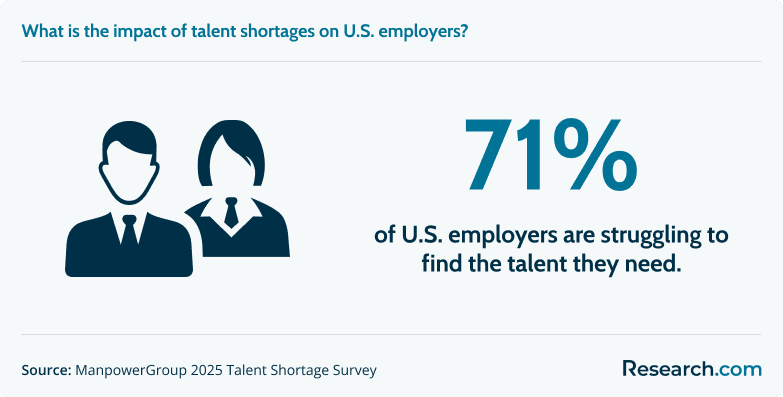
Studies show that 26% of CEOs rate talent shortages as the top threat to their business outlook, underscoring the critical importance of recruiting the right skilled workforce to meet organizational goals.
Enhanced agility and innovation
In a rapidly changing market, companies need to be adaptable to stay ahead. Strategic HR builds a resilient and agile workforce by anticipating future skill gaps. It then implements targeted training and development programs that prepare employees for new technologies or market shifts.
This focus on continuous learning and upskilling fosters a culture of innovation. In fact, companies that prioritize ongoing learning are 46% more likely to successfully adopt new technologies. This ability to quickly pivot and respond to change gives a company a strong competitive advantage.
Improved performance and retention
Strategic HR is key to building a high-performing workforce. Creating effective performance management systems and providing opportunities for professional growth help employees feel valued and motivated. This leads to higher job satisfaction and better employee retention, which in turn reduces recruitment and training costs.
A company that holds on to its top talent gains a significant competitive advantage that's hard for rivals to replicate.
What is performance management, and why is it important in HR?
Performance management is a structured, strategic HR process that tracks, evaluates, and improves employee performance to align with business goals. It involves setting clear objectives, regular check-ins between managers and employees, ongoing feedback, and formal performance reviews. This continuous cycle helps employees develop the skills needed to contribute effectively to departmental and organizational success.
Its importance in HR lies in fostering an engaged, motivated workforce and enhancing productivity. Effective performance management ensures employees are continually growing—similar to how prospective social workers ask “can I get a MSW without a BSW” to explore alternative pathways for advancing their careers and gaining necessary skills.
- Promotes alignment between individual performance and company objectives,
- Identifies employee development needs, enabling targeted training and growth,
- Recognizes high performers, boosting morale and retention,
- Cultivates a healthy feedback culture, improving manager-employee relations, and
- Drives better business outcomes.
Beyond improving internal operations and employee growth, understanding the broader landscape of the HR profession is crucial. This includes an analysis of where HR roles are most prevalent, as seen in the largest employers of human resources specialists.
How is technology transforming the HR profession?
Technology is transforming the HR profession in profound ways by enhancing efficiency, improving decision-making, and fostering strategic impact.
Artificial Intelligence (AI) is automating routine tasks such as candidate screening, payroll processing, and benefits administration, freeing HR professionals to focus on strategic activities like talent development and workforce planning. Over 60% of HR leaders report using AI to enhance recruitment efficiency and reduce bias.
Digital transformation in HR also introduces data analytics and predictive modeling, enabling evidence-based HR decisions regarding talent acquisition, retention risks, and skills development. Companies leveraging HR analytics report 20-25% improvement in workforce productivity.
Learning management systems and virtual training platforms facilitate continuous employee development and upskilling, critical for workforce agility in rapidly changing markets. Employee experience platforms powered by AI and automation personalize communication, performance feedback, and career pathing.
For those interested in the technological side of human resources, a background in software is becoming increasingly valuable. A mobile app development online degree could provide the technical expertise needed to build or manage the innovative platforms that are shaping the future of HR.
By harnessing technology, HR departments can now analyze complex workforce data to gain deeper insights into their people. This data-driven approach is key to understanding and responding to labor market trends, such as the geographic distribution of specialized roles like human resources analysts.
The chart below shows the top five most common states for human resources analysts:
What skills are required to work in HR analytics?
To work in HR analytics, the required skills include a blend of technical, analytical, and communication competencies:
- Data Analysis and Statistical Knowledge: Proficiency in analyzing workforce data using statistical tools to interpret trends and patterns that inform HR decisions, such as recruitment, retention, and performance.
- HR Metrics and Reporting Skills: Ability to understand and generate meaningful HR reports using HR information systems (HRIS), turning raw data into actionable insights with clear storytelling for stakeholders.
- Predictive Analytics: Skills in applying predictive models to forecast outcomes like employee turnover, performance, and recruitment success, helping organizations plan better talent strategies.
- Technology Proficiency: Comfortable using advanced HRIS, data visualization, and analytics software to manage and analyze HR data efficiently.
- Strong Attention to Detail and Problem Solving: Ensuring data accuracy and deriving solutions from complex datasets.
- Communication Skills: Translating complex data into clear, compelling messages tailored to diverse audiences, including managers and executives.
- Knowledge of Employment Laws and Compliance: Understanding legal aspects related to HR data management to ensure ethical and compliant practices.
For those looking to hone their communication and report-writing skills, a fast-track professional writing degree online can provide a strong foundation for a career in HR analytics.
Meanwhile, the chart below shows the most common human resources analyst degrees.
What are the key elements of a healthy organizational culture?
The key elements of a healthy organizational culture include core values, unified purposes, efficient leadership, effective communication, accountability, proper recognition, and a healthy environment. These elements foster employee connection, motivation, and engagement, which are essential for a thriving workplace.
Strong organizational culture is built on shared values that guide behavior, clear purpose and direction that align efforts, transparent communication that builds trust, leadership that models integrity, and a culture of appreciation that acknowledges contributions.
Additionally, psychological safety, a team-first mindset, resilience, innovation, and employee empowerment further contribute to a positive and sustainable organizational culture. These elements encourage collaboration, employee satisfaction, and high performance within the organization.
If you are a professional seeking to advance your understanding of these principles, pursuing an accelerated online master's degree in organizational leadership could be an ideal next step.
What is the role of HR in providing feedback and coaching to employees?
One of the human resources roles is providing feedback and coaching to employees, which is multifaceted and critical for employee development and organizational success. HR designs and implements structured feedback mechanisms such as performance reviews, real-time feedback systems, and surveys to facilitate continuous improvement.
HR ensures that feedback processes are fair, transparent, and aligned with organizational goals, fostering open communication and trust within the workplace.
HR professionals provide constructive and supportive feedback to help employees identify strengths and areas for development, set meaningful goals, and enhance their skills. They use coaching to guide employees and managers through reflection and action, helping them achieve personal and professional growth.
HR coaching also supports leadership development, conflict resolution, stress management, and transitioning employees during organizational changes.
Additionally, HR enables managers and teams by creating toolkits, learning programs, and supporting collaboration to build effective feedback and coaching cultures. This holistic approach helps boost employee engagement, accountability, morale, and retention while aligning individual performance with business objectives.
What are the main legal and ethical responsibilities of an HR professional?
The main legal and ethical responsibilities of an HR professional involve ensuring compliance with labor laws and regulations while upholding high moral standards in workplace practices.
Legal Responsibilities
HR professionals must comply with laws governing employment, such as non-discrimination, wage and hour laws, occupational safety, employee benefits, and labor relations. This includes enforcing fair hiring, promotion, and termination practices without bias or discrimination, maintaining workplace safety, and adhering to regulations regarding employee rights, working hours, and benefits.
HR is also responsible for developing and implementing policies that safeguard employee rights and organizational compliance, and handling investigations of legal or regulatory violations promptly and fairly.
Ethical Responsibilities
Ethically, HR must promote fairness, integrity, transparency, confidentiality, and respect in all interactions and decisions. They are tasked with fostering an inclusive, equitable work environment free from harassment or bias. HR must maintain the confidentiality of sensitive employee information, ensure ethical recruitment and performance management, model ethical leadership, and provide safe channels for reporting unethical behavior.
Additionally, HR should continually educate employees on ethical standards and uphold organizational values to build trust and a positive workplace culture.
For those looking to deepen their expertise in employment law and business ethics, a fast-track master of business law online can provide the specialized knowledge required to excel in these critical responsibilities.
What are diversity, equity, and inclusion (DEI) in the context of human resources?
Diversity, equity, and inclusion (DEI) in the context of human resources refer to organizational practices that promote fair, respectful, and inclusive workplaces by valuing differences, addressing bias, and ensuring equal opportunities for all employees.
Diversity
Diversity encompasses the presence and participation of individuals with differing characteristics and backgrounds, including race, ethnicity, gender identity, sexual orientation, age, religion, socioeconomic status, physical and mental abilities, and more. It emphasizes the importance of welcoming diverse perspectives and experiences to enrich the workforce.
Equity
Equity focuses on promoting impartiality and fairness in organizational policies and procedures. It involves recognizing and addressing systemic disadvantages that certain groups face and ensuring that all employees have access to the resources and opportunities needed to succeed, rather than applying uniform treatment to everyone.
Inclusion
Inclusion means creating a work environment where all employees feel welcomed, respected, valued, and able to contribute fully. It involves fostering a sense of belonging, allowing diverse voices to be heard, and making sure employees are not excluded or marginalized based on their identities.
Here's what HR professionals have to say about their roles:
- Isabella: "I love the fact that my work is all about people. We navigate complex policies and data every day, but at the heart of it, our job is to foster a positive and productive environment where employees feel valued. Nothing is more rewarding than seeing a team grow and succeed because of the support we provide. "
- Kenji: "Being a human resources professional means being a true business partner. We don't just handle administrative tasks; we're at the table making strategic decisions about talent acquisition and retention. It's incredibly fulfilling to see how our insights on a company's most important asset, its people, drive the entire organization forward."
- Janine: "Every day brings a new opportunity to make a difference. We are the first point of contact for new hires, guiding them through their journey and ensuring they feel welcome. It's truly a privilege to play such a key role in supporting an employee from their first day to their last, building a positive culture every step of the way."
Key Findings
- Employment for human resources specialists is projected to grow by 6% from 2024 to 2034, which is faster than the average for all other occupations.
- Studies indicate that 26% of CEOs view talent shortages as the top threat to their business outlook.
- Companies that focus on continuous learning are 46% more likely to successfully adopt new technologies.
- Over 60% of HR leaders use AI to improve recruitment efficiency and reduce bias. Companies that leverage HR analytics report a 20-25% improvement in workforce productivity.
What are the emerging trends shaping the future of HR?
Organizations are increasingly embracing data-driven and employee-centric strategies to respond to rapid market changes and workforce expectations. Innovations include the adoption of AI-powered recruitment tools, real-time people analytics, and digital platforms that enhance remote engagement and virtual onboarding. These trends are driving HR professionals to integrate continuous learning and agile methodologies into everyday practices while balancing technological advancements with authentic human interaction. Professionals also recognize the value of broad business insights, often pursuing further education, such as cheap online MBAs, to effectively lead in a transforming landscape.
References:
- How to become a Human Resources Analyst: What it is and career path - Zippia. (2025, January 8). https://www.zippia.com/human-resources-analyst-jobs
- HR Trends Report 2025. (n.d.). In AIHR Academy to Innovate HR. Retrieved September 16, 2025, from https://www.aihr.com/resources/AIHR_HR_Trends_Report_2025.pdf?il_id=in-article&il_name=HR-Trends-2025-Report-Top&il_position=none
- Human Resources Analyst Trends. (2024, July 24). https://www.zippia.com/human-resources-analyst-jobs/trends
- Human resources specialists. (2025, August 28). U.S. Bureau of Labor Statistics. Retrieved September 16, 2025, from https://www.bls.gov/ooh/business-and-financial/human-resources-specialists.htm
- ManpowerGroup. (2025). 2025 global talent shortage. https://go.manpowergroup.com/talent-shortage
- Smith, C. A. (2024, March 3). Continuous learning and innovation in technology adoption. Join the Collective. https://www.jointhecollective.com/article/continuous-learning-and-innovation-in-technology-adoption
- What is employee retention? Benefits, causes and strategies. (2025, March 26). Indeed. Retrieved September 16, 2025, from https://www.indeed.com/career-advice/career-development/definition-of-employee-retention
Other Things You Should Know About the Key Roles of Human Resources
In 2027, HR plays key roles in managing hybrid work environments, enhancing employee experience, driving digital transformation, and fostering diversity and inclusion. HR professionals are tasked with using advanced technologies to recruit talent, support continuous learning, and ensure employee well-being while aligning these goals with organizational growth.
Salary expectations for key HR roles in 2026 vary based on experience, location, and specific responsibilities. Generally, strategic HR managers can expect competitive salaries, often exceeding the average for mid-level corporate positions, due to their crucial role in aligning human resource functions with business goals and future workforce trends.


