
Ranking of Best & Most Affordable Programs in the US – 2026 Report

Co-Founder and Chief Data Scientist
On January 20, 2026, Research.com released its comprehensive program rankings, a yearly report designed to spotlight the most effective and accessible educational pathways across the United States. Moving beyond traditional academic metrics, this report provides a data-driven look at the overall state of education to help students and institutions identify high-value degrees that balance academic prestige with financial viability.
These rankings are shared to empower students, policymakers, and educators with actionable insights into the evolving landscape of online and stationary learning. This exhaustive analysis evaluated 28,382 unique programs, drawing from a massive dataset that includes 75,571 master’s program entries, 71,235 bachelor’s program entries, and 12,861 doctoral entries.
By highlighting everything from elite Ivy League offerings to the nation’s most affordable state programs, this report serves as a vital resource for those seeking to maximize their return on investment and navigate the complex relationship between program costs and career earnings.
Key Findings
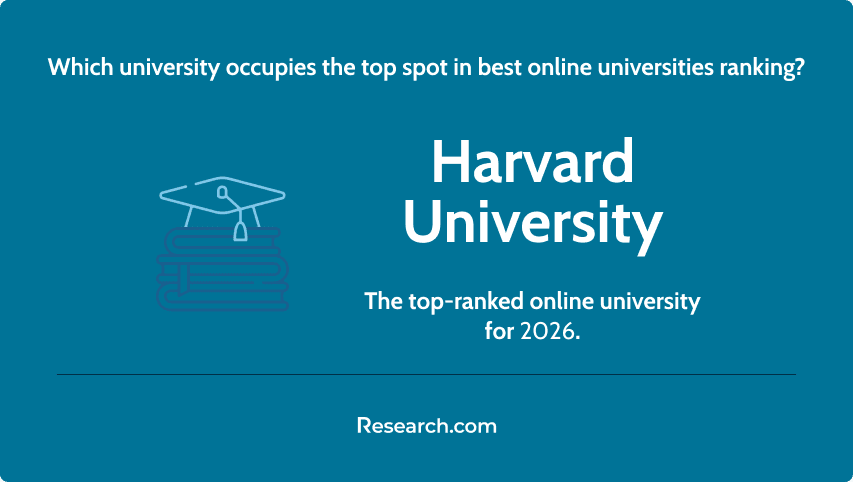
- Harvard University secures the top spot in the 10 best online program rankings, with its master’s programs in Finance, Business (MBA), and Engineering securing the top three positions, signaling the institution’s successful digital expansion.
- The University of Central Florida (UCF) dominates the affordability sector, claiming eight of the top 10 most affordable online programs. Its Online MBA and Master’s in Healthcare Management are identified as the most cost-effective master’s programs in the nation.
- Harvard University is ranked as the best online university in the USA, followed by the University of Central Florida and the University of Maryland Global Campus.
- The University of Central Florida leads as the nation’s most affordable online university, with the University of Maryland Global Campus and National University following in the second and third positions, respectively.
- Elite specialization is distributed among top-tier institutions: the University of Pennsylvania holds the top spot for MBA and Marketing, Stanford University leads in Computer Science, Duke University excels in Doctoral Nursing, and Harvard University remains the leader in Doctoral Psychology.
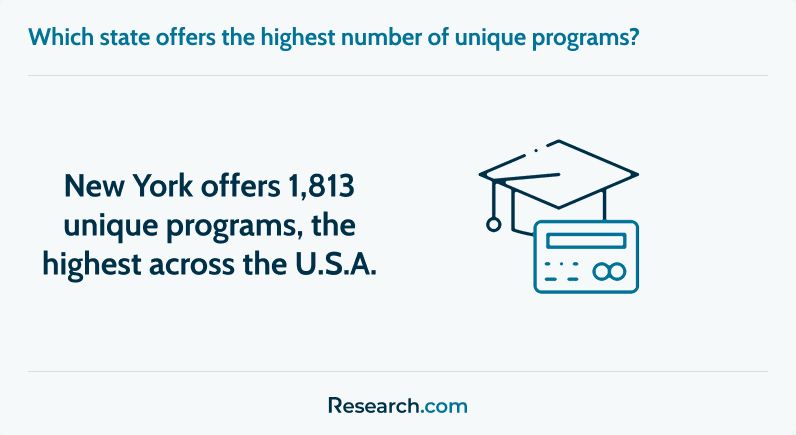
- Of the 28,382 unique programs recorded, New York offers the highest volume with 1,813 programs, followed by Pennsylvania (1,777) and California (1,770).
- While the national median for students receiving aid is 95%, Vermont leads the country with a staggering 99.5% of its students receiving financial support.
- There is a massive geographic price gap, with Washington state recording the highest average total program cost at $226,297, while Puerto Rico offers the most affordable education at an average of $17,063.
- Career ROI varies significantly by location; graduates in California enjoy the highest median earnings at $72,783, whereas graduates in Puerto Rico see the lowest median earnings at $22,620.
The Prestige vs. Value Battle in Online Education
The rise of online learning has leveled the playing field for accessibility while creating a new hierarchy of digital prestige. For many years, online degrees were viewed with skepticism, but the dominance of Harvard University in the "Best Online Programs" rankings signals a paradigm shift.
Harvard’s mastery of online Finance, Business, and Engineering programs suggests that the "Gold Standard" of education has successfully migrated to the cloud. However, this prestige often comes with a barrier to entry, which is where institutions like the University of Central Florida (UCF) and the University of Maryland Global Campus come in.
These schools have mastered the "affordability" niche, offering high-demand degrees in MBA and Healthcare Management at a fraction of the cost, reflecting a student body that is increasingly price-sensitive and career-focused.
Top Performers:
- Best Online University: Harvard University
- Most Affordable Online University: University of Central Florida
- Most Affordable Online Program: MBA at University of Central Florida
Top 10 Best Online Universities
Harvard University has successfully translated its historic academic excellence into the digital realm, securing the top spot as the Best Online University. By dominating the rankings across ten diverse fields—including Finance, Engineering, and Psychology—the institution demonstrates that elite, "Gold Standard" education is no longer confined to traditional brick-and-mortar classrooms.
| Rank | University |
| 1 | Harvard University |
| 2 | University of Central Florida |
| 3 | University of Maryland Global Campus |
| 4 | National University |
| 5 | Georgia Institute of Technology |
| 6 | The Ohio State University at Columbus |
| 7 | Johns Hopkins University |
| 8 | University of San Francisco |
| 9 | University of San Diego |
| 10 | University of Houston |
Top 10 Most Affordable Online Universities
In an era of rising tuition, the University of Central Florida stands out as the most affordable online university, providing a critical blueprint for accessible higher education. This ranking highlights UCF's commitment to delivering high-value degrees across various disciplines, ensuring that a quality education remains within reach for price-sensitive students.
| Rank | University |
| 1 | University of Central Florida |
| 2 | University of Maryland Global Campus |
| 3 | National University |
| 4 | Georgia Institute of Technology |
| 5 | University of San Francisco |
| 6 | University of Houston |
| 7 | University of San Diego |
| 8 | University of Maryland, College Park |
| 9 | University of Florida |
| 10 | Texas A&M University |
Top 10 Most Affordable Online Programs
The MBA at the University of Central Florida has been recognized as the nation's most affordable online program, offering a strategic pathway for professionals seeking a high return on investment. This specific distinction underscores a growing trend where students prioritize cost-effective credentials in high-demand business sectors to accelerate their careers without incurring massive debt.
| Rank | University | Program |
| 1 | University Of Central Florida | MBA |
| 2 | University Of Central Florida | Master's in Healthcare Management |
| 3 | University Of Central Florida | Master's in Business |
| 4 | University Of Central Florida | Master's Criminal Justice |
| 5 | University Of Central Florida | Master's in Social Work |
| 6 | University Of Central Florida | Master's in Education |
| 7 | University Of Central Florida | Master's in Public Administration |
| 8 | University of Maryland Global Campus | Master's in Business |
| 9 | University of Maryland Global Campus | MBA |
| 10 | University of Central Florida | Master's in Engineering |
Excellence Across Disciplines: The Stationary Strongholds
While online education is growing, the "Stationary" or traditional campus-based model remains the bedrock for specialized disciplines that require intense networking, laboratory access, or clinical hours. The data shows a clear specialization trend: the University of Pennsylvania remains the titan of the MBA and Social Work, while Stanford University and the University of Michigan-Ann Arbor lead in technical fields like Computer Science and Data Science.
Interestingly, the sheer volume of programs—such as the 3,054 Business Bachelor’s programs available nationwide—highlights how saturated the market is, forcing students to rely on these rankings to distinguish between a standard degree and a market-leading credential.
The University of Pennsylvania’s Wharton School maintains its status as the premier destination for business leadership, securing the top spot for MBA programs. Out of 1,067 competing programs nationwide, it remains the gold standard for its rigorous curriculum and unmatched global alumni network.
Stanford University leads the nation as the top-ranked institution for master’s degrees in Computer Science, distinguishing itself within a field of 905 available programs. Its proximity to Silicon Valley and pioneering research in artificial intelligence continue to make it the most sought-after credential for the next generation of tech innovators.
Duke University has been recognized as the leading provider of doctoral Nursing programs, a significant achievement given the 1,766 programs available in this high-demand healthcare sector. The program is celebrated for its global leadership in clinical practice and its role in shaping the future of advanced nursing education.
Harvard University holds the top ranking for its doctoral program in Psychology, emerging as the top choice among 2,307 programs across the country. This ranking underscores Harvard's historical influence and its ongoing commitment to groundbreaking research in behavioral science and clinical psychology.
Program Discipline: The Intersection of Volume and Value
The distribution of programs across various disciplines reveals a strategic shift in how students and institutions approach different fields of study.
- Healthcare (17,476 total programs), Education (17,378), and Business (17,146) represent the three disciplines with the most programs, both online and stationary.
- Nursing has 7,064 stationary programs compared to only 3,080 online, and Psychology has a staggering 9,228 stationary programs compared to just 850 online.
- The data shows that some disciplines have evolved to be exclusively online, such as Educational Leadership (1,430 programs), Information Technology (1,120 programs), and Healthcare Management (890 programs).
- There are only 375 online Biology programs and 120 online Environmental Science programs nationwide.
- Cyber Security (752 programs) and Data Science (396 programs) are listed exclusively as stationary offerings.
Geographic Powerhouses and Program Proliferation
Education remains a massive regional economic driver, with certain states acting as knowledge hubs. New York, Pennsylvania, California, and Texas lead the nation in the sheer volume of unique programs, offering a combined total of over 7,000 unique stationary programs. This geographic concentration suggests that despite the borderless nature of online education, physical proximity to industry hubs (like Silicon Valley in California or Wall Street in New York) still dictates the density of educational offerings.
New York stands at the forefront of the American educational landscape with a total of 1,813 unique programs, the highest volume of any state. This total is bolstered by 1,705 stationary programs, reflecting the state's deep-rooted history as a primary destination for traditional, campus-based higher learning.
Pennsylvania secures the second-highest spot in the nation with 1,777 total programs, demonstrating a vast academic infrastructure. The state offers a balanced mix of 160 online and 1,617 stationary programs, providing students with a significant degree of choice across diverse learning formats.
California ranks third in the country, offering 1,770 unique programs that cater to one of the largest student populations in the world. Driven by 1,689 stationary programs, the state continues to be a massive engine for traditional academic research and specialized vocational training.
The Financial Reality: Aid, Cost, and the Earnings Gap
Perhaps the most critical data point for the modern student is the intersection of debt and earning potential. With a national median program cost of $38,226 and a median earning of $50,922, the "value proposition" of college is under a microscope. The data shows a staggering disparity in costs; while a student in Puerto Rico might pay $17,063 for their education, a student in Washington state faces an average cost of over $226,000.
To mitigate these costs, financial aid has become a universal necessity, with the national median for students receiving aid sitting at a staggering 95%. This high percentage, particularly in states like Vermont and Maine (nearly 100%), highlights that the "sticker price" of American education is rarely what the student actually pays, yet the debt burden remains a significant factor in post-graduate life.
Graduates in California and the District of Columbia see the strongest financial returns, with median earnings reaching $72,783 and $70,805, respectively. These figures sit well above the national median of $50,922, reflecting the high demand and competitive salaries found in these major economic and political hubs.
At the highest end of the tuition spectrum, Washington state averages a staggering $226,297 for total program costs. This figure is nearly six times the national median of $38,226, representing a massive financial investment that places a significant burden on students pursuing degrees in that region.
In contrast, Puerto Rico offers the most affordable path to a degree with an average total program cost of only $17,063. This remarkably low cost—less than half of the national median—makes the island a unique outlier for students seeking to minimize their educational debt.
The Landscape of American Higher Education: Balancing Prestige, Accessibility, and ROI
The American higher education system is currently navigating a transformative era defined by the digital revolution and a heightened focus on return on investment (ROI). As students face rising tuition costs, the demand for flexible, online options has skyrocketed, forcing prestigious institutions and large state universities alike to rethink their delivery models. Today’s students are no longer just looking for a degree, they are looking for a strategic advantage, balancing the brand power of elite institutions against the pragmatic necessity of affordability.
The state of US education is one of extreme diversity in choice but also extreme variance in outcomes. Students are gravitating toward Healthcare, Education, and Business, which remain the most populated disciplines, accounting for tens of thousands of programs.
As the data suggests, the "smart" student is one who balances the prestige of a Harvard or Stanford against the geographic earnings advantages of California or DC, all while keeping a close eye on the affordability models pioneered by institutions like UCF. In this landscape, a degree is no longer just a rite of passage—it is a calculated financial and professional investment.


