
2027 Best ADN Nursing Programs in Minnesota: Online & Campus

Co-Founder and Chief Data Scientist
Choosing an Associate Degree in Nursing (ADN) in Minnesota is a practical decision for students who want to become registered nurses without spending four years in school before entering the workforce. ADN-prepared registered nurses make up nearly 40% of Minnesota's nursing workforce, which shows that this route remains an important part of the state's healthcare system.
This guide is for Minnesota residents, career changers, licensed practical nurses considering advancement, working adults comparing online and campus formats, and students deciding whether an ADN is the right first step toward nursing. You will learn how Minnesota ADN programs work, what admission usually requires, how clinical training is handled, what online options can and cannot offer, how to check accreditation, what costs to plan for, and what career and salary outcomes may look like after graduation.
Quick Answer: Is an ADN in Minnesota Worth Considering?
An ADN can be a strong option in Minnesota if you want a faster and often more affordable route to registered nursing than a bachelor's degree. Most programs prepare graduates to sit for the NCLEX-RN, and many students complete the nursing portion in about two years of full-time study after prerequisites. However, the right program must be approved for Minnesota RN licensure, include in-person clinical training, and fit your schedule, budget, and long-term plans.
Key Advantages of Minnesota ADN Programs
- Quicker entry into nursing: ADN programs are commonly designed around a two-year full-time nursing sequence, helping students move into RN roles sooner than many four-year pathways.
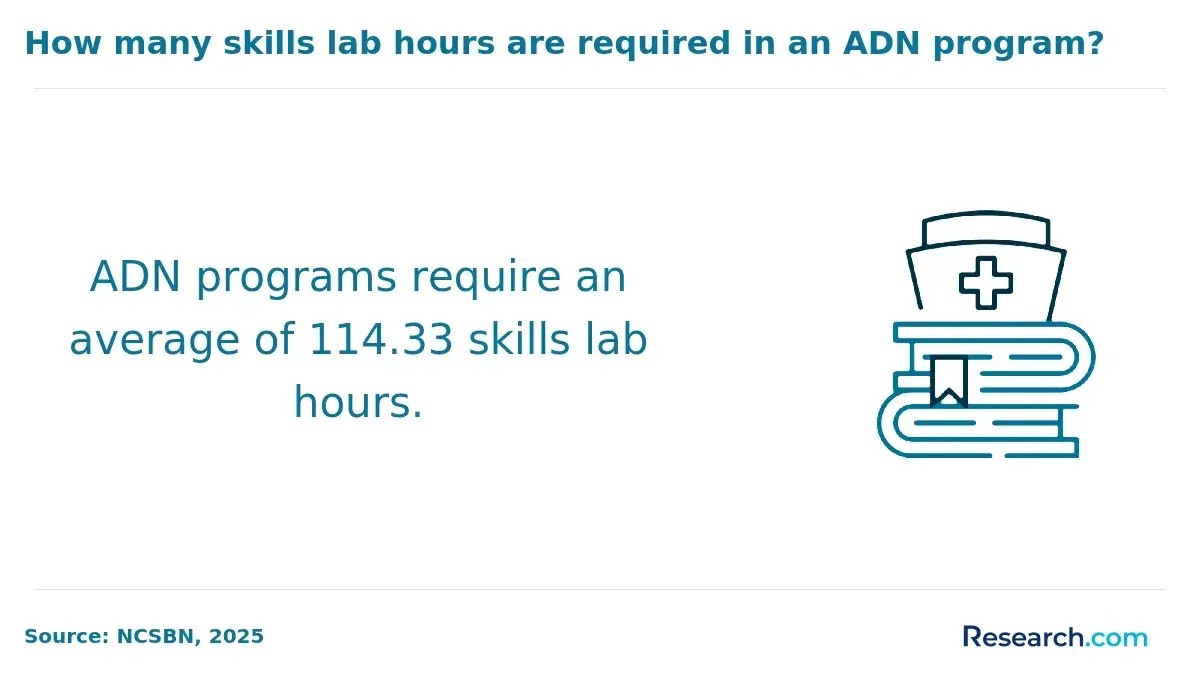
- Multiple delivery formats: Students may find campus-based, hybrid, or online-supported coursework, although clinical rotations and skills labs still require in-person participation.
- Licensure-focused preparation: Minnesota ADN programs are structured around the knowledge, clinical judgment, and patient-care skills needed for the NCLEX-RN, with many programs reporting pass rates that often exceed 85%.
- Lower-cost starting point: Community college ADN pathways can be more affordable than many four-year options, especially for in-state students who manage prerequisites, transfer credits, and financial aid carefully.
- Clear advancement pathway: ADN graduates can enter RN practice and later pursue RN-to-BSN, graduate nursing, specialty certification, or leadership opportunities.
- What is an Associate Degree in Nursing (ADN) in Minnesota?
- What are the admission requirements for ADN programs in Minnesota?
- How do ADN programs in Minnesota prepare students for the NCLEX-RN?
- How long are ADN nursing programs in Minnesota?
- How do online ADN programs in Minnesota compare to traditional ones?
- How do I know if an ADN program in Minnesota is accredited?
- How much does an ADN program cost in Minnesota?
- What financial aid options are available for ADN students in Minnesota?
- What can I do with an ADN in Minnesota after graduation?
- How much do ADN nurses earn in Minnesota?
What is an Associate Degree in Nursing (ADN) in Minnesota?
An Associate Degree in Nursing in Minnesota is an undergraduate nursing credential that prepares students for entry-level registered nurse practice. The degree combines science courses, nursing theory, skills labs, simulation, and supervised clinical practice. After completing an approved program, graduates can pursue RN licensure by taking the NCLEX-RN.
Students should understand one important point before enrolling: “online ADN” does not mean fully remote nursing training. Nursing is a hands-on profession, so Minnesota students must complete required labs and clinical experiences in person, even when lectures or assignments are delivered online.
Common ADN Program Formats in Minnesota
| Program format | How it works | Best fit | Important caution |
| On-campus ADN | Students attend lectures, labs, exams, and clinical preparation primarily in person. | Learners who want a set schedule, face-to-face faculty access, and campus-based peer support. | Commuting and fixed class times may be difficult for working adults or students far from campus. |
| Hybrid ADN | Some classroom content is online, while labs, simulations, exams, or clinical activities take place in person. | Students who need flexibility but still want regular hands-on instruction and faculty contact. | Clinical and lab dates are not optional, so students still need reliable transportation and availability. |
| Online-supported ADN | Didactic courses may be delivered online, but clinical placements and skills requirements are completed at approved sites. | Motivated students who can manage independent study and live near approved clinical locations. | Students must verify Minnesota Board of Nursing approval and clinical placement arrangements before enrolling. |
The best format depends on how you learn, how far you can travel, how much structure you need, and whether your schedule can accommodate clinical rotations. Students who already know they eventually want advanced practice may also want to review long-term education expectations, such as the path to becoming a family nurse practitioner, before choosing their first nursing degree.
Who Should Consider an ADN in Minnesota?
- Students who want to become RNs sooner: An ADN can shorten the time between starting nursing school and becoming eligible for the NCLEX-RN compared with starting in a traditional four-year program.
- Cost-conscious students: Community college ADN programs can reduce upfront tuition compared with many private or four-year options.
- Working adults: Hybrid or online-supported formats may make it easier to balance school, employment, and family responsibilities.
- LPNs seeking advancement: Some programs offer advanced placement or bridge options that may shorten the route to RN licensure.
- Students planning future education: An ADN can be a first step before an RN-to-BSN or graduate nursing pathway.
Who May Want a Different Nursing Path?
- Students targeting employers that strongly prefer a BSN: Some hospital systems and specialty units may favor or require bachelor's-prepared nurses.
- Students who cannot attend in-person clinicals: No legitimate ADN pathway can eliminate hands-on clinical training.
- Students who need maximum scheduling control: Clinical rotations are often assigned by the program and may include early mornings, evenings, or weekends.
- Students aiming directly for advanced practice: Future nurse practitioners, nurse anesthetists, or nurse educators should map the full academic timeline before choosing the ADN route.
What are the admission requirements for ADN programs in Minnesota?
Minnesota ADN programs usually use competitive admission because clinical seats are limited and nursing coursework is demanding. Requirements vary by college, but applicants should expect schools to evaluate academic preparation, science readiness, test performance, and professional suitability.
Typical ADN Admission Requirements
| Requirement | What it usually means | Why it matters |
| High school diploma or GED | Applicants must document secondary school completion or an equivalent credential. | This confirms basic readiness for college-level coursework. |
| Prerequisite courses | Common prerequisites include anatomy and physiology, microbiology, chemistry, and college-level English, often with a minimum grade of “C” or higher. | Nursing courses build heavily on science, communication, and critical-thinking skills. |
| Minimum GPA | Many schools set a GPA floor, often between 2.5 and 3.0, based on general education or prerequisite coursework. | Programs use GPA to identify students who are more likely to handle intensive nursing classes. |
| Entrance exam | Some programs require assessments such as the Health Science Reasoning Test (HSRT) or ATI TEAS. | Entrance testing helps schools evaluate academic skills and readiness for nursing concepts. |
| Application documents | Students may submit transcripts, recommendations, personal statements, or other program-specific materials. | These items help programs assess motivation, communication, professionalism, and preparation. |
Applicants should read each school's admission rubric rather than assuming all Minnesota ADN programs rank students the same way. Some programs weigh science grades heavily, while others give points for healthcare experience, prior degrees, residence, or completion of all prerequisites before the deadline.
How to Strengthen Your ADN Application
- Finish prerequisites early: Completing required science and general education courses before applying can make you more competitive and reduce the risk of schedule conflicts later.
- Retake weak prerequisite courses if allowed: A higher grade in anatomy, physiology, or microbiology may improve your ranking if the program permits repeat coursework.
- Prepare seriously for entrance exams: Treat ATI TEAS, HSRT, or similar tests as major admission factors, not as a formality.
- Document healthcare experience: CNA, LPN, medical assistant, patient care technician, or volunteer experience may help if the program awards admission points for relevant background.
- Confirm deadlines and sequence rules: Some programs admit once per year, while others have multiple cycles. Missing one document can delay entry by a full term.
If your long-term goal is advanced practice, it can also help to compare ADN requirements with later graduate-level expectations. For example, reviewing the education steps for psychiatric nurse practitioners can show how early academic performance may affect future options.
How do ADN programs in Minnesota prepare students for the NCLEX-RN?
Minnesota ADN programs prepare students for the NCLEX-RN by teaching nursing concepts, building clinical judgment, and repeatedly exposing students to patient-care scenarios. The NCLEX-RN is not only a memory test; it measures whether a future nurse can recognize problems, prioritize care, make safe decisions, and respond appropriately.
Common NCLEX Preparation Methods
- Core nursing coursework: Students study areas such as pharmacology, health assessment, adult nursing, maternal-child nursing, mental health, and complex patient care.
- Skills labs: Lab practice helps students learn procedures, assessment techniques, medication safety, infection control, and documentation before working with patients.
- Simulation: Mannequin-based and scenario-based simulation allows students to practice urgent decision-making in a controlled environment.
- Clinical rotations: Supervised placements help students apply classroom learning in hospitals, clinics, long-term care, community settings, or rehabilitation environments.
- NCLEX-style testing: Programs often use practice questions, case-based exams, review sessions, and remediation plans to help students identify weak areas before graduation.
- Faculty coaching: Instructors may provide tutoring, performance feedback, study planning, and support for students who struggle with clinical reasoning or test strategy.
A Minnesota ADN graduate described the value of repeated clinical exposure this way: simulation felt difficult at first, but it made real patient assessment less intimidating and helped connect exam questions to real nursing decisions. The graduate also noted that frequent NCLEX-style testing was useful because it showed exactly which subjects needed more focused review.
What Students Should Ask About NCLEX Readiness
- What is the program's recent NCLEX-RN pass rate, and how does it compare with state expectations?
- When does NCLEX-style testing begin in the curriculum?
- Does the program offer remediation for students who fail major exams?
- Are standardized review tools included in tuition or charged separately?
- How does the school support students who need extra help in pharmacology, clinical judgment, or test anxiety?
How long are ADN nursing programs in Minnesota?
Most Minnesota ADN programs take about two years of full-time study once prerequisite courses are completed. This often equals four semesters of nursing coursework, although the total time from first college course to graduation can be longer if a student still needs prerequisites, repeats a course, attends part time, or waits for the next admission cycle.
ADN Timeline Factors
| Timeline factor | How it can affect completion |
| Prerequisites | Science and general education courses may need to be finished before admission, adding time for students who start without college credits. |
| Full-time versus part-time enrollment | Full-time students may complete the nursing sequence faster, while part-time students may need additional semesters. |
| LPN advanced standing | Licensed Practical Nurses may qualify for advanced placement options at some schools, which can shorten the nursing sequence. |
| Clinical scheduling | Clinical rotations must be completed in person and may be offered only during specific terms or days. |
| Program start dates | Some programs admit students once per year, so missing an application deadline can delay entry. |
| Course progression rules | Nursing courses are commonly taken in a set sequence; failing or withdrawing from one course may postpone graduation. |
Students should build a realistic timeline before enrolling. A program advertised as “two years” may still require prerequisite preparation, application time, background checks, immunization documentation, and clinical onboarding before the nursing sequence begins.
Sample Planning Sequence
- Review Minnesota Board of Nursing approval and school accreditation.
- Complete prerequisite and general education courses.
- Take any required admission exam.
- Submit transcripts and application materials before the deadline.
- Complete background checks, immunizations, CPR certification, and clinical paperwork if admitted.
- Finish the nursing curriculum, labs, simulation, and clinical rotations.
- Apply for RN licensure and take the NCLEX-RN.
How do online ADN programs in Minnesota compare to traditional ones?
Online-supported, hybrid, and campus-based ADN programs can all lead toward RN licensure if they are properly approved and include the required clinical training. The biggest differences are not the license goal; they are schedule structure, learning environment, student support, and how much responsibility the student has for staying organized.
| Comparison point | Online-supported or hybrid ADN | Traditional campus ADN |
| Course delivery | Some lectures, assignments, and discussions may be completed online. | Most instruction occurs in scheduled face-to-face classes. |
| Clinical training | Still completed in person at approved locations; students may need to coordinate travel carefully. | Clinical placements are also in person and usually coordinated through the school. |
| Schedule flexibility | More flexible for theory coursework, especially if classes are asynchronous. | Less flexible because class and lab times are usually fixed. |
| Faculty access | Support may be delivered by email, video meetings, discussion boards, or scheduled campus visits. | Students may have easier access to instructors before or after class and during campus lab time. |
| Best learner profile | Self-directed, organized students who can manage deadlines without daily in-person reminders. | Students who learn best through routine, face-to-face instruction, and immediate feedback. |
| Main risk | Underestimating the time needed for online study, labs, and clinical travel. | Struggling to fit fixed class times around work, childcare, or commuting. |
When an Online or Hybrid ADN Makes Sense
- You live far from campus but can travel to required labs and clinical sites.
- You need more control over lecture study time because of work or family obligations.
- You are comfortable learning from digital materials and asking for help proactively.
- You have reliable internet, a quiet study environment, and strong time-management habits.
When a Campus ADN May Be Better
- You want frequent in-person interaction with instructors and classmates.
- You learn clinical skills more confidently with repeated supervised practice on campus.
- You prefer a predictable weekly routine.
- You are new to college or need more structured academic support.
One Minnesota hybrid ADN graduate described the format as demanding but workable. Online coursework made it easier to handle work and family responsibilities, while occasional in-person meetings helped build practical skills and relationships with instructors. The main challenge was arranging life around clinical days, which remained mandatory regardless of online flexibility.
How do I know if an ADN program in Minnesota is accredited?
Before applying to any ADN program, confirm two separate but related items: nursing program approval and institutional accreditation. Approval matters for RN licensure eligibility, while accreditation can affect financial aid, credit transfer, employer recognition, and future degree options.
Accreditation and Approval Checklist
- Check Minnesota Board of Nursing approval: Graduates generally need to complete a state-approved nursing program to become eligible for RN licensure through the NCLEX-RN process.
- Review nursing-specific accreditation: Many ADN programs seek accreditation from organizations such as the Accreditation Commission for Education in Nursing (ACEN). Accreditation indicates that the program has been reviewed against nursing education standards.
- Confirm institutional accreditation: The college itself should hold recognized institutional accreditation, such as accreditation through the Higher Learning Commission, to support financial aid eligibility and credit transfer.
- Use official sources, not marketing language: Do not rely only on phrases such as “recognized,” “licensed,” or “career-ready” on a school website. Verify status through official databases or the state board.
- Ask about recent changes: If a program is new, on warning, under review, or changing ownership, ask how that status affects licensure eligibility and transfer options.
Questions to Ask Before Enrolling
- Is the ADN program currently approved by the Minnesota Board of Nursing?
- Is the nursing program accredited by a recognized nursing accreditor?
- Is the college institutionally accredited?
- Will credits transfer into RN-to-BSN programs?
- Are graduates eligible to apply for the NCLEX-RN in Minnesota?
- Has the program had any recent accreditation or approval concerns?
How much does an ADN program cost in Minnesota?
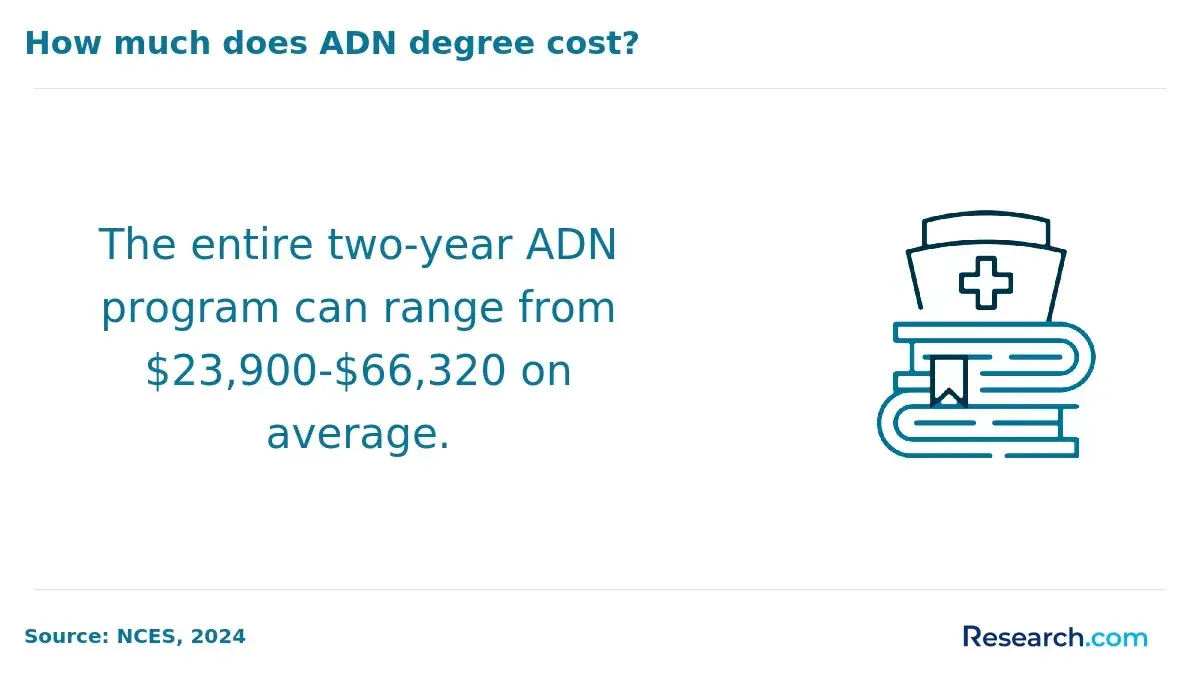
The cost of an ADN in Minnesota depends on the school type, residency status, program length, fees, supplies, clinical requirements, and whether the student relocates or commutes. Tuition is only one part of the total cost, so students should compare the full cost of attendance rather than choosing a program based on advertised tuition alone.
Main ADN Cost Categories in Minnesota
| Cost category | What to budget for | Planning note |
| Tuition and fees | Community college ADN tuition for in-state students is generally between $13,000 and $18,000 for the two-year program. Out-of-state or private school costs may rise above $24,000 annually. | Ask whether quoted tuition includes nursing course fees, lab fees, testing fees, and technology charges. |
| Books and learning materials | Students may spend several hundred to over a thousand dollars yearly on textbooks, digital platforms, and nursing resources. | Some programs require bundled digital products that cannot be bought used. |
| Uniforms and equipment | Scrubs, shoes, a stethoscope, supplies, and clinical gear may cost between $300 and $600. | Verify the exact dress code and equipment list before buying items independently. |
| Clinical requirements | Background checks, immunizations, drug screening, liability insurance, CPR certification, and travel may add several hundred dollars. | These costs are often mandatory and may occur before clinical placement begins. |
| Housing and transportation | Public institutions indicate room and board costs around $8,360 to $8,420 annually. | Online or hybrid students may save on housing but still need transportation for labs and clinical rotations. |
How to Reduce ADN Costs
- Complete prerequisites at a lower-cost institution: If transfer policies allow it, taking general education courses at a community college may reduce total tuition.
- Compare total program cost, not only per-credit tuition: Nursing fees, testing packages, clinical costs, and supplies can change the real price.
- Ask about employer reimbursement: Healthcare employers may support current employees who pursue RN training.
- Apply for scholarships every term: Nursing scholarships may be offered through colleges, foundations, employers, and professional groups.
- Plan clinical transportation early: A distant clinical site can increase fuel, parking, childcare, and scheduling costs.
Students who already plan to continue into graduate nursing should also factor future education into their cost planning. Comparing ADN expenses with later options, such as online acute care nurse practitioner programs, can help clarify the full investment required for advanced roles.
What financial aid options are available for ADN students in Minnesota?
Financial aid can help ADN students pay for tuition, fees, books, clinical expenses, and in some cases living costs. Eligibility depends on the school, program approval, enrollment status, financial need, residency, academic progress, and the type of aid.
Financial Aid Sources to Explore
- Federal aid: Completing the FAFSA can open access to federal grants, student loans, and work-study, depending on eligibility. Students must renew the application each year.
- Minnesota state aid: Programs such as the Minnesota State Grant and Minnesota Child Care Grant may help eligible residents enrolled in qualifying programs. Undocumented students may need to use the MN Dream Act process where applicable.
- College scholarships: Many Minnesota colleges offer foundation scholarships, need-based awards, returning student grants, or nursing-specific aid. Deadlines may be earlier than program admission deadlines.
- Private nursing scholarships: Students can look for support through professional associations, community foundations, workforce groups, and nursing organizations, including options such as the Nurse Corps Scholarship Program and Minnesota Nurses Association awards.
- Employer tuition assistance: Some hospitals, long-term care providers, clinics, and health systems help employees pay for nursing school in exchange for work commitments or continued employment.
- Loan repayment programs: Programs such as the National Health Service Corps may assist qualifying graduates who work in underserved areas, depending on eligibility and program rules.
Financial Aid Questions to Ask the School
- Is the ADN program eligible for federal financial aid?
- What is the average out-of-pocket cost after grants and scholarships?
- Are nursing program fees covered by financial aid?
- Can aid be used for uniforms, supplies, testing fees, and clinical requirements?
- What happens to aid if I attend part time?
- Are scholarships renewable, or do I need to reapply each term?
If you plan to move from RN practice into advanced nursing, it may be useful to compare future education options early. Research.com's guide to online nurse practitioner programs can help you understand how later credentials may fit into your career plan.
What can I do with an ADN in Minnesota after graduation?
After completing an approved ADN program and earning RN licensure, graduates can pursue entry-level registered nurse positions in several healthcare settings. The exact job options depend on employer preferences, clinical experience, local demand, and whether the nurse plans to continue into a BSN program.
Common ADN Nursing Roles in Minnesota
| Role or setting | Typical responsibilities | Why it may be a good fit |
| Hospital registered nurse | Assess patients, administer medications, monitor changes, communicate with physicians, and coordinate care on units such as medical-surgical, emergency, maternity, or specialty floors. | Good for nurses who want fast-paced work, broad clinical exposure, and potential tuition support for future education. |
| Long-term care or skilled nursing | Manage medications, monitor chronic conditions, supervise care plans, and coordinate services for older adults or patients recovering from illness. | Suitable for nurses interested in geriatrics, continuity of care, and supervisory growth. |
| Outpatient clinic or ambulatory care | Perform triage, patient education, procedure support, chronic disease follow-up, and care coordination. | Often attractive to nurses seeking more predictable schedules than hospital shift work. |
| Home health nursing | Provide wound care, medication teaching, assessment, and care planning in patients' homes. | Works well for nurses who value autonomy and one-on-one patient interaction. |
| Community or public health | Support immunization clinics, health education, screening programs, outreach, and prevention efforts through public agencies, schools, or nonprofits. | Best for nurses interested in population health and community-based care. |
| Transitional or rehabilitation care | Help patients recover after surgery, hospitalization, injury, or illness through education, monitoring, and care coordination. | Useful for nurses interested in recovery-focused care, patient teaching, and case management pathways. |
Career Advancement After an ADN
- RN-to-BSN programs: Many ADN graduates continue into BSN completion programs to improve mobility, qualify for more employers, or prepare for graduate school.
- Specialty certification: Experience in areas such as oncology, operating room nursing, rehabilitation, or geriatrics can support specialty credentials later.
- Charge nurse or supervisor roles: Experienced ADN nurses may move into unit leadership, especially in long-term care, rehabilitation, or community settings.
- Graduate nursing preparation: Students who eventually want to become nurse practitioners should plan for BSN completion and graduate admission requirements.
For students thinking beyond RN entry-level practice, understanding how long nurse practitioner school can take can make it easier to choose between ADN, BSN, and RN-to-BSN pathways.
How much do ADN nurses earn in Minnesota?
The cited average median pay for ADN registered nurses in Minnesota is $86,059 per year. Actual income varies by experience, employer, shift, location, specialty, and overtime. Salary figures should be treated as planning estimates, not guaranteed outcomes.
Salary Factors for ADN Nurses in Minnesota
- Experience level: Entry-level nurses may start around $64,200 annually, while experienced nurses or those with specialized skills may earn $100,000 or more.
- Work setting: Hospital nurses may earn higher wages, frequently exceeding $88,000, while long-term care and outpatient roles may begin nearer to $79,000.
- Location: Jobs in the Twin Cities may pay more because of local demand and cost-of-living differences, while rural wages may be closer to lower statewide percentiles.
- Specialty area: Nurses in areas such as oncology or operating room nursing may see salaries around or above $84,000 because of additional expertise.
- Shift differentials and overtime: Evening, night, weekend, holiday, and overtime hours can increase earnings beyond base pay.
How to Evaluate Salary Realistically
- Compare job postings by setting, not just job title.
- Ask whether advertised pay includes differentials, overtime, bonuses, or base wages only.
- Consider commuting distance, parking, benefits, retirement contributions, and tuition reimbursement.
- Look at advancement requirements, especially if the employer expects ADN nurses to complete a BSN later.
- Use salary estimates as a guide, but verify current local offers before making enrollment or borrowing decisions.
Current Trends Affecting ADN Students in Minnesota
Several practical trends are shaping how students should evaluate ADN programs in Minnesota. These trends do not change the basic requirement for safe clinical preparation, but they do affect program selection, employability, and long-term planning.
- Hybrid learning is becoming more common: More nursing programs use online coursework, simulation, and digital learning tools, but clinical competence still depends on in-person practice.
- Employers may encourage BSN completion: ADN graduates can enter RN practice, but some employers prefer nurses who continue into RN-to-BSN programs, especially for hospital advancement or specialty units.
- Technology skills matter: Nurses increasingly work with electronic health records, remote monitoring, telehealth tools, medication systems, and clinical decision-support platforms.
- Clinical placement capacity can be a bottleneck: Even strong applicants may face limited seats because programs must secure safe, supervised clinical experiences.
- Cost control is more important: Students should compare total cost, financial aid, transferability, and expected earnings before borrowing heavily.
Common Mistakes to Avoid When Choosing a Minnesota ADN Program
| Mistake | Why it can hurt you | Better approach |
| Choosing a program before checking approval | An unapproved program may not lead to RN licensure eligibility in Minnesota. | Verify Minnesota Board of Nursing approval before applying. |
| Assuming “online” means no campus or clinical attendance | All legitimate ADN pathways require hands-on clinical preparation. | Ask exactly where labs, simulations, exams, and clinical rotations occur. |
| Comparing tuition only | Fees, supplies, testing, immunizations, and travel can significantly change total cost. | Request a full cost breakdown for the entire program. |
| Ignoring NCLEX outcomes | Weak licensure preparation can delay employment and increase stress after graduation. | Review recent NCLEX-RN pass rates and ask about academic support. |
| Forgetting transfer plans | Some credits may not apply smoothly to RN-to-BSN or future graduate programs. | Ask about articulation agreements and BSN transfer pathways. |
| Underestimating time demands | Nursing school requires study time, lab preparation, clinical days, and exam review beyond scheduled classes. | Build a weekly schedule before enrolling and plan work hours realistically. |
How to Choose the Right ADN Program in Minnesota
- Confirm licensure eligibility first: Do not evaluate cost, schedule, or reputation until you verify that the program can lead to RN licensure in Minnesota.
- Compare total cost: Include tuition, fees, books, uniforms, testing, clinical requirements, transportation, and lost work hours.
- Review NCLEX-RN preparation: Look for pass-rate transparency, remediation support, simulation, and regular NCLEX-style testing.
- Evaluate clinical logistics: Ask where clinical sites are located, how placements are assigned, and whether evening or weekend rotations are possible.
- Match format to your learning style: Choose online-supported or hybrid study only if you are disciplined, organized, and comfortable asking for help remotely.
- Check progression and readmission policies: Understand what happens if you fail, withdraw, or need to repeat a nursing course.
- Ask about job placement and employer relationships: Programs with strong local healthcare connections may help students understand hiring expectations.
- Plan the next credential: If you may need a BSN later, choose an ADN program with strong transfer pathways.
What Minnesota ADN Graduates Say About the Experience
- Kwame said the online ADN program at Ridgeview Technical College made nursing school possible while he was managing family responsibilities. The flexible coursework helped him keep moving toward RN practice without giving up important time at home. After starting in a busy hospital setting, he described the degree as a turning point that allowed him to serve patients in his own community and build confidence in a growing healthcare field. Kwame
- Minerva described the hybrid ADN program at Northern Minnesota Community College as the right balance between virtual coursework and in-person clinical learning. She valued meeting instructors and classmates during hands-on training because those connections helped her through demanding rotations. Her work in home health later showed her how much the program had developed her resilience, adaptability, and patient-care confidence. Minerva
- Carlos said the on-campus ADN program at Lakeside Nursing Academy pushed him academically and personally. Close faculty support and a rigorous curriculum helped him transition into an academic healthcare organization after graduation. He credited the program with giving him the clinical foundation and professional confidence needed to contribute meaningfully to patient care while preparing for future growth. Carlos
Related Articles for Nearby States
- 2027 Best ADN Nursing Programs in Wisconsin: Online & Campus
- 2027 Best ADN Nursing Programs in Iowa: Online & Campus
- 2027 Best ADN Nursing Programs in North Dakota: Online & Campus
- 2027 Best ADN Nursing Programs in South Dakota: Online & Campus
- 2027 Best ADN Nursing Programs in Nebraska: Online & Campus
- 2027 Best ADN Nursing Programs in Illinois: Online & Campus
- 2027 Best ADN Nursing Programs in Missouri: Online & Campus
- 2027 Best ADN Nursing Programs in Michigan: Online & Campus
- 2027 Best ADN Nursing Programs in Kansas: Online & Campus
- 2027 Best ADN Nursing Programs in Indiana: Online & Campus
Key Insights
- An ADN is a practical RN pathway in Minnesota for students who want a shorter and potentially lower-cost route into nursing.
- Online or hybrid ADN coursework can improve flexibility, but labs and clinical rotations still require in-person attendance.
- Program approval and accreditation should be verified before applying because they affect licensure eligibility, financial aid, transfer credits, and employer confidence.
- Most ADN nursing sequences take about two years after prerequisites, but application timing, part-time study, clinical scheduling, and course progression rules can extend the timeline.
- Community college ADN tuition for in-state students is generally between $13,000 and $18,000, but students should also budget for books, fees, supplies, clinical requirements, housing, and transportation.
- The cited average median pay for ADN registered nurses in Minnesota is $86,059 per year, but actual earnings depend on experience, setting, location, specialty, and shifts.
- The strongest ADN choice is not always the cheapest or most flexible program. The best option is the one that is approved, affordable, clinically realistic, supportive, and aligned with your long-term nursing goals.
References:
- Nursing - Associates Degree https://ridgewater.edu/academics/areas-of-study/health-care/nursing-rn/
- Minnesota Nursing Schools And Programs | NurseJournal.org https://nursejournal.org/state/minnesota/
- Average Registered Nurse Salary in Minnesota https://www.incrediblehealth.com/salaries/rn/mn
- Cost and Financial Support https://nursing.umn.edu/academics/doctor-nursing-practice/cost-and-financial-support
- RN to BSN Programs in Minnesota | 2025 https://nurse.org/education/rn-bsn-programs-minnesota/
- Grants & Fellowships https://ahn.mnsu.edu/academic-programs/nursing-bs/doctor-of-nursing-practice/about-the-program/grants-fellowships/
- Associate Degree Nursing (ADN) Program - Rochester Community and Technical College https://www.rctc.edu/program/nurs/
- 10 Best ADN Programs in Minnesota – (2-Year RN Programs) https://www.nursingprocess.org/adn-programs/minnesota/
- Types of loans https://onestop.umn.edu/finances/types-financial-aid/loans-overview/types-loans
- A.S. Nursing Application Process https://www.mnwest.edu/academics/all-programs/admission-requirements/nursing/as-nursing-application-process.php
Other Things You Should Know About ADN Nursing Programs in Minnesota
To enroll in ADN programs in Minnesota for 2027, applicants typically need a high school diploma or equivalent, completion of prerequisite courses such as biology and chemistry, and a minimum GPA of 2.5. Specific program requirements may vary by institution.
ADN programs in Minnesota often feature a mix of daytime lectures and clinical rotations, with evening and weekend options available for some courses. Schedules vary by institution, but many programs offer flexibility to accommodate working students or those with families.


