
2027 Best ADN Nursing Programs in Maine: Online & Campus

Co-Founder and Chief Data Scientist
In Maine, nursing careers are growing steadily, with employment projected to increase by 15% over the next decade. Pursuing an associate degree in nursing (ADN), whether online or on-campus, offers a solid foundation for entering this rewarding field quickly and affordably. Maine's flexible ADN pathways accommodate diverse lifestyles, making nursing accessible to many aspiring professionals ready to make a positive impact on community health. This degree combines essential nursing skills with practical experience, opening doors to immediate employment and opportunities for further education.
This article, crafted by career planning experts, will guide readers through understanding what an ADN program in Maine entails. It explains what to expect, how to evaluate programs, and how to navigate choosing the best ADN options with confidence and clarity.
Key Benefits of ADN Programs in Maine
- Maine's ADN programs feature flexible online options combined with hands-on clinical training, accommodating busy schedules while ensuring practical experience.
- With a high NCLEX-RN pass rate of over 85%, Maine's ADN graduates demonstrate strong preparedness for nursing careers.
- Affordable tuition rates in Maine ADN programs make nursing education accessible, often costing 30% less than national averages, easing financial stress for students.
- What is an Associate Degree in Nursing (ADN) in Maine?
- What are the admission requirements for ADN programs in Maine?
- How do ADN programs in Maine prepare students for the NCLEX-RN?
- How long are ADN nursing programs in Maine?
- How do online ADN programs in Maine compare to traditional ones?
- How do I know if an ADN program in Maine is accredited?
- How much does an ADN program cost in Maine?
- What financial aid options are available for ADN students in Maine?
- What can I do with an ADN in Maine after graduation?
- How much do ADN nurses earn in Maine?
What is an Associate Degree in Nursing (ADN) in Maine?
An Associate Degree in Nursing (ADN) in Maine offers a strong foundation for launching a rewarding career in nursing. This two-year program is designed to prepare students for registered nurse (RN) licensure through a balanced combination of academic coursework and supervised clinical training. ADN programs in Maine seamlessly blend classroom instruction with hands-on clinical experiences, equipping students with essential nursing skills to provide compassionate and effective patient care. As you consider your educational journey, it's helpful to understand the different types of ADN programs available based on learning modality.
- On-Campus ADN Programs: These traditional programs involve attending classes and labs in person, providing direct engagement with instructors and peers. Students benefit from face-to-face lessons, simulation labs, and clinical rotations at healthcare facilities, nurturing strong practical skills and professional connections.
- Hybrid ADN Programs: Combining online coursework with mandatory in-person labs and clinical placements, hybrid options offer flexibility for those balancing work or family commitments. This pathway maintains rigorous clinical training while allowing more control over study schedules.
- Online ADN Programs: While fully online ADN programs are uncommon in Maine due to clinical experience requirements, some general education and theory courses may be offered remotely. Students still complete essential lab and clinical hours in person to meet ADN program requirements Maine and licensure eligibility.
Many students find financial support opportunities and strong job placement upon graduation. To deepen your understanding of future potential earnings, explore what is the salary of a nurse practitioner by state as you plan your nursing career path in Maine.
What are the admission requirements for ADN programs in Maine?
ADN programs in Maine commonly employ selective admission processes to ensure applicants are academically prepared and ready to meet the rigorous demands of nursing education. These standards help create a strong foundation for success both in the classroom and clinical settings. The following outlines key admission requirements typical for both online and on-campus ADN programs in Maine:
- High School Diploma or GED: Candidates must have completed high school or earned an equivalent credential like the GED. This baseline requirement confirms that applicants possess essential academic skills necessary for college-level nursing training.
- Prerequisite Courses: Completion of specific prerequisite courses with strong grades, often a B or better, is required. These usually include Anatomy and Physiology I & II with labs, English Composition, and College Algebra or Quantitative Reasoning. Meeting these ensures applicants have the scientific and communication foundation critical for ADN program success, reflecting common ADN program prerequisites in Maine.
- Minimum GPA Standards: Most programs ask for a minimum GPA between 2.5 and 3.0, with preference for high achievement in prerequisite coursework. A solid GPA demonstrates the ability to handle the challenging nursing curriculum and distinguishes strong candidates.
- Entrance Exams (TEAS): Many programs require the Test of Essential Academic Skills (TEAS), which evaluates math, science, reading, and English abilities. Schools set minimum composite scores, often between the 60th and 70th percentile, as part of the TEAS exam requirements for Maine nursing programs to assess readiness for rigorous study.
- Submission of Application Materials: Applicants must provide official transcripts, recommendation letters, and personal statements or essays. These materials allow schools to evaluate academic history, communication skills, motivation, and suitability for nursing roles.
- Background Checks and Medical Compliance: After acceptance, students complete criminal background screenings and submit immunization records, health physicals, and Basic Life Support (BLS) certification to ensure safety during clinical experiences.
- Additional Steps: Some colleges require interviews or attendance at information sessions to further gauge interpersonal skills and commitment. For LPN-to-ADN bridge candidates, proof of licensure and transcripts from accredited nursing programs are necessary.
Pursuing ADN programs in Maine, whether online or on campus, offers a stepping stone to a fulfilling nursing career path with the potential to progress into roles like a nurse practitioner career. These admission requirements ensure that students start prepared for success and meet the high standards essential for this rewarding healthcare profession.
How do ADN programs in Maine prepare students for the NCLEX-RN?
ADN programs in Maine are specifically designed to equip students with the knowledge, clinical skills, and critical thinking abilities needed to pass the NCLEX-RN and become licensed registered nurses. These programs focus on building readiness and confidence through comprehensive learning and practical experience. The following key elements highlight how ADN programs prepare students for exam success:
- Comprehensive Nursing Coursework: Students engage in a balanced mix of general education and specialized nursing classes that cover essential topics like anatomy, pharmacology, and patient care. This foundation closely matches the NCLEX-RN content, ensuring mastery of critical concepts.
- Simulation Labs and Clinical Rotations: Hands-on training in simulated clinical settings and real healthcare environments allows students to apply theoretical knowledge and sharpen judgment skills. These experiences boost confidence in making patient care decisions during the exam and beyond.
- NCLEX-Style Test Preparation and Review Sessions: Structured practice exams and review workshops help students become familiar with the test format and question styles, enhancing test-taking strategies for optimal performance.
- Evidence-Based Learning Strategies: Instruction emphasizes current research and technology use, teaching students to think critically and solve problems - key abilities tested on the NCLEX-RN.
- Faculty Mentorship and Academic Support: Dedicated educators provide personalized guidance and motivation, helping students navigate challenges and refine skills that contribute to strong exam outcomes.
When speaking with a nurse from Maine who graduated from a local ADN program, he reflected on how the program's real-world focus made all the difference. He recalled moments in clinical rotations when theory suddenly came alive, saying, "It wasn't just about memorizing facts; it was about knowing how to think on my feet under pressure." The regular NCLEX-style tests gave him confidence, diminishing anxiety about the exam itself. "The mentors were always available to discuss mistakes and improve my problem-solving," he shared. This combination, he explained, transformed uncertainty into assurance, preparing him not only to pass the NCLEX-RN but also to thrive in nursing practice.
I spoke with a nurse from Texas who graduated from a local ADN program about how well it prepared him for the NCLEX-RN. He shared that the combination of intense clinical rotations and personalized faculty support made a huge difference. "There were definitely moments I doubted myself, but having instructors who knew my weaknesses and pushed me to improve through extra review sessions really kept me on track." He also appreciated the simulated tests that mirrored the real exam's adaptive style, saying, "It wasn't just about memorizing facts; it was about thinking critically under pressure, and that practice made me feel ready on test day." His experience reflects how these programs blend rigorous academics with practical training and support to help students cross the finish line confidently.
How long are ADN nursing programs in Maine?
Most Associate Degree in Nursing (ADN) programs in Maine typically take about two years to complete when attending full-time. This timeline generally spans four academic semesters, but can vary based on whether a student opts for part-time study or enrolls in an accelerated or extended program track. Some institutions offer accelerated options that allow motivated students to finish in as little as 16 to 20 months, providing a faster route to entering the nursing profession. On the other hand, extended schedules and flexible formats like evening, weekend, or hybrid classes accommodate those balancing work and family commitments, making nursing education accessible for a wide range of learners.
Several key factors influence the total duration of ADN programs, including the need to complete prerequisite courses before starting nursing-specific classes. Clinical training hours form a crucial part of the journey, requiring hands-on patient care experience that runs alongside classroom learning. Scheduling flexibility plays an important role too, with different pathways available to suit individual needs and life circumstances. This thoughtfully designed balance between rigorous academics and practical clinical experience ensures that graduates are fully prepared and confident to succeed on the NCLEX-RN exam and thrive as registered nurses in Maine's healthcare settings.
How do online ADN programs in Maine compare to traditional ones?
Both online, hybrid, and traditional Associate Degree in Nursing (ADN) programs in Maine prepare students for RN licensure but vary in flexibility, learning format, and coursework delivery. Here's a closer look at how these options compare to help you find the best fit for your goals and lifestyle.
- Learning Format: Online programs deliver theory digitally, ideal for self-driven learners comfortable with technology. Hybrid blends online learning with on-campus labs, while traditional programs offer fully in-person instruction, benefiting those who thrive in a classroom setting.
- Clinical Training: All require in-person clinical hours, with online and hybrid students coordinating local placements or short campus immersions. Traditional students complete clinicals alongside regular classes, often with daily faculty guidance.
- Scheduling Flexibility: Online and hybrid programs allow pacing within deadlines and multiple start dates, perfect for working adults. Traditional programs follow fixed schedules, providing consistency for those who prefer structure.
- Student Interaction: Traditional programs encourage face-to-face collaboration and live faculty support. Online and hybrid rely more on virtual communication, suiting those comfortable with digital engagement.
- Accessibility: Online and hybrid formats open doors for students far from campuses or with transportation challenges, enhancing reach across Maine. Traditional programs serve students within commuting distance.
Reflecting on this, a nurse who graduated from a hybrid ADN program in Maine shared how balancing online coursework with on-campus skill sessions offered both freedom and connection. She noted, "The flexibility meant I could manage work and family, but those in-person labs were vital-they helped build confidence I wouldn't get behind a screen alone." She appreciated the blend, saying it made her feel prepared and supported, highlighting how hybrid programs can bridge the gap between isolation and community while adapting to busy lives.
How do I know if an ADN program in Maine is accredited?
Accreditation is essential for ADN nursing programs in Maine because it guarantees the program meets the rigorous educational standards required for RN licensure and equips graduates to provide safe, high-quality patient care. To confidently choose a legitimate program, consider these key verification steps:
- Check Accreditation Databases: Start by searching trusted sources like the Accreditation Commission for Education in Nursing (ACEN) or the New England Commission of Higher Education (NECHE). These databases list accredited ADN programs in Maine, helping you confirm your chosen program meets nationally recognized standards.
- Confirm State Board of Nursing Approval: The Maine State Board of Nursing must approve any ADN program to ensure graduates are eligible for RN licensure. Verifying this approval on the Board's website or directly with the school protects you from wasting time on unapproved programs.
- Visit the School's Official Website: Look for accreditation details prominently displayed on official school websites, often on "Accreditation" or "About" pages. This transparency helps you quickly verify the program's legitimacy and avoid unaccredited institutions.
- Verify National or Regional Accreditation Agencies: Ensure the accrediting agency is recognized by the U.S. Department of Education or the Council for Higher Education Accreditation (CHEA). Accredited programs allow you to access federal financial aid, transfer credits, and pursue advanced nursing degrees.
How much does an ADN program cost in Maine?
The cost of ADN programs in Maine can vary significantly based on the type of institution attended-whether a community college, public university, or private school-as well as program length and residency status concerning in-state or out-of-state tuition rates. Several key elements contribute to the overall investment required to earn an Associate Degree in Nursing. Below are the primary factors that influence ADN program costs in Maine.
- Tuition and Fees: The foundation of the total cost often lies in tuition, which tends to be most affordable at Maine's community colleges, with in-state students paying around $2,880 per year, while out-of-state students face approximately double that amount. Private institutions involve much higher tuition, significantly impacting the overall expense of nursing education.
- Books and Supplies: Textbooks, workbooks, and specialized materials such as simulation tools are necessary for success and can total between $1,000 and $2,800 over the course of the program. Technology fees may also apply, especially in online or hybrid ADN formats, adding a modern touch to the learning process.
- Uniforms and Equipment: Essential attire and instruments like clinical scrubs, shoes, and stethoscopes generally cost between $200 and $500 and are vital for participation in clinical experiences, helping students develop professional readiness.
- Clinical Expenses and Testing Fees: Clinical training involves additional costs such as liability insurance, background checks, and certifications including CPR and the NCLEX-RN exam-considered a crucial step toward licensure-with fees around $500. These expenses ensure preparedness and compliance with nursing standards.
- Living or Transportation Costs: Housing and daily expenses can account for $8,100 to $12,300 per year for students living on campus, while off-campus students should budget for commuting and related costs. Online learners may save on travel but will still attend essential clinical sessions in person, balancing flexibility with practical experience.
Planning carefully and understanding these components can empower you to make informed decisions about your nursing education journey in Maine. For those looking ahead to advanced nursing education pathways, consider exploring the best BSN to NP degree program options that build on successful completion of ADN programs and can elevate your career to new heights.
What financial aid options are available for ADN students in Maine?
Financial aid can help make ADN programs in Maine more affordable by covering some or all educational expenses, including tuition, fees, supplies, and living costs. Prospective students have several options to explore for financial support:
- Federal Financial Aid: Federal grants like the Pell Grant and SEOG offer need-based funding that doesn't require repayment. Subsidized and unsubsidized Stafford Loans are also available, providing flexible borrowing options that must be repaid after graduation.
- State of Maine Grants: The Maine State Grant Program awards need-based grants to eligible residents attending accredited schools, including ADN students. Applying for the FAFSA is essential to be considered for these state-funded resources.
- Institutional Scholarships and Grants: Many Maine colleges have scholarships and grants dedicated to nursing students, such as the Dr. Gard W. Twaddle Nurses Endowment Fund. These awards often recognize academic achievement or financial need, and applications are managed through each school's financial aid office.
- Private Nursing Scholarships: Local hospitals, nursing associations, and foundations offer scholarships that reward academic merit and community involvement. These opportunities expand the options for financial aid specifically tailored to Maine nursing scholarships and grants.
- Employer Tuition Assistance and Loan Forgiveness: Some healthcare employers in Maine provide tuition assistance or loan repayment programs, often linked to a work commitment after graduation. Additionally, programs like the Nurse Corps Loan Repayment Program support nurses serving in underserved areas.
To maximize opportunities, students should submit their FAFSA early and explore all available resources, including options related to the shortest post master's FNP program if advancing their nursing education beyond the ADN level.
What can I do with an ADN in Maine after graduation?
ADN graduates in Maine are fully qualified to sit for the NCLEX-RN exam, opening doors to a variety of entry-level nursing positions across multiple healthcare settings. These diverse opportunities allow individuals to choose career paths that align with their passions and the evolving healthcare landscape in Maine. Below are some of the most promising career options for those exploring registered nurse jobs with an associate degree in Maine:
- Hospital Registered Nurse (RN): Providing direct patient care in fast-paced hospital departments such as medical-surgical, emergency, oncology, and pediatrics, hospital RNs administer medications, monitor health status, and collaborate with healthcare teams. This path offers robust career growth through specialized roles and leadership opportunities.
- Long-Term Care and Extended Care Facilities: Working with elderly or chronically ill patients in nursing homes and rehabilitation centers, ADN nurses develop care plans, manage medications, and support patients' daily needs. The increasing demand in Maine's aging population makes this field rich with opportunities for advancement into management roles.
- Outpatient Clinics and Physician Offices: These roles involve patient assessments, minor procedure assistance, and education, often with more regular hours. Nurses here can expand into public health or clinic administration, benefiting from a balanced work-life structure.
- Home Health Nurse: Delivering personalized care to patients recovering at home, home health nurses focus on education, wound care, and medication management. This role offers greater autonomy and schedule flexibility, with paths toward case management or supervisory positions.
- Psychiatric and Substance Abuse Facilities: Providing vital care to individuals facing mental health or addiction challenges, these roles require strong interpersonal skills and can lead to specialized or leadership positions with further training.
- Hospice and Palliative Care: Supporting patients and families at life's end, hospice nurses manage symptoms and provide emotional support, making a meaningful impact with the potential for further certification and growth.
Many Maine employers encourage ADN graduates to pursue further education, such as RN-to-BSN programs. Students interested in exploring what are the most affordable online RN to MSN degree programs can find options to continue their education and expand their career possibilities.
How much do ADN nurses earn in Maine?
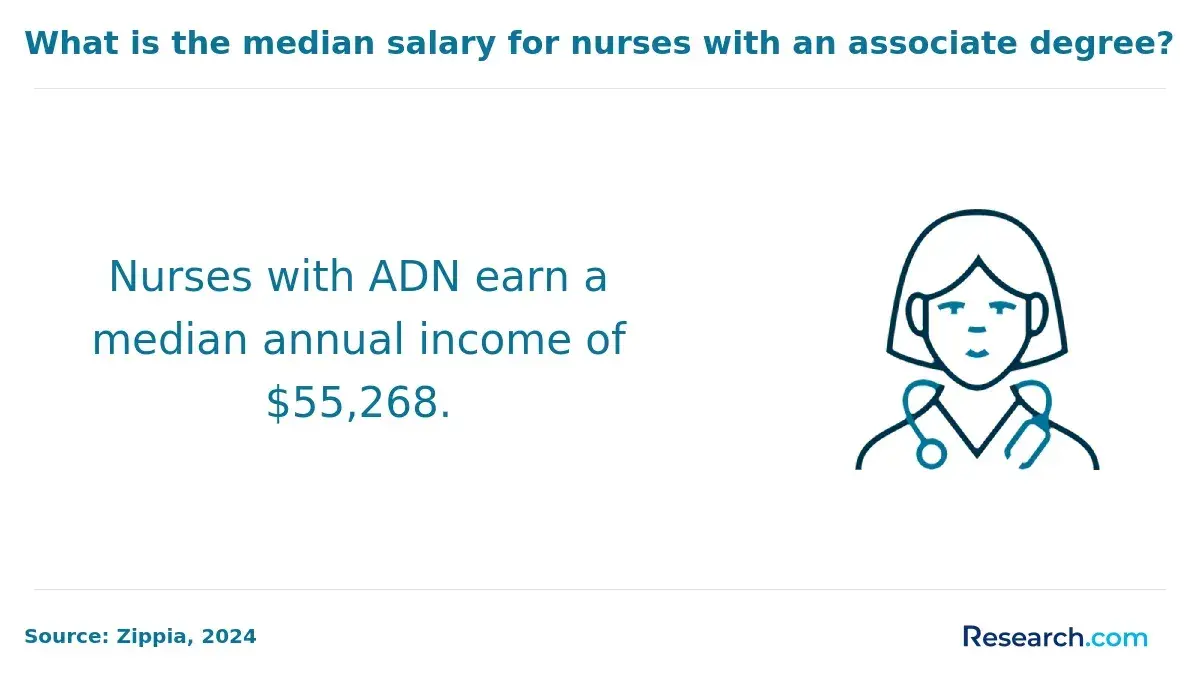
The average median pay for Associate Degree in Nursing (ADN) nurses in Maine is $85,073 per year, or about $40.90 per hour. Salaries for ADN-prepared registered nurses in Maine vary widely depending on factors such as experience, location, healthcare setting, and employer type. Understanding these key elements can help you make informed decisions as you pursue your nursing career in Maine. Here are the important factors that influence ADN nurse salaries:
- Level of Experience: Entry-level ADN nurses typically earn around $63,400 annually, while those with years of clinical practice can approach or exceed $100,700. Advancement through senior roles or certifications can significantly boost earning potential.
- Workplace Setting: Nurses in hospitals and acute care settings generally earn higher wages compared to those in outpatient clinics or long-term care, reflecting the demanding nature of acute care environments.
- Geographic Location: Urban areas like Portland and Bangor often offer salaries above the state average, while rural locations might provide more job opportunities despite lower pay.
- Specialization and Certifications: Specialties such as emergency or oncology nursing can elevate salaries, with certified nurses earning premiums that reflect their specialized skills.
- Shift Differentials and Overtime: Working night shifts, weekends, or overtime can significantly increase earnings through additional hourly premiums.
Here's What Graduates in Maine Have to Say About Their ADN Degree
- Completing the ADN program online through Kennebec Valley Community College allowed me the flexibility I needed while working part-time and caring for my family. The online classes were engaging and the instructors were always available for questions, making the learning process smooth and accessible. Starting my nursing career in a local hospital gave me the chance to apply what I learned directly to patient care in a fast-paced environment. The stability and demand for nurses in Maine's healthcare sector made me feel confident about my future. I'm proud to contribute to my community's well-being through this profession. Diva
- My experience in the hybrid ADN program at Eastern Maine Community College was incredibly enriching because it combined the best of both worlds: hands-on clinical experience on campus and the convenience of online coursework. This structure challenged me to grow both personally and professionally, honing my time management skills and deepening my commitment to patient-centered care. Working in home health facilities after graduation has been fulfilling, as I get to build meaningful relationships with my clients and support their independence. Maine's close-knit healthcare community helped me feel connected and valued as a new nurse. Andy
- Attending an on-campus ADN program at York County Community College shaped me not only academically but also as an active member of my local community. The experience of studying alongside peers and instructors fostered a sense of camaraderie and mutual support that I treasure. After graduating, I began working in academic nursing roles, where I mentor young adults and inspire future healthcare professionals. Pursuing my degree in Maine exposed me to unique challenges like rural health disparities, fueling my passion for making a positive impact through education and advocacy. Cassie
Related Articles for Nearby States
- 2027 Best ADN Nursing Programs in New Hampshire: Online & Campus
- 2027 Best ADN Nursing Programs in Massachusetts: Online & Campus
- 2027 Best ADN Nursing Programs in Vermont: Online & Campus
- 2027 Best ADN Nursing Programs in Connecticut: Online & Campus
- 2027 Best ADN Nursing Programs in Rhode Island: Online & Campus
- 2027 Best ADN Nursing Programs in New York: Online & Campus
- 2027 Best ADN Nursing Programs in New Jersey: Online & Campus
- 2027 Best ADN Nursing Programs in Pennsylvania: Online & Campus
- 2027 Best ADN Nursing Programs in Delaware: Online & Campus
- 2027 Best ADN Nursing Programs in Maryland: Online & Campus
References:
- How Much You Can Make With an Associate Degree in Nursing https://www.allnursingschools.com/adn/salary/
- Types of Aid https://usm.maine.edu/student-financial-services/types-of-aid/
- Nursing https://www.cmcc.edu/academics/programs/programs-of-study/nursing/
- Career Pathways: Nursing - University of Maine at Fort Kent https://www.umfk.edu/offices/early-college/career-pathways/nursing/
- Guide To Financial Aid For Nursing School | NurseJournal.org https://nursejournal.org/resources/financial-aid/nursing-scholarship-grants/
- 2025 Best RN to BSN Programs in Maine Online - Fast & Affordable Options https://www.registerednursing.org/rn-to-bsn/maine/
- Most Popular Online ADN Programs 2025 https://www.onlineu.com/degrees/associate-nursing
- Loans for the Health Professions - FAME Maine https://www.famemaine.com/affording-education/pay-for-school/borrowing-student-loans/student-loan-programs/health-professions/
- Become a Nurse in Maine – Licensure & Requirements https://nursinglicensemap.com/states/maine-nursing-license/
- RN to BSN Completion Program - University of Maine at Augusta https://www.uma.edu/academics/programs/nursing/rn-bsn/
Other Things You Should Know About Becoming a Nurse in Maine
In Maine, bridging from an Associate Degree in Nursing (ADN) to a Bachelor of Science in Nursing (BSN) typically involves enrolling in an RN-to-BSN program designed for working nurses. These programs build on your existing nursing education and experience, offering flexible options such as online or part-time study to accommodate work schedules. Many Maine institutions also credit your prior coursework and clinical hours, which can shorten the time required to complete the BSN. This pathway enhances career opportunities and prepares nurses for advanced roles in healthcare leadership, education, and specialized practice.
In 2027, some of the top-rated ADN programs in Maine include Southern Maine Community College, Central Maine Community College, and Kennebec Valley Community College. These programs are recognized for their comprehensive curricula, experienced faculty, and high NCLEX-RN pass rates.


