
2027 Best ADN Nursing Programs in Connecticut: Online & Campus

Co-Founder and Chief Data Scientist
Connecticut's healthcare sector shows steady growth, with a 12% projected increase in registered nurse employment over the next decade. Pursuing an associate degree in nursing (ADN) in Connecticut, whether online or on campus, offers a practical path for entering this expanding field. The flexible delivery of ADN programs responds to diverse student needs while grounding learners in essential clinical skills. This combination enhances employability in a competitive job market and supports lifelong learning opportunities within nursing.
This article provides a clear understanding of what an ADN in Connecticut entails. Crafted by experts in career planning, it guides readers through expectations, key considerations, and decision-making strategies for selecting ADN options that align with personal and professional goals. Insightful and concise, it empowers prospective students to navigate their educational journey with confidence.
Key Benefits of ADN Programs in Connecticut
- Connecticut offers diverse ADN programs combining robust online theory with hands-on clinical experience, preparing students for high-demand nursing roles.
- The state's ADN graduates enjoy a 90% NCLEX passing rate, reflecting Connecticut's strong curriculum and dedicated faculty support on both online and campus platforms.
- Flexible scheduling options in Connecticut's online ADN programs cater to working adults, making nursing education accessible without sacrificing career or family commitments.
- What is an Associate Degree in Nursing (ADN) in Connecticut?
- What are the admission requirements for ADN programs in Connecticut?
- How do ADN programs in Connecticut prepare students for the NCLEX-RN?
- How long are ADN nursing programs in Connecticut?
- How do online ADN programs in Connecticut compare to traditional ones?
- How do I know if an ADN program in Connecticut is accredited?
- How much does an ADN program cost in Connecticut?
- What financial aid options are available for ADN students in Connecticut?
- What can I do with an ADN in Connecticut after graduation?
- How much do ADN nurses earn in Connecticut?
What is an Associate Degree in Nursing (ADN) in Connecticut?
An Associate Degree in Nursing (ADN) is a foundational pathway into the nursing profession, carefully crafted to prepare students for registered nurse licensure through a blend of academic coursework and clinical training. ADN programs in Connecticut uniquely combine classroom instruction with hands-on experience to equip students with essential nursing skills vital for competent practice. These programs emphasize both knowledge and practical application, ensuring graduates are ready for the challenges of entry-level nursing. Various learning modalities accommodate the diverse needs of prospective nurses in the state.
Connecticut offers different types of ADN programs primarily based on how the instruction is delivered:
- On-Campus ADN Programs: These require students to complete all coursework and clinical training in person. They offer access to advanced simulation labs and direct faculty supervision. This traditional format supports collaborative learning and typically spans about two years full-time.
- Hybrid ADN Programs: Combining online classroom instruction with in-person clinical experiences, hybrid programs provide flexibility while maintaining rigorous supervised practical training. This balance helps students manage their schedules without sacrificing essential hands-on learning.
- Online ADN Programs: Fully online ADN paths are limited in Connecticut due to clinical training mandates. Some schools may offer certain didactic courses online, but in-person clinical components remain mandatory for meeting state ADN requirements for registered nurse licensure in Connecticut.
For those comparing advanced nursing degrees, understanding the FNP vs DNP key differences can offer additional clarity in planning a nursing career trajectory.
What are the admission requirements for ADN programs in Connecticut?
ADN programs in Connecticut generally employ selective admission processes to ensure applicants are academically prepared and capable of managing the rigorous demands of nursing education. These requirements help colleges identify students who are well-equipped to succeed in both online and on-campus ADN pathways. Below are the key admission criteria commonly expected across these programs:
- High School Diploma or GED: Admission requires proof of high school graduation, a GED, or equivalent certification. This baseline confirms that applicants have the foundational education to engage in college-level studies and clinical practice effectively.
- Completion of Prerequisite Courses: Applicants must complete foundational courses, notably in biology, chemistry, and mathematics, with a preferred minimum grade such as C+ or higher. These ADN program prerequisites in Connecticut are essential for assessing readiness and supporting success in nursing coursework and the NCLEX-RN exam.
- Minimum GPA Standards: Most programs mandate a cumulative GPA between 2.75 and 3.0 on a 4.0 scale. Meeting these Connecticut ADN nursing admission criteria demonstrates a candidate's consistent academic performance and readiness for demanding nursing studies.
- Entrance Exams: Many colleges require standardized tests like the TEAS (Test of Essential Academic Skills). Minimum score thresholds ensure that applicants possess sufficient knowledge in reading, math, science, and English, which are critical to nursing education.
- Submission of Application Materials: Candidates must provide official transcripts from previous academic institutions, recommendation forms from instructors or employers, and personal statements outlining their motivation and suitability for nursing. These materials enable programs to evaluate academic background, character, and commitment depth.
Each of these elements, combined, fosters a holistic review process for students stepping into nursing. Preparing well for these requirements not only strengthens an application but builds a solid foundation for a successful nursing career, potentially advancing along the nurse practitioner career path.
How do ADN programs in Connecticut prepare students for the NCLEX-RN?
ADN programs in Connecticut are specifically designed to equip students with the knowledge, clinical skills, and critical thinking abilities needed to pass the NCLEX-RN and become licensed registered nurses. These programs take a multi-faceted approach to build a strong foundation for exam success and professional practice. Key components include:
- Comprehensive Nursing Coursework: Curriculum covers vital nursing areas such as medical-surgical, pediatrics, maternity, psychiatric, and community health. This broad academic base ensures students grasp essential theories and pharmacology directly relevant to the NCLEX-RN.
- Simulation Labs and Clinical Rotations: Hands-on training in simulated settings and real clinical environments allows students to develop practical skills and confidence. Exposure to diverse patient care scenarios sharpens critical decision-making and teamwork capabilities.
- NCLEX-Style Test Preparation and Review Sessions: Frequent practice exams and tailored review courses help students familiarize themselves with the exam's format and question styles. This strategic preparation alleviates anxiety and enhances test-taking agility.
- Evidence-Based Learning Strategies: Emphasis on clinical reasoning and problem-solving using the latest evidence ensures students can apply knowledge in practical, real-world nursing situations.
- Faculty Mentorship and Academic Support: Personalized guidance through advising, tutoring, and flexible learning options supports diverse student needs and sustains motivation throughout the program.
Reflecting on these elements, a nurse from Connecticut who graduated from a local ADN program shared how the blend of rigorous coursework and hands-on experiences proved invaluable. He recalled moments when simulation labs pushed him beyond textbook knowledge, fostering calm and clarity in clinical judgment. "The review sessions truly demystified the exam," he said, noting how adaptive practice tests pinpointed his weak spots without overwhelming him. The mentorship he received wasn't just academic-it boosted his confidence during challenging times. This holistic preparation, he felt, was key to not only passing the NCLEX-RN but also transitioning smoothly into nursing practice, echoing the supportive and practical structure these programs offer.
How long are ADN nursing programs in Connecticut?
Most Associate Degree in Nursing (ADN) programs in Connecticut require about two years of full-time study to complete, typically spread over four semesters. However, the timeline can vary based on whether students enroll full-time or part-time and the specific program structure they choose. Some colleges offer accelerated tracks that allow motivated students to finish in as little as 18 to 20 months, while others provide extended options lasting up to three years to accommodate those needing more flexible pacing. Institutions such as community colleges and universities bring different formats-including traditional, evening, weekend, and hybrid courses-to meet diverse needs. This flexibility reflects the evolving landscape of nursing education while maintaining a focus on thorough preparation.
The length of an ADN program can be influenced by several key factors, including prerequisite coursework like anatomy and microbiology, which may add time if not completed beforehand. Clinical training hours also play a critical role; programs requiring extensive hands-on experience naturally extend the duration to ensure competency. Scheduling options, such as rolling admissions and flexible class times, help students balance work, family, and education but may lengthen or shorten the pathway depending on individual circumstances. Ultimately, program durations are carefully designed to provide a balanced combination of academic knowledge and practical clinical skills, all essential for passing licensure exams and succeeding as a registered nurse in Connecticut.
How do online ADN programs in Connecticut compare to traditional ones?
Online, hybrid, and traditional ADN programs in Connecticut all prepare students for RN licensure but vary in how they deliver coursework, clinical training, and flexibility. Each format suits different learning preferences and lifestyles. Here's a closer look at these key differences:
- Learning Format: Traditional programs require on-campus attendance with in-person lectures and labs. Online programs offer digital coursework for convenience, while hybrid blends remote classes with occasional campus sessions, ideal for balancing flexibility and hands-on learning.
- Clinical Training: All require in-person clinical hours. Traditional programs integrate rotations throughout the curriculum, offering close mentorship, whereas online/hybrid students arrange local placements, benefiting those needing flexible scheduling.
- Scheduling Flexibility: Online and hybrid programs allow students to study at times that fit their personal lives, helping working adults or caregivers. Traditional programs follow fixed campus schedules, which may be less adaptable.
- Student Interaction: Face-to-face interaction thrives in traditional programs, fostering community and instant feedback. Online formats rely on digital communication, suited for self-starters, while hybrid offers a balance of both.
- Accessibility: Online and hybrid programs broaden access for students far from campus or with transportation challenges by minimizing required visits. Traditional programs may present barriers for those living remotely.
I recently spoke with a nurse who completed a hybrid ADN program at a Connecticut school. She reflected on how the blend of online coursework and occasional campus labs helped her manage family, work, and school commitments effectively. She valued the flexibility to study evenings and weekends but appreciated the in-person clinicals for building confidence and relationships with instructors. "It wasn't always easy juggling everything," she recalled, "but having access to digital lectures meant I could revisit material when I needed extra review." Her experience highlights how hybrid programs can provide a supportive yet adaptable pathway, offering the best of both worlds for many aspiring nurses in Connecticut.
How do I know if an ADN program in Connecticut is accredited?
Accreditation is essential for nursing programs in Connecticut because it guarantees that a program meets the educational standards necessary for RN licensure and prepares graduates to deliver safe, high-quality patient care. To confidently verify an ADN program's accreditation status, consider these key steps:
- Check National Accreditation Databases: The Accreditation Commission for Education in Nursing (ACEN) is the primary national accreditor for ADN programs. By searching ACEN's official directory, you can confirm if a program holds current accreditation, ensuring its curriculum and clinical experiences meet rigorous standards.
- Confirm State Board Approval: The Connecticut State Board of Examiners for Nursing approves all ADN programs within the state. Graduates from state-approved programs are eligible to take the NCLEX-RN licensure exam. Verifying approval through the Department of Public Health's website or directly with the board helps avoid unaccredited schools.
- Visit the Program's Official Website: Accredited programs typically display their ACEN accreditation and state board approval status on their nursing pages. Look for up-to-date accreditation details and contact information for verifying these claims with accrediting bodies.
- Verify National or Regional Accreditation: In addition to ACEN, the institution should hold regional accreditation-such as from the New England Commission of Higher Education-to ensure overall educational quality and eligibility for federal aid. This dual accreditation status strengthens program credibility.
- Consult Nursing Associations: Professional groups like the National Council of State Boards of Nursing and the Connecticut Nurses Association offer directories and resources to confirm accreditation and provide updates on program statuses, aiding your informed decision-making.
How much does an ADN program cost in Connecticut?
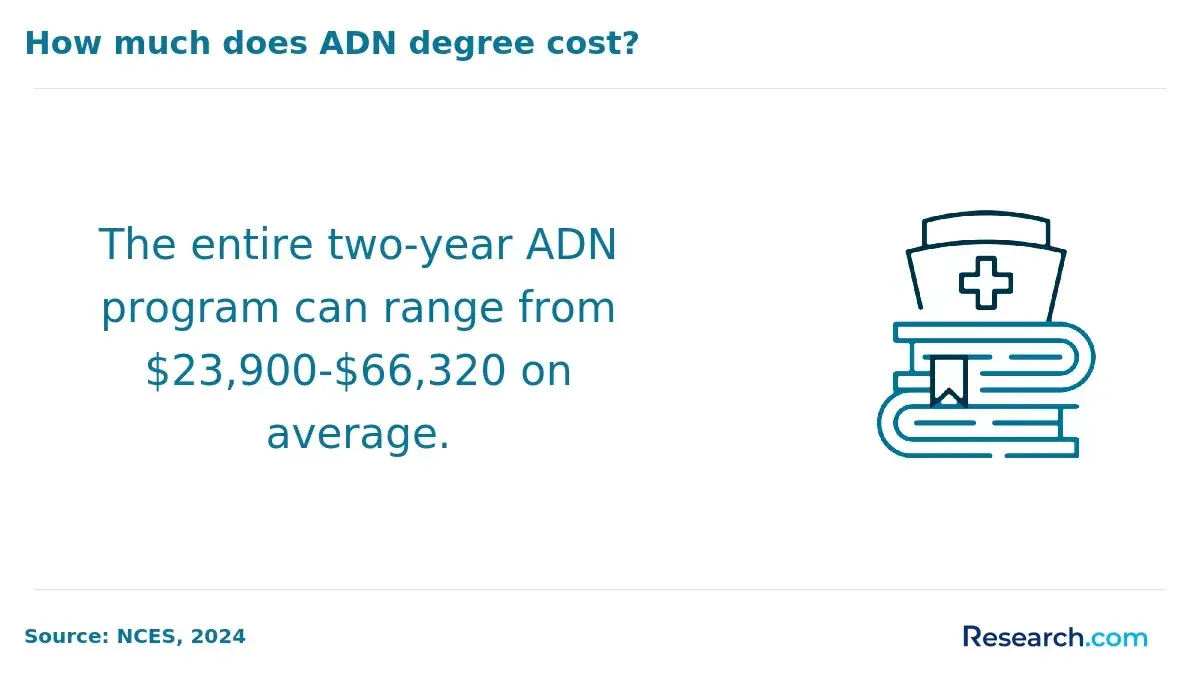
The cost of ADN programs in Connecticut varies depending on whether you attend a community college, public university, or private institution, as well as the program length and your residency status. These differences make it important to understand the range of expenses involved. Below are key factors that influence the overall cost of an Associate Degree in Nursing program in Connecticut.
- Tuition and Fees: Tuition usually represents the biggest expense, with community colleges charging in-state students around $4,000 to $6,000 yearly for a two-year ADN program. Public universities tend to cost more, averaging nearly $12,000 annually, while private schools may demand upwards of $25,000 to $33,000 per year.
- Books and Supplies: Nursing education requires a variety of textbooks and supplies such as stethoscopes and medical references, which can add $1,200 to $2,000 over the program's duration. These necessary tools are often overlooked in initial budgeting, yet they are essential for practical learning.
- Uniforms and Equipment: Students must purchase uniforms like scrubs and lab coats, as well as footwear and basic equipment, costing between $200 and $600. These items are integral to clinical settings and simulation labs, where professional appearance and readiness are mandatory.
- Clinical Expenses: Many programs include fees for clinical labs, health screenings, immunizations, and background checks, which often total several hundred dollars. These additional costs ensure compliance with healthcare regulations and support hands-on training.
- Living and Transportation Costs: Housing, meals, and commuting expenses are not included in tuition and vary greatly. On-campus housing at public institutions averages about $8,360 yearly, and travel to clinical placements can add to transportation budgets, especially for commuters.
When evaluating the average cost of an associate degree in nursing Connecticut residents should also consider expenses related to the NCLEX-RN exam and preparation. Additionally, exploring accredited programs and financial aid can substantially ease financial burdens. For those with an interest in advancing their career quickly, examining options like the ranking of the best 1 year nurse practitioner online programs may offer valuable insights.
What financial aid options are available for ADN students in Connecticut?
Financial aid can help make Associate Degree in Nursing (ADN) programs in Connecticut more affordable by covering some or all educational expenses. Various options exist to support students from different backgrounds and financial situations. Here are the main types of financial aid available to ADN students in Connecticut:
- Federal Student Aid: Most students qualify for federal assistance, including Pell Grants, Federal Supplemental Educational Opportunity Grants (FSEOG), and student loans. Eligibility depends on financial need and submitting the FAFSA annually, which ensures access to the best possible federal funding.
- State-Funded Programs and Free Tuition: Connecticut's PACT (Pledge to Advance Connecticut) program offers free tuition for eligible first-time, full-time students attending state community colleges. This scholarship acts as a last-dollar aid, covering tuition costs after other grants are applied and is available to residents who meet academic and financial criteria.
- Institutional Scholarships: Many nursing schools in Connecticut provide scholarships exclusive to ADN students, such as the Asher G. Zlotnick Memorial Nursing Scholarship. These awards typically consider merit, need, and sometimes residency or leadership, so checking with the school's financial aid office is essential for application details.
- Private Nursing Scholarships: Organizations like the Connecticut Nurses' Foundation and national groups offer scholarships focusing on academic achievement and community service. These grants also encourage recipients to commit to nursing practice within Connecticut after graduation, reflecting a focus on local workforce development.
- Employer Tuition Assistance and Loan Forgiveness: Healthcare employers across Connecticut often provide tuition reimbursement or loan forgiveness, especially amid the ongoing nursing shortage. Graduates working in underserved areas or pursuing nursing faculty roles may find specialized loan repayment programs designed to ease debt burdens.
Students interested in expanding their nursing education can also explore options such as the list of easiest nurse practitioner degree programs to get into, which may provide additional pathways for career advancement beyond the ADN level.
What can I do with an ADN in Connecticut after graduation?
ADN graduates in Connecticut are eligible to sit for the NCLEX-RN exam, opening doors to numerous entry-level nursing positions across diverse healthcare settings. These roles offer immediate employment and a strong foundation for growth within the nursing profession. Below are some notable Registered nurse career opportunities Connecticut provides for ADN holders.
- Hospital Registered Nurse: Hospitals employ many ADN-prepared RNs to deliver direct patient care, administer medications, and collaborate with interdisciplinary teams. These positions often come with structured career progression and opportunities for specialization or leadership roles.
- Long-Term Care and Rehabilitation Nurse: Working in skilled nursing and rehab facilities, ADN nurses manage daily care for elderly or recovering patients while coordinating therapy and supporting families. This setting offers stability and avenues for supervisory advancement.
- Outpatient Clinic Nurse: ADN RNs in outpatient clinics conduct patient assessments, provide immunizations, and assist with minor procedures. These roles generally have regular hours and promote work-life balance, with potential career moves into care coordination or management.
- Home Health Nurse: Providing nursing care within patients' homes, home health nurses monitor chronic conditions and educate families. This growing field offers flexibility and specialization options such as hospice or pediatric care.
- Travel Nurse: Connecticut's ongoing demand for nurses creates opportunities for ADN graduates to take temporary assignments regionally. Travel nursing enhances clinical experience and offers flexible scheduling along with competitive pay.
For nurses considering further education, exploring the list of most affordable online rn to fnp degree programs can provide additional pathways to advance their careers in nursing.
How much do ADN nurses earn in Connecticut?
The average median pay for ADN-prepared registered nurses in Connecticut is approximately $83,587 per year, with salaries varying widely based on factors such as experience, geographic location, healthcare setting, and employer type. Understanding these influences is essential for prospective nurses aiming to navigate their career and earning potential effectively. Below are the key factors shaping how much ADN nurses can earn across the state:
- Level of Experience: Entry-level ADN nurses often begin near the lower salary percentiles, earning around $62,300 annually, while those with substantial experience or specialized skills can earn upwards of $98,900, reflecting career growth and opportunities for leadership or overtime.
- Workplace Setting: Nurses working in high-intensity environments like emergency or operating rooms typically command higher salaries than those in outpatient or home health settings, where pay tends to be more modest.
- Geographic Location: Urban centers such as Hartford and Stamford offer higher pay scales, sometimes approaching $93,000, compared to smaller towns where compensation aligns more closely with state averages.
- Specialization and Certifications: Pursuing specialized nursing certifications can enhance earning potential by several thousand dollars annually, given the advanced skills and demand in areas like oncology or critical care.
- Shift Differentials and Overtime: Working nights, weekends, or holidays often comes with additional pay, and the availability of overtime can further increase a nurse's yearly income considerably.
Here's What Graduates in Connecticut Have to Say About Their ADN Degree
- Completing my ADN through the online program at Gateway Community College allowed me to balance work and study efficiently. The flexibility gave me the chance to gain real-world experience while still advancing my education. Starting my nursing career in a hospital here in Connecticut, I have witnessed how valuable the training I received truly is-especially the emphasis on patient-centered care. The program also encouraged me to grow personally by building resilience and empathy. I'm proud to support my community's health and safety every day. Theo
- Attending the hybrid ADN program at Manchester Community College was a transformative experience that combined the best of both worlds: hands-on clinical practice on campus and the convenience of online coursework. This blend prepared me well for working in home health facilities throughout Connecticut, where adaptability is key. The supportive faculty pushed me to develop my leadership skills, opening up future career growth opportunities in nursing management. Reflecting on my journey, I feel grateful for how the program shaped me into a confident and knowledgeable nurse. Hale
- The on-campus ADN program at Naugatuck Valley Community College was a challenging yet rewarding path that deepened my passion for serving Connecticut's youth in academic health settings. Being able to interact closely with instructors and classmates enriched my learning and nurtured a strong sense of community. Transitioning into my nursing role within local schools, I appreciate how my education prepared me to address the unique needs of young patients and their families. This experience has motivated me to pursue further professional development, aiming to make a lasting impact on public health education. Stuart
Related Articles for Nearby States
- 2027 Best ADN Nursing Programs in New York: Online & Campus
- 2027 Best ADN Nursing Programs in Rhode Island: Online & Campus
- 2027 Best ADN Nursing Programs in Massachusetts: Online & Campus
- 2027 Best ADN Nursing Programs in New Jersey: Online & Campus
- 2027 Best ADN Nursing Programs in Pennsylvania: Online & Campus
- 2027 Best ADN Nursing Programs in Vermont: Online & Campus
- 2027 Best ADN Nursing Programs in New Hampshire: Online & Campus
- 2027 Best ADN Nursing Programs in Delaware: Online & Campus
- 2027 Best ADN Nursing Programs in Maryland: Online & Campus
- 2027 Best ADN Nursing Programs in Maine: Online & Campus
References:
- What Can You Do With an Associate Degree in Nursing? | Goodwin University https://www.goodwin.edu/enews/what-can-you-do-with-associate-degree-nursing/
- Financial Assistance | Elisabeth DeLuca School of Nursing https://nursing.uconn.edu/admission-academics/admission-enrollment-services-2/financial-assistance/
- RN Diploma Vs. ADN Vs. BSN Degree: What’s The Difference? | NurseJournal.org https://nursejournal.org/degrees/bsn/rn-and-bsn-degree-differences/
- Is an Associate's Degree in Nursing Worth It? | University of Bridgeport https://www.bridgeport.edu/news/is-an-adn-worth-it/
- Nursing, A.S. https://threeriverscollegefoundation.org/academics/degrees-certificates/nursing/
- Western Connecticut State University Nursing https://www.wcsu.edu/nursing/
- Best Nursing Schools in Connecticut - ADN, BSN - Updated https://www.registerednursing.org/state/connecticut/
- Average Registered Nurse Salary in Connecticut https://www.incrediblehealth.com/salaries/rn/ct
- Admissions https://www.ccsu.edu/programs/nursing-bsn/admissions
- Can You Get Your Associate Degree in Nursing (ADN) Online? https://nurse.org/education/online-associate-degree-nursing/
Other Things You Should Know About ADN Nursing Programs in Connecticut
In 2027, Connecticut features top ADN nursing programs at schools such as Capital Community College, Gateway Community College, and Three Rivers Community College. These programs are praised for their strong curricula, clinical opportunities, and experienced faculty, making them ideal for aspiring nurses.
Bridging from an Associate Degree in Nursing (ADN) to a Bachelor of Science in Nursing (BSN) in Connecticut typically involves enrolling in an RN-to-BSN program designed for licensed nurses seeking to advance their education. These programs often offer flexible formats, including online and part-time options, to accommodate working professionals. Many community colleges and universities in Connecticut have established pathways that recognize prior coursework and clinical experience, allowing for accelerated completion. Additionally, financial aid and employer tuition assistance may be available to support students through this transition.
In 2027, the cost of enrolling in an ADN nursing program in Connecticut varies widely. For public community colleges, tuition can range from $5,000 to $10,000 per year for residents. Private institutions may charge significantly more. Additionally, students should budget for textbooks, lab fees, and other educational expenses.


