
2027 Best ADN Nursing Programs in Washington: Online & Campus

Co-Founder and Chief Data Scientist
Washington's healthcare sector is projected to grow 17% from 2020 to 2030, highlighting a strong demand for registered nurses holding associate degrees. Pursuing an Associate Degree in Nursing (ADN), whether through online or on-campus options, offers flexibility to meet diverse student needs without compromising essential clinical training. The ADN pathway provides an efficient route into nursing, balancing cost and time investment with certification eligibility and job prospects. However, the choice between online and campus formats requires consideration of individual learning preferences and practical requirements specific to the state's healthcare environment.
This article, crafted by career planning experts, aims to clarify what an ADN program in Washington entails. It outlines key factors prospective students should understand regarding program structure, accreditation, and workforce integration. Readers will gain insight into what to expect from these programs, how to evaluate them critically, and ways to make informed decisions tailored to their career goals in nursing within Washington's evolving medical landscape.
Key Benefits of ADN Programs in Washington
- Washington offers a balanced mix of online and on-campus ADN programs, with about 40% of students opting for flexible online coursework to accommodate working adults.
- Graduates from these programs enjoy a strong local job market, as Washington's healthcare sector is projected to grow by 15% over the next decade, outpacing the national average.
- Statewide ADN programs typically combine affordable tuition rates with clinical placements in diverse settings, giving students practical experience and reducing overall debt.
- What is an Associate Degree in Nursing (ADN) in Washington?
- What are the admission requirements for ADN programs in Washington?
- How do ADN programs in Washington prepare students for the NCLEX-RN?
- How long are ADN nursing programs in Washington?
- How do online ADN programs in Washington compare to traditional ones?
- How do I know if an ADN program in Washington is accredited?
- How much does an ADN program cost in Washington?
- What financial aid options are available for ADN students in Washington?
- What can I do with an ADN in Washington after graduation?
- How much do ADN nurses earn in Washington?
What is an Associate Degree in Nursing (ADN) in Washington?
An Associate Degree in Nursing (ADN) serves as a foundational pathway into the nursing profession, designed to prepare students for registered nurse (RN) licensure through a combination of academic coursework and clinical training. ADN programs in Washington integrate classroom instruction with hands-on experience, equipping students with essential nursing skills such as patient assessment, care planning, and critical thinking. This practical approach ensures graduates are ready for entry-level nursing roles. The following outlines the different types of ADN programs available in Washington, organized by learning modality.
- On-Campus ADN Programs: These traditional programs require students to attend in-person classes and clinical rotations at healthcare facilities. They provide direct access to faculty, labs, and peer collaboration, which can benefit students who thrive in structured, immersive environments.
- Hybrid ADN Programs: Combining online coursework with mandatory in-person labs and clinical practice, hybrid programs offer flexibility while maintaining crucial hands-on training. This format suits learners balancing education with other commitments.
- Online ADN Programs: Though limited due to state clinical requirements, some programs offer substantial online instruction for general education and nursing theory. However, all clinical skills and labs must be completed face-to-face to comply with Washington's licensing standards.
Meeting ADN degree requirements in Washington often involves completing prerequisite science and humanities courses before program admission. Prospective students should carefully consider how the program format aligns with their learning style and life circumstances. Additionally, understanding similarities and differences between nursing certifications can inform career decisions-for example, exploring topics such as FNP vs FNC BC certification which is better.
What are the admission requirements for ADN programs in Washington?
ADN programs in Washington typically have selective admission processes to ensure applicants are academically prepared and capable of handling the demands of nursing education. These requirements help maintain high standards for prospective students seeking to enter a challenging and rewarding field. Below are common admission criteria that applicants should expect when applying to both online and on-campus ADN programs in Washington.
- High School Diploma or GED: Applicants must hold a high school diploma or its equivalent, such as a GED, providing fundamental academic skills necessary for success in collegiate nursing study.
- Completion of Prerequisite Courses: Students are usually required to complete college-level prerequisite courses in subjects like biology, chemistry, mathematics, psychology, and English. This completion ensures readiness through a solid scientific and analytical background, integral to ADN program prerequisites in Washington.
- Minimum GPA Standards: Many programs demand a minimum cumulative GPA, often between 2.5 and 3.0, with particular emphasis on science and math courses. Higher GPAs often enhance an applicant's competitiveness due to the rigorous nature of nursing education.
- Entrance Exams (TEAS or HESI): Applicants frequently must pass standardized exams such as the TEAS test requirements for Washington nursing programs, which evaluate skills in reading, math, science, and English. These scores help admissions committees objectively assess academic readiness.
- Application Materials: Submissions typically include official transcripts, recommendation letters, and occasionally a personal statement. These elements collectively provide a holistic view of the applicant's academic performance, character, and motivation for pursuing nursing.
- Background Check and Drug Screening: To meet clinical placement standards and ensure patient safety, programs require passing criminal background checks and drug screenings before clinical rotations begin.
- Immunization Records and CPR Certification: Proof of current immunizations, including COVID-19 vaccines, and a valid CPR certification are mandatory to comply with clinical partner policies and protect all parties involved in patient care.
- Physical and Technical Standards: Applicants must demonstrate sufficient sensory, motor, and communication abilities essential for nursing tasks, aligning with health care facility requirements.
- Mandatory Information Sessions: Some institutions mandate attendance at informational sessions to familiarize applicants with program expectations and help them prepare effectively for the academic workload.
- Financial Aid Considerations: While tuition ranges widely, many students benefit from available scholarships and federal aid. Completion of an accredited ADN program is essential for eligibility to take the NCLEX-RN licensure exam, crucial for entering Washington's nursing workforce.
For those considering career options related to nursing, exploring forensic nurse careers can provide additional pathways within the healthcare field.
How do ADN programs in Washington prepare students for the NCLEX-RN?
ADN programs in Washington are specifically designed to equip students with the knowledge, clinical skills, and critical thinking abilities needed to pass the NCLEX-RN and become licensed registered nurses. These programs integrate multiple approaches to build student readiness and confidence for the licensure exam. Key elements include:
- Comprehensive Nursing Curriculum: Coursework spans foundational to advanced nursing topics, ensuring exposure to critical patient care areas. The curriculum is regularly revised to meet evolving professional standards and reflect current healthcare demands.
- Simulation Labs and Clinical Rotations: Hands-on training in clinical and simulated environments allows students to practice real-world nursing tasks safely. This experiential learning reinforces theoretical knowledge and develops the clinical judgment necessary for the NCLEX-RN.
- NCLEX-Style Test Preparation and Review Sessions: Targeted practice exams and review strategies familiarize students with exam formats and question styles. These sessions also help identify knowledge gaps and improve test-taking skills under timed conditions.
- Evidence-Based Learning Strategies: Programs emphasize application of research-backed practices and critical thinking, fostering problem-solving abilities aligned with the NCLEX's scenario-based questions.
- Faculty Mentorship and Academic Support: Experienced instructors provide personalized guidance, academic resources, and peer networking opportunities, contributing to higher student motivation and success rates.
How long are ADN nursing programs in Washington?
Most Associate Degree in Nursing (ADN) programs in Washington typically take about two years to complete, generally spanning six academic quarters for students enrolled full-time. This timeframe can vary depending on whether a student attends full-time or part-time, with part-time study potentially extending the duration. Some institutions offer accelerated tracks or bridge programs, such as those designed for Licensed Practical Nurses (LPNs), which can shorten the program to as little as three quarters for qualified individuals. On the other hand, extended or part-time options allow for greater flexibility but require a longer commitment. These variations accommodate diverse student needs, balancing speed against accessibility and depth of learning.
Several factors influence how long it takes to earn an ADN in Washington, including prerequisite coursework that often must be completed before entering the core nursing curriculum. Clinical training, a mandatory hands-on component, requires in-person attendance regardless of whether theoretical courses are online or on campus, which can impact scheduling. Additionally, program formats-full-time, part-time, or hybrid-play a role in determining total duration, as some students may prioritize flexibility over speed. Ultimately, the program length is purposely structured to ensure a thorough integration of academic study with immersive clinical experience, preparing graduates to meet licensing standards and succeed on the NCLEX-RN exam.
How do online ADN programs in Washington compare to traditional ones?
Both online, hybrid, and traditional ADN programs in Washington prepare students for RN licensure but differ notably in flexibility, learning format, and course delivery. These differences can shape student experiences and outcomes in meaningful ways. Below are key comparisons to consider:
- Learning Format: Online and hybrid programs offer remote access to lectures and assignments, suiting self-disciplined learners comfortable with technology. Traditional programs demand in-person attendance, appealing to those who value structured, face-to-face interaction.
- Clinical Training: All programs require hands-on clinical hours locally, but hybrid students often coordinate placements near home, whereas traditional students benefit from established hospital partnerships.
- Scheduling Flexibility: Online/hybrid pathways allow asynchronous study, benefiting working adults, while traditional formats follow fixed schedules for routine-focused learners.
- Student Interaction: Campus programs foster close peer and faculty connections, whereas online formats rely on virtual engagement that may feel less personal but offers convenience.
- Accessibility: Online and hybrid options expand access for rural students by reducing commuting, although some restrictions may apply; traditional programs suit those near urban centers.
How do I know if an ADN program in Washington is accredited?
Accreditation is essential for ADN programs in Washington because it confirms the program meets the educational standards required for registered nurse licensure and quality patient care. To ensure an ADN program is properly accredited, students should take the following steps:
- Consult National Accreditation Databases: Use databases from the Accreditation Commission for Education in Nursing (ACEN) and the National League for Nursing Commission for Nursing Education Accreditation (NLN CNEA) to verify the program's accreditation status. These sources provide up-to-date details, including candidacy and expiration dates, helping students avoid programs that lack recognized accreditation.
- Confirm State Board of Nursing Approval: Verify that the program is approved by the Washington State Board of Nursing, which is required for graduates to be eligible for RN licensure and the NCLEX-RN exam. This information can be found on the board's website or through direct contact, ensuring the program meets state regulatory standards.
- Visit the School's Official Website: Accredited programs typically show their accreditation status clearly, listing accrediting agencies and relevant dates. If a program is not accredited, schools in Washington must disclose this, helping students make informed decisions before enrollment.
- Verify National or Regional Institutional Accreditation: Check if the hosting institution holds accreditation from a US Department of Education-approved regional or national agency, such as the Northwest Commission on Colleges and Universities (NWCCU). This confirms institutional quality and eligibility for federal financial aid, which often supports nursing students.
How much does an ADN program cost in Washington?
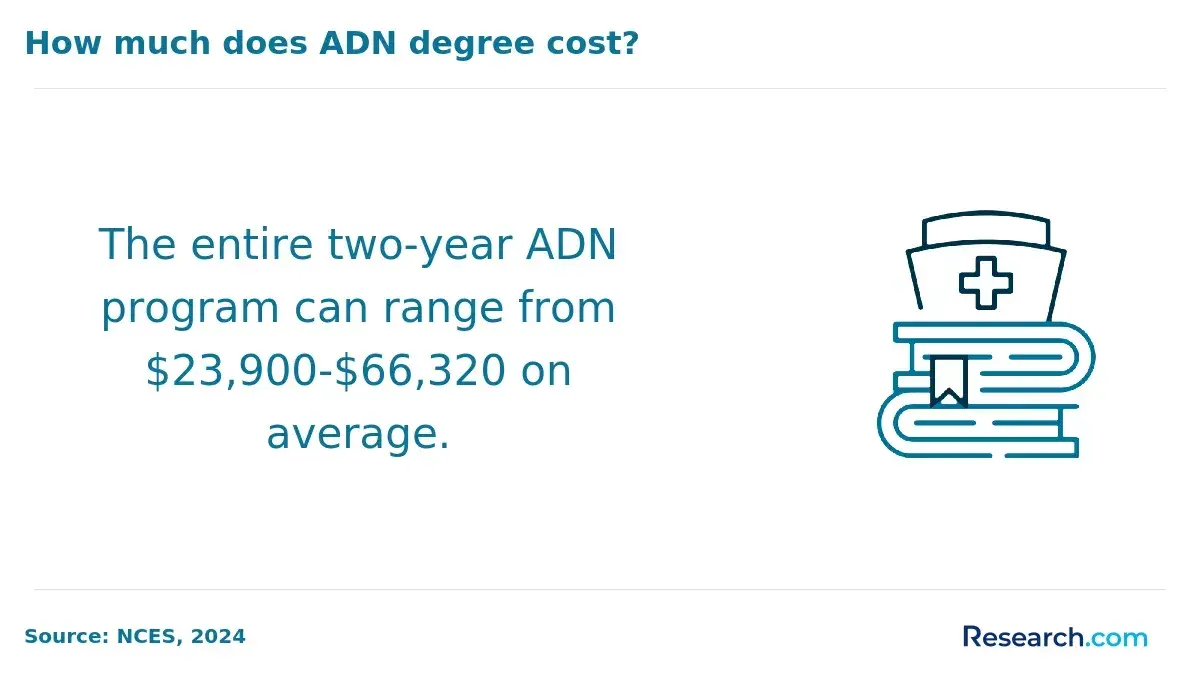
The cost of ADN programs in Washington can vary depending on the type of school-community college, public university, or private institution-the program length, and whether the student qualifies for in-state or out-of-state tuition. Several key factors contribute to the overall financial commitment required for these nursing programs. Below are some major expenses to consider.
- Tuition and Mandatory Fees: The tuition for ADN nursing programs in Washington differs widely by institution and residency status. Community colleges typically offer lower in-state rates, while public universities and private colleges can be considerably more expensive. Mandatory fees for technology, campus facilities, and labs add to the base tuition, sometimes substantially increasing the total cost.
- Books and Supplies: Course materials for an ADN program include textbooks, software, and other educational tools required for study. These costs can add up to several thousand dollars, as some programs also bundle exam preparation materials and e-books, which are essential for success in the program and on licensing exams.
- Uniforms and Equipment: Clinical practice requires students to purchase uniforms, specialized footwear, and equipment such as watches, which are necessary for hands-on training. These expenses generally occur early in the program and typically range between $300 and $400, reflecting essential but often overlooked costs.
- Clinical and Lab Fees: Fees relating to clinical placements, lab usage, liability insurance, and malpractice coverage contribute to the overall expenses. These can range from several hundred to several thousand dollars, depending on the institution's requirements and resources provided throughout the program.
- Living Expenses and Transportation: While some ADN programs are partly online, in-person clinical work usually requires commuting or temporary relocation. Housing, food, and travel costs vary based on a student's location and lifestyle, often making these indirect costs significant factors in planning for education expenses.
For those exploring nursing education pathways, especially shorter or specialized training, it is helpful to review options such as the list of best 1 year online nurse practitioner programs to understand alternative routes that may better fit individual circumstances and budgeting considerations.
What financial aid options are available for ADN students in Washington?
Financial aid can help make ADN programs in Washington more affordable by covering some or all educational expenses. Below are some key options available to students pursuing ADN degrees.
- Federal Student Aid: By submitting the Free Application for Federal Student Aid (FAFSA), students may qualify for federal grants like Pell Grants, subsidized and unsubsidized loans, or Federal Work-Study. Eligibility depends on factors such as financial need, citizenship, and enrollment in an accredited program, so timely application is important for accessing these funds.
- Washington College Grant: This state-funded program provides substantial financial aid to Washington residents enrolled in ADN programs at community and technical colleges. Awards cover tuition and approved expenses, determined by family income and household size. Students apply through the FAFSA or Washington Application for State Financial Aid (WASFA).
- Institutional Scholarships and Grants: Many colleges, including Seattle Central College, offer their own scholarships, tuition waivers, and emergency aid for nursing students. These awards may be merit- or need-based and typically require application via the institution's financial aid office.
- Private Nursing Scholarships: Various organizations provide scholarships specifically for nursing students in Washington. These can vary in amount and often require essays, enrollment proof, or demonstration of financial need. Applying for nursing scholarships and grants in Washington can significantly ease financial burdens during studies.
- Employer Tuition Assistance and Loan Repayment: Some healthcare employers in Washington offer tuition reimbursement or loan repayment programs for employees pursuing ADN degrees, often requiring a post-graduation work commitment in underserved areas.
For those considering advancement, it's worth exploring whether certain are nurse practitioner specialty programs easy to get into, as this can impact financial planning beyond the ADN.
What can I do with an ADN in Washington after graduation?
ADN graduates in Washington are qualified to sit for the NCLEX-RN exam and pursue a variety of entry-level nursing positions in diverse healthcare settings. These roles offer crucial experience and opportunities that can serve as the foundation for further career growth. Below are some of the primary ADN nursing career pathways in Washington that new graduates often consider:
- Registered Nurse in Hospitals: Hospitals employ ADN-prepared RNs in various departments, including medical-surgical, emergency, and intensive care units. These nurses carry out patient assessments, medication administration, and collaborate with the healthcare team. Career progression in hospitals often involves specialization or returning to school for a BSN.
- Long-Term Care and Skilled Nursing Facilities: Many ADN nurses start in nursing homes or rehabilitation centers, providing ongoing care for elderly or chronically ill patients. They manage medications, care plans, and coordinate with interdisciplinary teams. Experience here can lead to supervisory roles or nurse management positions.
- Outpatient Clinics and Physician Offices: These settings offer more regular hours and focus on patient education and preventive care. ADN-prepared RNs perform assessments, manage chronic illnesses, and assist with minor procedures, with potential growth into clinic management or specialized nursing roles.
- Home Health and Hospice Nursing: This role involves providing care to patients in their homes, requiring autonomy and flexibility. Responsibilities include complex treatment management and family support, with advancement possible to case manager or clinical supervisor roles.
- Community Health and Public Health Nursing: ADN RNs in these roles work with schools or public health departments on screenings, immunizations, and education programs, emphasizing population health. These positions may serve as a stepping stone to leadership or policy roles.
For those considering advancement, some employers favor BSN credentials for leadership roles, so ADN graduates often pursue RN-to-BSN programs available both online and on campus. Exploring specialized nursing fields can be beneficial too, and for example, if you're wondering is pediatric nurse practitioner online program easy to get into, there are accessible pathways to further specialization beyond the ADN level. These varied RN job opportunities with associate degree in Washington provide a strong foundation for a sustainable and rewarding nursing career.
How much do ADN nurses earn in Washington?
The average median annual salary for Associate Degree in Nursing (ADN) nurses in Washington is approximately $99,519, though wages can vary significantly depending on factors such as experience, location, healthcare setting, and employer type. Understanding these variables is crucial for prospective students evaluating online and on-campus ADN programs across the state. Below are key considerations affecting the earning potential of ADN-prepared registered nurses in Washington.
- Level of Experience: Entry-level ADN nurses typically start with lower salaries, often near $74,200 annually, while those with more experience or certifications can earn upwards of $117,800, reflecting the value of professional growth and specialization.
- Workplace Setting: Hospitals, especially general medical and surgical centers, offer higher salaries, whereas facilities like skilled nursing or home health services tend to pay less, influencing career choices based on desired compensation and work environment.
- Geographic Location: Urban areas such as Seattle provide higher wages due to the cost of living and demand, while rural regions often present lower salary averages, affecting regional employment opportunities.
- Specialization and Certifications: Nurses with specialized skills or certifications often earn salary premiums, highlighting the benefits of advanced training beyond entry-level credentials.
- Shift Differentials and Overtime: Additional pay for non-standard shifts and overtime hours can significantly boost overall income, particularly in hospital settings where such opportunities are common.
Here's What Graduates in Washington Have to Say About Their ADN Degree
- Completing the hybrid ADN program at Seattle Central College was a pivotal experience for me. Balancing online coursework with on-campus labs gave me the flexibility I needed while still providing hands-on training. Once I started working in a home health facility, I realized how much my education prepared me to deliver compassionate and effective care to patients in their own environments. The program also helped me grow professionally by opening doors to certifications and networking events specifically geared toward Washington healthcare providers. The supportive community and dedicated instructors made all the difference in my journey. Rashid
- Choosing the on-campus ADN program at Tacoma Community College allowed me to immerse myself fully in the nursing profession. The rigorous training and direct patient care experiences in local hospitals gave me confidence as I began my nursing career in the hospital industry. It was challenging, but I valued how my education connected me with mentors who emphasized the importance of lifelong learning and leadership in nursing. Pursuing my ADN in Washington has not only enhanced my clinical skills but also inspired me to give back by volunteering at health outreach programs in underserved communities. Carmen
- Attending the fully online ADN program at Clover Park Technical College was a transformative process that fit perfectly with my busy schedule. Being able to study at my own pace while working part-time was crucial. After graduating, I was thrilled to start my nursing career in an academic setting where I could support youth health initiatives. The program's focus on evidence-based practices and Washington's healthcare standards gave me the tools to contribute to improving student wellness programs. This degree has truly expanded my career opportunities and intensified my passion for promoting community health. Darnell
Related Articles for Nearby States
- 2027 Best ADN Nursing Programs in Oregon: Online & Campus
- 2027 Best ADN Nursing Programs in Idaho: Online & Campus
- 2027 Best ADN Nursing Programs in Montana: Online & Campus
- 2027 Best ADN Nursing Programs in California: Online & Campus
- 2027 Best ADN Nursing Programs in Nevada: Online & Campus
- 2027 Best ADN Nursing Programs in Utah: Online & Campus
- 2027 Best ADN Nursing Programs in Wyoming: Online & Campus
- 2027 Best ADN Nursing Programs in Arizona: Online & Campus
- 2027 Best ADN Nursing Programs in Colorado: Online & Campus
- 2027 Best ADN Nursing Programs in New Mexico: Online & Campus
References:
- Online ADN/ASN Programs - Reviewing Most Affordable Schools https://www.edumed.org/online-schools/associate-nursing-programs/most-affordable/
- What Jobs Can a Nurse with an ADN Do? | All Nursing Schools https://www.allnursingschools.com/adn/career-paths/
- Accreditation https://nursing.wsu.edu/about-us/accreditation/
- Associate Degree in Nursing :: Nursing https://www.bellevuecollege.edu/nursing/adn/
- 5 Short ADN Programs [Updated 2025] https://www.registerednursing.org/articles/shortest-adn-programs/
- In-Person Vs. Online Nursing Programs: Which Is Right For Me? | NurseJournal.org https://nursejournal.org/resources/in-person-vs-online-nursing-programs/
- Nursing Degrees - Washington Center for Nursing https://www.wcnursing.org/be-a-nurse/nursing-degrees/
- Become a Registered Nurse - School of Nursing & Health Studies https://www.uwb.edu/nhs/undergraduate/rn-bsn/becomearn
- Associate Degree in Nursing https://www.columbiabasin.edu/learn/discover-your-path/health-sciences/nursing-adn/index.html
- Scholarships & Financial Aid https://www.aacnnursing.org/students/scholarships-financial-aid
Other Things You Should Know About Pursuing ADN Nursing Programs in Washington
In 2027, some of the top ADN nursing programs in Washington include Bellevue College, which offers a flexible hybrid curriculum, and Shoreline Community College, known for its comprehensive hands-on clinical training. These programs are designed to equip students with the necessary skills for a successful nursing career.
Prerequisites for enrolling in a 2026 ADN nursing program in Washington typically include a high school diploma or GED, completion of specific courses like anatomy and physiology, basic math and English proficiency, and sometimes CPR certification. Requirements may vary slightly by institution.


