
2027 Best ADN Nursing Programs in Kentucky: Online & Campus

Co-Founder and Chief Data Scientist
In Kentucky, nearly 15% of registered nurses hold an associate degree, making ADN programs a solid stepping stone into the healthcare field. Whether online or on-campus, earning an ADN in Kentucky offers a flexible path to start a nursing career quickly and affordably. This route opens doors to a variety of nursing roles and sets the stage for further education and specialization.
This article dives into what an associate degree in nursing really means in Kentucky. Crafted by career planning experts, it guides readers through what to expect from ADN programs, how to spot quality options, and tips for making smart choices on this exciting journey. Navigating ADN options is easier with the right insights.
Key Benefits of ADN Programs in Kentucky
- Kentucky's ADN programs offer flexible online options alongside traditional campus classes, perfect for busy students juggling work and life.
- The state boasts a solid NCLEX pass rate averaging around 85%, showing strong program quality that prepares you well for licensure.
- Tuition in Kentucky ADN programs is generally affordable, with many community colleges charging under $5,000 per year, making nursing education more accessible.
- What is an Associate Degree in Nursing (ADN) in Kentucky?
- What are the admission requirements for ADN programs in Kentucky?
- How do ADN programs in Kentucky prepare students for the NCLEX-RN?
- How long are ADN nursing programs in Kentucky?
- How do online ADN programs in Kentucky compare to traditional ones?
- How do I know if an ADN program in Kentucky is accredited?
- How much does an ADN program cost in Kentucky?
- What financial aid options are available for ADN students in Kentucky?
- What can I do with an ADN in Kentucky after graduation?
- How much do ADN nurses earn in Kentucky?
What is an Associate Degree in Nursing (ADN) in Kentucky?
An Associate Degree in Nursing (ADN) serves as a solid stepping stone into the nursing field, designed to prepare students for RN licensure through a mix of academic coursework and clinical training. ADN programs in Kentucky blend classroom instruction with practical, hands-on experience to build the crucial skills needed to provide excellent patient care. This combination ensures students gain both the theory and real-world practice to confidently enter nursing roles. Now, let's look at the different types of ADN programs available in Kentucky based on how they're delivered:
- On-Campus ADN Programs: These offer in-person classes and clinical labs on college campuses, perfect for students who thrive with face-to-face learning and direct access to simulation labs and local healthcare placements.
- Hybrid ADN Programs: Mixing online lectures with on-campus labs and clinical work, these programs give flexibility for evening or weekend sessions, making it easier to juggle family, work, and study.
- Online ADN Programs: Though fully online options are rare due to state clinical practice requirements, some programs let you complete much of the theory remotely while doing clinical hours at approved local sites, ideal for working adults or those far from campus.
The ADN curriculum and requirements in Kentucky include not only coursework but also supervised clinical practice to ensure real healthcare skills. After completing an ADN, graduates can also explore further nursing roles, including advanced ones such as what is a family nurse practitioner, for those interested in expanding their nursing career.
What are the admission requirements for ADN programs in Kentucky?
ADN programs in Kentucky usually have selective admission processes to make sure applicants are ready both academically and practically for the demands of nursing education. These requirements help schools admit students who are set up for success in their studies and clinical work. Here are some of the key Kentucky ADN prerequisites for nursing schools that you'll likely encounter:
- High School Diploma or GED: You'll need to show proof of high school graduation or a GED. This is the basic foundation schools look for, confirming you're ready for college-level work.
- Completion of Prerequisite Courses: Most ADN programs want you to finish certain courses first, like anatomy and physiology, English composition, and math. These classes prepare you with crucial knowledge needed for nursing studies and show you can handle college coursework.
- Minimum GPA Standards: Keeping a good GPA is important. Many programs require a GPA between 2.5 and 3.0. This helps schools pick students who've consistently done well academically.
- Entrance Exam Scores: Exams like the ATI TEAS or HESI A2 are common requirements. They test your skills in reading, math, science, and English, giving programs a clear idea of how prepared you are for nursing studies.
- Application Materials: You might need to submit letters of recommendation or a personal statement. These let schools see your motivation and communication skills, which are key for a career in nursing.
Beyond these, some programs require background checks, health clearances, or attending an orientation. If you're curious about long-term nursing careers, you can also check out this guide on how to become a holistic nurse practitioner for more insight into advancing in nursing. Meeting these ADN program admission requirements in Kentucky will definitely put you on the right track to join a program that fits your goals.
How do ADN programs in Kentucky prepare students for the NCLEX-RN?
ADN programs in Kentucky are specifically designed to equip students with the knowledge, clinical skills, and critical thinking abilities needed to pass the NCLEX-RN and become licensed registered nurses. Here's how these programs get students ready for the big exam:
- Comprehensive Nursing Coursework: Students dive into essential subjects like anatomy, pharmacology, and mental health, making sure they have the core knowledge needed to understand patient care and nursing fundamentals thoroughly.
- Simulation Labs and Clinical Rotations: Hands-on practice in simulation labs and real healthcare settings helps students build confidence and sharpens their clinical judgment, a must for handling the fast-paced realities of nursing.
- NCLEX-Style Test Preparation and Review Sessions: Regular practice tests and review courses mirror the NCLEX format, reducing test anxiety and helping students get comfortable with the exam's tricky, computer-adaptive style.
- Evidence-Based Learning Strategies: Using case studies and scenario exercises, students develop critical thinking skills that translate to better problem-solving during the exam and in real patient situations.
- Faculty Mentorship and Academic Support: Experienced instructors provide tailored guidance, peer tutoring, and focused workshops that strengthen both knowledge and exam readiness.
When I asked a nurse from Kentucky who graduated from a local ADN program about how the training helped with the NCLEX-RN, he shared that balancing intense coursework and clinical hours was tough but rewarding. He recalled leaning heavily on simulation labs to feel prepared for real-life patient care scenarios and appreciated how the faculty's ongoing encouragement made the difference when exam stress hit. "The review sessions were like mini check-ins that kept me on track," he said, emphasizing how familiarizing with NCLEX-style questions boosted his confidence. Reflecting on his journey, he acknowledged that the program's blend of theory, practice, and support truly made passing the NCLEX-RN exam feel achievable rather than overwhelming.
How long are ADN nursing programs in Kentucky?
Most Associate Degree in Nursing (ADN) programs in Kentucky typically take about two years to complete, especially for students attending full-time. This standard timeline applies to both traditional campus-based and hybrid program formats, though there are options for faster or slower progression. Some schools offer accelerated tracks that let you finish in as little as 18 to 21 months, perfect if you want to jump into nursing sooner. On the other hand, extended part-time options give you the flexibility to balance school with work or family, ultimately stretching the program length beyond two years if needed.
The overall time needed to earn an ADN can vary depending on a few key factors. For instance, many students must first complete prerequisite classes like anatomy or psychology, which can add extra months before starting core nursing courses. Clinical training is another big piece-it's required alongside classroom learning and often scheduled at different times to accommodate busy students. Since nursing is hands-on, most programs emphasize in-person labs and clinical hours to ensure you get real-world experience. This careful mix of study and practice helps make sure you're ready not just to pass the NCLEX-RN exam but also to handle the demands of nursing work once you're licensed.
How do online ADN programs in Kentucky compare to traditional ones?
Both online, hybrid, and traditional ADN programs in Kentucky prepare students to become licensed Registered Nurses, but they vary quite a bit in how courses are delivered, flexibility, and student experience. Here's a quick look at some key differences that can help you figure out what might suit you best.
- Learning Format: Traditional programs rely on in-person classes and labs, great if you like face-to-face interaction. Online and hybrid options mix virtual lectures with some hands-on sessions, perfect for those juggling work or family.
- Clinical Training: All require in-person clinicals, but online and hybrid students often choose local sites and schedules, giving more control. Traditional students usually follow a fixed clinical calendar set by the school.
- Scheduling Flexibility: Online and hybrid programs often let you learn at your own pace or join multiple start dates, ideal if you need a flexible timetable. Traditional programs stick to set class times.
- Student Interaction: Traditional settings offer direct, frequent contact with teachers and peers, helpful for hands-on support. Online formats rely on virtual tools but can foster strong online communities.
- Accessibility: Online and hybrid options open doors for students in rural areas or with transportation challenges by reducing the need to commute. Traditional programs require being on campus regularly.
When I asked a nurse who completed a hybrid ADN program at a local Kentucky school about her experience, she shared how the balance between online coursework and in-person clinicals helped her manage a full-time job and family life without missing the essential hands-on training. "It was challenging at times to stay motivated during virtual classes-but having those in-person labs kept me grounded and confident," she said. She appreciated how the flexible scheduling let her tailor study time around her busy days, unlike stories she'd heard about friends in traditional programs stuck with rigid class hours. Her journey showed that hybrid programs really can bridge the gap between flexibility and real-world nursing skills.
How do I know if an ADN program in Kentucky is accredited?
Accreditation is key for nursing programs in Kentucky because it guarantees the program meets the standards needed for RN licensure and prepares students for safe, effective patient care. Here's how you can check if an ADN program in Kentucky is officially accredited:
- Check Official Accreditation Databases: Look up the Accreditation Commission for Education in Nursing (ACEN) or the Commission on Collegiate Nursing Education (CCNE) websites. These databases list accredited ADN programs, so you can see if the school's program is current and recognized.
- Confirm State Board of Nursing Approval: The Kentucky Board of Nursing (KBN) oversees prelicensure programs in the state. Their website has an updated list of approved ADN programs, and approval here is mandatory to sit for the NCLEX-RN exam.
- Visit the School's Official Website: Accredited programs usually display their accreditation status and accrediting bodies clearly. Many schools also share NCLEX pass rates and contact info for verification, which helps confirm their credibility.
- Verify National or Regional Accreditation: Make sure the accrediting agency is recognized by the U.S. Department of Education or CHEA. Regional accreditation, like from SACSCOC, also speaks to the school's academic quality and helps with credit transfers.
How much does an ADN program cost in Kentucky?
The cost of ADN programs in Kentucky can vary quite a bit depending on whether you attend a community college, public university, or private school, your program's length, and if you qualify for in-state or out-of-state tuition. Here's a quick rundown of the main factors that shape the overall price tag of earning your ADN in Kentucky:
- Tuition and Fees: This is usually the biggest chunk of the total cost, charged by credit hour or semester. Rates differ between schools and residency status-for example, community colleges often have lower in-state rates, while private schools can be much pricier. Keep in mind that the ADN program tuition and fees in Kentucky will also affect online options, with some schools offering flat rates for distance education.
- Books and Supplies: These costs add up and cover textbooks, lab materials, and other necessary course tools. While some institutions toss in free books, others expect you to pay several thousand dollars over the program. Budgeting here can be key since it's an often-overlooked expense.
- Uniforms and Equipment: You'll need to invest in uniforms and essential nursing supplies like stethoscopes and shoes. These are required for your clinical work and can add a few hundred to a few thousand dollars depending on the school's requirements.
- Clinical Expenses and Testing Fees: Apart from tuition, there are mandatory fees like background checks, liability insurance, lab kits, and standardized testing (including the NCLEX-RN exam). These can catch students off guard and range anywhere from a few hundred to over a thousand dollars during the program.
- Living and Transportation Costs: These indirect expenses include housing, food, and travel, which vary widely based on your living situation and whether your program is online or on-campus. It's smart to factor in these costs early to avoid surprises.
If you're curious about flexible learning options, you might also explore the best accelerated online nurse practitioner program choices, which can offer different financial structures and convenience. Overall, understanding the cost of online ADN programs in Kentucky alongside traditional paths will help you plan your budget more effectively.
What financial aid options are available for ADN students in Kentucky?
Financial aid can make ADN programs in Kentucky more affordable by covering tuition, fees, books, and other expenses, easing the financial burden for many students. Here are some of the main financial aid options you can explore as you pursue your nursing education:
- Federal Aid: This includes grants like the Pell Grant and FSEOG, plus federal student loans such as Direct Subsidized and Unsubsidized Loans. You'll need to fill out the FAFSA to apply, and aid eligibility mostly depends on your financial need. Grants don't require repayment, but loans do.
- State-Funded Programs: Kentucky offers grants and scholarships aimed at residents, including the College Access Program (CAP) Grant through KHEAA. These typically require you to live in Kentucky, attend a qualifying school, and complete the FAFSA, focusing on students with financial need.
- Institutional Scholarships: Many nursing schools in Kentucky, like community colleges and the University of Kentucky, provide scholarships based on your academic record, leadership qualities, or financial need. Often, you'll have to apply separately from FAFSA, so it pays to check with your school's financial aid office.
- Private Nursing Scholarships: A variety of private groups and foundations offer scholarships that sometimes target ADN students specifically or underrepresented communities in nursing. Criteria can include grades, community service, or a commitment to nursing within Kentucky, with each scholarship having its own application process.
- Employer Tuition Assistance: Some healthcare employers in Kentucky help cover tuition for current or future staff pursuing nursing degrees relevant to their job. These programs often require working for the employer after you graduate, so it's wise to talk to HR or local healthcare providers about available opportunities.
Starting your financial aid journey with the FAFSA is crucial to unlock many of these options. Also, if you're curious about advanced nursing paths, check out this easy nurse practitioner degree program to get into that can open doors after your ADN.
What can I do with an ADN in Kentucky after graduation?
ADN graduates in Kentucky qualify to take the NCLEX-RN exam and step into a variety of entry-level nursing roles across many healthcare settings. These positions offer solid opportunities for hands-on experience and stepping stones to further advancement. Here are some common career paths that ADN nursing jobs in Kentucky open up:
- Registered Nurse (RN) in Hospitals: Work directly with patients in busy hospital units like emergency rooms or medical-surgical floors. You'll handle medication administration, patient assessments, and coordinate with healthcare teams. Plus, many hospitals support growth into leadership roles such as charge nurse or nurse manager.
- Long-Term Care and Rehabilitation Facilities: Provide ongoing care in nursing homes or rehab centers, focusing on patients recovering from surgeries or managing chronic illnesses. These roles often include supervising nursing staff and offer chances to specialize in geriatric care or rehab nursing.
- Outpatient Clinics and Physician Offices: Enjoy more regular hours while assisting with patient exams, routine procedures, and health education. These positions are great for those interested in preventative care or balancing work and life.
- Home Health Nursing: Deliver care in patients' homes, performing wound care, medication management, and patient teaching. This role requires strong independent judgment and can lead to roles like case manager or home health supervisor.
- Community and Public Health Nursing: Focus on health promotion and education in community programs or schools, tackling immunizations and outreach. This path fits those passionate about population health and prevention.
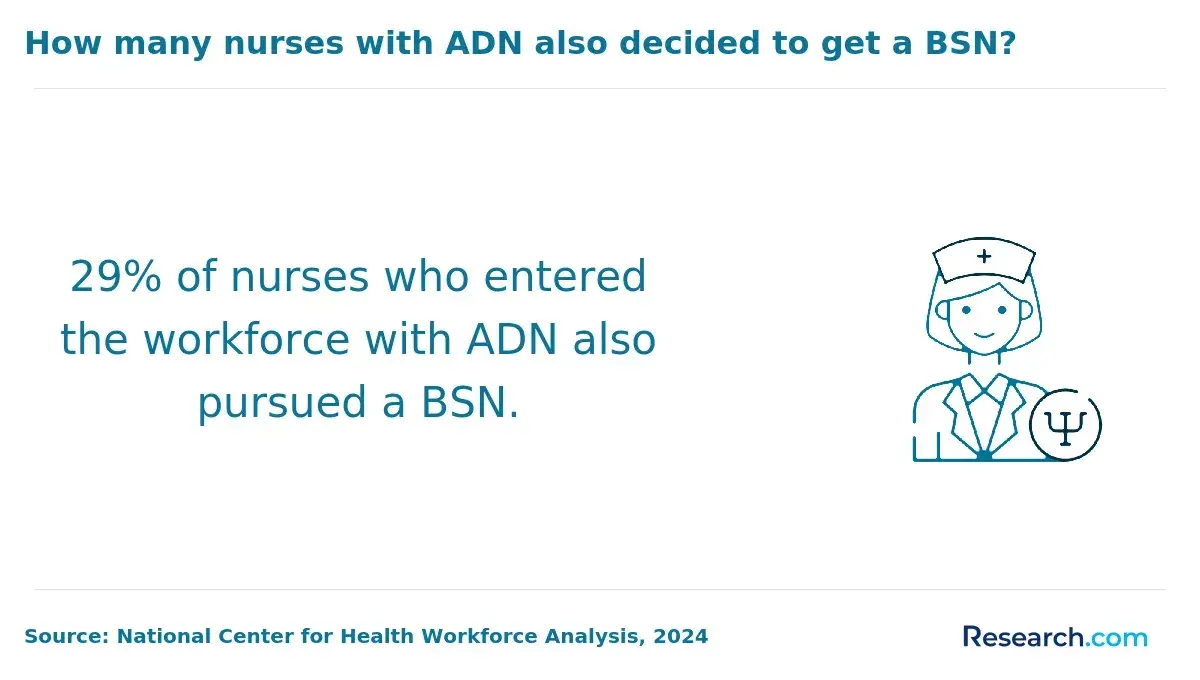
- Advancement Opportunities: Many ADN-prepared nurses pursue RN to BSN programs in Kentucky to unlock roles like nurse educator or specialty positions while employers often offer tuition help and flexible schedules. If you're curious about continuing education, check out this list of cheapest online womens health nurse practitioner degree programs to explore future options.
How much do ADN nurses earn in Kentucky?
The average median annual pay for ADN-prepared nurses in Kentucky is around $80,782, but salaries can vary quite a bit depending on experience, location, healthcare setting, and the type of employer. If you're thinking about pursuing an ADN-whether online or on-campus-it's helpful to know what factors influence your earning potential. Here's a quick look at the key reasons why ADN nurse salaries differ across the state:
- Level of Experience: Starting salaries for new ADN nurses are usually near $56,000, but with a few years under your belt, you could earn $70,000 or more as you take on advanced roles or specialties.
- Workplace Setting: Hospitals tend to pay more than clinics or nursing homes, with hospital-based RNs often making at or above the state median.
- Geographic Location: Urban areas like Louisville and Lexington offer higher pay due to demand and living costs, while rural jobs might throw in bonuses or loan repayment perks.
- Specialization and Certifications: Getting certified in areas like critical care or emergency nursing can add several thousand dollars to your yearly paycheck.
- Shift Differentials and Overtime: Night, weekend, and holiday shifts usually come with extra pay-sometimes $2-$4 more per hour-plus overtime can boost overall earnings significantly.
Here's What Graduates in Kentucky Have to Say About Their ADN Degree
- Completing my ADN online through Jefferson Community and Technical College allowed me to balance family responsibilities and study without sacrificing quality education. The program's flexibility was a lifesaver, especially when juggling shifts at a local hospital. Transitioning into my nursing career felt smoother because the instructors emphasized hands-on skills even in the virtual setting. I'm proud to now contribute directly to the health and recovery of patients in my community, knowing I was prepared both academically and emotionally. This journey reinforced my passion for nursing and my commitment to lifelong learning. Ken
- Attending the hybrid ADN program at Bluegrass Community and Technical College offered me a unique blend of face-to-face clinical experiences alongside the convenience of online theoretical courses. This balance helped me develop strong practical skills while nurturing self-discipline. Launching my career in home health services here in Kentucky has been deeply rewarding; I'm able to support patients in their own environments and see the immediate impact of personalized care. Reflecting on my growth, I realize how much the program boosted my confidence and professional opportunities within a stable healthcare industry. Leo
- Studying on campus at Gateway Community and Technical College was a transformative experience that connected me deeply with both my peers and the local community. The immersive clinical rotations in academic and pediatric settings inspired me to focus on youth wellness and education. Kentucky's emphasis on community health really shaped my approach to nursing-it's about more than medicine; it's about advocating for and empowering the people we serve. Earning my ADN here opened doors for career advancement, and I'm excited to continue evolving as a healthcare professional focused on making a positive community impact. Haj
Related Articles for Nearby States
- 2027 Best ADN Nursing Programs in Indiana: Online & Campus
- 2027 Best ADN Nursing Programs in Ohio: Online & Campus
- 2027 Best ADN Nursing Programs in Tennessee: Online & Campus
- 2027 Best ADN Nursing Programs in West Virginia: Online & Campus
- 2027 Best ADN Nursing Programs in Virginia: Online & Campus
- 2027 Best ADN Nursing Programs in Illinois: Online & Campus
- 2027 Best ADN Nursing Programs in Missouri: Online & Campus
- 2027 Best ADN Nursing Programs in North Carolina: Online & Campus
- 2027 Best ADN Nursing Programs in Georgia: Online & Campus
- 2027 Best ADN Nursing Programs in Mississippi: Online & Campus
References:
- Associate of Science in Nursing (ASN) - Online RN Program https://www.joyce.edu/nursing/asn/
- Undergraduate Financial Resources https://nursing.uky.edu/undergraduate-programs/scholarships-aid
- 2025-26 Tuition and Fees | Student Account Services https://studentaccount.uky.edu/2025-26-tuition-and-fees
- School of Nursing and Allied Health | Western Kentucky University https://www.wku.edu/nursing/
- Nursing | GCTC https://gateway.kctcs.edu/education-training/program-finder/nursing.aspx
- Associate of Applied Science in Nursing https://www.eku.edu/chs/nursing/aas-nursing/
- Nursing (ADN) | University of the Cumberlands https://www.ucumberlands.edu/academics/undergraduate/nursing-adn
- Online Bachelor's BSN in Nursing (RN-BSN) https://online.uky.edu/bachelors/nursing-rn-bsn/bsn
- RN to Bachelor of Science in Nursing https://louisville.edu/online/programs/bachelors/rn-to-bachelor-of-science-in-nursing
- Nursing Programs - Online, Hybrid, In-Person | Spalding University https://spalding.edu/nursing/
Other Things You Should Know About Becoming a Nurse in Kentucky
The top ADN programs in Kentucky for 2027 feature Elizabethtown Community and Technical College, West Kentucky Community and Technical College, and Hazard Community and Technical College, recognized for their comprehensive curriculum, high NCLEX-RN pass rates, and state-of-the-art facilities.
ADN programs in Kentucky typically require a high school diploma or GED, a minimum GPA, prerequisite courses in biology and chemistry, and passing scores on entrance exams like the TEAS. Additionally, prospective students may need to undergo a background check and provide immunization records.


