
2027 Best ADN Nursing Programs in Louisiana: Online & Campus

Co-Founder and Chief Data Scientist
Louisiana's healthcare sector relies heavily on skilled nursing professionals, with over 100,000 registered nurses projected to be needed by 2030. Pursuing an Associate Degree in Nursing (ADN), whether through online or on-campus programs, offers a viable pathway to meet this demand. ADN programs provide foundational nursing education and clinical training essential for licensure and entry into the workforce. Choosing to obtain this degree in Louisiana ensures alignment with state-specific licensure requirements and healthcare needs, enhancing employment prospects within the region.
This article, crafted by experts in career planning, offers an in-depth examination of what an ADN program in Louisiana entails. It aims to guide readers through understanding program expectations, evaluating critical factors, and making informed decisions when selecting ADN options that best suit their professional goals within the state.
Key Benefits of ADN Programs in Louisiana
- Louisiana offers affordable ADN programs with average tuition costs 20% below the national average, making nursing education accessible for many students.
- Both online and campus options provide flexible scheduling, enabling working adults to balance studies with personal commitments while maintaining clinical hours at local healthcare facilities.
- The state boasts strong NCLEX-RN pass rates above 85% for ADN graduates, reflecting the quality of training and preparation in Louisiana's nursing programs.
- What is an Associate Degree in Nursing (ADN) in Louisiana?
- What are the admission requirements for ADN programs in Louisiana?
- How do ADN programs in Louisiana prepare students for the NCLEX-RN?
- How long are ADN nursing programs in Louisiana?
- How do online ADN programs in Louisiana compare to traditional ones?
- How do I know if an ADN program in Louisiana is accredited?
- How much does an ADN program cost in Louisiana?
- What financial aid options are available for ADN students in Louisiana?
- What can I do with an ADN in Louisiana after graduation?
- How much do ADN nurses earn in Louisiana?
What is an Associate Degree in Nursing (ADN) in Louisiana?
An Associate Degree in Nursing (ADN) in Louisiana serves as a foundational pathway into the nursing profession, designed to prepare students for Registered Nurse (RN) licensure through a combination of academic coursework and clinical training. ADN programs in Louisiana carefully blend classroom instruction with extensive hands-on experience to equip students with the essential nursing skills required for safe and competent patient care. These programs meet the Louisiana ADN program requirements by incorporating clinical rotations alongside academic study, ensuring readiness for licensure exams and professional practice. Various formats exist to accommodate different student needs and circumstances.
The primary learning modalities for ADN programs in Louisiana include:
- On-Campus ADN Programs: Traditional face-to-face instruction offered at community colleges and universities throughout Louisiana, combining classroom lectures, laboratory work, and clinical experiences at local healthcare facilities under direct supervision.
- Hybrid ADN Programs: Programs that integrate online coursework with in-person clinical and laboratory sessions. This format provides flexibility by allowing theoretical components to be completed remotely while ensuring in-person skill development through clinical placements.
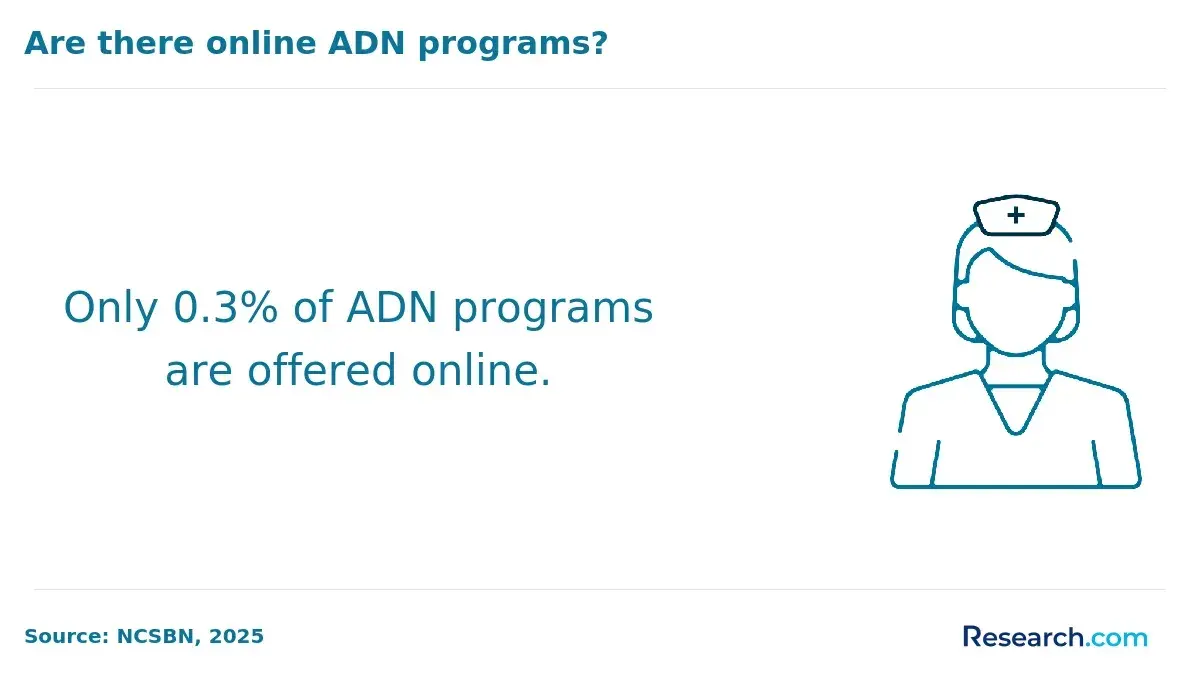
- Online ADN Programs: Although fully online ADN programs are uncommon due to clinical requirements for RN licensure, some institutions offer theoretical courses online paired with local clinical placements. These programs address accessibility for students in rural areas or those balancing work and familial responsibilities.
For prospective students evaluating their options, understanding which is better AGNP vs FNP roles, may provide insight into advanced nursing career paths beyond the ADN level.
What are the admission requirements for ADN programs in Louisiana?
ADN programs in Louisiana typically have selective admission processes to ensure applicants are academically prepared and capable of managing the rigorous demands of nursing education. These criteria help maintain high standards for student success across online and campus-based settings.
Below are key admission requirements common to most ADN programs in Louisiana.
- High School Diploma or GED: Applicants must have completed high school or obtained a GED certificate, demonstrating foundational academic skills necessary for higher education. This requirement is standard across accredited ADN programs and establishes a minimum educational baseline.
- Completion of Prerequisite Courses: Prospective students must successfully complete designated prerequisite courses such as English Composition, College Algebra, General Biology with Lab, Chemistry, and Psychology. Adhering to these prerequisites for associate degree nursing Louisiana ensures students possess essential knowledge before beginning nursing-specific coursework.
- Minimum GPA Standards: Candidates are required to maintain a minimum cumulative GPA, generally between 2.6 and 3.0, depending on the institution. This standard assesses consistent academic performance and readiness for the program's challenges.
- Entrance Exams: Many programs require standardized entrance exams like the HESI Admission Assessment, TEAS, or PAX, with specific minimum scores to evaluate academic skills in math, science, and reading. These tests further measure applicants' preparedness for nursing education.
- Submission of Application Materials: Applicants often must provide official transcripts, letters of recommendation, and sometimes a personal statement. These documents allow admissions committees to assess academic history, professional aptitude, and commitment to the nursing profession.
- Background Check and LSBN Approval: All students undergo a criminal background check and must receive approval from the Louisiana State Board of Nursing before participating in clinical courses, ensuring compliance with legal and ethical standards.
- Additional Program-Specific Criteria: Some institutions may require students to complete a set number of credits at the school, attend orientations, or fulfill immunization requirements, further preparing candidates for success.
For individuals progressing beyond initial nursing education, resources such as how to go from registered nurse to nurse practitioner guide career advancement.
How do ADN programs in Louisiana prepare students for the NCLEX-RN?
ADN programs in Louisiana are specifically designed to equip students with the knowledge, clinical skills, and critical thinking abilities needed to pass the NCLEX-RN and become licensed registered nurses. These programs employ a comprehensive approach to ensure graduates are fully prepared for both the exam and professional nursing practice. Key components of this preparation include:
- Comprehensive Nursing Coursework: Students engage in an in-depth study of core nursing subjects such as anatomy, pharmacology, and patient care, building a strong theoretical foundation essential for the NCLEX-RN and safe clinical practice.
- Simulation Labs and Clinical Rotations: Hands-on learning through advanced simulation technology and diverse clinical placements allows students to apply knowledge in realistic healthcare scenarios, sharpening critical thinking and practical skills aligned with exam expectations.
- NCLEX-Style Test Preparation and Review Sessions: Incorporation of practice questions, computerized testing, and structured review sessions helps students familiarize themselves with the exam format and question types, boosting confidence and exam readiness.
- Evidence-Based Learning Strategies: Faculty utilize case studies, clinical judgment exercises, and scenarios to promote higher-order thinking and clinical reasoning skills critical to passing the NCLEX-RN.
- Faculty Mentorship and Academic Support: Personalized guidance and remediation from experienced instructors help address individual learning gaps and foster effective study habits, especially benefiting online and hybrid learners.
How long are ADN nursing programs in Louisiana?
Most Associate Degree in Nursing (ADN) programs in Louisiana typically require about two years of full-time study to complete, though this duration can vary based on the specific program structure and whether students enroll full-time or part-time. Many institutions offer curricula spanning approximately five semesters, combining around 69 to 72 credit hours. To accommodate diverse student needs, some schools provide accelerated tracks to shorten the timeframe or extended options for those balancing work or family commitments. Additionally, bridge programs designed for Licensed Practical Nurses (LPNs) can reduce completion time to as few as three semesters for qualified candidates. These variations reflect the flexibility within Louisiana's ADN offerings to support a broad range of learners.
Several factors influence the overall length of ADN programs in the state, including the required prerequisite courses, clinical training hours, and the scheduling formats available. Some programs require students to complete general education prerequisites before beginning core nursing courses, potentially adding one or two semesters to the timeline. The mandated clinical experiences, which provide essential hands-on training in healthcare settings, also contribute significantly to program duration. Many schools offer evening, weekend, or hybrid schedules to enhance accessibility for students with outside commitments. Ultimately, the program's duration is carefully designed to ensure a comprehensive balance between theoretical instruction and practical clinical experience, preparing graduates to successfully pass the NCLEX-RN licensure examination and enter the nursing workforce.
How do online ADN programs in Louisiana compare to traditional ones?
Both online, hybrid, and traditional Associate Degree in Nursing (ADN) programs in Louisiana are designed to prepare students for RN licensure but differ notably in flexibility, learning format, and coursework delivery. These distinctions influence student experiences and outcomes across various dimensions:
- Learning Format: Traditional ADN programs are predominantly campus-based with face-to-face instruction, while hybrid programs blend online coursework with in-person sessions. Fully online ADN options are rare, often requiring out-of-state enrollment.
- Clinical Training: All formats mandate in-person clinical hours at approved facilities, ensuring practical experience irrespective of coursework delivery.
- Scheduling Flexibility: Online and hybrid programs offer greater scheduling adaptability suitable for working adults, whereas traditional programs follow fixed semester schedules.
- Student Interaction: Campus programs provide direct peer and instructor engagement; online formats rely on virtual communication, favoring self-motivated learners.
- Accessibility: Traditional programs are widely accessible within Louisiana; online and hybrid options are limited locally, sometimes prompting relocation or commuting.
How do I know if an ADN program in Louisiana is accredited?
Accreditation is essential for ADN programs in Louisiana because it confirms that a program adheres to the educational standards required for RN licensure and prepares students for safe, effective patient care. Here are key steps to verify if an ADN program is properly accredited:
- Check National Accreditation Databases: Search the Accreditation Commission for Education in Nursing (ACEN) database to find accredited ADN programs. ACEN is recognized by the U.S. Department of Education and provides current accreditation status, helping confirm program legitimacy.
- Verify State Board of Nursing Approval: The Louisiana State Board of Nursing (LSBN) approves ADN programs that meet state standards. Only graduates from approved programs can take the NCLEX-RN and obtain licensure, so checking LSBN's listings or contacting them ensures the program is authorized.
- Visit the School's Official Website: Accredited programs clearly state their accreditation and state board approval details online. Cross-referencing this information with official accreditor databases helps validate accuracy and current standing.
- Confirm National or Regional Accreditation Agencies: Beyond programmatic accreditation like ACEN, verify the college or university is regionally accredited by a U.S. Department of Education-recognized body, such as the Southern Association of Colleges and Schools Commission on Colleges (SACSCOC) for Louisiana. This ensures broader recognition and eligibility for federal aid.
- Contact the Louisiana State Board of Nursing for Direct Verification: When in doubt, directly reaching out to the LSBN provides the most reliable confirmation of a program's approval status and eligibility for conferring RN licensure-qualifying degrees.
How much does an ADN program cost in Louisiana?
The cost of Associate Degree Nursing (ADN) programs in Louisiana varies based on the type of institution-community college, public university, or private school-as well as program length and whether students pay in-state or out-of-state tuition. Several key factors collectively influence the total expense of earning an ADN degree. These include:
- Tuition and Fees: Tuition represents the largest portion of ADN program costs. In-state tuition at Louisiana community colleges typically ranges from about $5,100 to $6,000 for the entire program, while public universities may charge higher per-semester rates. Out-of-state tuition and fees at private institutions can increase these expenses significantly.
- Books and Supplies: Students should budget between $2,000 and $3,400 for textbooks, digital resources, and necessary supplies throughout the program. This often includes specialized items like nursing software and kits, which may be bundled with tuition or charged separately.
- Uniforms and Equipment: Clinical coursework requires specific uniforms, lab coats, stethoscopes, and other equipment, typically costing between $200 and $400, generally purchased during the first semester.
- Clinical Expenses: Additional costs associated with clinical rotations cover background checks, drug screenings, malpractice insurance, CPR certification, and required vaccinations or health tests, all essential for placement in healthcare settings.
- Living and Transportation Costs: While some students reduce expenses by living at home, others face variable costs for housing, meals, and daily travel to clinical sites, especially if attending on-campus or hybrid programs.
For those exploring educational options, it is beneficial to review a list of the best 1 year nurse practitioner online programs to understand how online formats might affect cost and scheduling flexibility when considering ADN program tuition and fees in Louisiana.
What financial aid options are available for ADN students in Louisiana?
Financial aid can make Associate Degree in Nursing (ADN) programs in Louisiana more affordable by covering some or all educational expenses. Various options are available to support students' diverse financial needs and academic backgrounds, including:
- Federal Financial Aid: ADN students can access federal resources such as Pell Grants, Federal Supplemental Educational Opportunity Grants (FSEOG), and Federal Direct Loans by completing the Free Application for Federal Student Aid (FAFSA). Grants do not require repayment, while loans must be repaid after graduation.
- State-Funded Programs: Louisiana offers merit-based scholarships through the Taylor Opportunity Program for Students (TOPS) for residents meeting academic criteria. The MJ Foster Promise Program also provides tuition assistance to eligible adults pursuing two-year degrees, including ADN, with requirements like residency and income limits.
- Institutional Scholarships: Many Louisiana colleges provide scholarships specifically for nursing students based on academic achievement, financial need, or campus involvement. For example, schools such as Louisiana Tech University offer endowed scholarships that may require essays and recommendations.
- Private Nursing Scholarships: Nursing associations and local healthcare organizations offer scholarships targeting ADN students, like those from the Louisiana Association of Student Nurses and the Louisiana Long Term Care Foundation. These awards focus on merit, need, or specific nursing career paths.
- Employer Tuition Assistance and Loan Repayment: Some healthcare employers in Louisiana help reduce education costs by offering tuition reimbursement or loan repayment for students who commit to work post-graduation, especially in underserved or rural areas.
Students interested in further advancing their nursing education might also explore programs such as the easiest neonatal nurse practitioner online program, which can complement ADN studies and career development.
What can I do with an ADN in Louisiana after graduation?
ADN graduates in Louisiana are eligible to sit for the NCLEX-RN exam, which qualifies them to become licensed registered nurses and pursue a variety of entry-level nursing positions across the state. These positions exist in diverse healthcare settings, offering numerous ADN job opportunities in Louisiana. Key career paths include:
- Hospital Registered Nurse (RN): Hospitals employ the majority of Louisiana's RNs, where ADN graduates provide direct patient care, monitor vital signs, administer medications, and collaborate with multidisciplinary teams. Career advancement is possible through specialization or leadership roles within varied departments, such as emergency or critical care.
- Long-Term Care and Nursing Facilities: Nurses in nursing homes and rehabilitation centers manage ongoing care for elderly or chronically ill patients, coordinate treatment plans, and serve as vital liaisons with families. This pathway allows ADN nurses to develop expertise in geriatric care and advance into supervisory positions.
- Outpatient Clinics and Ambulatory Care: Approximately 10% of Louisiana RNs work in outpatient settings such as physician offices and specialty clinics. These roles emphasize patient education and routine assessments, often offering more predictable schedules and potential growth into administrative or advanced practice roles.
- Home Health and Hospice Nursing: In these settings, ADN-prepared nurses provide essential care to patients in their homes, including medication management and wound care. This expanding field values independence and critical thinking, presenting strong growth opportunities.
- School Nursing: ADN-prepared nurses also work in K-12 and higher education institutions, supporting student health by administering medications and managing chronic illnesses. The role offers a stable schedule and can lead to positions in public health or health education.
- Behavioral Health and Substance Abuse Nursing: Nurses in this specialty assist patients with mental health and addiction challenges by assessing needs and administering medications. With experience, ADN nurses can pursue advanced certifications and specialize in mental health care.
- Opportunities for Advancement: Many ADN graduates enhance their qualifications through RN-to-BSN programs, often accessible online, to increase earning potential and expand career options. For those seeking further specialization, there are also affordable online psychiatric nurse practitioner programs that build upon ADN foundations.
These nursing careers with an associate degree in Louisiana form a strong base for professional growth and meaningful impact within the state's evolving healthcare landscape.
How much do ADN nurses earn in Louisiana?
The average median pay for Associate Degree in Nursing (ADN) nurses in Louisiana is approximately $36.12 per hour, with salaries varying significantly depending on factors such as experience, location, healthcare setting, and employer type. Understanding these influences is essential for prospective students considering online or on-campus ADN programs in Louisiana. The following key factors illustrate how ADN nurse salaries can differ across the state:
- Level of Experience: Entry-level ADN nurses typically start around $26.92 per hour, while more experienced nurses can earn up to $42.74 per hour. Increased experience often leads to opportunities for leadership or specialized roles that command higher compensation.
- Workplace Setting: ADN nurses working in hospitals generally receive higher salaries compared to those in nursing or residential care facilities, reflecting the complexity and demands of different healthcare environments.
- Geographic Location: Urban centers such as Shreveport, New Orleans, and Baton Rouge offer salaries above the state average, with some roles exceeding $71,000 annually, making location a crucial consideration for earning potential.
- Specialization: Nurses specializing in areas like emergency room care or oncology may see salaries as high as $85,936 annually, emphasizing the financial benefits of pursuing certifications and advanced training.
- Shift Differentials: Working non-traditional shifts, such as nights or weekends, often results in higher hourly rates, positively impacting overall earnings despite limited specific data for Louisiana.
Here's What Graduates in Louisiana Have to Say About Their ADN Degree
- Completing the online ADN program at Baton Rouge Community College was a game-changer for me. Balancing work and study was challenging, but the flexible schedule allowed me to learn at my own pace. Starting my career in a hospital setting here in Louisiana gave me hands-on experience that truly complemented my online coursework. I feel grateful for the professional development opportunities that the program opened up, and I am excited to keep advancing in my nursing career locally. This degree has truly strengthened my commitment to supporting the community's health. Khalil
- Attending Delgado Community College's hybrid ADN program blended the best of classroom learning and remote study, which suited my busy life as a mother. After graduation, I began working in home health care facilities, where I can directly impact patients' quality of life in our neighborhoods. The program instilled in me a deep sense of responsibility and equipped me with skills that I continually apply. It was rewarding to see how my professional growth mirrored my personal growth, enhancing my confidence and sense of purpose. Naomi
- Studying on-campus at South Louisiana Community College connected me with an incredible network of peers and instructors dedicated to improving health outcomes. The immersive environment prepared me well for starting my nursing career in academic healthcare institutions locally. This path wasn't without its challenges, especially balancing the rigorous coursework, but it sharpened my critical thinking skills and passion for educating others. Earning my ADN in Louisiana gave me a solid foundation and promising career advancement opportunities that I'm eager to explore. Leonardo
Related Articles for Nearby States
- 2027 Best ADN Nursing Programs in Mississippi: Online & Campus
- 2027 Best ADN Nursing Programs in Arkansas: Online & Campus
- 2027 Best ADN Nursing Programs in Texas: Online & Campus
- 2027 Best ADN Nursing Programs in Alabama: Online & Campus
- 2027 Best ADN Nursing Programs in Tennessee: Online & Campus
- 2027 Best ADN Nursing Programs in Missouri: Online & Campus
- 2027 Best ADN Nursing Programs in Oklahoma: Online & Campus
- 2027 Best ADN Nursing Programs in Florida: Online & Campus
- 2027 Best ADN Nursing Programs in Kentucky: Online & Campus
- 2027 Best ADN Nursing Programs in Georgia: Online & Campus
References:
- Nurse Salaries By State + the Highest Paying States For RNs https://nurse.org/articles/highest-paying-states-for-registered-nurses/
- The School of Nursing – Louisiana Christian University https://lcuniversity.edu/academics/school-of-nursing/
- School of Nursing https://nursing.lsuhsc.edu/bsn/admission.aspx
- RN to BSN Fee Schedule https://louisiana.edu/studentcashier/tuition-fees/current-tuition-fees/online-hybrid-programs/rn-bsn-fee-schedule
- Department of Associate Degree Nursing | Panola College https://www.panola.edu/adn
- Board of Nursing Licensure Requirements | NCSBN https://www.ncsbn.org/nursing-regulation/education/board-of-nursing-licensure-requirements.page
- 12 Best ADN Programs in Louisiana – (2-Year RN Programs) https://www.nursingprocess.org/adn-programs/louisiana/
- Accelerated B.S.N. Program Requirements https://www.loyno.edu/academics/colleges/college-nursing-health/accelerated-bachelor-science-nursing-hybrid
- Accelerated Nursing Programs in Louisiana: The 7 Best for Your Career https://betternurse.org/accelerated-nursing-programs-louisiana/
- Online Nursing Schools in Louisiana: Evaluating Top Programs https://www.edumed.org/online-schools/nursing-rn-programs/louisiana/
Other Things You Should Know About Pursuing ADN Nursing Programs in Louisiana
In 2027, notable accredited online ADN nursing programs in Louisiana include those offered by institutions like Delgado Community College. These programs allow students to complete theoretical coursework online while participating in clinical practice at local healthcare facilities, providing both flexibility and hands-on experience.
In Louisiana, nurses with an Associate Degree in Nursing (ADN) can bridge to a Bachelor of Science in Nursing (BSN) through several accelerated and RN-to-BSN programs offered by various universities. These programs typically acknowledge prior nursing coursework and clinical experience, allowing for a more streamlined path to earning a BSN. Many schools offer flexible options such as online or hybrid courses, accommodating working nurses seeking career advancement. Completing a BSN enhances clinical skills, opens up leadership opportunities, and is increasingly preferred by employers in Louisiana's healthcare system.
In 2027, top ADN programs in Louisiana include Baton Rouge Community College, Delgado Community College, and South Louisiana Community College. These programs are recognized for their strong NCLEX-RN pass rates, comprehensive curricula, and support for student success, offering pathways in both online and campus settings.


