
2027 Best ADN Nursing Programs in New Hampshire: Online & Campus

Co-Founder and Chief Data Scientist
New Hampshire offers a promising landscape for students pursuing an associate degree in nursing, with the state reporting a 7% employment growth for registered nurses by 2030. Choosing an ADN program, whether online or on-campus, opens pathways to vital healthcare roles in a state emphasizing quality patient care and workforce development. This degree equips learners with essential skills and licensure eligibility, making it a valuable step into nursing in New Hampshire's evolving medical environment.
This article explores what an associate degree in nursing in New Hampshire truly involves. Prepared by experts in career planning, it guides readers through understanding program structures, expectations, and decision-making considerations. The aim is to empower readers with clarity on how to navigate ADN options and select the best fit for their career goals in this dynamic field.
Key Benefits of ADN Programs in New Hampshire
- New Hampshire offers flexible ADN programs, with over 40% of courses available online, perfect for balancing studies and work.
- Graduates enjoy a robust job market, as the state's nursing sector is expected to grow by 15% through 2030, outpacing the national average.
- Statewide clinical partnerships provide hands-on experience in diverse healthcare settings, enhancing practical skills and job readiness.
- What is an Associate Degree in Nursing (ADN) in New Hampshire?
- What are the admission requirements for ADN programs in New Hampshire?
- How do ADN programs in New Hampshire prepare students for the NCLEX-RN?
- How long are ADN nursing programs in New Hampshire?
- How do online ADN programs in New Hampshire compare to traditional ones?
- How do I know if an ADN program in New Hampshire is accredited?
- How much does an ADN program cost in New Hampshire?
- What financial aid options are available for ADN students in New Hampshire?
- What can I do with an ADN in New Hampshire after graduation?
- How much do ADN nurses earn in New Hampshire?
What is an Associate Degree in Nursing (ADN) in New Hampshire?
An Associate Degree in Nursing (ADN) serves as a foundational gateway for those eager to enter the nursing field, combining rigorous academic coursework with supervised clinical training to prepare students for Registered Nurse (RN) licensure. ADN programs in New Hampshire skillfully blend classroom instruction in essential subjects like anatomy and nursing theory with hands-on clinical experience, providing the practical skills necessary to succeed on the NCLEX-RN exam and in real-world healthcare settings. Exploring the different pathways within these accredited ADN programs in New Hampshire reveals multiple approaches tailored to diverse learning styles and life circumstances.
Here are the main types of ADN programs offered in New Hampshire based on learning modality:
- On-Campus ADN Programs: Traditional and immersive, these programs offer face-to-face classes and clinical labs on college campuses such as Lakes Region Community College. Students gain around 700 clinical hours under direct supervision, ensuring thorough preparation through structured, in-person training.
- Hybrid ADN Programs: Blending online theory courses with in-person labs and clinical sessions, hybrid programs provide the flexibility needed by working adults or those with family commitments without sacrificing the hands-on practice essential for nursing competency.
- Online ADN Programs: While fully online ADN pathways are limited due to mandated clinical hours, some schools offer online coursework for general education and nursing theory. Students must still complete required in-person clinical practice, making the online components a convenient way to reduce commuting and fit studies into busy schedules.
Financial support often accompanies these programs, and for those wondering about career advancement or how to integrate specialized nursing roles, resources like how to start as a psychiatric nurse practitioner offer invaluable guidance.
What are the admission requirements for ADN programs in New Hampshire?
ADN programs in New Hampshire typically have selective admission processes to ensure that applicants are academically prepared and capable of handling the demands of nursing education. These requirements help identify students ready to take on a rewarding yet challenging path. Here are the key admission standards you can expect when exploring ADN program prerequisites in New Hampshire:
- High School Diploma or GED: Proof of high school completion or an equivalent credential like a GED is essential. This baseline qualification guarantees applicants possess the foundational education needed for college-level learning and clinical preparation.
- Completion of Prerequisite Courses: Prospective students must complete specific courses such as biology, chemistry, and algebra, often with lab work, to demonstrate readiness. Some programs may also require Anatomy & Physiology or Introduction to Psychology, typically with a minimum grade, emphasizing the importance of solid science knowledge before nursing study.
- Minimum GPA Standards: A minimum cumulative GPA around 2.5 to 3.0 is generally required, reflecting academic consistency and the ability to handle rigorous nursing coursework successfully.
- Entrance Exam (TEAS): Meeting the TEAS exam requirements for New Hampshire nursing schools is crucial. Most ADN programs require the ATI Test of Essential Academic Skills with a passing score near 66%, testing competencies in reading, math, science, and English. This assessment offers insight into a candidate's readiness for nursing studies.
- Application and Supporting Materials: A complete application includes official transcripts, evidence of prerequisite completion, and often letters of recommendation or personal statements. These materials allow schools to evaluate a candidate's interpersonal skills, motivation, and commitment to the nursing profession.
For those eager to advance even further, exploring the fastest way to become a nurse practitioner might spark inspiration once the ADN journey begins.
How do ADN programs in New Hampshire prepare students for the NCLEX-RN?
ADN programs in New Hampshire are specifically designed to equip students with the knowledge, clinical skills, and critical thinking abilities needed to pass the NCLEX-RN and become licensed registered nurses. These programs prepare students through a multifaceted approach that builds confidence and competence. Key components include:
- Comprehensive Nursing Coursework: Students dive into a wide range of essential topics, from pharmacology to pediatric care, creating a solid theoretical foundation that aligns with NCLEX-RN content areas.
- Simulation Labs and Clinical Rotations: Hands-on practice in simulation labs and real-world clinical placements allows students to sharpen their skills and clinical judgment within supportive settings, bridging classroom learning with patient care.
- NCLEX-Style Test Preparation and Review Sessions: Programs embed exam-style questions and offer targeted review sessions, helping students become familiar with the test format and develop effective strategies to manage exam stress.
- Evidence-Based Learning Strategies: Emphasizing current best practices, students learn to critically evaluate clinical evidence, enhancing their ability to tackle complex NCLEX questions requiring analysis and application.
- Faculty Mentorship and Academic Support: Small class sizes enable personalized guidance and timely feedback, with faculty supporting students through challenges and reinforcing readiness for the licensing exam.
A nurse from New Hampshire who graduated from a local ADN program reflected on this preparation journey, sharing how the blend of focused mentorship and rigorous clinical experiences was invaluable. "The simulation labs felt intense at first, but they truly made a difference when I encountered similar situations during my clinical rotations," he said.
He recalled that faculty support went beyond academics, providing encouragement and tailored advice that helped ease his exam anxiety. With the NCLEX-style questions incorporated throughout the course, he felt progressively more confident facing the actual test. "It wasn't just about memorizing facts; it was about thinking critically under pressure," he remarked, underscoring how the ADN program's well-rounded approach shaped his path to success.
How long are ADN nursing programs in New Hampshire?
Most Associate Degree in Nursing (ADN) programs in New Hampshire typically take about two years to complete when attending full-time, usually spanning four to five semesters. However, this timeline can vary depending on whether a student enrolls part-time or chooses an accelerated track-some schools offer summer courses or extended schedules to better fit different lifestyles and commitments.
These flexible options allow learners to either speed up their journey or balance studies with work and personal responsibilities. Whether following a traditional path or an alternative schedule, each program is crafted to guide students efficiently through the necessary coursework and clinical experiences. This adaptability helps meet the diverse needs of aspiring nurses across the state.
Several factors can influence how long it takes to earn an ADN in New Hampshire, including prerequisites, clinical hours, and scheduling flexibility. Many programs require students to complete foundational science and theory courses before advancing, which can add time if prerequisites aren't yet fulfilled.
Clinical training, a vital component starting early in the curriculum, often demands hands-on hours that must be balanced with classroom learning, potentially affecting pacing. Programs also offer various formats-on-campus, hybrid, or online-allowing students to tailor their studies around personal and professional lives.
Ultimately, the duration is carefully designed to ensure students gain both the knowledge and practical skills necessary to succeed on the NCLEX-RN exam and confidently enter the nursing workforce.
How do online ADN programs in New Hampshire compare to traditional ones?
Both online, hybrid, and traditional Associate Degree in Nursing (ADN) programs in New Hampshire prepare students for RN licensure but differ notably in flexibility, learning format, and delivery. Exploring these differences unveils how various approaches suit distinct student needs and lifestyles. Here are some key points to consider:
- Learning Format: Online and hybrid programs blend remote coursework with in-person clinicals, offering adaptability for busy students. Traditional programs focus on in-person classes and labs, ideal for those who thrive with direct interaction and structured schedules.
- Clinical Training: All require hands-on clinical hours, but hybrid students often access diverse hospital placements remotely arranged, while traditional students experience consistent, on-campus labs and rotations.
- Scheduling Flexibility: Online and hybrid formats offer asynchronous options and part-time pacing, fitting varied commitments, whereas traditional programs follow fixed, immersive schedules.
- Student Interaction: Traditional programs foster immediate peer and faculty engagement in-person, while hybrid students connect digitally, favoring self-driven communication.
- Accessibility: Online and hybrid paths expand opportunities for distant learners, reducing travel barriers, unlike traditional programs which require campus presence.
When I spoke with a nurse who graduated from a local New Hampshire hybrid ADN program, she reflected on juggling work and family while managing online coursework. "The flexibility let me attend to my kids when they were sick," she shared, emphasizing how virtual class discussions kept her connected despite not being on campus daily.
Yet she valued her in-person clinicals deeply, saying, "Hands-on training was the real test-no screen can replace that feeling of caring for patients face-to-face." Her journey highlights how hybrid programs can blend convenience with essential clinical experience, making nursing education achievable without sacrificing quality or connection.
How do I know if an ADN program in New Hampshire is accredited?
Accreditation is the gateway ensuring ADN programs in New Hampshire meet the high standards necessary for RN licensure and delivering quality patient care. To confidently choose a program that leads you safely on this nursing path, here are key steps to confirm accreditation:
- Check National Accreditation Databases: Dive into the Accreditation Commission for Education in Nursing (ACEN) or Commission on Collegiate Nursing Education (CCNE) online directories. These authoritative sources list all accredited ADN programs, allowing you to verify the program's official standing and ongoing compliance with national quality benchmarks.
- Confirm New Hampshire Board of Nursing Approval: The New Hampshire Board of Nursing (NHBON) grants the crucial stamp of approval that lets graduates sit for the NCLEX-RN exam. Reviewing the Board's published list ensures the program you choose is state-approved and meets specific regulatory conditions necessary for licensure.
- Visit the School's Official Website: A transparent program clearly displays its accreditation status and Board approval on its site. Look for current and specific details about recognized accrediting bodies; this openness signals adherence to educational standards and regulatory expectations.
- Verify with National or Regional Accreditation Agencies: Accreditation must come from recognized agencies approved by the U.S. Department of Education. Cross-reference the accreditor's legitimacy through official federal databases or accreditor websites to ensure the program's credentials are trustworthy and valid.
- Review State Regulations and NCLEX Outcomes: Keep in mind that New Hampshire requires newer programs to have accreditation for full Board approval and maintains minimum NCLEX pass rates for recognition. Checking these pass rates on official sources adds another layer of confidence in program quality.
- Contact the Program or Board Directly: When in doubt, reach out to the nursing department or the Board itself. This direct connection can clear up questions, especially for online or hybrid programs, and confirm their accreditation and approval status without guesswork.
How much does an ADN program cost in New Hampshire?
The cost of ADN programs in New Hampshire can vary significantly based on the type of school-community college, public university, or private institution-as well as program length and whether tuition is paid in-state or out-of-state. Several key factors combine to shape the total amount you'll invest in earning your nursing associate degree in New Hampshire. Here's a closer look at what influences these costs:
- Tuition and Fees: This is the largest portion of the cost, with community colleges charging about $230 per credit for in-state students, leading to a total of around $13,800-$15,000 for a 60-65 credit ADN program. Out-of-state students face higher rates, and private institutions can charge significantly more-sometimes exceeding $49,000 per year. Additional mandatory fees for labs and clinicals also add to the price.
- Books and Supplies: Expect to budget between $1,200 and $2,000 annually for textbooks, digital resources, and essential nursing materials. These costs cover everything from your main coursework to specialized NCLEX-RN exam preparation materials.
- Uniforms and Equipment: Nursing students need to invest in uniforms, lab coats, shoes, and basic medical tools like stethoscopes and blood pressure cuffs. These necessities usually cost between $300 and $700 but can fluctuate depending on program specifics and clinical site requirements.
- Clinical Expenses: Clinical placements often require additional expenditures such as health screenings, immunizations, background checks, and travel costs. These can amount to $200-$800 over the course of the program, a vital commitment regardless of whether your ADN is online or on-campus.
- Living and Transportation Costs: Housing, meals, and commuting add another layer of expenses, especially for students attending campus in person. For instance, on-campus housing combined with meal plans at community colleges can range from roughly $11,778 to $16,720 per year. Even online learners should factor in travel to clinical sites.
For those curious about prolonging their nursing journey beyond an associate degree, exploring the best BSN to NP programs can open new doors to advanced practice opportunities.
What financial aid options are available for ADN students in New Hampshire?
Financial aid can make ADN programs in New Hampshire more affordable by covering tuition, fees, and other education-related expenses. Exploring these options can open doors to various funding sources designed to support your journey. Here are the main types of financial aid available to ADN students in the state:
- Federal Financial Aid: Access to Pell Grants, Direct Student Loans, and Federal Work-Study programs is available by completing the FAFSA. These programs help cover tuition, books, and living costs, and eligibility requires enrollment in an accredited ADN program with U.S. citizenship or eligible residency.
- State-Funded Programs and Grants: Although New Hampshire lacks a broad state grant program, the UNIQUE Scholarship Program offers need-based awards to qualifying residents attending eligible institutions. Applying for this scholarship typically involves completing the FAFSA and meeting residency and enrollment conditions.
- Institutional Scholarships and Grants: Many nursing schools in New Hampshire provide scholarships ranging from $400 to $14,400 annually based on academic performance or financial need. These awards may require separate applications or maintaining a minimum GPA, making it worth investigating options at your chosen campus.
- Private Nursing Scholarships: Various organizations grant scholarships that target ADN students, including the Foundation of the National Student Nurses' Association and the HRSA Nurse Corps Scholarship Program. These can cover tuition, living stipends, or book fees and often focus on nursing scholarships for New Hampshire students from specific backgrounds or regions.
- Employer Tuition Assistance: Healthcare employers in New Hampshire often offer tuition reimbursement for employees pursuing ADN degrees, especially if they commit to working in high-need or underserved areas. Ask your employer or potential employers about such benefits and related service commitments.
For students looking to continue their nursing education, exploring a list of best online BSN to FNP programs can be a great next step after ADN completion.
What can I do with an ADN in New Hampshire after graduation?
ADN graduates in New Hampshire are eligible to take the NCLEX-RN exam and pursue various entry-level nursing jobs in New Hampshire across multiple healthcare settings. These positions provide a foundation for RN career advancement in New Hampshire and open doors to diverse, rewarding pathways. Consider the following key career options for ADN holders:
- Hospital Registered Nurse (RN): Hospital RNs deliver direct patient care, administer medications, and collaborate with medical teams. Formal nurse residency programs, like those in New Hampshire hospitals, help ease the transition from student to professional while offering pathways to specialties such as emergency or pediatric care.
- Long-Term Care and Rehabilitation Nurse: These nurses support patients with chronic conditions or recovering from illness, providing daily care and developing treatment plans. Experience here can lead to supervisory or management roles within care facilities.
- Outpatient Clinic or Ambulatory Care Nurse: Working in clinics, ADN nurses conduct assessments, assist with minor procedures, and educate patients on health management. This setting offers opportunities for leadership, quality improvement, and educator positions, especially with further education.
- Home Health Nurse: Nurses in this role visit patients at home, managing chronic illnesses and offering personalized education and support. This career allows autonomy and flexibility, with potential growth into case management or team supervision.
- Community Health Nurse: These nurses promote wellness in schools, public health departments, and community organizations. The role emphasizes outreach and prevention and can be a gateway to advanced public health nursing.
Many ADN graduates embrace continuous learning, often pursuing a BSN or higher degrees to enhance RN career advancement in New Hampshire. Those interested in further nursing specialization might explore RN to NP programs, which can expand clinical expertise and career options significantly.
How much do ADN nurses earn in New Hampshire?
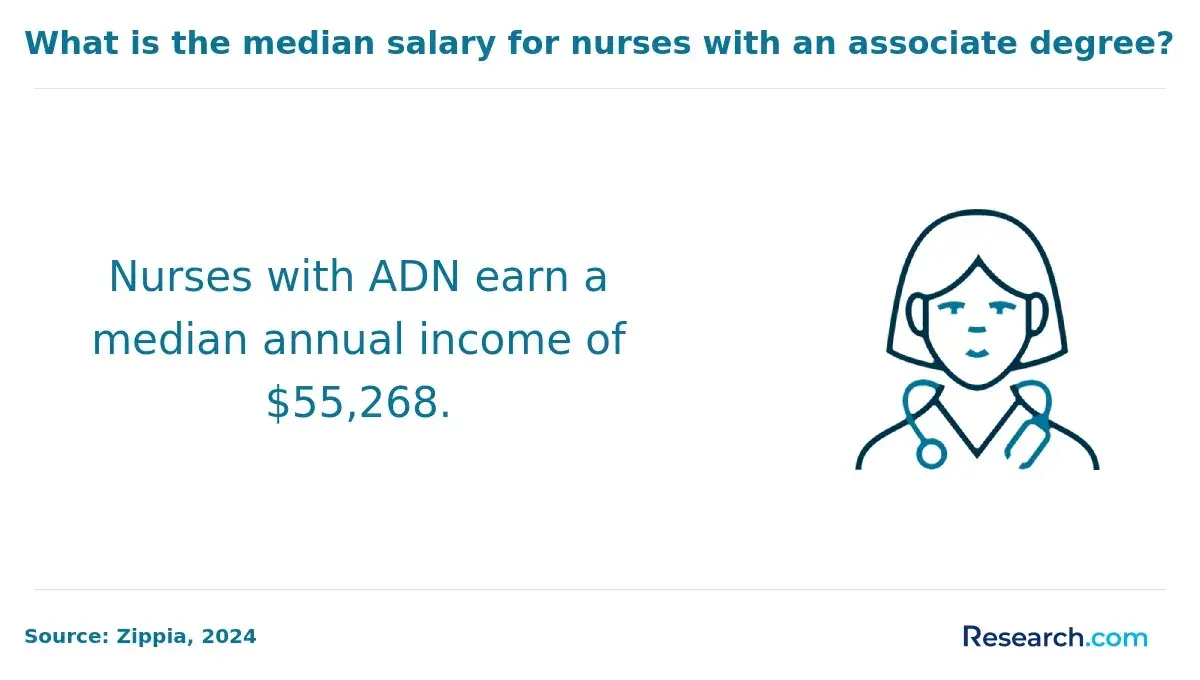
The average median annual pay for ADN-prepared nurses in New Hampshire is approximately $90,454, though salaries can vary widely depending on experience, geographic location, healthcare setting, and employer type. These differences reflect the dynamic nature of the nursing profession in the state and highlight opportunities for growth and advancement. Here are the main factors shaping ADN nurse earnings in New Hampshire:
- Level of Experience: Entry-level ADN nurses typically start with lower salaries around $50,600 annually, while seasoned professionals with advanced skills can earn up to $163,867. Experience often unlocks leadership roles and specialty pay.
- Workplace Setting: Hospitals, particularly those with Magnet status, generally offer higher wages and extra shift pay, whereas long-term care and outpatient clinics may offer lower base salaries but additional benefits or flexible scheduling.
- Geographic Location: Nurses in metropolitan areas like Portsmouth earn more compared to rural settings, reflecting local demand and living costs that influence salary scales.
- Specialization and Credentials: Pursuing certifications in critical care or emergency nursing can significantly boost income, rewarding specialized expertise beyond the standard ADN preparation.
- Shift Differentials and Overtime: Evening, night, weekend, and holiday shifts often come with additional compensation, with overtime pay potentially adding thousands to annual earnings for motivated nurses.
Here's What Graduates in New Hampshire Have to Say About Their ADN Degree
Completing the online ADN program at Great Bay Community College was a game-changer for me. Balancing work and study was challenging, but the flexibility allowed me to gain my degree without putting my life on hold. Starting my career in a home health facility here in New Hampshire has been fulfilling because I get to build personal relationships with patients in their own environment. This experience has deepened my passion for community care and made me confident in my role as a nurse. I highly recommend this path for anyone looking to make a real difference with a manageable schedule. Kenji
Choosing the hybrid ADN program at Lakes Region Community College gave me the perfect mix of hands-on learning and online coursework. The in-person labs helped me gain confidence in clinical skills, while the online classes offered the convenience I needed. After graduation, I started working in a hospital setting and witnessed firsthand the importance of professional development opportunities available to ADN nurses in New Hampshire. This journey has encouraged me to keep advancing my education and contribute significantly to improving patient care. Anita
Attending the on-campus ADN program at Nashua Community College enriched me not just academically but personally. The close-knit community of students and instructors supported me through the challenges unique to nursing education in New Hampshire's rural areas. Working in an academic healthcare environment, I appreciate how my degree opened doors for leadership roles focused on student well-being and health education. This program truly cultivated my sense of responsibility and pride in contributing to the well-being of young people in our community. Marcus
Related Articles for Nearby States
- 2027 Best ADN Nursing Programs in Vermont: Online & Campus
- 2027 Best ADN Nursing Programs in Massachusetts: Online & Campus
- 2027 Best ADN Nursing Programs in Maine: Online & Campus
- 2027 Best ADN Nursing Programs in New York: Online & Campus
- 2027 Best ADN Nursing Programs in Connecticut: Online & Campus
- 2027 Best ADN Nursing Programs in Rhode Island: Online & Campus
- 2027 Best ADN Nursing Programs in New Jersey: Online & Campus
- 2027 Best ADN Nursing Programs in Pennsylvania: Online & Campus
- 2027 Best ADN Nursing Programs in Delaware: Online & Campus
- 2027 Best ADN Nursing Programs in Maryland: Online & Campus
References
- Admissions Requirements for Nursing Programs - Franklin Pierce University https://www.franklinpierce.edu/academics/programs/nursing/admissions-requirements.html
- Online Nursing Schools in NH: Finding Top Programs https://www.edumed.org/online-schools/nursing-rn-programs/new-hampshire/
- [Updated] Best LPN to RN/BSN Programs in New Hampshire | PracticalNursing.org https://www.practicalnursing.org/lpn-to-rn/new-hampshire
- How to Become a Registered Nurse in New Hampshire https://studyonline.sjcme.edu/blog/how-become-registered-nurse-new-hampshire
- Nursing, AS https://mccnh.edu/program/nursing/
- Accelerated B.S. in Nursing: 12 Month https://www.une.edu/wchp/nursing/accelerated-bs-nursing-12-month
- Scholarships and Grants https://www.nhti.edu/financial-aid/scholarship-grants/
- Board of Nursing Education Programs | NH Office of Professional Licensure and Certification https://www.oplc.nh.gov/board-nursing-education-programs
- Nursing (RN to BSN) (Bachelor's Completion) (B.S.N.) https://cps.unh.edu/online/program/bsn/nursing-rn-bsn-bachelors-completion
Other Things You Should Know About ADN Nursing Programs in New Hampshire
In 2027, ADN students in New Hampshire can access financial aid options such as federal Pell Grants, state-specific scholarships like the NH Nursing Scholarship Program, and loans. Many institutions also offer work-study opportunities and institutional scholarships to help manage tuition costs.
In New Hampshire, bridging from an Associate Degree in Nursing (ADN) to a Bachelor of Science in Nursing (BSN) typically involves enrolling in an RN-to-BSN program designed for licensed nurses. These programs often offer flexible options such as part-time or online study to accommodate working professionals.
Many local universities and colleges provide accredited RN-to-BSN pathways that build on prior nursing education and clinical experience, enabling faster degree completion. This approach not only enhances nursing knowledge and skills but also improves career advancement opportunities within the state's healthcare system.
In 2027, top accredited ADN programs in New Hampshire include River Valley Community College and Manchester Community College, recognized for their comprehensive curricula and clinical training opportunities. These programs are esteemed for their rigorous academic standards and high NCLEX pass rates.


