
2027 Best ADN Nursing Programs in Montana: Online & Campus

Co-Founder and Chief Data Scientist
Montana's healthcare landscape is evolving, with a 15% projected growth in registered nurse employment over the next decade. Pursuing an associate degree in nursing (ADN) here-whether through online courses or on-campus experiences-offers a strategic pathway into a thriving profession. The ADN equips aspiring nurses with practical skills and foundational knowledge, setting the stage for impactful careers where rural and urban healthcare needs intersect.
This article unpacks what an ADN program in Montana truly entails. Crafted by experts in career planning, it guides readers through expectations, key considerations, and decision-making strategies essential for choosing the right ADN route. Understanding these factors helps streamline the journey toward a fulfilling nursing career.
Key Benefits of ADN Programs in Montana
- Montana's ADN programs blend rugged wilderness living with top-notch healthcare education, boasting a 92% NCLEX pass rate that rivals national averages, whether online or on-campus.
- Flexible online ADN options serve remote students across Big Sky Country, cutting travel costs and providing access to quality instruction from accredited faculty.
- Hands-on clinical experiences in Montana hospitals provide real-world skills, with many programs offering partnerships that fast-track job placements in rural and urban healthcare settings.
- What is an Associate Degree in Nursing (ADN) in Montana?
- What are the admission requirements for ADN programs in Montana?
- How do ADN programs in Montana prepare students for the NCLEX-RN?
- How long are ADN nursing programs in Montana?
- How do online ADN programs in Montana compare to traditional ones?
What is an Associate Degree in Nursing (ADN) in Montana?
An Associate Degree in Nursing (ADN) in Montana serves as a gateway into the nursing profession, meticulously crafted to ready students for RN licensure through a dynamic mix of academic coursework and crucial clinical training. These programs don't just pump out theory-they plunge students into hands-on experiences, melding classroom instruction with real-world scenarios. This blend sharpens nursing skills, from patient monitoring to delivering compassionate care across varied populations. Now, the landscape of associate degree in nursing programs in Montana unfolds in diverse learning models tailored to modern demands and lifestyles.
Here are the primary types of ADN programs offered in Montana:
- On-Campus ADN Programs: Rooted in tradition, these programs immerse students in the bustling energy of college labs and classrooms at institutions like Missoula College. With focused cohorts and rigorous schedules, they demand a full-time commitment to build foundational nursing competencies through direct faculty engagement and clinical rotations.
- Hybrid ADN Programs: Bridging the physical and digital, hybrid options let students flexibly balance online theory with mandatory in-person labs and clinical hours. This model is designed for those juggling work, family, or other commitments, ensuring critical hands-on practice isn't sacrificed.
- Online ADN Programs: Mostly remote, these programs deliver coursework through virtual platforms, while clinical experiences occur locally under supervision to meet accreditation demands. Students enjoy the support of virtual advising, navigating a path that blends autonomy with accountability.
Those intrigued by nursing's evolving pathways might also explore specialized routes such as how to become a family nurse practitioner fast, an expanding career frontier for ADN graduates seeking advanced roles.
What are the admission requirements for ADN programs in Montana?
ADN programs in Montana typically have selective admission processes to ensure that applicants are academically prepared and capable of handling the demands of nursing education. These steps help maintain high standards while protecting patient and student well-being. Here are the common requirements you'll encounter when applying to both online and on-campus ADN programs in Montana:
- High School Diploma or GED: Every applicant must have completed a recognized high school program or earned a GED. This basic credential serves as the academic launching pad, demonstrating you've met essential educational foundations needed before tackling college-level nursing courses.
- Completion of Prerequisite Courses: Before admission, programs expect successful completion of key science classes-typically anatomy and physiology, microbiology, and chemistry. These prerequisites confirm that you possess the scientific knowledge critical to nursing, often requiring a grade of C or better, with some schools demanding even higher proficiency.
- Minimum GPA Standards: Programs usually require a solid GPA, often between 2.5 and 3.0, to indicate sustained academic competence. Meeting this benchmark reassures schools you can handle the rigorous curriculum ahead, especially in prerequisite coursework.
- Entrance Exams: Many ADN programs ask applicants to pass standardized tests like the ATI TEAS, which evaluate skills in science, math, and reading comprehension. Achieving minimum scores ensures readiness and helps programs fairly compare candidates.
- Submission of Application Materials: Alongside transcripts, prospective students often submit personal statements, resumes, and letters of recommendation. These documents paint a fuller picture of motivation and communication skills, essential for those entering the nursing profession.
Meeting these admission requirements is your first step toward joining Montana's ADN programs, whether online or campus-based. Students are advised to stay updated on policies from each school and prepare thoroughly to elevate their chances. For insights on the nursing field's rewards, check out how much does a psychiatric nurse practitioner make, revealing opportunities beyond the ADN track.
How do ADN programs in Montana prepare students for the NCLEX-RN?
ADN programs in Montana are meticulously crafted to arm students with the essential knowledge, clinical skills, and sharp critical thinking necessary to conquer the NCLEX-RN and step confidently into registered nurse roles. The multifaceted approach taken ensures that every candidate is not only prepared but empowered to succeed. Key components of this preparation include:
- Comprehensive Nursing Coursework: These programs dive deep into nursing theory and patient care, layering complex pharmacology and clinical principles so students absorb exactly what the NCLEX-RN demands, creating a robust academic backbone.
- Simulation Labs and Clinical Rotations: Hands-on labs and real-world clinical experiences dramatically enhance practical skills and clinical reasoning, bringing textbook knowledge to life and fostering confidence in direct patient care scenarios.
- NCLEX-Style Test Preparation and Review Sessions: Targeted workshops and mock exams familiarize students with the exam's unique style, reducing anxiety and sharpening test-taking strategies through repeated, focused practice.
- Evidence-Based Learning Strategies: Engaging methods like case studies and critical thinking exercises encourage students to actively apply concepts, cultivating acute clinical judgment critical for the NCLEX-RN.
- Faculty Mentorship and Academic Support: Personalized guidance from seasoned nursing faculty helps students navigate challenges, reinforces weak areas, and builds resilience-turning potential stress into structured progress.
When I spoke with a Montana nurse who graduated from a local ADN program, he reflected on the intensity and support that defined his journey. "The simulations were game-changers," he said, remembering how vivid the lab scenarios felt, almost like real patients demanding real decisions. He shared how his instructors didn't just teach-they coached, often challenging him to think deeper and strategize better for exam questions that seemed daunting at first. "One moment stands out: during the NCLEX prep course, I realized I wasn't just memorizing facts, but learning to think like a nurse under pressure," he recalled. Despite sleepless nights, the consistent academic support and structured review sessions transformed overwhelming stress into steady confidence. His experience illustrated that Montana's ADN programs don't just prepare students for a test-they forge adaptable nurses ready to thrive in their careers.
How long are ADN nursing programs in Montana?
Associate Degree in Nursing programs in Montana typically unfold over about two years of full-time study, a rhythm balancing intensity with accessibility. This timeline can flex like a dancer depending on whether a student chooses full-time immersion or a part-time stroll through the curriculum.
Some institutions pace programs across four semesters of focused coursework, while others stretch to five, weaving in prerequisite semesters or offering the chance to accelerate if energy and ambition align. Online options blend digital learning with on-site clinical practice, still clocking near the two-year mark but allowing for a mix of virtual and real-world experiences to suit different lifestyles.
The journey's tempo varies as prerequisites, clinical hours, and scheduling play their parts like directors behind the scenes. Foundational courses may extend the curtain call by an extra semester before students dive into nursing specifics, while the hands-on clinical sessions, indispensable and state-mandated, anchor the timeline to real-world practice.
Hybrid and online programs introduce a dance of flexibility and commitment, requiring on-campus skill intensives despite remote lectures, which shapes how quickly students progress. This careful choreography ensures the ADN timeline molds academic rigor and practical exposure into a credential that readies graduates not just to pass the NCLEX-RN but to thrive in Montana's evolving healthcare stage.
How do online ADN programs in Montana compare to traditional ones?
Both online, hybrid, and traditional ADN programs in Montana prepare students for RN licensure but diverge in flexibility, learning style, and how coursework and clinicals are delivered. Here's a clear-eyed look at these differences to guide your choice:
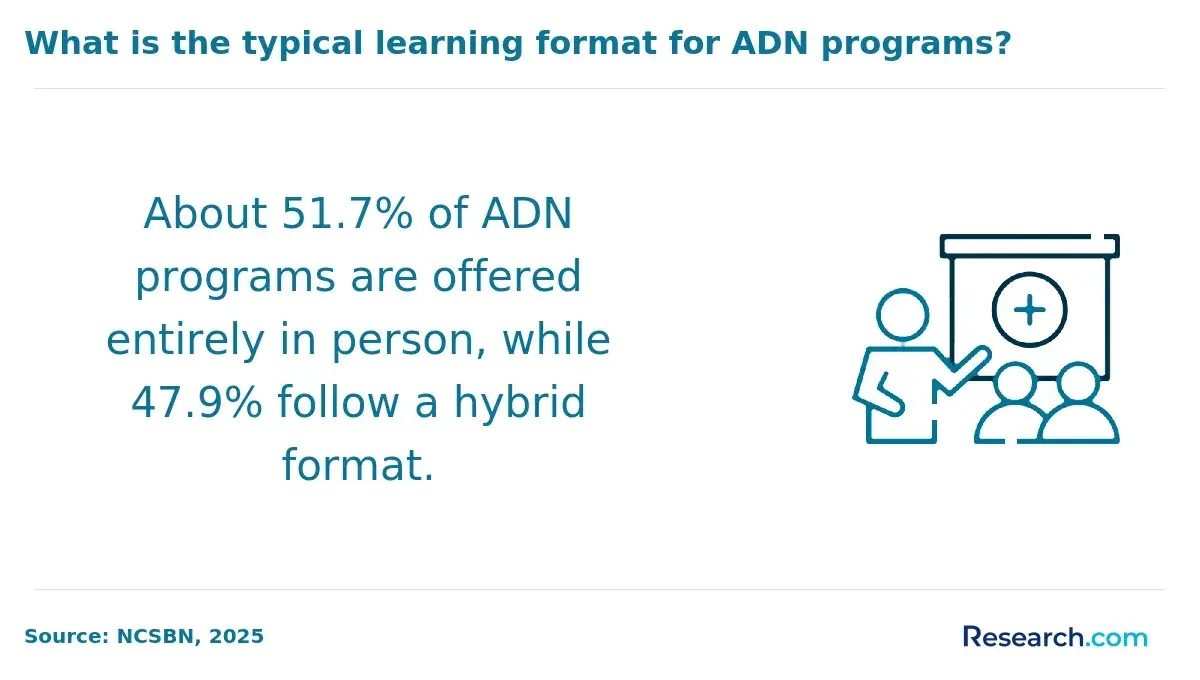
- Learning Format: Online and hybrid programs unfold through digital classrooms, ideal for self-starters who crave pace control. Traditional programs offer immersive, face-to-face lectures, suited for those craving in-person mentorship and structure.
- Clinical Training: All require hands-on clinicals, but online or hybrid students often arrange rotations locally or at workplaces, while traditional students join group placements through campus networks.
- Scheduling Flexibility: Online and hybrid formats bend around work and family, offering asynchronous study. Traditional tracks demand fixed daytime attendance, favoring those who can fully commit.
- Student Interaction: Traditional students thrive on direct peer and faculty engagement; online learners connect via chat and video, perfect for geographically scattered students comfortable with digital communication.
- Accessibility: Online and hybrid options break down geographical barriers, easing access for rural residents. Traditional programs may require relocation or lengthy commutes to urban campuses.
When I asked a nurse who graduated from a hybrid ADN program at a local Montana school about her journey, she reflected on the balancing act: "Managing coursework online while holding a part-time job was tough, but having local clinical rotations kept me grounded in real-world skills." She valued the flexible schedule but noted, "I did miss some of the spontaneous interactions that come with being on campus." Her story highlights how hybrid learning enabled her to pursue nursing without uprooting her life, blending independence with essential hands-on experience in her Montana community.
How do I know if an ADN program in Montana is accredited?
Accreditation in Montana nursing programs is the golden seal that certifies the educational journey aligns with the high standards essential for RN licensure and competent patient care. It's your beacon in the fog of numerous programs, guiding you toward legitimate, reputable nursing schools. Here's how to illuminate your path:
- Check National Accreditation Databases: Dive into official national registries like ACEN's database to find verified lists of accredited ADN programs in Montana. These living documents ensure you're seeing only the programs recognized for quality and legitimacy, keeping you clear of unaccredited pitfalls.
- Confirm State Board of Nursing Approval: The Montana Board of Nursing is the gatekeeper who grants permission for programs to operate. Only graduates from these officially approved schools can sit for the NCLEX-RN exam, so verifying their approval is non-negotiable for your professional future.
- Visit the School's Official Website: Legitimate programs wear their accreditation like a badge of honor. Look for direct accreditation statements from ACEN, CCNE, or the Montana Board on their official pages, often coupled with contact info for further verification.
- Verify National or Regional Accreditation Agencies: Beyond nursing-specific seals, confirm the institution's regional accreditation by bodies such as NWCCU. Regional accreditation affects credit transferability and eligibility for federal aid, underscoring the program's overall credibility.
How much does an ADN program cost in Montana?
The cost of an Associate Degree in Nursing (ADN) program in Montana can swing dramatically based on whether you enroll in a community college, public university, or private institution, alongside factors like program length and residency status. Below is a breakdown of the key elements that shape what you'll ultimately invest in your ADN journey.
- Tuition and Fees: The backbone of the cost structure, tuition typically charges per credit hour and widely varies across schools. In-state students might pay between $200 and $255 per credit hour at public colleges, while private institutions ask for a heftier fee, sometimes up to $450 per credit. Out-of-state tuition skyrockets, pushing the total tuition and fees for two years sometimes beyond $13,000.
- Books and Supplies: Nursing coursework demands a rich arsenal of textbooks, lab manuals, and reference materials. These costs can add up to roughly $3,000, covering everything from vital nursing texts to consumable supplies, an essential but often overlooked part of the cost.
- Uniforms and Equipment: Clinical settings require distinct uniforms, shoes, and medical tools like stethoscopes. Expect to budget around $225 just for uniforms, with extra for gear replacements and equipment necessary throughout clinical rotations.
- Program and Lab Fees: Some programs charge supplemental fees to maintain technology-enhanced simulations and lab spaces. These can range from a few hundred to over six hundred dollars, facilitating hands-on learning indispensable to nursing skills.
- Clinical Expenses: Beyond tuition, students pay for background checks, immunizations, drug testing, and liability insurance, prerequisites for participating in off-campus clinical rotations that bring real-world experience.
- Living and Transportation Costs: Particularly in Montana's vast rural landscapes, commuting and housing can inflate your budget. Room and board are separate from tuition, and travel expenses to distant clinical sites can be a significant barrier for many students.
- NCLEX-RN Exam Preparation and Licensing Fees: After coursework, you'll face state licensure and exam fees required for RN certification. These additional expenses might run several hundred dollars, acting as the final stepping stone in your ADN process.
- Financial Aid and Scholarships: Montana's ADN programs often offer a lifeline through federal grants, loans, and scholarships. Exploring these resources early can substantially ease your cost burden while you pursue an associate nursing degree Montana residents find increasingly accessible.
If you're curious about options beyond traditional campuses, consider exploring some of the cheapest online acute care nurse practitioner programs, which might offer flexible and budget-friendly pathways aligned with your nursing career goals.
What financial aid options are available for ADN students in Montana?
Financial aid can unlock the door to affordable education by covering tuition, fees, and essential costs in Montana's ADN programs. Here's a curated list of key financial aid avenues crafted especially for nursing scholarships in Montana for ADN students.
- Federal Student Aid: Dive into a mix of federal grants, subsidized and unsubsidized loans, and work-study options by completing the FAFSA. Grants offer the sweet relief of no repayment, loans come with student-friendly terms, and work-study allows earning while learning through part-time jobs tailored to your schedule.
- State-Funded Programs: Montana dishes out grants and scholarships for residents showing promise or need, supporting ADN learners at state-approved schools. To catch these opportunities, timely FAFSA submissions and meeting priority deadlines are key - many awards vanish fast, often on a first-come, first-served basis.
- Institutional Scholarships: Homegrown support thrives at many Montana colleges, where scholarships and tuition waivers reward achievement, leadership, or financial need. Expect to pitch your story through essays and recommendations, with financial aid offices standing ready to guide you through this gateway.
- Private Nursing Scholarships: Private foundations and nursing organizations open another treasure chest of options, especially valuable for those balancing online or campus study. Membership, commitment to nursing, and plans to serve Montana communities can be your ticket here, with broad databases ready to be explored by diligent searchers.
- Employer Tuition Assistance: Some healthcare employers in Montana act as financial allies, offering tuition reimbursement in exchange for service commitments. If working while studying or continuing post-graduation sounds ideal, don't hesitate to ask employers about their support programs.
For those navigating multiple options, weaving together support from these sources can transform the financial landscape. Explore strategies that fit your journey, and don't forget to check out the ranking of easiest online MSN programs for future advancement possibilities.
What can I do with an ADN in Montana after graduation?
ADN graduates in Montana are fully prepared to take the NCLEX-RN exam and step confidently into a variety of entry-level positions that form the backbone of healthcare delivery across the state. These diverse roles offer pathways not only into essential nursing careers in Montana with an ADN but also set the stage for ongoing professional growth and specialization. Here are some dynamic avenues waiting for you:
- Registered Nurse (RN) in Hospitals: About 60% of Montana's RNs work in hospitals, where they provide hands-on patient care, administer medications, and monitor vital signs in fast-paced, often high-acuity environments. Hospital RNs gain exposure to specialty units like ICU or labor and delivery, paving the way for upward mobility and skill diversification.
- Long-Term Care and Skilled Nursing Facilities: These nurses support elderly and chronically ill populations with direct care, wound management, and patient education. The ongoing demand for skilled nursing here offers chances to advance into leadership roles like charge nurse or nurse manager.
- Outpatient Clinics and Ambulatory Care: Regular hours and focused patient interactions define this setting, where ADN nurse job opportunities in Montana include roles in primary care, pediatrics, and chronic disease management, helping nurses develop concentrated expertise.
- Home Health and Hospice Nursing: Delivering care in patients' homes, these nurses enjoy autonomy while managing recovery and end-of-life care. Flexible schedules and pathways into case management or supervisory positions make this a compelling choice.
- Community and Public Health Nursing: Focusing on prevention and education, nurses in this field engage with diverse populations through immunization clinics and outreach, ideal for those passionate about population health and leadership.
- Clinical Nurse Educator: Experienced graduates may transition into educator roles, training new nurses and supporting clinical excellence within healthcare or academic settings.
- Remote and Telehealth Nursing: Emerging telehealth services open doors to remote nursing positions, combining flexibility and the ability to impact rural communities, reflecting Montana's unique geography and healthcare needs.
For insight into advanced roles, such as the evolving distinctions between nursing and other healthcare providers, you can explore perspectives on is there a difference between nurse practitioner and physician assistant.
How much do ADN nurses earn in Montana?
The average median pay for ADN-prepared registered nurses in Montana hovers around $80,650 annually, though earnings can ebb and flow greatly depending on experience, location, healthcare environment, and employer type. This vibrant salary landscape invites a closer look at the multiple currents shaping nurse compensation across the Treasure State. Consider these key factors that influence how much ADN nurses in Montana take home:
- Level of Experience: Starting salaries for ADN nurses often begin near $60,100 annually, reflecting entry-level status; with expertise accrued over years, especially past five, wages rise toward and beyond the median, sometimes reaching over $120,000.
- Workplace Setting: Hospitals and acute care units generally offer the heftiest paychecks, whereas long-term care and home health settings tend to command more modest salaries, mirroring the demand and complexity of care provided.
- Geographic Location: Urban hubs like Billings or Missoula usually promise higher wages compared to rural areas, where pay scales adjust to local cost of living and healthcare funding nuances.
- Specialization and Credentials: Nurses with advanced certifications or critical care skills often unlock premium positions and bonuses, particularly within hospital settings.
- Shift Differentials and Overtime: Night or weekend shifts can boost hourly rates by several dollars, with overtime providing additional financial uplift in understaffed or rural facilities.
Here's What Graduates in Montana Have to Say About Their ADN Degree
- Completing the online ADN program at Montana State University offered me the flexibility I needed while managing family commitments. The virtual lectures combined with local clinical placements allowed me to gain hands-on experience without relocating. Starting my nursing career in a community hospital here has been rewarding, especially knowing I can support local families' health. The program's comprehensive curriculum truly prepared me for real-world challenges in healthcare. I feel grateful for the balance and education I received. Kai
- Enrolling in the hybrid ADN program at Flathead Valley Community College was a turning point in my life. The blend of on-campus labs and online coursework gave me the confidence to excel in both theory and practice. Working in home health services right after graduation allowed me to make a direct impact on patient well-being in our rural areas. This experience has deepened my passion for improving healthcare access across Montana. Fatima
- Attending the on-campus ADN program at Helena College helped me grow both professionally and personally. The small class sizes fostered strong relationships with instructors and peers, enriching my learning environment. Starting my career in a local academic health organization has opened doors for continual professional development and leadership opportunities. Pursuing this degree solidified my commitment to community health and lifelong education. Luis
Related Articles for Nearby States
- 2027 Best ADN Nursing Programs in Idaho: Online & Campus
- 2027 Best ADN Nursing Programs in Wyoming: Online & Campus
- 2027 Best ADN Nursing Programs in North Dakota: Online & Campus
- 2027 Best ADN Nursing Programs in South Dakota: Online & Campus
- 2027 Best ADN Nursing Programs in Washington: Online & Campus
- 2027 Best ADN Nursing Programs in Oregon: Online & Campus
- 2027 Best ADN Nursing Programs in Utah: Online & Campus
- 2027 Best ADN Nursing Programs in Nebraska: Online & Campus
- 2027 Best ADN Nursing Programs in Minnesota: Online & Campus
- 2027 Best ADN Nursing Programs in Colorado: Online & Campus
References
- Financial Aid < University of Montana | University Of Montana Catalog https://archive-umt-catalog-20-21.coursedog.com/expenses-services-organizations/expenses/finaid
- Online Nursing Programs in Montana: Choosing the Right School https://www.edumed.org/online-schools/nursing-rn-programs/montana/
- Best associate's degree in nursing (ADN) programs in Montana | NursingSchoolsAlmanac.com https://www.nursingschoolsalmanac.com/articles/best-associates-degree-nursing-adn-programs-montana
- In-Person Vs. Online Nursing Programs: Which Is Right For Me? | NurseJournal.org https://nursejournal.org/resources/in-person-vs-online-nursing-programs/
- Best Nursing Schools in Montana - ADN, BSN - Updated https://www.registerednursing.org/state/montana/
- ADN vs BSN: Which is Right for You? https://www.nursingworld.org/content-hub/resources/becoming-a-nurse/adn-vs-bsn/
- Registered Nurse Salary in Montana (2024) | Trusted Health https://www.trustedhealth.com/nurse-salary-guide/montana
- Guide to Financial Aid in Montana https://applymontana.mus.edu/paying-for-school/financial-aid/index.html
- A Guide to Nursing Licenses and Renewals in Montana https://www.incrediblehealth.com/blog/montana-ceu-license-requirements/
- Associate Degree Nursing Program | Mt. San Jacinto College https://www.msjc.edu/nursingandalliedhealth/adn/index.html
Other Things You Should Know About The Best ADN Nursing Programs in Montana
Admission requirements for ADN programs in Montana typically include a high school diploma or GED, completion of prerequisite courses such as biology and chemistry, and a minimum GPA, often around 2.5 to 3.0. Prospective students may also need to pass an entrance exam and submit letters of recommendation.
In 2027, the most highly-rated ADN nursing programs in Montana include Montana State University – Billings, Helena College University of Montana, and Missoula College University of Montana, offering robust curriculums and dedicated faculty on both online and on-campus platforms.
In 2027, top ADN programs in Montana, like those at Montana State University and Missoula College, offer both online and campus options. These programs focus on comprehensive nursing education combining theory, clinical skills, and practical experience, preparing students for the NCLEX-RN exam and a successful nursing career.


