
2027 Best ADN Nursing Programs in South Dakota: Online & Campus

Co-Founder and Chief Data Scientist
South Dakota offers both online and on-campus associate degree in nursing (ADN) programs designed to meet the growing demand for qualified nurses. With a projected 12% increase in nursing jobs in the state over the next decade, obtaining an ADN in South Dakota provides a strategic pathway to a stable and rewarding healthcare career. The flexibility of online options combined with hands-on clinical training ensures students gain both theoretical knowledge and practical experience essential for licensure and employment.
This article explains what an ADN program entails in South Dakota, crafted by experts in career planning. It guides readers through what to expect, key factors to consider, and strategies for selecting the right ADN options to make informed decisions that align with personal and professional goals.
Key Benefits of ADN Programs in South Dakota
- South Dakota offers affordable ADN programs with average tuition under $6,000 annually, benefiting both online and on-campus students.
- Flexible online ADN options enable working adults to balance education with jobs, with many programs featuring clinical placements in local healthcare facilities.
- Graduates enjoy strong job prospects due to South Dakota's nursing shortage, with an expected 15% employment growth for RNs by 2030.
- What is an Associate Degree in Nursing (ADN) in South Dakota?
- What are the admission requirements for ADN programs in South Dakota?
- How do ADN programs in South Dakota prepare students for the NCLEX-RN?
- How long are ADN nursing programs in South Dakota?
- How do online ADN programs in South Dakota compare to traditional ones?
- How do I know if an ADN program in South Dakota is accredited?
- How much does an ADN program cost in South Dakota?
- What financial aid options are available for ADN students in South Dakota?
- What can I do with an ADN in South Dakota after graduation?
- How much do ADN nurses earn in South Dakota?
What is an Associate Degree in Nursing (ADN) in South Dakota?
An Associate Degree in Nursing (ADN) in South Dakota serves as a foundational pathway for individuals aiming to become Registered Nurses (RNs). These programs combine rigorous academic coursework with supervised clinical training to develop essential nursing skills. Students gain knowledge in areas such as anatomy, pharmacology, and patient care, coupled with practical hands-on experience in healthcare environments. This integrated approach ensures graduates are well-prepared for RN licensure and real-world nursing responsibilities.
ADN programs in South Dakota are offered through various learning modalities to suit different lifestyles and educational preferences. These include:
- On-Campus ADN Programs: Traditional face-to-face programs held at campus facilities provide direct access to faculty, simulation labs, and clinical placements. This setting supports structured learning with immediate academic support and collaboration with peers.
- Hybrid ADN Programs: These programs combine online theoretical coursework with scheduled in-person labs and clinical practice. Hybrid options offer greater flexibility for students balancing work or other commitments while maintaining essential hands-on training.
- Online ADN Programs: Typically designed for Licensed Practical Nurses (LPNs) advancing to RN status, these programs deliver most didactic content online but still require in-person clinical rotations at approved healthcare sites. This format suits working professionals needing to balance employment with education.
Students interested in the most reputable associate degree in nursing programs in South Dakota will find accredited ADN schools in South Dakota that meet national standards and prepare graduates for the NCLEX-RN exam. Additionally, pursuing advanced certifications through recognized specialties can improve career prospects and salary potential, including routes to some of the highest paid NP roles in nursing.
What are the admission requirements for ADN programs in South Dakota?
ADN programs in South Dakota have selective admission processes designed to ensure applicants are academically prepared for the demands of nursing education. Meeting these admission requirements helps increase the chances of success in both online and on-campus nursing programs. Key criteria commonly expected include the following:
- High School Diploma or GED: Applicants must have completed a high school education or obtained a GED certificate. This baseline qualification demonstrates the necessary academic foundation for college-level courses and nursing training.
- Minimum GPA Standards: Most ADN programs require a minimum cumulative GPA to assess academic readiness. For example, some schools prioritize applicants with GPAs of 3.0 or higher, while others have cutoffs around 2.5 to 2.7. Maintaining a strong GPA helps identify students likely to manage the nursing curriculum effectively.
- Completion of Prerequisite Courses: Prospective students need to finish specific courses such as biology, chemistry, anatomy, physiology, and mathematics. These prerequisites build essential scientific knowledge and quantitative skills critical for nursing studies.
- Entrance Exams (If Required): Some programs ask for standardized tests like the TEAS or HESI Admission Assessment. These exams evaluate strengths in reading, math, and science, providing additional insight into candidate qualifications beyond GPA and coursework.
- Submission of Application Materials: Applicants should prepare to submit official transcripts, recommendation letters, and personal statements. These documents help admissions committees understand the applicant's academic history, motivation, and commitment to nursing.
LPN-to-RN bridge programs may also require an active South Dakota LPN license and relevant work experience. Ensuring you meet these South Dakota nursing school prerequisites is essential for a smooth application process. For those interested in advancing, learning how to start as a nurse practitioner can provide a valuable career path after completing an ADN program.
How do ADN programs in South Dakota prepare students for the NCLEX-RN?
ADN programs in South Dakota are specifically designed to equip students with the knowledge, clinical skills, and critical thinking abilities needed to pass the NCLEX-RN and become licensed registered nurses. These programs implement a variety of strategies that build students' readiness and confidence for the exam.
- Comprehensive Nursing Coursework: The curriculum covers essential topics such as anatomy, pharmacology, and patient care, carefully aligned with NCLEX-RN requirements. This foundation ensures students grasp both theory and practical skills necessary for nursing practice.
- Simulation Labs and Clinical Rotations: Hands-on clinical training in real healthcare settings, combined with simulation exercises, allows students to practice decision-making and patient care safely. These experiences bridge classroom learning and real-world nursing challenges.
- NCLEX-Style Test Preparation and Review Sessions: Many programs integrate practice exams and focused review classes to sharpen test-taking strategies. Students typically start formal NCLEX prep months before graduation to build familiarity with exam formats.
- Evidence-Based Learning Strategies: Coursework emphasizes current best practices and clinical judgment skills that mirror the critical thinking questions on the NCLEX. This approach deepens understanding beyond memorization.
- Faculty Mentorship and Academic Support: Low student-to-faculty ratios and personalized guidance help students address weaknesses and build confidence. Mentorship includes tutoring and progress tracking to sustain steady improvement.
How long are ADN nursing programs in South Dakota?
Most Associate Degree in Nursing (ADN) programs in South Dakota typically take about two years to complete when attending full-time, although this can vary based on the program's structure and student enrollment status. Some schools provide accelerated options, allowing qualified Licensed Practical Nurses (LPNs) to finish in as little as 12 to 18 months, while part-time or extended tracks accommodate those balancing work or family commitments. Programs may span four to five semesters, with flexibility through online, hybrid, or on-campus formats. Choosing a pace that fits personal circumstances can help students complete their ADN efficiently without compromising quality.
Several factors influence the overall length of ADN programs, including prerequisite course requirements that may add to the timeline if not completed beforehand. Clinical training hours are a significant component, often requiring around 750 hours to meet accreditation and prepare students for the NCLEX-RN exam. Scheduling flexibility also affects duration-intensive or blended programs can shorten completion time, while part-time options extend it. This balance of academic coursework and practical clinical experience ensures graduates are well-prepared for entry-level nursing roles and successful licensure in South Dakota.
How do online ADN programs in South Dakota compare to traditional ones?
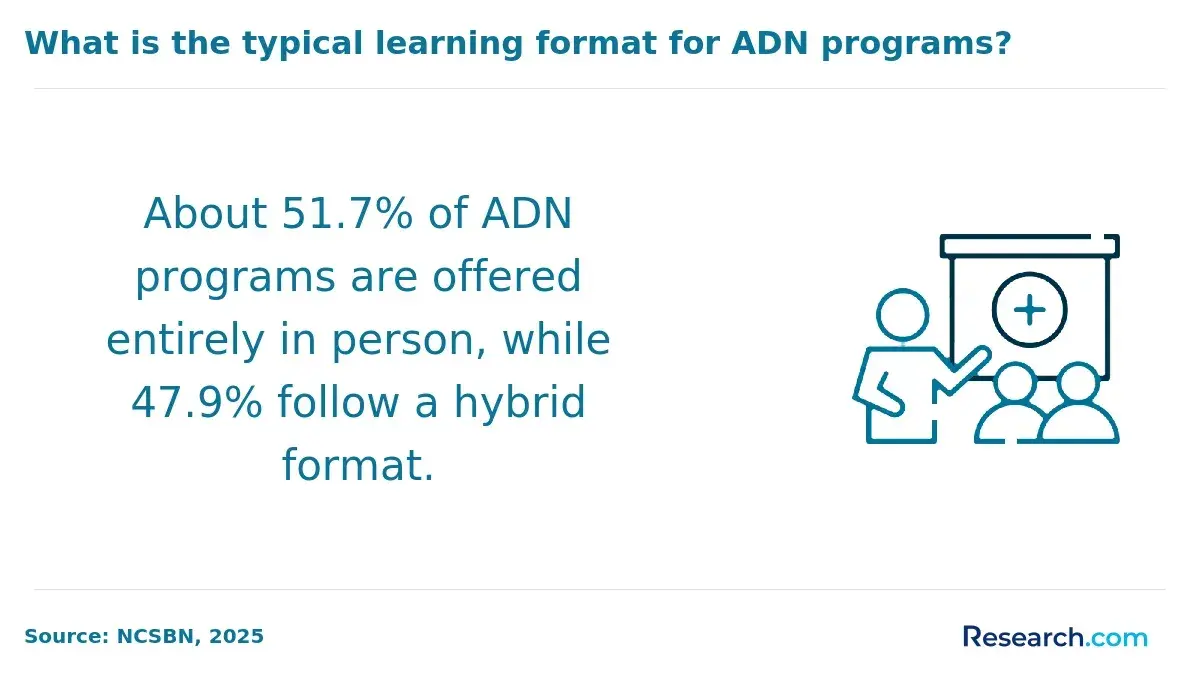
Both online, hybrid, and traditional ADN programs in South Dakota prepare students for RN licensure but differ in flexibility, learning style, and course delivery. These distinctions influence which students thrive in each setting. Consider these key comparisons:
- Learning Format: Online programs deliver lectures and assignments remotely, ideal for self-directed learners balancing other commitments. Hybrid blends online content with on-campus labs, offering flexibility plus hands-on practice. Traditional programs require full in-person attendance, benefiting those who prefer structured classroom settings.
- Clinical Training: All formats require supervised clinical hours in healthcare settings. Online and hybrid students coordinate placements independently, which may demand extra planning. Traditional students often have clinical rotations arranged by the school.
- Scheduling Flexibility: Online and hybrid programs allow asynchronous study, suiting working adults or caregivers. Traditional schedules are fixed, providing predictable routines but less flexibility.
- Student Interaction: Traditional programs encourage face-to-face collaboration and immediate feedback. Hybrid offers both in-person and virtual engagement. Online relies on digital communication, favoring independent learners.
- Accessibility: Online and hybrid options expand access for rural students, reducing travel needs. Traditional programs mostly serve urban areas, potentially requiring relocation or long commutes.
How do I know if an ADN program in South Dakota is accredited?
Accreditation is essential for ADN programs in South Dakota because it ensures the program meets the educational standards required for RN licensure and prepares students for safe, competent patient care. Here are several practical steps to verify if an ADN program is accredited:
- Check National Accreditation Databases: Search the official lists of accredited programs maintained by the Accreditation Commission for Education in Nursing (ACEN) and the Commission on Collegiate Nursing Education (CCNE). These databases provide up-to-date information on accredited ADN programs, which is important since graduation from an accredited program is often required to sit for the NCLEX-RN exam and obtain licensure.
- Confirm State Board of Nursing Approval: The South Dakota Board of Nursing approves nursing education programs eligible for RN licensure. Use their website or contact them directly to verify that the ADN program you are interested in is currently approved by the board, ensuring it meets state requirements.
- Visit the School's Official Website: Accredited programs typically display their accreditation status clearly on their official pages. Look for detailed information about ACEN, CCNE, and state board approval. If the accreditation status is unclear or missing, reach out to the school's admissions office for written confirmation.
- Verify Regional or Institutional Accreditation: Besides nursing-specific accreditation, check that the college or technical school holds regional accreditation recognized by the U.S. Department of Education. This impacts financial aid eligibility, credit transfer, and institutional reputation, complementing programmatic nursing accreditation.
How much does an ADN program cost in South Dakota?
The cost of ADN programs in South Dakota varies depending on the type of institution-community college, public university, or private school-program length, and whether the student qualifies for in-state or out-of-state tuition. These factors all influence the total investment required to earn an Associate Degree in Nursing in the state. Below are key elements that contribute to the overall cost of an ADN program in South Dakota:
- Tuition and Fees: Tuition rates typically range from around $278 to $400 per credit hour at public institutions, with total tuition and mandatory fees for the program usually between $10,000 and $30,000. Private schools may charge substantially more, and residency status heavily affects price, with in-state rates being more affordable than out-of-state ones.
- Books and Supplies: Expenses for textbooks, digital materials, and nursing software often add $2,500 to $3,600 to the program cost. These resources are necessary for coursework and exam preparation, so comparing options like used books or digital formats can help manage these costs.
- Uniforms and Equipment: Students must budget $40 to $150 for initial scrubs, clinical shoes, and nursing tools. Replacements or additional supplies might also be required during clinical training, which can affect your overall expenses.
- Clinical Expenses: Many programs charge separate clinical fees around $1,800, plus added costs for background checks, immunizations, CPR certification, and liability insurance. Planning for these ensures uninterrupted access to necessary clinical experiences.
- Living and Transportation Costs: Housing, meals, and commuting costs vary depending on whether you attend school in urban centers like Sioux Falls or online. Choosing programs with online or hybrid options can reduce these expenses, especially transportation costs.
To explore accelerated nursing pathways, consider programs like the 12 month FNP program online, which may offer different cost structures and delivery models for flexibility. Careful budgeting that accounts for all these factors will help you make an informed decision about pursuing an Associate Degree in Nursing in South Dakota.
What financial aid options are available for ADN students in South Dakota?
Financial aid can help make ADN programs in South Dakota more affordable by covering some or all educational expenses for eligible students. Here are the primary financial aid options available to those pursuing an ADN in South Dakota:
- Federal Financial Aid: Students can access federal support by completing the FAFSA, which qualifies them for Pell Grants, Federal Supplemental Educational Opportunity Grants (FSEOG), federal loans, and Work-Study programs. These funds can be used for tuition, fees, textbooks, and some living expenses at any accredited ADN program.
- South Dakota Nurse Education Assistance Scholarship: This state-funded scholarship provides up to $1,000 per academic year to eligible ADN students who are South Dakota residents and accepted into approved nursing programs. Priority is given to applicants demonstrating financial need, with awards applied directly to tuition and fees.
- Institutional Scholarships and Grants: Many South Dakota colleges, including well-known schools offering South Dakota nursing scholarships for ADN students, offer their own scholarships based on merit or need. Applications generally start through the school's financial aid office and often use FAFSA information for eligibility.
- Private Nursing Scholarships: Various foundations and organizations grant scholarships targeting nursing students in South Dakota, especially those from underrepresented groups or those planning to work in underserved areas. Researching databases like NurseJournal can uncover opportunities and application details to help reduce education costs.
- Employer Tuition Assistance and Loan Forgiveness: Some healthcare employers provide tuition help or loan repayment programs that require working for them post-graduation. Federal options like the Nurse Corps Loan Repayment Program also support students who serve in high-need areas, offering additional financial relief.
For students exploring their educational pathways, it's also helpful to learn what are the easiest nurse practitioner specialty programs to get into, especially when considering advancement opportunities after completing an ADN.
What can I do with an ADN in South Dakota after graduation?
ADN graduates in South Dakota are eligible to take the NCLEX-RN exam and pursue a variety of entry-level nursing positions across diverse healthcare environments. These roles offer solid entry points for building a nursing career with room for growth and specialization. Below are key RN jobs with associate degree in South Dakota that provide both practical experience and advancement opportunities:
- Hospital Registered Nurse (RN): Work in medical-surgical units, emergency departments, labor and delivery, or other specialties. Responsibilities include coordinating patient care, medication administration, monitoring progress, and patient education. Hospital positions often lead to specialized certifications or leadership roles.
- Long-Term Care and Skilled Nursing Facilities RN: Manage chronic care and supervise LPNs and CNAs in nursing homes or rehab centers. These roles focus on compliance and patient care plans, with pathways to nurse management or director positions due to high demand from South Dakota's aging population.
- Outpatient Clinic and Physician Office RN: Provide patient assessments, assist with procedures, and offer education in clinics or physician offices. These RN jobs with an associate degree in South Dakota often involve regular hours and opportunities to specialize in areas like pediatrics or oncology through further certification.
- Home Health and Community Health RN: Deliver care and education in patients' homes or community settings, managing chronic conditions and wound care. This path offers autonomy and a chance to move into supervisory or community health leadership roles.
- Rural and Critical Access Hospital RN: Serve in rural hospitals with broader responsibilities and greater independence. Career growth may include rural health leadership or transition to advanced practice roles. ADN programs here prepare graduates well for the unique demands.
- Government and Public Sector RN: Participate in public health initiatives, immunization clinics, or care in correctional facilities and tribal health services. Experience can lead to program coordination or supervisory roles.
- Further Education and Specialization: Many ADN graduates pursue a BSN or higher degrees through online or hybrid programs in South Dakota, opening doors to advanced practice and leadership. For those wondering about the next steps after initial nursing roles, exploring the difference between physician assistant and nurse practitioner is a helpful way to understand advanced career options.
How much do ADN nurses earn in South Dakota?
The average median pay for ADN nurses in South Dakota is approximately $55,863 per year, but salaries can vary widely depending on experience, geographic location, healthcare setting, and employer type. Understanding these factors is crucial for prospective students considering online or on-campus ADN programs in the state. The following key elements strongly influence ADN nurse earnings in South Dakota:
- Level of Experience: Entry-level ADN nurses often earn between $16.48 and $28.89 per hour, with salaries increasing steadily over time. Experienced nurses, especially those with five to ten years in practice, can earn upwards of $38.00 per hour or more.
- Workplace Setting: Nurses employed in government or large hospital systems typically earn higher salaries, while those working in nursing care facilities, outpatient clinics, or educational institutions usually see lower pay ranges.
- Geographic Location: Urban areas like Sioux Falls and Rapid City generally offer higher wages due to demand and living costs, whereas rural settings may provide incentives like sign-on bonuses to offset lower pay.
- Specialization: ADN nurses with additional certifications in critical care, emergency, or labor and delivery often command higher salaries and access to advanced roles.
- Shift Differentials and Overtime: Evening, night, and weekend shifts commonly include pay differentials, while overtime work significantly boosts annual income, especially in hospitals and long-term care facilities.
Here's What Graduates in South Dakota Have to Say About Their ADN Degree
- Completing the online ADN program at Dakota State University allowed me to balance my family life while advancing my nursing career. The flexibility of virtual classes combined with occasional in-person labs gave me the best of both worlds. Starting work in a home health facility, I've been able to apply what I've learned directly to patient care in my own community. The program not only boosted my clinical skills but also deepened my commitment to supporting vulnerable populations. I feel empowered and hopeful about the opportunities ahead in South Dakota's healthcare system. Andre
- The hybrid ADN program at Mitchell Technical College was a perfect fit for me because it offered hands-on experience alongside online coursework, which suited my learning style. My first nursing job in a hospital setting has been incredibly fulfilling, providing me with the chance to impact patients' recovery journeys every day. South Dakota's tight-knit healthcare community encourages professional growth, and I appreciate how the program prepared me to meet those demands confidently. Reflecting on this journey, I am proud to contribute to improving healthcare accessibility in our region. Leila
- Attending an on-campus ADN program at Lake Area Technical College gave me a strong foundation and a motivating environment where I made lasting connections with peers and instructors. Starting my nursing career in an academic health setting, I've been able to merge clinical knowledge with research-driven practices that benefit young patients. Earning this degree in South Dakota also means being part of a network that values continuous learning and career advancement, encouraging me to pursue further specializations. The challenges of balancing rigorous coursework and clinical hours taught me resilience and a deep passion for nurturing community health. Thomas
Related Articles for Nearby States
- 2027 Best ADN Nursing Programs in North Dakota: Online & Campus
- 2027 Best ADN Nursing Programs in Nebraska: Online & Campus
- 2027 Best ADN Nursing Programs in Minnesota: Online & Campus
- 2027 Best ADN Nursing Programs in Wyoming: Online & Campus
- 2027 Best ADN Nursing Programs in Iowa: Online & Campus
- 2027 Best ADN Nursing Programs in Montana: Online & Campus
- 2027 Best ADN Nursing Programs in Colorado: Online & Campus
- 2027 Best ADN Nursing Programs in Kansas: Online & Campus
- 2027 Best ADN Nursing Programs in Wisconsin: Online & Campus
- 2027 Best ADN Nursing Programs in Missouri: Online & Campus
References:
- - SD Board of Nursing https://www.sdbon.org/rn_lpn/endorse/
- RN to BSN Programs in South Dakota | What’s the Endpoint? – SD - NursingLicensure.org https://www.nursinglicensure.org/rn-to-bsn/rn-to-bsn-south-dakota/
- Nursing https://www.usd.edu/Academics/Colleges-and-Schools/school-of-health-sciences/nursing
- Career Paths | South Dakota Department of Health https://doh.sd.gov/work-with-us/career-paths/
- South Dakota Residents Can Now Enroll in Accelerated Nursing Programs at Joyce https://www.joyce.edu/press/south-dakota-residents-can-now-enroll-in-accelerated-nursing-programs-at-joyce/
- Registered Nursing https://www.wdt.edu/degree-programs/registered-nursing/
- 2025 Best RN to BSN Programs in South Dakota Online - Fast & Affordable Options https://www.registerednursing.org/rn-to-bsn/south-dakota/
- Online ADN Programs: Choosing the School for You https://www.edumed.org/online-schools/associate-nursing-programs/
- 5 Best ADN Programs in South Dakota – (2-Year RN Programs) https://www.nursingprocess.org/adn-programs/south-dakota/
- How Much You Can Make With an Associate Degree in Nursing https://www.allnursingschools.com/adn/salary/
Other Things You Should Know About Pursuing ADN Nursing Programs in South Dakota
Applicants to ADN programs in South Dakota in 2027 should have a high school diploma or GED, pass application assessments, and meet specific prerequisite courses requirements like biology and chemistry. Some schools also require entrance exams such as the TEAS (Test of Essential Academic Skills).
For 2027, top ADN nursing programs in South Dakota include Southeast Technical College and Lake Area Technical College. Both offer comprehensive training and leverage modern facilities to prepare students for a successful career in nursing. Southeast Technical College offers traditional and hybrid classes to accommodate varying student needs.


