
2027 Best ADN Nursing Programs in Oklahoma: Online & Campus

Co-Founder and Chief Data Scientist
Oklahoma's healthcare sector continues to grow, with registered nursing jobs projected to increase by 12% over the next decade. Pursuing an associate degree in nursing (ADN) in Oklahoma, whether online or on-campus, provides a practical and efficient pathway into this expanding field. The ADN offers a balance of theoretical knowledge and clinical practice, preparing students for immediate career entry and state licensure.
This article, prepared by experts in career planning, explains what an ADN program in Oklahoma entails. The goal is to provide clear, actionable information for informed decision-making.
Key Benefits of ADN Programs in Oklahoma
- Oklahoma ADN programs offer flexible formats with over 50% of programs providing hybrid or fully online coursework, ideal for working students balancing jobs and family.
- The state boasts a strong ADN job placement rate, with around 85% of graduates employed within six months, reflecting robust healthcare demand.
- Many programs have partnerships with local hospitals, granting students extensive clinical experiences, essential for licensure and real-world nursing skills development.
- What is an Associate Degree in Nursing (ADN) in Oklahoma?
- What are the admission requirements for ADN programs in Oklahoma?
- How do ADN programs in Oklahoma prepare students for the NCLEX-RN?
- How long are ADN nursing programs in Oklahoma?
- How do online ADN programs in Oklahoma compare to traditional ones?
- How do I know if an ADN program in Oklahoma is accredited?
- How much does an ADN program cost in Oklahoma?
- What financial aid options are available for ADN students in Oklahoma?
- What can I do with an ADN in Oklahoma after graduation?
- How much do ADN nurses earn in Oklahoma?
What is an Associate Degree in Nursing (ADN) in Oklahoma?
An associate degree in nursing (ADN) in Oklahoma serves as a foundational pathway into the nursing profession, preparing students for registered nurse (RN) licensure through a blend of academic coursework and supervised clinical training. These accredited ADN programs in Oklahoma combine classroom instruction in nursing theory and health sciences with essential hands-on experiences in clinical environments, ensuring graduates gain the practical skills necessary for safe and competent patient care. To accommodate different student needs, several types of ADN programs are offered based on learning modality.
- On-Campus ADN Programs: These programs are delivered at community colleges and technical schools, requiring students to attend in-person classes and clinical rotations. Typically completed within two years, on-campus tracks provide direct access to faculty and campus resources, fostering collaboration and immediate feedback.
- Hybrid ADN Programs: Hybrid options blend online coursework with mandatory on-site labs and clinical practice. This format supports students balancing work or family commitments while fulfilling in-person clinical requirements crucial for RN licensure.
- Online ADN Programs: Fully online ADN programs remain uncommon in Oklahoma due to stringent clinical experience standards. However, select courses within hybrid or campus-based programs may be offered online, benefiting students in rural or underserved areas by enhancing flexibility.
For those considering advanced practice, knowing the highest paid DNP specialties can guide future specialization and career growth.
What are the admission requirements for ADN programs in Oklahoma?
ADN programs in Oklahoma typically have selective admission processes to ensure that applicants are academically prepared and capable of handling the demands of nursing education. Meeting these requirements carefully improves your chances of acceptance and readiness for the nursing field. Below are key admission requirements common to both online and on-campus ADN programs in Oklahoma:
- High School Diploma or GED: You must have completed high school or earned an equivalent credential like a GED. This establishes that you have the foundational literacy and numeracy skills required for college-level nursing coursework.
- Completion of Prerequisite Courses: Most programs require you to finish certain courses with at least a "C" grade. Common prerequisites include English Composition, Introduction to Psychology, Nutrition, Human Anatomy & Physiology, and Chemistry, ensuring you have the essential background knowledge for nursing studies.
- Minimum GPA Standards: A minimum GPA between 2.5 and 3.0 is usually needed to demonstrate academic consistency. Some schools like Oklahoma City University demand a cumulative GPA of 3.0 or higher, reflecting higher competition and standards.
- Entrance Exams: Programs often require standardized tests such as the HESI Admission Assessment or Accuplacer. These exams assess your skills in reading, math, and science to confirm your readiness. For example, Murray State College requires specific reading scores to pass its entrance evaluation.
- Submission of Application Materials: You must complete an application package that may include transcripts, letters of recommendation, and personal essays. These documents let programs evaluate your academic history and motivations while letters provide insight into your character and professionalism.
Additionally, for those whose first language isn't English, proof of proficiency is essential for successful communication in clinical settings. Many ADN programs, whether online or campus-based, may also require interviews, background checks, and immunization records to meet health and safety standards.
This preparation positions you for success in nursing education and your future career, which can also impact earning potential such as the forensic nurse salary among specialized nursing roles.
How do ADN programs in Oklahoma prepare students for the NCLEX-RN?
ADN programs in Oklahoma are specifically designed to equip students with the knowledge, clinical skills, and critical thinking abilities needed to pass the NCLEX-RN and become licensed registered nurses. The following points explain how these programs build readiness and confidence for success on the exam:
- Comprehensive Nursing Coursework: Students engage with core subjects such as patient care, pharmacology, ethics, and safety, ensuring a solid understanding of material tested on the NCLEX-RN. The curriculum aligns with current best practices and clinical standards to prepare students for real healthcare challenges.
- Simulation Labs and Clinical Rotations: Hands-on experiences in simulation settings combined with clinical placements allow students to apply theoretical knowledge. These opportunities sharpen critical thinking and practical skills by exposing students to realistic patient care scenarios.
- NCLEX-Style Test Preparation and Review Sessions: Programs incorporate exam-like questions and application-based testing early and throughout their courses. Additional review sessions and resources reduce anxiety and familiarize students with the NCLEX-RN's format and question styles.
- Evidence-Based Learning Strategies: Instruction encourages integrating research and quality improvement findings into care decisions. This prepares students to handle scenario-based questions by applying proven best practices in clinical settings.
- Faculty Mentorship and Academic Support: Students receive personalized guidance and tutoring from faculty and advisors, helping identify areas needing improvement and supporting steady progress toward exam readiness and graduation.
When asked how ADN programs helped him prepare for the NCLEX-RN, a nurse from Oklahoma who graduated from a local school reflected on the balance of challenges and support. He mentioned feeling initially overwhelmed by the volume of information but found that frequent practice tests and review sessions were critical in building his confidence. The clinical rotations stood out as essential because they allowed him to experience patient care firsthand, which made theoretical knowledge more tangible. He recalled, "The mentorship helped me stay focused and calm; knowing I had faculty backing me up made a big difference." He emphasized that the program's structured approach eased anxiety and gave him practical skills that translated directly to success on the licensure exam.
How long are ADN nursing programs in Oklahoma?
Most Associate Degree in Nursing (ADN) programs in Oklahoma typically take about two years to complete when attending full-time. This timeframe usually includes four to five semesters of core nursing courses after finishing prerequisite classes. Some programs offer accelerated options, especially for students with prior licensed practical nursing (LPN) or paramedic experience, allowing completion in as little as one year.
Meanwhile, part-time enrollment or programs with flexible scheduling can extend the duration to fit work or personal commitments. Choosing between campus-based, hybrid, or online formats also influences how quickly students progress.
Several factors affect the overall length of ADN programs in Oklahoma. Prerequisite courses such as anatomy and physiology must often be completed before starting core nursing classes, which can add extra semesters. Clinical training hours are mandatory and require students to arrange their schedules around in-person lab work and onsite hospital experience, sometimes causing delays if slots are limited.
Programs designed to balance both academic and hands-on clinical learning ensure students are prepared for the NCLEX-RN licensure exam, so flexibility options must still meet rigorous state and accreditation standards. Planning your coursework and clinical hours strategically is key to staying on track while gaining essential practical skills.
How do online ADN programs in Oklahoma compare to traditional ones?
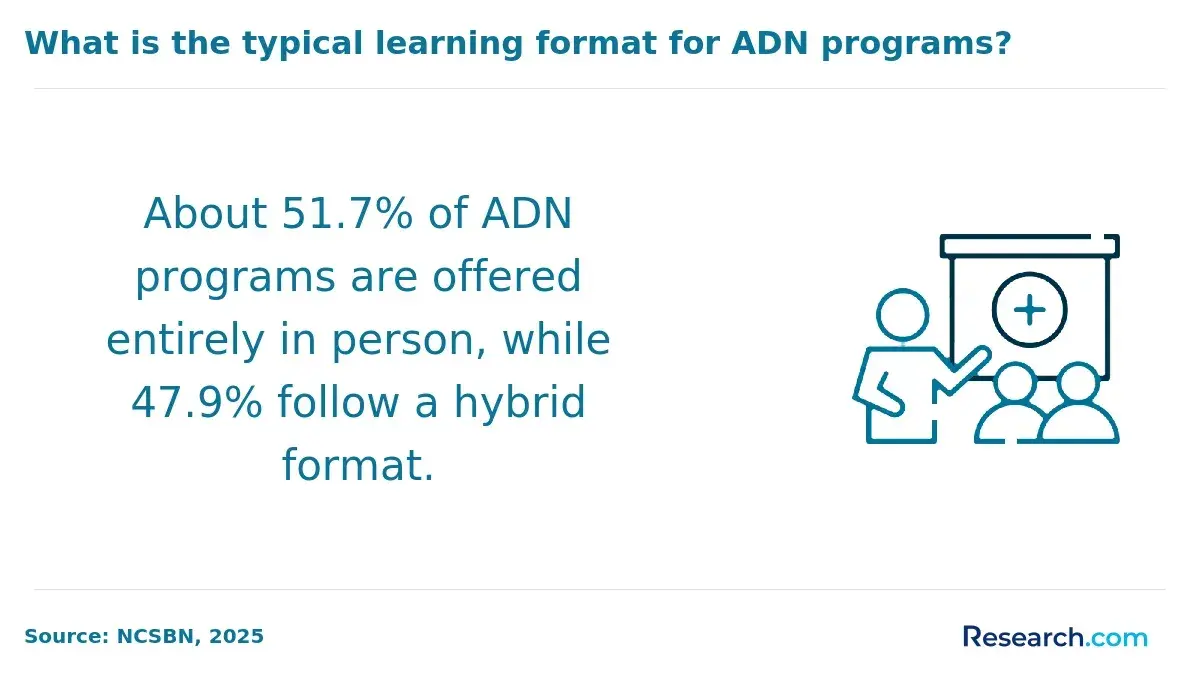
Online, hybrid, and traditional ADN programs in Oklahoma each prepare students for RN licensure but differ in flexibility, learning format, and coursework delivery. Here's a practical comparison of key aspects to consider when choosing a program type:
- Learning Format: Online programs offer asynchronous coursework ideal for self-disciplined learners balancing work or family. Hybrid blends online study with occasional campus sessions, while traditional programs require full in-person attendance and suit those who prefer structured, face-to-face learning.
- Clinical Training: All formats require in-person clinicals at healthcare sites, but online and hybrid students often schedule these locally with some flexibility. Traditional students usually follow fixed clinical schedules aligned with classes.
- Scheduling Flexibility: Online and hybrid offer greater scheduling freedom, supporting working adults and caregivers. Traditional programs have rigid schedules requiring regular campus presence.
- Student Interaction: Traditional programs foster direct peer and faculty contact, enhancing mentorship. Online relies on digital communication, which may feel less personal, with hybrid offering a mix of both.
- Accessibility: Online and hybrid formats reduce geographic and commuting barriers for rural or mobility-limited students, while traditional programs usually require relocation or daily travel to campus.
When I spoke with a nurse who completed a hybrid ADN program from a local Oklahoma school, she described the balance as both challenging and rewarding. "Managing online classes with scheduled campus labs meant juggling deadlines with hands-on skills practice," she explained. The flexibility helped her work part-time, but she appreciated the real-time support during in-person sessions. She recalled moments of self-doubt during remote study, overcome through virtual study groups and occasional campus visits. "The hybrid path wasn't easier, just different-it gave me the structure and freedom I needed to succeed." Her experience reflects the blend of independence and connection that hybrid programs uniquely offer.
How do I know if an ADN program in Oklahoma is accredited?
Accreditation ensures that ADN programs in Oklahoma meet the strict educational standards required for registered nurse licensure and high-quality patient care. Here are the key steps to verify if an ADN program is accredited:
- Check National Accreditation Databases: Look up the program in databases from agencies like the Accreditation Commission for Education in Nursing (ACEN), Commission on Collegiate Nursing Education (CCNE), or National League for Nursing Commission for Nursing Education Accreditation (NLN-CNEA). A program listed here confirms it meets national standards and supports RN licensure eligibility.
- Confirm Approval by the Oklahoma Board of Nursing (OBN): Visit the OBN website to see if the ADN program is state-approved. This approval is required for graduates to take the NCLEX-RN exam in Oklahoma, ensuring compliance with state licensing requirements.
- Visit the School's Official Website: Accredited programs usually display their accreditation details prominently, including the accrediting agency and dates. This can reveal if the accreditation is current, provisional, or nearing renewal, giving additional proof of legitimacy.
- Verify with Accreditation Agencies Directly: Contact accrediting bodies like ACEN, CCNE, or NLN-CNEA to confirm a program's current accreditation status. This is especially useful if online or school information is unclear, helping students avoid unaccredited programs.
How much does an ADN program cost in Oklahoma?
The cost of ADN programs in Oklahoma can vary depending on the type of school you choose-whether a community college, public university, or private institution-as well as the length of the program and your residency status. These differences affect tuition and fees for ADN programs Oklahoma, among other expenses. Key cost factors to consider include:
- Tuition and Fees: This is the largest part of your budget and varies greatly between schools and residency. For example, in-state tuition at community colleges is significantly lower than out-of-state rates or private school tuition, which can be several times higher. Make sure to check if your chosen program includes any bundled fees for testing or resources.
- Books and Supplies: Required textbooks and course materials can add up, with estimates typically ranging from several hundred dollars to more, especially if you need access to specialized online modules or subscriptions.
- Uniforms and Equipment: Expect to invest in clinical uniforms, shoes, and basic nursing tools such as stethoscopes and pen lights. These are necessary for clinical rotations and typically cost a few hundred dollars.
- Clinical Expenses: Clinical participation often requires additional costs like immunizations, CPR certification, drug testing, background checks, liability insurance, and access to clinical management platforms. These collectively contribute to the overall expense of earning the degree.
- Living and Transportation Costs: Housing, food, and commuting expenses must be factored in, especially if your program requires in-person attendance for clinicals. While online ADN programs may reduce daily travel costs, they do not eliminate travel to required clinical sites. Budgeting realistically for these personal costs is essential.
Financial aid is commonly available to help offset these expenses, and consulting a school's financial aid office can provide personalized estimates. For those exploring flexible study options, consider reviewing the list of best accelerated nurse practitioner online programs, which may include accelerated pathways or hybrid models to fit different budgeting and scheduling needs.
What financial aid options are available for ADN students in Oklahoma?
Financial aid can make ADN programs in Oklahoma more affordable by helping to cover tuition, fees, textbooks, and other educational costs. Below are the main financial aid options available for ADN students in Oklahoma to consider.
- Federal Financial Aid: By submitting the Free Application for Federal Student Aid (FAFSA), students gain access to federal grants like Pell Grants, work-study opportunities, and student loans. Eligibility depends largely on financial need, and nursing schools often use FAFSA data to allocate aid, so applying early is essential for maximizing support.
- State-Funded Financial Assistance: Oklahoma offers grants and scholarships targeted at nursing students, such as the Nursing Student Assistance Program, which encourages service in rural or underserved areas. Most programs require Oklahoma residency and a minimum GPA, with awards typically ranging from $500 to $2,000 annually.
- Institutional Scholarships: Many colleges with accredited ADN programs, including Connors State College and Oklahoma City Community College, provide scholarships of up to $1,500 per year. Application requirements and deadlines vary by institution, so students should check with their financial aid office for specific details.
- Private Nursing Scholarships: Numerous organizations offer scholarships specifically for nursing students in Oklahoma, including the Sue Holloway Memorial Scholarships and awards from national groups like the American Association for Men in Nursing or TYLENOL. These typically require academic achievement, essays, or professional memberships, and awards range broadly up to $10,000.
- Employer Tuition Assistance: Some healthcare employers in Oklahoma provide tuition reimbursement for employees pursuing ADN degrees, often requiring continued employment or service commitments after graduation. Eligibility and application procedures differ widely, so direct inquiries to employers are necessary.
For those interested in advancing to advanced practice degrees, reviewing resources like easiest np specialty programs to get into can provide helpful guidance on subsequent career steps.
What can I do with an ADN in Oklahoma after graduation?
ADN graduates in Oklahoma are qualified to take the NCLEX-RN exam and pursue a variety of entry-level nursing positions across the state's healthcare system. These roles offer solid starting points with room for growth. Below are key career paths for ADN nurses in Oklahoma that provide diverse opportunities in various settings.
- Hospital Registered Nurse (RN): Hospitals are the main employers of ADN-prepared nurses. These RNs deliver direct patient care, manage medications, and collaborate with healthcare teams in departments like emergency, medical-surgical, or ICU. Many hospitals encourage further education and certification to advance nursing careers.
- Long-Term Care and Skilled Nursing Facilities: RNs in nursing homes and rehabilitation centers focus on managing chronic conditions and overseeing care plans. These positions offer stability and leadership roles such as charge nurse, especially attractive to those interested in geriatric care.
- Outpatient Clinics and Physician Offices: ADN graduates often provide patient assessments, immunizations, and minor procedure assistance in outpatient settings. These jobs commonly feature regular hours and can involve specialties like pediatrics and family health.
- Home Health and Hospice Nursing: Nurses in home health or hospice deliver individualized care in patients' homes, managing chronic diseases and end-of-life support. These roles require autonomy and offer flexibility, along with chances to specialize in palliative nursing.
- Community and Public Health Nursing: Some ADN nurses work in public health clinics, schools, or community programs focusing on disease prevention and education. These positions can lead to leadership roles in public health and benefit from pursuing further degrees like a BSN.
Advancement is achievable through additional education such as an RN-to-BSN program, which increases RN job opportunities in Oklahoma and beyond. Nurses interested in further degrees might explore options like the rn to msn program to open doors to leadership and specialized nursing roles.
How much do ADN nurses earn in Oklahoma?
The average median pay for ADN nurses in Oklahoma is approximately $66,863 per year, or $32.15 per hour. Salaries for ADN-prepared registered nurses in the state can vary significantly depending on factors such as experience, geographic location, healthcare setting, and employer type. Understanding these influences is essential for prospective students and graduates planning their nursing careers.
- Level of Experience: Entry-level ADN nurses start with lower wages, around $28.89 per hour, while seasoned nurses with over 20 years can earn up to $38.01 per hour, reflecting increased expertise and leadership roles.
- Workplace Setting: Government facilities tend to offer the highest salaries, averaging nearly $99,840 annually, with hospital nurses earning slightly less; educational and residential care settings generally pay less.
- Geographic Location: Urban areas like Tulsa and Oklahoma City provide higher wages due to demand and living costs, whereas rural areas may offer incentives such as sign-on bonuses to attract nurses.
- Specialization and Certification: Nurses with specialized skills or certifications, such as oncology or emergency nursing, often command higher salaries ranging from mid-$70,000s to mid-$80,000s annually.
- Shift Differentials and Overtime: Working nights, weekends, or holidays typically results in additional pay, boosting overall income, especially in hospitals and emergency care settings.
Here's What Graduates in Oklahoma Have to Say About Their ADN Degree
- Completing the online ADN program at Tulsa Community College was a perfect fit for my hectic schedule. Being able to study remotely gave me the flexibility to balance family responsibilities while gaining the knowledge and skills I needed. After graduation, I started my nursing career in a local hospital setting, where the hands-on clinical training I received made the transition seamless. The program's strong connections with healthcare providers in Oklahoma really helped with job placement opportunities. I'm grateful for this experience as it set a strong foundation for my professional growth in nursing. Jenny
- The hybrid ADN program at Rose State College allowed me to experience both in-class learning and practical clinical hours, which made all the difference. This balance helped me stay engaged and prepared to start my career working in home health care within my community. I've become more confident in providing compassionate care to patients in their own homes, and I feel like I'm making a meaningful impact every day. Pursuing my degree in Oklahoma offered me unique opportunities to connect with diverse populations and serve them effectively. It has definitely been a reflective and rewarding journey. Bryan
- Attending the on-campus ADN program at Oklahoma City Community College truly transformed my perspective on nursing and patient care. The hands-on experience with academic medical centers was invaluable, especially in developing strong clinical judgment and communication skills. Having access to instructors and peers in person fostered a professional environment that pushed me toward continuous learning and career advancement. I appreciate how Oklahoma's ADN programs support nurses in growing within the health care industry and serving our communities with dedication and expertise. Ashlyn
Related Articles for Nearby States
- 2027 Best ADN Nursing Programs in Texas: Online & Campus
- 2027 Best ADN Nursing Programs in Kansas: Online & Campus
- 2027 Best ADN Nursing Programs in Arkansas: Online & Campus
- 2027 Best ADN Nursing Programs in Missouri: Online & Campus
- 2027 Best ADN Nursing Programs in Colorado: Online & Campus
- 2027 Best ADN Nursing Programs in New Mexico: Online & Campus
- 2027 Best ADN Nursing Programs in Nebraska: Online & Campus
- 2027 Best ADN Nursing Programs in Louisiana: Online & Campus
- 2027 Best ADN Nursing Programs in Iowa: Online & Campus
- 2027 Best ADN Nursing Programs in Mississippi: Online & Campus
References:
- Best-Paying Nursing Jobs With An Associate Degree In Nursing (ADN) https://nursejournal.org/degrees/adn/best-paying-adn-jobs/
- Nurse Salaries By State + the Highest Paying States For RNs https://nurse.org/articles/highest-paying-states-for-registered-nurses/
- RN to BSN Program https://swosu.edu/nursing/rn-bsn/index.php
- Accreditation https://nursing.ouhsc.edu/About/Accreditation
- Traditional Financial Aid https://www.okwu.edu/admissions/financial-aid/traditional/
- What if My Nursing School Isn’t Accredited? https://www.registerednursing.org/articles/what-if-nursing-school-isnt-accredited/
- Associate in Applied Science Degree in Nursing | Oklahoma State University https://osuit.edu/academics/degrees-programs/nursing.html
- Nursing Admission - Western Oklahoma State College | Altus, OK https://www.wosc.edu/index.php
- ADN Admissions - Northeastern Oklahoma A&M College https://neo.edu/academics/majors-degrees/nursing-allied-health-physical-education/nursing/adn-admissions/
- Registered Nurse Salary in Oklahoma (2024) | Trusted Health https://www.trustedhealth.com/nurse-salary-guide/oklahoma
Other Things You Should Know About ADN Programs in Oklahoma
Some of the top ADN programs in Oklahoma for 2027 include Tulsa Community College, Oklahoma City Community College, and Rose State College. These programs are recognized for their comprehensive curricula, strong NCLEX-RN pass rates, and flexible learning options that accommodate both online and on-campus students.
In 2026, the typical starting salary for ADN nurses in Oklahoma is approximately $52,000 to $60,000 annually. This can vary based on factors such as location, healthcare facility type, and additional certifications or experience acquired by the nurse.


