
2027 Best ADN Nursing Programs in Indiana: Online & Campus

Co-Founder and Chief Data Scientist
Indiana faces a growing demand for qualified nurses, with projections indicating a 15% increase in nursing jobs over the next decade. Pursuing an associate degree in nursing (ADN) within the state, whether online or on-campus, offers a meaningful pathway into this vital profession. The ADN not only provides essential clinical skills but also opens doors to licensure and employment in diverse healthcare settings. Such a degree challenges assumptions that a bachelor's degree is the only viable route, highlighting practical, accessible options for entry into nursing.
This article explores what an ADN program in Indiana truly entails. Prepared by career planning experts, it aims to guide readers through expectations, key considerations, and decision-making strategies. By clarifying the ADN journey, the article empowers prospective students to make informed choices aligned with their goals and Indiana's healthcare needs.
Key Benefits of ADN Programs in Indiana
- Indiana's ADN programs offer flexible online options alongside traditional campus classes, catering to working adults and accelerating pathways to licensure with average completion times under two years.
- Statewide partnerships between hospitals and schools boost clinical placements, providing students with hands-on experience in top Indiana healthcare facilities, a critical factor in employment success.
- Indiana's growing nursing demand, projected at 15% over the next decade, means ADN graduates enjoy strong job prospects combined with competitive salaries, often starting above the national average for new nurses.
- What is an Associate Degree in Nursing (ADN) in Indiana?
- What are the admission requirements for ADN programs in Indiana?
- How do ADN programs in Indiana prepare students for the NCLEX-RN?
- How long are ADN nursing programs in Indiana?
- How do online ADN programs in Indiana compare to traditional ones?
- How do I know if an ADN program in Indiana is accredited?
- How much does an ADN program cost in Indiana?
- What financial aid options are available for ADN students in Indiana?
- What can I do with an ADN in Indiana after graduation?
- How much do ADN nurses earn in Indiana?
What is an Associate Degree in Nursing (ADN) in Indiana?
An Associate Degree in Nursing (ADN) in Indiana serves as a crucial entry point into the nursing field, blending academic coursework with supervised clinical training to prepare students for Registered Nurse (RN) licensure. These programs integrate classroom instruction with practical, hands-on experiences, ensuring students develop key nursing competencies such as patient assessment, medication administration, and delivering evidence-based care. The design of Indiana ADN programs reflects a commitment to producing well-prepared nurses who meet state standards and pass the NCLEX-RN exam. Exploring the various learning modalities available highlights how students can tailor their educational journey to fit their unique circumstances.
Types of ADN programs in Indiana based on learning modality include:
- On-Campus ADN Programs: These immerse students in an environment that supports face-to-face interaction with instructors and clinical faculty, fostering closer mentorship and immediate access to simulation labs. Typically lasting two years, they encourage direct engagement in local healthcare settings, which helps build foundational professional networks crucial for early career success.
- Hybrid ADN Programs: By merging online coursework with necessary in-person clinical and lab sessions, hybrid programs offer flexibility without sacrificing essential hands-on learning. This format suits individuals balancing work or family commitments while meeting Indiana ADN program requirements and allowing pathways for continued advancement, such as RN-to-BSN programs.
- Online ADN Programs: Although fully online ADN degrees are uncommon due to clinical practice mandates, some programs deliver extensive remote instruction complemented by local clinical placements. This approach maximizes accessibility and appeals to those needing geographic or schedule flexibility; however, students must still complete supervised clinical experiences to qualify for licensure in Indiana.
Considering the diverse routes and settings, this range of ADN options challenges the assumption that nursing education must be rigidly campus-based, opening doors for many aspiring nurses. Prospective students evaluating their choices should reflect on how each modality aligns with personal needs and career goals, bearing in mind that ADN credentials serve not only as workforce entry points but also as stepping stones toward some of the top paying nursing careers.
What are the admission requirements for ADN programs in Indiana?
ADN programs in Indiana maintain selective admission processes to ensure students meet the academic and professional challenges of nursing education effectively. These criteria emphasize not only scholastic ability but also personal readiness to navigate the complexities of healthcare practice. Here are the key ADN program admission requirements in Indiana that every prospective student should consider:
- High School Diploma or GED: Proof of a high school diploma or GED is essential, serving as evidence of foundational education. This baseline assures programs that candidates have completed the necessary secondary education required for college-level nursing courses.
- Minimum GPA Standards: Most programs expect a minimum cumulative GPA between 2.5 and 2.8, sometimes with specific minimums for science courses. These thresholds help identify students with the academic persistence and aptitude to thrive in rigorous nursing curricula.
- Prerequisite Courses: Completion of courses like anatomy, physiology, biology, chemistry, psychology, and English composition with grades of "C" or better is required. This preparation equips students with vital knowledge before tackling advanced nursing subjects.
- Entrance Exams: Many ADN programs mandate entrance exams such as the ATI TEAS test, which evaluates essential skills in reading, math, science, and English. Understanding the TEAS score required for Indiana ADN programs helps applicants assess their readiness and target their preparation accordingly.
- Application Materials: Applicants typically submit formal applications including essays or personal statements, and sometimes letters of recommendation. These materials offer insights into motivation, character, and suitability beyond academic achievements.
- Background Check and Health Documentation: Passing a criminal background check and providing immunization records and CPR certification are standard. These ensure safety and compliance with clinical site requirements.
- Interviews and Informational Sessions: Some programs include interviews to assess communication skills and professional motivation, further refining the selection process.
- Proof of Citizenship or Residency: Legal residency or citizenship verification is often required to meet state regulations and clinical placement eligibility.
If you aim to advance in nursing, including exploring specialized roles like becoming a women's health nurse practitioner, consider learning how to become a womens health nurse practitioner fast to complement your ADN foundation.
How do ADN programs in Indiana prepare students for the NCLEX-RN?
ADN programs in Indiana are specifically designed to equip students with the knowledge, clinical skills, and critical thinking abilities needed to pass the NCLEX-RN and become licensed registered nurses. The preparation for the exam and nursing practice is multifaceted, encompassing several key approaches:
- Comprehensive Nursing Coursework: The curriculum covers critical subjects aligned directly with the NCLEX-RN test plan, ensuring students deeply understand vital concepts and clinical procedures necessary for success both on the exam and in real-world settings.
- Simulation Labs and Clinical Rotations: Hands-on experiences in simulation labs and various healthcare environments allow students to translate theory into practice, sharpening their clinical judgment and building confidence before entering professional roles.
- NCLEX-Style Test Preparation and Review Sessions: Regular practice exams and targeted review workshops familiarize students with exam formats and hone their test-taking strategies, addressing weaknesses that could hinder passing rates.
- Evidence-Based Learning Strategies: Interactive methods like case studies and group work cultivate critical thinking and adaptive problem-solving, preparing students for the complex, evolving challenges posed by the NCLEX-RN.
- Faculty Mentorship and Academic Support: Dedicated faculty provide personalized guidance and resources, supporting students through academic and clinical challenges to enhance learning outcomes and exam readiness.
How long are ADN nursing programs in Indiana?
Most Associate Degree in Nursing (ADN) programs in Indiana typically take about two years of full-time study to complete, but this timeline is far from rigid. Students enrolled part-time or those who choose programs with extended clinical hours may experience longer durations. Conversely, some institutions offer accelerated or bridge options that shorten the pathway for qualified individuals, sometimes to as little as 20 months. The program structure, including whether courses are delivered online, on campus, or in hybrid formats, also plays a significant role in shaping the timeline. This flexibility challenges the one-size-fits-all notion often assumed about nursing education duration.
The total length of an ADN program hinges on several nuanced factors beyond raw credit hours. Prerequisite courses, which some schools require before beginning nursing-specific classes, can extend the educational journey, especially for students without prior relevant credits. Clinical training requirements, mandated by Indiana's Board of Nursing, embed unpredictable elements like scheduling conflicts or absences that may lengthen the process. Moreover, variations in program flexibility-such as evening courses or self-paced learning-offer opportunities to tailor progress but also complicate average completion times. Ultimately, these programs are designed not merely to fit a timeline but to carefully balance academic knowledge with sufficient clinical experience, ensuring graduates are fully prepared for the demands of RN licensure and nursing practice in Indiana.
How do online ADN programs in Indiana compare to traditional ones?
Both online, hybrid, and traditional ADN programs in Indiana prepare students for RN licensure but differ notably in flexibility, learning format, and delivery of coursework. These distinctions matter deeply depending on a student's lifestyle and learning style. Consider the following key aspects:
- Learning Format: Online and hybrid programs deliver theory digitally, offering flexibility and self-paced study, ideal for independent learners. Traditional programs require in-person attendance, suiting those who value direct interaction and structured schedules.
- Clinical Training: All formats mandate hands-on clinical experience. Online/hybrid students arrange local placements, while traditional students train mostly on campus clinical sites, appealing to those seeking immediate supervision.
- Scheduling Flexibility: Online and hybrid formats allow asynchronous coursework for busy adults, unlike rigid traditional schedules, making them preferable for students balancing work or family.
- Student Interaction: Traditional programs foster face-to-face engagement and community, whereas online programs rely on digital tools; hybrids offer a blend, balancing connection with flexibility.
- Accessibility: Online and hybrid options suit students in rural areas or with transportation limits, while traditional programs may require commuting or relocation.
How do I know if an ADN program in Indiana is accredited?
Accreditation for ADN programs in Indiana safeguards that the curriculum meets essential standards for Registered Nurse licensure and supports effective patient care. Recognizing genuine accreditation protects you from wasting time and resources on programs that won't qualify you for licensure or employment. Here are key ways to verify an ADN program's accreditation status:
- Check Official Accreditation Databases: Search the Accreditation Commission for Education in Nursing (ACEN) database to confirm if the program holds current accreditation recognized by the U.S. Department of Education. This step removes guesswork and ensures you're considering programs meeting national quality benchmarks.
- Confirm State Board of Nursing Approval: Verify on the Indiana State Board of Nursing or Indiana Professional Licensing Agency websites that the program is approved to prepare students for initial RN licensure. State approval is a non-negotiable requirement to qualify for the NCLEX-RN exam and legal nursing practice in Indiana.
- Visit the School's Official Website: Look for detailed accreditation information directly on the school's site. Legitimate programs are transparent about their accrediting bodies, allowing you to cross-check these claims with official sources and avoid programs lacking clear accreditation evidence.
- Verify National and Regional Accrediting Agencies: Seek accreditation from reputable agencies like ACEN or the Higher Learning Commission (HLC). For online or hybrid ADN programs, ensure they have proper approval for distance education through recognized reciprocity agreements, guaranteeing program legitimacy across states.
How much does an ADN program cost in Indiana?
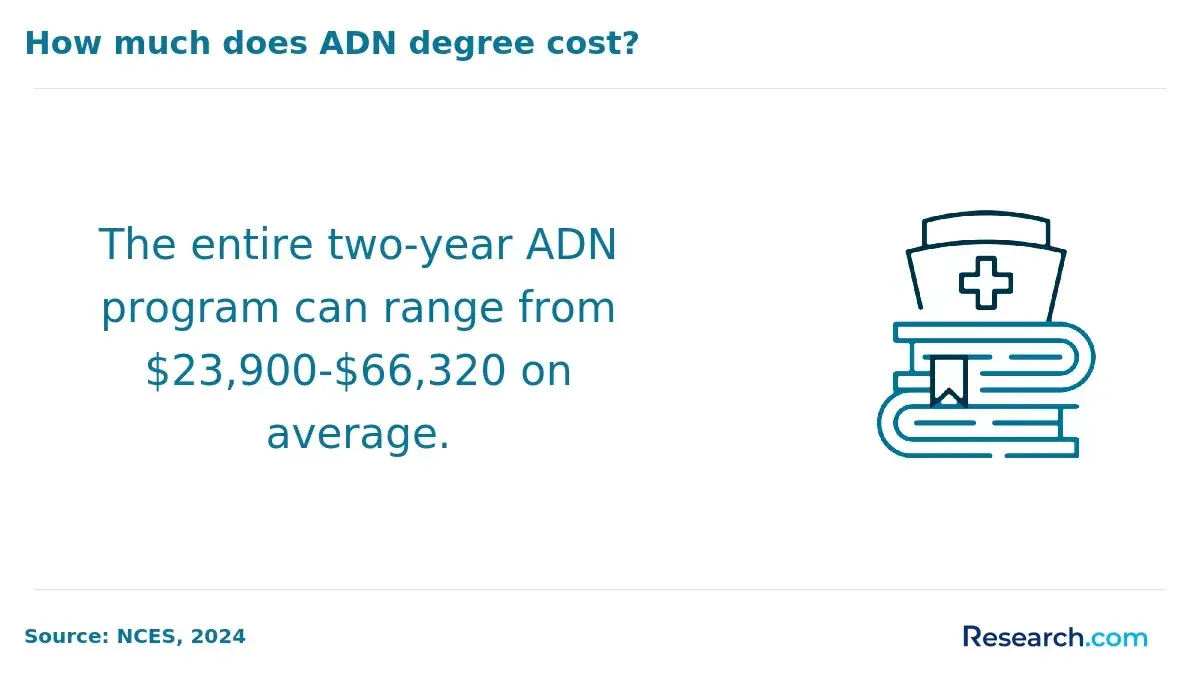
The cost of ADN programs in Indiana varies widely depending on factors like attending a community college, public university, or private institution, the length of the program, and whether students pay in-state or out-of-state tuition. These variables make it essential to look beyond just tuition when estimating the total financial commitment. The key cost elements to consider include the following:
- Tuition and Mandatory Fees: Tuition typically represents the largest portion of expenses, fluctuating by institution type and residency status. Indiana associate degree in nursing tuition at community colleges can be significantly lower for in-state students, while private institutions may charge substantially more, sometimes exceeding $30,000 for the full program.
- Books and Supplies: Required textbooks, digital materials, and specialized resources like simulation kits can add up to several thousand dollars. These expenses vary depending on whether materials are purchased new, used, or digitally, and they play a crucial role in supporting hands-on nursing training.
- Uniforms and Equipment: Essential clinical gear, including uniforms, stethoscopes, and clinical shoes, often carries costs that are easy to overlook but necessary for participation in clinical rotations. These items may need replacing throughout the program, slightly increasing the overall financial burden.
- Clinical Fees and Compliance Expenses: Background checks, drug screenings, immunizations, and liability insurance are required for clinical participation, ranging from a few hundred to over a thousand dollars. Travel to clinical sites may incur additional transportation costs, making these expenses highly variable but important to anticipate.
- Living and Transportation Costs: Housing, meals, and commuting add significantly to the true cost of earning an ADN, with estimates ranging widely based on personal circumstances. Even online programs require in-person clinical hours, which can affect these costs.
After graduation, licensing fees such as the NCLEX-RN exam and state board charges further impact the financing needed to enter practice. Students seeking to minimize expenses should explore the best acute care NP programs and financial aid options available to Indiana residents, carefully balancing these costs against educational quality and outcomes.
What financial aid options are available for ADN students in Indiana?
Financial aid can dramatically reduce the cost burden for those pursuing Associate Degree in Nursing (ADN) programs in Indiana by covering tuition, fees, books, and sometimes even living expenses. Exploring these options thoroughly reveals opportunities students might otherwise overlook, especially when navigating the FAFSA requirements for Indiana ADN programs. Here are the primary types of financial assistance available:
- Federal Financial Aid: Federal grants like the Pell Grant and loans such as Stafford and Perkins Loans provide critical support for many ADN students. Applicants must complete the FAFSA, which assesses financial need and enrollment status, making most students eligible to apply this aid toward tuition and related costs.
- Indiana State Grants: Indiana offers targeted programs such as the Frank O'Bannon Grant for residents pursuing their first associate degree at accredited institutions, plus the Adult Student Grant, which provides up to $2,000 annually for financially independent students attending at least six credit hours. Both require submission of the FAFSA and additional applications through ScholarTrack to qualify.
- Institutional Scholarships: Many colleges have tailored scholarships for nursing students; for example, Ivy Tech Community College's Beacon Scholar Program covers full tuition, books, fees, and even offers a living stipend, along with exam prep and job placement guarantees. These institutional resources often reduce financial barriers significantly.
- Private and Foundation Scholarships: Various organizations, including the Indiana Center for Nursing and Ascension St. Vincent Foundation, award scholarships based on merit or need. Requirements generally include enrollment verification and recommendation letters, making proactive applications essential for maximizing these opportunities.
- Employer Tuition Assistance: Healthcare employers in Indiana frequently provide tuition reimbursement or scholarships to ADN students employed by them. Such programs often require a commitment to work post-graduation but can cover substantial costs, making employment a strategic way to finance nursing education.
Students preparing to apply should also consider looking beyond traditional funding and exploring specialized certificate options, such as those found in a list of the best shortest online PMHNP certificate programs, which might complement or enhance their ADN pathway.
What can I do with an ADN in Indiana after graduation?
ADN graduates in Indiana are eligible to take the NCLEX-RN exam, allowing them to become licensed registered nurses and step into various entry-level nursing roles across multiple healthcare environments. This foundational qualification opens the door to diverse RN career opportunities Indiana offers. Below are some prominent career paths for those holding an ADN in the state:
- Registered Nurse in Hospitals: Hospital settings remain the largest employers of ADN-prepared nurses, where they provide essential care in units such as medical-surgical, emergency, and maternity. These roles involve direct patient care, medication administration, and collaboration with interdisciplinary teams, with clear options for advancement into leadership or specialty areas.
- Long-Term Care and Skilled Nursing Facilities: Nursing homes and rehabilitation centers offer settings focused on caring for elderly or chronically ill patients. ADN nurses here handle medication management and wound care while supporting daily living activities, often progressing into supervisory roles as experience builds.
- Outpatient Clinics and Physician Offices: These environments provide a predictable schedule wherein ADN nurses conduct routine assessments, administer vaccines, and educate patients on health maintenance. Such roles can be ideal for those seeking balance and steady routines.
- Home Health Nursing: ADN-licensed nurses deliver personalized care in patients' homes, supporting recovery and chronic illness management. This pathway fosters deep patient rapport and is expanding rapidly due to growing demand for community-based healthcare.
- Community Health and Public Health Nursing: Roles in public health departments or community organizations allow ADN graduates to contribute to health education, immunizations, and outreach initiatives, addressing broader public health needs in Indiana.
For those interested in enhancing their credentials, many ADN holders explore how to become a RN online through seamless credit transfer programs or employer-supported education, expanding their RN career opportunities in Indiana can provide.
How much do ADN nurses earn in Indiana?
The average median pay for Associate Degree in Nursing (ADN) nurses in Indiana is approximately $83,612 per year, though salaries for ADN-prepared registered nurses can vary widely depending on experience, geographic location, healthcare setting, and employer type. These variations highlight the complex landscape of nursing compensation in Indiana. Understanding the main factors influencing these earnings can empower prospective nurses to make strategic career decisions.
Consider the following key influences on ADN nurse salaries in Indiana:
- Level of Experience: Entry-level ADN nurses might earn around $62,300 annually, while those with extensive experience can command salaries exceeding $99,000. Experience often correlates with enhanced clinical skills and greater responsibility, which are rewarded financially.
- Workplace Setting: Hospitals typically offer higher wages compared to long-term care facilities or outpatient clinics, with specialized units like emergency or oncology nursing tending to pay in the range of $73,000 to $86,000.
- Geographic Location: Urban centers such as Indianapolis generally provide higher pay to attract nurses, whereas rural areas may offer lower compensation due to economic factors and demand.
- Specialization and Certifications: Pursuing certifications in high-demand specialties can increase salary prospects by several thousand dollars and open doors to advanced roles.
- Shift Differentials and Overtime: Night, weekend, or holiday shifts often come with extra pay, typically $2-$6 more per hour, and overtime at 1.5 times the regular rate can significantly boost income.
Here's What Graduates in Indiana Have to Say About Their ADN Degree
- Completing the online ADN program at Ivy Tech Community College allowed me to balance my family life with my studies seamlessly. The flexibility was invaluable, especially when managing my two young children while pursuing my nursing degree. After graduating, starting my career in a local home health facility gave me a unique perspective on personalized patient care, which I find incredibly rewarding. This program not only equipped me with strong clinical skills but also helped me grow into a more confident healthcare provider who truly values community impact. Tariq
- Attending the on-campus ADN program at Vincennes University was a deeply enriching experience that fostered both my professional and personal development. Being in the classroom and clinical settings every day allowed me to build relationships with instructors and peers who have supported my journey as a nurse. Beginning my nursing career in a hospital environment nearby has been challenging but fulfilling, and I appreciate how Indiana's healthcare community supports new nurses. I am especially proud to contribute to patient care in my region and see the tangible difference we make. Lila
- The hybrid ADN program at Purdue Polytechnic Institute provided the perfect blend of hands-on training and online learning, preparing me for a successful nursing career in an academic healthcare setting. This approach suited my learning style by offering flexibility without sacrificing interaction with instructors and classmates. Indiana's commitment to nursing education created opportunities for advancement and continuing education that I am eager to pursue. Reflecting on my journey, I feel empowered to advocate for my patients and excited about the growth ahead as a healthcare professional. Diego
Related Articles for Nearby States
- 2027 Best ADN Nursing Programs in Ohio: Online & Campus
- 2027 Best ADN Nursing Programs in Illinois: Online & Campus
- 2027 Best ADN Nursing Programs in Kentucky: Online & Campus
- 2027 Best ADN Nursing Programs in Michigan: Online & Campus
- 2027 Best ADN Nursing Programs in Wisconsin: Online & Campus
- 2027 Best ADN Nursing Programs in Missouri: Online & Campus
- 2027 Best ADN Nursing Programs in Tennessee: Online & Campus
- 2027 Best ADN Nursing Programs in Iowa: Online & Campus
- 2027 Best ADN Nursing Programs in West Virginia: Online & Campus
- 2027 Best ADN Nursing Programs in Minnesota: Online & Campus
References:
- Nursing https://betheluniversity.edu/academics/majors-minors/nursing/
- Financial Aid | Hondros College of Nursing (HCN) https://www.hondros.edu/tuition-and-financial-aid/financial-aid/
- Apply for the ABSN track on your campus https://nursing.iu.edu/academics/programs-degree/bsn/accelerated.html
- Best-Paying Nursing Jobs With An Associate Degree In Nursing (ADN) https://nursejournal.org/degrees/adn/best-paying-adn-jobs/
- How Much You Can Make With an Associate Degree in Nursing https://www.allnursingschools.com/adn/salary/
- Accreditation | Accredited Nursing Programs | United States | ICN https://ic4n.org/nursing-education/accreditation/
- Associate Degree in Nursing https://www.fortis.edu/programs/nursing/associate-degree-in-nursing.html
- Online Nursing Schools in IN: Learning About Top Programs https://www.edumed.org/online-schools/nursing-rn-programs/indiana/
- 2025 Best RN to BSN Programs in Indiana Online - Fast & Affordable Options https://www.registerednursing.org/rn-to-bsn/indiana/
- Online RN-to-BSN Program - Purdue University Northwest https://www.pnw.edu/program-finder/nursing-online-rn-to-bsn-bachelors-degree/
Other Things You Should Know About Pursuing ADN Nursing Programs in Indiana
Admission requirements for top ADN nursing programs in Indiana generally include a high school diploma or GED, completion of prerequisite courses with a minimum GPA, and passing a pre-admission exam. Some programs may also require a personal statement or letters of recommendation.
In 2027, ADN nursing students in Indiana can explore federal grants, scholarships from healthcare organizations, and state-funded student loans. Many Indiana colleges also offer internal scholarships specifically for nursing students. It's crucial to check each program's financial aid office for all available opportunities.
In 2027, some ADN programs in Indiana may require prospective students to take the Test of Essential Academic Skills (TEAS) as part of the admission process. Check specific program requirements for additional prerequisite exams or scores needed for enrollment.


