
2027 Best ADN Nursing Programs in Tennessee: Online & Campus

Co-Founder and Chief Data Scientist
Tennessee's healthcare sector grows steadily, with over 45,000 registered nurses shaping its future. Pursuing an associate degree in nursing (ADN), whether online or on-campus, offers a direct path into this vital workforce. The flexibility of online courses combined with hands-on clinical experiences available locally makes ADN programs a valuable investment for aspiring nurses. An ADN equips students to meet the state's rising demand, opening doors to meaningful patient care roles and stable career opportunities.
This article unpacks what an ADN in Tennessee truly involves. Crafted by career planning experts, it guides readers through understanding program expectations, essential criteria, and how to make informed choices. Dive in to discover the steps for navigating the ADN landscape with confidence and clarity.
Key Benefits of ADN Programs in Tennessee
- Tennessee ADN programs offer flexibility with numerous online options, allowing students to balance studies and personal life while maintaining clinical experience on local campuses.
- The state's ADN graduates boast a strong NCLEX pass rate, often above 85%, reflecting the high quality of both traditional and hybrid nursing education.
- Cost-effective tuition at Tennessee community colleges makes ADN programs accessible, with many schools providing financial aid and accelerated tracks for a faster career launch.
- What is an Associate Degree in Nursing (ADN) in Tennessee?
- What are the admission requirements for ADN programs in Tennessee?
- How do ADN programs in Tennessee prepare students for the NCLEX-RN?
- How long are ADN nursing programs in Tennessee?
- How do online ADN programs in Tennessee compare to traditional ones?
- How do I know if an ADN program in Tennessee is accredited?
- How much does an ADN program cost in Tennessee?
- What financial aid options are available for ADN students in Tennessee?
- What can I do with an ADN in Tennessee after graduation?
- How much do ADN nurses earn in Tennessee?
What is an Associate Degree in Nursing (ADN) in Tennessee?
An Associate Degree in Nursing (ADN) serves as a foundational pathway into the nursing profession, crafted to prepare students for Registered Nurse (RN) licensure through a blend of academic coursework and essential clinical training. ADN programs in Tennessee balance rigorous classroom instruction in areas like human anatomy and health assessment with immersive hands-on clinical experiences, shaping students into skilled nursing professionals ready for practical decision-making. Exploring how to become a registered nurse in Tennessee leads one to discover various ADN program options tailored to different learning styles and life circumstances.
These are the main types of ADN programs available in Tennessee based on learning modality:
- On-Campus ADN Programs: Traditional and immersive, these programs require attendance in person for classes, labs, and clinical rotations. They typically span two academic years and provide direct interaction with faculty and access to simulation labs and healthcare facilities, offering a full, hands-on nursing education.
- Hybrid ADN Programs: Blending online coursework with required in-person clinical skills and lab sessions, hybrid programs provide flexibility for students balancing work or family. This format maintains the essential hands-on components while offering greater scheduling freedom.
- Online ADN Programs: Fully online ADN pathways are uncommon due to Tennessee's strict clinical training standards. While theoretical courses may be available remotely, clinical rotations must be completed in approved healthcare settings. Prospective students should ensure that any online program meets licensure requirements.
The investment in these programs reflects the strong demand for ADN nurses in Tennessee, where graduates can access diverse entry-level roles and explore opportunities aligned with the nurse practitioner salary by state data, guiding future career and educational decisions.
What are the admission requirements for ADN programs in Tennessee?
ADN programs in Tennessee typically have selective admission processes to ensure that applicants are academically prepared and capable of handling the demands of nursing education. These requirements help filter students who are ready to succeed both in online and on-campus ADN programs. Here are some key admission requirements applicants should explore:
- High School Diploma or GED: Applicants must have a high school diploma or a GED to demonstrate a foundational level of education necessary for college-level nursing courses. This baseline ensures that everyone starts with the essential knowledge needed for ADN program success.
- Completion of Prerequisite Courses: Most Tennessee ADN programs insist on completing prerequisites such as English Composition, Anatomy and Physiology I & II, and Introduction to Human Pathophysiology with at least a "C" grade. These ADN program prerequisites in Tennessee build critical background knowledge and prepare students for rigorous nursing classes.
- Minimum GPA Standards: A cumulative GPA of 2.5 or higher is commonly required to prove consistent academic capability. Some programs may demand higher GPAs for science prerequisites, ensuring applicants have the academic stamina to tackle demanding coursework.
- Entrance Exams: Many programs require passing standardized tests like the ATI TEAS or HESI A2, assessing competencies in writing, reading, and math. These Tennessee ADN nursing entrance exam requirements help evaluate whether candidates possess the necessary academic skills for nursing education.
- Submission of Application Materials: Applicants must submit a complete application by the deadlines, including official transcripts and often letters of recommendation or personal statements. These materials provide a glimpse into the student's motivation, background, and readiness for the nursing profession.
For those curious about advancing further in nursing, exploring how to become a holistic nurse practitioner fast could be the next exciting step in your educational journey.
How do ADN programs in Tennessee prepare students for the NCLEX-RN?
ADN programs in Tennessee are carefully crafted to equip students with the knowledge, clinical skills, and critical thinking needed to confidently pass the NCLEX-RN and become licensed registered nurses. These programs blend rigorous academics with practical experiences to create well-rounded nursing professionals. Here are some key ways they prepare students for NCLEX-RN success:
- Comprehensive Nursing Coursework: Students engage in in-depth studies covering essential topics like medical-surgical nursing, pharmacology, and pediatric care, ensuring a solid grasp of the varied content featured on the NCLEX-RN exam.
- Simulation Labs and Clinical Rotations: Hands-on practice through realistic simulations and hospital rotations allows students to apply knowledge in real-life settings, sharpening clinical judgment and skills needed to tackle NCLEX scenarios.
- NCLEX-Style Test Preparation and Review Sessions: Incorporating practice exams and targeted review workshops, these programs familiarize learners with the exam's format and question types, reducing anxiety and boosting test-taking confidence.
- Evidence-Based Learning Strategies: Grounded in current nursing research, students learn to approach patient care analytically, preparing them to navigate complex, critical-thinking questions on the exam.
- Faculty Mentorship and Academic Support: Seasoned instructors provide personalized guidance and tutoring, helping students overcome challenges and stay motivated throughout their journey toward NCLEX success.
How long are ADN nursing programs in Tennessee?
Most Associate Degree in Nursing (ADN) programs in Tennessee take about two years to complete for full-time students, though this can vary depending on whether you enroll part-time or choose a specific program structure. Some schools offer accelerated tracks that can be finished in as little as 15 months by packing in intensive, blended coursework. On the other hand, extended or more flexible timelines accommodate students managing work or family commitments. Both online and campus-based options blend classroom learning with supervised clinical experiences, ensuring a well-rounded education. This variety allows students to find a path that fits their individual pace and lifestyle.
Several factors influence how long it takes to earn an ADN in Tennessee. You might need to complete prerequisite courses like biology or chemistry before diving into the nursing curriculum, which adds time if they aren't already done. Required clinical training hours must be completed in healthcare settings, and scheduling these hands-on experiences can affect your program's length. Additionally, many programs offer hybrid or online formats that provide scheduling flexibility to juggle life's demands, potentially shortening or extending your timeline. This well-balanced approach ensures that students gain both the solid academic foundation and practical skills necessary to succeed on the NCLEX-RN licensure exam and in professional nursing roles.
How do online ADN programs in Tennessee compare to traditional ones?
Both online, hybrid, and traditional Associate Degree in Nursing (ADN) programs in Tennessee prepare students for RN licensure but differ notably in flexibility, learning format, and coursework delivery. Exploring these distinct paths reveals unique benefits and challenges. Here's how they compare across key areas:
- Learning Format and Delivery: Online programs let students access coursework remotely and asynchronously, ideal for self-paced learners. Hybrid blends virtual classes with occasional campus time, while traditional programs demand in-person attendance, suiting those who thrive in face-to-face settings.
- Clinical Training: All require in-person clinical rotations, but online and hybrid students arrange placements locally, offering geographic convenience. Traditional students often benefit from school-established partnerships, simplifying placements.
- Scheduling Flexibility: Online ADN offers maximum schedule freedom for working adults or caregivers. Hybrid programs provide moderate flexibility, balancing online content with scheduled sessions. Traditional formats follow fixed timetables, supporting students who prefer structured routines.
- Student Interaction: Traditional classes foster direct, immediate engagement. Online and hybrid rely on virtual tools, which some find less personal but effective when paired with dedicated support.
- Accessibility: Online and hybrid programs broaden access for rural or remote students, eliminating commuting barriers. Traditional programs appeal to those who value on-campus immersion and networking.
How do I know if an ADN program in Tennessee is accredited?
Accreditation is crucial for nursing programs in Tennessee because it confirms that the program meets the educational standards necessary for RN licensure and ensures graduates are prepared to deliver safe, quality patient care. Here are key steps to explore and verify an ADN program's accreditation status with confidence:
- Check Official Accreditation Databases: Start with trusted sources like the Accreditation Commission for Education in Nursing (ACEN) database, which lists accredited ADN programs across Tennessee. Programs listed here have met national nursing education standards, critical for licensure eligibility and credit transfer.
- Confirm State Board of Nursing Approval: The Tennessee Board of Nursing approves ADN programs that fulfill state-specific requirements. Only graduates from these approved programs can take the NCLEX-RN exam, so verifying their inclusion on the Board's official list strengthens program legitimacy.
- Visit the School's Official Website: Accredited schools clearly display their current accreditation and state approvals on their program pages. Look for mentions of ACEN accreditation and Tennessee Board approval, along with recent accreditation dates and contact information for verification.
- Verify National or Regional Accreditation Agencies: Beyond nursing-specific accreditation, check if the institution holds regional accreditation like the Southern Association of Colleges and Schools Commission on Colleges (SACSCOC). Institutional accreditation reassures overall academic quality and supports financial aid access.
How much does an ADN program cost in Tennessee?
The cost of ADN programs in Tennessee can vary greatly depending on the type of school you choose-whether a community college, public university, or private institution program length, and whether you pay in-state or out-of-state tuition. These variables shape the investment required, especially if you're exploring both online and on-campus ADN programs in Tennessee. Here are the key factors that influence the overall cost:
- Tuition and Fees: Tuition is the largest portion of ADN program expenses and differs based on residency status and school type. Community colleges tend to offer lower in-state tuition rates, while private institutions usually charge higher fees. Online programs may include additional costs per credit hour, which can add up over the course of the degree.
- Books and Supplies: Preparing for nursing studies means budgeting for textbooks, specialized workbooks, and sometimes access to online resources. These materials can range from essential reading to simulation software, often totaling several thousand dollars throughout the program.
- Uniforms and Equipment: Nursing students must invest in uniforms like scrubs and closed-toe shoes, plus clinical tools such as stethoscopes and penlights. These upfront expenses are crucial for hands-on training and are often mandatory in the first term, with possible replacements needed later.
- Clinical Expenses: Clinical training comes with its own costs, including background checks, liability insurance, drug screenings, and immunizations to meet hospital requirements. Such fees ensure you're fully prepared and eligible to participate in essential practice settings.
- Living and Transportation Costs: Whether commuting or attending campus full-time, students should factor in housing, meals, and travel. While distance learners might save on daily commuting, occasional travel to clinical sites still incurs expenses. These costs vary widely but can significantly impact the total price of your education.
Exploring educational options can lead you to find programs that align with your lifestyle and budget, including some promising online pathways listed in the list of the best 1 year nurse practitioner online programs that might offer accelerated routes toward nursing careers.
What financial aid options are available for ADN students in Tennessee?
Financial aid can help make ADN programs in Tennessee more affordable by covering some or all educational expenses for eligible students. Here are the main types of support ADN nursing students in Tennessee can explore:
- Federal Student Aid: ADN students at accredited Tennessee institutions can access Pell Grants, Direct Subsidized and Unsubsidized Loans, and Federal Work-Study programs. Eligibility depends on completing the FAFSA, and awards are based on financial need and enrollment status, with Pell Grants offering no-repayment assistance for tuition and other education costs.
- State-Funded Programs: Tennessee provides options like the Tennessee Student Assistance Award (TSAA) and Tennessee Promise Scholarship, which offer need-based grants and last-dollar scholarships covering tuition and fees at community and technical colleges. Applications usually go through the TSAC Student Portal or FAFSA, making these options ideal for qualifying residents.
- Institutional Scholarships: Many schools, such as the University of Tennessee and Galen College of Nursing, offer scholarships for ADN candidates based on merit, financial need, or nursing program criteria. These scholarships vary by institution, so connecting with each school's financial aid office is essential to uncover opportunities.
- Private Nursing Scholarships: Foundations like the Tennessee Nurses Foundation award scholarships as $5,000 grants to ADN students annually, with applications open early each year. Other organizations, including the Oncology Nursing Foundation and Exceptional Nurse, also offer awards that recognize academic achievement or specific career goals.
- Employer Assistance and Loan Repayment Programs: Some Tennessee healthcare employers provide tuition reimbursement or scholarships for employees advancing in nursing. Graduates might also qualify for loan repayment programs, including the Nurse Corps Loan Repayment Program, which reduces debt for nurses working in underserved areas. Exploring these routes can be a game-changer for students balancing work and study.
If you're exploring pathways that build on your ADN credentials, consider looking into the shortest post master's FNP program options to continue your nursing education efficiently.
What can I do with an ADN in Tennessee after graduation?
ADN graduates in Tennessee are qualified to sit for the NCLEX-RN exam, opening doors to a wide array of entry-level nursing positions across diverse healthcare settings. This flexibility allows new nurses to explore various paths based on their interests and desired work environments. Here are some key options for those looking into ADN nursing jobs in Tennessee:
- Hospital Registered Nurse: Hospitals are the primary employers of RNs, where ADN graduates work in medical-surgical units, emergency rooms, intensive care, and specialty floors. Responsibilities include patient assessment, medication administration, and collaborating with healthcare teams, with many opportunities for career advancement through clinical ladder programs.
- Long-Term Care & Rehabilitation Facilities: Nurses in nursing homes and rehab centers provide essential care for patients recovering from surgery or managing chronic conditions. These roles often include coordinating with physicians and managing nursing staff, offering a natural path to leadership positions.
- Outpatient Clinics & Physician Offices: In these more predictable and outpatient-focused settings, ADN nurses handle routine procedures, patient education, and immunizations, often with a better work-life balance. This environment supports career advancement through certifications and additional training.
- Home Health & Hospice Nursing: Serving patients in their homes, ADN-prepared nurses provide skilled care, medication management, and health education, particularly in rural areas. The autonomy and flexible scheduling here can lead to roles like case manager or clinical supervisor.
- Community Health & Public Health Nursing: Nurses working in public health departments or community clinics focus on preventive care and health education, driving improvements in population health. Experience in these roles can lead to specialized public health leadership positions.
- Travel Nursing & Per Diem Opportunities: Thanks to Tennessee's participation in the Nurse Licensure Compact, ADN RNs can take advantage of travel nursing and flexible shifts across multiple states, bringing diverse clinical experiences and enhanced pay.
Many ADN graduates also consider the foundation their degree provides for career advancement for ADN nurses in Tennessee by pursuing higher education such as BSN programs. For those wondering about future academic options, exploring what are the cheapest online womens health nurse practitioner degree programs could be a smart next step.
How much do ADN nurses earn in Tennessee?
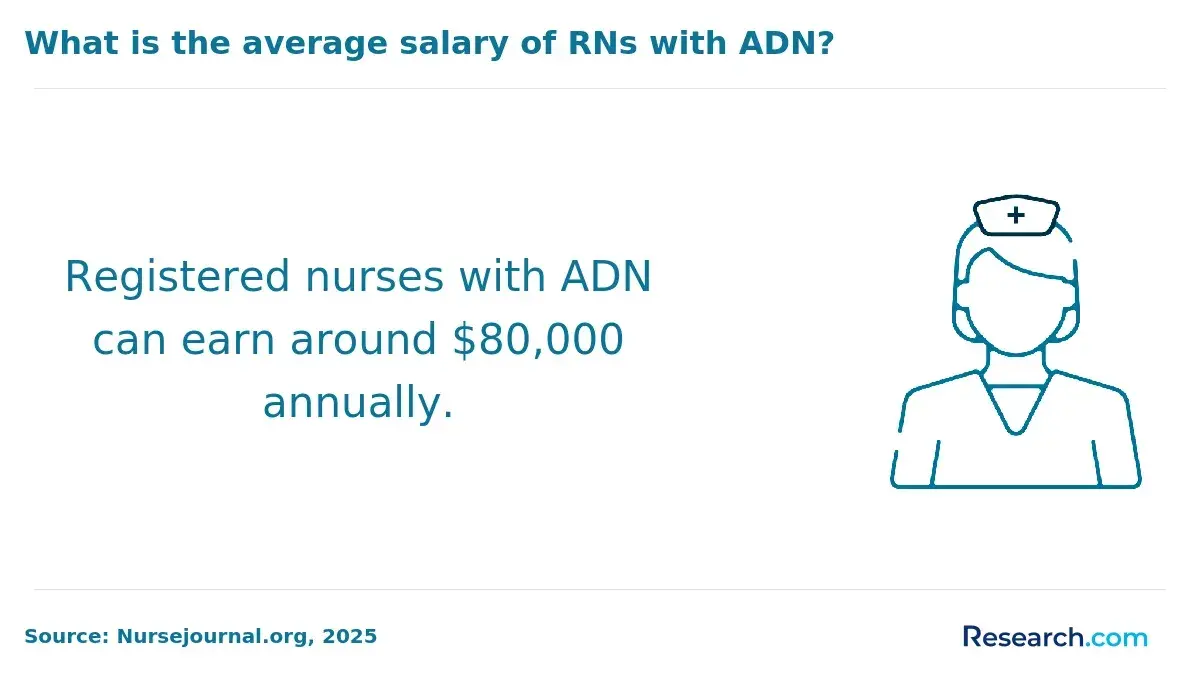
Embarking on the journey to become an ADN nurse in Tennessee opens doors to a rewarding career with an average median pay of approximately $79,750 per year, or about $38.34 per hour. Salaries for ADN-prepared registered nurses in Tennessee can vary widely depending on experience, geographic location, healthcare setting, and employer. Understanding these variables can help you navigate your career path confidently. Let's explore the key factors that shape the earning potential for ADN nurses in Tennessee:
- Level of Experience: Entry-level nurses typically start with salaries near $59,400 annually, while seasoned professionals can earn up to $94,400, reflecting the value of expertise and advanced skills.
- Workplace Setting: Hospital positions often offer higher pay than outpatient clinics or residential facilities, with major centers providing the most competitive wages.
- Geographic Location: Urban areas like Nashville and Memphis tend to pay more compared to rural regions, balancing opportunity with cost of living.
- Specialization and Certifications: Earning credentials in specialties such as critical care or emergency nursing can increase hourly rates and open doors to premium roles.
- Shift Differentials and Overtime: Working evenings, nights, or weekends often leads to higher pay, with overtime offering additional income boosts.
Here's What Graduates in Tennessee Have to Say About Their ADN Degree
- Completing my ADN at Volunteer State Community College through their fully online program allowed me to balance family responsibilities while gaining a solid education in nursing. Starting my career in a local hospital has been incredibly rewarding as I get to apply the clinical skills I learned directly to patient care. The program not only strengthened my nursing knowledge but also boosted my confidence and helped me grow personally. It's inspiring to contribute to my community's health, especially here in Tennessee, where access to quality care is vital. Pursuing this degree online was challenging yet flexible enough for my hectic schedule, making it a lifetime opportunity. Darnell
- Attending the hybrid ADN program at Chattanooga State Community College was a transformative experience. The combination of on-campus practical labs and online coursework gave me both the hands-on skills and theoretical foundation I needed in nursing. After graduation, I began working in home health facilities, where I cherish the close relationships I build with patients. Reflecting on my journey, the challenges of commuting and managing clinical hours were worth it because this role lets me make a real difference in people's everyday lives. This program provided a strong base for my career advancement and encouraged me to continuously seek professional growth. Yasmin
- My time at Nashville State Community College's on-campus ADN program was filled with meaningful interactions and rigorous training that fueled my passion for nursing in educational settings. Working in the academic industry after graduation, I have the chance to influence the well-being of young people and mentor future healthcare professionals. Although balancing coursework and practical sessions took dedication, the community support and faculty encouragement made it manageable. Being part of Tennessee's nursing workforce gives me purpose and pushes me to excel professionally, knowing that my efforts shape lives beyond clinical care. The program truly empowered me to be a leader and advocate in healthcare. Keisha
Related Articles for Nearby States
- 2027 Best ADN Nursing Programs in Kentucky: Online & Campus
- 2027 Best ADN Nursing Programs in Mississippi: Online & Campus
- 2027 Best ADN Nursing Programs in Alabama: Online & Campus
- 2027 Best ADN Nursing Programs in Georgia: Online & Campus
- 2027 Best ADN Nursing Programs in North Carolina: Online & Campus
- 2027 Best ADN Nursing Programs in Missouri: Online & Campus
- 2027 Best ADN Nursing Programs in Arkansas: Online & Campus
- 2027 Best ADN Nursing Programs in Virginia: Online & Campus
- 2027 Best ADN Nursing Programs in Indiana: Online & Campus
- 2027 Best ADN Nursing Programs in South Carolina: Online & Campus
References:
- A List Of More Than 50 Nursing Scholarships & Grants | NurseJournal.org https://nursejournal.org/resources/financial-aid/nursing-scholarships/
- How Much You Can Make With an Associate Degree in Nursing https://www.allnursingschools.com/adn/salary/
- RN to BSN https://www.memphis.edu/nursing/program-admit/rn-bsn/rn-bsn.php
- Associate of Science in Nursing (ASN) - Online https://www.herzing.edu/nursing/asn-associate-nursing/online
- Was it worth continuing education for nurses to get their BSN vs the ADN/ASN? https://www.incrediblehealth.com/nurse-advice/questions/608b6494/was-it-worth-continuing-education-for-nurses-to
- Tennessee Financial Aid - College for TN https://www.collegefortn.org/tennessee-financial-aid/
- Nursing https://www.nscc.edu/academics/programs/nursing/index.php
- BSN Admission Requirements https://www.uthsc.edu/nursing/bsn-admission-requirements.php
- Whitson-Hester School of Nursing - RN-to-BSN Program https://www.tntech.edu/nursing/rn-to-bsn.php
- Nursing https://www.fortis.edu/campuses/tennessee/nashville/associate-degree-in-nursing.html
Other Things You Should Know About Pursuing ADN Nursing Programs in Tennessee
In 2027, the top requirements for ADN programs in Tennessee generally include a high school diploma or GED, completion of prerequisite courses like anatomy and physiology, a minimum GPA (often around 2.5-3.0), and passing the TEAS (Test of Essential Academic Skills). Specific requirements may vary by institution, so it's essential to consult individual schools for their criteria.
In 2027, ADN programs in Tennessee effectively combine online and campus-based learning by offering hybrid models. This approach lets students take didactic coursework online, providing flexibility, while fulfilling clinical requirements in-person at healthcare facilities, ensuring hands-on experience.
Clinical experience in Tennessee's ADN programs for 2027 often includes rotations in hospitals or clinics, requiring in-person attendance. Programs typically mandate around 400–600 clinical hours, aligning with Tennessee Board of Nursing standards, to ensure students gain hands-on experience in patient care settings.


