
2027 Best ADN Nursing Programs in Wisconsin: Online & Campus

Co-Founder and Chief Data Scientist
Wisconsin's healthcare industry continues to grow, with about 137,000 registered nurses employed statewide in 2023. Pursuing an associate degree in nursing (ADN) in Wisconsin, whether online or on-campus, offers a practical, cost-effective path to enter this expanding field. ADN programs provide essential clinical skills and theoretical knowledge needed to pass the NCLEX-RN exam and begin a nursing career. The flexibility of online options also accommodates working adults and those balancing other commitments, making nursing accessible to a broader population.
This article explores what an ADN program in Wisconsin entails. Prepared by experts in career planning, it guides readers through program structures, admission requirements, and essential considerations. Learn what to expect, what factors to evaluate, and how to make informed decisions when selecting ADN options to launch a successful nursing career in Wisconsin.
Key Benefits of ADN Programs in Wisconsin
- Wisconsin offers flexible ADN options with over 15 accredited programs available online and on-campus, catering to both working adults and recent high school graduates.
- The state's ADN programs maintain a high NCLEX-RN pass rate averaging 85%, ensuring graduates are well-prepared for licensure and entry-level nursing roles.
- Tuition for in-state ADN students typically ranges between $4,000 and $9,000 annually, making nursing education in Wisconsin affordable compared to national averages.
- What is an Associate Degree in Nursing (ADN) in Wisconsin?
- What are the admission requirements for ADN programs in Wisconsin?
- How do ADN programs in Wisconsin prepare students for the NCLEX-RN?
- How long are ADN nursing programs in Wisconsin?
- How do online ADN programs in Wisconsin compare to traditional ones?
- How do I know if an ADN program in Wisconsin is accredited?
- How much does an ADN program cost in Wisconsin?
- What financial aid options are available for ADN students in Wisconsin?
- What can I do with an ADN in Wisconsin after graduation?
- How much do ADN nurses earn in Wisconsin?
What is an Associate Degree in Nursing (ADN) in Wisconsin?
An Associate Degree in Nursing (ADN) is a foundational pathway into the nursing profession designed to prepare students for registered nurse (RN) licensure through academic coursework and supervised clinical training. ADN nursing curriculum Wisconsin programs combine classroom instruction with hands-on experience in healthcare settings to equip students with essential nursing skills like anatomy, pharmacology, and patient care. These programs ensure graduates meet the knowledge and practice requirements needed for the NCLEX-RN licensing exam.
Wisconsin offers several types of ADN programs based on learning modality to accommodate different student needs and schedules:
- On-Campus Programs: These traditional programs require in-person attendance for lectures, labs, and clinical rotations, offering direct faculty access and structured learning. They are best suited for students who prefer face-to-face interaction and a campus-based environment.
- Hybrid Programs: Combining online coursework with on-campus clinical training, hybrid formats provide flexibility for working students. Core theory is often completed online, while hands-on skills labs and clinical experiences occur at local healthcare facilities.
- Online Programs: Fully online ADN programs are limited due to state clinical requirements; however, some offer majority online didactic content with mandatory in-person skills and clinical rotations. This model maximizes flexibility while meeting licensure standards.
Students interested in advancing beyond ADN may explore career options like family nurse practitioner roles; for insight, visit how much does a family nurse practitioner make.
What are the admission requirements for ADN programs in Wisconsin?
ADN programs in Wisconsin use selective admission processes to ensure applicants meet the academic and professional standards necessary for the demands of nursing education. These requirements help schools identify candidates who are prepared for both the rigorous coursework and hands-on clinical experiences. Key admission criteria typically include the following:
- High School Diploma or GED: Applicants must submit official proof of high school graduation or an equivalent credential like a GED or HSED. This foundational step confirms that candidates have attained the basic education needed for nursing studies.
- Prerequisite Courses: Completion of certain courses such as chemistry or biology is commonly required, often needing a minimum grade of 'C' or better. These prerequisites ensure students have essential scientific knowledge and some familiarity with healthcare principles.
- Minimum GPA Standards: Most programs set a minimum cumulative GPA, often between 2.0 and 2.5 on a 4.0 scale, as a baseline for admission. Meeting this benchmark demonstrates consistent academic performance and readiness for challenging nursing work.
- Standardized Entrance Exams: Many ADN programs require a qualifying score on tests like the ATI TEAS, ACT, or Accuplacer. These exams assess skills in math, science, reading, and English to make sure students can manage the intellectual demands of nursing training.
- Submission of Transcripts: Official transcripts from all prior high schools or colleges must be provided. This allows schools to verify completion of prerequisite courses and GPA requirements.
- Background Checks and Health Requirements: Applicants typically undergo criminal background checks and must provide proof of immunizations and physical exams. These measures help maintain safety in clinical settings.
- CPR Certification: Proof of current Basic Life Support (BLS) or Healthcare Provider CPR certification is often mandatory. This certification confirms applicants' ability to respond in emergency situations during clinical rotations.
- Letters of Recommendation and Personal Statements (if required): Some programs ask for recommendations and personal statements to better assess applicants' character, motivation, and commitment to nursing.
- Mandatory Orientation: Accepted students are usually required to attend orientation sessions to learn program expectations and clinical procedures.
- Residency Requirements: Due to high demand, certain programs prioritize admission for district or state residents to support local workforce needs.
For those exploring careers as nurses, understanding these ADN program admission requirements in Wisconsin is a crucial step. Successfully navigating these prerequisites sets a strong foundation for a career, including pathways to becoming a psych nurse practitioner.
How do ADN programs in Wisconsin prepare students for the NCLEX-RN?
ADN programs in Wisconsin are specifically designed to equip students with the knowledge, clinical skills, and critical thinking abilities needed to pass the NCLEX-RN and become licensed registered nurses. Below are the key ways these programs build students' readiness and confidence for the exam:
- Comprehensive Nursing Coursework: Core classes cover essential subjects such as medical-surgical nursing, pharmacology, and mental health. This foundation ensures students understand the theoretical concepts that underpin safe and effective nursing practice.
- Simulation Labs and Clinical Rotations: Hands-on experience through simulation labs allows students to practice realistic patient scenarios. Clinical placements in varied healthcare settings further develop practical skills and build confidence needed for the NCLEX-RN and real-world nursing.
- NCLEX-Style Test Preparation and Review: Regular practice with NCLEX-format questions and mock exams familiarizes students with the computerized adaptive testing style. Dedicated review sessions reinforce content mastery and exam strategies to improve pass rates.
- Evidence-Based Learning Strategies: Programs emphasize critical thinking and clinical reasoning, training students to apply evidence-based practices. This approach reflects the decision-making skills required on the NCLEX-RN and in professional nursing.
- Faculty Mentorship and Academic Support: Experienced faculty provide ongoing mentorship, feedback, and tailored academic assistance. Personalized study plans and tutoring help address individual learning needs and boost exam preparation.
A nurse from Wisconsin who graduated from a local ADN program shared that initially, the volume of material felt overwhelming, but the step-by-step guidance from faculty and the repeated NCLEX-style practice questions made a significant difference. "I remember the simulation labs especially-they made me feel like I was already treating patients, not just reading about it," he reflected. Clinical rotations were challenging but also reassuring, as they translated theory into real situations. The constant feedback and review sessions helped track progress and reduce exam anxiety. This layered preparation created a steady build-up of confidence that ultimately eased the stress of sitting for the NCLEX-RN and contributed to his success.
How long are ADN nursing programs in Wisconsin?
Most Associate Degree in Nursing (ADN) programs in Wisconsin take about two years to complete when attending full-time. This timeline typically includes 65-70 credits of coursework paired with clinical experiences. However, the exact duration depends on whether you enroll full-time or part-time, as part-time options can extend your study to three or more years. Some schools offer accelerated tracks to help qualified students finish sooner, while others provide extended or evening programs to accommodate working adults or those with family commitments.
Several factors influence how long it takes to earn an ADN. Having prerequisite courses already completed can shorten your path, since those classes often need to be finished before starting the core nursing curriculum. Clinical training hours are mandatory and must meet state and accreditation standards, which sets a clear minimum time for hands-on practice. Additionally, scheduling flexibility varies-some schools use shorter course blocks or summer sessions to help students move faster or adjust study to their personal schedules. Together, these elements ensure you gain both the academic knowledge and practical skills needed to succeed on the NCLEX-RN and enter the nursing workforce well-prepared.
How do online ADN programs in Wisconsin compare to traditional ones?
Both online, hybrid, and traditional ADN programs in Wisconsin aim to prepare students for RN licensure but differ notably in flexibility, learning format, and course delivery. Here's a clear comparison of key factors to consider when choosing between these options:
- Learning Format: Online and hybrid programs deliver most coursework virtually, ideal for independent learners who need flexibility. Traditional programs require in-person attendance, benefiting those who prefer structured, face-to-face learning environments.
- Clinical Training: All formats mandate in-person clinicals at approved facilities. Hybrid students arrange local placements, while traditional students follow campus-based clinical schedules.
- Scheduling Flexibility: Online and hybrid options offer adaptable schedules to fit work or family commitments. Traditional programs have fixed class times that suit students who can commit to daytime attendance.
- Student Interaction: Traditional programs foster daily in-person interaction and immediate feedback, while online and hybrid rely on virtual communication, which can feel less personal for some.
- Accessibility: Online and hybrid programs broaden access for students in remote areas, removing geographic barriers that limit on-campus enrollment.
When I spoke with a nurse who graduated from a local hybrid ADN program, she reflected on balancing work, study, and family. "Managing online lectures around my job was a game-changer," she explained, "but I still valued the hands-on labs and in-person clinicals that gave me confidence." She admitted initial doubts about virtual learning but found the flexibility essential. "It wasn't easy switching between screens and clinical sites, but that mix prepared me better than I expected." Her journey illustrates how hybrid programs can offer a practical blend, meeting diverse needs without sacrificing essential in-person experience.
How do I know if an ADN program in Wisconsin is accredited?
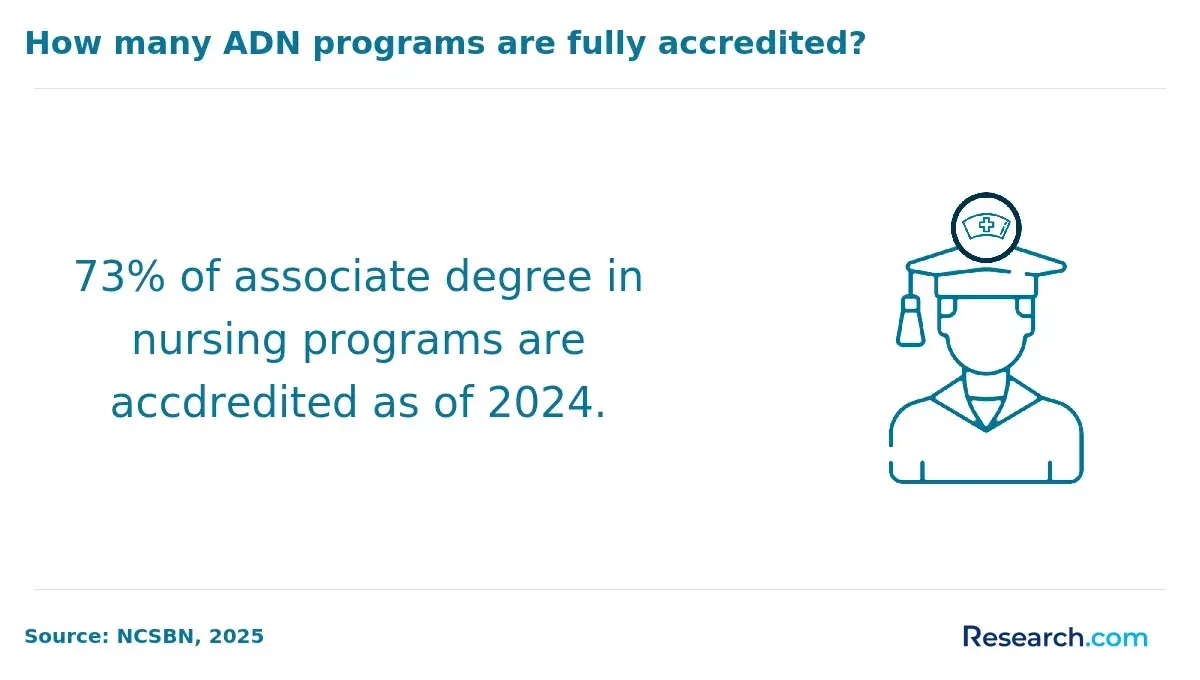
Accreditation is essential for ADN programs in Wisconsin because it guarantees the program meets the educational standards needed for RN licensure and ensures quality patient care. To confirm an ADN program's accreditation status, consider these practical verification steps:
- Check Wisconsin Board of Nursing Approval: Verify that the program is officially approved by the Wisconsin Board of Nursing, which enforces state educational standards. This ensures the program is recognized for preparing students to qualify for RN licensure in Wisconsin.
- Consult National Accreditation Databases: Look for accreditation from national agencies such as the Accreditation Commission for Education in Nursing (ACEN) or the Commission on Collegiate Nursing Education (CCNE). State law requires programs to obtain national accreditation within three years, so this confirms both legitimacy and eligibility for federal aid.
- Visit the School's Official Website: Accredited ADN programs usually display their current accreditation status and accrediting agency on their websites. If details are missing, contact admissions to request official documentation.
- Verify Regional Accreditation: Confirm the college or university has regional accreditation from agencies like the Higher Learning Commission, which supports credit transfer and degree recognition beyond nursing-specific accreditation.
- Use Resources from Wisconsin Nursing Organizations: Check directories maintained by the Wisconsin Center for Nursing or local professional associations. These lists provide trusted, up-to-date information on accredited ADN programs, including both online and on-campus options.
How much does an ADN program cost in Wisconsin?
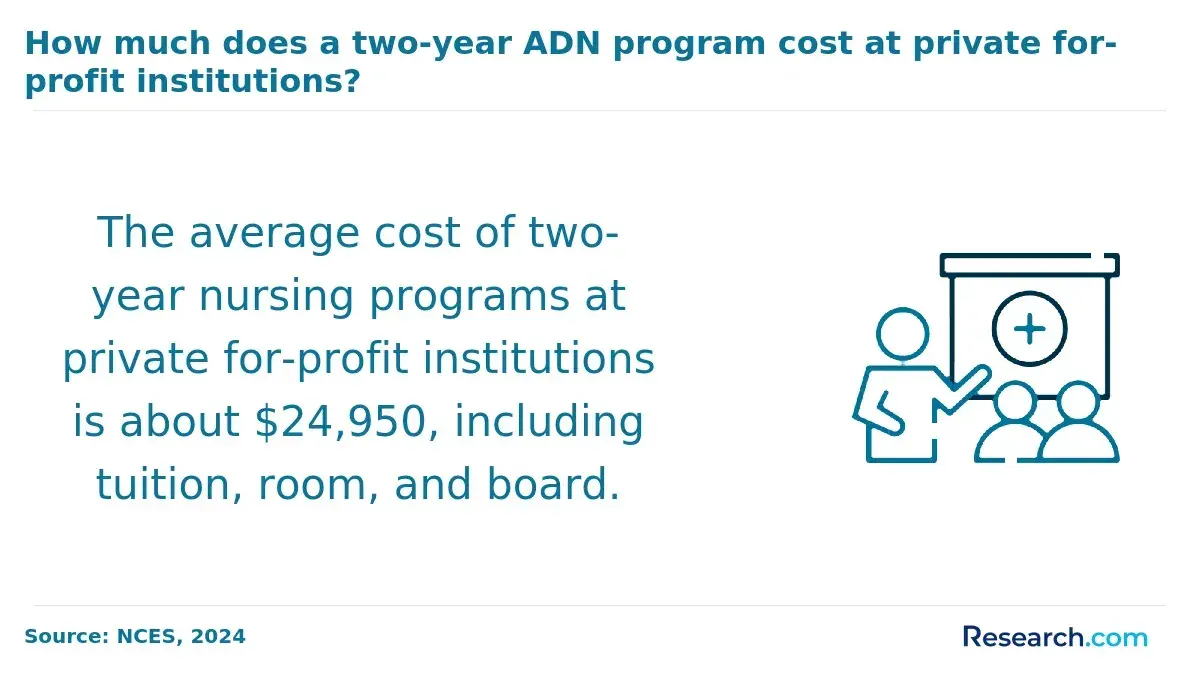
The cost of an Associate Degree in Nursing (ADN) program in Wisconsin varies based on the type of school-community college, public university, or private institution-the length of the program, and whether a student qualifies for in-state or out-of-state tuition. Here are the key factors that impact the overall expense of earning an ADN degree in the state.
- Tuition and Fees: This is the largest portion of the cost. In-state tuition at Wisconsin technical colleges typically ranges between $10,800 and $13,300 for the full two-year program, while private colleges may charge per credit hour plus additional fees. It's important to confirm what mandatory fees or technology charges might be added on top of base tuition.
- Books and Supplies: Costs for textbooks, study guides, and lab materials usually fall between $1,400 and $1,500. These expenses vary depending on whether materials are bought new, used, or rented, so budgeting ahead can help prevent surprises during the program.
- Uniforms and Equipment: Nursing students need to purchase specific uniforms, shoes, and medical tools such as stethoscopes. These items are often required early on and may cost several hundred dollars-an important but sometimes overlooked part of the overall budget.
- Clinical Expenses: Traveling to clinical sites can add transportation and parking costs. Additionally, schools may require background checks, immunizations, and liability insurance before clinical participation, so plan for these extra fees as part of your clinical requirements.
- Living and Transportation Costs: Beyond tuition, housing, food, and commuting add significantly to expenses. For example, living costs can exceed $10,000 per academic year for students relocating away from home, with transportation expenses adding further to the budget. Those considering online or hybrid formats should weigh these in their financial plan.
When researching options, keep in mind that many ADN programs qualify for financial aid, which can offset some costs. Also, students interested in advancing their career might explore specialized options such as 1 year nurse practitioner programs after completing their ADN. By carefully comparing total expenses, including all these factors, students can make informed decisions about the average cost of nursing associate degree Wisconsin programs and find the best fit for their financial situation.
What financial aid options are available for ADN students in Wisconsin?
Financial aid can help make ADN programs in Wisconsin more affordable by covering some or all educational expenses such as tuition, fees, and supplies. Below are the main financial aid options available to support Wisconsin ADN students.
- Federal Student Aid: Wisconsin ADN students attending accredited schools can apply for federal grants, loans, and work-study programs by submitting the FAFSA. Eligibility depends on financial need, and these programs are available for various formats including online, hybrid, and in-person programs.
- State-Funded Programs: The Wisconsin Nursing Student Loan Program eligibility and other state aid options like the Wisconsin Grant help residents enrolled in qualified programs. Loan forgiveness programs are also available for those who agree to work as nurse educators in Wisconsin after graduation, with applications handled by the Wisconsin Higher Education Aids Board.
- Institutional Scholarships: Many colleges, including UW-Madison and technical colleges, offer scholarships based on academic merit, leadership, and financial need. Students should check their school's financial aid office or scholarship portal for application details to maximize support.
- Private Nursing Scholarships: Numerous private organizations and nursing associations provide scholarships targeting students preparing for the NCLEX-RN or serving high-need areas. These vary in amount and requirements, so researching local and national opportunities is key.
- Employer Assistance: Healthcare employers often offer tuition help, loan repayment, or scholarships for employees pursuing ADN degrees. If already employed in healthcare, inquire with your employer's human resources about available education benefits, which can ease program costs.
Additionally, students interested in advanced nursing credentials may explore fnp post master's certificate programs online as a practical next step in their nursing careers.
What can I do with an ADN in Wisconsin after graduation?
ADN graduates in Wisconsin are eligible to sit for the NCLEX-RN exam, opening the door to various entry-level nursing jobs in Wisconsin across multiple healthcare environments. Here are key RN career opportunities Wisconsin ADN holders commonly pursue:
- Hospital Registered Nurse (RN): Hospitals represent the largest employers for ADN-prepared nurses, offering roles in medical-surgical units, emergency rooms, and specialty areas like dialysis. These positions involve direct patient care and teamwork coordination, with clear pathways to advance into leadership or specialized clinical roles.
- Long-Term Care and Rehabilitation Nurse: Working in skilled nursing or rehab centers, nurses provide ongoing care for elderly or chronically ill patients. This role emphasizes medication administration and patient monitoring, often leading to supervisory or case management opportunities over time.
- Outpatient Clinic Nurse: Nurses in clinics support patient assessments, vaccinations, and chronic care management while building continuous patient relationships. Advancement may include specialty clinics or clinic leadership roles.
- Home Health Nurse: Delivering care at patients' homes, these nurses manage post-surgical recovery and chronic diseases autonomously. The role offers flexibility and options to specialize in areas like pediatrics or palliative care.
- School Nurse: Providing health services and emergency response in schools, these nurses often become advocates for student health and can advance to district health coordination.
- Specialized Nursing Roles: ADN-trained RNs may also find positions in settings such as dialysis centers, correctional facilities, or mental health clinics, gaining niche expertise and opening doors to roles like nurse educator or quality assurance nurse.
- Further Education and Advancement: Many ADN graduates pursue BSN completion programs, enhancing career prospects in leadership and advanced clinical roles. Flexible options, including online pathways, complement busy schedules, making continued education accessible. For those exploring specialized mental health nursing options, consider the cheapest online PMHNP programs.
How much do ADN nurses earn in Wisconsin?
The average median pay for ADN nurses in Wisconsin is approximately $119,835 per year, though salaries can vary widely depending on factors such as experience, location, healthcare setting, and employer type. Understanding these influences can help prospective nurses realistically assess their earning potential in the state. Below are the main factors impacting ADN nurse salaries in Wisconsin:
- Level of Experience: Entry-level ADN nurses usually start around $98,900 annually, while seasoned nurses with advanced skills can earn $139,300 or more. Continuous professional development often leads to wage growth.
- Workplace Setting: Nurses in hospitals tend to earn higher wages compared to those in nursing homes or outpatient clinics, reflecting the complexity and demands of the roles.
- Geographic Location: Urban areas like Milwaukee and Madison generally offer higher salaries, whereas rural regions may offer lower pay but sometimes include retention bonuses.
- Specialization and Advanced Roles: Pursuing specialties such as critical care or emergency nursing can increase earning potential significantly.
- Shift Differentials and Overtime: Evening, night, or weekend shifts often come with additional pay, and overtime opportunities can boost annual income by thousands of dollars.
Here's What Graduates in Wisconsin Have to Say About Their ADN Degree
- Choosing the hybrid ADN program at Madison Area Technical College gave me the flexibility I needed while balancing family and work. The blend of online theory with on-campus labs was challenging but incredibly rewarding, preparing me well for my current job in a local hospital. Wisconsin's healthcare environment is welcoming, and having a degree from a respected state institution really opened doors for me. I feel proud knowing my skills directly contribute to patient care and community health. Kwame
- Completing my ADN at Milwaukee Area Technical College entirely online allowed me to study on my own schedule while working part-time in a home health facility. The program was rigorous and thorough, which boosted my confidence as I transitioned into my nursing career. Reflecting on my journey, I feel empowered by the professional growth opportunities available in Wisconsin's nursing field, especially for those of us pursuing advanced certifications later. Linh
- Attending an on-campus ADN program at Western Technical College immersed me in an engaging academic atmosphere where I developed lifelong friendships and strengthened my passion for community service. Starting work in local academic healthcare organizations has allowed me to impact young patients positively. The challenges of hands-on clinical practice in this program enhanced my resilience and professionalism, laying a strong foundation for career advancement in Wisconsin's evolving healthcare sector. Carlos
Related Articles for Nearby States
- 2027 Best ADN Nursing Programs in Minnesota: Online & Campus
- 2027 Best ADN Nursing Programs in Iowa: Online & Campus
- 2027 Best ADN Nursing Programs in Illinois: Online & Campus
- 2027 Best ADN Nursing Programs in Michigan: Online & Campus
- 2027 Best ADN Nursing Programs in Indiana: Online & Campus
- 2027 Best ADN Nursing Programs in Missouri: Online & Campus
- 2027 Best ADN Nursing Programs in Ohio: Online & Campus
- 2027 Best ADN Nursing Programs in South Dakota: Online & Campus
- 2027 Best ADN Nursing Programs in Nebraska: Online & Campus
- 2027 Best ADN Nursing Programs in Kentucky: Online & Campus
References:
- 2025 Best RN to BSN Programs in Wisconsin Online - Fast & Affordable Options https://www.registerednursing.org/rn-to-bsn/wisconsin/
- Do Online Nursing Degrees Hold the Same Weight as Traditional Degrees? https://www.herzing.edu/blog/do-online-nursing-degrees-hold-same-weight-traditional-degrees
- RN to BSN to MSN - School of Nursing and Health Professions https://www.uwosh.edu/nhp/graduate/masters/rn-bsn-msn/
- Associate Degree in Nursing (ADN) | Carroll University https://www.carrollu.edu/academics/health-sciences/adn-nursing
- Compare BSN Online Nursing Programs | BSN@Home https://bsnathome.com/choose-a-campus/
- Wisconsin Nursing Schools And Programs | NurseJournal.org https://nursejournal.org/state/wisconsin/
- Nursing - Associate Degree Career Outlook | Northwood Technical College https://www.northwoodtech.edu/academic-programs/degree-programs-and-certificates/nursing-associate-degree/career-outlook
- Average Registered Nurse Salary in Wisconsin https://www.incrediblehealth.com/salaries/rn/wi
- Types of Aid https://flex.wisconsin.edu/tuition-financial-aid/financial-aid/types-of-aid/
- 2024 Rankings: The Best Associate’s Degree in Nursing (ADN) Programs in Wisconsin | NursingSchoolsAlmanac.com https://www.nursingschoolsalmanac.com/rankings/adn/wisconsin
Other Things You Should Know About ADN Nursing Programs in Wisconsin
In 2027, top ADN programs in Wisconsin include Madison College and Gateway Technical College. Both schools offer a blend of online and on-campus courses to provide flexibility while ensuring comprehensive clinical training. These programs are accredited, preparing students for the NCLEX-RN and successful nursing careers.
ADN nursing students in Wisconsin in 2027 can explore financial aid options such as federal Pell Grants, state-funded scholarships, and school-specific grants. Additionally, some colleges offer work-study programs to help offset educational expenses for eligible students pursuing nursing degrees.
ADN graduates in Wisconsin can advance their careers by pursuing RN-to-BSN programs, many of which offer flexible online options. Clinical experience can also lead to roles in specialties such as pediatrics or oncology, and ADN credentials fulfill requirements for continuing education to maintain licensure.


