
2027 How to Get Into Cloud Computing

Co-Founder and Chief Data Scientist
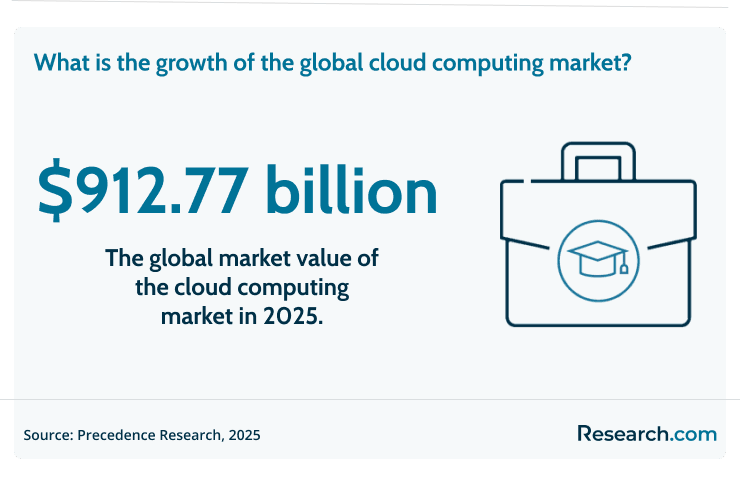
Cloud computing has become one of the fastest-growing fields in technology, with the global market reaching $912.77 billion in 2025, up from $156.4 billion in 2020. This explosive growth has created a huge demand for skilled professionals who can design, secure, and manage cloud systems across industries.
If you’re looking to start a career in this space, understanding where to begin can feel overwhelming with so many platforms, certifications, and career paths to choose from. This guide will walk you step by step through the essentials, covering skills, certifications, career options, and practical learning strategies, so you can confidently take your first steps into cloud computing.
Key things you should know about getting into cloud computing
- Cloud computing is one of the fastest-growing fields, with organizations across all industries seeking skilled professionals.
- The average salary for cloud engineers in the U.S. is around $133,468 per year, making it a lucrative career choice.
- Beginners can start with foundational certifications, hands-on labs, and free-tier cloud accounts to build real-world skills.
- How can specialized advanced degrees enhance your cloud computing career? How can specialized advanced degrees enhance your cloud computing career?
- What is the average salary for cloud computing roles? Average Salary
- Can cloud computing optimize healthcare operations? Can cloud computing optimize healthcare operations?
What is cloud computing, and how does it work?
Cloud computing is the delivery of computing services, such as servers, storage, databases, networking, software, and analytics, over the internet (“the cloud”) instead of relying on local hardware. Instead of owning and maintaining physical infrastructure, organizations can rent resources from cloud providers like AWS, Microsoft Azure, or Google Cloud, paying only for what they use.
IT professionals looking to enter this field quickly can enroll in the shortest CompTIA Network online training can provide the foundational networking knowledge needed to better understand and manage cloud environments.
It works by hosting these resources in massive data centers around the world, which are managed and maintained by cloud providers. Users access the services through web interfaces, APIs, or command-line tools, allowing them to deploy applications, store data, or run workloads on demand.
What are the main types of cloud services (IaaS, PaaS, SaaS)?
When learning about cloud computing, it’s important to understand the three main service models—Infrastructure as a Service (IaaS), Platform as a Service (PaaS), and Software as a Service (SaaS)—since each serves different needs for businesses and individuals.
Here’s what you need to know:
- Infrastructure as a Service (IaaS): IaaS provides virtualized computing resources such as servers, storage, and networking over the internet. It allows businesses to scale infrastructure quickly without the need to purchase and manage physical hardware.
- Platform as a Service (PaaS): PaaS offers a complete development environment with tools, libraries, and frameworks for building and deploying applications. Developers can focus on coding and innovation while the platform manages infrastructure, operating systems, and updates.
- Software as a Service (SaaS): SaaS delivers ready-to-use applications through the cloud, accessible via web browsers or apps. It removes the need for installation or maintenance, making it easy for users to access tools like email, collaboration software, or CRM systems.
The global cloud computing market has experienced explosive growth, reflecting its critical role in modern business and technology. In 2020, the market was valued at $156.4 billion, but by 2025 it surged to $912.77 billion, underscoring how quickly organizations worldwide are adopting cloud solutions.
This rapid expansion highlights not only the demand for scalable, cost-efficient infrastructure but also the increasing reliance on cloud-based platforms for innovation, security, and digital transformation.
For professionals considering careers where security and infrastructure management overlap, pursuing a fast-track online bachelor’s in homeland security degree can complement cloud knowledge by focusing on risk assessment, cyber defense, and emergency management in both digital and physical environments.
Why is cloud computing important for businesses and career growth?
Cloud computing plays a critical role in today’s digital economy, offering businesses powerful advantages while also creating rewarding career opportunities for professionals. By understanding its importance, you can see why organizations are rapidly adopting it and why cloud skills are in such high demand.
- Scalability for businesses: Companies can scale resources up or down instantly to meet changing demand. This ensures they stay agile without overinvesting in physical infrastructure.
- Cost efficiency: Cloud services reduce the need for large upfront hardware investments. Businesses instead pay only for the resources they actually use.
- Innovation and speed: Organizations gain access to cutting-edge tools like AI, analytics, and automation. This helps them innovate faster and maintain a competitive edge.
- Future-proof skills: Professionals who learn cloud computing build expertise that aligns with long-term technology trends. This makes them more adaptable and resilient in a fast-changing job market.
- Global collaboration: Cloud enables teams across different locations and time zones to access the same data and applications seamlessly. This fosters productivity and supports remote or hybrid work models.
- Built-in security and compliance: Leading providers offer advanced security tools and compliance frameworks. This gives businesses peace of mind while meeting industry regulations.
Cloud computing is essential for businesses because it drives efficiency, scalability, and innovation while creating strong career opportunities for professionals.
Just as an accelerated online AutoCAD course with certificate allows individuals to quickly gain specialized skills and enter the job market, learning cloud computing equips professionals with in-demand expertise that opens doors to high-paying roles and career advancement.
What are the essential technical skills for a cloud computing beginner?
Cloud computing beginners need to build a strong technical foundation to understand how cloud environments work and to start applying their skills in real-world projects. These core skills make it easier to grasp advanced concepts later and position learners for entry-level roles.
Basic networking knowledge
Beginners should understand IP addresses, DNS, load balancing, and firewalls because these concepts form the backbone of how cloud resources communicate. Without networking fundamentals, it’s difficult to design secure and efficient cloud systems.
Linux fundamentals
Many cloud environments are built on Linux-based systems, so learning basic commands, file management, and permissions is critical. This knowledge allows beginners to navigate, configure, and troubleshoot servers effectively.
Virtualization concepts
Cloud computing relies heavily on virtualization, which is the ability to run multiple virtual machines on shared hardware. Understanding how virtualization works helps beginners grasp how resources are allocated, scaled, and optimized in the cloud.
Scripting skills
Knowing scripting languages like Python, Bash, or PowerShell allows beginners to automate repetitive tasks. Automation improves efficiency and reduces the risk of human error when managing cloud environments.
Cloud service basics
Beginners should gain familiarity with fundamental cloud services such as compute, storage, and databases. Free-tier accounts on AWS, Azure, or Google Cloud provide hands-on practice that reinforces these concepts.
Version control systems
Beginners should learn tools like Git, which are widely used in cloud and DevOps workflows. Version control enables collaboration, tracks code changes, and helps maintain reliable software development practices.
For those looking to advance in cloud security, accelerated CISSP certification training online provides a fast, structured way to gain essential security expertise.
What are the most in-demand roles in cloud computing?
Cloud computing has opened up a wide range of career paths, and as organizations continue to migrate to the cloud, certain roles are in especially high demand. These positions not only offer strong job security but also competitive salaries, making them attractive options for professionals at different career stages.
Here are some of the top cloud computing roles today:
- Cloud Engineer: Cloud engineers design, implement, and manage cloud-based infrastructure and services for organizations. They focus on deploying applications, automating processes, and ensuring systems are secure and scalable.
- Cloud Architect: Cloud architects create the overall strategy and structure for cloud environments, aligning solutions with business needs. They oversee system design, integration, and governance to ensure performance and cost-effectiveness.
- Cloud Security Engineer: Cloud security engineers specialize in protecting data, applications, and infrastructure within the cloud. They implement security policies, manage access controls, and monitor for vulnerabilities or threats.
- DevOps Engineer: DevOps engineers bridge development and operations by automating deployments, managing CI/CD pipelines, and maintaining infrastructure reliability. They are key to enabling agile development and faster delivery cycles in cloud environments.
- Cloud Data Engineer: Cloud data engineers build and maintain systems for collecting, storing, and processing large datasets in the cloud. They ensure data pipelines are efficient, scalable, and optimized for analytics and machine learning.
Pursuing a career in cloud computing offers professionals the chance to work at the forefront of digital transformation while benefiting from high salaries and steady demand. Whether you’re interested in engineering, architecture, security, or data, these roles provide clear opportunities for growth and specialization in a rapidly expanding industry.
For those exploring alternative options, these positions are also examples of highest paying careers non medical, showing that lucrative opportunities exist outside traditional healthcare fields and across a variety of technology-driven industries.
The chart below highlights how these in-demand positions compare in terms of average salaries, giving a clearer picture of the value they bring to the technology landscape.
How can I transition from IT support to a cloud computing role?
Making the move from IT support to cloud computing is a natural career progression, since many of the skills you already use, like troubleshooting, system administration, and customer support, can be built upon to manage cloud environments.
By gaining hands-on experience and certifications, you can position yourself as a strong candidate for entry-level cloud roles.
- Leverage transferable skills: IT support professionals already understand operating systems, troubleshooting, and user needs. These skills directly apply to cloud environments, especially in areas like system monitoring and problem resolution.
- Learn cloud fundamentals: Start by exploring core services like compute, storage, and networking through free-tier accounts on AWS, Azure, or Google Cloud. This hands-on exposure helps you understand how the cloud compares to traditional infrastructure.
- Pursue entry-level certifications: Earning certifications such as AWS Certified Cloud Practitioner, Microsoft Azure Fundamentals, or Google Cloud Digital Leader builds credibility. For those looking to specialize in cybersecurity within cloud environments, the shortest CompTIA CySA+ certification training provides a fast and effective way to gain essential skills.
- Get hands-on practice: Platforms like AWS Skill Builder, Microsoft Learn, and Qwiklabs provide guided labs. Practicing real-world scenarios makes the transition smoother and prepares you for technical interviews.
- Explore hybrid roles: Positions like cloud support associate or junior cloud engineer are great stepping stones. They allow you to apply your IT support background while gradually moving deeper into cloud technologies.
- Network and showcase skills: Join cloud-focused communities, contribute to open-source projects, or build personal projects in the cloud. Demonstrating your work gives you a competitive edge when applying for cloud roles.
How can specialized advanced degrees enhance your cloud computing career?
Advanced interdisciplinary educational programs can provide a competitive edge by integrating technical cloud expertise with domain-specific knowledge. These programs offer targeted curricula that address emerging industry challenges, from data integrity in regulated environments to innovative problem-solving in specialized sectors. For example, pursuing online masters in health informatics fast track programs can equip professionals with strategic insights and leadership skills necessary for designing secure, healthcare-focused cloud solutions.
What are the core benefits and challenges of adopting cloud computing?
Adopting cloud computing can bring significant advantages to organizations, but it also comes with challenges that businesses must carefully manage. Understanding both sides is essential for making informed decisions about cloud adoption.
- Cost Efficiency: Cloud computing reduces the need for expensive on-premise hardware and lowers maintenance costs. Companies can pay only for the resources they use, making it a flexible and scalable solution.
- Scalability: Businesses can easily scale resources up or down to meet demand. This allows organizations to handle growth or seasonal spikes without major infrastructure investments.
- Innovation Speed: Cloud platforms provide access to advanced tools like AI, analytics, and machine learning. This accelerates product development and helps companies stay competitive in fast-moving markets.
- Security Concerns: While cloud providers offer strong protections, businesses still face risks related to data breaches and misconfigurations. Proper training and governance are needed to ensure secure usage.
- Compliance Challenges: Different industries must meet strict regulatory requirements, such as the General Data Protection Regulation (GDPR) or HIPAA. Ensuring compliance across global cloud environments can be complex and resource-intensive.
Cloud adoption is no longer limited to large corporations; small businesses are also increasingly relying on the cloud to manage operations and scale efficiently. About 44% of traditional small businesses now use cloud infrastructure or hosting services, a sign that even non-tech-focused companies recognize the value of flexibility, cost savings, and access to modern tools.
In comparison, cloud usage is even higher among tech-driven organizations. Around 66% of small tech companies and 74% of enterprises leverage cloud services, underscoring how critical these solutions have become for innovation, scalability, and global reach.
This trend highlights a clear gap in adoption between traditional small businesses and their tech-focused or enterprise counterparts, revealing opportunities for growth and education in the small business sector.
This widespread adoption also creates opportunities for students and professionals to develop complementary skills. For those interested in expanding their expertise, pursuing multiple fields can be advantageous—learning how to double major in college allows students to combine technical knowledge with business or management skills, better positioning them for careers in cloud computing and related industries.
The chart below illustrates these adoption rates side by side, making the differences easy to see at a glance.
What certification should I start with for AWS cloud computing?
If you’re new to Amazon Web Services (AWS) and cloud computing, starting with an entry-level certification is the best way to build a strong foundation. AWS offers several certifications, but some are designed specifically for beginners, making them ideal first steps before moving on to more advanced paths.
- AWS Certified Cloud Practitioner: This is the most recommended starting point for beginners. It covers the basics of Amazon Web Services, global infrastructure, pricing models, and cloud concepts without requiring deep technical knowledge.
- AWS Certified Solutions Architect – Associate: Once you’ve mastered the fundamentals, this certification is often the next step. It validates your ability to design scalable and secure cloud solutions on Amazon Web Services, making it one of the most sought-after credentials.
- Preparation resources: Amazon Web Services offers free training through AWS Skill Builder and learning paths on their official website. Hands-on practice with a free-tier AWS account is also highly recommended to reinforce what you learn.
- Career advantage: Starting with an Amazon Web Services certification shows employers your commitment to cloud computing.
While AWS certifications focus on cloud expertise, professionals in broader project-based industries may also benefit from complementary credentials. For example, earning a construction manager certification can enhance project management skills, demonstrating versatility in managing complex technical projects across both IT and construction sectors.
How do I ensure compliance (e.g., GDPR, HIPAA) in cloud deployments?
Ensuring compliance in cloud deployments is a critical responsibility, especially when working with sensitive data regulated by laws such as GDPR in Europe or HIPAA in the United States.
Businesses must take a proactive approach by combining cloud provider tools, internal policies, and regular monitoring.
- Choose compliant providers: Select cloud vendors that are certified for frameworks like GDPR, HIPAA, ISO 27001, or SOC 2. Verified certifications ensure the provider already meets industry-standard security and privacy requirements.
- Implement strong data governance: Establish policies for how data is collected, stored, and shared in the cloud. Clear governance ensures sensitive information is handled consistently and legally.
- Encrypt data: Always encrypt sensitive data both at rest and in transit using strong encryption protocols. This protects information even if it is intercepted or accessed by unauthorized users.
- Use Identity and Access Management (IAM): Apply the principle of least privilege so users only have access to the resources they need. Strong IAM practices reduce compliance risks related to unauthorized access.
- Maintain audit trails: Enable logging and monitoring to track who accessed what data and when. Detailed records are vital for compliance audits and incident investigations.
- Regular compliance audits: Conduct internal and third-party audits to verify that cloud deployments align with GDPR, HIPAA, and other regulatory frameworks. Continuous evaluation helps identify and address gaps.
For professionals seeking to advance their careers alongside expertise in compliance and cloud management, pursuing an MBA can be beneficial. Those concerned about past academic performance may find MBA programs that accept low GPA particularly appealing, as they offer a pathway to develop business leadership and strategic skills without being constrained by undergraduate grades.
What is the average salary for cloud computing roles?
The average salary for cloud computing roles varies significantly based on the specific job title, years of experience, certifications, and location. The field is known for being one of the highest-paying sectors in the technology industry due to high demand and a specialized skill set.
Here is a breakdown of the average annual salaries for several key cloud computing roles in the United States:
- Cloud Consultant/Cloud Project Manager: $90,000 to $130,000 per year
- DevOps Engineer with Cloud Focus: $105,000 to $140,000 per year
- Cloud Engineer: $120,000 to $145,000 per year
- Cloud Security Engineer: $135,000 to $160,000 per year
- Cloud Solutions Architect: $150,000 to $170,000 per year
As with most tech roles, experience is a primary factor. Entry-level cloud positions might start around $90,000 to $110,000, while a mid-career professional with 5-10 years of experience can command a six-figure salary, and senior-level experts with a decade or more of experience can reach the top of the pay scale.
Holding professional certifications from major cloud providers is one of the most effective ways to boost your salary. Certifications from AWS, Microsoft Azure, and Google Cloud are highly valued. For example, an AWS Certified Solutions Architect or a Google Professional Cloud Architect certification can often lead to a higher salary.
Salaries for cloud roles are also often highest in major technology hubs like the San Francisco Bay Area, Seattle, Boston, and New York, where the cost of living and demand for talent are also higher.
Can cloud computing optimize healthcare operations?
Cloud computing drives significant improvements in healthcare by enabling streamlined data management, real-time collaboration, and scalable infrastructure that supports telemedicine and remote patient monitoring. Integrating cloud solutions in healthcare can enhance the delivery of services, facilitate data sharing between departments, and improve overall system responsiveness—while maintaining high standards for patient data security and operational efficiency. Professionals looking to bridge technical expertise with industry-specific administration can complement their technical skill sets by exploring programs such as health administration degree online.
What future job opportunities are emerging in cloud tech?
Cloud technology continues to evolve rapidly, creating new and specialized job opportunities that didn’t exist just a few years ago. Roles like cloud AI/ML engineer, cloud automation specialist, and multi-cloud strategist are emerging as companies look to leverage advanced tools and optimize hybrid or multi-cloud environments.
Similarly, demand is growing for cloud security specialists who can handle increasingly complex compliance requirements and protect sensitive data in distributed systems. As edge computing, serverless architectures, and industry-specific cloud solutions mature, professionals with expertise in these areas will be highly sought after.
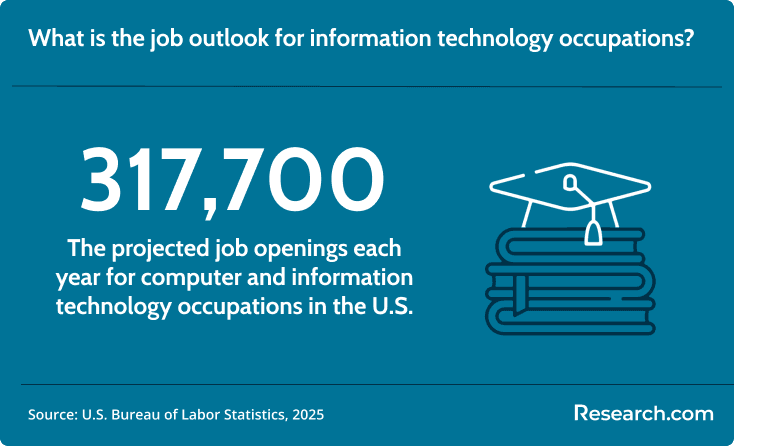
This growth aligns with broader trends in technology employment. According to projections, overall employment in computer and information technology occupations is expected to grow much faster than the average for all occupations from 2024 to 2034, with about 317,700 openings projected each year, on average.
This surge reflects not only the expansion of cloud services but also the integration of cloud with AI, big data, and IoT, creating a wide range of opportunities for professionals who want to be at the cutting edge of innovation.
Here’s what graduates have to say about their cloud computing degrees:
- Ellen: "Transitioning from IT support to cloud engineering completely changed my career trajectory. Within a year of earning my first AWS certification, I landed a role with a 30% salary increase and more opportunities for growth. The sense of achievement and financial stability has been life-changing. "
- Knox: "Working in cloud computing has allowed me to be part of cutting-edge projects, from AI integrations to global-scale infrastructure. I love the constant learning curve, and knowing my skills are always in demand keeps me motivated and confident in my career future."
- Charles: "For me, the biggest benefit of moving into cloud computing was flexibility. Not only do I earn a six-figure salary, but I also have the freedom to work remotely with international teams, which has given me more time with my family and space for personal growth."
Key Findings
- The global cloud computing market grew from $156.4 billion in 2020 to $912.77 billion in 2025, highlighting explosive industry expansion.
- About 44% of traditional small businesses use cloud infrastructure or hosting services compared to 66% of small tech companies and 74% of enterprises.
- Cloud-related careers are highly lucrative, with the average U.S. cloud engineer salary around $133,468 per year.
- Overall employment in computer and IT occupations is projected to grow much faster than average between 2024 and 2034, with 317,700 openings per year on average.
- Cloud adoption continues to rise because it offers scalability, cost savings, and access to advanced technologies like AI and analytics.
References:
- Combs, V. (2021). SMBs are using more cloud services than ever and still struggling with tech expertise. TechRepublic
- Glassdoor. (2025). Salary: Cloud Architect in the United States 2025. Glassdoor
- Indeed. (2025). Cloud engineer salary in the United States. Indeed
- Precedence Research. (2025). Cloud Computing Market Size, Share, and Trends 2025 to 2034. Presedence Research
- U.S. Bureau of Labor Statistics. (2025). Occupational Outlook Handbook: Computer and Information Technology Occupations. U.S. BLS
- ZipRecruiter. (2205). Salary: Cloud Security Engineer, United States. ZipRecruiter
Other things you should know about getting into cloud computing
In 2027, a degree is not strictly necessary to enter cloud computing. Many employers prioritize practical skills and certifications such as AWS, Microsoft Azure, or Google Cloud. However, having a degree in fields like IT, computer science, or engineering can enhance your understanding and career prospects.
To enroll in a cloud computing course in 2027, you'll typically need a basic understanding of operating systems, networking, and programming languages. Some programs may also require prior technical experience or specific certifications, such as CompTIA Network+.


