
2027 How to Double Major in College

Co-Founder and Chief Data Scientist
Double majoring is an increasingly popular choice for students who want to expand their academic horizons and improve their career prospects. In fact, research shows that nearly 1 in 5 college students in the U.S. pursue more than one major during their undergraduate years.
While the decision can open doors to higher earnings and broader opportunities, it also requires careful planning, time management, and a clear understanding of university policies. This guide will walk you through everything you need to know about how to double major in college, so you can decide if this path is the right fit for your goals.
Key things you should know about getting a double major in college
- Most double majors require 15 to 30 additional credits beyond a single major, though overlap between programs can reduce the total.
- With careful planning, many students finish a double major in four years, but some combinations may extend graduation to a fifth year.
- Early meetings with academic advisors are essential to ensure all requirements are met within institutional credit limits.
Popular College Degrees Worth Considering for 2027
Business Administration
A degree in business administration is one of the most versatile options for undergraduates, preparing students for careers in management, finance, marketing, and entrepreneurship. Coursework typically covers leadership, organizational behavior, accounting, and strategy, equipping graduates with both analytical and practical decision-making skills.
Psychology
Psychology remains a popular major because it offers insights into human thought, behavior, and emotion that are applicable across countless fields. Students explore areas such as cognitive processes, developmental psychology, and abnormal behavior, while also gaining research and statistical skills.
Counseling
A counseling degree focuses on preparing students to help individuals, families, and groups overcome personal and social challenges. Coursework often includes topics like counseling theory, ethics, multicultural awareness, and crisis intervention, along with supervised practicum experiences.
Nursing
Nursing is a high-demand degree where students take courses in anatomy, pharmacology, patient care, and clinical practice, often completing supervised rotations in hospitals or clinics. A nursing degree provides direct entry into a respected profession and offers pathways to specialized practice or advanced degrees like nurse practitioner roles.
Social Work
A social work degree equips students to advocate for individuals, families, and communities while addressing social justice issues. Coursework includes human behavior, social policy, case management, and fieldwork experiences. Graduates can pursue careers in child welfare, school systems, or nonprofit organizations, or advance to master’s programs to qualify for clinical licensure.
What does it mean to double major in college?
To double major in college means earning a single bachelor’s degree while fulfilling the requirements of two distinct majors, unlike a dual degree, which results in two separate diplomas; a double major leads to one diploma that lists both areas of study.
This path requires students to complete all core courses, electives, and upper-level requirements for both majors, though some universities allow overlapping classes to count toward each program. For example, a student double-majoring in economics and political science might apply certain quantitative or social science electives to both majors.
Choosing to double major is often motivated by a desire to broaden knowledge, pursue interdisciplinary interests, or improve career prospects. It can give students an edge in the job market by showcasing both depth and versatility, especially when the majors complement one another.
At the same time, double majoring demands careful planning and consistent academic advising to stay within credit limits and avoid extending graduation, according to the American Council on Education (ACE).
Here are some key features that define what it means to double major in college:
- One Degree, Two Majors: Students graduate with a single bachelor’s degree that lists both majors, rather than receiving two separate diplomas.
- Completion of Two Sets of Requirements: Each major’s full requirements, including core classes, electives, and capstone projects, must be fulfilled, sometimes with courses overlapping.
- Additional but Manageable Credits: A double major usually requires 15–30 more credits than a single major, though careful planning often keeps the timeline within four years.
- Advising and Planning Are Essential: Students need to work closely with academic advisors to map out courses, ensure overlaps are used wisely, and stay within credit or time limits.
Students who choose to double major often do so with long-term academic or research goals in mind. For example, those considering combined masters and PhD programs later on may use a double major to build interdisciplinary expertise that strengthens graduate school applications and provides a broader foundation for future scholarly work.
How is a double major different from a dual degree?
When exploring academic options, many students confuse a double major with a dual degree, but they are not the same. Both allow you to study two fields, yet the structure, credit requirements, and outcomes differ in important ways. Here are the key distinctions:
- Number of Degrees Awarded: A double major results in one bachelor’s degree with two majors listed on the transcript, while a dual degree grants two separate diplomas. This means dual degree graduates officially hold two credentials, often in different fields or schools within a university.
- Credit Requirements: Double majors usually require 120–128 total credits with some overlap between majors, whereas dual degrees typically demand 150–160 credits or more. The added coursework in a dual degree often extends graduation by an extra semester or year.
- Program Structure: Double majors are housed under the same degree type (e.g., Bachelor of Arts or Bachelor of Science), while dual degrees can combine different types (e.g., BA in Economics and BS in Computer Science). This structural difference allows dual degrees to span broader academic areas.
- Time to Completion: Most double majors can be completed in four years with careful planning, but dual degrees almost always take longer. Students may need five or more years to complete all requirements for two distinct degrees.
- Career and Academic Impact: Double majors signal versatility within one degree field, making graduates attractive to employers seeking interdisciplinary skills. Dual degrees, on the other hand, often position students for advanced careers or graduate programs that require strong foundations in two separate disciplines, such as those offered through best online MSW programs CSWE-accredited for students pursuing social work licensure.
What is the timeline to complete a double major?
The timeline to complete a double major in college usually mirrors the standard four-year undergraduate path, but with added planning and, in some cases, an extra semester or year. Students typically earn around 30 credits per year, which allows them to graduate in four years with one major at about 120 credits.
For a double major, most schools require an additional 15–30 credits, which can be managed within the four-year timeframe if there is overlap between majors and if students take full course loads each semester (15–18 credits).
For students whose majors have little overlap, such as pairing STEM with humanities, the double major can stretch into a fifth year, bringing the total to around 150 credits.
While this path requires dedication and careful scheduling, it’s manageable for many students who prioritize academic planning and balance course loads strategically.
The chart below illustrates a typical progression: freshmen complete about 30 credits, sophomores reach 60, juniors 90, seniors 120, and those needing an optional fifth year finish with about 150 credits.
What are typical credit requirements for a double major?
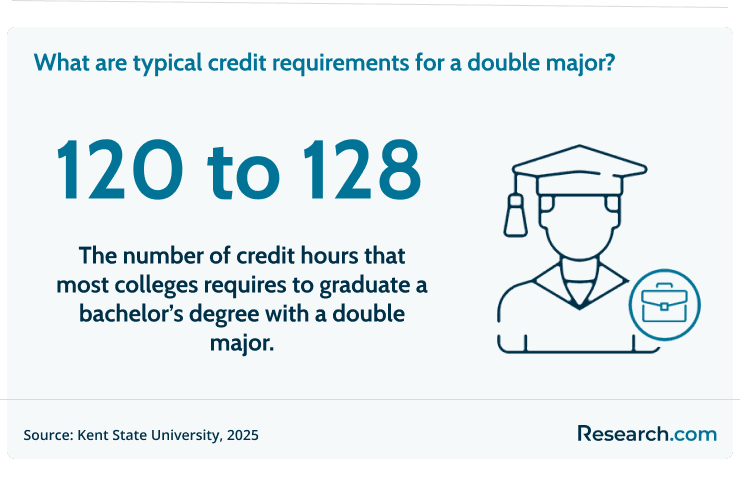
Most colleges require about 120 to 128 total credits to graduate with a single bachelor’s degree, and a double major is usually completed within that same framework. In many cases, students don’t need to take a full extra set of courses for the second major because general education, electives, and overlapping requirements can count toward both programs.
As a result, the additional coursework for a double major often ranges from 15 to 30 credits—roughly the equivalent of one to two extra semesters.
Here are the things you need to remember when estimating the credit requirements for a double major:
- Standard Credit Requirement: Most U.S. colleges require about 120 credits for a bachelor’s degree, which serves as the foundation for students considering a double major.
- Additional Credits for Double Major: A double major typically adds 15–30 credits to the graduation plan, which may extend a student’s timeline by one to two semesters if there is little course overlap. Students who map out requirements early can avoid delays, in the same way that those researching how to get CMA certification must carefully plan to meet all eligibility standards on time.
- Course Overlap Between Majors: Many universities allow overlapping courses to count toward both majors, helping students reduce the total number of additional credits required.
- Impact of Unrelated Majors: Students who pair unrelated majors, such as engineering and history, often face higher credit requirements that can approach 150 total credits.
- Institutional Credit Limits: Some schools, like Kent State University, set maximum credit caps to ensure students complete both majors without exceeding a reasonable academic workload.
What are the career benefits of having a double major?
Choosing a double major can be challenging, but one of the biggest motivations for students is the career advantage it can bring. Employers and graduate programs often value the breadth and depth of knowledge that comes with pursuing two fields at once.
Here are the main career benefits of having a double major:
Increased Earning Potential
Research shows that graduates with certain double major combinations, especially those spanning unrelated fields, earn between 7% and 50% more than single majors. This salary boost highlights how blending disciplines can make graduates more marketable in high-demand industries.
Broader Career Opportunities
A double major can open doors to multiple fields, allowing graduates to qualify for a wider range of positions. For example, pairing business with computer science prepares students for both management and technical roles, just as following the steps to becoming a US Marshal requires developing skills across different areas of expertise.
Competitive Edge in the Job Market
Employers often view double majors as adaptable, motivated, and capable of handling complex workloads. This perception can make candidates stand out when competing for internships or entry-level jobs.
Stronger Graduate School Applications
Interdisciplinary expertise is increasingly valued in graduate and professional programs. Admissions committees often see double majors as proof of academic commitment and intellectual curiosity.
Resilience in a Changing Economy
Having training in two areas makes graduates less vulnerable to shifts in one industry. This diversification of skills provides long-term job security and career flexibility.
Enhanced Networking Opportunities
Double majors often engage with two separate academic departments, giving them access to a wider circle of faculty, peers, and alumni. This expanded network can be valuable when seeking mentorship, research opportunities, or job referrals.
Interdisciplinary Problem-Solving Skills
Employers increasingly need workers who can think across disciplines to solve complex problems. A double major fosters this ability by training students to approach issues from multiple academic perspectives.
Long-Term Career Growth
Double majors may start with more entry-level flexibility, but over time, the dual expertise often positions them for leadership roles. Employers may view them as more versatile candidates for promotions and cross-departmental responsibilities.
Students interested in fields like counseling, education, or community development may also find that combining majors helps them qualify for more advanced or specialized roles over time. For example, those curious about progressing into roles associated with the highest paid social worker positions can benefit from blending studies in areas such as psychology, public administration, and healthcare, which strengthens both their credentials and long-term earning potential.
Does double majoring increase job prospects?
Many students wonder if pursuing a double major will actually make them more competitive after graduation. While outcomes depend on the fields chosen, research shows that double majors often enjoy higher earnings, broader career options, and greater job security compared to single majors.
Here’s how a double major can affect your career prospects:
- Higher Starting Salaries: Studies show that double majors can earn between 7% and 50% more than single majors, depending on the field combination. This pay bump is especially strong when students combine unrelated majors, such as STEM and humanities.
- Diversified Skill Sets: Employers often value graduates who demonstrate expertise in two disciplines, as it signals adaptability and problem-solving skills. This can help candidates stand out in competitive job markets.
- Reduced Earnings Risk: Research indicates that double majors experience about 56% less variability in earnings over time compared to single majors. This “human capital diversification” makes them more resilient in industries affected by economic shifts.
- Expanded Career Pathways: A double major can open opportunities across multiple sectors. This flexibility often leads to more job options at graduation, much like completing accelerated CompTIA Network+ online training can expand career pathways in IT more quickly.
- Graduate School and Advanced Careers: Double majors may have an advantage when applying to graduate programs or research-based careers, where interdisciplinary knowledge is increasingly valuable. Admissions committees often see this as evidence of strong academic commitment.
Data shows how combining different types of majors affects average earnings. Students who pair unrelated fields like STEM and Humanities enjoy the highest advantage, with a 50% increase in earnings. Those who choose moderately related fields, such as Business and Economics, gain about an 18% boost. Meanwhile, students combining closely related fields like Psychology and Sociology see the smallest benefit, with only a 7% increase in earnings.
The chart below highlights how different combinations of majors translate into measurable earnings advantages, showing the real impact of choosing two fields of study.
What are the downsides of double-majoring?
While double majoring can offer strong career and academic benefits, it’s not without its challenges. Students should carefully weigh the potential drawbacks before committing to this demanding path. Here are the main downsides of double majoring:
- Heavier Course Load: Completing two sets of requirements often means taking more classes each semester. This can lead to a more stressful workload and less time for personal interests or extracurricular activities.
- Longer Time to Graduate: Depending on the overlap between majors, a double major may extend graduation by one or more semesters. This delay can also increase tuition costs and postpone entry into the workforce.
- Higher Overall Costs: Additional semesters or summer courses can significantly raise the total cost of a degree. For some students, the financial burden may outweigh the long-term benefits.
- Reduced Flexibility in Course Choices: Double majors must carefully sequence required classes, leaving little room for electives or exploration of unrelated subjects. This rigidity can make the college experience feel more structured and less exploratory.
- Greater Risk of Burnout: Managing the demands of two majors requires strong discipline, but it can also lead to fatigue or decreased academic performance. Students may struggle to maintain a balance between coursework, part-time jobs, and social life.
Students exploring double majors should also think about their long-term goals. For example, those interested in early childhood education careers might instead focus on professional credentials such as learning how to get a CDA certificate, which can qualify them for classroom roles more directly and with less academic and financial strain than completing two full majors.
Can transfer students plan a double major?
Yes, transfer students can plan a double major, but it often requires even more careful coordination than for first-year students. Since transfer students usually enter with a set number of completed credits, they have less flexibility to explore electives or overlap courses across majors.
The key is to review how transfer credits are evaluated at the new institution; some may count toward general education, while others may not fulfill major requirements. Meeting with an academic advisor early, ideally during the first transfer orientation, is essential to determine whether the student can finish both majors within the school’s maximum credit limits.
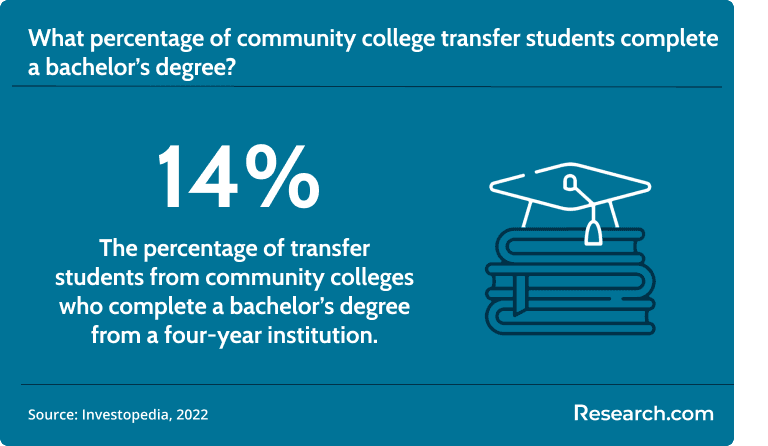
Available data highlights some of the unique challenges faced by transfers: for instance, only about 14 percent of community college students who transfer vertically to a four-year institution actually complete a bachelor’s degree at that institution.
While this figure doesn’t specify how many pursue a double major, it underscores the tight window transfer students often face, similar to how students exploring career guides, like how to become a crime scene technician, must carefully plan each step to reach their goals.
What are the most popular double major combinations?
When students choose to double major, certain subject pairings stand out because they complement each other academically and professionally. These popular combinations often balance technical skills with broader analytical or communication abilities, making graduates highly versatile in the job market.
Here are some of the most common double major pairings:
- Economics and Political Science: This combination is popular among students interested in law, government, or public policy. It provides a strong foundation in both quantitative analysis and critical thinking about social systems.
- Business and Computer Science: Pairing business with computer science equips students for leadership roles in tech companies or startups. It merges managerial knowledge with technical expertise, creating graduates who can bridge communication between business and engineering teams.
- Biology and Chemistry: Many pre-med students pursue this double major because of the significant overlap in coursework. Together, these fields strengthen preparation for medical school and research careers in the life sciences.
- Psychology and Sociology: Students drawn to understanding human behavior often choose this pairing. It combines individual-level insights with broader social perspectives, making it valuable for careers in counseling, social work, or human resources.
- Engineering and Mathematics: This rigorous combination suits students aiming for research, graduate school, or technical innovation roles. The shared analytical focus builds problem-solving skills that are in high demand across industries.
- International Relations and Foreign Language: Many students preparing for diplomacy, international business, or nonprofit work choose this path. The added cultural and linguistic skills make graduates globally competitive.
- Finance and Accounting: Business-focused students often pair these majors to prepare for careers in corporate finance, auditing, or investment banking. The overlap reduces extra credits while boosting job readiness in competitive markets.
- Communications and Marketing: Students pursuing careers in media, advertising, or public relations often select this combination. It blends strategic messaging with audience analysis to prepare graduates for roles in brand development or digital marketing, similar to how students in accelerated online fashion merchandising programs combine creativity with business skills to enter competitive markets.
Can I pursue an interdisciplinary major instead of doubling?
Yes, pursuing an interdisciplinary major can be a strong alternative to double majoring, especially for students who want to combine fields without the heavy course load of completing two full majors. Interdisciplinary majors are designed to integrate coursework from multiple departments into a single program of study, such as combining computer science and biology for bioinformatics or politics and economics for political economy.
Unlike a double major, which requires meeting the full set of requirements for two separate majors, an interdisciplinary program creates a curated path that draws from both fields but streamlines the credit requirements. This option can be especially valuable for students pursuing emerging fields where rigid departmental boundaries don’t capture the full scope of knowledge needed.
For students exploring career-specific pathways, interdisciplinary programs can also help align education with professional goals more efficiently. For example, someone considering entering healthcare fields may compare different education tracks, including certificate programs, before committing to a full degree. Questions like “how much does it cost to become a dental assistant” can help clarify whether a shorter, skills-focused program might be a more direct and cost-effective route than undertaking multiple majors or extended study.
Here’s what graduates have to say about their double majors in college:
- Shane: "Balancing two majors seemed overwhelming at first, but online classes gave me the flexibility to manage the heavier course load without sacrificing sleep or social life. In the end, I graduated on time with skills that helped me land a higher-paying job right after college."
- Derek: "Double majoring gave me a mix of technical and creative skills that employers truly value, and online learning made it possible to take extra electives without worrying about schedule conflicts. Looking back, I’m proud that I turned a challenging path into an opportunity to grow in two fields I love. "
- Francine: "Pursuing two majors taught me discipline, adaptability, and time management—qualities I use every day in my career. The option to complete many of my courses online kept the journey manageable and affordable, and I wouldn’t trade the experience for anything."
Key Findings
- Nearly 1 in 5 U.S. college students pursue more than one major during their undergraduate studies.
- Double majors often require an additional 15–30 credits beyond a single major, though overlap can reduce the total.
- Research shows that graduates with certain double major combinations earn 7% to 50% more than single majors, especially in unrelated fields.
- While many students finish a double major in four years, some programs may extend graduation by one or two semesters.
- Careful advising and early planning are the strongest predictors of successfully completing a double major without delays.
What are the financial implications of double majoring?
Pursuing a double major can lead to an increase in tuition costs and related expenses, particularly when additional credits are required beyond the standard curriculum. Students should assess whether overlapping course requirements can effectively mitigate extra fees. It is important to consider the opportunity cost associated with potentially extending the duration of study, which might affect overall student budgeting. Academic advisors and financial aid officers can provide guidance on available scholarships or installment plans that specifically address the needs of students undertaking a double major. This financial planning becomes even more critical when evaluating long-term return on investment, as the benefits of diversified skill sets may eventually outweigh the upfront monetary commitments. Additionally, students interested in broadening their qualifications post-graduation might explore further credential enhancements, such as the cheapest graduate certificate online, which can offer a cost-effective pathway to additional expertise and career advancement.
References:
- Johnson, H. (2022). 3 Challenges Community College Students Face Transferring to Four-Year Schools. Investopedia
- Kent State University. (2025). Academic Policy: Dual Degrees and Double Majors. KSU
- Rice University Office of Academic Advising. (n.d.). Double Major and Dual Degree. Rice University
- Tett, G. (2024). Make sure your brain has a diverse portfolio too. Financial Times
- University of California, San Diego. (n.d.). Undergraduate Academic Advising: Double Majors. UC San Diego
- Ward, L. (2024). Why It Pays to Be a Double Major in College. The Wall Street Journal
Other things you should know about getting a double major in college
To declare a double major, most colleges in 2027 require a minimum GPA of 3.0. This requirement ensures that students can handle the increased academic load. Always check specific college policies, as some programs might have higher GPA requirements.
At some universities, it is possible to double major across different colleges (e.g., business and arts & sciences), but this often requires special approval. Because colleges within a university may have different core requirements, students need to meet both sets of standards, which can significantly increase the total credits required.
This type of double major is usually more time-intensive and may extend graduation. However, for students aiming for interdisciplinary careers, the benefits can outweigh the challenges.


