
2027 How to Obtain a Child Development Associate Credential

Co-Founder and Chief Data Scientist
Standing out as a professional in early childhood education is particularly important today. Several occupations in the field in the United States (US) are expected to experience a negative job outlook in the following years. For instance, kindergarten teachers across the country have a job-growth rate of -2% from 2024 to 2034 [US Bureau of Labor Statistics (BLS), 2025].
Earning a Child Development Associate credential® (CDA) can set you apart in a tight labor market and help you get good job offers. To help you get started on your credentialing journey, I created this in-depth guide to becoming a CDA. Explore the application process, basic requirements, the assessment process, available educator pathways, and the cost of getting the credential.
What are the benefits of earning a Child Development Associate® (CDA) Credential?
- Applicants of a Childhood Development Associate Credential® (CDA) undergo 120 hours of formal training and 480 hours of work experience in early childhood education. Aspirants develop their teaching and classroom management knowledge and skills.
- Successful candidates of CDA credentials can provide proof of the education, training, and commitment required to be granted the credential.
- Professionals with nationally recognized credentials, such as CDA credentials, may get promoted or pay hikes. For example, the highest 10% of childcare workers in the US in terms of wage earned over $21.42 in 2024, which is higher than the $15.41 median hourly wage (US BLS, 2025).
- What is a Child Development Associate® (CDA) Credential? CDA Credential
- What steps do I need to take to apply for the CDA® credential? Application Process
- What are the basic requirements to apply for the CDA® credential? Basic Requirements
- How many training hours are required for a CDA® credential? How many training hours are required for a CDA® credential?
- What are the different CDA® credential educator pathways? What are the different CDA® credential educator pathways?
- How do I choose the right CDA® pathway for my career goals? How do I choose the right CDA® pathway for my career goals?
- What is included in the CDA® Assessment process? What is included in the CDA® Assessment process?
- How much does it cost to earn the CDA® credential? Cost
- Can a CDA® Credential Help Expand Advanced Academic Opportunities? Can a CDA® Credential Help Expand Advanced Academic Opportunities?
- What are the CDA® renewal requirements? Renewal Requirements
- What jobs can you get with a CDA® credential? What jobs can you get with a CDA® credential?
What is a Child Development Associate® (CDA) Credential?
A Child Development Associate Credential® (CDA) is a nationally recognized credential for early childhood educators in the US. CDA credential holders work with infants, toddlers, preschoolers, and families. The qualification validates their knowledge, skills, and commitment to promoting young children’s learning and development.
The CDA credential was first awarded in 1975 by the then US Department of Health, Education, and Welfare, Administration on Children, Youth, and Families (ACYF). Since 1985, the credential has been administered by the Council for Professional Recognition, a nonprofit organization created through a cooperative agreement between the ACYF and the National Association for the Education of Young Children (NAEYC).
Becoming a CDA may be required by some employers and may be a good stepping stone for further education and career-advancement opportunities.
In addition to earning a CDA, individuals interested in expanding their careers in pediatric or rehabilitation settings often consider pursuing higher-level healthcare degrees. For example, those curious about occupational therapy may ask how long is occupational therapy school, which typically involves completing a 2- to 3-year master’s program after an undergraduate degree, followed by supervised clinical fieldwork before full licensure. This pathway provides a more advanced scope of practice and opens doors to specialized roles working with children and other populations.
What steps do I need to take to apply for the CDA® credential?
Applicants must meet the standard requirements set by the Council for Professional Recognition to earn their CDA credential. These criteria may also be based on the preferred educator pathways of the aspirants, which are also discussed in this guide. Explore the following steps to find out how you can achieve the CDA credential:
- Prepare the requirements. Applicants must complete the required number of hours of formal training and professional experience, depending on the educator pathway of their choice. They must also prepare a professional portfolio, pass the CDA Examination, and undergo a CDA Verification Visit®.
- Complete the application. After meeting all eligibility requirements, candidates must complete their applications online via YourCouncil or through a paper application found in the CDA Competency Standards book.
- Schedule the assessment. After CDA-application approval, applicants receive their “Ready to Schedule” notice for the CDA Verification Visit and the CDA Examination.
- Wait for the credentialing decision. Once the CDA Verification Visit and the CDA Examination are completed, the results of the assessment are submitted to the Council of Professional Recognition. The Council reviews the applications and decides whether or not to grant the CDA credential. Denied applicants are given recommendations for improvement and are advised on the steps to take to succeed on their next attempt.
Many CDA credential holders later advance their studies by pursuing the shortest master's degree in early childhood education online.
What are the basic requirements to apply for the CDA® credential?
Eligibility requirements for the Child Development Associate Credential® (CDA) focus on formal training, work experience, and the documentation.
Education
Aspirants must fulfill the following academic requirements before submitting their applications:
- High School Education: Earn a high school diploma, get a GED, or be enrolled as a junior or senior in a high school career and technical program in the field of early childhood education.
- Formal Training: Finish the required number of hours of formal early childhood education training through qualified training organizations. The training covers the growth and development of their chosen demographic to teach.
Applicants must ensure that they collect the appropriate forms of training documentation, such as college transcripts from accredited academic institutions, certificates of training, and letters of training on official letterhead of the agencies.
Experience
Applicants must acquire 480 hours of professional experience in the setting that they decide to teach in. For instance, individuals who have chosen to work in a center-based infant-toddler setting will be working with children from ages birth to 3 years. Meanwhile, individuals in a center-based preschool setting will be working with children from ages 3 to 5.
Applicants must accomplish this requirement within 3 years of submitting their applications.
Documentation
Applicants must build their CDA professional portfolios, which are reference materials that are relevant to their work with young children and families. They must also choose their CDA Professional Development (PD) Specialist™ to hold their CDA Verification Visit®, a component of their final assessment. PD Specialists are in charge of the following:
- Review professional portfolios
- Observe aspiring CDA credential holders at work
- Conduct a reflective dialogue with applicants
- Submit score recommendations to the Council for Professional Recognition.
Applicants must accomplish this requirement within 6 months of submitting their applications.
For those exploring related healthcare support roles, it’s also helpful to consider how long it takes to enter other positions in the field. For instance, many wonder how many years to be a dentist assistant. Typically, becoming a dental assistant can take anywhere from 9 months to 2 years, depending on whether one completes a formal certificate program or an associate degree, followed by on-the-job training or optional certification. This provides a quicker pathway into healthcare support roles while still gaining valuable patient-care experience.
How many training hours are required for a CDA® credential?
Applicants must finish 120 hours of formal early childhood education training conducted by eligible training organizations. These training agencies must specialize in early childhood education and teacher preparation. They must also submit official documentation of the training that applicants complete.
Applicants must also include at least 10 training hours in every CDA subject area such as the following:
- Planning a safe and healthy learning environment
- Advancing children’s physical and intellectual development
- Supporting children’s social and emotional development
- Building productive relationships with families
- Managing an effective program operation
- Maintaining a commitment to professionalism
- Observing and recording children’s behavior
- Understanding the principles of child development and learning
Moreover, applicants must complete 480 hours of professional experience in the setting that they decide to teach in or based on their preferred educator pathway. Some educators later build on these qualifications by enrolling in the fastest online graduate certificate programs in early childhood education.
What are the different CDA® credential educator pathways?
The Council for Professional Recognition enables early childhood educators to get credentialed through different educator pathways. Explore the following eligible early childhood education settings:
Center-based Infant-Toddler
Applicants in this center-based setting are observed working with a group of three children at the minimum from birth to 36 months. Children in the program are categorized into three sub-age groups: young infants (birth to 8 months); mobile infants (9 to 17 months); and toddlers (18 to 36 months). The program is required to have a minimum of 10 kids enrolled and a minimum of two early childhood educators focused on the children on a regular basis.
Center-based Preschool
Candidates in the center-based preschool setting work with at least eight kids aged 3 to 5 years. Similar to the center-based infant-toddler setting, the program is required to have a minimum of 10 kids enrolled and a minimum of two early childhood educators focused on the children on a regular basis.
Birth to Five
Applicants in the center-based birth-to-five setting work with children that are from any of the following sub-age groups:
- A minimum of three children aged birth to 36 months
- A minimum of six children aged 3 to 5 years
Applicants may be observed working with a mix of any of the sub-age groups enrolled in the learning center. Notably, the children must meet the age criteria of this center-based setting.
Family Child Care
Candidates in the family-child-care setting work in a family child-care home. They are observed to be working with a minimum of two children aged 5 or younger. The kids must not be related to the candidates by blood or marriage. Notably, the setting is required to fulfill the minimum level of applicable state and local regulations.
Home Visitor
Applicants aiming to get credentialed through home visits work with families that have kids aged 5 or younger. They provide the parents with support in fulfilling the needs of their kids. Candidates are observed during regular home visits, which is the primary method of program delivery.
The chart below provides a visualization of the employment levels of early childhood education (ECE) professionals in the US in 2024, according to 2025 data from the US BLS.
How do I choose the right CDA® pathway for my career goals?
When applying for a Child Development Associate Credential®, early childhood educators must carefully choose the educator pathway that best supports their long-term career goals and professional interests. The following criteria can help guide the decision:
- Age-group Preference: Educators should consider whether they prefer working with infants, toddlers, preschoolers, or in family childcare. Choosing the right setting ensures alignment with daily responsibilities and teaching style.
- Career-advancement Opportunities: Certain educator pathways, such as preschool or infant-toddler, may open up job opportunities in childcare centers,
- Work-environment Fit: Educators should evaluate their experiences in structured center-based programs, flexible family childcare settings, or home-visiting roles. Understanding the settings where aspirants thrive and matching the pathway with their personal strengths enhances professional satisfaction and effectiveness.
Some early childhood education professionals also build on their CDA® credential by pursuing the shortest bachelor's degree in early childhood education online for further career growth.
What is included in the CDA® Assessment process?
Aside from the required training, professional experience, and professional portfolio, CDA candidates must undergo the CDA Assessment. This portion of the application consists of two components: the CDA Examination and the CDA Verification Visit.
The CDA Examination
The CDA Exam is computer-based and consists of 65 questions. Taken at a local Pearson VUE testing site, it evaluates the applicant’s knowledge of basic early childhood best practices based on the CDA Competency Goals and the 13 Functional Areas. Candidates must schedule their own exam dates after getting the “Ready to Schedule” notice from the Council for Professional Recognition. Exam scores are then sent to the Council electronically.
CDA Verification Visit
The CDA Verification Visit requires the candidate to be observed while working with children or families as a lead teacher in a particular age group. The candidate must schedule their own visit after getting the “Ready to Schedule” notice from the Council for Professional Recognition.
For the CDA Verification Visit, the Council-approved, CDA Professional Development (PD) Specialist™ goes to the applicant’s employment location and evaluates the applicant’s professional portfolio. The PD Specialist also observes the applicant working with children or families and holds a reflective dialogue with the candidate about their strengths and areas for improvement. PD Specialists send the evaluation and scores electronically to the Council.
For those considering broader career paths in human services or criminal justice, it’s helpful to plan ahead for additional education. Understanding how long does it take to get a criminology degree can inform your timeline for entering roles in law enforcement, corrections, or social services, and can complement skills gained through early childhood education or other human development programs.
How much does it cost to earn the CDA® credential?
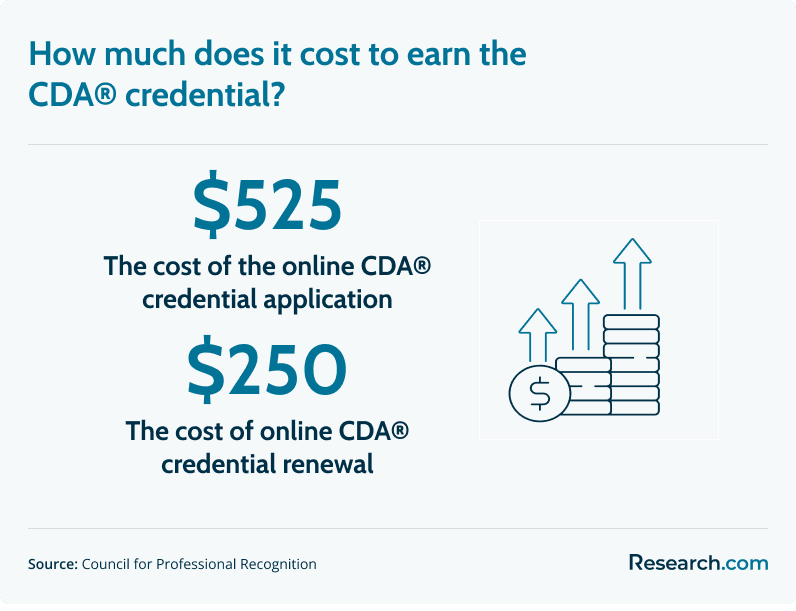
The cost of earning a Child Development Associate credential® (CDA) depends on the application type and chosen pathway. For center-based credentials, such as Infant-Toddler, Preschool, or Birth to Five, the application fee is $525 online and $600 by paper. The same fees apply to Family Child Care and Home Visitor credentials.
Candidates renewing their CDA pay a reduced fee: $250 for online renewal or $300 by mail. While the CDA represents a significant investment, it is a nationally recognized credential that can expand job opportunities and enhance professional credibility. Many employers, Head Start programs, or local workforce initiatives may also offer financial assistance to help cover these costs.
For professionals seeking to further their education, the shortest online degree in early childhood development can be a practical next step.
Can a CDA® Credential Help Expand Advanced Academic Opportunities?
Earning a CDA® credential not only validates your expertise in early childhood education but can also serve as a strategic stepping stone toward higher academic pursuits. With a strong professional foundation, many educators leverage their CDA® to explore leadership roles and advanced studies that foster an in-depth understanding of education theory and policy. Aligning practical classroom experience with further academic credentials—such as those offered by online EdD programs—can open pathways to roles in educational administration and curriculum development. This focused approach aids in career diversification and may ultimately position professionals for roles that significantly influence educational practices and outcomes.
What are the CDA® renewal requirements?
The CDA credential expires 3 years after it is awarded. To renew your credential, you must meet the following requirements:
- Continued Professional Education: Finish in-person, online, or hybrid training courses. You must document the completion of 4.5 continuing education units (CEUs), a 3-credit-hour college course from an accredited academic institution, or 45 hours of training in early childhood education and/or child development.
- Membership: You must ensure current membership to a national or local early childhood education professional organization. Renewal applicants must show proof of membership, such as a membership card, a membership certificate, or payment receipt of membership fees.
- Recommendation: You must choose an early childhood education (ECE) professional to become your ECE reviewer based on the requirements in the “Information for the Early Childhood Education Reviewer” booklet. The ECE reviewer provides a recommendation that verifies the 80-hour work requirement for renewal and is based on the CDA Competency Standards.
- Work Experience: You must complete a minimum of 80 hours of working with young children in the same setting and age group as indicated in your application. You must earn this requirement within a year before submitting your CDA renewal application.
Notably, the validity period was changed from 5 years to 3 years, as the Council for Professional Recognition found out through a study of industry standards that 3 years is “an efficient amount of time” to reassess the professional development and performance of early childhood education professionals.
Renewing your CDA credential is important to ensure that you maintain the knowledge and skills to deliver quality educational services to young children. The credential can also help you advance your career and get a salary raise.
Explore the chart below to find out more about the occupations that may be available to CDA credential holders and their income potential. The chart provides a visualization of the median annual wages of early childhood education (ECE) professionals in the US in 2024, according to 2025 data from the US BLS.
For those interested in advancing their career even further, it’s worth exploring opportunities beyond early childhood education. Social work, for example, offers a range of career paths with varying salaries, and professionals often seek positions with the greatest earning potential. Understanding the highest paid social work jobs can help credentialed educators or those in related fields plan long-term career growth while leveraging their expertise in child development and human services.
What jobs can you get with a CDA® credential?
A Childhood Development Associate Credential® (CDA) enables professionals to demonstrate their knowledge and skills in the field of early childhood education. The nationally recognized credential provides them with additional credibility that can improve their employability and income potential. Educators with this qualification may be eligible for the following occupations:
Childcare Workers
With a CDA, individuals can qualify for positions in daycare centers or family childcare homes. While no additional degree is required, state regulations may require background checks and CPR certification. In May 2024, childcare workers in the US had a median annual wage of $32,050 (US BLS, 2025).
Preschool Teachers
Many preschool programs prefer or require a CDA credential. Some states may also mandate an associate degree in early childhood education or related coursework for lead teaching roles. In May 2024, preschool teachers in the US had a median annual wage of $37,120 (US BLS, 2025).
Kindergarten and Elementary School Teachers
A CDA alone is not sufficient for these roles. Candidates usually need at least a bachelor’s degree in education and a state-issued teaching license. However, a CDA provides foundational experience that supports advanced study and licensure. In May 2024, kindergarten and elementary school teachers in the US had a median annual wage of $62,310 (US BLS, 2025).
Aspiring teachers may also choose to pursue the fastest online master's in elementary education programs to further advance their qualifications.
The chart below provides a visualization of the job outlook for early childhood education (ECE) professionals in the US from 2024 to 2034, according to 2025 data from the US BLS.
Here’s What Professionals Say about Their Child Development Associate® (CDA) Credential
- Justin: "Earning my CDA credential gave me the confidence to apply for leadership roles in my center. The training helped me strengthen classroom management skills and deepen my understanding of child development. It’s a nationally recognized credential that has opened new career doors for me."
- Paul: "As a preschool teacher, completing the CDA credential made me feel more prepared and valued in my role. The process challenged me to reflect on my teaching practices, and now families trust me more. It also increased my job opportunities within early childhood programs."
- Victoria: "My CDA credential was a turning point in my career. The structured training helped me grow professionally and boosted my salary. Employers recognize the CDA as proof of dedication, and I’ve gained both confidence and credibility working with young children and their families."
Key Findings
- A Child Development Associate Credential® (CDA) is a nationally recognized credential for early childhood educators in the US. CDA credential holders work with infants, toddlers, preschoolers, and families.
- Candidates must finish 120 hours of formal early childhood education training conducted by eligible training organizations. They must also acquire 480 hours of professional experience in the setting that they decide to teach in.
- Aside from the required training, professional experience, and professional portfolio, CDA candidates must undergo the CDA Assessment. This portion of the application consists of two components: the CDA Examination and the CDA Verification Visit®.
- For center-based CDA credentials, such as Infant-Toddler, Preschool, or Birth to Five, the application fee is $525 online and $600 by paper.
- The CDA credential expires 3 years after it is awarded.
References:
- Council for Professional Recognition. About the Child Development Associate® (CDA) Credential™. https://www.cdacouncil.org/en/about/learn-about-the-cda
- US Bureau of Labor Statistics. (2025, August 28). Childcare Workers. Occupational Outlook Handbook. https://www.bls.gov/ooh/personal-care-and-service/childcare-workers.htm
- US Bureau of Labor Statistics. (2025, August 28). Elementary, Middle, and High School Principals. Occupational Outlook Handbook. https://www.bls.gov/ooh/management/elementary-middle-and-high-school-principals.htm
- US Bureau of Labor Statistics. (2025, August 28). Kindergarten and Elementary School Teachers. Occupational Outlook Handbook. https://www.bls.gov/ooh/education-training-and-library/kindergarten-and-elementary-school-teachers.htm
- US Bureau of Labor Statistics. (2025, August 28). Preschool and Childcare Center Directors. Occupational Outlook Handbook. https://www.bls.gov/ooh/management/preschool-and-childcare-center-directors.htm
- US Bureau of Labor Statistics. (2025, August 28). Preschool Teachers. Occupational Outlook Handbook. https://www.bls.gov/ooh/education-training-and-library/preschool-teachers.htm
Other Things You Should Know about the Child Development Associate® (CDA) Credential
To apply for a Child Development Associate (CDA) credential in 2027, candidates do not need a college degree. However, they must have a high school diploma or GED. They also need 120 hours of formal early childhood education training and at least 480 hours of professional experience working with young children.
General qualifications for a CDA credential include earning a high school diploma, getting a GED, or being enrolled as a junior or senior in a high school career and technical program in the field of early childhood education. Applicants must also complete the required number of hours of training and work experience. Notably, eligibility requirements may vary, depending on your preferred educator pathway.
No, you do not need a college degree for CDA credentials. Applicants only need a high school diploma or the equivalent as well as the required training and work-experience hours.


