
2027 Best MBA Programs that Accept a Low GPA

Co-Founder and Chief Data Scientist
You have built a successful career, but an old, low GPA can feel like a roadblock to your next big step. This is a common situation for proven leaders. In fact, many executive MBA students bring more than a decade of professional experience to the classroom. Top schools have recognized this trend and increasingly value real-world achievement over old transcripts.
This guide is your strategic playbook. The career planning experts who created it have over 10 years of experience helping professionals like you. We will show you how to find the best MBA programs that accept low GPA and build an application that highlights your true strengths.
What are the benefits of getting an MBA with a low GPA?
- Unlock access to senior management and leadership roles across high-impact industries like technology, finance, and consulting.
- Significantly increase your earning potential, as the average starting salary for MBA graduates is more than $115,000.
- Gain the ability to earn your degree from a top-tier online program, allowing you to advance your career without pausing it.
What can I expect from an MBA program that accepts a low GPA?
You should expect the exact same high-quality and rigorous educational experience you would get from any other accredited MBA program. The curriculum, the faculty standards, and the degree you earn are identical.
These schools don't have lower academic standards; they have different admissions standards. They've made a strategic choice to prioritize demonstrated leadership potential and real-world competence over historical academic metrics.
The key is to focus on accreditation from bodies like the AACSB. This is your guarantee of quality. It ensures that the education you receive at MBA programs that accept low GPA meets a high, globally recognized standard for business education.
Where can I work after completing an MBA with a low GPA?
Graduates from these programs work across the full spectrum of top-tier industries. You will find them in management consulting, financial services, technology, and healthcare leadership.
Here’s what you need to understand about MBA-level hiring: recruiters are focused on your professional experience, your interview performance, and the skills you developed during the program. Your undergraduate transcript from years ago is simply not a factor in their decision-making process. The MBA credential itself is what opens these doors.
How much can I make with an MBA with low GPA?
Your earning potential is determined by your chosen industry and role, not by the stats in your admissions file. An MBA is a powerful tool for salary growth, regardless of your undergraduate record.
The average annual salary for an MBA graduate is around $115,000. In high-demand fields like consulting, that figure can climb to an average of $147,178. Your past GPA has no bearing on these salary outcomes; your new skills and credential do.
- List of the Best MBA Programs that Accept a Low GPA for 2027 List of Programs
- How long does it take to complete an MBA program with low GPA? Completion Time
- What are the financial aid options for students enrolling in an MBA program that accept low GPA? Financial Aid
- What are the prerequisites for enrolling in an MBA program that accept low GPA? What are the prerequisites for enrolling in an MBA program that accept low GPA?
- What courses are typically in an MBA program that accept low GPA? What courses are typically in an MBA program that accept low GPA?
- What types of specializations are available in an MBA program that accept low GPA? Spcializations
- How to Choose the Best MBA Program that Accept a Low GPA How to Choose the Best MBA Program that Accept a Low GPA
- What career paths are available for graduates of an MBA program that accept low GPA? Career Paths
- What is the job market for graduates of an MBA program that accept low GPA? Job Market
- Can I access affordable MBA programs without compromising on quality? Can I access affordable MBA programs without compromising on quality?
Best MBA Programs That Accept a Low GPA for 2027
A low undergraduate GPA can make MBA admissions feel out of reach, but it does not automatically disqualify you. Many business schools review applicants holistically, weighing professional experience, leadership potential, career progression, recommendations, essays, test scores or test waivers, and evidence that you can handle graduate-level quantitative work.
This guide is for applicants who have a weaker college transcript but stronger professional credentials, including working adults, career changers, military veterans, entrepreneurs, and managers seeking promotion. You will learn which MBA programs on this list may be more accessible to applicants with a lower GPA, how to compare program quality, what admissions committees usually look for, how much these programs cost, and how to decide whether an MBA is the right investment.
Quick Answer: Can You Get Into an MBA Program With a Low GPA?
Yes. You can be admitted to an MBA program with a low GPA if the rest of your application shows readiness for graduate business study. Schools that use holistic admissions may consider your work history, leadership achievements, quantitative skills, recommendations, essays, interview performance, certifications, and GMAT/GRE results or waiver eligibility. The best choice is not simply the easiest program to enter; it is an accredited MBA that fits your career goal, budget, schedule, and academic support needs.
How Research.com Ranks These Programs
Because an MBA can require a major financial and time commitment, our ranking process emphasizes transparent, comparable information. Research.com uses established education data sources, including the IPEDS database, Peterson's database, the College Scorecard database, and The National Center for Education Statistics.
These sources help evaluate MBA programs that may be suitable for applicants with lower GPAs while still prioritizing institutional quality, program structure, affordability, and student outcomes. For a fuller explanation of the ranking process, see the Research.com methodology page.
Featured MBA Programs That May Consider Applicants With a Lower GPA
| Program | Best Fit | Length | Credits | Cost | Accreditation |
| Canisius University - Master of Business Administration | Students who want a flexible MBA with career coaching and leadership development | 1-2 years | 36 | $975 per credit | The Association to Advance Collegiate Schools of Business (AACSB) |
| Syracuse University - Master of Business Administration | Students seeking a collaborative MBA with experiential learning | 2 years | 54 | $2,015 per credit | Middle States Commission on Higher Education (MSCHE) |
| Lynn University - Master of Business Administration | Students looking for online or on-ground study with specialization options | 10 months to 2 years | 37 | $750 per credit | Southern Association of Colleges and Schools Commission on Colleges (SACSCOC) |
| Saint Mary’s University of Minnesota - Master of Business Administration | Working professionals who want online or hybrid study and many specialization choices | 1.5-2 years | 30 | $19,500 (Hybrid) or $23,250 (Online) | International Accreditation Council for Business Education (IACBE) |
| Winthrop University - Master of Business Administration | Students interested in a STEM-designated MBA with analytics, technology, and micro-certificates | 1.5-2 years | 30 | $426 (In-State) or $909 (Out-of-State) per credit | The Association to Advance Collegiate Schools of Business (AACSB) |
| Saint Leo University - Master's Degree in Business Administration | Students who want a values-based MBA with fast-tracked pathways | Approximately 2 years | 30-33 | $650 per credit | Accreditation Council for Business Schools and Programs (ACBSP) |
| Lasell University - Master's in Business Administration | Working adults seeking a 100% online or hybrid MBA with concentrations | As few as 12 months | 36 | Approximately $675 per credit | Accreditation Council for Business Schools and Programs (ACBSP) |
| Rowan University - Master of Business Administration | Students who want a customizable online, in-person, or hybrid MBA | 1-2 years | 36 | $940.75 per credit | The Association to Advance Collegiate Schools of Business (AACSB) |
1. Canisius University - Master of Business Administration
Canisius University offers an MBA built for flexibility, with options to move quickly or study at a steadier online pace. The program combines business coursework with individualized support, including career preparation, leadership development, and coaching intended to help students translate the degree into professional advancement.
- Program Length: 1-2 years
- Required Credits to Graduate: 36
- Cost per Credit: $975
- Accreditation: The Association to Advance Collegiate Schools of Business (AACSB)
2. Syracuse University - Master of Business Administration
Syracuse University offers its MBA through the Whitman School of Management, where teamwork, applied learning, and preparation for changing global business conditions are central parts of the experience. Students complete at least two experiential learning components, which may include internships, consulting-style projects, or other course-based professional experiences.
- Program Length: 2 years
- Required Credits to Graduate: 54
- Cost per Credit: $2,015
- Accreditation: Middle States Commission on Higher Education (MSCHE)
3. Lynn University - Master of Business Administration
Lynn University provides an MBA for students who want managerial training for a changing international business environment. The degree is available online and on campus, includes a 10-month accelerated route for eligible students, and requires learners to choose from a broad set of specializations.
- Program Length: 10 months to 2 years
- Required Credits to Graduate: 37
- Cost per Credit: $750
- Accreditation: Southern Association of Colleges and Schools Commission on Colleges (SACSCOC)
4. Saint Mary’s University of Minnesota - Master of Business Administration
Saint Mary’s University of Minnesota offers an MBA designed for working professionals at different points in their careers. Students can study online or in a hybrid format and choose from 13 specializations, with six additional credits allowing them to add focused expertise to the general MBA curriculum.
- Program Length: 1.5-2 years
- Required Credits to Graduate: 30
- Total Tuition: $19,500 (Hybrid) or $23,250 (Online)
- Accreditation: International Accreditation Council for Business Education (IACBE)
5. Winthrop University - Master of Business Administration
Winthrop University offers a STEM-designated MBA that emphasizes globalization, analytics, technology, and leadership. Students may complete the program fully online or through a blended format, and the curriculum includes three embedded micro-certificates in Business Analytics, Financial Analysis, and Leadership.
- Program Length: 1.5-2 years
- Required Credits to Graduate: 30
- Cost per Credit: $426 (In-State) or $909 (Out-of-State)
- Accreditation: The Association to Advance Collegiate Schools of Business (AACSB)
6. Saint Leo University - Master's Degree in Business Administration
Saint Leo University structures its MBA around practical business skills, professional research, global awareness, and values-based decision-making. The program includes fast-tracked pathways and is designed to help students apply management strategies across organizations of different sizes.
- Program Length: Approximately 2 years
- Required Credits to Graduate: 30-33
- Cost per Credit: $650
- Accreditation: Accreditation Council for Business Schools and Programs (ACBSP)
7. Lasell University - Master's in Business Administration
Lasell University offers a globally accredited MBA for working professionals who need scheduling flexibility. Students can choose 100% online or hybrid study, build core knowledge across major business functions, and select concentrations that match their professional direction.
- Program Length: As few as 12 months
- Required Credits to Graduate: 36
- Cost per Credit: Approximately $675
- Accreditation: Accreditation Council for Business Schools and Programs (ACBSP)
8. Rowan University - Master of Business Administration
Rowan University gives MBA students several ways to complete the degree, including 100% online, in-person, and hybrid options. The curriculum includes 18 credits of core business courses and 18 credits that students can shape through concentrations or electives.
- Program Length: 1-2 years
- Required Credits to Graduate: 36
- Cost per Credit: $940.75
- Accreditation: The Association to Advance Collegiate Schools of Business (AACSB)
How Long Does It Take to Finish an MBA Program If You Have a Low GPA?
Your undergraduate GPA usually does not change the length of an MBA program. Time to completion depends on the program format, credit load, transfer policies, academic calendar, and whether you study full time, part time, online, hybrid, or on campus.
A traditional full-time MBA commonly takes 18 to 24 months. Part-time and online MBA programs are often designed for working adults and may take between three and five years. Admissions testing may also affect your application timeline, especially if you are deciding between the GRE vs GMAT or seeking a test waiver.
Why Work Experience Can Offset a Lower GPA
Many MBA programs, especially those serving working professionals, expect applicants to have meaningful career experience. The average MBA student has between four and six years of work experience before applying, which gives admissions committees more evidence than a transcript alone can provide.
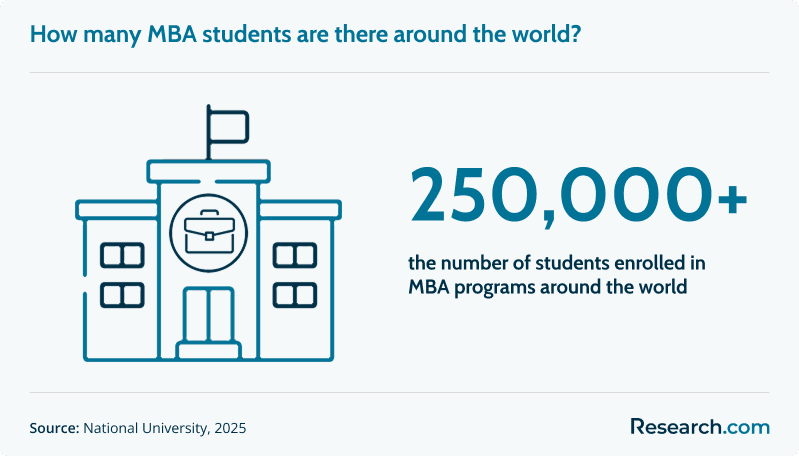
With more than 250,000 students currently enrolled in MBA programs worldwide, the MBA remains a widely used graduate pathway for professionals seeking management, finance, consulting, entrepreneurship, technology, and operations roles. Applicants who want a shorter public-sector alternative may also compare MBA options with the best 1 year online MPA programs.
| Format | Typical Timeline | When It Makes Sense | Trade-Off |
| Full-time MBA | 18 to 24 months | You can pause or reduce work and want an immersive experience | Higher opportunity cost if you leave the workforce |
| Part-time MBA | Between three and five years | You want to keep earning income while studying | Longer completion time and heavier work-school balance |
| Online MBA | Varies by pace | You need location flexibility or travel often for work | Networking requires more intentional effort |
| Accelerated MBA | As few as 12 months or 10 months to 2 years in listed examples | You have strong preparation and want to finish quickly | Compressed workload can be demanding |
What Is the Average Cost of an MBA Program That Accepts a Low GPA?
An MBA program does not usually cost more or less because it considers applicants with lower GPAs. Price is driven by the school, delivery format, residency status, credit requirements, fees, and institutional funding policies. Among the schools listed here, the average cost is between $35,353 and $37,165. Across the broader MBA market, tuition can range from under $13,000 to over $100,000.
Do not compare programs by tuition alone. A lower-cost MBA may be a strong value if it is accredited, offers relevant career support, and matches your goals. A higher-cost MBA may be worthwhile only if the brand, network, placement support, specialization, or employer access justifies the added expense.
How to Think About MBA ROI
Return on investment depends on your current salary, target industry, geography, career mobility, and how much debt you take on. Salary outcomes are not guaranteed, but location and industry can affect earning potential. For example, the average MBA salary in Washington is over $165,000, while in New York it is nearly $160,000.
| Cost Factor | Why It Matters | Question to Ask |
| Tuition per credit or total tuition | Programs price tuition differently, so compare total degree cost | What will I pay from start to graduation, not just per course? |
| Fees | Technology, graduation, course, and student service fees can increase the final bill | Are mandatory fees included in the advertised tuition? |
| Residency status | Public universities may charge different rates for in-state and out-of-state students | Will my residency affect the rate I pay? |
| Time away from work | Full-time study can reduce income during enrollment | Can I keep working while completing the degree? |
| Employer support | Tuition assistance can reduce borrowing | Does my employer reimburse MBA coursework? |
What Financial Aid Options Are Available for MBA Students With a Low GPA?
Applicants with lower undergraduate GPAs can still pursue many of the same funding options as other MBA students. Financial aid eligibility is usually based on program eligibility, enrollment status, citizenship or residency rules, need, creditworthiness for private borrowing, employer policy, and scholarship criteria rather than GPA alone.
- Federal and Private Loans: Many MBA students use federal aid through FAFSA or private loans to help cover tuition and related expenses.
- Scholarships and Grants: Business schools may offer need-based or merit-based funding, and professional achievements can strengthen your scholarship application even if your undergraduate GPA is not ideal.
- Employer Sponsorship: Some companies provide tuition reimbursement, partial sponsorship, or full sponsorship for employees pursuing graduate business education.
Employer Sponsorship Can Be a Major Advantage
If you are employed, ask about tuition assistance before you borrow. About 68% of part-time MBA students receive some form of company sponsorship, making employer support one of the most important funding routes for working professionals. Read the policy carefully, including grade requirements, repayment obligations if you leave the company, annual reimbursement caps, and whether the program must be preapproved.
What Are the Prerequisites for MBA Programs That Accept a Low GPA?
MBA programs that consider lower GPAs typically look for stronger evidence elsewhere in the application. The core question is whether you can succeed in graduate business courses and contribute meaningfully to the cohort.
Most applicants need a completed bachelor's degree from an accredited institution, professional work experience, essays that explain goals and growth, and recommendations from supervisors or colleagues who can comment on leadership potential. Some programs may also request a resume, interview, GMAT/GRE score, proof of quantitative preparation, or documentation for a test waiver.
Applicants targeting highly selective schools can learn from the strategies used in elite admissions. Research.com's guide on how to get into MBA Ivy League programs explains how essays, career achievements, networking, and application positioning can affect competitiveness.
How to Strengthen an MBA Application With a Low GPA
A lower GPA needs context. If your grades improved over time, say so. If work, family, military service, health, or financial obligations affected your undergraduate performance, explain the situation briefly and professionally. Then shift the focus to evidence that you are ready now.
- Show career progression: Promotions, expanded responsibilities, revenue impact, process improvements, team leadership, and client results can demonstrate maturity and capability.
- Quantify achievements: Admissions committees respond better to measurable impact than vague claims.
- Address quantitative readiness: If your transcript is weak in math, accounting, economics, or statistics, consider preparatory coursework or a strong test score.
- Use recommendations strategically: Choose recommenders who can describe your judgment, leadership, and analytical ability.
- Write a focused optional essay: Acknowledge the GPA without sounding defensive, then explain what changed and why you can succeed in the MBA.
Professional Experience Often Carries Significant Weight
Many MBA programs value real-world business judgment. GMAT/GRE waivers are more common when applicants have substantial work experience or other proof of analytical ability. At the executive MBA level, 97% of students have over a decade of experience, which illustrates how strongly some graduate business programs value career history.
Applicants from non-business backgrounds may benefit from strengthening foundational business knowledge before applying. Some students start by building entrepreneurial or management literacy through an accelerated entrepreneurship bachelor's degree online, though most MBA applicants will not need a second bachelor's degree if they already hold an accredited undergraduate credential.
What Courses Are Common in MBA Programs That Accept a Low GPA?
Accredited MBA programs generally cover the same core business disciplines regardless of whether they use flexible admissions criteria. A low-GPA-friendly admissions approach does not mean the coursework is easier. Students should expect graduate-level reading, case analysis, presentations, team projects, quantitative assignments, and applied strategy work.
- Core Courses: Most MBA students study finance, accounting, marketing, operations, economics, analytics, organizational behavior, leadership, and strategy.
- Elective Courses: Electives let students focus on a career direction such as finance, marketing, healthcare management, supply chain, entrepreneurship, technology, or international business.
What the Core Curriculum Is Designed to Teach
The core MBA curriculum helps students understand how decisions in one business function affect the rest of the organization. Career changers use these courses to build business vocabulary and confidence, while experienced managers use them to connect functional expertise to broader strategy. Students who want stronger analytical preparation before graduate study may explore fast-track online economics degree programs.
MBA classrooms also expose students to peers from different sectors and roles. Women now make up nearly 48% of applicants to full-time programs, reflecting the broader diversity of today’s MBA applicant pool.
| Course Area | What You Learn | Why It Matters for Career Growth |
| Finance | Capital budgeting, valuation, financial decision-making, and risk | Supports roles involving budgets, investment decisions, and executive reporting |
| Marketing | Customer research, brand strategy, pricing, and digital channels | Useful for product, growth, sales leadership, and brand management |
| Operations | Process improvement, logistics, quality, and supply chain systems | Relevant for managers responsible for efficiency and delivery |
| Accounting | Financial statements, managerial accounting, and performance measurement | Helps leaders interpret organizational performance |
| Strategy | Competitive positioning, market analysis, and long-term planning | Prepares students for senior management decisions |
What MBA Specializations Are Available in Programs That Accept a Low GPA?
Specialization options depend on the school’s faculty, curriculum, employer relationships, and program design. Programs that consider lower GPAs can still offer rigorous concentrations aligned with high-demand business functions.
- Finance: A strong fit for students targeting corporate finance, investment banking, financial planning, or asset management.
- Marketing: Useful for careers in brand leadership, customer strategy, market research, and digital marketing management.
- International Business: Designed for students interested in multinational operations, global trade, cross-border strategy, or international management.
- Operations Management: Focuses on process improvement, logistics, supply chains, quality systems, and efficiency.
How to Choose a Specialization
Choose a specialization based on your target role, not only your current interests. Review job descriptions for the roles you want, identify recurring skills, and select electives that close those gaps. If you are not ready to commit to a full MBA concentration, a shorter credential such as the shortest online graduate certificate in logistics and supply chain management may help you test a field first.
Specialization choice can influence salary potential, though outcomes vary by employer, geography, prior experience, and industry. Available data shows that a consulting path yields an average salary of over $147,000, while a technology industry path averages around $134,000.
| Specialization | Best For | Consider Another Path If |
| Finance | You want to work with capital, investments, corporate planning, or transactions | You dislike quantitative analysis or financial modeling |
| Marketing | You enjoy customer behavior, brand strategy, analytics, and growth | You want a heavily technical or operations-focused role |
| International Business | You want exposure to global markets and multinational strategy | Your career goals are highly local or industry-specific |
| Operations Management | You want to improve systems, supply chains, logistics, and productivity | You prefer client-facing strategy, finance, or creative brand work |
How to Choose the Best MBA Program That Accepts a Low GPA
The right MBA is not necessarily the one with the most forgiving admissions policy. It is the accredited program that can help you reach a realistic career goal at a cost and pace you can manage. Applicants with lower GPAs should be especially careful to avoid programs that use easy admission as a substitute for academic quality, career support, or employer recognition.
Start with three non-negotiables: accreditation, relevant career services, and an active alumni network. Then examine whether the admissions process genuinely values professional experience. Strong signs include essay prompts about leadership and impact, resume-based review, optional GPA explanations, test waiver pathways, and admissions advisors who can explain how the school evaluates nontraditional applicants.
Accreditation Should Come First
Accreditation protects students by showing that a school or program has undergone external quality review. Only about 52% of business programs worldwide are accredited, so this is not a detail to ignore. Business-specific accreditors such as the Association to Advance Collegiate Schools of Business (AACSB) are especially important signals of quality in graduate management education.
Accreditation can also affect transferability, employer confidence, and long-term degree value. If you are comparing MBA career outcomes by field, Research.com's guide to MBA in project management salary can help you think about how specialization and role choice may affect ROI.
Questions to Ask Before You Apply
| Question | Why It Matters |
| Is the institution regionally accredited or nationally recognized by an appropriate accreditor? | Accreditation affects credibility, aid eligibility, and employer trust. |
| Does the business school hold programmatic accreditation? | Programmatic review can signal stronger business curriculum standards. |
| How does the admissions committee evaluate a low GPA? | You need to know whether the school truly uses holistic admissions. |
| Are GMAT/GRE scores required, optional, or waivable? | A strong score may help offset a weak transcript, while a waiver may save time. |
| What academic support is available for quantitative courses? | Support matters if your transcript shows weaker math, accounting, or statistics preparation. |
| What career services are available to online and part-time students? | Some programs provide stronger support to full-time campus students than to remote learners. |
| What percentage of students receive scholarships or employer support? | Funding can significantly change the program’s actual cost. |
Common Mistakes to Avoid
- Choosing only by admissions flexibility: Easy entry does not guarantee strong outcomes.
- Ignoring accreditation: A cheaper program can become costly if employers do not respect the credential.
- Comparing only tuition: Fees, travel, residency rates, books, and lost income can change the real cost.
- Assuming online means easier: Online MBA programs can be rigorous and require disciplined time management.
- Writing a defensive GPA explanation: Own the issue briefly, then focus on evidence of growth and readiness.
- Relying only on rankings: Rankings are useful starting points, but fit, cost, support, and career alignment matter more.
What Career Paths Are Available After an MBA Program That Accepts a Low GPA?
Graduating from an accredited MBA program can support advancement into management, strategy, finance, technology, operations, consulting, entrepreneurship, and cross-functional leadership roles. Once you are in the job market, employers are usually more interested in your professional results, MBA performance, leadership skills, and fit for the role than in your undergraduate GPA.
- Management Consultant: Advises organizations on strategy, operations, performance improvement, and change initiatives.
- Senior Product Manager: Leads product strategy, development, market positioning, stakeholder alignment, and launch planning.
- Investment Banker: Works on financial transactions, mergers, acquisitions, capital raising, and corporate advisory projects.
- IT Director: Oversees technology strategy, systems, infrastructure, cybersecurity priorities, and technical teams.
When a Specialized Master’s May Be Better Than an MBA
An MBA is valuable when you want broad business mobility. However, a specialized graduate degree may be more efficient if your goal is narrow and technical. For example, students focused specifically on logistics and operations leadership may compare MBA options with a fast-track master's in supply chain management online. The best choice depends on whether you need broad management training or deep expertise in one field.
| Goal | MBA May Be Better If | Specialized Degree May Be Better If |
| Move into general management | You need broad exposure to finance, marketing, operations, and leadership | Your target role requires technical depth in one discipline |
| Change industries | You want a versatile credential and a broader network | You already know the exact function you want to enter |
| Advance with your current employer | Your company values management training and leadership development | Your promotion path requires a specific technical credential |
| Build a business | You need strategy, finance, marketing, and operations skills | You need specialized regulatory, technical, or scientific expertise |
What Is the Job Market Like for MBA Graduates?
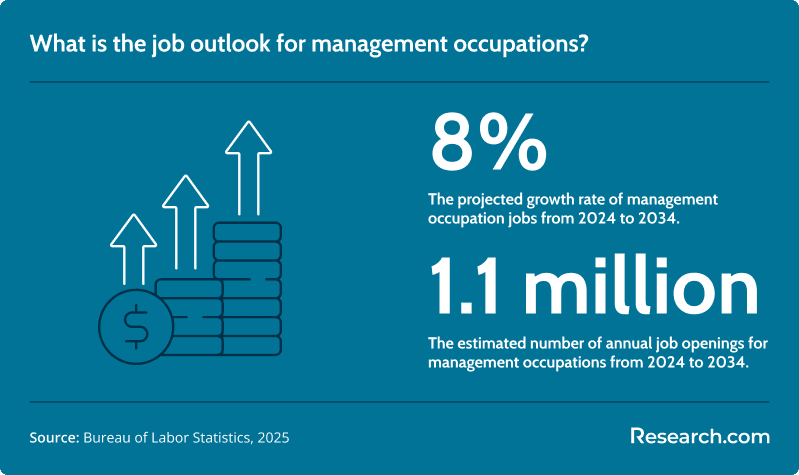
The job market for MBA graduates depends on industry, school reputation, work experience, location, specialization, and hiring cycles. Management occupations are projected to grow by 8% over the next decade, adding over a million jobs each year, which supports continued demand for professionals with leadership, financial, analytical, and organizational skills.
For experienced applicants, the MBA can strengthen an already established professional profile. Employers hiring for MBA-level roles generally focus on current capabilities, leadership record, problem-solving ability, and business impact rather than undergraduate academic history. This is one reason MBA programs that accept low GPA applicants can be a practical option for professionals whose college grades do not reflect their current ability.
Professionals in construction or infrastructure leadership may also combine graduate business education with industry credentials. For example, a CCM certification construction can add credibility for senior project and construction management roles.
Employer Demand and Degree-Level Outcomes
Employer interest in MBA graduates remains substantial. A recent survey showed that 95% of corporate recruiters plan to hire MBA graduates. The unemployment rate for individuals with a master's degree is 2.6%, although individual outcomes depend on field, geography, work experience, and economic conditions. Specialized areas can also be strong; for example, roles connected to an accelerated master's in taxation management online degree may appeal to students pursuing tax, accounting, or financial management careers.
The most practical approach is to connect the MBA directly to a role you can pursue. Before enrolling, review job postings, talk with alumni, compare salary data, evaluate your current skill gaps, and ask the school for career outcomes that match your intended concentration and location.
What Graduates Say About Their MBA Experience
- Kevin: "For years, I let my undergraduate GPA convince me that graduate business school was not for me. I was especially nervous about corporate finance and quantitative analysis. Once I started, the faculty explained difficult material in a way that made it manageable, and I realized I could compete academically. That confidence helped me just as much as the coursework when I began interviewing."
- Shae: "I spent much of my career trying to prove that my college transcript did not define me. This MBA was the first academic environment where my professional experience carried real weight. Earning the degree mattered, but the bigger shift was being evaluated for what I had accomplished at work. A few months after graduation, I moved into a director role."
- Priya: "I assumed an online MBA would limit networking, but my experience was different. My capstone team included a marketing leader in Chicago, a finance professional in Dallas, and an operations manager in Seattle. We stayed connected after the course ended, and one teammate later introduced me to the recruiter at my current company. The network is there, but you have to build it intentionally."
Can You Find an Affordable MBA Without Sacrificing Quality?
Yes, but affordability should be measured against quality, accreditation, support, and career relevance. A low-cost MBA is not automatically a good deal, and an expensive MBA is not automatically a better investment. Compare total tuition, fees, financial aid, employer reimbursement, accreditation, faculty access, alumni engagement, career services, and whether the curriculum fits your target role.
If price is a major concern, use affordable program lists as a starting point rather than a final answer. Research.com's guide to the cheapest online MBA accredited programs can help you compare cost-conscious options while still focusing on accredited schools.
Key Insights
- A low GPA is not the end of your MBA plan. Many schools evaluate professional experience, leadership, essays, recommendations, test scores or waivers, and evidence of current academic readiness.
- Accreditation matters more than admissions flexibility. Prioritize recognized institutional and business accreditation before comparing cost, format, or speed.
- Work experience can be your strongest admissions asset. Promotions, measurable impact, team leadership, and business results can help offset a weaker undergraduate record.
- Program format affects your life more than your GPA does. Full-time, part-time, online, hybrid, and accelerated MBAs have different workload, networking, and opportunity-cost trade-offs.
- Total cost is not just tuition. Include fees, books, travel, residency pricing, lost income, loan interest, and employer reimbursement when comparing MBA ROI.
- Specialization should follow your target job. Finance, marketing, international business, and operations management can lead to different roles, skills, and salary potential.
- Do not apply without a GPA strategy. Explain the low GPA briefly if needed, show what changed, and provide stronger proof through career outcomes, recommendations, quantitative preparation, and focused goals.
References:
- Association to Advance Collegiate Schools of Business. (2024). Master's enrollment trends at AACSB schools. Retrieved September 26, 2025, from https://www.aacsb.edu/insights/reports/2024/masters-enrollment-trends-at-aacsb-schools
- Indeed Editorial Team. (n.d.). How much does an MBA make? Indeed. Retrieved September 26, 2025, from https://www.indeed.com/career-advice/pay-salary/how-much-does-an-mba-make
- National Center for Education Statistics. (n.d.). Graduate degree fields. U.S. Department of Education, Institute of Education Sciences. Retrieved September 26, 2025, from https://nces.ed.gov/programs/coe/indicator/ctb/graduate-degree-fields
- National University. (n.d.). MBA statistics. Retrieved September 26, 2025, from https://www.nu.edu/blog/mba-statistics/
- U.S. Bureau of Labor Statistics. (n.d.-a). Occupational outlook handbook: Business and financial occupations. Retrieved September 26, 2025, from https://www.bls.gov/ooh/business-and-financial/
- U.S. Bureau of Labor Statistics. (n.d.-b). Occupational outlook handbook: Management occupations. Retrieved September 26, 2025, from https://www.bls.gov/ooh/management/
- Zippia. (n.d.-a). Jobs that require an MBA. Retrieved September 26, 2025, from https://www.zippia.com/answers/jobs-that-require-an-mba/
- Zippia. (n.d.-b). MBA statistics. Retrieved September 26, 2025, from https://www.zippia.com/advice/mba-statistics/
Other Things You Need To Know About MBA Programs That Accept a Low GPA
Strong letters of recommendation, relevant work experience, and a high GMAT or GRE score can bolster an MBA application with a low GPA. Highlighting leadership roles, special projects, or certifications can also demonstrate capability and commitment, enhancing admission prospects for 2027.
Yes, some MBA programs offer scholarships for students with a low GPA focusing on criteria like leadership potential and professional achievements to encourage diverse applicant backgrounds. It's advisable to research specific program offerings as these scholarships vary by institution.


