
2027 Best Certifications for Security Analysts

Co-Founder and Chief Data Scientist
With a projected 29% job growth in the field, your timing to become a security analyst couldn't be better. But that opportunity has created a confusing landscape of credentials, leaving many aspirants stuck and worried about wasting time and money on the wrong one.
That’s why our career planning experts built this guide. It is more than just a list; it is a clear, data-backed roadmap designed to give you the straightforward advice you need. We will help you find the right certifications for security analysts to launch your career with confidence.
What are the benefits of getting a certification for security analysts?
- It provides a direct entry point into a high-demand career. Employers are actively looking for certified candidates to fill a massive talent gap, making it one of the most efficient ways to get your foot in the door.
- It unlocks significant earning potential. With security analysts earning a median salary of $124,910, a certification validates the skills that command a premium in the job market.
- It offers flexible and accessible learning pathways. You can gain job-ready skills online and on a schedule that fits your life, which is perfect for career changers.
What can I expect from a certification for security analysts?
A certification program gives you a structured path to learn a specific body of knowledge, and it all leads to a single event: a standardized, proctored exam. The real value is in passing that exam to earn the industry-recognized credential.
This is a key point where people get confused. Many online courses offer a "certificate of completion" when you finish their training. That's nice, but it's not the same as an official industry certification. The credential that employers recognize is the one you earn by passing the exam from a respected body like CompTIA, ISACA, or (ISC)².
Think of it this way: the training helps you learn, but the certification proves you know your stuff. That's why official certifications for security analysts are so powerful in the job market; they are a trusted signal of your skills.
Where can I work with a certification for security analysts?
You can work almost anywhere. That's one of the best parts of this field.
It’s a common misconception that you only work for "tech companies." In reality, any organization that handles sensitive data needs security analysts. This includes finance, healthcare, retail, and government. The top employers are found in computer systems design, finance and insurance, and management services.
It’s also important to know that not all security roles are the same. A high-pressure job in a 24/7 Security Operations Center (SOC) is very different from an internal role managing risk for a corporation.
The rise of remote work has also opened up the market. You can often work for a major firm without having to relocate, giving you tremendous flexibility in your job search.
How much can I make with a certification for security analysts?
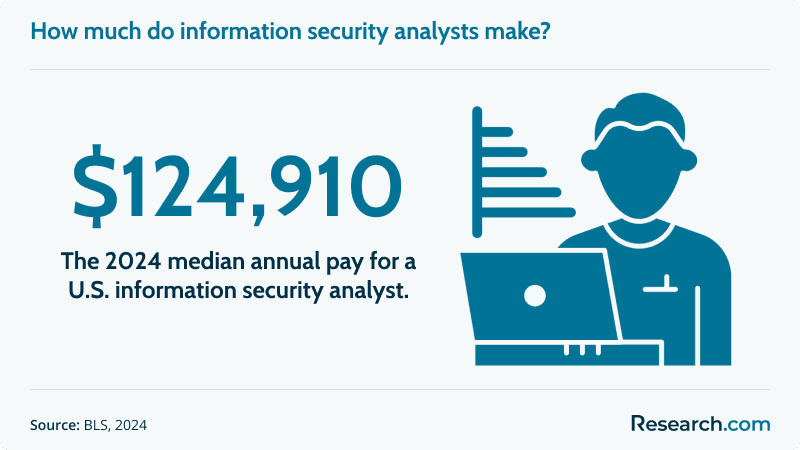
The median salary for a security analyst is excellent—it's currently $124,910 per year. That figure shows you the strong earning potential in this field.
Now, it's important to understand that "median" means half the people in the job earn more and half earn less. As someone starting out, your initial salary will depend on your location, the industry you enter, and any prior IT experience you bring to the table.
The great news is that the intense demand for qualified professionals creates consistent upward pressure on wages. This makes it a very lucrative career path to start on.
List of the Best Certifications for Security Analysts for 2027
How do we rank the programs?
Recognizing that paying for a certification is a significant investment, our ranking methodology ensures that students can make informed decisions based on comprehensive and transparent information. The ranking draws upon reliable sources such as the IPEDS database, Peterson's database, the College Scorecard database, and The National Center for Education Statistics.
These sources provide a robust foundation of data to evaluate and rank the best certification for security analyst programs. For more details on our methodology, please visit Research.com’s methodology page.
1. GIAC (Global Information Assurance Certification)
GIAC certifications are considered a gold standard in the industry, known for their technical depth and rigorous, hands-on focus. They are closely associated with training from the SANS Institute and are highly respected by employers, particularly for intermediate to advanced-level security roles. Think of these as specialized credentials that prove your mastery of a specific cybersecurity domain.
Key Certifications for Security Analysts:
- GIAC Security Essentials (GSEC): This is a strong foundational certification within the GIAC portfolio. It validates a broad range of essential security knowledge, from networking and cryptography to incident response, making it a good starting point for those new to the field.
- GIAC Certified Intrusion Analyst (GCIA): This is a more specialized, intermediate-level certification perfect for an aspiring Tier 2 or Tier 3 analyst. It focuses deeply on network traffic analysis, intrusion detection, and understanding the signatures of modern attacks.
Cost and Logistics:
- Cost: GIAC certifications represent a significant financial investment. A single exam attempt typically costs around $2,499. This price does not include the associated SANS training course, which can cost several thousand dollars more, though bundles are available.
- Completion Time: The time to prepare is entirely self-paced and depends on your experience level; most professionals study for several months. The proctored exams themselves are timed, typically lasting between 2 to 5 hours.
2. CompTIA (Computing Technology Industry Association)
Think of CompTIA as the industry standard for building a strong, vendor-neutral foundation for your IT career. Their certifications are globally recognized and are often the first credential that professionals earn because they prove you have the essential, cross-platform skills that every employer looks for. They provide a clear, step-by-step pathway for getting into and advancing in the field.
Key Certifications for Security Analysts:
- CompTIA Security+: This is the essential first step for any aspiring security professional. It is the global benchmark for foundational cybersecurity knowledge and is a common requirement for entry-level analyst jobs. It validates the core skills needed to perform security functions and pursue an IT security career.
- CompTIA Cybersecurity Analyst (CySA+): This is the logical next step after Security+. It focuses on the practical, hands-on skills of an analyst, including threat detection, data analysis, and incident response. This certification proves you have the skills to move beyond theory and into the day-to-day work of a security operations center (SOC).
- CompTIA Network+: While not a security certification, this is a highly recommended prerequisite. It validates your understanding of how networks function, which is critical knowledge for anyone tasked with defending them.
Cost and Logistics:
- Cost: CompTIA certifications are very accessible financially. The exam voucher for certifications like Security+ or CySA+ typically costs around $392. This price is for the exam itself and does not include training materials, which can be acquired affordably through self-study.
- Logistics: Preparation is self-paced. The exams are proctored and can be taken online or at a testing center. CompTIA certifications are valid for three years and must be renewed by earning Continuing Education (CE) credits, ensuring your skills stay up-to-date.
3. EC-Council (International Council of E-Commerce Consultants)
EC-Council is best known for its hands-on certifications that map directly to specific job roles within the cybersecurity industry. While they are famous for the Certified Ethical Hacker (CEH), they also offer strong defensive credentials. Think of their programs as intensive training designed to make you proficient in the day-to-day tasks of a particular security position.
Key Certification for Security Analysts:
- Certified SOC Analyst (CSA): This is a highly specialized, job-role certification designed for individuals aiming to work as a Tier I or Tier II analyst in a Security Operations Center (SOC). The entire program is built around real-world SOC processes, focusing heavily on practical skills like log management, SIEM tool operation, and incident response procedures. It’s an excellent choice if you know for certain that a SOC analyst role is your goal.
Cost and Logistics:
- Cost: The exam voucher for the CSA certification is typically priced around $550. This does not include the official training course, which is a separate and more significant investment, often starting around $2,199 for a self-paced online program.
- Logistics: The exam is a 3-hour, 100-question multiple-choice test. Like other professional credentials, the certification is valid for three years and requires you to earn EC-Council Continuing Education (ECE) credits to maintain it.
4. (ISC)² (International Information System Security Certification Consortium)
Think of (ISC)² as the professional association for cybersecurity leaders. Earning one of their certifications is about making a long-term commitment to the field and joining a global community of trusted experts. Their credentials are globally recognized and often required for senior-level and management roles, focusing on a broad, strategic understanding of security.
Key Certifications for Security Analysts:
- Certified in Cybersecurity (CC): This is (ISC)²'s foundational certification, designed for anyone looking to start their first role in cybersecurity. It covers the essential concepts and principles, providing a clear entry point into the profession and a pathway to more advanced credentials.
- Systems Security Certified Practitioner (SSCP): This is an excellent certification for hands-on security practitioners, including experienced analysts and engineers. It validates your technical skills across seven key security domains, proving you can implement, monitor, and administer IT infrastructure in line with security best practices.
- Certified Information Systems Security Professional (CISSP): This is one of the most respected certifications in the world, but it is for experienced professionals, typically requiring at least five years of work experience. It validates deep technical and managerial competence and is often required for leadership roles.
Cost and Logistics:
- Cost: The cost varies significantly by certification. The entry-level CC exam is very affordable at around $199, while the SSCP is $249 and the advanced CISSP exam is $749.
- Logistics: To maintain your certification, you must pay an Annual Maintenance Fee (AMF) and earn Continuing Professional Education (CPE) credits. This structure reinforces your ongoing professional development and membership in the (ISC)² community.
5. IBM (International Business Machines)
IBM offers a different kind of credential called a Professional Certificate. Think of this as a highly structured, university-style training program developed by a major tech employer. It's an excellent way for beginners to build a strong foundation of knowledge and get hands-on experience with real security tools before tackling a formal industry certification.
Key Professional Certificate for Security Analysts:
- IBM Cybersecurity Analyst Professional Certificate: This program is a comprehensive learning path designed to take you from zero knowledge to job-ready. It covers all the core domains, including threat intelligence, incident response, and compliance, with a strong emphasis on practical labs using industry tools like IBM's own QRadar SIEM.
Cost and Logistics:
- Cost: This certificate is typically offered through a subscription-based model on platforms like Coursera. This makes it a very low-cost and flexible way to acquire foundational skills, as you only pay a monthly fee for as long as it takes you to complete the courses.
- Logistics: The program is entirely self-paced and online. Most learners can complete the series of courses in about 4-6 months with part-time study. Upon completion, you receive a professional certificate from IBM, which is a valuable addition to your resume and LinkedIn profile.
How long does it take to complete a certification for security analyst?
Most foundational certifications can be achieved in 2-4 months with consistent, part-time study.
This timeframe is a solid guideline, but your personal timeline will depend on your starting point. Someone with a background in IT networking might move faster, while a complete beginner should plan to spend more time on foundational concepts. Your study discipline is the other key factor.
Accelerated Paths for Motivated Learners
If you need to get certified more quickly, intensive training bootcamps can shorten the timeline to just a few weeks of full-time study. These programs, such as some of the fastest online CompTIA Security+ training bootcamps, are designed for rapid learning and are an excellent option if you can commit to an immersive schedule.
The reason these accelerated paths are so popular is the massive demand for talent. The industry is facing a significant global workforce gap, meaning there are far more open jobs than qualified people to fill them, as the data below shows.
How does an online certification for security analyst compare to an on-campus?
For the certification credential itself, there is no difference between online and on-campus training.
Employers see that you earned the certification from an official body like CompTIA or (ISC)². They do not see how you prepared for the exam, so one training method holds no advantage over the other on a resume. The final credential is what matters.
Choosing the Right Learning Environment for You
The decision comes down to your personal learning style, budget, and schedule. Online programs offer maximum flexibility and are often more affordable, allowing you to study at your own pace. This is ideal if you are balancing work or other commitments.
On-campus programs provide a structured schedule and direct, in-person access to instructors and peers. This environment works well for learners who thrive on external accountability and face-to-face interaction. The industry's full acceptance of remote proctoring has made online training a completely viable and respected path to the same goal.
For students new to the field, a common question is "is cyber security hard?" The answer depends largely on your starting point and willingness to practice consistently. While some concepts—like threat analysis or network defense—can be complex at first, structured training and real-world labs help make the learning curve manageable. Many learners find that once they understand the fundamentals, their confidence and skills grow quickly over time.
What is the average cost of a certification for security analyst?
The cost of a certification has two main parts: the exam voucher and your training materials.
The exam voucher is a fixed fee you pay to the certifying body to take the test. For most foundational certifications, this costs between $300 and $600. The second part, your training, is where the cost can vary widely. It can range from less than $100 for self-study resources to several thousand dollars for an immersive bootcamp.
Smart Strategies for a High ROI
You do not need to enroll in the most expensive program to succeed. Many people pass their exams by building their own study plan with high-quality books, video courses, and practice tests. This approach can keep your total training costs under $200 and offers an excellent return on investment.
While structured bootcamps can be valuable for their speed, be cautious of predatory programs that make unrealistic promises. The key is to understand that affordable and effective certifications for security analysts are well within reach if you choose your resources wisely.
For those comparing paths in tech, some also wonder “is being a data scientist hard?” Like cybersecurity, data science comes with a learning curve, especially around statistics, programming, and analytical thinking. However, with guided coursework and consistent practice, both cybersecurity and data science become more approachable, and many learners find that confidence builds steadily as foundational skills develop.
What are the financial aid options for students enrolling in a certification for security analyst?
Traditional student loans, like those from FAFSA, don't apply to standalone certification programs because they aren't college degrees. However, you still have several excellent options for funding your training.
- Provider Payment Plans: Many training companies and bootcamps offer their own financing, allowing you to pay for the course over several months.
- Employer Tuition Reimbursement: If you are currently employed, ask your company if they have a program to help pay for training. Many employers are willing to invest in cybersecurity skills.
- Veterans' Benefits: The GI Bill can often be used to cover the costs of both the training program and the certification exam itself.
- Government Grants: Programs like the Workforce Innovation and Opportunity Act (WIOA) are designed to fund training for in-demand careers, and cybersecurity is a top priority.
The key is to remember that financial aid is tied to the training provider you choose, not the certification body. You would seek funding from a bootcamp or school, not directly from an organization like CompTIA.
What are the prerequisites for enrolling in a certification for security analyst?
Most foundational certifications have no formal prerequisites to register for the exam.
However, this is a point that trips up many beginners. "No formal prerequisites" does not mean "no prior knowledge needed." To pass the exam and get a job, you need a solid understanding of basic IT and networking concepts. This is non-negotiable for success in the field.
Building a Strong Foundational Knowledge Base
You cannot secure a network if you do not understand how a network functions. You need to know about IP addresses, ports, and protocols before you can learn how to defend them. This is why many successful analysts start by building their networking knowledge first.
For example, learning the material covered in a networking certification provides an ideal base. Pursuing training from some of the best online CCNA training bootcamps is a common and effective strategy to build those core skills before you tackle a security-specific credential.
What courses are typically in a certification for security analyst?
A typical foundational certification curriculum is built around the core functions of a security analyst. You can expect to cover broad domains that are essential for day-to-day defensive operations.
Core areas of study include:
- Network Security: Understanding and securing network infrastructure.
- Threat & Vulnerability Management: Identifying and mitigating weaknesses in systems.
- Security Operations: Monitoring systems and responding to security incidents.
- Cryptography: Using encryption to protect data.
The curriculum is not about "hacking." Instead, the focus is on defensive principles, operational procedures, and risk management. These certifications for security analysts are designed to build the practical, job-ready skills that companies need to protect their systems.
For students interested in expanding beyond security analysis, many of the same foundational skills overlap with cloud-based environments. Learning how to build a career in cloud computing often begins with these core security concepts, as cloud roles require a strong understanding of identity management, secure architecture, and platform-specific security controls. Adding cloud certifications later can help open doors to high-growth roles in DevSecOps, cloud security engineering, and cloud architecture.
Aligning Your Skills with Employer Needs
These curriculum domains directly map to what hiring managers are looking for. Employers need analysts who understand risk management, can implement security controls, and know how to respond to incidents. The constant updates to certification curricula to include modern challenges like cloud and AI security mean you are learning the relevant, in-demand skills.
As you can see from the data, the skills taught in these programs are the ones employers are actively hiring for.
What types of specializations are available in a certification for security analyst?
After you have a foundational certification and some experience, you can start to specialize. This is how you advance your career and increase your salary.
The most common paths are defensive security (blue team), offensive security (red team), cloud security, or governance, risk, and compliance (GRC). It's important to know that you don't need to choose a specialization from day one. Master the fundamentals first, then decide which area interests you most.
Specializing in Defensive Operations
This is a natural next step for a security analyst. It involves moving into more proactive roles like threat hunting and incident response. To do this, you'll need a more advanced credential focused on analytics. For example, many professionals pursue the certification covered in the best online CompTIA CySA+ training bootcamps to deepen their defensive skills.
The AI Frontier
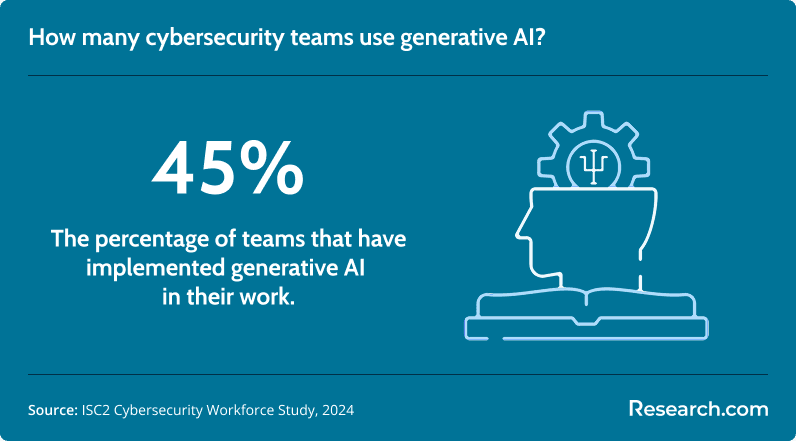
The most exciting new specialization is in artificial intelligence. As companies increasingly use AI for security, they need experts who can manage and secure these complex systems. With a significant number of organizations already adopting AI, this trend is creating entirely new, high-demand career paths, as the data shows.
How to Choose the Best Certification for Security Analyst
To make the right choice, you need to answer three simple questions about your own situation:
- What is your current experience level?
- What is your budget for training and the exam?
- What certifications appear most often in job descriptions in your area?
Answering these will guide you. However, if you are new to the field, my direct advice is to start with a foundational, vendor-neutral certification. For most people, this means the CompTIA Security+.
Prioritizing Foundational, Vendor-Neutral Certifications
Starting with a broad certification is a strategic move. It gives you a comprehensive understanding of security principles without tying you to a specific company's technology. This makes you a more versatile and attractive candidate for a wider range of entry-level roles.
This credential is so widely respected that it's a baseline requirement for many government and corporate jobs. It serves as a clear, industry-standard signal to employers that you have the essential knowledge to succeed. This is why resources like the top CompTIA Security+ online training are such a popular and effective starting point for a successful career.
What career paths are available for graduates of a certification for security analyst?
The most direct path from a foundational certification is to a Tier 1 Security Operations Center (SOC) Analyst role. Other common entry points include positions like IT auditor or compliance analyst, especially if you have a background in business or finance.
It's important to see this as the first step on a long career ladder. A certification is your ticket to the entry-level job; from there, you build experience to climb to more senior and specialized positions.
The Analyst Career Ladder
Once you are in an analyst role, a typical progression moves from Tier 1 to Tier 2 and Tier 3, each with increasing responsibility. With a few years of experience, you can advance to high-paying senior roles like Security Engineer, Security Architect, or Security Consultant. Many companies are now building internal career ladders to retain talent, creating clear growth paths for new hires.
Adjacent and Complementary Technical Fields
Strong security skills are also highly valued in other technical fields. For example, professionals in areas like the best mobile app development online degree programs need a deep understanding of security to build safe and trusted applications. This expertise makes you a valuable asset across the entire tech landscape, especially within the most resilient industries.
What is the job market for graduates of a certification for security analyst?
The job market for graduates with certifications for security analysts is exceptionally strong.
The field is projected to grow by 29% over the next decade, which is much faster than the average for all occupations. This high demand is driven by a simple, powerful fact: there are far more open cybersecurity jobs than there are qualified people to fill them.
A Future-Proof Career
This isn't a temporary trend; it's a structural talent gap. Globally, there is a shortage of nearly 4.7 million cybersecurity professionals. This massive, ongoing demand ensures long-term job security and gives qualified candidates significant leverage in the market.
This intense competition for talent is also why salaries are so high. When demand outstrips supply, companies are willing to pay a premium for validated skills. As the data shows, the earning potential in this field is substantial, making it a resilient and rewarding career choice for the future.
For learners coming from fields outside traditional computer science, the path into cybersecurity is also becoming more structured and accessible. Many universities now offer MS Computer Science for non CS majors programs, which provide foundational computing and programming skills while allowing students to transition into security-focused coursework. This makes it easier for career changers to bridge the knowledge gap and move confidently into high-demand cybersecurity roles.
How Does a Cybersecurity Degree Complement a Security Analyst Certification?
While certifications are designed to validate specific technical skills and immediate job readiness, a cybersecurity degree delivers a broader academic foundation, encouraging critical thinking and strategic planning. This academic pathway enhances your understanding of emerging technologies, managerial practices, and industry research, which can be particularly advantageous when aiming for leadership roles. For many, combining the hands-on expertise from a certification with the comprehensive theory of a degree creates a more competitive profile in a rapidly evolving job market. For those considering further formal education, options like the cheapest cyber security degree online can provide a cost-effective complement to your technical credentials.
Here’s What Graduates Have to Say About Their Certification for Security Analyst
- Ben: "Before I got certified, I felt like I was just spinning my wheels. I knew I was capable of more, but my resume wasn't getting past the automated filters for security roles. Earning the certification was the key that unlocked those doors. Suddenly, I wasn't just another IT guy; I was a security professional with validated skills."
- Regi: "Honestly, I had a serious case of imposter syndrome. The field seemed so complex, and I wasn't sure I belonged. The online labs were what really made the difference for me. Getting my hands on the tools and actually performing the tasks built a quiet confidence that I took right into my interviews. I could talk about what I’d done, not just what I’d read."
- Andy: "As someone already in IT, I was worried a foundational certification would be too basic and a waste of time. I was wrong. The program respected my existing knowledge of networking and operating systems while focusing squarely on the security principles I needed to learn. It was efficient, targeted, and exactly the bridge I needed to pivot into a security role."
Key Findings
- The security analyst field is experiencing exceptional growth, with a projected 29% increase in jobs and a median salary of $124,910, offering a strong return on investment for new entrants.
- A massive global talent shortage, projected to reach 4.7 million open roles, creates immense opportunity and job security for certified professionals entering the field.
- Industry-wide validation is clear, with 98% of professionals agreeing that certifications are valuable for their careers, confirming they are a respected and effective path to employment.
- Certification curricula are directly aligned with employer needs, focusing on in-demand skills like cloud security, which is sought by 45% of hiring managers.
- The field is rapidly evolving, with 51% of organizations now using AI in security, creating new, high-demand specialization pathways for professionals looking to advance their careers.
- A security certification opens doors to the most resilient sectors of the economy, including Information Technology, Healthcare, and Financial Services, ensuring stable career paths.
References:
- CyberSeek. (n.d.). Cybersecurity supply/demand heat map. Retrieved September 24, 2025, from https://www.cyberseek.org/heatmap.html
- IBM. (n.d.). Cost of a data breach report. Retrieved September 24, 2025, from https://www.ibm.com/reports/data-breach
- (ISC)². (2024, October). ISC2 2024 Cybersecurity Workforce Study. Retrieved September 24, 2025, from https://www.isc2.org/Insights/2024/10/ISC2-2024-Cybersecurity-Workforce-Study
- Readynez. (n.d.). GIAC exam passing rates: What you need to know before taking the test. Retrieved September 24, 2025, from https://www.readynez.com/en/blog/giac-exam-passing-rates-what-you-need-to-know-before-taking-the-test/
- U.S. Bureau of Labor Statistics. (2024, September 4). Information security analysts. Occupational Outlook Handbook. Retrieved September 24, 2025, from https://www.bls.gov/ooh/computer-and-information-technology/information-security-analysts.htm
- U.S. Government Accountability Office. (n.d.). Cybersecurity. Retrieved September 24, 2025, from https://www.gao.gov/cybersecurity
Other Things You Need To Know About Certifications for Security Analysts
In 2027, top certifications for security analysts include Certified Information Systems Security Professional (CISSP), Certified Information Security Manager (CISM), CompTIA Security+, and Certified Ethical Hacker (CEH). Each offers unique strengths, validating skills in cybersecurity principles and practices.
While certifications provide theoretical knowledge and validate skills, hands-on experience is crucial. It helps in applying concepts learned in real-world scenarios, making you more desirable to employers. Many top certifications, like CISSP and CEH, recommend practical experience to succeed in the field.
Practical experience is crucial for security analysts because it allows individuals to apply theoretical knowledge in real-world scenarios, thereby enhancing their problem-solving skills and technical expertise. This hands-on experience is essential in 2027, as employers increasingly seek candidates who can demonstrate proficiency in both certification objectives and workplace challenges.
In 2027, essential certifications for security analysts include Certified Information Systems Security Professional (CISSP), Certified Information Security Manager (CISM), and Certified Ethical Hacker (CEH). These certifications validate expertise in cybersecurity, risk management, and ethical hacking, making them invaluable for professionals in the field.


